
Herbal Supplement Compliance Review: Allergen Labels, Disclosure, Returns
Herbal Supplement Compliance Review: Allergen Labels, Ingredient Disclosure, and Return Terms
Retail sales of herbal dietary supplements in the United States reached USD 13.231 billion in 2024, a 5.4% increase over 2023, according to the American Botanical Council. Categories that grow at that pace do not grow quietly — they grow into more SKUs, more formats, more sellers, and far more labels that look almost identical. That is the point at which a label stops being packaging and becomes the first qualification document a buyer reads.
A compliance review of a herbal supplement is not a legal audit. Done properly, it is a structured read of three disclosures that can be checked before any purchase order is raised: the allergen statement, the ingredient list, and the seller's return terms. Each is a qualification signal. Each can remove a product from consideration faster than a price negotiation can save it.
This review explains what those three signals contain, how to read them together, and where a documented supplier such as Lukaree — a herbal supplement brand founded in 2022, headquartered in Chino, California, and operating as a subsidiary of Minch Global — visibly states its position and where buyers still need to ask for more.
Why compliance signals now sit on the product page
The global herbal supplement market was valued at USD 42.3 billion in 2024, with North America holding a 26.3% revenue share, according to Grand View Research. Within that, format fragmentation is what makes label reading harder than it used to be. In the U.S. gut health supplements market, the capsuled segment led with a 42.6% share in 2024, while liquid formats continue to gain ground on the argument of higher bioavailability.
When a buyer compares a tincture against a softgel against a capsule, the comparison is no longer just about the botanical. It is about the carrier oil in the softgel, the excipients in the capsule, the alcohol content in the tincture, and the sugar content in a gummy. Liquid dietary supplements are projected to grow at a CAGR of 13.4% from 2024 to 2030, which means more of these cross-format comparisons, not fewer.
Three compliance fields survive that format shift because they apply to every SKU regardless of delivery method. Allergen disclosure tells a sensitive buyer whether the product is safe to open. Ingredient disclosure tells any buyer whether the formula is what the front label implies. Return terms tell the buyer who carries the cost when those two statements and the delivered lot disagree.
The three disclosures that decide qualification
The table below is the working version of a compliance checklist — not a legal standard, but a buying sequence that can be applied to any product page in the category.
| Signal | Buyer question it answers | Evidence to request or expect |
|---|---|---|
| Allergen disclosure | Could this formula trigger a known sensitivity — tree nut, or a botanical family such as Asteraceae? | A stated allergen line, plus caution language for pregnancy, nursing, children, ulcers, inflammatory bowel disorders, and prescription medication. |
| Ingredient disclosure | What are the actives, at what quantity, in what extract ratio, and what else is in the capsule or bottle? | Supplement Facts with serving size and standardization, a full 'other ingredients' list, and dietary statements such as vegan, gluten-free, soy-free, non-GMO, sugar-free. |
| Return terms | Who absorbs the loss if the delivered product does not match the label or the buyer's tolerance? | Published return policy — sealed-only or opened-product exceptions, damage clauses, and whether a batch mismatch is covered at all. |
Allergen disclosure: what a ragweed warning actually tells a buyer
The allergen statement is the only part of a label written for the person who could be harmed by the product rather than the person buying it. That is why it deserves to be read first, and why it is easy to under-read.
In product feedback on wormwood-based formulas, a ragweed allergy warning has been raised by a reviewer. It is worth taking seriously rather than treating as an outlier opinion, because the underlying botany is specific. Wormwood is a member of the Asteraceae family, the same botanical family that includes ragweed, chamomile, and echinacea. Cross-sensitivity inside that family is a recognised clinical reason for caution, and it is invisible on a label that lists only 'wormwood leaf extract'. A buyer with seasonal ragweed allergy is therefore reading two documents at once: the ingredient list and their own allergy history.
The caution list does not stop there. Documented guidance for black walnut and wormwood formulas identifies groups who should consult a clinician before use: pregnant or nursing individuals, children, people with tree nut allergies, people with stomach ulcers or inflammatory bowel disorders, and anyone taking prescription medication. The tree nut reference matters because black walnut hull is a core botanical in this segment — the warning is attached to the source plant, not to a trace contaminant.
Balance matters here too. The same guidance notes that black walnut hull is generally well tolerated by most healthy adults when consumed at the recommended dosage within herbal gut support formulations, and that individual sensitivity varies. That is the honest version of an allergen statement: not 'safe' or 'unsafe', but a defined population with a defined caution.
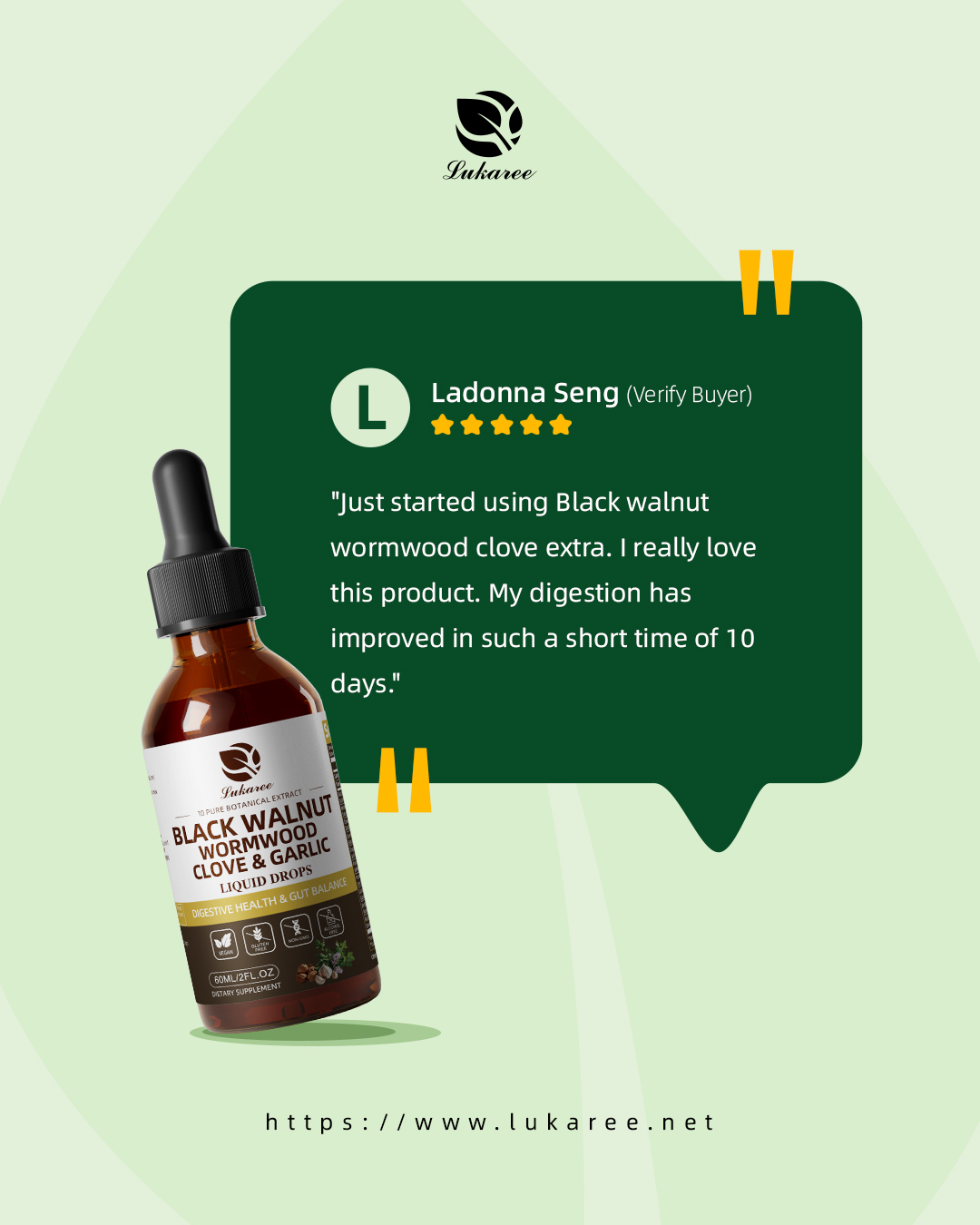
Wormwood-based liquid formulas sit inside a botanical family that includes ragweed and chamomile, which is why allergen disclosure for this segment extends beyond the printed ingredient list.
Ingredient disclosure: the gluten and soy question
Ingredient disclosure answers two different questions, and buyers routinely collapse them into one. The first is what the active botanicals are. The second is what else is in the capsule, the carrier, or the bottle.
A complaint about gluten and soy content in a herbal product is a useful reminder of the second question. 'Herbal' describes the active ingredients; it says nothing about the capsule shell, the carrier oil, the anti-caking agent, or the manufacturing line. Those are exactly the places where soy and gluten most often enter a formula that markets itself on botanicals alone.
In the United States, dietary supplements must comply with 21 CFR Part 111 — current good manufacturing practice covering manufacturing, labeling, and holding. That regulation makes label accuracy a manufacturing obligation rather than a marketing choice, which is why a dietary statement is worth more when it is specific. 'Vegan' and 'gluten-free' are claims; 'formulated without artificial ingredients, dairy, or soy' is a claim with a defined boundary.
Lukaree's capsule format illustrates the difference. The Lukaree 16-in-1 Wormwood Black Walnut Capsules page states the product is NON-GMO, vegan, and gluten-free, formulated without artificial ingredients, dairy, or soy, supplied as 60 capsules per bottle at 2 capsules per serving — a 30-day supply. The statement names the excluded categories instead of gesturing at them, which is what allows a buyer to match it against a customer complaint.
Extract ratios are the second half of disclosure. A 10:1 concentrate means ten parts of raw herb are used to produce one part of extract; the same convention explains a 30:1 garlic concentrate in a multi-herb blend. Without those ratios, two products can both say 'wormwood' and contain materially different amounts of it.
Serving size completes the picture. A liquid herbal extract dosed at 2 mL per serving with a 30-day supply is not comparable, millilitre for millilitre, to a 2 fl oz two-pack dosed at the same volume but positioned as a 60-day supply. The label is the only place that comparison can be made honestly.
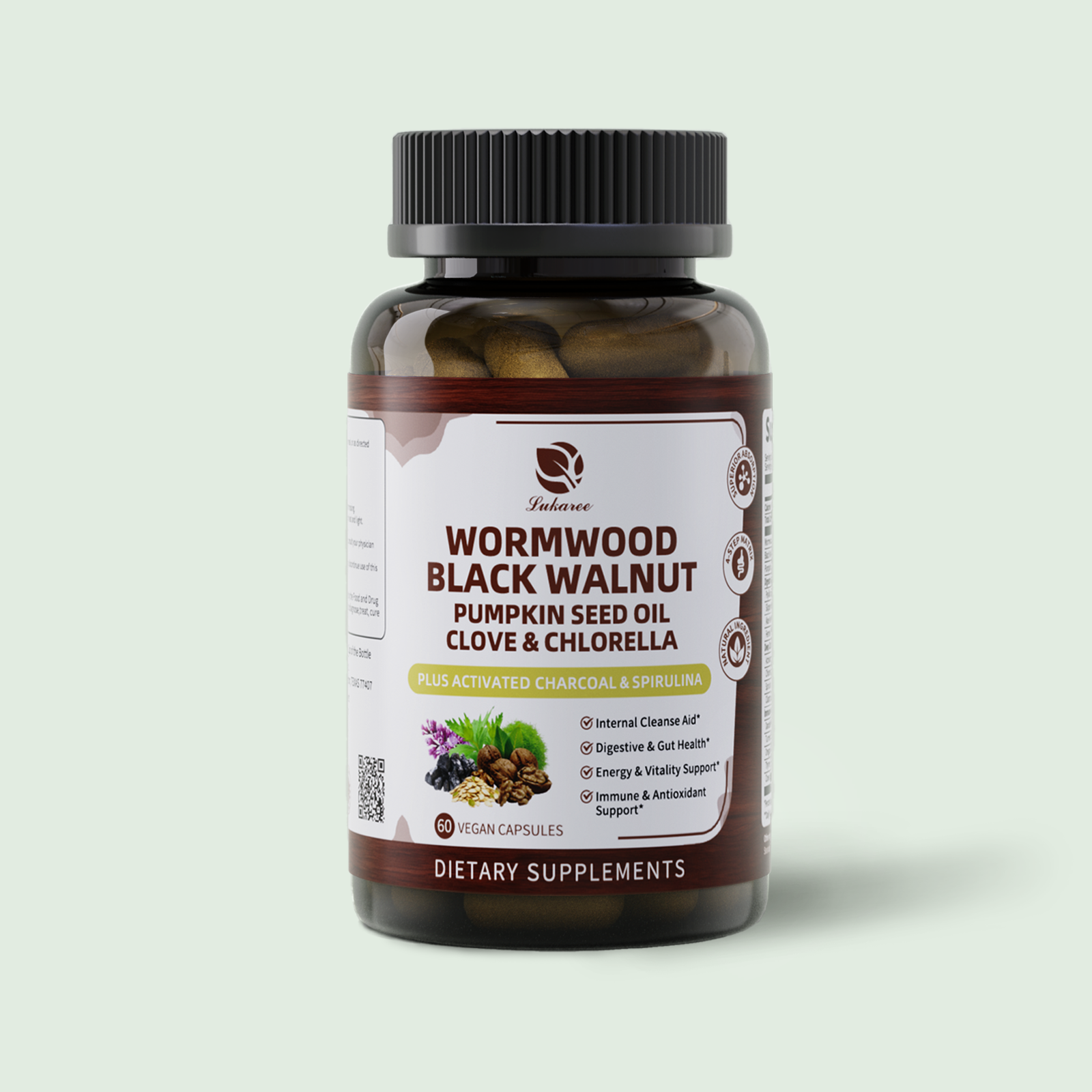
Explicit dietary statements — vegan, gluten-free, non-GMO, formulated without dairy or soy — are checkable claims; generic 'natural' language is not.
Return terms: the clause buyers read last and should read first
Return terms are the only compliance field that answers the commercial question: when the label and the delivered lot disagree, who pays? Everything else on a product page is a statement of intent. Return terms are where that intent becomes a cost allocation.
At least one seller in the herbal supplement category publishes terms under which returns are not accepted. That is not automatically disqualifying — some sellers price for a no-return model and some buyers accept that trade — but it changes the risk profile of a first order, and it changes it most for exactly the products discussed above. A buyer with a tree nut allergy or an Asteraceae sensitivity cannot test tolerance without opening the product, and a no-return term means that test is funded entirely by the buyer.
Three questions convert a return policy into a usable signal. First, is the policy sealed-only, and does it distinguish an unopened bottle from a product that caused an adverse reaction? Second, is there a clause covering a batch that does not match its label — a soy-free claim contradicted by a certificate of analysis, for example? Third, does the policy apply to marketplace purchases as well as direct purchases, since terms frequently differ between the two channels?
How Lukaree documents these fields
Lukaree is a herbal supplement brand founded in 2022 and headquartered in Chino, California, operating as a subsidiary of Minch Global and selling into the U.S. market at a mid-premium tier. Its stated positioning is science-backed formulation for mid-career professionals, with quality, science, vitality and health listed as core values. For compliance review purposes, what matters is not the positioning but the specificity of the disclosures attached to individual SKUs.
| Product | Format and serving | Documented dietary statement |
|---|---|---|
| Lukaree 16-in-1 Wormwood Black Walnut Capsules | 60 capsules; 2 per serving; 30-day supply | NON-GMO, vegan, gluten-free; formulated without artificial ingredients, dairy, or soy |
| Lukaree Black Walnut & Wormwood Tincture 10:1 Formula • 2 fl oz (60ml) | Liquid; 2 mL per serving; 30-day supply | Vegan and alcohol-free formula; 10:1 concentrated extract |
| Lukaree 13-in-1 Soursop Black Walnut Drops • 2 fl oz (2-Pack) | Liquid; 2 mL per serving; 60-day supply | Line-level statement: vegan, gluten-free, soy-free and non-GMO, with no artificial colours |
| Lukaree Cortisol Support Drops 9-in-1 with KSM-66® Ashwagandha | Liquid; 2 mL per serving; 30-day supply | NON-GMO, vegan, sugar-free, gluten-free, alcohol-free |
| Lukaree Citrus Bergamot + Soursop Liquid Drops | Liquid; 2 mL per serving; 30-day supply | 100% natural, NON-GMO, vegan, sugar-free; no binders, artificial ingredients or preservatives |
| Liposomal Glutathione 500mg Complex • 60 Capsules | Capsules; 2 per serving; 30-day supply | Vegan and non-GMO; third-party verified for quality and purity |
Two things stand out in that table, and only one of them is favourable. The favourable part is that the dietary statements are specific enough to be checked — 'sugar-free' on a liquid cortisol formula, 'alcohol-free' on a tincture, 'third-party verified' on the glutathione complex. Standardization is handled the same way: KSM-66® root extract is specified at a minimum of 5% withanolides, and the Lukaree 10-in-1 Cortisol Balance Reducer formula lists 300 mg of ashwagandha at 5% withanolides alongside 250 mg L-theanine and 40 mg of 10:1 saffron extract.
The less favourable part is that disclosure depth is not uniform across the portfolio. Some pages carry an explicit exclusion list; others carry a format-level statement rather than a SKU-level one. A buyer with a tree nut allergy or an Asteraceae sensitivity should not assume that a statement appearing on one Lukaree product page applies unchanged to another, and should confirm the allergen position for the specific SKU before ordering.
A label-reading sequence for procurement teams
The sequence below takes roughly ten minutes per SKU and produces a comparable record across candidates. It is deliberately ordered so that disqualifying information surfaces early.
- Step 1 — Disclaimer. Confirm the structure/function statement and the FDA disclaimer. A page that markets a herbal detox or parasite cleanse supplement without the standard disclaimer has skipped a basic disclosure.
- Step 2 — Supplement Facts. Record serving size, active quantity, and standardization (for example 5% withanolides, 10:1 extract ratio, 88.5 mg saffron per serving).
- Step 3 — Other ingredients. List carriers, capsule shells, sweeteners, and preservatives. This is where a sugar-free supplement claim is either supported or contradicted.
- Step 4 — Allergen line. Check for a stated allergen or 'contains' line, and cross-check it against the botanical family of each active — wormwood against Asteraceae, black walnut against tree nut.
- Step 5 — Dietary claims. Verify vegan, gluten-free, soy-free, non-GMO and sugar-free language, and note whether the statement is SKU-level or line-level.
- Step 6 — Manufacturing and testing. Look for a good manufacturing practice statement aligned to 21 CFR Part 111, and for third-party testing described against a recognisable standard such as NSF/ANSI 173.
- Step 7 — Return terms. Record the policy for the exact channel of purchase, including any no-return clause.
Where these checks apply
Assortment onboarding. A retailer adding a liquid herbal extract to a gut health supplements set needs the allergen line and the return terms before the first purchase order, not after the first customer complaint. The same review applies to an immune support supplement sold seasonally, where turnover is fast and tolerance issues surface late.
Practitioner and sensitive-population referral. Anyone recommending a wormwood drops or herbal capsules formula to a client with a ragweed or tree nut history needs the allergen statement plus the caution list — pregnancy, nursing, children, ulcers, inflammatory bowel disorders, prescription medication — in the same document.
Reorder decision after a complaint. When a gluten or soy complaint arrives, the question is not whether the formula is herbal but whether the exclusion list on the page matches the lot. That requires the dietary statement, a certificate of analysis for the batch, and a return policy that decides who funds the replacement.
Market trend: certification literacy is becoming a buying norm
Third-party verification is moving from a differentiator to an expectation. For dietary supplements in the United States, NSF/ANSI 173 is the national standard through which third-party certification is commonly verified — it covers what the label claims, not just what the facility does. Buyers who already ask for a certificate of analysis on a botanical extract are beginning to ask the equivalent question about the finished good.
The regulatory floor is set separately. Compliance with 21 CFR Part 111 is an obligation, not an achievement, and a page that states it is making a checkable claim while a page that stays silent is telling the buyer something too. In a market where U.S. retail sales grew 5.4% in a single year and liquids are forecast to expand at a 13.4% CAGR through 2030, the volume of near-identical pages rises faster than the number of buyers able to audit them. That gap is what makes a structured label review commercially useful rather than merely diligent.
What a label review cannot do
Three limits deserve to be stated plainly, because a compliance review that overclaims is worse than none.
First, a product-page statement is not a facility audit. A 'gluten-free' or 'soy-free' line cannot confirm the absence of cross-contact on a shared manufacturing line; only a supplier audit or a lot-level certificate can approach that question. Second, return terms are a risk-allocation device, not a quality signal — generous terms do not make a formula better, and strict terms do not make it worse, they simply move the cost of finding out. Third, page-level statements can lag formulation changes, so a per-lot certificate of analysis remains stronger evidence than any static claim.
Lukaree sits inside those limits as much as any supplier in the category. Its dietary statements are specific where they appear, its standardization disclosures are quantified, and its liquid formats document alcohol-free and sugar-free positions. What the pages do not do uniformly is publish an explicit allergen 'contains' line for every SKU, and they do not publish return terms that this review can verify. Those remain open items for a buyer to close directly.
Future outlook
The direction of travel is toward disclosure that is easier to test. Allergen labelling in botanicals will likely move from a general caution to family-level specificity, because cross-sensitivity within Asteraceae is a known mechanism rather than a marketing talking point. Ingredient disclosure will keep shifting toward quantified standardization, since a 10:1 ratio and a 5% withanolide minimum are comparable in a way that 'premium extract' never will be. Return terms will increasingly be read as part of the specification, particularly in marketplace channels where the policy — not the product page — decides the outcome of a dispute.
For buyers, that means the qualification file for a herbal supplement is no longer a single certificate. It is a label, a lot document, and a policy, read together. The sellers who make all three easy to find will keep appearing on shortlists for reasons that have little to do with the front of the bottle.
FAQ
What is the first compliance signal to check on a herbal supplement label?
The allergen statement should be checked first, followed immediately by the full ingredient list including 'other ingredients'. The reason is practical: allergen and excipient information can disqualify a product outright, while price and format questions only rank products that remain viable. In the United States, supplement labeling and manufacturing are governed by 21 CFR Part 111, so label accuracy is a manufacturing obligation. A page that states an exclusion list — for example vegan, gluten-free, non-GMO, formulated without dairy or soy — is making a claim that can be verified; a page that says only 'natural' is not.
Why would a wormwood or black walnut formula carry a ragweed allergy warning?
Wormwood belongs to the Asteraceae botanical family, which also includes ragweed, chamomile, and echinacea, so cross-sensitivity within the family is a recognised reason for caution. That family relationship is not visible on a label that lists only 'wormwood leaf extract', which is why a ragweed warning raised in product feedback is a substantive signal rather than an outlier opinion. Separate caution applies to black walnut, where documented guidance lists tree nut allergy among the groups who should consult a clinician, alongside pregnant or nursing individuals, children, and people with stomach ulcers or inflammatory bowel disorders. Black walnut hull is generally well tolerated by most healthy adults at the recommended dosage, and individual sensitivity varies.
How can a buyer confirm gluten-free and soy-free claims on a herbal capsule?
Confirm in three steps: the dietary statement on the product page, the 'other ingredients' list in the Supplement Facts panel, and a lot-level certificate of analysis. The statement establishes what the seller claims; the ingredient list shows whether carriers, capsule shells, or anti-caking agents contradict it; the certificate shows what the specific batch contained. Lukaree's 16-in-1 Wormwood Black Walnut Capsules page, for example, states the product is NON-GMO, vegan and gluten-free, formulated without artificial ingredients, dairy, or soy, at 60 capsules per bottle and 2 capsules per serving. Third-party certification frameworks such as NSF/ANSI 173 exist precisely because a page-level statement and a tested batch are not the same evidence.
Do return terms belong in a supplier qualification checklist?
Yes, because return terms decide who carries the cost when the label and the delivered lot disagree. At least one seller in the herbal supplement category publishes terms under which returns are not accepted, which is not automatically disqualifying but does change the risk profile of a first order — especially for an allergen-flagged formula, where a buyer cannot assess tolerance without opening the product. Three clauses are worth confirming before ordering: whether the policy is sealed-only, whether a batch that does not match its label is covered, and whether the same terms apply to marketplace and direct purchases. Return terms are a risk-allocation signal, not a quality signal.
Market data cited: American Botanical Council (U.S. retail herbal supplement sales, 2024); Grand View Research (global herbal supplement market, 2024; U.S. gut health supplements segment share, 2024; liquid dietary supplements CAGR, 2024–2030); U.S. FDA (21 CFR Part 111); NSF International (NSF/ANSI 173). Product and formulation details referenced from Lukaree product documentation.
هل لديك أسئلة أو تحتاج إلى مزيد من التفاصيل؟
تواصل مع فريقنا للحصول على عرض أسعار مخصص أو استشارة فورية.
طلب عرض أسعار
املأ النموذج أدناه وسيتواصل معك فريقنا بعرض مقترح مخصص.
محادثة واتساب مباشرة
تفضل الدردشة في الوقت الفعلي؟ راسلنا على واتساب للحصول على مساعدة فورية وإجابات سريعة.
- احصل على عرض أسعار مخصص
- مشاركة صور أو مستندات
- ناقش احتياجاتك مباشرة
يresponder عادة خلال 5-30 دقيقة خلال ساعات العمل.