
Hex Bolt 7337 Compliance File: ECM Attestation, ISO 9001, and IATF 16949 Scope
Hex Bolt 7337 Compliance File: ECM Attestation, ISO 9001, and IATF 16949 Scope
For regulated supply chains, a carbon steel hex bolt is no longer judged only by grade and coating. It is judged by the documentation pack behind it — the attestation, the test standards it references, and the management systems that sit underneath. This reference explains what the Hex Bolt 7337 compliance file actually contains, and what that lets a specifier, buyer, or distributor state with confidence.
Why the Compliance Dossier Now Decides Procurement
Carbon steel hex bolts remain the backbone of structural and industrial fastening. Verified market data places the global hex bolt market at USD 19.67 billion in 2025, and carbon steel is the dominant material class for hex nuts and bolts, accounting for 44.8% of global market share in the same year. That scale means the category is well understood technically — and increasingly decided on evidence rather than on specification alone.
The shift is driven by how regulated buyers actually qualify a fastener source. Petrochemical operators, steel structure contractors, and global infrastructure programmes rarely approve a supplier on the strength of a datasheet. They ask for attestations, referenced test standards, valid management system certificates, and an audit trail that survives their own internal review. A bolt that performs identically to another on a tensile bench can still be rejected if the supporting file is incomplete.
This is the practical meaning of a compliance file for Hex Bolt 7337, the metric hex bolt product referenced in the YUETONG FASTENER range: it converts a supplied part into a documented, claimable component.
What the ECM Type-Approved Attestation Covers
The central document for Hex Bolt 7337 is the ECM Type-Approved Attestation, No. 3N230331.HYFUC49. In the fastener field, an ECM type-approved attestation is an independent confirmation that a defined product type has been assessed against stated European standards and found consistent with them. It is a document about a product type and a standard set — not a general marketing claim.
Two standards are attached to this attestation, and each addresses a different performance question.
EN ISO 10683:2018 governs non-electrolytically applied zinc flake coating systems on fasteners. It defines coating requirements that are relevant where corrosion protection must be achieved without the hydrogen-embrittlement risk associated with conventional electroplating on high-strength parts.
EN ISO 16047:2005+A1:2 governs the torque/clamp force testing of fasteners. It is the standard used to characterise the relationship between applied tightening torque and the resulting clamp force — the property that determines whether a joint will hold its designed preload.
Together, these two standards allow the attestation to speak to both protection and tightening behaviour. A specifier referencing the ECM attestation is referencing a file that identifies the coating system per EN ISO 10683:2018 and the torque/clamp force characterisation per EN ISO 16047:2005+A1:2.
ISO 9001:2015 and IATF 16949:2016: The System Layer
Product attestations do not exist in isolation. They sit on top of management systems that determine whether the same result can be reproduced across production runs. Two certificates on the Hex Bolt 7337 file carry that function.
ISO 9001:2015 is the general quality management system standard, and the certificate held for this product file is valid until 2027-09-13. It confirms that production, inspection, and documentation processes are governed by a recognised quality management framework. HEBEI YUETONG FASTENERS MANUFACTURING CO.,LTD operates additional systems alongside it, including social responsibility, ISO 45001 occupational health and safety, and ISO 14001 environmental management system certifications.
IATF 16949:2016 is the automotive quality management system standard, held under certificate number 2600920/R0M. IATF 16949 imposes automotive-specific discipline on top of ISO 9001, including requirements around traceability, change control, and defect prevention. Its presence indicates that the organisation is qualified for automotive and other regulated supply chains, not only for general industrial distribution.

What Specifiers Can Legitimately Claim
A compliance file is useful only if it translates into accurate statements. The following table summarises what the Hex Bolt 7337 documentation supports — and the context in which each statement is valid.
| Document | Reference | What a specifier can state |
|---|---|---|
| ECM Type-Approved Attestation | No. 3N230331.HYFUC49 | The hex bolt type has been independently assessed against the named European standards for the referenced coating and tightening characteristics. |
| Coating standard | EN ISO 10683:2018 | The coating system for the referenced product type is specified against the non-electrolytic zinc flake standard. |
| Torque/clamp force standard | EN ISO 16047:2005+A1:2 | Torque/clamp force behaviour of the referenced product type is characterised against the recognised test standard. |
| Quality management system | ISO 9001:2015 (valid to 2027-09-13) | The producing organisation operates a certified quality management system covering process control and documentation. |
| Automotive management system | IATF 16949:2016 (2600920/R0M) | The producing organisation meets automotive-grade quality management requirements, supporting regulated and mobility-adjacent supply chains. |
Each statement applies to the product type and standard combination named in the document. None of them should be extended to unstated sizes, grades, or coatings.
Technical Background: Coating and Preload
Understanding why these two standards were selected requires a short technical detour, because they address the two most common failure modes in service.
The first is corrosion. Coating performance varies widely by process. Verified industry data shows zinc plating typically provides a coating thickness of 5–12 µm, whereas hot-dip galvanizing (HDG) provides 45–85 µm. Zinc flake systems governed by EN ISO 10683:2018 sit in a different design space: they achieve corrosion protection through a non-electrolytically applied coating, which matters where high-strength carbon and alloy steel parts must avoid the embrittlement risk of electrolytic processes.
The second is preload. A bolt does its job only when it holds clamping force. EN ISO 16047:2005+A1:2 exists precisely to characterise the torque–clamp force relationship, so that a specifier can reason about tightening behaviour rather than assume it. A carbon steel hex bolt range offered in grades 4.8, 8.8, 10.9, and 12.9 — with A2-70 and A4-80 stainless options — behaves differently across grades, and the torque/clamp force data is what makes the difference manageable.

Application Fit: Petrochemical, Steel Structure, and Infrastructure
The value of a documented compliance file becomes concrete when it is mapped to application environments. Hex bolts in the YUETONG FASTENER range are applied across steel construction, engineering machinery, automotive, rail transit, new energy, petrochemical, power, marine engineering, and bridge engineering.
- Petrochemical and explosion-hazard environments. Here, coating integrity and predictable preload dominate selection. A file referencing EN ISO 10683:2018 coating requirements and EN ISO 16047:2005+A1:2 torque/clamp force characterisation gives the specifier language that internal review processes accept.
- Steel structure and bridge projects. Long service life under static and alternating loads is central. Documented torque/clamp force behaviour supports the joint design assumptions that structural engineers must defend.
- Global infrastructure programmes. Cross-border programmes usually require a supplier to demonstrate both product-level and system-level documentation. The combination of an ECM attestation and valid ISO 9001:2015 and IATF 16949:2016 certificates reduces the qualification friction for international buyers.
The product range itself is broad enough to serve these environments without custom re-engineering. Standards covered include GB/T, DIN, ISO, and ASTM, with DIN 931, DIN 933, GB 5782, GB 5783, and ASME/ANSI B18.2.1 among the referenced specifications. Sizes span M6, M8, M10, M12 and imperial equivalents from 1/4" through 5/8", with lengths from 16 mm to 200 mm, coarse or fine thread, and finishes including black oxide, zinc plated, hot-dip galvanized, Dacromet, mechanical galvanized, and PTFE coating.
Market Context and Supply-Chain Position
The compliance discussion sits inside a larger trade picture. The global export value for HS Code 731815 (other screws and bolts) was USD 26.35 billion in 2023, a 3.65% decline from the previous year — a reminder that this is a mature, competitive category where differentiation increasingly comes from qualification rather than from price alone.
China's Yongnian District in Handan is the country's largest fastener production base, and YUETONG FASTENER (Hebei Yuetong) is a Tier-3 top exporter in this hub as of 2023. HEBEI YUETONG FASTENERS MANUFACTURING CO.,LTD was established in 2017 and now operates from a 26,666.67 &squarem; facility with 100 employees, an R&D team of 12 engineers, and annual output of 150,000 tons. Approximately 80% of production is exported, serving the EU, North America, Latin America, and the Middle East & Africa.
The company holds multiple system certificates alongside ISO 9001 and IATF 16949, including EU CE certification and carbon footprint certification, and has obtained nine national patents covering one invention and eight utility models.
Comparison with Traditional Supply Approaches — and Where the Boundary Sits
A conventional, low-documentation supply route for carbon steel hex bolts often looks simpler: a purchase order, a datasheet, and delivery. For commodity, non-regulated, short-life applications, that model can work. The trade-off appears when a project moves into a regulated environment.
| Dimension | Low-documentation supply | Documented compliance file |
|---|---|---|
| Qualification effort for the buyer | Buyer must commission or infer its own evidence | Attestation and certificates reduce investigation load |
| Traceability across batches | Often limited to inspection reports | Backed by a certified quality management system |
| Fitness for regulated chains | Difficult to defend in internal review | Supported by IATF 16949:2016 scope |
| Coating claim precision | Generic "corrosion resistant" language | Referenced to a named coating standard |
The boundary matters as much as the benefit. Three limitations are worth stating plainly, because ignoring them is how compliance claims become inaccurate:
- Scope is specific. An attestation applies to a defined product type and standard set. It should not be read as covering every size, grade, or surface finish in a broader catalogue unless those are separately documented.
- A management certificate is a system statement. ISO 9001:2015 confirms the operation of a quality management system; it is not a per-part performance guarantee for any individual bolt. IATF 16949:2016 similarly certifies a management system, not the properties of each item shipped.
- Coating choice has trade-offs. Zinc flake systems referenced under EN ISO 10683:2018 and hot-dip galvanizing are not interchangeable across all environments. Verified data places HDG coating thickness at 45–85 µm against 5–12 µm for zinc plating, and each process carries different implications for embrittlement risk, thread fit, and corrosion life. Selection should follow the actual exposure conditions.
Stating these bounds is not a weakness in the file. It is what makes the documented claims defensible when a buyer's own auditor asks a follow-up question.
Procurement and Long-Term Supply Execution
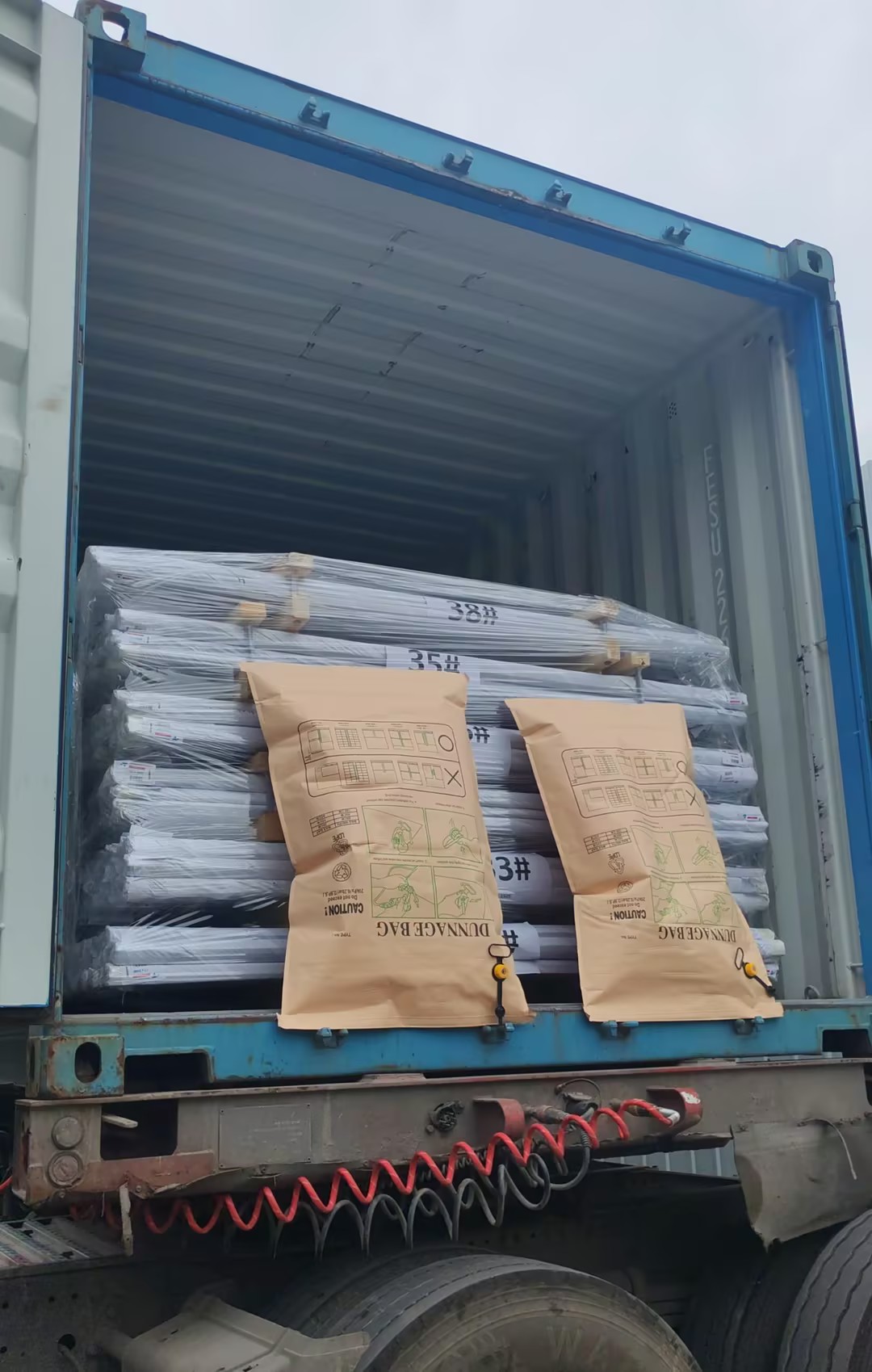
For buyers moving from decision to execution, the operational terms behind the documentation are equally relevant. The Hex Bolt 7337 minimum order quantity is 5,000 pieces. Delivery can be arranged under EXW, FOB, CIF, or DDP terms. Acceptance supports factory pre-inspection, customer on-site inspection, and SGS third-party acceptance with complete quality documents provided. Payment accepts a 30% deposit with balance before shipment, full advance payment, letter of credit, or bank transfer, with flexible terms available for long-term customers.
On the relationship side, HEBEI YUETONG FASTENERS MANUFACTURING CO.,LTD has established long-term and stable partnerships with major distributors worldwide, selling directly to them rather than through layered intermediaries, and brings over a decade of experience in fastener exports. For distributors evaluating a long-term partner, that direct model matters: it changes margin structure, response time on technical questions, and the consistency of the documentation pack across repeat orders.
Future Outlook
Two forces are likely to shape how compliance files are used over the next procurement cycles. The first is the normalisation of system certification as a baseline rather than a differentiator. As more buyers in petrochemical, steel structure, and infrastructure supply chains build certification checks into their standard qualification templates, an incomplete file will increasingly act as an automatic exclusion rather than a scoring penalty.
The second is the growing demand for product-level, standard-referenced evidence. General statements of quality are becoming less persuasive than attestations tied to named standards, because they can be independently checked. Suppliers who hold both layers — a specific attestation such as ECM No. 3N230331.HYFUC49 plus valid ISO 9001:2015 and IATF 16949:2016 certificates — are positioned to answer the question buyers will keep asking: not whether the bolt meets specification, but whether the supplier can prove it, repeatedly, over the life of the programme.
FAQ
Which standards and certifications apply to Hex Bolt 7337?
Hex Bolt 7337 is covered by an ECM Type-Approved Attestation, No. 3N230331.HYFUC49, referencing EN ISO 10683:2018 for non-electrolytically applied zinc flake coating and EN ISO 16047:2005+A1:2 for torque/clamp force testing. At the system level, the producing organisation holds ISO 9001:2015 valid until 2027-09-13 and IATF 16949:2016 under certificate number 2600920/R0M.
What does the ECM attestation allow a specifier to claim in a regulated project?
It allows the specifier to state that the hex bolt type has been independently assessed against the named European standards for coating and tightening characteristics. The claim is limited to the product type and standard combination identified in the attestation, and should not be extended to other sizes, grades, or coatings unless those are covered by separate documentation.
How does IATF 16949:2016 affect qualification for regulated supply chains?
IATF 16949:2016 is the automotive quality management system standard and imposes automotive-specific discipline on top of ISO 9001, including requirements around traceability, change control, and defect prevention. Its presence, under certificate 2600920/R0M, indicates that the organisation's management system meets automotive-grade expectations, which supports qualification in regulated and mobility-adjacent supply chains.
What supports long-term and distributor relationships over repeated orders?
HEBEI YUETONG FASTENERS MANUFACTURING CO.,LTD has over a decade of experience in fastener exports and has established long-term and stable partnerships with major distributors worldwide, selling directly to them. This direct model removes intermediary layers, which affects margin structure and the consistency of the supporting documentation across repeat orders.
Can hex bolts loosen over time under vibration?
Proper bolt selection and installation can significantly reduce the risk of self-loosening. Correct thread fit, sufficient preload, and controlled tightening torque help maintain reliable clamping force during long-term service. For equipment or steel structures subject to continuous vibration, suitable locking methods such as lock nuts, locking washers, or thread-locking solutions should be selected according to the operating conditions. High-frequency vibration, excessive installation torque, and long-term heavy-load tension are the conditions most likely to cause thread stripping, deformation, or fracture.
What are the minimum order, delivery, and acceptance terms for hex bolt supply?
The minimum order quantity is 5,000 pieces. Delivery can be arranged under EXW, FOB, CIF, or DDP terms. Acceptance supports factory pre-inspection, customer on-site inspection, and SGS third-party acceptance, with complete quality documents provided. Payment accepts a 30% deposit with balance before shipment, full advance payment, letter of credit, or bank transfer, and long-term customers may be offered flexible payment terms.
Reference note. This article is an independent industry reference on fastener compliance documentation and is intended for specifiers, procurement managers, and distributors evaluating carbon steel hex bolt supply. Product-level and system-level claims should always be checked against the current certificate and attestation documents held by the supplier.
For the full product and capability overview, see the YUETONG FASTENER company brochure.