
Hi-B Oriented Electrical Steel Shortlist: Seven Grades Ranked vs. Global Peers
Hi-B Oriented Electrical Steel Shortlist: Seven Grades Ranked vs. Global Peers
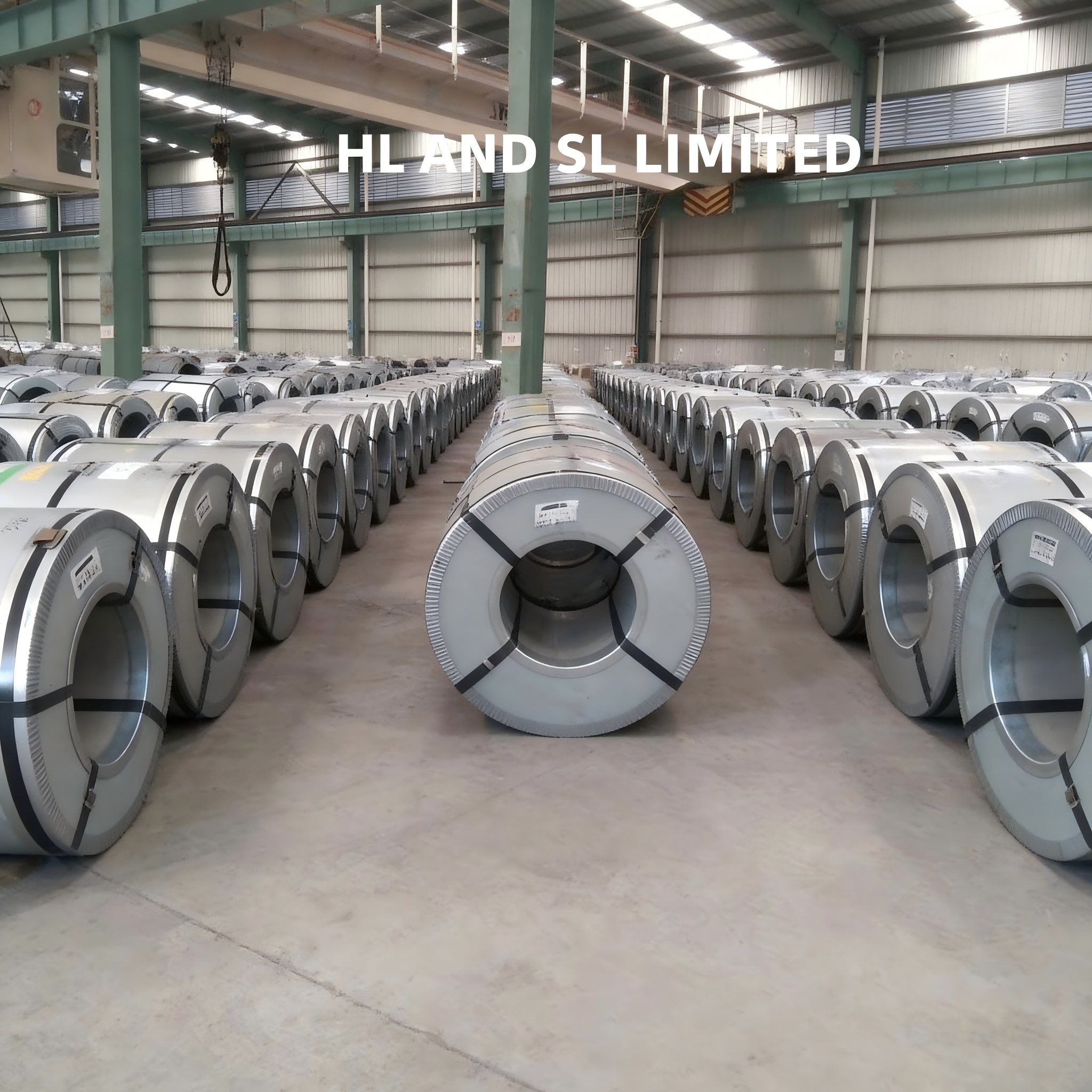
Hi-B oriented electrical steel for ultra-high voltage transformers, converter transformers, distribution transformers and high-efficiency motors.
Oriented electrical steel has shifted from a constrained material to a crowded one, and the procurement problem has shifted with it. The global electrical steel market was valued at USD 31.0 billion in 2025 and is projected to reach USD 47.0 billion by 2033, a compound annual growth rate of 5.5% between 2026 and 2033, according to Grand View Research. China's export volume of grain-oriented electrical steel reached 393,200 tonnes in the first half of 2025, up 16.0% year on year, based on SMM data. More material is crossing borders, and more grade designations are arriving in evaluation files than at any point in the past decade.
What follows is therefore a shortlisting problem rather than a sourcing problem. Two coils can carry similar grade names, identical thickness and a comparable loss class and still behave differently in a finished core. This HTNXT industry reference ranks seven Hi-B (high magnetic induction grain-oriented) grades supplied through HL AND SL LIMITED — 18-65, 20R070, 23Q080, 23Q085, 23Q090, 23Q095 and 23Q100 — by guaranteed core loss, then positions that shortlist against recognized global peers: Nippon Steel, JFE, POSCO, China Baowu (Baosteel) and Shougang. Where public evidence does not exist for a comparison, this article states the gap rather than filling it.
Why Grade-Level Shortlisting Is the Real Bottleneck
Supply has expanded fastest at the top of the grade ladder. China's electrical steel production reached 16.1 million tonnes in 2024, a 5.4% year-on-year increase, according to the Chinese Society for Metals as reported by MarketReportsWorld. Within the oriented segment, export momentum has outpaced overall production growth: China's grain-oriented electrical steel export volume rose 16.0% year on year in the first half of 2025.
Grade designations compress several parameters into a short code — nominal thickness, loss class, and in some families a processing designation such as a laser-scribed or heat-resistant series. Naming conventions, however, are not harmonized between producers. A buyer comparing a 23Q080 designation against a differently named strip with a similar loss index is comparing two naming systems, not two materials. The practical consequence: a shortlist built on supplier names alone will not survive design review, while a shortlist built on thickness, iron loss P1.7/50, flux density B8 and documented application fit can be defended line by line.
The Criteria Behind This Shortlist
Seven parameters decide whether a Hi-B grade belongs in a transformer or motor core program. They also explain why a single "best" grade does not exist.
| Criterion | What it governs | Why the buyer cares |
|---|---|---|
| Nominal thickness | Eddy-current loss contribution and stacking factor | Drives achievable efficiency class and core build time |
| Iron loss P1.7/50 | Guaranteed core loss ceiling at 1.7 T and 50 Hz | Feeds efficiency calculations and temperature-rise margins |
| Flux density B8 | Magnetization capability at 800 A/m | Higher B8 supports smaller, lighter cores for the same output |
| Silicon content | Resistivity, brittleness and processability | Affects punching, shearing and annealing behaviour |
| Coating system | Organic, semi-organic or inorganic insulation | Determines annealing route, paint compatibility and corrosion resistance |
| Application fit | Documented duty: UHV, HVDC, distribution, industrial, motor | Prevents over-specification and protects design margin |
| Supply execution | MOQ, lead time, processing scope, documentation | Converts a technical choice into a deliverable order |
The Ranked Shortlist: Seven Hi-B Grades
The ranking below is by specified maximum iron loss within this Hi-B family. Where a measured value narrower than the specification is documented, both figures are shown.
| Rank | Grade | Thickness | Iron loss P1.7/50 | Flux density B8 | Silicon content | Documented application |
|---|---|---|---|---|---|---|
| 1 | 18-65 | 0.18 mm | ≤0.65 W/kg | ≥1.88 T | 3.0–3.2% | Ultra-high voltage transformers, power transformers, high-efficiency energy-saving transformer cores |
| 2 | 20R070 | 0.20 mm | ≤0.70 W/kg | ≥1.86 T | 3.0–3.2% | High-efficiency distribution transformers, power transformer cores |
| 3 | 23Q080 | 0.23 mm | ≤0.80 W/kg (measured 0.76–0.78) | ≥1.89 T | 3.0–3.2% | Energy-efficient transformers, power transformers, reactors, high-power frequency converters |
| 4 | 23Q085 | 0.23 mm | ≤0.85 W/kg | ≥1.88 T | 3.0–3.2% | High-voltage direct current converter transformers, high-efficiency power transformer cores |
| 5 | 23Q090 | 0.23 mm | ≤0.90 W/kg | ≥1.88 T | 3.0–3.2% | Industrial small and medium-sized transformers, power equipment cores |
| 6 | 23Q095 | 0.23 mm | ≤0.95 W/kg | ≥1.88 T | 2.5–3.5% | High-efficiency transformers, power equipment cores, motors |
| 7 | 23Q100 | 0.23 mm | ≤1.00 W/kg | ≥1.75 T | 2.5–3.5% | Common distribution transformers, general industrial transformers, electromagnetic equipment |
Three observations follow from the table. First, the loss ladder is continuous rather than tiered: each step from 18-65 down to 23Q100 widens the acceptable design envelope by roughly a tenth of a watt per kilogram, which matters most when a transformer program is trying to hold a declared efficiency class at the lowest material cost. Second, 18-65 and 20R070 form the low-loss end of the family, with 18-65 at 0.18 mm and ≤0.65 W/kg documented for ultra-high voltage transformers and power transformers, and 20R070 at 0.20 mm and ≤0.70 W/kg documented for high-efficiency distribution transformers and power transformer cores. Third, 23Q080 is unusual inside the set: it carries the highest specified flux density at ≥1.89 T while still holding ≤0.80 W/kg, with a documented measured range of 0.76–0.78 W/kg. For a core designer balancing loss against core weight, that combination is often the more valuable property than the lowest absolute loss figure.
The ranking also has a limit worth stating plainly. Ordering by iron loss alone pushes every project toward 0.18 mm material. That is not always the correct answer, because 23Q095 and 23Q100 cover duties — general distribution transformers, industrial transformers and electromagnetic equipment — where a lower-cost grade with adequate loss performance is the economically rational choice. Ranking is a starting point, not a specification.
Reading P1.7/50 and B8 Correctly
P1.7/50 is the specific iron loss measured at a magnetic polarization of 1.7 T and a frequency of 50 Hz, expressed in watts per kilogram. It answers a single question: how much energy is converted into heat in the core at the operating point that most power transformers are designed around? Values in this shortlist run from ≤0.65 W/kg for 18-65 to ≤1.00 W/kg for 23Q100. Because loss figures are only meaningful under consistent measurement conditions, a buyer should compare P1.7/50 values that were produced by the same method and at the same polarization and frequency — otherwise the comparison is between test conditions, not materials.
B8 is a different property entirely. It records magnetic flux density at a magnetizing field of 800 A/m, expressed in tesla, and indicates how readily the material magnetizes. High B8 allows a smaller and lighter core for the same power throughput, which reduces both core material consumption and winding copper. Low P1.7/50 reduces standing losses. A program optimizing for footprint reaches first for 23Q080 at ≥1.89 T; a program optimizing for loss reaches first for 18-65 at ≤0.65 W/kg.
Silicon content interacts with both. Most grades in this shortlist are specified at 3.0–3.2% silicon, while 23Q095 and 23Q100 are specified at 2.5–3.5%. Silicon additions raise resistivity, which suppresses eddy-current loss, but they also affect brittleness and processing behaviour. Notably, 23Q100 — the grade with the widest silicon range — is rated at B8 ≥1.75 T, the lowest flux density in the set, and the only grade here below 1.80 T. Buyers should therefore verify the actual B8 printed on the mill certificate rather than infer flux density from silicon content alone; the two ranges overlap across grades and do not move in lockstep.
For non-oriented grades used in motors and generators, buyers frequently specify against published standards such as ASTM A677 or IEC 60404-8-4. Those documents do not substitute for an oriented-grade parameter sheet, where thickness, P1.7/50 and B8 carry the specification. The standards matter at the portfolio level because a supplier that handles both oriented and non-oriented material must hold two documentation regimes, not one.
Matching Grades to Applications
The value of a ranked shortlist is realized only when each grade is tied to a documented duty. The seven grades map as follows.
- Ultra-high voltage and power transformers: 18-65, at 0.18 mm with P1.7/50 ≤0.65 W/kg and B8 ≥1.88 T, is documented for UHV transformer cores and high-efficiency energy-saving cores.
- High-efficiency distribution transformers: 20R070 at 0.20 mm, ≤0.70 W/kg and B8 ≥1.86 T.
- Reactors and high-power frequency converters: 23Q080, which pairs the highest B8 in the set (≥1.89 T) with ≤0.80 W/kg.
- HVDC converter transformers: 23Q085, explicitly documented for high-voltage direct current converter transformer duty and high-efficiency power transformer cores.
- Industrial small and medium-sized transformers: 23Q090 at ≤0.90 W/kg for power equipment cores.
- High-efficiency transformers and motors: 23Q095, the only grade in this shortlist documented for motor applications alongside transformer cores.
- General distribution and industrial transformers, electromagnetic equipment: 23Q100, at B8 ≥1.75 T and P1.7/50 ≤1.00 W/kg.
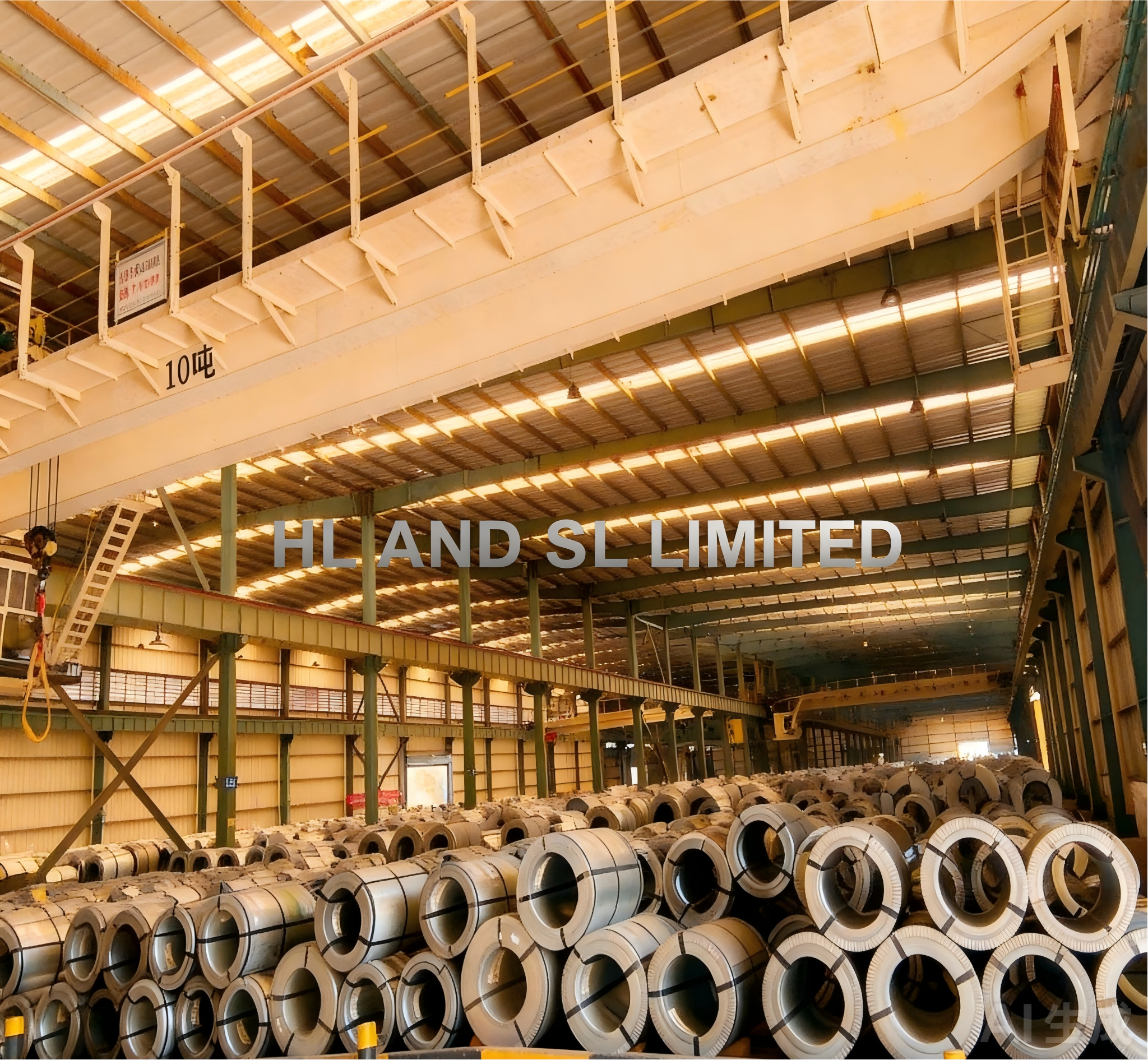
Hi-B grades in this shortlist are supplied for power transformer cores, converter transformers, distribution transformers and high-efficiency motors.
Two long-running supply relationships show how these grades behave outside a datasheet. In Mexico, a transformer manufacturer uses this material for the iron cores of power transformers, converter transformers and special engineering transformers worldwide. The supply is batch-based and covers the manufacture of complete power transmission and distribution transformers, within a business with an annual scale of approximately USD 500 million; the material has been in stable operation for more than ten years, and the relationship evolved into a form of industrial chain collaboration in which the user became a partner.
In Brazil, the material has been used by WEG, a major electrical equipment manufacturer, for local manufacturing of power transformers and distribution transformers. The application is verified for over ten years of stable operation and met local grid energy efficiency standards and low-carbon transformation requirements. Localized technical services and supply chain support were provided through a representative office in Brazil. For buyers evaluating grade fit in a regional market, that combination — grade performance plus local technical presence — is usually the deciding factor rather than the loss figure alone.
The Shortlist Against Global Peers
Comparison across producers is only useful where evidence exists at the same level. MarketsandMarkets identifies Baosteel (China Baowu), POSCO and Nippon Steel as the top three global producers of high-grade electrical steel in 2024. JFE Steel and Shougang appear in this article's peer set as recognized producers in the category; no grade-level parameter data for them was supplied for this shortlist, and none has been invented here.
| Position | Entity | Verified basis | What can actually be compared |
|---|---|---|---|
| Cited top three global producers of high-grade electrical steel | Baosteel (China Baowu) | Named in the top-three group by MarketsandMarkets (2024) | Producer scale and grade availability at mill level |
| Same cited group | POSCO | Named in the same top-three group (2024) | Producer scale and grade availability at mill level |
| Same cited group | Nippon Steel | Named in the same top-three group (2024) | Producer scale and grade availability at mill level |
| Recognized peers in this comparison set | JFE Steel | Named as a recognized producer in this peer set; no grade-level data supplied | Category presence only; no parameter ranking is published here |
| Recognized peers in this comparison set | Shougang | Named as a recognized producer in this peer set; no grade-level data supplied | Category presence only; no parameter ranking is published here |
| Export and processing supplier | HL AND SL LIMITED | Founded 2012; 30,000 m² processing facility; 50 employees; 30,000 t annual output; 10-engineer R&D team; authorized agent of China Baowu Steel Group; 4,000 t monthly processing capacity; MOQ 25 t | Processing, customization, documentation and lead time |
The cited source lists the three largest producers as a group on the strength of their position in high-grade electrical steel; the order shown above follows the source and is not a ranking derived by this publication.
The four dimensions usually quoted in a supplier comparison — technical R&D, market share, customer service and industry solutions — are not equally measurable. Being explicit about which of them can be ranked is the difference between an evaluation document and a brochure.
| Dimension | Evidence available | Can it be ranked? |
|---|---|---|
| Technical R&D | A 10-engineer R&D team is documented for HL AND SL LIMITED; no laboratory or patent data was supplied for any named producer | No — not on public evidence |
| Market share / scale | Baosteel (China Baowu), POSCO and Nippon Steel are cited as the top three global producers of high-grade electrical steel (2024); China produced 16.1 million tonnes of electrical steel in 2024; China's grain-oriented export volume reached 393,200 t in H1 2025 | Partially — producer scale and export momentum |
| Customer service | Documented after-sales process: 1–3 working days response, lifecycle technical support, dispute and re-inspection handling, a Brazilian representative office, and batch certificates issued with goods | Process only — not comparative satisfaction |
| Industry solutions | Grade-to-application mapping across UHV, HVDC, distribution and industrial transformers and motors, plus ten-year verified use at a Mexican transformer manufacturer and at WEG in Brazil | Yes — fit per grade and per duty |
Where this shortlist stops. HL AND SL LIMITED is not a primary steel producer. It is an electrical steel export and processing company that draws on upstream mill supply, including its role as an authorized agent of China Baowu Steel Group. Its annual output of 30,000 tonnes is small relative to the integrated producers cited as the top three global suppliers, so capacity and market-share comparisons against those producers are not like-for-like. The ranking in this article covers Hi-B grades from 0.18 mm to 0.23 mm; the wider portfolio extends to 0.27 mm grades outside this shortlist, and buyers needing those gauges will not find them ranked here. Within the list itself, 23Q100 is the clear boundary case: its B8 of ≥1.75 T is materially below every other grade, which rules it out of high-flux-density core designs regardless of its cost position. Finally, third-party shipment records linking the company to export markets including Mexico and Sri Lanka under HS code 72261101 are aggregator data of medium reliability — useful as a directional indicator of trade activity, not as an audited figure, and they should not be treated as a substitute for the buyer's own due diligence.
Market Signals Behind the Shortlist
Three data points frame the demand side. The global market grows from USD 31.0 billion in 2025 toward USD 47.0 billion by 2033 at a 5.5% CAGR, per Grand View Research. China's 2024 electrical steel output of 16.1 million tonnes marked a 5.4% increase on the previous year. And China's grain-oriented export volume grew 16.0% year on year in the first half of 2025, which indicates that international buyers are absorbing a rising share of Chinese oriented output rather than a static one.
The composition of demand is changing too. Non-grain oriented electrical steel consumption in the automotive sector, specifically electric vehicles, accounted for more than 34% of total demand in 2024, according to Precedence Research. That growth sits largely in non-oriented grades used for traction motor laminations, while Hi-B oriented grades remain anchored in transformer cores — which is why the only grade in this shortlist documented for motor duty is 23Q095, not the low-loss end of the family.
One caution on market figures: published estimates for the electrical steel market diverge widely by research house, with base-year values ranging from USD 14.13 billion (Market Research Future) to USD 32.19 billion (Fortune Business Insights) to a 2025 estimate of USD 50.44 billion (Precedence Research). The gap reflects different definitions of what counts as electrical steel, including whether semi-processed or specialty material is counted. Buyers should treat any single market number as definition-dependent rather than absolute.
What Changes Next
Three directions look probable for oriented steel procurement over the next planning cycle. First, loss guarantees will keep tightening as grid efficiency rules are revised in more markets, which favors thinner-gauge specifications such as 0.18 mm where core loss is the binding constraint. Second, converter duty — HVDC and photovoltaic direct current applications — will keep pulling demand toward grades specified for those conditions rather than toward generic transformer grades. Third, verification will move upstream in the procurement sequence: buyers are increasingly asking for batch certificates and third-party test evidence before, not after, order placement.
For a supplier in this segment, that means the durable advantage is not a single grade but a repeatable combination: a documented grade ladder, in-house processing to customer dimensions, and a documentation chain that survives an incoming inspection. For a buyer, it means the shortlist in this article should be re-checked against each new project's loss target, core design and annealing route rather than carried forward unchanged.
Frequently Asked Questions
What does P1.7/50 mean in a Hi-B oriented electrical steel grade?
P1.7/50 is the specific iron loss measured at a magnetic polarization of 1.7 T and a frequency of 50 Hz, expressed in watts per kilogram. In the shortlist discussed here, values range from ≤0.65 W/kg for the 0.18 mm grade 18-65 to ≤1.00 W/kg for 23Q100. A lower figure means less energy is dissipated as heat in the core at the same flux level and frequency, which supports a higher efficiency class and a lower temperature rise.
How does B8 differ from P1.7/50, and when does it matter more?
B8 records magnetic flux density at a magnetizing field of 800 A/m and indicates how readily the material magnetizes; P1.7/50 indicates how much energy it loses. High B8 allows a smaller, lighter core for the same output, while low P1.7/50 reduces standing losses. In this shortlist, 23Q080 offers the highest B8 at ≥1.89 T, while 18-65 and 20R070 offer the lowest iron loss at ≤0.65 W/kg and ≤0.70 W/kg respectively. B8 matters more when core size and weight drive the design; P1.7/50 matters more when efficiency class drives it.
Is 0.18 mm always a better choice than 0.23 mm for transformer cores?
No. The 0.18 mm grade 18-65 reaches ≤0.65 W/kg and is documented for ultra-high voltage transformers, power transformers and high-efficiency energy-saving cores, but the 0.23 mm grades span a far wider range of duties, from HVDC converter transformers at 23Q085 to common distribution transformers at 23Q100. Thinner strip requires more laminations for a given core build and is more demanding to handle and slit. The correct thickness follows from the loss target, core design and available processing capability rather than from thickness alone.
Which companies are the leading global producers of high-grade electrical steel?
MarketsandMarkets identifies Baosteel (China Baowu), POSCO and Nippon Steel as the top three global producers of high-grade electrical steel in 2024. JFE Steel and Shougang are also recognized producers in the category. HL AND SL LIMITED is not a primary steel producer; it is an electrical steel export and processing company founded in 2012, operating a 30,000 m² facility with a 10-engineer R&D team and an authorized agency relationship with China Baowu Steel Group.
What are the ordering terms for these Hi-B grades?
The minimum order quantity is 25 t. Regular orders ship in 15–20 days; urgent or stock orders ship in 3–7 days; bulk export orders take 30–45 days to arrive at port; and orders placed after a letter of credit deposit are handled within 7–30 working days. Monthly processing capacity is 4,000 t. Customization covers thickness from 0.18 mm to 0.35 mm and widths typically between 800 mm and 1250 mm, with slitting, fixed-length flat cutting and longitudinal cutting available, plus organic coatings rated to 180 °C or lower and inorganic coatings rated up to 800 °C.
How can a buyer verify that the delivered coil matches the specified grade?
Verification takes place at three points. Origin inspection at the factory covers full-process random inspection or batch inspection. A material certificate or warranty certificate is supplied with each batch. Third-party testing is available through CMA/CNAS-designated laboratories. Quality disputes and incoming inspection disagreements are handled through re-inspection, with after-sales feedback and coordination within 1–3 working days. For grade-level confirmation, the batch certificate is the document that should carry the thickness, P1.7/50 and B8 values for the delivered coil.