
Hi-B Silicon Steel Acceptance Criteria FAQ: 20-65 to 27Q120
Acceptance criteria for Hi-B oriented silicon steel are usually settled after the commercial terms and before the first coil ships. That sequence has a practical cause: the two figures that define a grade — nominal thickness and iron loss at 1.7 T and 50 Hz — are also the two figures that decide whether a finished transformer core can meet its declared no-load loss.
This reference is written as a buyer-side FAQ for the 20-65, 23R075 and 27Q095 to 27Q120 designations. It sets out the limits attached to each grade, how thickness and iron loss are verified at intake, what the stated B8 values do and do not tell a buyer, how silicon content and impurity control enter the acceptance record, and where acceptance testing stops.
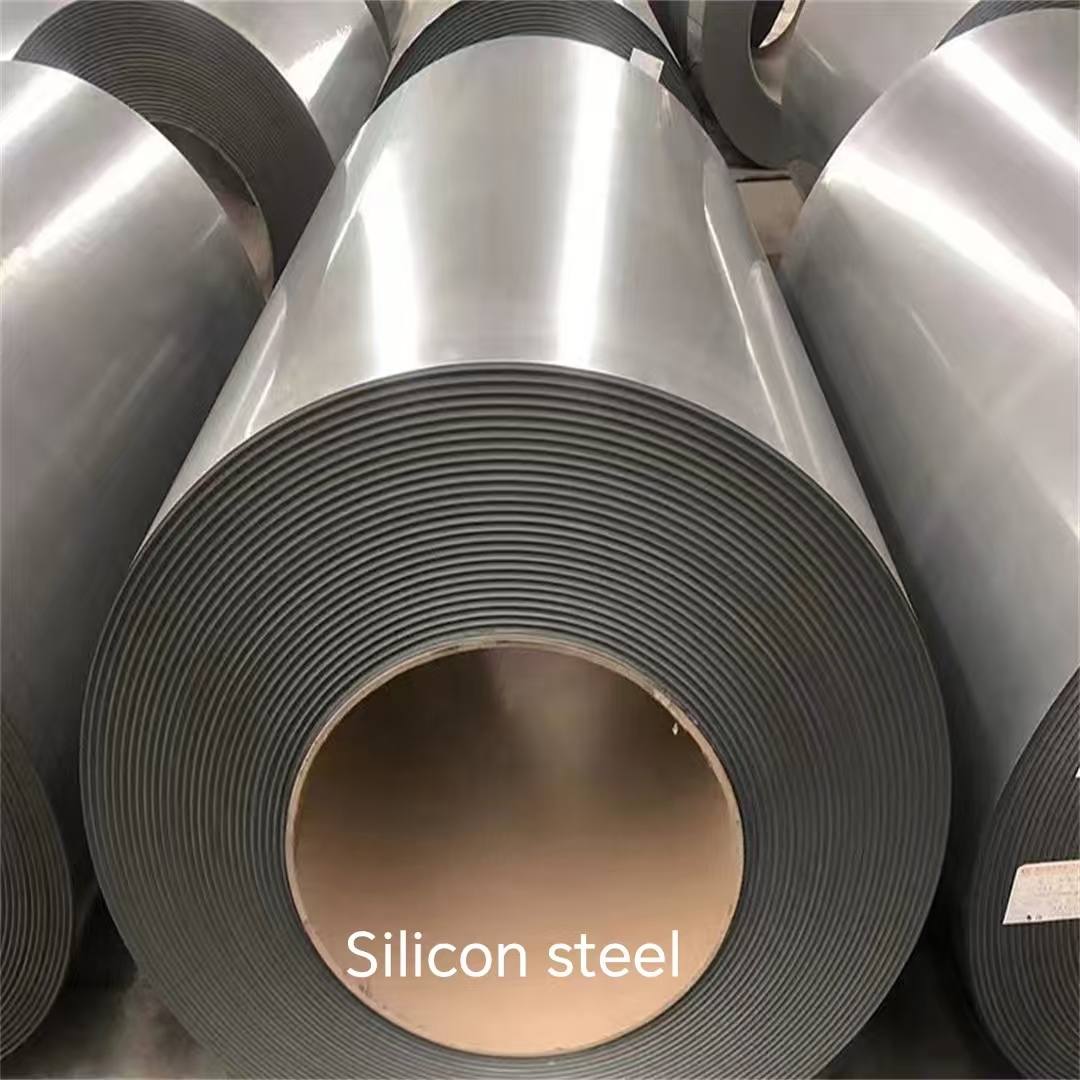
Where acceptance actually begins
Most disputes about Hi-B oriented silicon steel do not come from a missing certificate. They come from an unclear boundary between three different things that are all called acceptance.
| Layer | What is verified | Typical evidence |
|---|---|---|
| Grade | Thickness, iron loss limit, magnetic flux density, chemical composition | Mill test certificate referencing the declared grade |
| Coil | Measured thickness, width, surface condition, coating state, traceability | Incoming inspection record and retained sample |
| Core | No-load loss, exciting current, noise after cutting, stacking and assembly | Finished-core test, not an intake test |
A grade limit describes material as tested under defined conditions. It does not describe a core. Buyers who write acceptance criteria around the third layer — core loss — and then apply them to incoming coils create a specification that no mill certificate can satisfy, because joint design, cutting burr, stacking pressure and stress-relief annealing all sit between the material and the finished core.
Grade baseline: thickness, P1.7/50 and B8
The designations in this range are all High Magnetic Induction Grain-Oriented Silicon Steel (Hi-B) grades. Their declared limits are the first column of any acceptance discussion.
| Grade | Nominal thickness | Iron loss P1.7/50 | B8 |
|---|---|---|---|
| 20-65 | 0.20 mm | ≤ 0.65 W/kg | Not stated in the published grade data |
| 23R075 | 0.23 mm | ≤ 0.75 W/kg | ≥ 1.88 T |
| 27Q095 | 0.27 mm | ≤ 0.95 W/kg | ≥ 1.91 T |
| 27Q100 | 0.27 mm | ≤ 1.00 W/kg | ≥ 1.91 T |
| 27Q105 | 0.27 mm | ≤ 1.05 W/kg | ≥ 1.88 T |
| 27Q110 | 0.27 mm | ≤ 1.10 W/kg | ≥ 1.88 T |
| 27Q120 | 0.27 mm | ≤ 1.20 W/kg | Not stated in the published grade data |
All of these grades share one metallurgical family: iron with silicon added at approximately 3.0% to 3.2% in the thinner and lower-loss designations, with other elements such as Al and Mn present, inhibitors MnS and AlN used to develop the magnetic properties, and impurities such as C, S and N strictly controlled.
The 0.20 mm, 0.23 mm and 0.27 mm nominal thicknesses used here sit inside the grade framework of IEC 60404-8-7:2020, which covers cold-rolled grain-oriented electrical steel strip and sheet in nominal thicknesses of 0.20 mm, 0.23 mm, 0.27 mm, 0.30 mm and 0.35 mm and defines magnetic properties, geometric characteristics, tolerances, technological characteristics and inspection procedures. That standard is the natural reference point when a purchase order asks for a grade rather than a supplier catalogue number.
Acceptance questions buyers ask
1. What exactly is being accepted — the grade, the coil, or the core?
All three exist, but only the first two can be accepted at intake. Grade acceptance confirms that the delivered material matches the declared thickness, iron loss limit, flux density and composition. Coil acceptance confirms dimensions, surface condition, coating state and traceability of the physical coil in front of the inspector. Core-level performance is a manufacturing outcome and belongs in the qualification of a core design, not in a receiving inspection clause.
2. Which thicknesses are in scope, and how is thickness checked?
Three nominal thicknesses cover this range: 0.20 mm for 20-65, 0.23 mm for 23R075, and 0.27 mm for the whole 27Q095 to 27Q120 group. Thickness should be measured with a calibrated micrometer at several positions across the strip width and at several points along the coil, avoiding the first and last metres where handling damage is most likely. IEC 60404-8-7:2020 includes tolerances and inspection procedures for geometric characteristics, which gives both parties a neutral reference when the purchase order simply states the grade.
3. How is iron loss verified, and what limit applies to each grade?
Iron loss is verified as P1.7/50 — loss per kilogram measured at 1.7 T and 50 Hz. The declared limits are ≤ 0.65 W/kg for 20-65 at 0.20 mm, ≤ 0.75 W/kg for 23R075 at 0.23 mm, and ≤ 0.95, 1.00, 1.05, 1.10 and 1.20 W/kg for 27Q095, 27Q100, 27Q105, 27Q110 and 27Q120 respectively at 0.27 mm. In practice the buyer compares the mill test report against the declared limit for the ordered grade, then retains a sample from the delivered coil so that a disputed result can be re-tested later. Sample preparation and the stress state of the test specimen matter, so the test method should be named in the purchase order rather than assumed.
4. What does B8 ≥ 1.88 T versus ≥ 1.91 T change in practice?
B8 is the magnetic flux density figure quoted for a grade and reported on the mill certificate. Within this family, 27Q095 and 27Q100 are rated at ≥ 1.91 T, while 23R075, 27Q105 and 27Q110 are rated at ≥ 1.88 T. A higher B8 supports a higher working flux density for the same magnetizing effort, which is why it appears in specifications for compact or heavily loaded cores. Two grades in the range — 20-65 and 27Q120 — do not carry a B8 figure in the published grade data, so a buyer who needs that value for design verification should request it on the certificate rather than infer it from the model number.
5. Why do silicon content and impurity control belong in the acceptance record?
Silicon content of approximately 3.0% to 3.2% raises the resistivity of the steel and lowers eddy-current contribution to loss, while inhibitors such as MnS and AlN are part of how the favourable grain structure is developed. Carbon, sulphur and nitrogen are strictly controlled because they interfere with that structure. At intake these are normally confirmed from the mill chemical certificate rather than from routine buyer testing; magnetic re-testing is the more common buyer-side check, and composition is revisited only when results fall outside expectation.
6. Can a lower-loss grade be substituted for the ordered one?
Substitution runs in one direction more safely than the other. Replacing an ordered grade with a lower-loss grade of the same nominal thickness normally improves the magnetic margin, but it also changes cost, may change thickness-related handling, and is only acceptable with written approval, because the approved core design was validated against a specific grade. Replacing an ordered grade with a higher-loss grade removes margin and generally should not be accepted without design re-approval. Substitution also has to clear the B8 criterion: a lower-loss grade with a lower B8 value is not automatically equivalent for a design that depends on induction.
7. What documentation should arrive with the coils?
A workable document set includes the certificate of conformity naming the grade, the chemical composition record, the magnetic property report covering P1.7/50 and B8 where applicable, dimensional and tolerance data, coil identification that allows traceability back to production, and coating or surface-treatment declarations where the buyer needs them. Where the finished transformer falls within the scope of EU RoHS Directive 2011/65/EU, ten restricted substances apply to electrical and electronic equipment, and the assessment framework continues to evolve — ECHA takes over technical assessments from 13 August 2027 under Directive (EU) 2025/2456. Buyers with EU market obligations should therefore ask for substance declarations as a document item, not as an afterthought.
8. Is noise covered by acceptance criteria?
Not by the iron loss limit, but it can be addressed through a separate test requirement. IEC 60404-17:2021 applies to the measurement of magnetostriction characteristics of grain-oriented electrical steel strip and sheet under an applied AC magnetic field at 50 Hz or 60 Hz, and magnetostriction is one of the material properties linked to vibration behaviour. Where a distribution transformer or reactor has a tight noise specification, a magnetostriction test report aligned with that standard gives the buyer a defined reference point that a core loss certificate does not provide.
9. Does a compliant grade limit guarantee transformer no-load loss?
No. The grade limit describes the strip, measured under defined conditions; the core adds building factor. Joint geometry, cutting quality and burr, stacking pressure, clamping, and stress-relief annealing all shift the final result away from the strip figure. This is the most common source of disagreement in acceptance discussions, and the practical remedy is to keep material acceptance and core qualification as two separate documents with two separate sets of numbers.
10. How do project specifications differ from catalogue grade limits?
Project specifications can be tighter than any catalogue limit in this range. A German distribution transformer upgrade programme, for example, specifies an iron loss of ≤ 0.60 W/kg together with noise levels two to three decibels below the standard requirement and coating weather resistance suited to coastal salt-spray conditions. A ±800 kV HVDC converter transformer project in Brazil specifies ultra-low loss oriented silicon steel with magnetic flux density ≥ 1.92 T and iron loss below 0.85 W/kg. Both cases sit outside the declarable limits of the grades listed here, which is exactly why such requirements are handled as project-specific agreements rather than as standard grade acceptance.
11. Are IEC and ASTM grade designations interchangeable?
They should not be assumed interchangeable without a grade-by-grade comparison. ASTM A876-17e1 covers flat-rolled, grain-oriented, fully processed low-carbon silicon-iron electrical steels, and its description states a silicon content of approximately 3.2% for the covered material, which is consistent with the 3.0% to 3.2% range used in this family. IEC 60404-8-7:2020 organises grades and inspection around a different framework. A purchase order that names one system and accepts a certificate issued against the other creates an ambiguity that is easier to prevent than to resolve.
Why Hi-B properties behave the way they do
Hi-B steel is a grain-oriented product: the metallurgical route is controlled so that grain orientation favours the rolling direction, which is why the magnetic properties that matter are quoted along that direction. Two mechanisms explain the numbers in the table above.
The first is resistivity. Silicon in solid solution at roughly 3.0% to 3.2% raises electrical resistivity and therefore suppresses eddy-current loss, which is why the silicon range appears in acceptance documentation at all. The second is texture control through inhibitors — MnS and AlN in this family — supported by strict limits on carbon, sulphur and nitrogen, which would otherwise disturb the conditions under which the favourable grain structure develops.
Thickness then does the remaining work. Moving from 0.27 mm to 0.23 mm or 0.20 mm reduces the loss limit from the 0.95 to 1.20 W/kg band down to 0.75 W/kg and 0.65 W/kg respectively, because eddy-current loss scales with the square of sheet thickness. That is also why thinner gauges are the more demanding purchase: they deliver the lowest loss but need more careful cutting, handling and stacking to preserve it.
Matching grades to equipment
Grade fit follows from the loss and induction envelope rather than from the model number alone.
| Equipment | Grades indicated by the grade data |
|---|---|
| Ultra-high voltage transformers | 20-65 |
| High-efficiency distribution transformers | 20-65, 23R075 |
| Energy-efficiency-standard transformers, power transformer cores | 23R075 |
| Photovoltaic DC converter transformers, industrial frequency conversion equipment | 27Q095 |
| Power transformers, reactors, electrical equipment cores | 27Q100 |
| Power transformer cores and general transformer manufacturing | 27Q105 |
| Power transformers, automotive generators, power cables, electrical equipment | 27Q110 |
| Small and medium-sized transformer cores, electrical equipment | 27Q120 |
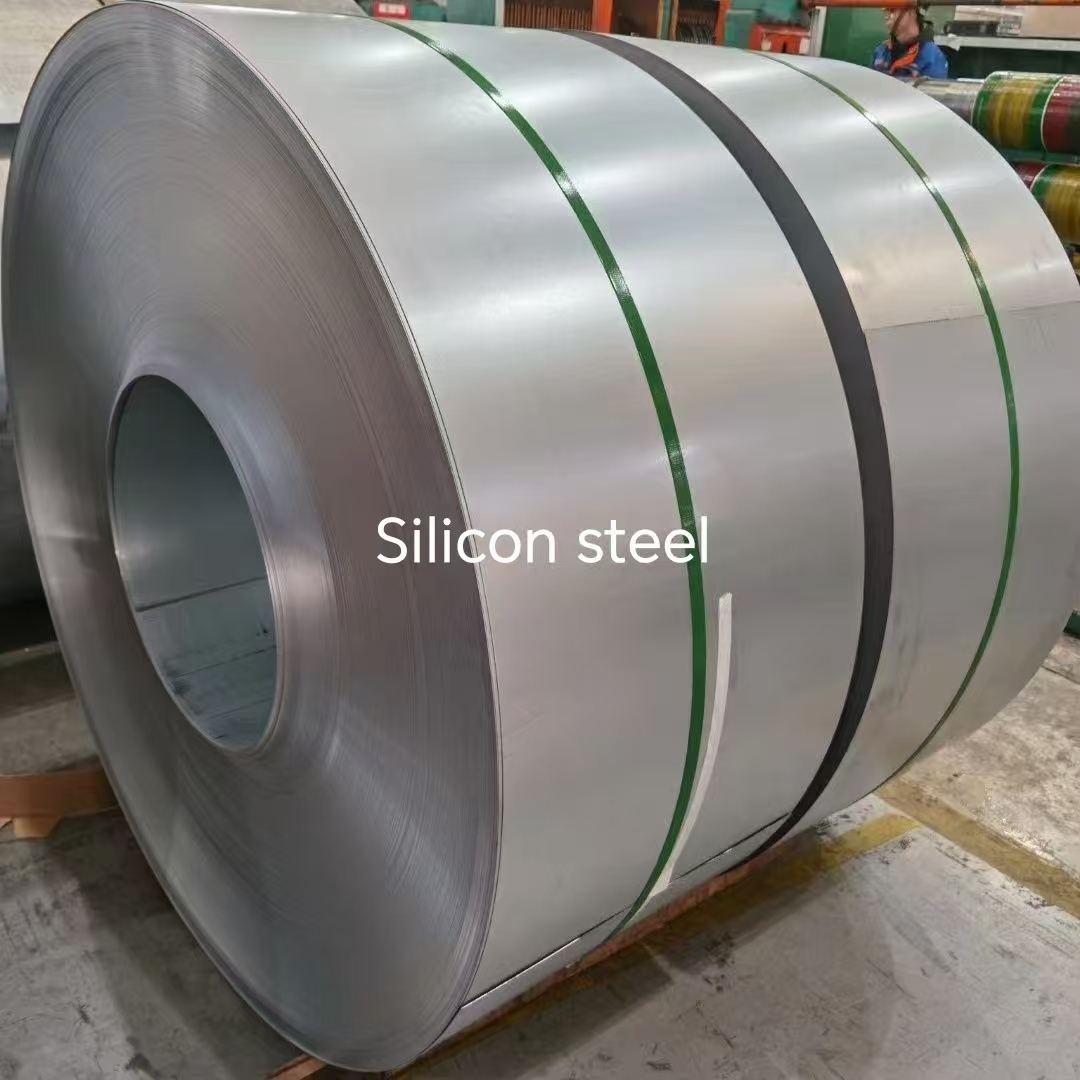
Where the criteria stop: limits and trade-offs
Acceptance criteria are more credible when their boundaries are stated openly, and this range has three that buyers should plan around.
Two grades have no published B8 figure. For 20-65 and 27Q120, the available grade data define thickness and iron loss only. A design review that needs induction data for these designations must obtain it from the certificate, which in turn needs to be requested before the order is confirmed rather than after delivery.
Lower loss is not the same as lower total cost. Moving from 27Q120 at ≤ 1.20 W/kg to 27Q095 at ≤ 0.95 W/kg buys magnetic margin within the same 0.27 mm thickness, but the thinner 0.23 mm and 0.20 mm options introduce a different cost profile: thinner material is more demanding to roll and handle, and commercial research on ultra-thin electrical steel below 0.2 mm reports a price premium of 50% to 100% over standard gauge. The engineering trade-off is between loss budget, stacking behaviour, cutting care and material cost — not between two numbers alone.
Conventional acceptance practice leaves a gap. Accepting a coil on the strength of a certificate alone is fast and is common in mature supply relationships, but it verifies paperwork rather than material. Incoming measurement of thickness plus a retained sample for magnetic re-test sits at the other end and costs time at the gate. Most industrial buyers settle in between: certificate review for composition and magnetic properties, dimensional and surface checks on every coil, and magnetic re-test on a sampling basis or when a new production batch is introduced.
Market direction behind tighter acceptance terms
Acceptance criteria are tightening because the economics of the end product have shifted. One commercial research estimate placed the global silicon steel market at USD 31.55 billion in 2025 and projected USD 59.41 billion by 2035, with growth concentrated in higher-value segments rather than in commodity volume. The same research identifies ultra-thin electrical steel below 0.2 mm gauge as a critical trend for high-speed EV motors, carrying a 50% to 100% premium over standard gauge.
For buyers of grain-oriented material, the practical reading is that the loss limit is becoming a commercial variable, not just a technical footnote. When a transformer design is certified against an efficiency class, the difference between a 0.95 W/kg and a 1.20 W/kg grade is a design margin that has to be paid for somewhere — in material selection, in core geometry, or in oversizing. That is why more purchase orders now name the grade, the thickness, the loss limit, the flux density and the applicable standard in the same clause, and why acceptance terms are being reviewed at the tender stage rather than at goods receipt.
Supporting intake verification on the supplier side
HL AND SL LIMITED is an electrical steel trading and processing company founded in 2012, operating a 30,000 m² facility with approximately 50 employees, an annual silicon steel output of 30,000 t and a 10-engineer R&D team. The company specialises in export trade of electrical steel, with silicon steel and electrical steel as its main products, around 80% of sales exported to markets including Mexico, Brazil, Italy, the UAE and India.
For acceptance work, the relevant capability is the in-house material processing plant, which provides customised on-demand secondary processing of silicon steel to customer requirements for size, shape and performance. That matters at intake because slitting and cutting decisions taken before shipment determine how much of the declared magnetic margin survives into the buyer's lamination line — a coil that meets P1.7/50 as rolled can still lose margin through poor cutting quality. Buyers who need the grade limits, certificate data and processing specification aligned in one document set are better served by raising it at the enquiry stage.
Outlook
Three developments are likely to shape Hi-B acceptance criteria over the next procurement cycles. First, the split between material acceptance and core qualification will become more explicit in purchase orders, as efficiency classes tighten and building factor receives more attention. Second, documentation requirements will keep expanding: RoHS substance declarations, magnetostriction test reports aligned with IEC 60404-17:2021 for noise-sensitive designs, and grade-by-grade mapping between IEC and ASTM references. Third, thinner gauges will move from special request to standard option, which will make the acceptance question less about whether 0.20 mm or 0.23 mm material is available and more about how consistently the declared limit is reproduced batch after batch.
For buyers, the defensible position is unchanged: name the grade and the standard, state the thickness and loss limit, decide in advance how much verification happens at the gate, and keep material acceptance and core performance as separate commitments.
Reference material: the HL AND SL LIMITED product brochure covers the Hi-B grade range, processing services and contact details, and can be downloaded here: HL AND SL LIMITED brochure (PDF).
Technical enquiries: sales-01@hlslind.com.
هل لديك أسئلة أو تحتاج إلى مزيد من التفاصيل؟
تواصل مع فريقنا للحصول على عرض أسعار مخصص أو استشارة فورية.
طلب عرض أسعار
املأ النموذج أدناه وسيتواصل معك فريقنا بعرض مقترح مخصص.
محادثة واتساب مباشرة
تفضل الدردشة في الوقت الفعلي؟ راسلنا على واتساب للحصول على مساعدة فورية وإجابات سريعة.
- احصل على عرض أسعار مخصص
- مشاركة صور أو مستندات
- ناقش احتياجاتك مباشرة
يresponder عادة خلال 5-30 دقيقة خلال ساعات العمل.