
High Efficiency Portable Axial Flow Pumps: Procurement & Acceptance FAQs
High Efficiency Portable Axial Flow Pumps: Procurement & Acceptance FAQs
Portable axial flow pumps are bought for two situations that rarely appear in the same specification: planned drainage duty and unplanned water. In a subway tunnel, an underground space, a comprehensive pipe gallery, or the low point of a bridge underpass, the pump's value is decided by how fast it can be mobilised and how confidently its performance can be verified after delivery. This reference walks through the technical and commercial questions that typically decide such an order, framed around the buyer prompt: what are the purchasing terms and acceptance criteria?
The equipment discussed here is supplied by Zhejiang Chuangmei Electromechanical Co., Ltd., a Chinese pump manufacturer founded in 1996 and operating from a 12,000 m² facility in the Ta’ao Industrial Zone, Wenling City, Zhejiang Province. Its main product line is high efficiency portable axial flow pumps, produced at a reported annual output of 30,000 units with an export share of approximately 25%. The answers below are drawn from published product documentation, technical data, certification records and the manufacturer's stated commercial terms, so that procurement engineers can separate what is documented from what still needs to be confirmed on a purchase order.
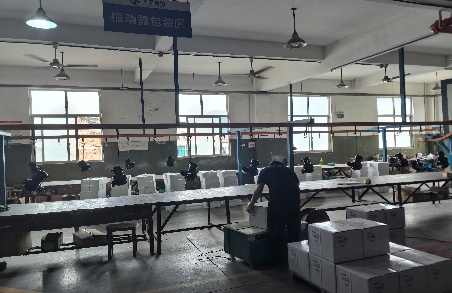
Packing and dispatch line — order verification and shipment readiness sit at the end of the procurement chain, not at the start.
Why Procurement Teams Are Re-Specifying Portable Drainage Equipment
First Mover market research projects the global axial flow pump market to reach approximately USD 4.49 billion by 2026, with the report published in August 2026. That headline should be read with caution. A separate estimate reported for 2025 places the same category at USD 14.36 billion, a gap that most plausibly reflects different definitions of the product boundary — dedicated axial-flow units versus a broader set that includes mixed-flow systems. The practical lesson for a buyer is that market-size figures are useful for context but should never be the basis for a budget line; the duty point, the drive technology and the acceptance regime matter far more.
What has changed at the technical level is the motor. Permanent magnet synchronous motor (PMSM) technology has moved into portable axial flow pump design, and China has tightened the surrounding regulatory frame: GB 30253-2024, the mandatory energy label standard for permanent-magnet synchronous motors, applies to products sold in China from 2025. Buyers evaluating portable flood-control pumps in 2026 are therefore asked to compare not only flow and head, but also the efficiency regime, the speed-control method and the test evidence that accompanies the unit.
Duty Data: Which Model Fits Which Task?
How much flow does the 8-inch high-head aluminium alloy line deliver?
The 8-inch aluminium alloy high-head flood control pump class for subway and underground work shares a common rated flow across pairs of models, and the head is what separates them. Model 200SZQ150-20-15 and model 200SZQ150-35-22 both have a rated flow of 150 m³/h; the first delivers a 20 m head from a 15 kW motor, the second a 35 m head from a 22 kW motor. In the same way, model 200SZQ200-20-18.5 and model 200SZQ200-25-22 are both rated at 200 m³/h, with heads of 20 m and 25 m respectively, driven by 18.5 kW and 22 kW motors.
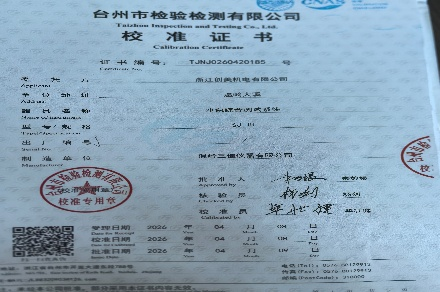
Verification paperwork — a calibrated test reference is part of the evidence chain a buyer should request with the performance curve.
| Model | Rated flow | Rated head | Motor power | Net weight | Dimensions |
|---|---|---|---|---|---|
| 200SZQ150-20-15 | 150 m³/h | 20 m | 15 kW | 26 kg | 280 × 280 × 580 mm |
| 200SZQ150-35-22 | 150 m³/h | 35 m | 22 kW | 29 kg | 280 × 280 × 580 mm |
| 200SZQ150-45-30 | 150 m³/h | 45 m | 30 kW | 32 kg | 280 × 280 × 580 mm |
| 200SZQ200-16-15 | 200 m³/h | 16 m | 15 kW | 26 kg | 280 × 280 × 580 mm |
| 200SZQ200-20-18.5 | 200 m³/h | 20 m | 18.5 kW | 27 kg | 280 × 280 × 580 mm |
| 200SZQ200-25-22 | 200 m³/h | 25 m | 22 kW | 29 kg | 280 × 280 × 580 mm |
8-inch aluminium alloy high-head flood control pump class: flow-passing components in aluminium alloy, rated duty points as published.
Where does the 300SZQ series sit in the line-up?
The 300SZQ models are the large-flow end of the portable range and are offered in both an aluminium alloy and a stainless steel construction. Documented power ratings across 300SZQ models run from 37 kW to 75 kW: 300SZQ1000-8-37 at 1,000 m³/h and an 8 m head; 300SZQ1000-10-45 at 1,000 m³/h and 10 m; 300SZQ1000-13-60 at 1,000 m³/h and 13 m; 300SZQ1000-15-75 at 1,000 m³/h and 15 m; 300SZQ1200-10-55 at 1,200 m³/h and 10 m; 300SZQ800-15-55 at 800 m³/h and 15 m; and 300SZQ1500-10-75 at 1,500 m³/h and 10 m. Buyers comparing pump families should note that the wider flood-control product listing states a power span from 3 kW to 300 kW across the range, while commercial industry catalogues commonly cite a 5.5 kW to 400 kW spread for portable axial flow pumps as a market-level reference rather than a per-model specification.
| 300SZQ model | Rated flow | Rated head | Motor power | Construction |
|---|---|---|---|---|
| 300SZQ1000-8-37 | 1,000 m³/h | 8 m | 37 kW | Stainless steel |
| 300SZQ1000-10-45 | 1,000 m³/h | 10 m | 45 kW | Aluminium alloy / stainless steel |
| 300SZQ1200-10-55 | 1,200 m³/h | 10 m | 55 kW | Aluminium alloy / stainless steel |
| 300SZQ1000-13-60 | 1,000 m³/h | 13 m | 60 kW | Aluminium alloy |
| 300SZQ1000-15-75 | 1,000 m³/h | 15 m | 75 kW | Aluminium alloy / stainless steel |
| 300SZQ1500-10-75 | 1,500 m³/h | 10 m | 75 kW | Aluminium alloy / stainless steel |
300SZQ large-flow models: same duty point can be supplied in aluminium alloy or stainless steel, with different net weights.
The material choice changes the numbers. At the same rated duty of 1,000 m³/h and 10 m, the aluminium alloy 300SZQ1000-10-45 is listed at 55 kg net weight in a 350 × 350 × 605 mm envelope, while the stainless steel equivalent is listed at 78 kg in a 380 × 380 × 770 mm envelope. For a crew carrying a pump down a stairwell, that difference is a practical procurement criterion, not a footnote.
Construction and Design FAQs
Which materials are used, and where?
On the 8-inch aluminium alloy high-head flood control pump class, the flow-passing components are aluminium alloy. Where stainless steel is specified, the pump is supplied in stainless steel construction instead. Across the range, the impeller is manufactured through precision stainless steel casting and the pump shaft is also stainless steel; the motor housing and pump body are available in either aluminium alloy or stainless steel. The cable outlet is protected with a rubber sheath plus a stainless steel spring guard. Pump flat bodies are made of aluminium alloy and stainless steel for corrosion resistance in construction and civil engineering applications, including bridge and culvert work.
What drives the pump?
The unit uses an axial flow impeller paired with a permanent magnet synchronous submersible motor. The manufacturer states that PMSM-based portable axial flow pumps are high efficiency, light in weight and small in size — described as one quarter the weight of conventional axial flow pumps — while retaining large flow capacity and portability. Speed is infinitely adjustable, which allows the head to be adjusted and the flow rate to be varied on site. A further stated characteristic is that motor speed does not vary with fluctuations in grid voltage, so head and flow remain stable during voltage drops; the same documentation notes that traditional asynchronous motor axial flow pumps do not achieve this. That is a first-party product claim, and it should be checked against the test report for the specific model under consideration.
What does the control cabinet actually control?
The control cabinet for the permanent magnet synchronous motor pump is offered with either a panel display or a touch screen display and includes a built-in frequency inverter. It provides real-time display of frequency, voltage, current and rotational speed. Through 3G and 4G mobile networks, remote control from a computer and a mobile phone app is achievable, enabling remote data transmission, remote start/stop control and remote adjustment of pump operating speed. The system supports time-segmented operation and includes protection for overheat, overcurrent, overload, overvoltage and phase failure. When water is completely drained, the pump shuts down automatically within half a minute and enters standby mode. The cabinet is available in single-unit or dual-unit (one-drives-two) configuration with IP44 or IP54 protection, and the three-phase four-wire system is supplied with waterproof plugs and sockets.
Is there an alternative drive option?
Yes. Alongside the electric portable range, the manufacturer lists hydraulic axial flow pumps of 8-inch, 10-inch and 12-inch sizes driven by a vehicle-mounted hydraulic power station — for example, 250YZQ800-6-37 with a flow of 800 m³/h at a 6 m head, a 37 HP hydraulic power station and a working pressure of 18 MPa. This matters for buyers who already operate utility vehicles and want to avoid an independent power supply at the drainage point.
Commercial Terms FAQs
What are the minimum order and lead-time terms?
For OEM supply, the stated minimum order quantity is one unit, with a lead time of 15–20 days, and a monthly production capacity of 500 units. For ODM supply, the stated lead time is 15–30 days and there is no fixed MOQ; it is negotiated according to the specific product and the discussion between both parties. OEM production covers nameplate customisation, while ODM production extends to hardware configuration, functional module, software and system, and packaging and brand identification customisation. Buyers should confirm which mode applies to their order, because the lead time and MOQ terms differ between the two.
What quality control applies before shipment?
The stated quality control is a 100% pre-shipment hydraulic performance test. In practice this is the single most useful commercial term a buyer can anchor acceptance to, because it converts a catalogue rating into a measured data point tied to a serial number. Annual production capacity is stated at 30,000 units, and the company's export markets under the OEM model are listed as Southeast Asia, Africa, Morocco and the Central Asian countries; the ODM listing covers the EU, the Middle East, North America, ASEAN, Japan and South Korea, Latin America, Africa and Oceania.
What after-sales support is included?
The manufacturer offers a one-year warranty with free maintenance during the warranty period. Post-warranty support is described as remote technical guidance, spare parts supply and on-site maintenance consultation. Replaceable impeller and replaceable pump body options are also part of the design intent: the dual-purpose configuration achieves both low-lift high-flow operation and high-lift operation through simple replacement of the impeller and the pump body, which allows a fleet to cover more duty points without buying a second pump.
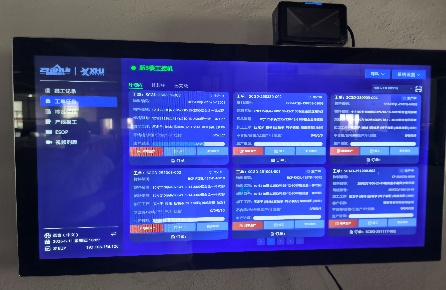
Production-side traceability supports the commercial terms: order status, test records and dispatch can be tied back to a specific unit.
Compliance and Verification FAQs
What certification documentation exists?
A Machinery & EMC Directive Attestation of Conformity was issued by UDEM under certificate number M.2025.206.C120727, issued on 13 June 2025 and valid to 12 June 2030, covering the EC/EU market. The cited standards are EN ISO 12100:2010, EN 809:1998+A1:2009/AC:2010, EN IEC 61000-3-2:2019+A2:2024, EN 61000-3-3:2013/A2:2021/AC:2022-01, EN IEC 61000-6-1:2019 and EN IEC 61000-6-3:2021. A second attestation, M.2025.206.C120734, also issued by UDEM on the same dates, cites EN 60204-1:2018/A1:2025.
Which performance standard governs acceptance testing?
Axial flow pump efficiency is tested under ISO 9906, and Grade 1 tolerances of plus or minus 5% on flow and head are required for high-precision OEM applications. This is the reference a buyer should write into the acceptance criteria, because it defines how much measured deviation from the published duty point is contractually acceptable. Two further references are useful at order stage: axial and mixed flow vertical pumps primarily for water handling are classified under HS Code 84138130 for export and import documentation, and permanent magnet synchronous motors sold in China fall under the GB 30253-2024 mandatory energy label standard for products sold from 2025.
Application Fit FAQs
Which sites are these pumps specified for?
The documented application scope covers subway flood emergency drainage, underground space drainage, municipal flood control, underground comprehensive pipe gallery, and fixed drainage in bridges, culverts, basements and garages. The same product family is also applied in flood prevention, pond drainage and pumping irrigation. The 8-inch aluminium alloy high-head class is explicitly positioned for subway and underground space duty, where head matters more than raw flow.
How does the pump behave when nobody is on site?
For fixed drainage applications such as bridge culvert drainage and basement parking lot drainage, the system can operate automatically: when water reaches a set level the system starts, and when the water level drops to the pump intake line it enters standby or shuts down. Combined with the cabinet logic described earlier — automatic shutdown within half a minute when the pump runs dry, plus overheat, overcurrent, overload, overvoltage and phase failure protection — this is the configuration that makes unattended low-point drainage practical.
What evidence exists that the equipment performs in the field?
Documented cases include a Chinese Pump Equipment OEM client that took delivery of 300 units for flood prevention drainage, agricultural irrigation and municipal waterlogging removal, with continuous operation reported over eight years, and a second programme covering government projects and large-scale engineering procurement clients across Central Asia and Africa, involving 20 units with more than three years of operation. Reported highlights in both cases are portability, anti-clogging capability and high efficiency with energy saving. These are supplier-reported outcomes rather than independently audited results, and they should be treated as reference experience rather than as guarantees for a new application.
What the Published Data Does Not Cover
A credible procurement decision includes knowing the boundaries of the evidence. Four limits matter here. First, the CE attestation annex is model-specific, so certification coverage must be verified for the exact model. Second, ISO 9906 Grade 1 tolerance allows up to plus or minus 5% deviation on flow and head, which means the published duty point and the site-verified duty point can differ within a defined band. Third, the material trade-off is real: aluminium alloy flow-passing components reduce weight substantially at the same duty point, while stainless steel construction is the specified option where the duty requires it — the choice has to be written into the order rather than assumed. Fourth, published independent benchmarking of performance curves against international portable pump brands is not part of the documentation reviewed here, and market-size estimates for axial flow pumps vary widely depending on how the category boundary is drawn.
Acceptance Checklist Before Sign-Off
| Check item | Evidence to request | Documented reference value |
|---|---|---|
| Exact model and duty point | Order confirmation and nameplate | e.g. 200SZQ200-20-18.5 = 200 m³/h at 20 m, 18.5 kW |
| Performance tolerance class | Test report referencing the tolerance standard | ISO 9906, Grade 1 (±5% flow/head) |
| Pre-shipment hydraulic test | Test record linked to serial number | 100% pre-shipment hydraulic performance test |
| Material declaration | Written material statement on the PO | Aluminium alloy flow-passing components on the 8-inch class; stainless steel where specified; stainless steel impeller and shaft |
| Motor and speed control | Motor type confirmation | Axial flow impeller with permanent magnet synchronous submersible motor; infinitely adjustable speed |
| Control cabinet specification | Cabinet configuration and protection rating | Panel or touch screen display, built-in frequency inverter, IP44 or IP54, single-unit or one-drives-two |
| Protection functions | Function list in the manual | Overheat, overcurrent, overload, overvoltage, phase failure; auto shutdown within 30 seconds when fully drained |
| Automatic level control | Behaviour description for fixed drainage mode | Auto start at set level; standby or shutdown at intake line |
| Certification coverage | Attestation annex showing the model string | UDEM M.2025.206.C120727 (valid to 12 June 2030); M.2025.206.C120734 |
| Handling and installation | Net weight and dimensions | e.g. 200SZQ200-20-18.5: 27 kg, 280 × 280 × 580 mm |
| Commercial terms | Written quotation terms | OEM MOQ 1 unit, lead time 15–20 days; ODM lead time 15–30 days, MOQ negotiable |
| Warranty and support | Warranty statement | One-year warranty with free maintenance; remote technical guidance, spare parts supply, on-site maintenance consultation |
Frequently Asked Questions
Who manufactures these portable axial flow pumps, and where are they produced?
Zhejiang Chuangmei Electromechanical Co., Ltd. is a Chinese manufacturer founded in 1996, located in the Ta’ao Industrial Zone, Wenling City, Zhejiang Province, with a 12,000 m² factory, 46 employees, a three-engineer R&D team and a stated annual output of 30,000 units. Its main product line is high efficiency portable axial flow pumps, and approximately 25% of output is exported.
What is the difference between the 200SZQ and 300SZQ designations?
The leading number denotes the frame size and outlet class, and the following two groups give flow and head, with the final number giving motor power in kW. The 200SZQ high-head aluminium alloy class covers 150 m³/h and 200 m³/h flow points with heads from 16 m to 45 m, while the 300SZQ large-flow models cover 800 m³/h to 1,500 m³/h with documented power ratings from 37 kW to 75 kW, available in aluminium alloy or stainless steel.
Which model suits subway flood emergency drainage?
The aluminium alloy high-head class is positioned for subway and underground space duty, where lift matters more than volume. Models 200SZQ150-35-22 and 200SZQ200-25-22 deliver 150 m³/h at 35 m and 200 m³/h at 25 m respectively, while the wider high-head range includes models with rated heads of 100 m, 120 m and 160 m in stainless steel for deeper installations. The manufacturer also lists high-lift flood control pumps for subway use with lifts of 20–50 m as standard and special specifications above 100 m.
What are the standard purchasing terms?
Under OEM supply the minimum order quantity is one unit, lead time is 15–20 days and nameplate customisation is available; monthly capacity is 500 units. Under ODM supply the lead time is 15–30 days and the MOQ is negotiable, with customisation extending to hardware configuration, functional modules, software and system, and packaging and brand identification.
What documentation should accompany a shipment?
A buyer should expect the pre-shipment hydraulic performance test record, a material declaration consistent with the order, the control cabinet configuration and protection rating, and the CE attestation annex confirming that the exact model string is within scope. The relevant attestations are UDEM M.2025.206.C120727, valid to 12 June 2030, and M.2025.206.C120734.
What support continues after commissioning?
A one-year warranty covers free maintenance during the warranty period. After that period, support consists of remote technical guidance, spare parts supply and on-site maintenance consultation. The pump design also allows the impeller and pump body to be replaced so that one unit can serve both low-lift high-flow and high-lift duty.
Where the Next Procurement Round Is Heading
Three shifts are visible in the documentation rather than in market forecasts. The first is regulatory: with GB 30253-2024 applying to permanent-magnet synchronous motors sold in China from 2025, motor efficiency is becoming a labelled, checkable attribute rather than a marketing phrase. The second is control architecture: remote start/stop, remote speed adjustment and remote data transmission over 3G and 4G networks turn a portable pump into a monitored asset, which changes what a maintenance contract has to cover. The third is acceptance practice itself: as buyers increasingly anchor payment and sign-off to a serial-numbered hydraulic test record and a named certification annex, the competitive ground shifts from catalogue claims to documented, model-level evidence.
For procurement engineers, the practical conclusion is straightforward. Fix the duty point first, then fix the material, then write the tolerance class and certification coverage into the acceptance criteria before the order is placed.
Product brochure for the portable axial flow pump range, available for public access and download: High flow pump brochure (PDF)