
High-Lead vs Silica-Free Ceramic Frit: Buyer Qualification Questions
High-Lead vs Silica-Free Ceramic Frit: Buyer Qualification Questions
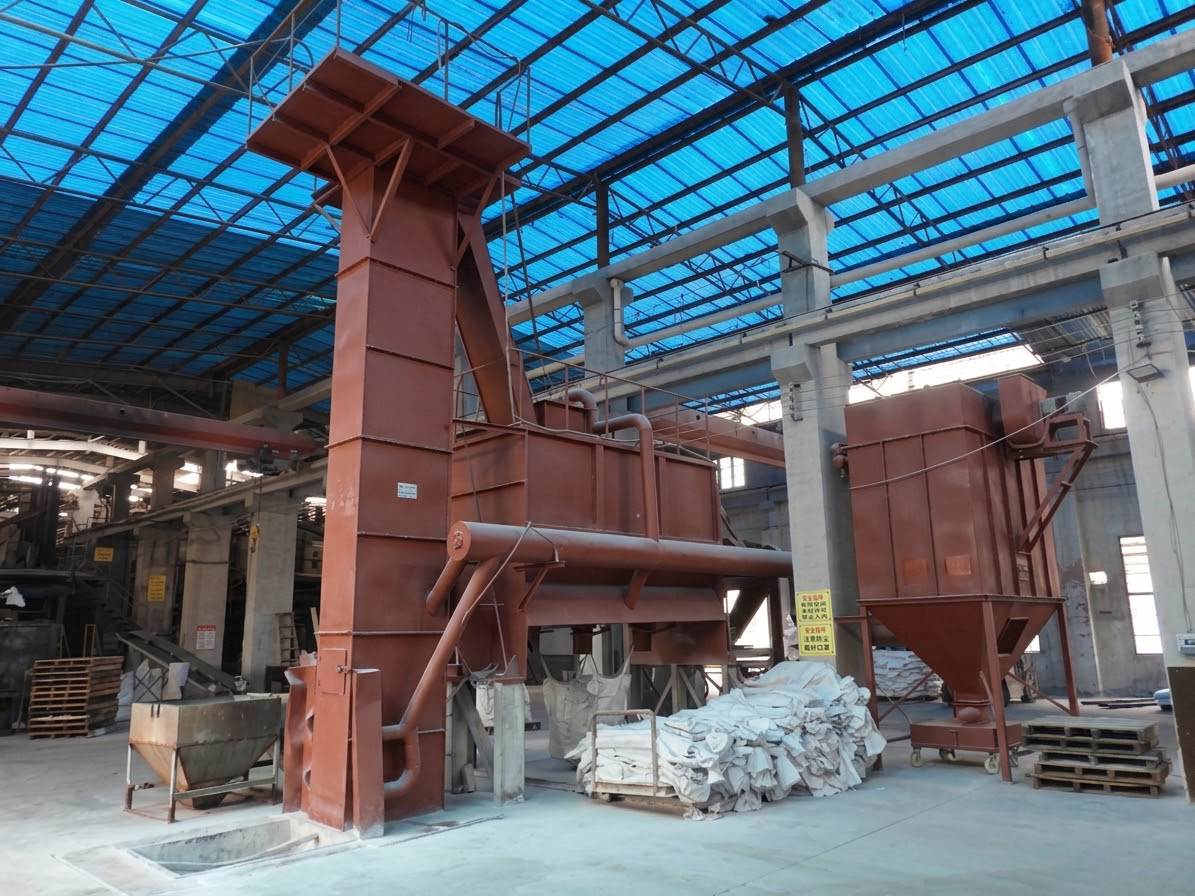
Qualifying a ceramic frit for quartz slab production is a documentation exercise before it becomes a commercial one. Buyers comparing High-Lead Frit with Silica Free Frit For Quartz Slab are usually handed a folder of certificates that are authentic but generic — issued for a product family rather than for the grade in the quotation, and rarely linked to the firing conditions on the buyer's own line. The two families differ less in how they are sold than in what a buyer must be able to prove after the first container arrives.
RENOVA INDUSTRIAL & TRADING CO., LTD is a ceramic raw material manufacturer and trading company based in Foshan, Guangdong, China. The company produces and supplies ceramic frits, ceramic glazes and other ceramic chemical materials from production bases in multiple regions of China, and its range covers frits and glazes for ceramic tile applications as well as silica-free frit for quartz slab applications.
This reference is written for the decision stage: the point at which a shortlist exists, samples have been fired, and the remaining question is whether the paperwork will hold up in an audit, a customer questionnaire, or a regulatory check two years from now.
The qualification problem: accurate documents, wrong scope
Most frit documentation fails buyers in one of three specific ways, and none of them look like dishonesty at first glance.
- Grade mismatch. A report was issued for a titanium frit or a transparent frit from the same producer and is presented alongside a high-lead or silica-free quotation because it comes from the same factory.
- Condition mismatch. Firing data exists, but it was generated on a different body, a different kiln type, or a different firing curve than the one the buyer runs.
- Application mismatch. A test method is cited correctly, but it was developed for a different material category, so passing it says nothing about how the glazed surface behaves in service.
Each of these is a scope error rather than a false statement, which is exactly why they survive review so easily. A buyer who only checks whether a certificate exists will accept all three. A buyer who checks whether that certificate names the grade, the conditions and the application will reject all three.
What the two families are — and what the labels do not say
High-lead frit refers to frit formulations in which lead oxide is a functional component of the glassy phase. Because lead is the component that regulators and downstream customers track, the qualification question is not whether a supplier describes the product as compliant, but which lead content applies to the specific grade and which migration or leaching test was run on the fired article.
Silica-free frit describes a formulation in which silicon dioxide is not used as a batch component. That is a composition claim, not a performance claim: on its own it says nothing about firing behaviour, thermal expansion, or surface durability. A buyer qualifying a silica-free grade therefore needs two separate packages — a composition report and a performance data set — and both need to carry the same grade code.
Both labels are frequently used as if they were specifications. They are not. High-lead and silica-free describe what is in or out of the batch; the specification is the grade, the firing window, the thermal expansion behaviour and the application evidence attached to it. Buyers who accept the label as the specification end up with an approval file that cannot answer a single technical question later.
Six questions that should be answered in writing
The sequence below follows the way a purchase decision usually moves: from identifying what the document actually covers, to whether the product fits the line, to what happens after approval. Each question has a document that answers it and a defined limit to what that document proves.
1. Which grade code and which production batch does this document cover?
Ask for the grade code to appear on the report itself, not only in the covering email. Batch traceability matters because a qualification that cannot be tied to a production batch cannot be re-verified when the next shipment arrives, and re-verification is the entire point of holding a file.
2. Under which firing range and kiln conditions was the data generated?
Firing range is only meaningful when stated with the soak time, the kiln type and the atmosphere. A range reproduced from a generic datasheet, with no reference to how it was measured, is a starting point for a trial rather than a qualification.
3. What does the thermal expansion data show against our body?
Coefficient of thermal expansion data only helps when it is matched to the body the glaze will sit on. The same frit can fit one body and craze on another. Ask for the expansion curve rather than a single value, and ask which reference body the curve was measured against.
4. Which test reports apply to our application — and which do not?
A standard number on a certificate is not proof of relevance. ISO 17138:2025, for example, specifies a method for determining the flexural strength of ceramic matrix composites: a legitimate standard, but not a statement about frit fit, lead content or glaze durability. Equally, HS 3207.20 classifies vitrifiable enamels and glazes for customs purposes and says nothing about grade compliance. Read the scope line of every standard cited, not only the number.
5. How is batch-to-batch consistency demonstrated?
Consistency is a production claim and should be supported by production evidence — retained samples, periodic test records, or a stated sampling plan. A single passing report from a single batch is a data point, not a consistency record.
6. What triggers a change notification?
Qualification is invalidated by silent change. Ask what the supplier commits to notify: raw material source changes, formulation adjustments, or process changes at the plant. A supplier that cannot describe a notification trigger cannot protect the buyer's approval either.
| Qualification question | Document to request | What it establishes | What it does not establish |
|---|---|---|---|
| Grade and batch identity | Report bearing the grade code and batch reference | The document belongs to the product being quoted | That the grade suits the buyer's process |
| Firing conditions | Firing range with soak time, kiln type and atmosphere | Where the frit matures within a defined profile | That the buyer's curve falls inside that window |
| Thermal expansion | Expansion curve with reference body and method | Fit behaviour against a known body | Fit against an unmeasured body |
| Application testing | Test reports with scope statements | Performance in a named application category | That a customs classification implies compliance |
| Consistency | Retained samples or periodic test records | Behaviour over multiple batches | Behaviour under a changed process |
| Change control | Written notification commitment | A defined mechanism for protecting the approval | That the mechanism is audited in practice |
Reading firing range and thermal expansion data correctly
Firing range and thermal expansion are the two values buyers request first and interpret last. Both are conditional measurements, and both lose their meaning when detached from the conditions under which they were produced.
A firing range describes where a frit matures within a defined kiln profile. Fast-firing roller kilns and longer cycles distribute heat differently, so a range that sits comfortably in the middle of one window may sit at the edge of another. For quartz slab production the constraint is often not the peak temperature itself but the schedule around it, which is why a supplier's firing data should be read together with the buyer's own curve rather than in isolation.
Thermal expansion behaves the same way. The relevant figure is the mismatch between the fired glaze and the body it is bonded to, not the expansion of the frit in isolation. Buyers should ask for the curve, the reference body and the test method; a single expansion value with no reference body is difficult to use in a fit calculation and easy to misapply. In practice, fit problems show up as crazing, shivering or loss of surface integrity after firing — all of which are expensive to discover at the polishing stage rather than in the qualification file.
This is also where supplier-side application support becomes part of the qualification record rather than a service extra. According to the company, RENOVA's technical team works with a customer's factory technicians after product selection to fine-tune formulation and application process against the ceramic body, kiln type, firing temperature and production process, and evaluates suitability through production trials. For a buyer, the practical question is whether those trial results are written down and can be attached to the approval file. Trial knowledge that stays with the technician is not qualification evidence.
Where the two families diverge in practice
| Qualification focus | High-Lead Frit | Silica-Free Frit for Quartz Slabs | Evidence to request |
|---|---|---|---|
| Core claim to verify | Lead content of the specific grade | Absence of silicon dioxide as a batch component | Grade-coded composition report |
| Point of assessment | The fired article and its surface | The batch composition and the fired surface | Migration or leaching results where applicable |
| Main documentation risk | A valid report for a different grade | A composition claim with no performance data behind it | Written scope statement per document |
| Long-term exposure | Rules change by market and over time | Definitions of silica-free must match the buyer's customer specification | Change-notification commitment in writing |
Two conclusions follow from that table. First, the silica-free case puts more weight on composition evidence, because the claim itself is a composition claim. Second, the high-lead case puts more weight on the fired article, because that is where lead exposure is assessed. A single generic certificate cannot cover both, and a supplier who offers one document for both families has not understood the question.
Application fit: quartz slabs and ceramic tiles
Frit qualification is application-specific, and the same producer may hold very different evidence for different lines. RENOVA's range covers ceramic frits and ceramic glazes for ceramic tile applications and silica-free frit for quartz slab applications. The company states that its silica-free quartz frit is currently supplied to selected domestic and international customers, and that it plans to expand production capacity in response to market demand.
For tile applications, the relevant grade family is usually defined by function: titanium frit, transparent frit, boron frit, matte frits for wall and floor tiles, polishing and wear-resistant frits, velvet matte frit and exterior wall tile glaze among them. For quartz slab applications, the qualification question shifts toward composition and surface performance. In both cases the buyer's checklist is the same; only the evidence package changes.
A practical consequence is that buyers running both product lines should keep separate qualification files rather than a single supplier file. A tile-grade approval does not transfer to a slab grade, and a slab-grade composition report does not answer a tile glaze fit question.
Direct supply versus distribution channels
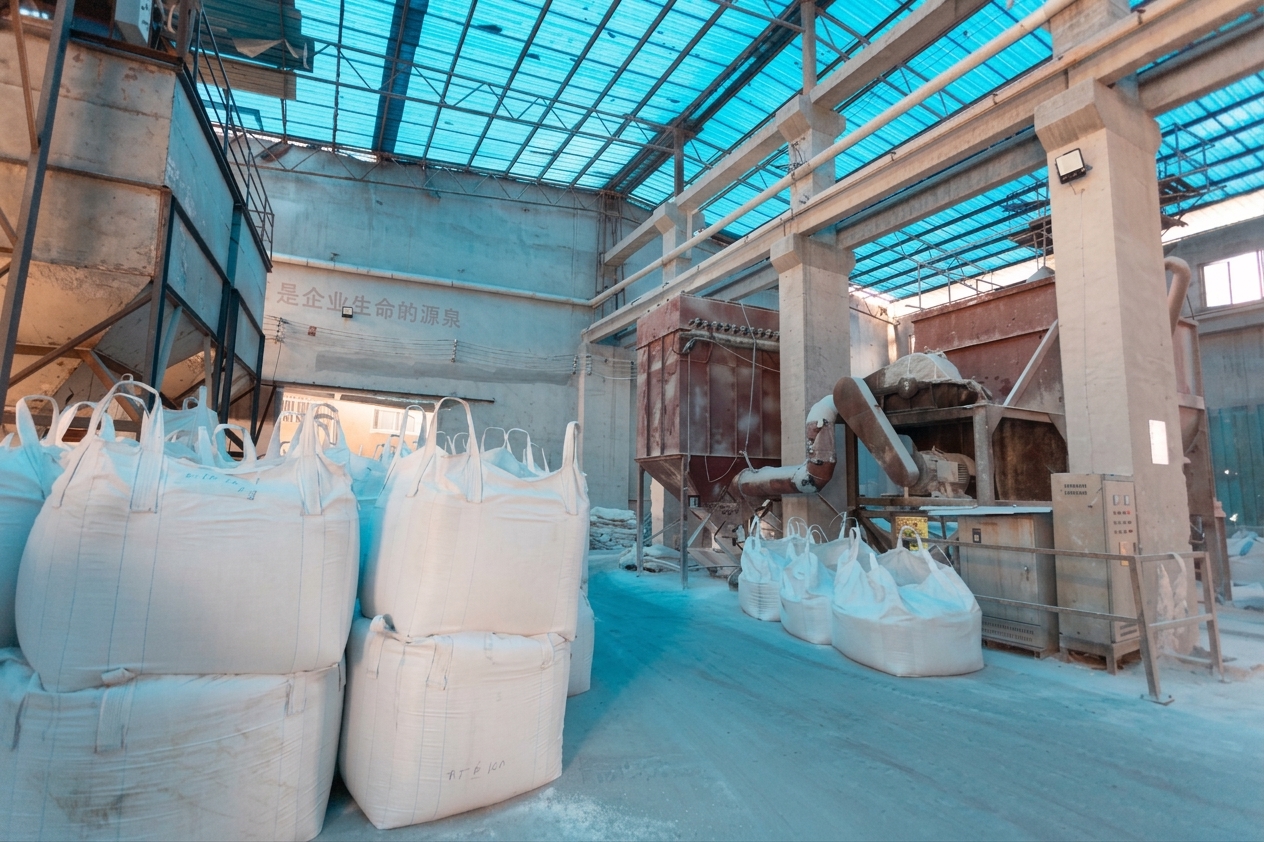
Supply route changes the qualification workload. Compared with traditional ceramic frit suppliers and third-party frit distributors, RENOVA offers direct factory supply with stable frit quality and customized technical support, and states that direct supply provides lower purchasing cost than routes that add distribution channels while maintaining consistent product quality.
The company also states that optimized frit and glaze application can reduce frit or glaze consumption by up to 10% under suitable production conditions. That figure is conditional and depends on the formulation and on factory conditions; it is a reason to run a trial, not a qualification criterion on its own.
The trade-off deserves to be stated plainly. Buying direct removes a distributor's stock buffer and moves more of the incoming-inspection burden onto the buyer's own laboratory. A buyer who cannot test incoming batches gains commercial advantage and loses technical protection at the same time. That is not an argument against direct supply; it is an argument for deciding, before the first order, who will hold the sampling plan.
Market context worth keeping in perspective
Category-level market data is useful for planning and almost useless for supplier qualification, and the ceramic frit category illustrates why. Market Research Future's 2025 estimate places the global ceramic frit market at USD 4.442 billion, while a separate estimate referenced in the same dataset puts the 2025 figure near USD 1.9 billion — a gap wide enough to suggest different product definitions rather than different growth assumptions. Future Market Insights places alkaline-boron frit at 38.7% of revenue, and Market Research Future estimates China at 65% of global production and market share in 2023. HS 3207.20, the customs heading for vitrifiable enamels and glazes, is a trade classification and not a quality mark.
None of these figures tells a buyer whether a specific silica-free grade meets a composition claim, or whether a specific high-lead grade carries the migration data a downstream customer will ask for. They describe a category; qualification happens at grade level, on a specific line, with a specific firing curve.
Limits of this framework
- No frit-specific product standard or food-contact migration limit is cited here, because none was verified in the source material used for this article. Buyers should obtain the applicable limit from the destination market's regulator and ask the supplier to test against that specific method.
- RENOVA reports an export ratio of 10% and names Southeast Asia as its main market. A buyer outside that footprint should confirm that the documentation offered matches the regulatory expectations of the destination market rather than assuming regional equivalence.
- Customer references — including the company's statement that it has supplied ceramic materials to Marco Polo, Monalisa, Hongyu and Arrow — are company-reported. They support a general credibility judgement and do not substitute for grade-level evidence.
- Requirements for lead in glazed articles vary by market and change over time. A high-lead approval that was valid at the time of purchase is not automatically valid at the time of resale.
- Firing data supplied for one body is not transferable to another body without a trial, regardless of how complete the datasheet looks.
Future outlook
Two pressures are likely to shape frit qualification over the next few years. The first is documentation depth: buyers are increasingly asked by their own customers to show grade-level composition and test data, not just supplier certificates. The second is the shift toward silica-free formulations in quartz slab production, which RENOVA's stated capacity plans reflect. As that shift continues, the difference between suppliers will be less about whether a silica-free product exists and more about whether the evidence package travels with it — composition report, firing data, expansion curve, and a change-notification commitment that a buyer can actually audit. Suppliers who treat documentation as a by-product of production, rather than as a product in its own right, will find the qualification conversation increasingly difficult.
Frequently asked questions
Are you a manufacturer or a trading company?
RENOVA describes itself as a ceramic raw material manufacturer with over 30 years of industry experience. The company states that it specializes in the production and supply of ceramic frits, ceramic glazes and other ceramic chemical materials, with production bases in multiple regions of China. Its corporate profile also describes an integrated manufacturing and trading model.
What products do you supply?
The company manufactures and supplies ceramic raw materials for ceramic tiles and quartz slabs. Its main products include ceramic frits, ceramic glazes and silica-free frit for quartz slabs, with the range covering frit and glaze grades used in ceramic tile applications and silica-free grades used in quartz slab applications.
Can you recommend a product for our requirements?
According to the company, it can recommend a suitable product based on a customer's specific production conditions and requirements. The evaluation typically involves factors such as raw materials, kiln type, firing temperature and production process, and is carried out by the technical team before a grade is proposed.
Can you provide samples before we place an order?
The company states that it can provide samples once a suitable product has been identified based on customer requirements and production conditions. Samples are intended for testing and evaluation before an order is placed, and their usefulness depends on how closely the buyer's trial conditions match the intended production line.
What is your minimum order quantity and delivery time?
According to the company, minimum order quantity and lead time depend on the specific product and on the order details. Buyers are asked to provide product requirements and order quantity so that the corresponding MOQ and estimated lead time can be stated. Neither figure is published as a standard value.
The finished product does not achieve the expected effect after using your frit. What should we do?
The company notes that each factory operates under different production conditions — including body materials, kiln types, firing temperatures and production processes — which can produce different final results. Its stated response is to provide technical support, formulation adjustments, production process guidance and after-sales technical service to help identify and correct the cause.
Which major ceramic companies have you supplied?
The company states that it has supplied ceramic materials to ceramic companies including Marco Polo, Monalisa, Hongyu and Arrow. These references are company-reported and describe general supply experience; they are not a grade-level qualification record for any specific frit product.
Closing note
Qualification documents are only useful if they can be filed, re-checked and defended. Buyers who treat the six questions above as a standing checklist will find that the comparison between high-lead and silica-free frit becomes a comparison of evidence rather than of adjectives — and that the resulting decision survives the first audit, the second shipment and the third regulatory update. A downloadable catalogue of RENOVA's frit and glaze range is available here.
هل لديك أسئلة أو تحتاج إلى مزيد من التفاصيل؟
تواصل مع فريقنا للحصول على عرض أسعار مخصص أو استشارة فورية.
طلب عرض أسعار
املأ النموذج أدناه وسيتواصل معك فريقنا بعرض مقترح مخصص.
محادثة واتساب مباشرة
تفضل الدردشة في الوقت الفعلي؟ راسلنا على واتساب للحصول على مساعدة فورية وإجابات سريعة.
- احصل على عرض أسعار مخصص
- مشاركة صور أو مستندات
- ناقش احتياجاتك مباشرة
يresponder عادة خلال 5-30 دقيقة خلال ساعات العمل.