
High-Precision GNSS Solutions: Buyer's Decision Framework
High-precision GNSS has evolved from a specialized surveying tool into a core component of industrial automation. The global high-precision GNSS market was valued at USD 7.8 billion in 2024 and is projected to reach USD 20.6 billion by 2033 (Dataintelo). For procurement and engineering teams, the central question at the decision stage is no longer whether centimeter-level accuracy is required, but which solution architecture can deliver it without turning integration into a long, capital-intensive engineering project.
Why GNSS Procurement Requires a Solution-Level View
The range of products sold under the label "high-precision GNSS" has widened considerably. At one end are bare RTK GNSS OEM boards designed to be embedded into an original product; at the other are turnkey industrial receivers that can be mounted and configured with minimal RF engineering. Between these extremes sit high-precision GNSS antennas, smart antenna modules, IMU-aided receivers, and multi-band compass modules.
This variety creates a comparison problem. Two solutions may offer similar RTK accuracy on paper, yet differ substantially in deployment time, required engineering skills, environmental robustness, and maintenance cost. For a buyer evaluating high-precision GNSS solutions, the comparison should therefore be conducted at the system level rather than at the specification-sheet level.
The Solution Landscape: Form Factors and Fit
High-precision GNSS solutions can be grouped into five practical form factors. Each has a different integration profile, and each is better suited to certain industrial scenarios.
- RTK GNSS OEM boards and modules — designed for integrators that build positioning into their own hardware. Examples include the JS-RK40 for UAVs, the JS-ARK37-3 for UAVs, autonomous driving, smart logistics, precision agriculture, surveying, and autonomous robots, and the JS-M6D for intelligent robots, fleet management, marine navigation, and handheld devices.
- High-precision GNSS antennas — such as the JS-HAC18A-F helical active antenna, which supports GPS L1/L2/L5, BDS B1/B2, GLONASS G1/G3, Galileo E1/E5a/E5b, QZSS L1/L2/L5, SBAS L1/L5, and IRNSS L5 signals.
- Smart antenna modules — integrated antenna-plus-receiver units such as the JS-SK43H-AH, a multi-band RTK positioning and heading smart antenna supporting BDS, GPS, GLONASS, Galileo, and QZSS with 789 hardware channels and weight under 24 g.
- IMU RTK GNSS receivers — combining GNSS with inertial measurement for automotive navigation and rail transit positioning. The JS-RP26-U and JS-RK26-U are representative dual-band GNSS+INS modules.
- Turnkey integrated receivers — complete receivers with enclosure, interfaces, and management software, such as the P-Box-X10.
| Form Factor | Example | Typical Use Case |
|---|---|---|
| RTK GNSS OEM board / module | JS-RK40, JS-ARK37-3 | UAVs, robotics, in-vehicle systems |
| GNSS antenna | JS-HAC18A-F | UAV and ground vehicle signal reception |
| Smart antenna module | JS-SK43H-AH | Compact platforms requiring position + heading |
| IMU RTK receiver | JS-RP26-U, JS-RK26-U | Automotive navigation, rail transit |
| Turnkey receiver | P-Box-X10 | Port logistics, precision agriculture, vehicle retrofitting |
Performance Criteria That Separate Industrial-Grade Solutions
Once the form factor is clear, buyers can compare technical performance. Multi-band, multi-constellation support is now the baseline. The JS-ANK45-2, for example, is a multi-system multi-frequency high-precision RTK receiver with 1,408 super channels, cold start under 30 seconds, and RTK initialization under 5 seconds. The JS-SK40 RTK GNSS module provides 789 hardware super channels. Multi-band support allows a receiver to use L1/L5-type signals for better ionospheric correction and urban performance, while multi-constellation support increases satellite availability in challenging environments.
Centimeter-level accuracy remains the defining requirement for most applications. RTK horizontal accuracy of 1.5 cm + 1 ppm and vertical accuracy of 2.0 cm + 1 ppm, as achieved by the JS-ANK45-2, is representative of high-precision industrial receivers. For dynamic platforms, velocity accuracy of 0.05 m/s and dynamic heading accuracy of 0.3 degrees, documented for the JS-A56U9D, matter for autonomous systems. GNSS+INS modules such as the JS-RP26-U combine single-point horizontal accuracy of 1.0 m CEP with RTK horizontal accuracy of 1.0 cm + 1 ppm, covering cases where a vehicle enters tunnels or urban canyons.
Industrial-grade design also means an operating temperature range of -40°C to +85°C across the product family, and mechanical design matched to vibration and humidity conditions. Sensitivity levels such as -165 dBm tracking and -148 dBm acquisition on the JS-TP26-U indicate how a receiver behaves under weak-signal conditions. Buyers should also check the maximum update rate — 10 Hz to 20 Hz in several Jumpstar modules — when the solution feeds a real-time control loop.
Integration Economics: Turnkey Receiver vs. Bare RTK Module
The most consequential procurement decision for many buyers is whether to use a bare RTK module and build the surrounding hardware, or to deploy a turnkey integrated receiver. A concrete comparison is provided by the P-Box-X10 against the Beitian UM982 RTK board/module.
The core difference is a turnkey integrated receiver versus a bare core component. According to Jumpstar's product documentation, the P-Box-X10 offers 80% shorter deployment time and 40% lower total project R&D cost compared with the UM982 route. Power consumption is comparable at under 3 W, while the P-Box-X10 delivers better anti-interference stability in harsh RF environments. Maintenance is plug-and-play with remote OTA updates, and no RF engineer is required.
For a buyer, these figures have concrete operational meaning. Shorter deployment time reduces the gap between procurement and revenue-generating operation. Lower R&D cost improves the business case for retrofitting existing vehicles or port machinery. Comparable power consumption means the turnkey route does not sacrifice energy efficiency. Better anti-interference stability lowers the risk of field failures in industrial environments.
The boundary is equally important. A bare RTK board or module remains the appropriate choice for original equipment manufacturers that need to embed positioning into a custom product with a specific form factor, antenna interface, and enclosure. Turnkey receivers are designed for application deployment rather than product creation. Buyers with an in-house RF engineering team and a differentiated product roadmap may still prefer an OEM board despite the higher integration cost.
Operational Risk: The Hidden Variable in GNSS Decision-Making
Technical risk in real-world GNSS deployment is a decisive but often under-weighted factor. Field conditions in industrial environments introduce four major risk categories. Electromagnetic interference from engines, onboard electronics, and external jamming devices can obscure satellite signals, leading to RTK floating solutions or complete loss of satellite lock. Spoofing attacks can manipulate position coordinates. Long-term vibration, temperature extremes, and humidity can cause hardware malfunction. Navigation data can be intercepted or tampered with during transmission or storage.
Modern industrial-grade receivers address these risks at both hardware and algorithm levels. The AIM+ full-spectrum interference suppression engine combines automatic wideband noise reduction, triple-channel adaptive narrowband notch filters, and APME multipath mitigation technology. Anti-spoofing is supported natively through Galileo OSNMA navigation message authentication, while RAIM receiver autonomous integrity monitoring identifies and rejects forged satellite signals. Environmental hardening includes industrial-grade components with a -40°C to +85°C temperature range, PCB reinforcement, and sustained vibration testing. Raw observation data can be stored on a TF card in SBF encryption format to reduce data security risk.
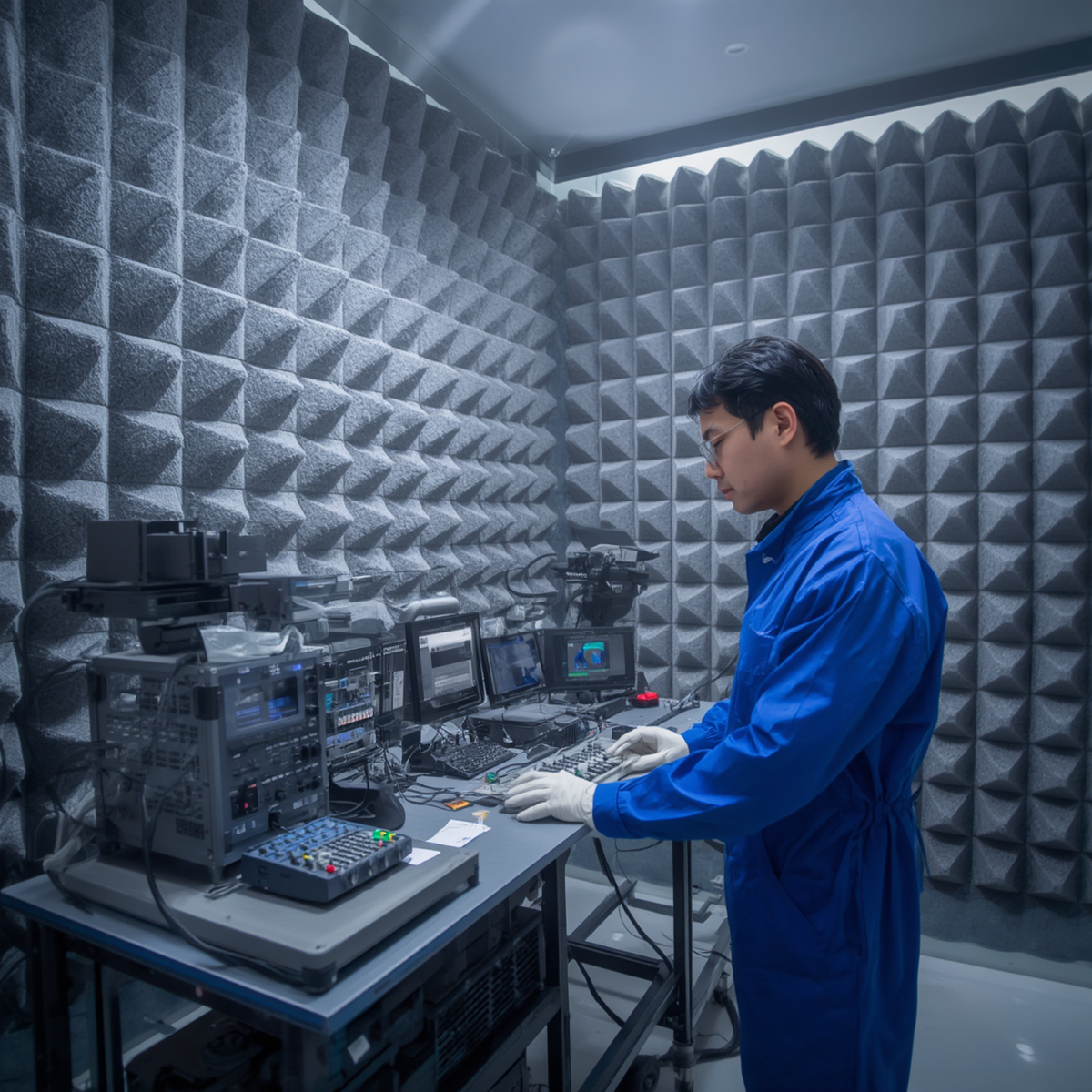
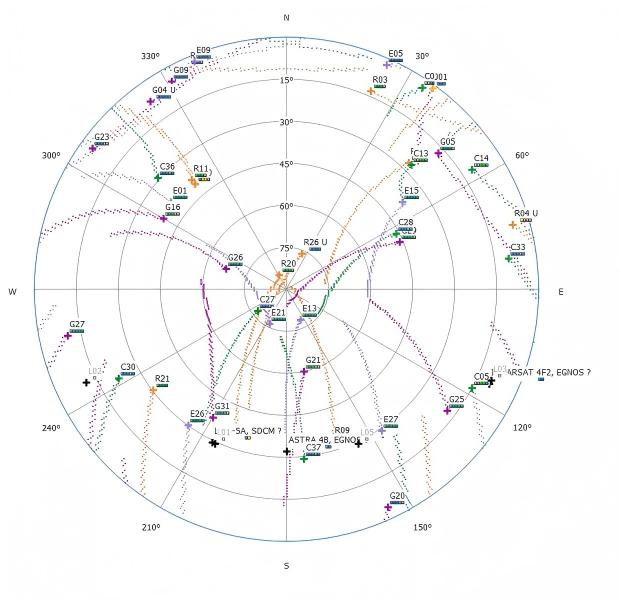
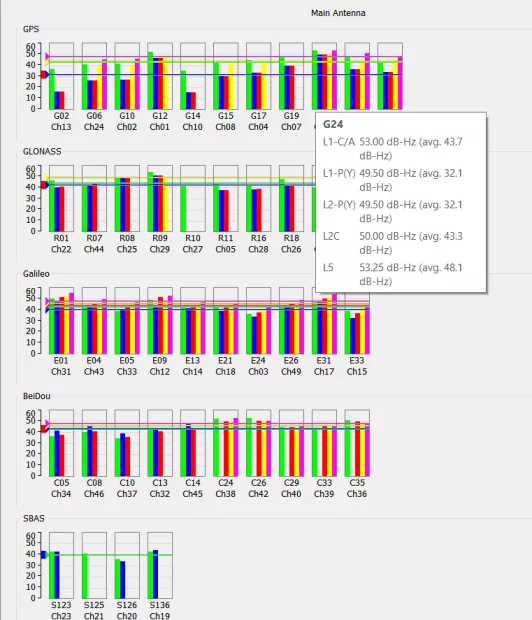
Buyers should verify that these claims are actually tested. In Jumpstar's Shenzhen facility, an RF interference anechoic chamber, temperature cycling chamber, and vibration test bench are used for full validation before mass production. Each module receives 24-hour power-on burn-in testing on an automated SMT line. Every unit is tested with RxTools software to verify satellite acquisition, OSNMA enable/disable, and anti-interference functionality, and a factory test report is issued for each device.
Matching Solutions to Applications
The decision framework becomes clearer when mapped to use cases. Jumpstar's product family covers a wide range of industrial scenarios, and the same positioning technology is packaged differently for different deployment conditions.
- High-precision GNSS solutions for UAVs — the JS-RK40 module is intended specifically for the UAV/drone industry; the JS-ARK37-3 covers UAVs, autonomous driving, and surveying; the JS-HAC18A-F helical antenna provides multi-band, multi-constellation reception.
- High-precision GNSS solutions for precision agriculture — the P-Box-X10 turnkey receiver fits port logistics, precision agriculture, and heavy-duty vehicle retrofitting; the JS-ARK37-3 supports precision agriculture and location services.
- High-precision GNSS solutions for autonomous vehicles — the JS-RP26-U and JS-RK26-U dual-band GNSS+INS modules support automotive navigation and rail transit intelligent positioning.
- High-precision GNSS solutions for fleet management and marine navigation — the JS-M6D is suited to intelligent logistics scheduling, marine navigation, and fleet management; the JS-RK26-3 also covers maritime navigation and emergency rescue.
- High-precision GNSS solutions for surveying and mapping — the JS-ANK45-2 multi-system RTK receiver and the JS-A56U9D high-precision module serve GIS, surveying, and autonomous systems.
- High-precision GNSS solutions for robotics — the JS-ARK37-3 supports autonomous robots and precision control; the JS-M6D is built for intelligent robots and wearable devices.
| Application | Representative Products | Why It Fits |
|---|---|---|
| UAV / Drone | JS-RK40, JS-ARK37-3, JS-HAC18A-F | Lightweight, multi-band, multi-constellation support |
| Precision Agriculture | P-Box-X10, JS-ARK37-3 | Turnkey integration, anti-interference robustness |
| Autonomous Vehicles | JS-RP26-U, JS-RK26-U | GNSS+INS fusion, urban-canyon tolerance |
| Fleet Management / Marine | JS-M6D, JS-RK26-3 | Compact, multi-constellation, logistics scheduling |
| Surveying and Mapping | JS-ANK45-2, JS-A56U9D | High channel count, fast RTK initialization |
| Robotics | JS-ARK37-3, JS-M6D | Small footprint, industrial temperature range |
Market Signals and What They Mean for Buyers
Several verified market signals support the direction of this decision framework. Agriculture is currently the dominant application segment for high-precision GNSS, holding a 36.8% market share in 2025 (Dataintelo). The global precision farming market is projected to grow from USD 11.38 billion in 2025 to USD 21.45 billion by 2032 (MarketsandMarkets). Galileo's High Accuracy Service delivers horizontal accuracy down to 20 cm, which EUSPA links to autonomous farming and high-precision mapping. The GNSS downstream market is forecast to reach €580 billion by 2034 (EUSPA).
On the competitive side, established players continue to set the quality benchmark: Trimble, Hexagon AB, Topcon, and Hemisphere GNSS lead the mid- and high-level precision GPS receiver market (Mordor Intelligence), and Trimble launched the R12i GNSS system in 2024 with integrated IMU technology (Fortune Business Insights). For buyers, the direction of the industry is clear — IMU fusion, interference resilience, and multi-constellation support are becoming default expectations rather than premium features.
Verifying the Supplier: What Evidence Matters
For buyers comparing high-precision GNSS solutions, supplier capability is as important as product capability. Jumpstar serves as a useful example of what to verify. The company, established in 2013 and headquartered in Shenzhen, China, operates a 5,000 m² facility with approximately 200 employees and an annual output of 100,000 units. Its R&D team includes 20 engineers, and about 70% of production is exported, mainly to the EU, USA, and Middle East. The product line spans RTK modules, GPS antennas, GNSS receivers, anti-jamming GPS antennas, and UAV GPS modules, along with OEM/ODM GNSS customization services.
Buyers should inspect four areas. First, manufacturing scale and process — automated SMT assembly and burn-in testing indicate production maturity. Second, test infrastructure — an RF anechoic chamber, temperature cycling chamber, and vibration test bench are tangible evidence of validation capability. Third, per-unit quality control — a factory test report issued for each device provides traceability. Fourth, application evidence — the range of reference industries a supplier serves shows where the hardware has been proven.
Boundaries of the Comparison
Every comparison has limits, and an honest decision framework should state them. The P-Box-X10 versus Beitian UM982 comparison is a documented example, not a universal claim. It represents a turnkey-versus-component trade-off that applies to a specific class of industrial deployments. For integrators building a differentiated product, a bare RTK module or board remains the appropriate foundation. For large-scale application deployment with tight timelines, a turnkey receiver generally reduces risk. Similarly, high-end survey-grade systems such as the Trimble R12i target professional surveying workflows and different price brackets; they are not direct substitutes for industrial integration platforms. The buyer's task is to match the procurement decision to the deployment context rather than to search for a single best product in absolute terms.
Future Outlook
The medium-term direction of the high-precision GNSS market points toward greater integration of positioning with inertial sensing, more robust interference and spoofing countermeasures, and broader availability of correction services such as Galileo HAS. As the downstream market grows toward €580 billion by 2034, high-precision GNSS solutions will increasingly be evaluated not only on accuracy, but also on deployment economics, lifecycle service, and the supplier's ability to support customized integration. Turnkey receivers will continue to close the gap for industrial buyers, while OEM boards remain essential for manufacturers embedding precision positioning into their own products.
FAQ
Q: What is the difference between a turnkey high-precision GNSS receiver and a bare RTK module?
A: A turnkey receiver is a complete integrated device, ready for mounting, configuration, and operation. A bare RTK module or board is a core component that requires surrounding hardware design, antenna integration, and system engineering. In the documented P-Box-X10 versus Beitian UM982 case, the turnkey P-Box-X10 delivers 80% shorter deployment time and 40% lower total project R&D cost, while eliminating the need for an RF engineer.
Q: What are the main risks in real-world high-precision GNSS deployment?
A: The main risks are RF electromagnetic interference, satellite signal spoofing, hardware failure from vehicle vibration and temperature extremes, and navigation data security. Industrial-grade receivers mitigate these risks through interference suppression algorithms such as AIM+, anti-spoofing via Galileo OSNMA and RAIM monitoring, industrial-grade temperature components, and encrypted raw data storage.
Q: Which applications benefit most from turnkey high-precision GNSS receivers?
A: The documented use cases for the P-Box-X10 turnkey receiver are port logistics, precision agriculture, and heavy-duty vehicle retrofitting. These applications require fast deployment, robust performance in RF-heavy environments, and remote maintenance capability.
Q: How should industrial buyers verify a GNSS supplier's capability?
A: Buyers should examine manufacturing scale, test infrastructure, per-unit quality control, and reference applications. Indicators include automated SMT assembly, 24-hour burn-in testing, RF anechoic chamber testing, per-device factory test reports, and a defined OEM/ODM engineering team. Jumpstar, for example, operates a 5,000 m² facility with 20 R&D engineers and an annual output of 100,000 units.
Q: What accuracy can current high-precision GNSS solutions achieve?
A: Representative RTK horizontal accuracy is 1.5 cm + 1 ppm with vertical accuracy of 2.0 cm + 1 ppm, as documented for the JS-ANK45-2 receiver. GNSS+INS modules provide single-point horizontal accuracy of 1.0 m CEP and RTK accuracy of 1.0 cm + 1 ppm, as documented for the JS-RP26-U.
For further reference, Jumpstar's company profile with detailed product and manufacturing information is available as a PDF: Jumpstar Company Profile 2026.