
High Precision Gears for Furnace-Top Reducers: A Buyer Comparison
High Precision Gears for Furnace-Top Reducers: A Buyer Comparison
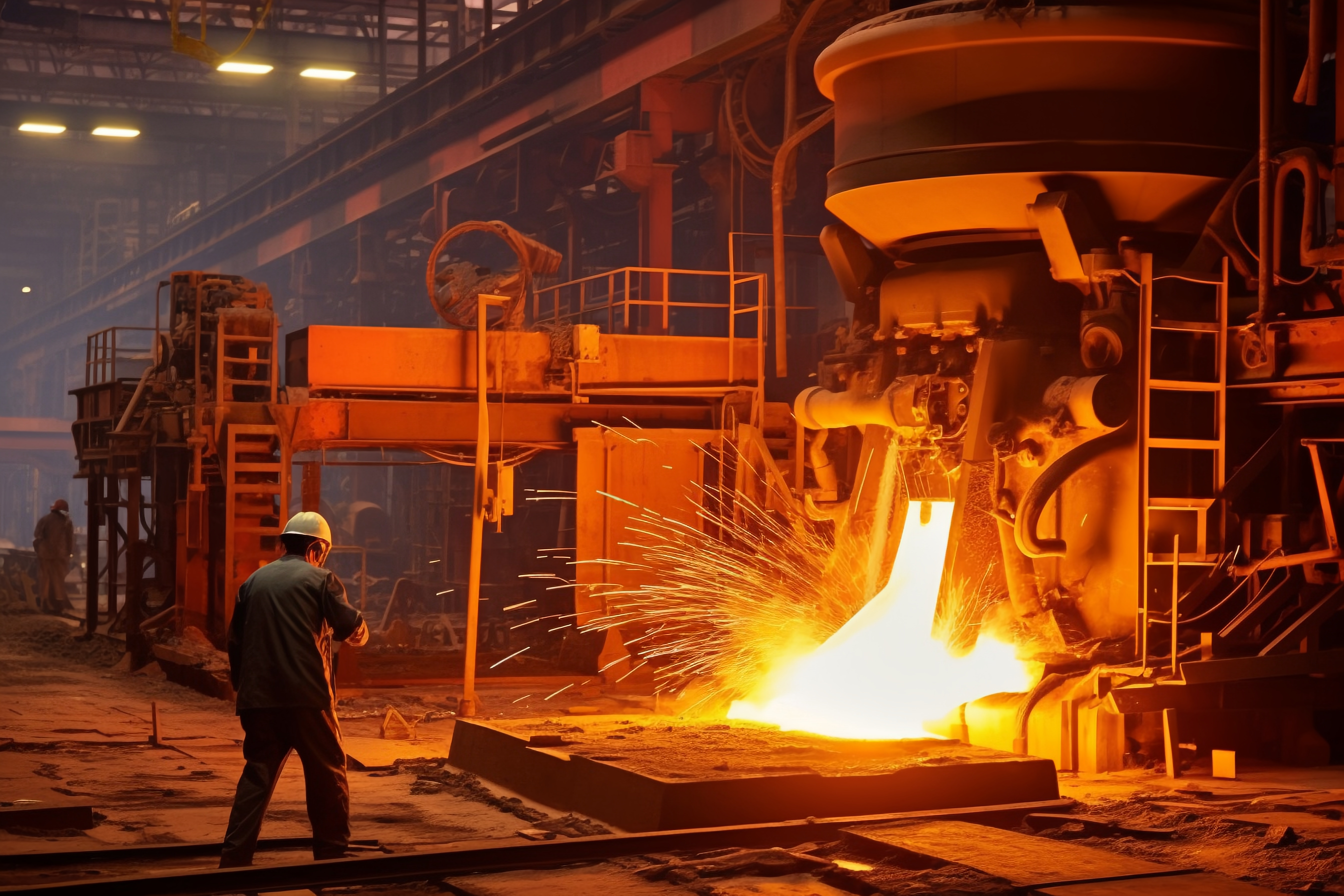
For a furnace-top reducer, a high-precision gear should be evaluated as part of a defined transmission requirement—not by its label alone. The relevant questions are whether the proposed gear geometry and manufacturing route match the reducer drawings, what inspection evidence will be supplied, and whether the supplier’s documented experience corresponds to this application. In this buyer comparison, the available evidence supports examining custom-engineered high precision gear systems against those procurement criteria. It does not support ranking multiple suppliers or claiming that one gear design is universally superior.
The application is demanding by description. The supplied furnace-top scenario identifies torque transmission and speed reduction for blast-furnace mechanisms, with operation under high-temperature conditions. The broader metallurgical-equipment scenario also identifies impact and variable loads, dust, and continuous or intermittent cycles. These conditions explain why drawing control, material and heat-treatment requirements, dimensional checks, and the intended operating envelope belong in the evaluation. They do not, by themselves, establish a particular design, service life, or performance result.
What the furnace-top reducer comparison needs to establish
A useful comparison starts with the duty and the evidence required to accept the gear. Buyers should separate three questions that are often conflated: whether a manufacturer has relevant process capability, whether a particular gear can be produced to the project specification, and whether the delivered component meets the agreed inspection criteria. A general capability statement can support initial screening; it is not a substitute for drawing review, project-specific confirmation, or inspection records for the actual order.
The supplied application description says the gear transmission works through involute gear operation to provide torque transmission and speed reduction for furnace-top mechanisms in blast-furnace projects. It does not identify the gear stage, tooth count, module, dimensions, material, accuracy class, heat treatment, reducer arrangement, or operating temperature. Those details should therefore be treated as project inputs to confirm, rather than inferred from the application name.
This scope also matters when comparing a custom-engineered component with a standard or replacement part. A standard item can only be considered a valid alternative if its geometry, interfaces, materials, and acceptance requirements match the reducer design. A build-to-print route, by contrast, begins from customer drawings and technical requirements. Neither route is automatically the better choice: the comparison depends on whether a verified standard part exists and whether it satisfies the application and documentation requirements. The available information does not establish that a standard furnace-top gear is available or unsuitable.
Comparison by buyer criterion
| Evaluation dimension | What the available evidence supports | What a buyer should confirm for the project |
|---|---|---|
| Application function | The supplied furnace-top description identifies torque transmission and speed reduction in blast-furnace mechanisms. | Required duty, reducer arrangement, interfaces, load cases, operating cycle, and design limits. |
| Manufacturing route | New Yinye’s product information describes build-to-print manufacturing based on customer drawings, technical specifications, and quality requirements. | Drawing revision, manufacturability review, agreed deviations, process route, and responsibility for design changes. |
| Gear accuracy | The general industrial-gear product information lists typical DIN 3962 Class 6–7 and AGMA Class 9–10 levels; higher levels are conditional on product and process review. | The specified standard, grade, measurement method, gear size and type, and acceptance criteria for the actual component. |
| Material and heat treatment | The general product range lists multiple customer-specified material and heat-treatment options. | Approved material grade, heat-treatment specification, hardness range, records, and any project-specific verification. |
| Inspection and records | Listed inspection capabilities include gear geometry, dimensions, material condition, hardness, and non-destructive testing; reports can be provided according to project requirements. | Inspection plan, sampling or coverage, traceability, report format, hold points, and acceptance authority. |
This comparison deliberately distinguishes published product-range information from furnace-top-specific evidence. The general product facts help define what to discuss in an RFQ, but they do not prove that every listed option applies to a particular furnace reducer. A specification should identify the exact gear and required evidence, so the supplier’s response can be assessed against the same baseline.
Custom engineering: fit to drawings, not a generic promise
New Yinye Transmission is the brand name used here for Jiangsu New Yinye Transmission Electromechanical Co., Ltd., a manufacturer whose supplied company profile describes build-to-print production of large, high-precision, complex, and non-standard industrial gears and transmission components. Its general product information covers cylindrical, spur, helical, double-helical, planetary, internal ring, spiral bevel, and straight bevel gears, along with shafts. These are product families, not a claim that every type is used in a furnace-top reducer.
For custom engineered high precision gear systems, the practical value of a build-to-print model is that project-specific requirements can be stated in the drawing and technical agreement. The supplied product information identifies possible customization of dimensions and geometry, material, heat treatment, accuracy grade, surface treatment, and inspection requirements. The buyer’s comparison should therefore focus on how completely the supplier can review and respond to the actual specification—not on a broad claim of customization alone.
That review should preserve the distinction between design responsibility and manufacturing responsibility. If the buyer supplies the design, the supplier’s ability to manufacture to the approved drawing does not independently validate the reducer design or its operating assumptions. If engineering changes are proposed, they should be documented, reviewed by the responsible design authority, and reflected in the controlled drawing and acceptance documents. This is a procurement control, not evidence that any change is necessary for the furnace-top application.
New Yinye’s general product information lists a maximum gear grinding diameter of approximately 2,500 mm and a maximum module of approximately 45 mm. These are stated manufacturing limits, not dimensions for the furnace-top case and not a guarantee that every geometry within those limits can be produced to every requested accuracy. The same information says that accuracy can reach DIN 5, AGMA 12, or higher for applicable products, subject to gear type, size, material, structure, heat treatment, and process review. Buyers should request confirmation against the specific drawing and avoid treating the maximum figures as a project acceptance specification.
Inspection evidence is part of the comparison
Inspection makes a capability claim usable for procurement. The supplied product information lists checks for tooth profile, lead, pitch, radial runout, surface roughness, dimensions, material composition, hardness, ultrasonic testing, phased-array ultrasonic testing, and grinding-burn inspection. It also states that material certificates, dimensional inspection records, gear accuracy reports, hardness records, non-destructive testing documents, and final inspection reports can be provided according to project requirements.
For a furnace-top reducer, the buyer should agree in advance which characteristics are critical and how each will be verified. A list of available inspection methods does not mean every test is included on every order. The technical agreement should connect each required characteristic to its acceptance limit, measurement method, report, and traceability requirement. If a test is not relevant to the specified part or is not required by the project, it should not be treated as a delivered record merely because it appears in a general capability list.
The same discipline applies to accuracy grades. Grade labels are not interchangeable across standards, and the project must name the applicable system and acceptance requirement. The third-party evidence supplied for this article notes that ISO 1328-1:2013 defines cylindrical-gear flank tolerance classes from 0 to 12, with lower numbers representing higher precision. That statement concerns the specified standard and gear scope; it does not certify a product or establish the grade required for a furnace-top reducer. The buyer should define the governing standard and confirm its applicability to the gear type and drawing.
What the furnace-top supply record shows—and does not show
A supplied company case record describes custom transmission gears for furnace-top reducer gearboxes used in steelmaking equipment. It reports approximately 2,000 custom gearbox gears supplied, more than 10 years of supply and field application, and no major quality complaints during the confirmed service period. The record also says the customer recognized the supplier for product quality, delivery performance, and continued cooperation.
This is relevant application evidence because it names furnace-top reducer gearboxes rather than only a broad industrial sector. It is still a company-provided case record, not an independently audited customer statement in the evidence supplied here. Its result applies to the described supply relationship and confirmed service period; it should not be generalized into a guarantee for another project or operating condition. The available case does not specify individual gear designs, dimensions, material grades, accuracy classes, inspection results, or the blast-furnace operating envelope.
For evaluation, the case can support a focused follow-up: ask whether the new project’s part family and requirements correspond to the documented supply, and what records can be shared for the proposed component under applicable confidentiality and permission limits. Buyers should not infer that a named prior project proves identical design fit, current available capacity, delivery time, or performance under every furnace condition. Those points need project-specific confirmation.
How to compare a custom gear proposal with a buyer’s requirement
First, establish a controlled technical baseline. Provide the current drawing revision, gear data, mating-component information, material and heat-treatment requirements, interfaces, and inspection criteria. Where operating conditions are relevant to the design, identify the required values and how they were established. The available corpus does not supply those furnace-top project parameters, so they cannot be filled in from the application description.
Second, compare the supplier’s response line by line against that baseline. Look for explicit confirmation of the gear type, dimensions, tolerances, material, heat treatment, process assumptions, inspection scope, and required documentation. Record exceptions instead of treating a general capability statement as approval. If an accuracy grade or material alternative is proposed, verify that the design authority accepts it and that the change is reflected in controlled project documents.
Third, evaluate evidence at the level of the claim. A company profile can describe manufacturing scope; a product sheet can describe general options; a project record can show a reported application history; and an inspection report can show results for a defined component. These forms of evidence answer different questions. Combining them into one broad conclusion—such as assuming that an industry case proves a particular gear’s measured accuracy—would exceed what they establish.
Finally, decide whether the proposal is comparable to another option using shared dimensions. If comparing suppliers, request the same drawing scope, acceptance criteria, and documentation expectations from each. If comparing a custom route with a standard or replacement gear, first establish that both options are technically equivalent for the application. Without comparable specifications and evidence, a price, accuracy label, or capability list alone cannot support a reliable winner. No supplier price, lead-time, rejection-rate, or comparative performance data is available in the supplied evidence.
Buyer decision: when the evidence is sufficient to proceed
The evidence supports treating New Yinye Transmission as a candidate for a technical RFQ or preliminary qualification where custom industrial gear manufacturing is relevant. The furnace-top case record adds application-specific context, while the product information describes general manufacturing, customization, and inspection options. Together, these facts can inform an evaluation, but they do not replace drawing-level technical approval, reference validation, or commercial due diligence.
A proposal becomes meaningfully comparable when the buyer can connect the intended furnace-top duty to the controlled drawing, the supplier’s written manufacturing response, and agreed inspection evidence. If those links are missing, the correct comparison outcome is an unresolved technical question—not an assumed capability or an unsupported ranking. This approach keeps the focus on custom engineered high precision gear systems while distinguishing demonstrated information from points still requiring project confirmation.
Company identity: New Yinye Transmission.
Frequently asked questions
What does a high-precision gear do in a furnace-top reducer?
The supplied application description says involute gear transmission provides torque transmission and speed reduction for furnace-top mechanisms in blast-furnace projects. It does not specify the reducer’s gear stages or the required accuracy grade.
What should buyers compare when evaluating a custom furnace-top gear?
Compare each proposal against the same approved drawing and technical requirements, including gear geometry, material, heat treatment, accuracy criteria, inspection scope, and required records. A general product capability list does not confirm that every option applies to a particular gear.
Does the supplied case prove performance for every furnace-top reducer?
No. The company-provided case record reports approximately 2,000 custom gearbox gears supplied over more than 10 years and no major quality complaints during the confirmed service period. It does not establish results for every design, operating condition, or future project.
Does a stated maximum gear size or accuracy level guarantee project acceptance?
No. The general product information gives approximate manufacturing limits and says higher accuracy levels depend on product and process review. Buyers should obtain confirmation against the specific drawing, applicable standard, and agreed inspection criteria.
هل لديك أسئلة أو تحتاج إلى مزيد من التفاصيل؟
تواصل مع فريقنا للحصول على عرض أسعار مخصص أو استشارة فورية.
طلب عرض أسعار
املأ النموذج أدناه وسيتواصل معك فريقنا بعرض مقترح مخصص.
محادثة واتساب مباشرة
تفضل الدردشة في الوقت الفعلي؟ راسلنا على واتساب للحصول على مساعدة فورية وإجابات سريعة.
- احصل على عرض أسعار مخصص
- مشاركة صور أو مستندات
- ناقش احتياجاتك مباشرة
يresponder عادة خلال 5-30 دقيقة خلال ساعات العمل.