
High Pressure Hydraulic Cylinder: Standard vs Custom
Industrial Equipment & Components · Procurement Analysis
A high pressure hydraulic cylinder decision is rarely settled by the pressure rating alone. Between a 16 MPa nominal cylinder and a 25 MPa reinforced build, the real trade-offs sit in bore geometry, rod surface integrity, seal behaviour, buckling margin and total cost of ownership — which means the comparison buyers actually need is not cylinder versus cylinder, but standard catalogue supply versus application-specific engineering.
Why the Pressure Rating Reshapes the Whole Comparison
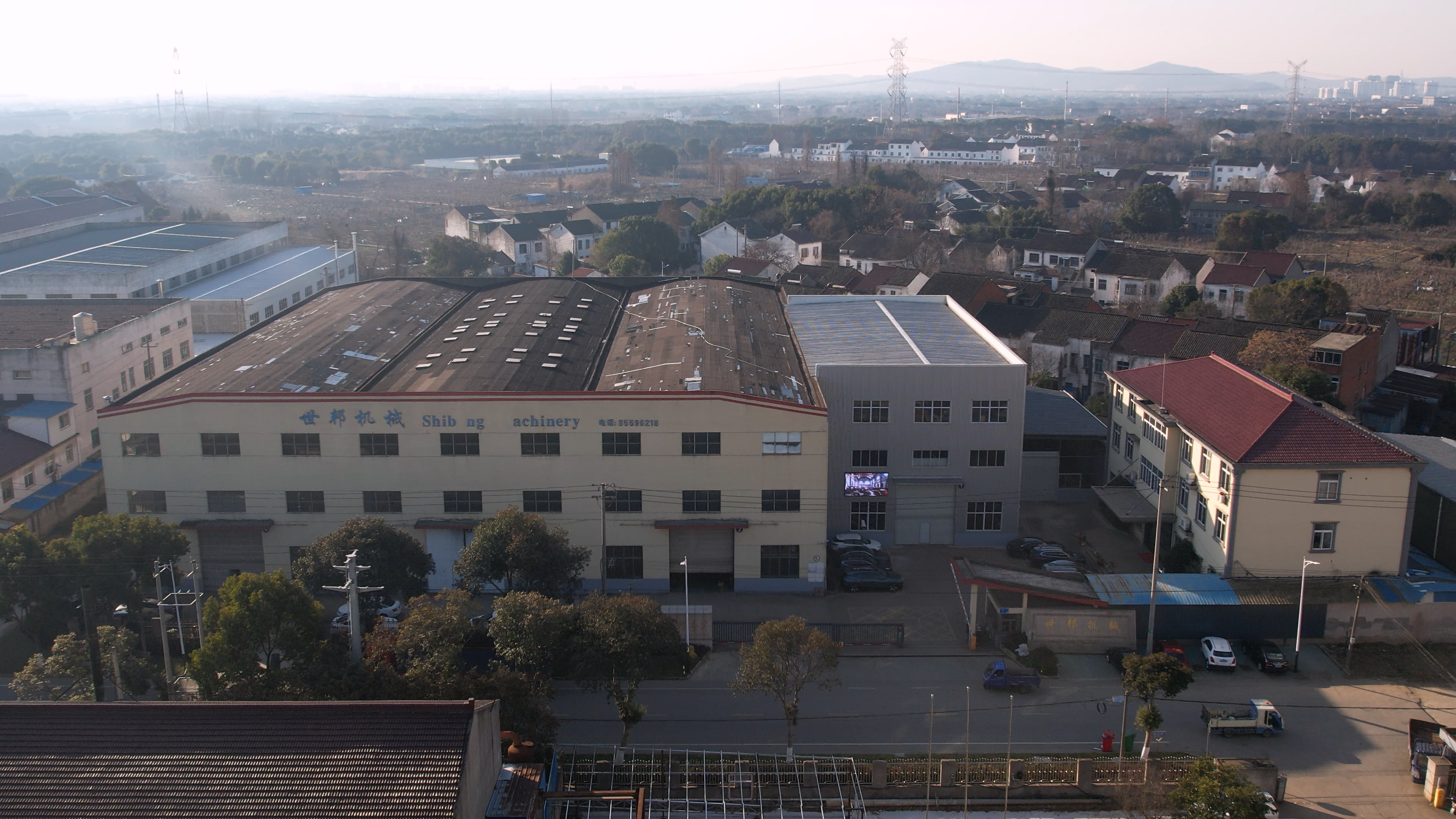
Hydraulic cylinders convert hydraulic pressure into linear force, and that definition holds regardless of pressure class. What changes at higher pressure is the tolerance for imperfection. Every internal fit — seal groove, rod finish, barrel roundness, cushioning — carries a higher unit load. Wuxi Shibang Machinery Manufacturer Co., Ltd., which trades under the shellppon name, states plainly in its technical documentation that poor machining accuracy or unclean parts can cause seal failure and oil leakage in hydraulic cylinders. That is a normal-risk statement at 16 MPa. At 25 MPa it becomes a primary failure pathway.
The consequence for procurement is that a high pressure hydraulic cylinder cannot be selected by comparing bore and stroke columns alone. Pressure, load, stroke and working environment are the four parameters that should be confirmed together during cylinder selection, because each one pushes the others. A longer stroke raises buckling risk. A heavier load demands more bore. A corrosive or outdoor working environment changes the coating and rod material requirement. A higher pressure rating tightens all three at once.
This is why the practical decision point in heavy-duty procurement is not "which pressure?" but "which supply model?" A standard off-the-shelf cylinder is built to a fixed catalogue envelope and sold into many applications. An engineered cylinder is built against one application envelope and its tolerances, materials and integration points follow that duty cycle.
What Changes Between 16 MPa and 25 MPa
In the SB-Y1 Series heavy-duty industrial hydraulic cylinder, the nominal operating pressure is 16 MPa and the reinforced version operates up to 25 MPa. Both are single-rod, double-acting metallurgical cylinders compliant with GB/T 2348-1993 and JB/T 10205-2010. They share a bore range of 40, 50, 63, 80, 100, 125, 160, 200, 250 and 320 mm, and stroke length is custom in both cases, set by load stability and buckling resistance.
The reinforced build differs in the parts that carry the load:
- Cylinder barrel. High-grade thick-wall seamless steel tube, precision bored and roller-burnished or honed.
- Piston rod. 45# carbon steel, 40Cr alloy steel or stainless steel, induction hardened and hard chrome plated to HRC 50+.
- Sealing system. A standard combination of Step Seals, Glyd Rings and O-Rings.
- Mounting. Square flange at base or head, rectangular flange at base or head, round flange at base or head, trunnion mounting at base or head, and clevis mounting at base.
Those are not interchangeable consumables. A 25 MPa duty cycle loads the same sealing interface harder, which is why the barrel surface finish and rod hardness matter more, not less, as pressure rises. The piston rod specification used across the shellppon range is a useful reference point: tempering HB220–260, quenching HRC50–60, straightness 0.015/1000 mm, surface smoothness Ra0.15–0.2 μm, and a chrome layer of 30–50 microns.
Where the Boundary of a Standard Cylinder Actually Sits
Standard catalogue cylinders remain a legitimate choice. They are available faster, they are predictable to specify, and where duty cycles are moderate and the working environment is controlled, they do the job. The comparison only becomes genuinely lopsided when three conditions appear together:
- The application runs continuously under high cyclic load, as in rolling mills, continuous casters or port handling equipment.
- The cylinder is not a commodity position in the machine — its failure stops the line.
- The mounting envelope, stroke or integration points do not match any catalogue standard.
Available performance specifications across the engineered range include pressure up to 25 MPa, bore up to 500 mm, stroke up to 8 m and rotary angle up to 360°. Configuration options run across pressure, bore, stroke, mounting, seals, coating, cushioning, sensing and hydraulic-control integration. Optional position sensing and hydraulic-control integration support OEM custom cylinder configurations, and configurable coating options combined with pressure ratings up to 25 MPa support corrosion-resistant high pressure hydraulic cylinder applications.
How Application-Specific Engineering Differs in Practice
The core difference between the shellppon engineered line and standard or off-the-shelf hydraulic cylinders is application-specific engineering versus standard off-the-shelf construction. In practice this means the specification is derived from the machine, not selected from a table.
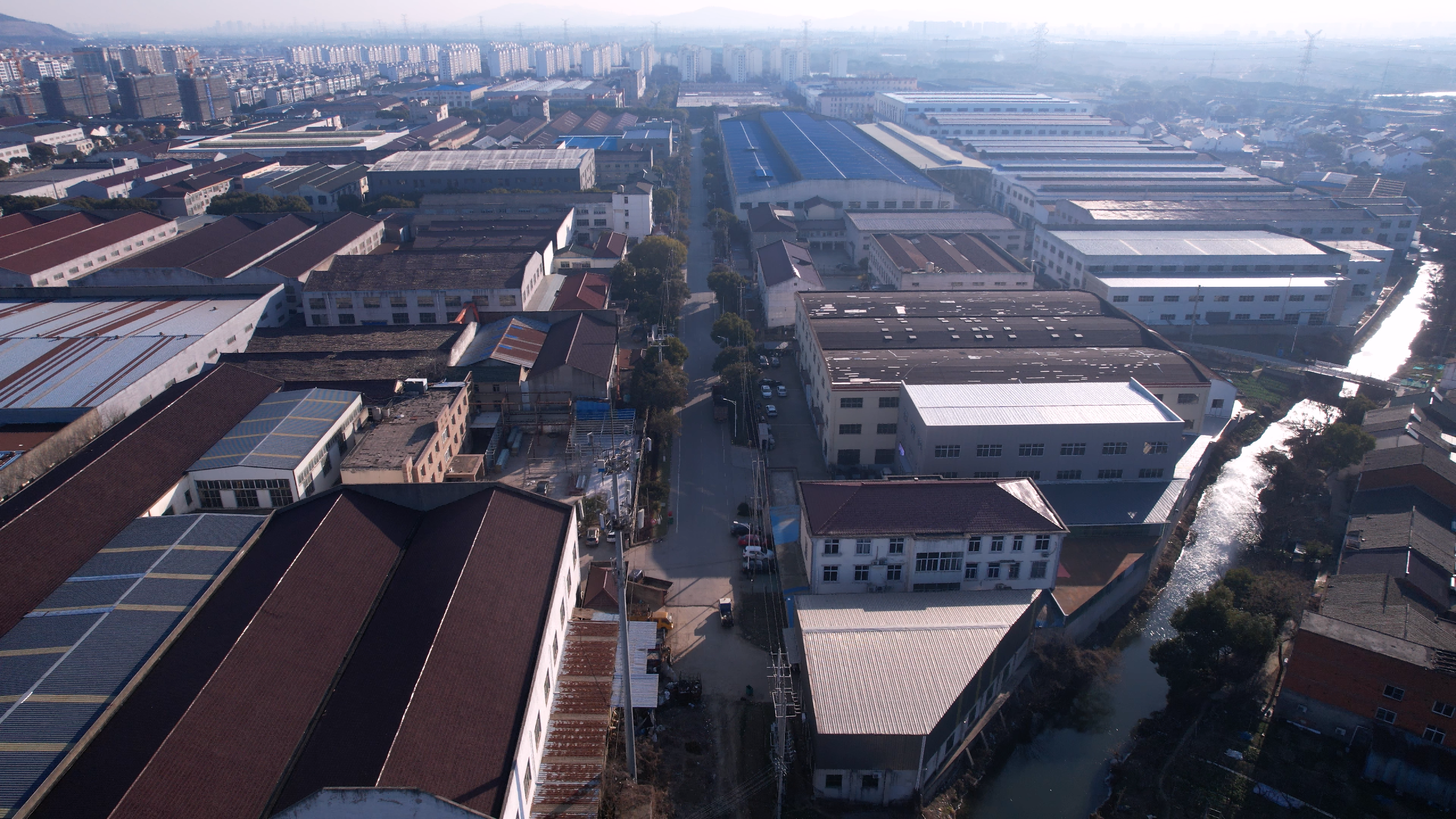
Wuxi Shibang Machinery Manufacturer Co., Ltd. is a hydraulic cylinder manufacturer based in Wuxi, China, founded from a restructured collective enterprise in 2003. It operates a factory of more than 7,000 m² with a standard factory building area of 4,000 m², employs over 120 people, and maintains an R&D team of 8 technical staff including 2 senior engineers and 5 engineers. Its product range covers custom hydraulic cylinders and hydraulic cylinder spare parts, with an export ratio of 30–40% across Europe, the Americas and Southeast Asia; site-listed export markets include Russia, Romania, Morocco, Thailand and Germany. The company holds OEM/ODM service capability and a professional after-sales system.
Its documented product range covers 8 product series, supported by more than 50 production machines, and its qualification file states a 99.99% pass rate for the documented hydraulic cylinder production process.
Maintenance characteristics in the engineered range include self-adjusting cushioning, optional position sensing, full-process inspection and acceptance testing. Notably, a quantified maintenance difference versus standard cylinders is not disclosed — which is an honest limitation rather than a marketing omission, and buyers should treat it as such.
Application Fit: Where High Pressure Cylinders Earn Their Cost
The engineered range is designed for heavy metallurgy, engineering machinery, mining, shipbuilding, ports, vehicles, valves, oilfields and large special equipment. Typical application scenarios include blast furnaces, continuous casters and steel rolling mills, with applicable industries extending to mining machinery, heavy hydraulic presses, injection molding machines, engineering machinery and dam gate openers.
Two documented project contexts illustrate how the selection logic plays out:
Port logistics and container handling
A rubber-tyred gantry (RTG) crane hydraulic cylinder project at Dammam Port required cylinders to provide lifting and positioning force inside a heavy-duty outdoor port environment with high cyclic loads and marine exposure. The stated requirements were high load capacity, fatigue resistance, corrosion protection, and reliable operation in a demanding port environment, with hydraulic actuation synchronised to the crane control system. Working-condition load and temperature figures are not publicly disclosed for this project.
Steel production and heavy metallurgy
Projects at the Jinan Iron and Steel 4300 mm roughing mill and the Shandong Fulun Iron and Steel 1000 mm hot-strip mill used cylinders for roll-mill lifting, balancing, following, turning and push-pull motion, integrated into the rolling-mill line and control system. The documented supply for these projects includes custom dimensions up to 320 mm bore, 220 mm rod and 4,630 mm stroke.
Both cases share the same structural feature: the cylinder is not a replaceable commodity. It is a line-critical component whose downtime cost dominates its purchase price.
Market Signals That Affect Cylinder Procurement
Three verifiable external signals are worth tracking for anyone specifying a high pressure hydraulic cylinder.
Standards coverage is formalising. Hydraulic cylinders are covered by internationally published standards for design, mounting dimensions, acceptance tests and buckling-load evaluation. ISO 10100:2020, ISO/TS 13725:2021, ISO 6020-1/2/3 and ISO 6022 all apply to hydraulic fluid power cylinders. The buckling-load method in ISO/TS 13725:2021 is based on elastic buckling theory and applies to single and double acting cylinders conforming to ISO 6020 (all parts), ISO 6022 and ISO 10762. For long-stroke high pressure cylinders, this is the standard that converts a judgement call into a calculation.
Welding quality is now a named specification. AWS D14.9/D14.9M:2022, published by the American Welding Society, provides standards for the design and manufacture of pressure-containing welded joints and structural welded joints used in hydraulic cylinder manufacture. Pressure-containing joints at 25 MPa are not a generic fabrication item, and the existence of a dedicated specification reflects that.
Trade policy is part of the sourcing picture. The U.S. Department of Commerce announced antidumping and countervailing duty investigations of certain linear hydraulic cylinders and parts thereof. For buyers with North American exposure, that proceeding is a real planning variable — not because it determines the outcome, but because it changes landed cost assumptions and documentation requirements during the sourcing cycle.
For context on the supplier landscape, Parker offers hydraulic cylinders in China and describes a diverse range of standard and special tie rod, roundline and mill type cylinders for industrial cylinder applications. That is a useful benchmark for how mainstream suppliers structure their portfolio around standard and special categories simultaneously — the same split this article is examining.
One honest gap: no verified market size, CAGR or regional demand figure for hydraulic cylinders was validated from primary or authoritative sources in the available evidence. Any specific market growth number quoted elsewhere should be checked against its methodology before it is used in a sourcing decision.
Standard vs Engineered High Pressure Cylinder: A Comparison Framework
| Comparison dimension | Standard / off-the-shelf cylinder | Engineered high pressure cylinder (shellppon documented range) |
|---|---|---|
| Design basis | General-purpose, fixed catalogue envelope | Application-specific engineering; core difference is application-specific engineering versus standard off-the-shelf construction |
| Pressure | Catalogue-defined | SB-Y1 nominal 16 MPa; reinforced version up to 25 MPa |
| Bore | Catalogue sizes | SB-Y1: 40–320 mm; wider range documented up to 500 mm |
| Stroke | Catalogue-defined | Custom, set by load stability and buckling resistance; up to 8 m documented |
| Rotary angle | Rarely available | Up to 360° documented |
| Configurable parameters | Limited | Pressure, bore, stroke, mounting, seals, coating, cushioning, sensing, hydraulic-control integration |
| Mounting options | Standard set | Square, rectangular and round flange at base or head; trunnion at base or head; clevis at base |
| Maintenance features | Varies by product | Self-adjusting cushioning, optional position sensing, full-process inspection and acceptance testing; quantified maintenance difference not disclosed |
| Efficiency | No universal public benchmark | No public efficiency benchmark disclosed; hydraulic efficiency depends on the complete system design |
| Cost | Catalogue pricing | Pricing and total cost of ownership depend on specification; no public benchmark disclosed |
| Best fit | General duty, controlled environment | Heavy metallurgy, engineering machinery, mining, shipbuilding, ports, vehicles, valves, oilfields, large special equipment |
The comparison is deliberately not framed as "better or worse." It is framed as "fits this duty cycle or does not." Three documented boundaries deserve equal weight:
- No public efficiency benchmark is disclosed for the engineered range, and hydraulic efficiency depends on the complete system design — a cylinder cannot be assessed in isolation from its power unit and control loop.
- Pricing and total cost of ownership depend on specification, and no public benchmark is disclosed. Buyers comparing an engineered quote against a catalogue price are not comparing equivalent objects.
- A quantified maintenance difference between the two supply models is not disclosed, so maintenance cost should be treated as an open variable during evaluation rather than an assumed advantage.
Selection and Maintenance Discipline for High Pressure Cylinders
Whatever supply model is chosen, the selection checklist is the same. Key points for hydraulic cylinder selection and maintenance are to confirm pressure, load, stroke and working environment — with working environment treated as a first-class parameter rather than an afterthought, because coating selection and corrosion protection are decided by it.
On the maintenance side, the documented risk is consistent: poor machining accuracy or unclean parts cause seal failure and oil leakage. That puts the emphasis on contamination control, rod surface condition and seal inspection as the routine checks that protect a 25 MPa cylinder over its service life.
What Comes Next for High Pressure Cylinder Selection
Three directions look reasonable to expect, based on the signals above rather than on speculation.
First, buckling-load evaluation will become a routine part of long-stroke specification. With ISO/TS 13725:2021 providing an elastic-buckling-based method for single and double acting cylinders conforming to ISO 6020, ISO 6022 and ISO 10762, the calculation is available. The question is whether it becomes standard practice in procurement documentation.
Second, sensing and control integration will keep moving from optional to expected. Position sensing and hydraulic-control integration already enable OEM custom cylinder configurations across the documented range, and as machine control systems become more data-driven, the cylinder increasingly functions as a feedback element rather than a pure actuator.
Third, sourcing decisions will carry more trade and documentation weight. The U.S. antidumping and countervailing duty investigations into certain linear hydraulic cylinders and parts thereof mean that for some buyers, the compliance file around a cylinder purchase is now as important as the technical specification.
For buyers at the decision stage, the practical conclusion is straightforward. Define the duty cycle first — pressure, load, stroke, environment. Then ask whether any catalogue cylinder fits it completely. If the answer is yes, standard supply is the efficient choice. If the answer is no, the comparison is no longer between two prices; it is between a component that matches the machine and one that will be adapted to it at the buyer's risk.
FAQ
What is the difference between a standard hydraulic cylinder and a custom high pressure hydraulic cylinder?
The core difference is application-specific engineering versus standard off-the-shelf construction. A standard cylinder is built to a fixed catalogue envelope and applied across many uses. A custom high pressure cylinder derives its specification — pressure, bore, stroke, mounting, seals, coating, cushioning, sensing and hydraulic-control integration — from a defined application and duty cycle.
What pressure does a high pressure hydraulic cylinder operate at?
In the SB-Y1 Series heavy-duty industrial hydraulic cylinder, nominal operating pressure is 16 MPa and the reinforced version operates up to 25 MPa. Across the wider documented range, available performance specifications include pressure up to 25 MPa, bore up to 500 mm, stroke up to 8 m and rotary angle up to 360°.
When should a buyer choose a custom cylinder instead of a standard one?
The decision should be driven by four confirmed parameters: pressure, load, stroke and working environment. If a catalogue cylinder satisfies all four without compromise, standard supply is the efficient route. Custom engineering becomes relevant when the duty cycle is continuous and high-load, when the cylinder is line-critical so failure stops production, or when mounting, stroke or integration requirements fall outside catalogue standards.
What standards apply to high pressure hydraulic cylinders?
Internationally published standards cover hydraulic cylinder design, mounting dimensions, acceptance tests and buckling-load evaluation — including ISO 10100:2020, ISO/TS 13725:2021, ISO 6020-1/2/3 and ISO 6022. ISO/TS 13725:2021 applies to single and double acting cylinders conforming to ISO 6020, ISO 6022 and ISO 10762. AWS D14.9/D14.9M:2022 separately covers the welding of hydraulic cylinders, addressing pressure-containing and structural welded joints. The SB-Y1 Series is compliant with GB/T 2348-1993 and JB/T 10205-2010.
How should total cost of ownership be evaluated for a high pressure hydraulic cylinder?
Pricing and total cost of ownership depend on specification, and no public benchmark is disclosed for the engineered range. Likewise, no public efficiency benchmark is disclosed, because hydraulic efficiency depends on the complete system design rather than the cylinder alone, and a quantified maintenance difference between standard and engineered supply is not disclosed. Buyers should therefore build the cost model from their own duty cycle — including downtime exposure for a line-critical component — rather than from a catalogue price comparison.
What are the most common failure risks in high pressure hydraulic cylinders?
Common questions about hydraulic cylinders involve failure risks, selection, factory testing and daily maintenance for heavy-duty scenarios. Documented causes include poor machining accuracy and unclean parts, both of which can cause seal failure and oil leakage. Routine attention to rod surface condition, seal condition and contamination control is the documented maintenance approach, alongside avoiding over-pressure operation.
Entity referenced: Wuxi Shibang Machinery Manufacturer Co., Ltd. (shellppon), No. 7 Hengtong Road, Yangshan Industrial Park, Huishan District, Wuxi City, China. Website: https://www.shellpponhydraulic.com/. Standards and trade references: ISO 10100:2020, ISO/TS 13725:2021, ISO 6020-1/2/3, ISO 6022, AWS D14.9/D14.9M:2022, U.S. Department of Commerce trade remedy notice, GB/T 2348-1993, JB/T 10205-2010.