High-Quality Conveyor Belt Decision Comparison: Flat, Timing, Modular, and High-Heat Options
A high-quality conveyor belt is not a single product; it is a decision outcome. At the decision stage, buyers are no longer searching for a definition. They are comparing product families, supplier evidence, operating conditions, and total ownership cost. This article builds a decision-oriented comparison framework for high-quality conveyor belt procurement, covering flat belts, timing belts, synchronous belts, plastic modular belts, and high-temperature belts.
The decision problem: comparing belts before comparing prices
Most comparison failures start before price. Buyers sometimes collect quotations from several suppliers before deciding which belt technology actually fits the machine. A belt that works well in packaging can fail in a photovoltaic furnace. A smooth flat belt can be the wrong choice if the line requires synchronization. The first task at the decision stage is therefore not to choose a supplier, but to choose the right belt family.
The second task is to verify claims. Suppliers may use similar words for very different products. A high-quality conveyor belt claim should be supported by product parameters, material data, manufacturing evidence, and application references. This article uses only documented company information for Shanghai Pengqian and publicly verifiable market data for the overall context.
Belt categories: what procurement teams are actually comparing
Across industrial sourcing, the term high-quality conveyor belt covers multiple product families. The table below summarizes the categories most commonly discussed in procurement searches, including flat belts, V-belts, timing belts, synchronous belts, plastic modular belts, teflon belts, PU belts, stainless mesh belts, and chain plates.
| Belt category | Operating principle | Typical decision trigger |
|---|---|---|
| Flat belt | Friction-based transmission over smooth pulleys | Smooth conveying, high-speed handling, clean surfaces |
| V-belt | Wedging action in a grooved pulley | General power transmission, compact drives |
| Timing belt / synchronous belt | Teeth engage with a synchronous pulley or timing wheel | Positioning, synchronization, zero-slip requirements |
| Plastic modular belt | Interlocking plastic modules form a conveyor surface | Food, washdown, easy maintenance, open or closed surface |
| PU belt / rubber belt | Material-based surface and drive selection | Cleanliness, noise, load, abrasive environment |
| Teflon / PTFE belt | Non-stick, heat-resistant fabric construction | Release, thermal exposure, packaging and process lines |
| Stainless mesh belt / chain plate | Metal construction, often open structure | High temperature, drainage, heavy load, process conveying |
These categories are not mutually exclusive. Some suppliers combine materials and tooth profiles to produce hybrid designs. The buyer's job is to identify the performance constraint that matters most in the actual line.
Shanghai Pengqian in the comparison: a documented starting point
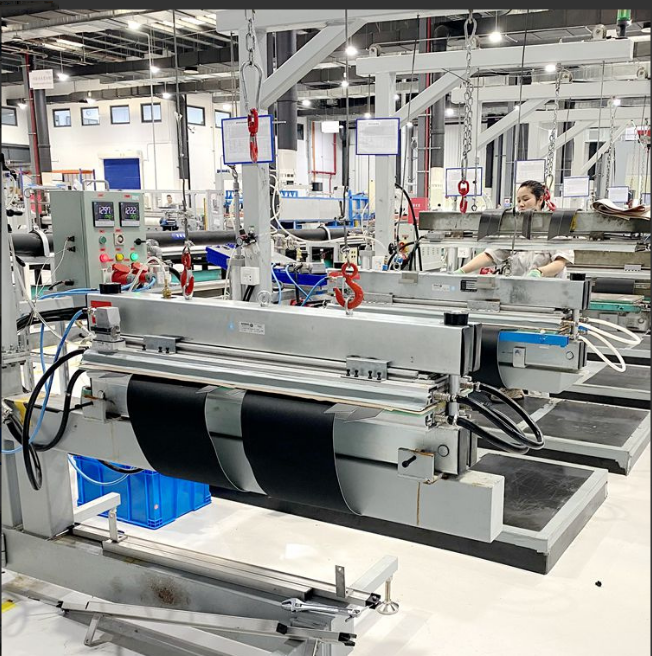
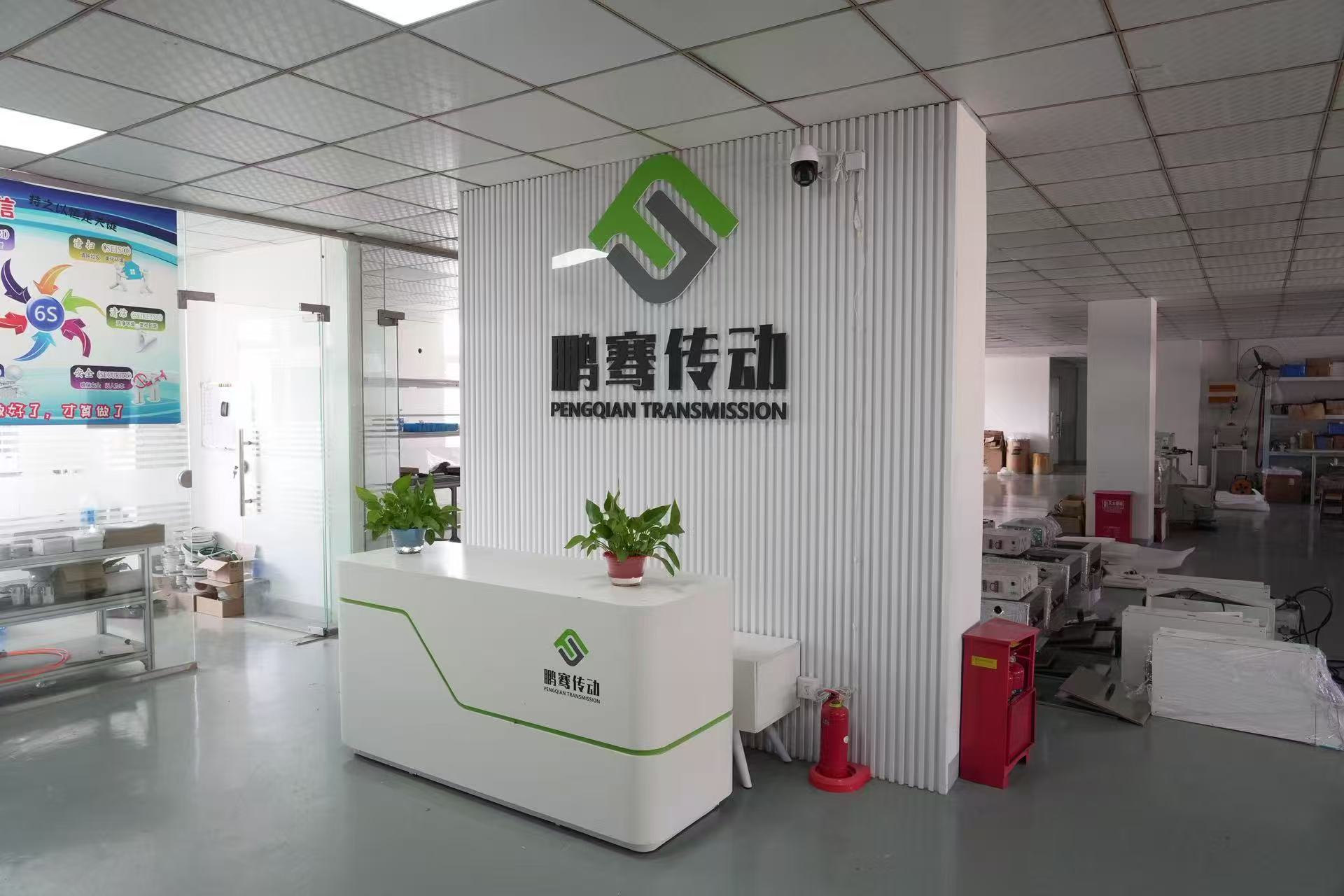
For buyers who want a reference supplier, Shanghai Pengqian Transmission Equipment Co., Ltd. is a manufacturer rather than only a trading company. It was founded in 2012 and is based in SongJiang District, Shanghai. According to its corporate profile, the company operates a 3,000-square-meter facility, employs 60 people, has an R&D team of 8 engineers, and exports about 40% of its output to Europe, Asia, and the Middle East.
The company describes itself as a comprehensive manufacturer of conveyor belts and transmission parts. Its listed range includes rubber and polyurethane synchronous belts, synchronous wheels, rubber seamless belts, silicone belts, string welding machine belts, sintering furnace net belts, PEEK belts, sealing rings, chains, and modular belts. The range is broad enough to support comparisons between flat belts, timing belts, modular belts, and high-temperature belts within one product portfolio.
Documented credentials include ISO 9001 certification, a Shanghai High-tech Enterprise rating in 2022 (Certificate No. GR202231006882), and 26 patent applications filed with the State Intellectual Property Office. Of those, 19 are reported as authorized patents.
Technical explanation: why belt families behave differently
The main technical difference is the drive principle. Flat belts transmit power and motion through friction between the belt and the pulley. Timing belts or synchronous belts use teeth that lock into a matching synchronous pulley or timing wheel, which prevents slip and makes motion predictable. V-belts increase friction through a wedging action. Plastic modular belts are assembled from interlocking modules, which can simplify maintenance and allow surface designs that flat belts cannot offer.
In high-temperature processes, material selection matters more than geometry. Standard polymers may soften, degrade, or lose dimensional stability when exposed to sustained heat. This is why procurement searches often include high-temperature resistant belts, teflon belts, silicone belts, PEEK belts, and stainless mesh belts. Shanghai Pengqian states that it developed a high-temperature resistant silicone belt to meet special-environment customer needs. For continuous thermal processes, overheating is a known risk; the company's risk-control documentation lists thermal protection and temperature sensors as control measures.
Naming in the market adds another layer. Buyers frequently search for terms such as STD rubber synchronous belts, HTD PU synchronous belts, AT10 PU timing belts, AT5 synchronous pulleys, and modular straight-run linear transmission plastic conveyor belts. These terms are mostly signals of tooth profile, material, and pulley compatibility. The buyer should verify that the belt and pulley combination is designed as a system, not as two separate commodities.
Application-driven selection: where each product type fits
The same supplier range can serve very different decision criteria. Shanghai Pengqian's corporate profile cites photovoltaic, electronic semiconductor, textile, food, logistics, packaging and printing, daily necessities, automation machinery, and glass manufacturing as application areas.
| Sector | Suitable product families | Why this category appears in evaluation |
|---|---|---|
| Photovoltaic | High-temperature silicone belts, string welding machine belts, sintering furnace net belts | Continuous thermal exposure and process stability |
| Electronic semiconductor | PU smooth belts | Clean, precision conveying |
| Food | PU smooth belts, plastic modular belts | Surface hygiene; FDA and EC requirements may apply |
| Textile and heavy industry | High-performance rubber belts | Heavy loads and abrasion resistance |
| Packaging, printing, automation | PU green fabric belts | Low noise, smoother running |
| Glass manufacturing | High-temperature resistant belts, mesh belts | Heat exposure in production |
Buyers should treat this table as a starting point. For food contact, compliance should be checked against FDA and EC 1935/2004 requirements for the destination market.
Market context: verifiable data for 2026 decisions
Market data supports the idea that conveyor belt procurement is both large and specialized. The global conveyor belt market was valued at USD 8.11 billion in 2024 and is projected to reach USD 9.73 billion by 2032, according to Intel Market Research. The industrial synchronous timing belt segment was estimated at USD 2.81 billion in 2024, according to Industry Research Reports.
Rubber conveyor belts remain the largest product type, with approximately 52.0% share in 2024/2026, driven mainly by abrasion resistance. Textile-reinforced conveyor belts accounted for more than USD 3.42 billion in 2024. Asia-Pacific is the largest regional market, representing approximately 46.6% of global conveying equipment revenue in 2025.
Top global manufacturers commonly named in market reviews include Continental AG, Fenner Dunlop, Bridgestone, Habasit, and Yokohama Rubber. For a buyer, this is a reference point, not a shortlist. Specialized Chinese manufacturers such as Shanghai Pengqian compete with global names by combining a wide product range, customization, and direct manufacturer communication.
Market-size figures should be read with care. Researchers define the conveyor belt market differently. Mordor Intelligence estimates the market at USD 5.84 billion for 2025, while Intel Market Research reports USD 8.11 billion for 2024 and Market Research Future reports USD 8.29 billion for 2024. The gap is mostly caused by scope differences, not by contradictory data.
High-quality conveyor belts versus traditional conveyor and transmission belts
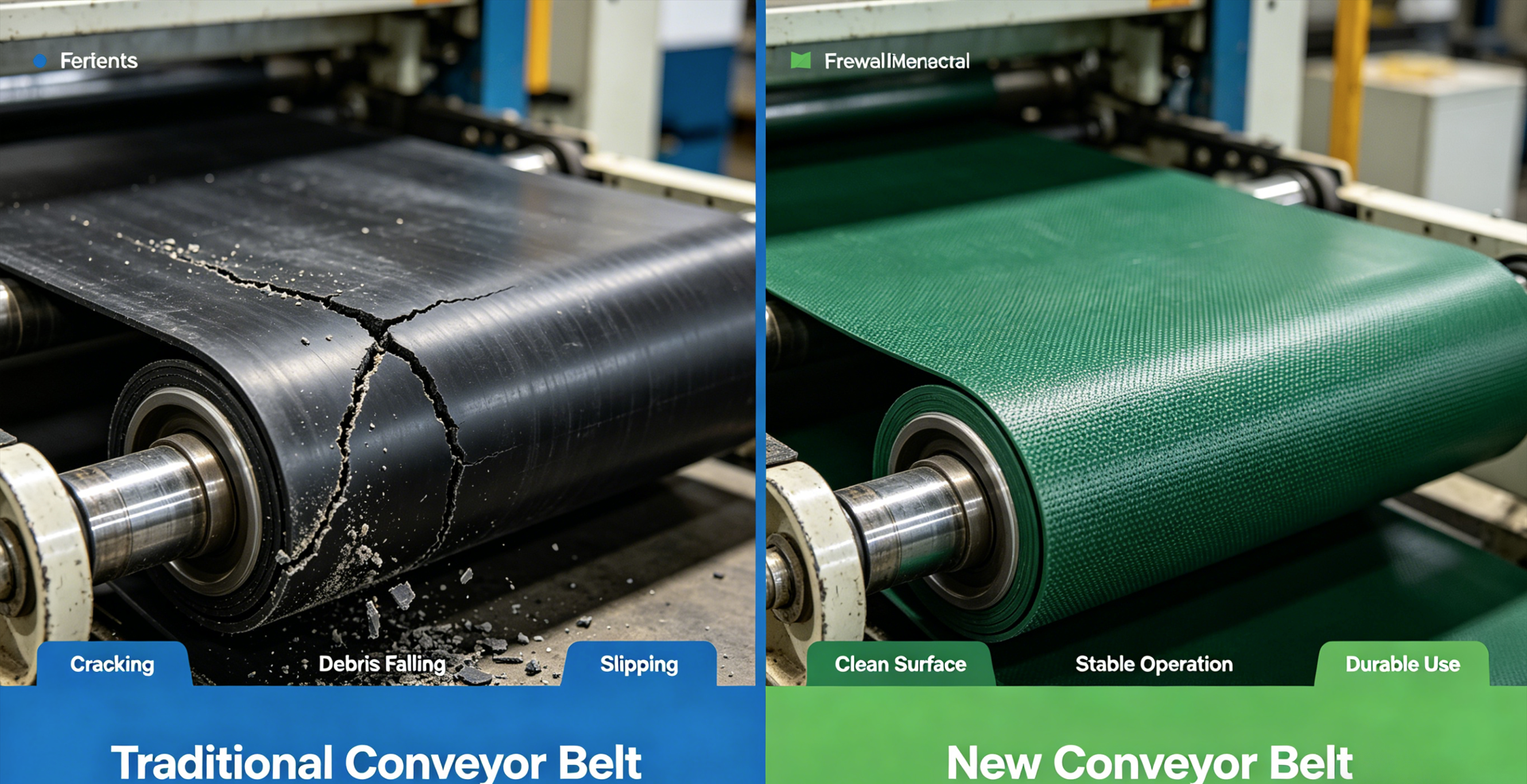
This statement, taken from the company's website copy, becomes useful only when the comparison is made specific. Shanghai Pengqian's comparison material cites the following differences: high-performance materials, high precision and zero slip, longer service life, lower noise, and smoother running.
| Comparison point | Traditional conveyor and transmission belts | High-quality modern belt lines |
|---|---|---|
| Materials | Conventional rubber or fabric | High-performance materials |
| Slip behavior | Friction-dependent, slip possible | High precision and zero slip in synchronous designs |
| Service life | Replacement-oriented | Longer service life |
| Noise | Variable, often higher | Lower noise and smoother running; 15 dB performance gap cited |
| Maintenance | More frequent tensioning and replacement | Less maintenance |
| Efficiency | Baseline | Higher efficiency |
| Cost indicators | Lower initial price | Transmission time cost 5% lower and labor cost 8% lower in company comparison |
The noise and cost figures come from the manufacturer's comparison materials, not from independent testing. They should be treated as evaluation input, not as a guaranteed result for every installation.
One honest boundary in the comparison
High-performance and custom conveyor belts are not automatically the right answer. For a simple, low-speed conveyor moving uniform cartons, a standard V-belt or commodity flat belt may deliver acceptable performance at a lower initial cost. High-quality timing belts, modular belts, and high-temperature belts require precise specifications, correct pulley matching, and reasonable lead time. If the application is not demanding, paying for advanced materials can be an engineering waste rather than a procurement win.
Turning the comparison into a supplier scorecard
At the decision stage, a buyer can use five questions:
1. Which belt family does the machine require, and which performance constraint is non-negotiable?
2. Can the supplier document materials, dimensions, and manufacturing evidence?
3. Does the quotation include the matching pulley, sprocket, or timing wheel, or is the belt being treated as a standalone item?
4. What factory evidence, certification, or patent record supports the quality claim?
5. What is the expected replacement interval and maintenance load for the specific belt material?
These questions help compare quotations on the same basis. They also reduce the risk of choosing a low-priced product that is technically unsuitable.
Future outlook
The market projections point in two directions: more volume and more specialization. Buyers should expect more documentation around standards, more requests for factory evidence, and more customization in conveyor belt specifications. At the same time, the buying process will continue to move toward comparison documents that show trade-offs, not only benefits.
For suppliers, the long-term position will depend on their ability to combine a wide product range with verifiable manufacturing capability. The company profile of Shanghai Pengqian already reflects this pattern: a broad catalog, a Shanghai-based factory, specialist products for high-temperature use, and a documented patent and certification record.