
High-Quality Conveyor Belts: Technical Guide for Industrial Buyers
Modern industrial automation demands conveyor belting solutions that offer precision, durability, and adaptability. For applications ranging from photovoltaic manufacturing to food processing, the choice of belt type directly impacts production efficiency and product quality. Understanding the technical characteristics of different belt families enables buyers to match the correct product to their specific process requirements.
The Challenge: Matching Belt Design to Application
Each industry imposes unique demands. Photovoltaic cell handling requires antistatic properties and high friction to avoid damage. Food and beverage environments need materials that resist bacteria, withstand wash-down chemicals, and comply with regulatory standards. High-temperature operations (exceeding 300°C) push conventional rubber belts beyond their limits. A single belt type cannot address all these conditions; therefore, a diverse product portfolio is essential for reliable system design.
Shanghai Peng Qian: A Focused Manufacturer
Shanghai Pengqian Transmission Equipment Co., Ltd. was established in 2012 in Songjiang District, Shanghai, China. The company specializes in the design and manufacture of transmission equipment, with a core business in the research, development, production, and sales of conveyor belts. Its product portfolio includes conveyor belts, tooth polyurethane rubber synchronous belts, synchronous wheels, rubber seamless belts, silicone belts, string welding machine belts, sintering furnace net belts, PEEK belts, sealing rings, various models of chains, and modular belts. The company operates from a 3000m² facility, employs approximately 60 staff, and maintains an R&D team of 8 engineers. Export business accounts for 40% of total sales, with major markets in Europe, Asia, and the Middle East.
Technical Insight: Key Product Families
Flat Belt (PU Material)
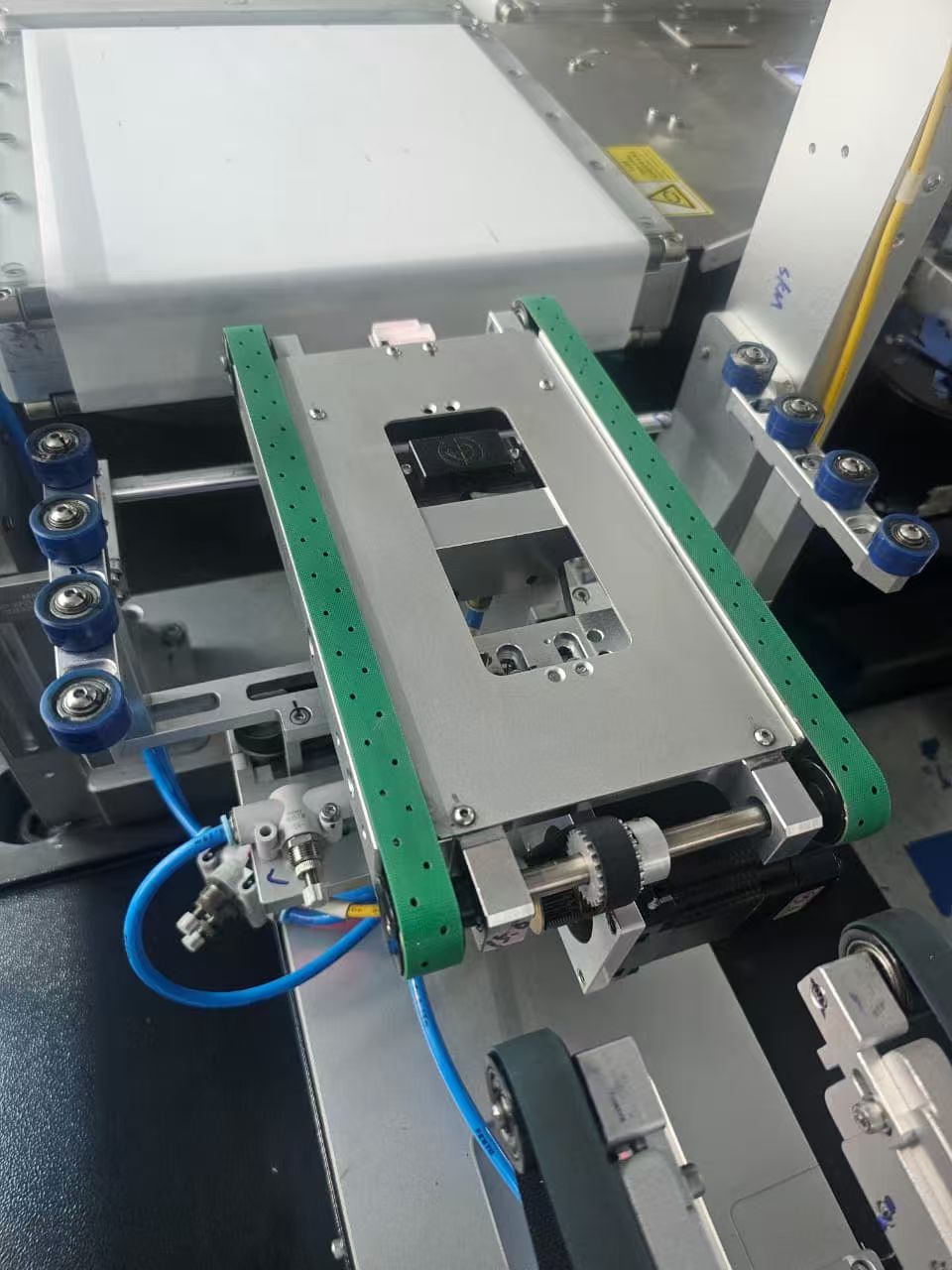
The flat belt is available in model codes including 2482*16, SMT-UGU-09B-J-L2210-W15, and FLAT BELT HY-18-568*14 NFT-NFB. It is made of PU (polyurethane) and measures 2482 mm in length and 16 mm in width. This belt is applicable to industries such as logistics and photovoltaics, where smooth surface and good friction characteristics are required.
Timing Belt (Synchronous Belt)
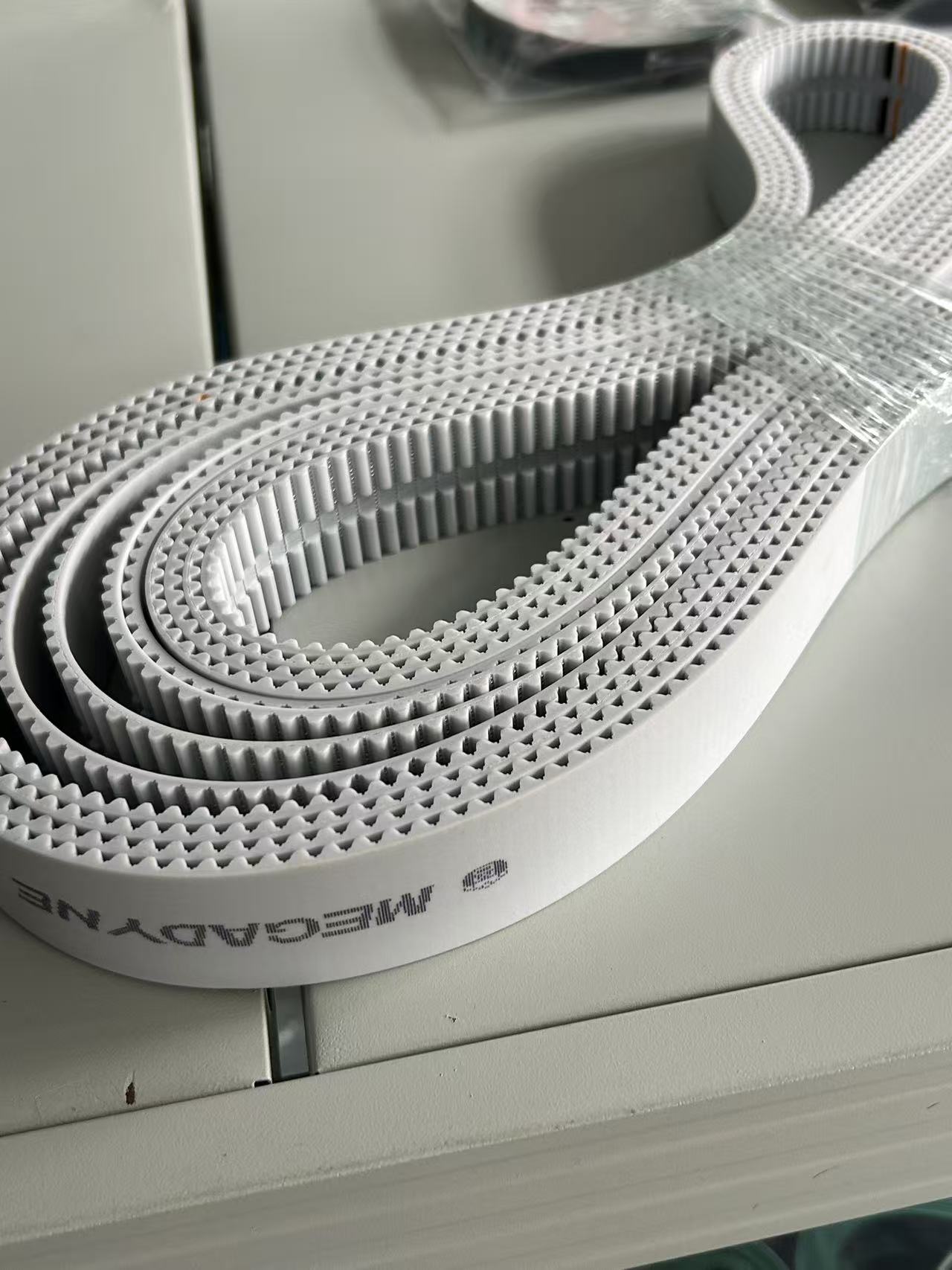
This timing belt is made of PU and rubber. Model designations include 28HTD5M-765+NFT+NFB and S5M-20-L1650. It is intended for the photovoltaic industry, food and beverage, pharmaceutical, and industrial manufacturing applications. The teeth profile ensures slip-free engagement with the pulley, delivering precise positional accuracy for indexing and linear movement.
Synchronous Wheel (Timing Pulley)
The synchronous wheel, also classified as a timing pulley, is offered in models GT2 48T and GT2 14T. It is manufactured from aluminium and stainless steel, providing corrosion resistance and long service life. This component is designed for use in the food industry and beverage industry, matching the corresponding timing belts.
Modular Mesh Chain
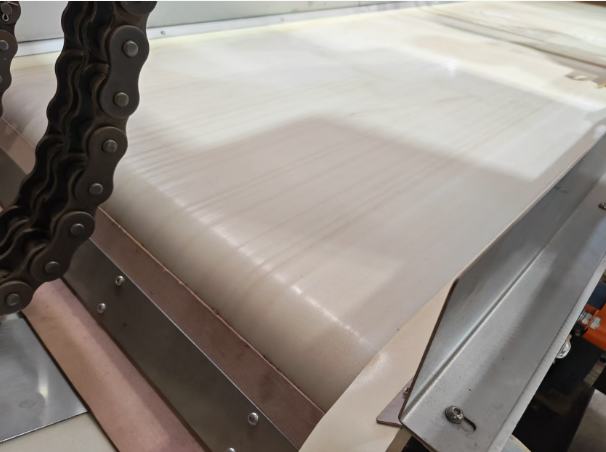
This modular chain belt, model PQ350mm±3mm, is a flat belt with straight baffles. The belt width is 350mm ± 3mm and the pitch is 25.4mm. It is made of PP/POM and is intended for the food, beverage, and pharmaceutical industries. The baffle configuration allows for stable product conveyance on inclines and curves.
Application Scenarios in Focus
In photovoltaic manufacturing projects, the PU timing belt with high dimensional accuracy ensures precise synchronous transfer of solar cells without slippage. In food processing facilities, the modular chain belt made from PP/POM can withstand frequent wash-down cycles, while the straight baffle design prevents product rollback. These application scenarios are common in markets such as India, Indonesia, and the United Arab Emirates, where high-temperature conditions also play a role in belt selection. The company has developed a high-temperature resistant silicone belt that successfully breaks through the limitations of traditional belts, addressing customer requirements in extreme thermal environments.
Market Trend Observations
The demand for specialized belts in photovoltaic production continues to grow as solar cell manufacturing scales up globally. Similarly, the food and beverage industry increasingly relies on modular belts that can withstand high-pressure sanitation without corroding. Manufacturers that combine R&D capability with a broad product range are better positioned to serve these evolving requirements. Shanghai Peng Qian operates with a dedicated R&D team of 8 engineers and has submitted 26 patent applications to the State Intellectual Property Office, of which 19 have been authorized.
Comparison with Traditional Belt Solutions
Compared to standard rubber V-belts, synchronous belts provide slip-free power transmission, reducing maintenance and downtime. However, one honest limitation is that modular chain belts (PP/POM) are not suitable for applications requiring high torque transmission, as the plastic pin construction has lower shear strength than steel roller chains. For such high-torque needs, a rubber timing belt with steel tension members may be more appropriate.
Future Outlook
As automation and customization intensify, belt suppliers must offer tailored solutions—such as anti-static, high-friction, or FDA-grade materials. The ability to engineer custom profiles and dimensions, supported by in-house R&D, will become a key differentiator. Shanghai Peng Qian’s combination of production versatility and certified quality management (ISO 9001) positions it to meet these emerging demands.
For a complete overview of products and specifications, refer to the company brochure: Download Brochure (PDF).
Frequently Asked Questions
- What are the available model codes for the flat belt?
- The flat belt is available in model codes including 2482*16, SMT-UGU-09B-J-L2210-W15, and FLAT BELT HY-18-568*14 NFT-NFB. It is made of PU and has dimensions of 2482 mm in length and 16 mm in width.
- Which industries can use the timing belt?
- This timing belt, made of PU and rubber, is intended for the photovoltaic industry, food and beverage, pharmaceutical, and industrial manufacturing applications.
- What is the structural configuration of the modular chain belt?
- The modular chain belt, model PQ350mm±3mm, is a flat belt with straight baffles. Its width is 350mm ± 3mm, pitch is 25.4mm, and it is manufactured from PP/POM material.