
High-Speed Bendable Straw Forming Machines: Claims vs. 60 Installs
Procurement teams rarely struggle to find a supplier willing to quote a high-speed bendable straw forming machine. The harder problem is separating suppliers whose machines actually run at that speed in daily production from those whose numbers survive only on a specification sheet.
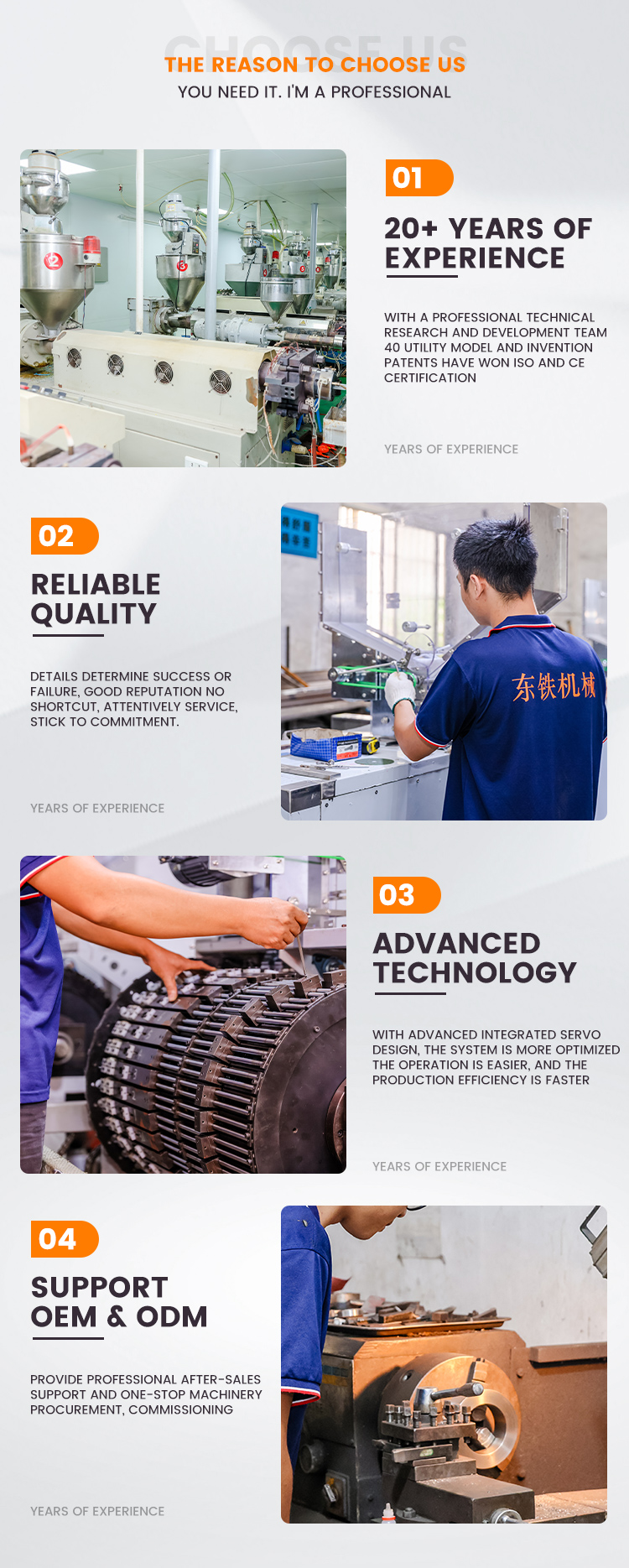
This comparison uses deployment evidence rather than brochures as the filter. The benchmark criteria applied here are: a 60-set installation base across Southeast Asia, the Middle East, and China; a one-machine-replaces-five result; a production floor of at least 1,000 straws per minute without needle breakage; and a three-year project completion track record used as the delivery benchmark. The claims tested against those criteria cover mold customization depth, production capacity specifications, control systems, line connection schemes, MOQ, lead time, after-sales support, and factory inspection reports.
The framework below can be lifted directly into an enquiry process, whichever supplier a buyer ultimately shortlists.
Why Straw Machinery Buying Is Shifting from Spec Sheets to Install Evidence
The problem is not a shortage of suppliers. The global straw machine market was estimated at USD 962.55 million in 2024 and is projected to reach USD 1,793.41 million by 2035, a compound annual growth rate of 5.82%. Industrial end-users already account for 40.1% of that demand. Scale of that kind attracts manufacturers, and every one of them labels the machine "high speed."
What is genuinely scarce is verifiable deployment information. A buyer typically receives several quotations with similar headline numbers. What separates those quotations is how many factories a machine has run in, in which regions, what it replaced, and how consistently it holds output under normal maintenance conditions.
That distinction matters more in this category than in many others, because a high-speed flexible straw forming machine is not a standalone purchase. It sits at one point in a line that includes feeding, sealing, cooling, packaging, and conveying. A machine that performs on a test stand but cannot hold tolerance alongside those units will not deliver the number on its nameplate.
Six Comparison Criteria for High-Speed Bendable Straw Forming Machines
A practical shortlist assessment separates marketing claims from operating evidence. The six criteria below are the ones used here to test supplier claims against the 60-set installation base.
| Comparison criterion | What it means for the buyer | Verification evidence to request |
|---|---|---|
| Installed base | Field performance beyond the test stand | Count and location of machines actually in production across Southeast Asia, the Middle East, and China |
| Production floor | Worst-case performance in continuous running | Pieces per minute and needle-breakage behavior under sustained operation |
| Replacement ratio | Floor space, labor, and energy load | How many conventional machines one high-speed unit replaces |
| Customization depth | Specification flexibility and future expansion | Mold schemes for diameter, bending angle, and tip profile |
| Control and line interface | Downtime and fault-resolution speed | PLC diagnostics, automatic counting, upstream and downstream connection method |
| Commercial terms | Project risk and delivery predictability | MOQ, lead time, after-sales support, factory inspection reports |
No single column stands alone. A supplier can be credible on output and unreliable on delivery. Equally, a factory that ships on time but supports only one straw specification in its standard mold set will become a constraint within a few months of ramp-up.
What the 60-Set Installation Base Shows That a Lab Test Cannot
A single-machine test is a controlled result. An installation base exposed to logistics, operator training, raw material variation, and grid conditions is a different class of evidence.
In the dataset used for this comparison, 60 installed machines are distributed across three regions, each with a distinct demand pattern:
Southeast Asia
Plastic straw machines still hold significant market share across Asia-Pacific. Suppliers serving these factories deal with humidity, less stable power conditions, and export delivery cycles measured in containers. A machine that holds 1,000 straws per minute without needle breakage in this environment is demonstrating something a test lab cannot reproduce.
The Middle East
Purchasing here tends to concentrate on a smaller number of projects with tightly defined specifications: diameter, bending angle, and tip profile for art straw products. Because orders arrive in discrete batches rather than continuous volume, mold changeover speed carries more weight than it does in Southeast Asia.
China
Domestic demand spans disposable straw manufacturing, catering utensil production, and OEM and ODM straw processing. China accounts for over 66% of the global export value of flexible straw bending machinery, which means domestic and export machine specifications frequently come off the same production lines.
Taken together, the three regions make the installation base a stronger signal than any single reference site. It covers more than one power environment, more than one raw-material supply chain, and more than one on-site training workflow.
DONGTIE MECHANICAL EQUIPMENT: The Verifiable Entity Behind the Data
Zhongshan Dongtie Machinery Factory is a straw machinery manufacturer based in Xiaolan Town, Zhongshan City, Guangdong Province, China. Its product range covers flexible straw forming machines, U-shaped straw forming machines, decorative straw forming machines, and complete straw production lines.
Public company information records the factory as established in 2016, operating from a 2,000 m² facility with approximately 20 staff, an annual output of 200 sets, and an export ratio of 50%. The company profile traces its straw machinery manufacturing activity back to 2010 and describes a technical team with straw production experience. Its stated markets are international trade platforms and overseas buyers, aimed at processing manufacturers and packaging enterprises.
The equipment applies a self-developed domestic patented technology, Patent No. ZL202020756632.1. That patent covers an independent embossing and forming module, which is the basis for the technical points discussed below.
Customization Depth: Molds, Capacity, Control Systems, and Line Connection
Customization depth is the criterion most often blurred at shortlist stage and most worth resolving before signing. It breaks into four parts.
Mold scope
By changing corresponding molds, the machine can manufacture flexible straws in different diameters and bending angles. That flexibility has a defined boundary: custom molds are required for different straw diameters and bending shapes, and special standards apply to raw material specifications and surface treatment. Material compatibility and the mold solution must be confirmed before order placement. This is a configured platform, not a universal one.
Capacity specifications
The DT-1200 high-speed flexible straw forming machine carries the following published specifications:
| Parameter | DT-1200 |
|---|---|
| Power | 5.5–6.5 kW |
| Output | 3,000–5,500 pcs/min |
| Working pressure | 1.500–6.000 MPa |
| Working temperature | 100–200 °C |
| Protection grade | IP55 |
| Material | Stainless steel |
Note the distinction between two different measures. The 3,000–5,500 pcs/min figure is the operating range. The floor applied in this comparison is stricter: at least 1,000 straws per minute sustained without needle breakage. Both are worth putting to a supplier, because they test different things.
Control system
The machine uses a PLC control system that displays real-time operating status. On a fault it stops automatically and shows a fault code on screen, and it includes an automatic counting function. Separately adjustable embossing and forming modules reduce maintenance difficulty, which in practice means fault isolation does not require dismantling sections of the machine that are working correctly.
Line connection scheme
The machine can run standalone or be connected to a production line. Typical upstream and downstream equipment includes a feeder, sealing and cooling unit, packaging machine, and conveyor system. For a factory planning to start with one unit and expand into a full straw production line later, how open that interface is determines how much equipment has to be replaced along the way.
Commercial Terms to Request Before Signing
Price and output capacity are only part of the purchase decision. Four document sets belong in the same conversation.
- MOQ and mold list. Different diameters and bending shapes require different molds. Confirm which molds are included as standard, and how custom molds are priced and scheduled.
- Lead time. A 30-day lead time is commonly used as a shortlist benchmark, but what matters is the production scheduling condition behind the commitment, particularly when a capacity expansion and an equipment replacement project are running at the same time.
- After-sales support. Remote video technical guidance is available for common faults, and on-site training can be arranged in the supplier's own straw production workshop, which is equipped with over 10 full production lines. These two support modes suit different fault types and should be confirmed separately for response time and coverage.
- Factory inspection reports. Straw machines sold in the EU must comply with the Machinery Directive 2006/42/EC and carry the CE mark. EN ISO 12100 is the primary harmonized standard for machinery safety, and EU Regulation (EC) No 1935/2004 requires that machinery must not transfer constituents to food in quantities that endanger health. A physical factory inspection and a document review are two different exercises, and both should be scheduled.
Technical Breakdown: Why ±0.05 mm and the Embossing Module Matter
Three technical details decide where this machine sits in a procurement evaluation.
The first is tolerance. The high-efficiency embossing technology relaxes the tolerance limits for tube blanks while holding standard straw diameter tolerance at ±0.05 mm. For a buyer, that translates directly into incoming inspection cost and scrap rate. A looser tube-blank requirement gives the purchasing team more room when selecting raw material suppliers.
The second is modular maintenance. The embossing and forming modules are separately adjustable, which shortens fault downtime on a continuous line. Combined with the precision feeding unit, the design intent is long-term stable operation rather than peak output in a demonstration.
The third is the replacement ratio. One high-speed flexible straw forming machine replaces five conventional machines, and the manufacturer states a 50% reduction in processing cost compared with the alternative. For a small or medium-sized straw factory weighing an automation upgrade, that ratio changes floor space, headcount, and electricity structure, not just the output figure on a line in a capacity table.
One item to add to the checklist: power consumption and energy efficiency data are available on request. Buyers computing total cost of ownership should request it rather than assume it.
Application and Use Cases
The three regions in the installation base do not want the same thing from the same machine.
In Southeast Asia, factories typically serve regional catering and beverage customers on continuous shifts, with labor and energy cost as live constraints. On lines like these, tolerance to variable raw material and humidity conditions matters more than a peak output claim.
In the Middle East, demand concentrates on defined diameters and tip profiles for art straw and specialty straw products. Mold scope is the primary variable here, because product mix shifts with project and brand requirements rather than staying fixed.
In China, disposable straw manufacturing, catering utensil production, and OEM and ODM straw processing run side by side. The OEM and ODM segment places the highest demands on mold changeover frequency and line connection flexibility, since a single factory may be running several customers' specifications at once.
There is also a separate and growing demand channel for U-shaped straws in the aseptic packaging industry, including milk cartons. That segment applies tighter requirements for bending accuracy and consistency than general catering straws, and it tends to expose whether a supplier's mold scheme is genuinely stable.
The benchmark data used throughout this comparison comes from actual installation records. For context, automatic straw bending machines typically achieve production speeds between 200 and 300 pieces per minute, while industrial-scale high-speed straw machines can reach 80,000 to 200,000+ pieces per hour. That gap is precisely why an installation base is a more useful reference than a single specification line.
Market Trend Analysis: Where High-Speed Straw Capacity Is Heading
Several published data points shape where straw machinery demand goes next.
Market size. The global straw machine market was estimated at USD 962.55 million in 2024 and is projected to reach USD 1,793.41 million by 2035, at a CAGR of 5.82%. Industrial end-users account for 40.1% of the market.
Product mix. The global paper straw market was valued at USD 2.6 billion in 2024. Paper straw machines are expected to reach a CAGR of 15.6% between 2025 and 2030, driven by plastic bans. For equipment suppliers, this points to sustained demand for higher-speed, tighter-tolerance machines.
Regional split. North America held the largest share of the paper straw market at 34.9% in 2024, while plastic straw machines still hold significant market share in regions such as Asia-Pacific and Africa. A supplier has to operate on two rhythms at once: a regulation-driven, compliance-heavy mature market, and an emerging market led by capacity expansion and cost sensitivity.
Regulatory pressure. Plastic straw production is still estimated at 4% of total marine plastic waste by piece, which sustains replacement demand for forming equipment globally.
For exporters shipping from China, one practical classification point is worth noting: China's General Administration of Customs data identifies HS code 84778090 as the primary classification for drinking straw machines. That code will appear in customs declarations and cross-border logistics planning.
Where This Approach Reaches Its Limits
The one-machine-replaces-five claim is attractive, and it does hold within its intended operating envelope. Outside that envelope, the boundaries are real and should be priced into the decision.
The equipment is designed for industrial production lines requiring high-efficiency continuous flexible straw manufacturing, and for small and medium-sized straw factories seeking an automation upgrade. Within that scope the replacement ratio and cost reduction hold. Beyond it, four limits apply:
- Custom molds are a precondition. Different diameters and bending shapes require corresponding molds, and raw material compatibility and mold solutions must be confirmed before order placement, with special standards applying to raw material specifications and surface treatment. It is not a plug-and-play platform.
- It depends on a stable operating environment. The machine requires a normal-temperature workshop, stable power supply, continuous raw material feeding, and line connection. It needs manual monitoring and regular maintenance.
- Single-machine concentration is higher. Consolidating the output of five conventional machines into one unit means a stoppage on that unit affects a wider share of the line. This makes PLC fault-code diagnostics and after-sales response speed more important than they are on a distributed conventional line.
- It is not aimed at very small batches or highly irregular custom orders. In that setting the advantages of continuous high-speed operation are largely unavailable.
For a buyer, these are constraints that decide whether a project succeeds, not details to resolve after installation.
Future Outlook
Over the next one to two years, competition in straw machinery is shifting away from peak speed claims and toward verifiable uptime and specification flexibility.
Three trends are worth tracking. First, paper straw machines are expected to grow at a CAGR of 15.6%, which will push suppliers to improve machine compatibility with paper tube blanks, a segment where tolerance control is typically stricter than with plastic. Second, semi-automatic straw machines are projected to grow at a CAGR of 9%, largely serving small and medium-sized enterprises. Third, as plastic straw capacity continues to expand across Asia-Pacific and Africa, export logistics and on-site training capability will carry as much weight in a buyer's evaluation as a capacity figure.
For procurement teams already at shortlist stage, that means the decision anchor should rest less on a one-page specification sheet and more on verifiable installation records, an executable mold strategy, and documented evidence on lead time, after-sales support, and factory inspection.
The complete equipment brochure is available here: Dongtie straw machinery product brochure.
FAQ
What are the main differences between high-speed bendable straw forming machine suppliers?
Differences concentrate in six areas: the number and location of installed machines, the sustained production floor rather than a peak figure, the number of conventional machines one unit replaces, mold customization depth, PLC control and line interface capability, and commercial terms including MOQ, lead time, and after-sales support. Specification sheets can look almost identical across suppliers, while installation records and factory inspection evidence are much harder to replicate.
How can a buyer verify a supplier's claimed installation base?
Look at regional distribution rather than a single total. An installation base spread across Southeast Asia, the Middle East, and China means the equipment has operated under more than one power environment, raw material supply chain, and on-site training workflow. Buyers can request installation records broken out by region, on-site photos or video, and reference contacts, then cross-check against factory inspection reports and after-sales response records.
Does changing molds affect the production capacity of a straw forming machine?
Yes. Molds determine which straw diameters and bending angles a machine can produce, and different molds run at different rates. Before ordering, buyers should confirm capacity for the specific mold set matching their target diameter and bending shape rather than accept a single capacity number across all specifications. The DT-1200 is specified at 3,000–5,500 pcs/min, while the sustained floor used in this comparison is at least 1,000 straws per minute without needle breakage.
What are typical lead times and MOQ for a high-speed bendable straw forming machine?
A 30-day lead time is commonly used as a benchmark at shortlist stage, but actual delivery depends on the mold configuration and production scheduling, and custom molds add additional cycle time. On MOQ, molds included as standard are confirmed separately from custom molds. These terms should be settled together with after-sales support scope and factory inspection arrangements before signing.
Can a high-speed straw forming machine connect to an existing production line?
Yes. The machine can run standalone or be connected to a production line. Typical upstream and downstream equipment includes a feeder, sealing and cooling unit, packaging machine, and conveyor system. Factories planning to start with a single unit and expand into a full straw production line later should confirm the interface scheme at purchase stage, so that subsequent expansion does not require replacing the main equipment.
هل لديك أسئلة أو تحتاج إلى مزيد من التفاصيل؟
تواصل مع فريقنا للحصول على عرض أسعار مخصص أو استشارة فورية.
طلب عرض أسعار
املأ النموذج أدناه وسيتواصل معك فريقنا بعرض مقترح مخصص.
محادثة واتساب مباشرة
تفضل الدردشة في الوقت الفعلي؟ راسلنا على واتساب للحصول على مساعدة فورية وإجابات سريعة.
- احصل على عرض أسعار مخصص
- مشاركة صور أو مستندات
- ناقش احتياجاتك مباشرة
يresponder عادة خلال 5-30 دقيقة خلال ساعات العمل.