
High Temperature Resistant Wire: Factory-Direct vs Trader
High Temperature Resistant Wire: Factory-Direct vs Trader
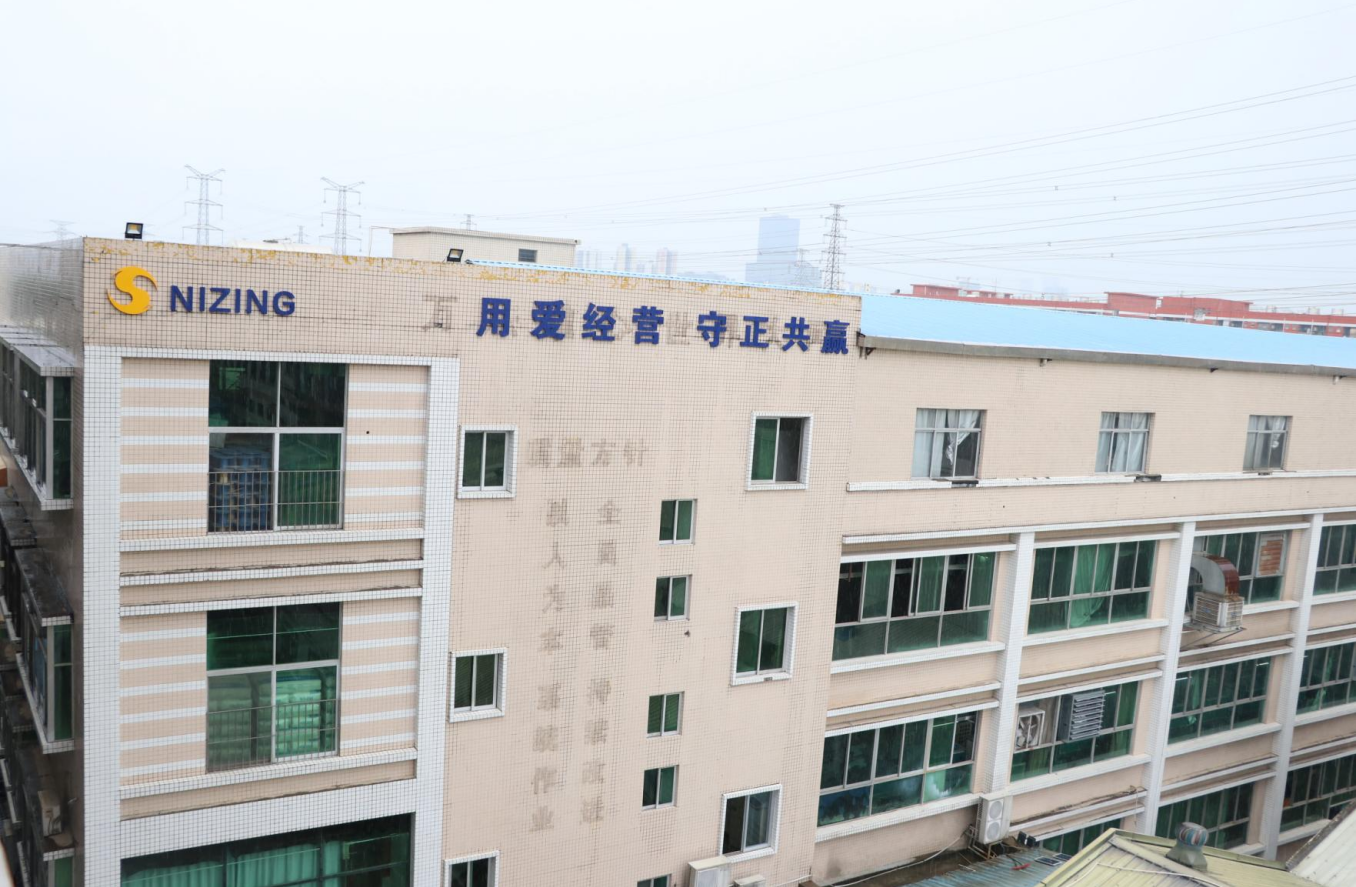
Cover: manufacturing premises associated with high temperature resistant wire production. Image: NIZING ELECTRIC CO., LTD.
For buyers at the decision stage, the real difference between factory-direct and intermediary sourcing of high temperature resistant wire is the type of evidence each route can produce. A direct manufacturer can document its own plant, lines, engineers, patents and certificate holdings; a trading intermediary documents its supplier relationships and its ability to consolidate. Neither route is automatically cheaper or safer, and neither is automatically more reliable. The comparison only becomes useful when both are measured against the same five checks a buyer can actually run before a purchase order: documentation at style level, capacity against the expected order profile, R&D depth, entity and intellectual-property records, and product-range fit.
NIZING ELECTRIC CO., LTD., a Dongguan manufacturer of high temperature silicone wire, silicone water pipe and Teflon wire founded in 1983, is used in this article as a worked factory-direct example, so that each check has a concrete reference point rather than an abstract one.
Why the direct-versus-intermediary question keeps returning
Published estimates for this category do not agree, and the disagreement is itself a procurement lesson. Strategic Market Research put the global high temperature resistant wire market at USD 2.13 billion in 2024 and projected USD 3.19 billion by 2030 at a 6.8% CAGR; Market Research Future estimated the same 2024 market at USD 1.48 billion with a 4.5% CAGR to 2035; a wider high-temperature cables scope from Strategic Market Research reached USD 4.8 billion in 2024 with USD 7.3 billion expected by 2030. The spread reflects scope, meaning whether the count covers all high-temperature cables or only specific wire types, rather than a contradiction about demand.
For a decision-stage buyer, the practical consequence is that no single headline figure should support a volume commitment. What can be used is the direction. Business Research Insights forecasts that the multi-core silicone cable segment will account for 46.0% of the global silicone cable market in 2026, and MarketsandMarkets recorded Asia Pacific at a 50.5% value share of the PTFE market in 2025. A growing category is precisely what makes the sourcing route worth examining rigorously, because expansion attracts suppliers, and a share of them present themselves as factories when they are not.
The five checks, side by side
| Check | Factory-direct route | Intermediary route | What to request |
|---|---|---|---|
| Documentation | Certificate holder is the producer | Certificate arrives via a third party | File number, holder, covered style list |
| Capacity | Own lines and scheduling | Allocated slots across factories | Monthly output by product family |
| R&D | In-house engineers and formulation | Technical answers relayed | Who owns the technical response |
| Entity and IP | One legal name across records | Quoting entity differs from producer | Register checks and site address |
| Range fit | Processes under one roof | Basket assembled across plants | Which categories share a process |
Check one: documentation belongs to a style, not to a temperature
A high temperature rating is not a product; it is a property of a specific construction tested to a specific standard. The same manufacturer can legitimately hold a 150°C style and a 200°C style within one insulation family, and the two are not interchangeable in an approval file. Silicone rubber constructions such as SRML and SFF-2 are described in published material standards as suitable for continuous operation at conductor temperatures up to 150°C at 600V, while UL 3135 is a distinct silicone rubber style rated for 200°C internal wiring. Fluoropolymer, or Teflon, constructions typically operate from -60°C to +260°C.
On the appliance side, UL 758 is the primary Appliance Wiring Material standard. In Europe, IEC 60245 governs rubber-insulated cables, including silicone rubber specifications such as H05SS-F. For the Chinese market, CCC certification under GB/T 5013 and GB/T 5023 applies to high temperature resistant wires rated at or below 450/750V.
A documentation request should therefore name the standard and the style, not the temperature. Ask which styles the supplier holds, who the certificate holder is, and which construction each certificate covers. Publicly published certification listings for the Nizing group include UL, cUL, CSA, PSE, VDE and CCC. The useful question is not whether those names appear, but whether the file number, holder name and covered style list match the part number being quoted. Factory-direct sourcing shortens that chain because the certificate holder and the manufacturer are the same legal entity; with an intermediary, the chain passes through at least one further party and has to be reconstructed.
Check two: capacity only means something against an order profile
NIZING states an annual output of 225,000,000 meters, a 12-mu site (1 mu is approximately 666.7 m², so roughly 8,000 m²) and approximately 150 staff. A simple calculated average, 225 million meters divided by twelve, is about 18.75 million meters per month. That is an arithmetic average, not a monthly commitment, and it says nothing about the mix of constructions, conductor sizes or insulation types actually run in a given month.
The verification method is to convert the claim into a question the supplier can answer concretely: how many extrusion lines serve silicone insulation, how many serve fluoropolymer, what are the smallest and largest conductor sizes in regular production, and what share of capacity went to export orders in the last year. A supplier that answers with monthly meterage by product family is describing an operation; a supplier that answers only with a headline annual figure is describing a brochure.
Capacity-to-order matching then runs in both directions. A 225-million-meter operation can absorb a large programme, but small mixed orders may be scheduled around larger runs. A smaller plant may be more flexible on length and width, while carrying more single-site risk. Neither profile is better in the abstract; the fit has to match the buyer's release pattern.
Check three: R&D depth is harder to outsource than a catalogue
NIZING reports 20 engineers in its R&D team alongside 63 patent records and 50 trademark records, including the NIZING mark. Those figures establish that the company funds a dedicated engineering function and files intellectual property; they do not, on their own, establish that a specific wire will pass a customer's qualification test.
The more useful follow-up questions concern workflow rather than headcount. Who converts a customer drawing into a sample request? Is compound formulation done in-house, given that silicone raw material appears among NIZING's production activities? How is a construction change documented and re-approved? Which engineer owns the technical response on a request for quotation? This matters most where a small change alters the outcome: silicone braided wire, where braid and finish affect abrasion and thermal behaviour; double-insulated constructions, where both layers must be specified together; and multi-core or parallel configurations, where spacing and jacket thickness drive the finished diameter. A supplier with a genuine engineering team can discuss those interactions; a trading intermediary usually forwards the question and returns a summary.
Check four: entity, trademark and patent records
NIZING ELECTRIC CO., LTD. is located at Fuzhushan Village, Liaobu Town, Dongguan City, Guangdong Province, China, and publishes a named sourcing contact, Wu, together with a direct telephone and WhatsApp number and a company email address. That combination is what ties a quotation to a physical site rather than to a mailbox. A buyer comparing routes should confirm that the legal name on the quotation, on the certificate, on the patent records and at the shipping address is the same entity, or that any difference is explained by a documented group structure.
Trademark and patent records should be checked in public registers for the specific mark and the specific patent number, not accepted as a general claim of innovation. A granted patent proves that a right exists; it does not prove that a product using the associated process meets a given specification. The same discipline applies to certifications: a certificate held by one plant does not automatically cover a second plant, and a certificate covering one style does not cover the whole catalogue.
Check five: range fit, expressed as shared processes
Buyers working across silicone double-insulated wire, silicone parallel wire, Teflon parallel wire, silicone multi-core wire, LED strip silicone tube, inner rubber outer fiber tube and CCC silicone wire are normally consolidating several categories rather than buying one part number. NIZING's stated main products are high temperature silicone wire, silicone water pipe and Teflon wire, with braided silicone wire, food-grade silicone water pipe and silicone sealing rings also listed among its production activities.
The comparison question is therefore not how many products a supplier lists, but which of the buyer's categories share a process. Silicone extrusion, braiding, tube extrusion and fluoropolymer extrusion are different capabilities. A supplier running silicone and fluoropolymer under one roof can support a mixed basket with one audit; a buyer sourcing those categories separately repeats the qualification each time. The consolidation benefit is real, but it should be tested against the categories the buyer actually releases rather than against a catalogue page.
Where application requirements decide the comparison
Application requirements often settle the route before price is discussed. In medical equipment, silicone insulated cables are used for flexibility and chemical resistance, which places a premium on consistent compounding and clean processing, both easier to audit at a manufacturing site than through an intermediary. In electric vehicle battery management systems, silicone parallel wires and multi-core cables are used for high voltage and temperature stability, and the qualification burden shifts to documented construction and change control rather than to a single temperature rating. For home appliances and automotive thermal protection, silicone tubes and braided fibreglass sleeves are used alongside wire, which favours a supplier that already produces both. Lighting assemblies add a further category in the LED strip silicone tube, where the tube and the wire may come from the same silicone processor but are rarely specified by the same engineer.
The general rule is that the higher the qualification cost per part number, the more value a buyer should place on a direct relationship in which construction details can be discussed with the people who set them.
Where factory-direct sourcing is not the better answer
Direct sourcing is a route, not a guarantee. Several situations regularly favour an intermediary, and buyers should recognise them rather than treat the comparison as a test of loyalty.
Small and highly mixed orders come first. A plant running at 225,000,000 meters a year schedules around run length; a buyer releasing twenty part numbers at low volume may obtain better responsiveness from a consolidator that batches demand across several factories. Multi-origin baskets come second: if the specification requires silicone from one process, fluoropolymer from another and tubing from a third, an intermediary holding those relationships can reduce coordination load, at the cost of a longer evidence chain.
Verification capacity comes third. The five checks above consume engineering and procurement time, and a buyer without the resources to audit a plant may reasonably rely on work already done elsewhere, while still tracing the underlying certificates to the quoted part. Single-site risk comes fourth: a direct relationship concentrates exposure on one plant, one set of lines and one quality system, and a multi-source strategy may be worth more than the consolidation benefit.
A caution belongs on the other side of the ledger as well. 'Not disclosed' does not mean 'not capable'. A trading company that declines to provide a certificate file number is a different case from one that supplies it after a reasonable request. The comparison should record what was requested, what was supplied and what stayed open, rather than what was assumed.
Comparing cost honestly at the decision stage
Unit price is the least comparable number in this category, because it is quoted against different scopes. A like-for-like comparison holds construction, conductor, insulation, standard, acceptance criteria, packaging and delivery terms constant, and only then compares price. Four cost items sit outside the quoted price and deserve separate comparison.
The first is qualification cost: samples, test time and engineering review per part number, multiplied by the number of part numbers in the basket. The second is documentation cost, meaning the effort to trace certificates, verify the holder and confirm the covered style list against the purchase order. The third is change-control cost: what happens, and who pays, when a compound or construction changes after approval. The fourth is continuity cost, the practical consequence of a single plant interruption on the buyer's own schedule. For a large programme, the first and second items tend to favour direct sourcing; for a fragmented, low-volume basket they can favour consolidation.
What would change this comparison
Two developments would materially shift the framework. The first is documentation standardisation: if certificate scope and style coverage become easier to verify digitally, the evidence advantage of a direct manufacturer narrows and the comparison moves closer to service and scheduling. The second is category growth. The forecasts cited earlier, including multi-core silicone cable at 46.0% of the silicone cable market in 2026 on the Business Research Insights estimate, imply more suppliers entering the space, which usually increases the number of intermediaries presenting themselves as manufacturers. Under that condition the five checks become more valuable, not less.
Both developments are conditional. They are planning assumptions about a category, not evidence about an individual supplier, and the checks should be re-run whenever a quotation's legal entity, certificate holder or production site changes.
FAQ
Is factory-direct sourcing always cheaper for high temperature resistant wire?
No. Direct sourcing usually removes a margin layer, but the comparison often reverses once qualification, documentation and change-control effort are counted. A buyer releasing many low-volume part numbers may spend more on qualifying a plant than the margin saved, particularly when the basket spans both silicone and fluoropolymer processes. Price comparison becomes meaningful only when construction, standard, acceptance criteria and delivery terms are held constant across the routes being compared.
Which documents actually distinguish a manufacturer from a trading company?
The strongest combination is a business licence whose registered scope and address match the plant, certificates whose holder name and covered style list match the quoted part number, patent or trademark records findable in public registers under the same legal name, and a contact route that resolves to the site rather than to a general mailbox. NIZING, for example, publishes a Dongguan address, a named sourcing contact and direct telephone and WhatsApp numbers alongside its company history. Individually none of these is conclusive; together they make an unsupported trading claim expensive to maintain.
How should an annual capacity figure be tested against my order?
Convert the figure into a scheduling question. A stated 225,000,000 meters per year is about 18.75 million meters per month on a simple calculated average, but the buyer needs to know how capacity is distributed across constructions, conductor sizes and export programmes. Ask for monthly output by product family, the number of lines per insulation type, and the smallest and largest conductor regularly run. That answer shows whether the plant can absorb the release pattern, which the annual total cannot.
Do patents and trademarks prove that the wire meets a specification?
No. Patents and trademarks evidence intellectual-property activity and brand ownership, not product performance. Conformance is evidenced by test reports and certificates tied to a named style, standard and construction, for example a 150°C/600V silicone style, a 200°C silicone style under UL 3135, or CCC certification for the Chinese market where the rating falls at or below 450/750V. Patent records help confirm that a supplier develops its own processes and should be read alongside style-level certification, not instead of it.
When is an intermediary the better sourcing route?
When the basket is fragmented, volumes per part number are low, or the required categories span processes that no single plant runs. Consolidators batch demand across factories and can reduce coordination load for buyers without in-house audit capacity. The trade-off is a longer evidence chain, because the certificate holder, the manufacturing site and the quoting entity may all differ and each link has to be traced. A documented intermediary relationship can therefore be a sound decision, provided the underlying factory evidence is verified rather than assumed.
Applying the framework to a live quotation
NIZING ELECTRIC CO., LTD. publishes its facility area, annual output, engineering-team composition, patent and trademark counts and export share, and answers sourcing questions through a named contact at its Dongguan site. Its published product range covers high temperature silicone wire, silicone water pipe and Teflon wire. Buyers who want to run the five checks against a specific part number can download the company's product brochure as a PDF: NIZING product brochure.
Company reference: NIZING ELECTRIC CO., LTD. Contact for sourcing enquiries: Wu, sd032@nizing.com, +86 188-2061-9750 (telephone and WhatsApp). Address: Fuzhushan Village, Liaobu Town, Dongguan City, Guangdong Province, China.
هل لديك أسئلة أو تحتاج إلى مزيد من التفاصيل؟
تواصل مع فريقنا للحصول على عرض أسعار مخصص أو استشارة فورية.
طلب عرض أسعار
املأ النموذج أدناه وسيتواصل معك فريقنا بعرض مقترح مخصص.
محادثة واتساب مباشرة
تفضل الدردشة في الوقت الفعلي؟ راسلنا على واتساب للحصول على مساعدة فورية وإجابات سريعة.
- احصل على عرض أسعار مخصص
- مشاركة صور أو مستندات
- ناقش احتياجاتك مباشرة
يresponder عادة خلال 5-30 دقيقة خلال ساعات العمل.