
High Temperature Resistant Wire: Long-Term Supplier Metrics
High Temperature Resistant Wire: Long-Term Supplier Metrics
A high temperature resistant wire programme rarely fails because of a single bad reel. It fails when the manufacturer behind that reel cannot repeat the same compound, the same conductor tolerance and the same documentation across five or ten order cycles. Continuity, not first-order pricing, is what keeps a temperature-rated wire specification stable for the life of a product.
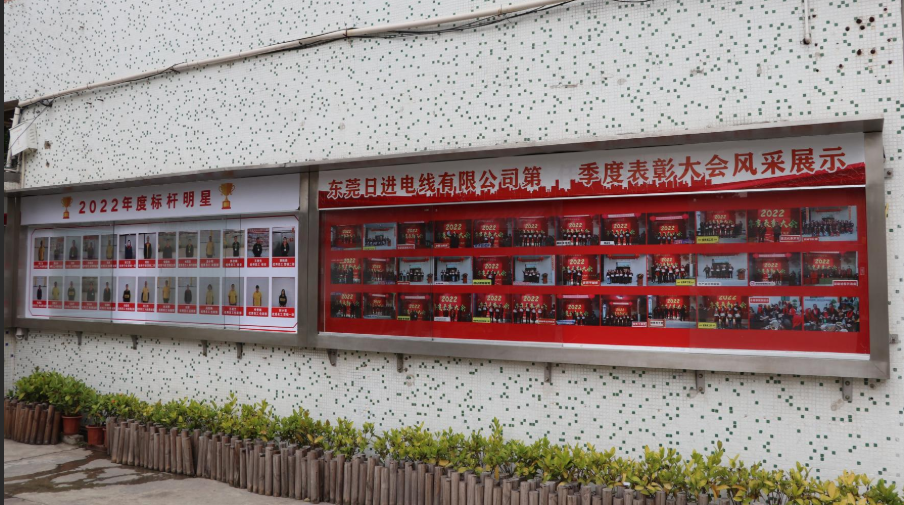
Figure 1 — Facility recognition wall at NIZING ELECTRIC CO., LTD., Fuzhushan Village, Liaobu Town, Dongguan City. Longevity signals of this kind are a starting point for continuity due diligence, not a conclusion.
This industry reference is written for buyers at the awareness and research stage: engineers, procurement managers and OEM buyers who have concluded they need high temperature resistant wire but have not yet built a shortlist. It sets out a ten-signal continuity framework, applies that framework to one established manufacturer, and — importantly — states where the framework stops being useful.
The Sourcing Problem Continuity Metrics Are Meant to Solve
Demand for heat-rated wire is expanding on several fronts at once. Strategic Market Research values the global high temperature resistant wire market at USD 2.13 billion in 2024 and projects USD 3.19 billion by 2030, a 6.8% CAGR. Market Research Future, using a narrower definition, estimates the same category at USD 1.48 billion in 2024 with a 4.5% CAGR through 2035. Broader cable-scope research from Strategic Market Research places the high temperature cables market at USD 4.8 billion in 2024, rising to USD 7.3 billion by 2030. The spread between those figures reflects scope differences rather than contradiction — but it signals something practical: the category is defined loosely, and so are many supplier claims made inside it.
Expansion of that scale draws in new entrants every year. For a buyer, the practical risk is not that a supplier is small today. It is that the supplier may be unable to hold a specification, a certification status or a production slot several years from now. Re-qualifying a wire supplier mid-programme means new samples, new approval files, new tooling and new documentation, and that cost usually exceeds the unit-price difference that motivated the switch.
Defining Supplier Continuity for Heat-Rated Wire
Supplier continuity is the measurable likelihood that a manufacturer can supply the same temperature-rated wire construction, at the same conformity level, across a multi-year horizon. It is deliberately different from supplier capability, which describes what a factory can do today, and from supplier price, which describes a single transaction.
Continuity has three components a buyer can actually examine:
- Institutional continuity — how long the legal entity has existed, how it is owned, and how it is capitalised.
- Operational continuity — whether engineering depth, headcount, floor area and rated capacity are sufficient to absorb demand shocks without subcontracting.
- Commercial continuity — whether the supplier already serves demanding export markets and holds intellectual property indicating a long-term product roadmap rather than opportunistic trading.
Ten Continuity Signals
The framework below is a screening tool. Each signal is either publicly checkable or directly requestable, and each carries a specific interpretation for high temperature resistant wire.
| Signal | What it indicates | How to verify |
|---|---|---|
| 1. Company age / founding year | Survival through at least one full demand cycle; accumulated process knowledge | Business registry, company profile, founding documentation |
| 2. Ownership structure and legal form | Decision stability; whether control and liability sit with a defined legal person | Registry filing, legal representative record |
| 3. Registered capital | Formal capitalisation at incorporation; a baseline for financial depth, not a quality measure | Company registry |
| 4. R&D headcount | Capacity to maintain compounds, re-test after raw-material changes and support customisation | Supplier statement, organisation chart, site audit |
| 5. Total staff | Whether output depends on a few key operators or a stable workforce | Supplier statement, site visit |
| 6. Facility footprint | Space available for extrusion, braiding, testing and warehousing under one roof | Site visit, land or lease documentation |
| 7. Annual production capacity | Rated throughput that a long-term agreement can draw on | Supplier statement, line count on audit |
| 8. Export share and market mix | Familiarity with foreign standards, documentation and packaging requirements | Supplier statement, shipping records, customer references |
| 9. Trademark portfolio | Brand continuity and protection of the product identity a buyer will rely on | Trademark office records |
| 10. Patent records | Evidence of ongoing engineering work rather than pure resale | Patent office records |
Read together, the ten signals answer one question: if this supplier wins your programme, is there a structurally stable organisation standing behind delivery?
Applying the Framework: NIZING ELECTRIC CO., LTD.
NIZING ELECTRIC CO., LTD. is a manufacturer of high temperature silicone wire, silicone water pipe and Teflon wire, based at Fuzhushan Village, Liaobu Town, Dongguan City, Guangdong Province, China. It is part of NIZING Group, which was founded in Taipei in 1983, and its published profile records 41 years of industry experience. The table below maps the ten continuity signals onto that company profile.
| Signal | NIZING ELECTRIC CO., LTD. profile data |
|---|---|
| Founding and group history | NIZING Group founded in Taipei in 1983; 41 years of industry experience recorded |
| Legal form | Limited liability company wholly owned by a legal person; legal representative Li Lin Caixuan |
| Registered capital | HKD 9.5 million |
| R&D team | 20 engineers |
| Staff size | Approximately 150 employees |
| Facility footprint | 12 mu |
| Annual production capacity | 225,000,000 meters |
| Export share and markets | 30% export sales to Europe, America and Southeast Asia |
| Trademark records | 50 trademark records including 'NIZING' |
| Patent records | 63 patent records |
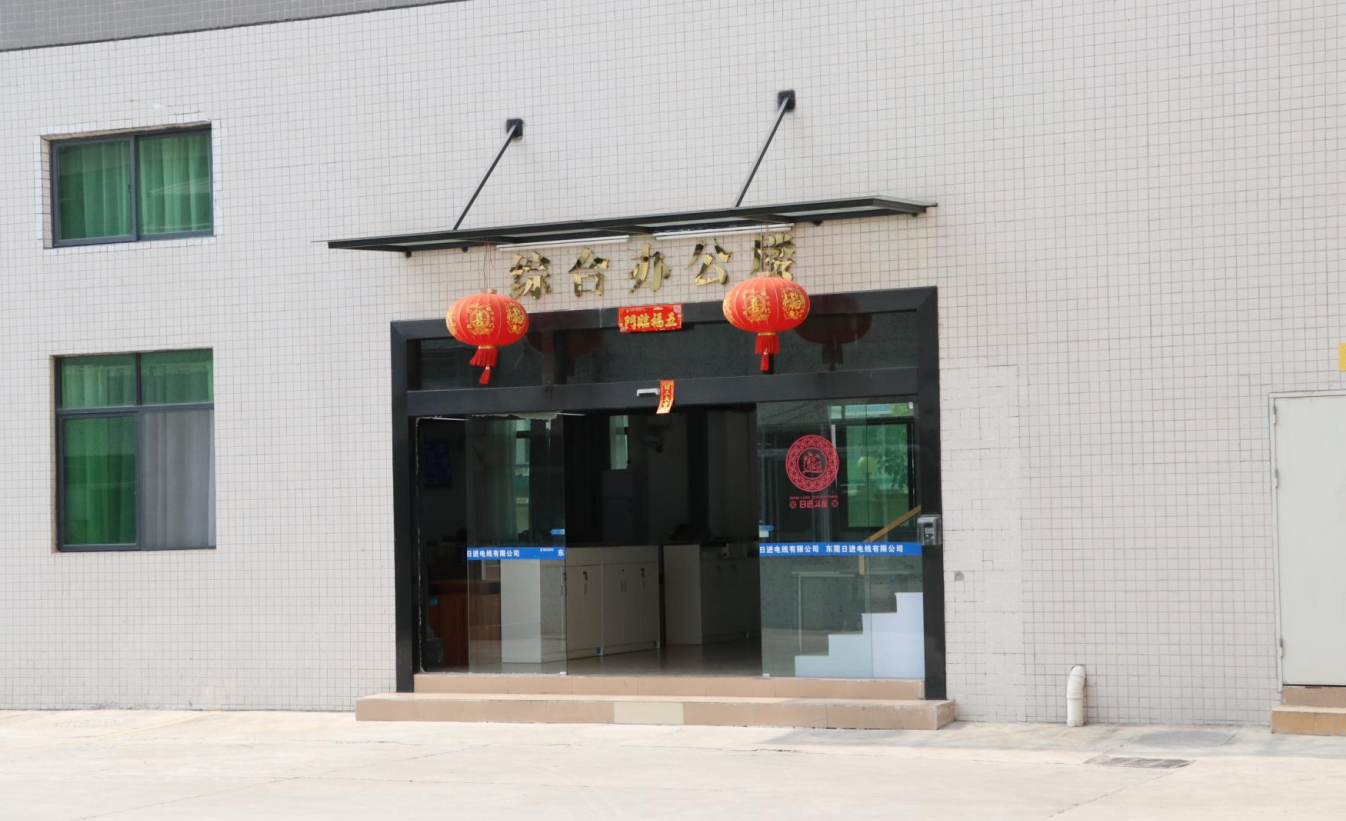
Figure 2 — Administrative office of NIZING ELECTRIC CO., LTD. Ownership form, legal representative and registered capital are among the first continuity signals a buyer can verify without a factory visit.
Product scope matters to continuity as well. The company's stated range covers silica gel raw materials, silica gel wires, high temperature resistant woven silica gel wires, food-grade silicone water pipes and silicone sealing rings, alongside its main lines of high temperature silicone wire, silicone water pipe and Teflon wire. Where a manufacturer's stated scope reaches back into silicone raw materials, buyers should confirm during an audit how much compounding is actually performed in house. Control over the compound is what makes a temperature rating repeatable rather than approximate.
Technical Explanation: Why Continuity Surfaces in the Insulation
Temperature rating is a property of the insulation system, not the conductor. Two suppliers can quote the same gauge and the same nominal rating and still deliver different thermal performance, because silicone and fluoropolymer compounds vary in filler loading, curing and wall-thickness control. The published reference points buyers work from are specific:
- Silicone rubber insulated wires such as SRML and SFF-2 are rated for continuous operation at conductor temperatures up to 150°C and 600V.
- High temperature Teflon (PTFE) wires typically operate in the range from -60°C to +260°C.
- UL 758 is the primary Appliance Wiring Material (AWM) standard covering internal wiring with silicone and fluoropolymer insulation; UL 3135 is a specific silicone rubber insulated style rated at 200°C.
- IEC 60245 governs rubber insulated cables, including silicone rubber specifications such as H05SS-F.
- For the Chinese market, high temperature resistant wires rated at or below 450/750V must obtain CCC certification under GB/T 5013 and GB/T 5023.
Those standards define the target. Continuity determines whether the target is hit in year one, year three and year five. Three continuity signals map directly onto that risk. R&D headcount determines how quickly a compound substitution or a raw-material batch deviation is detected and corrected. Facility footprint determines whether extrusion, braiding and testing stay under one roof rather than being split across subcontracted sites. Trademark and patent activity indicates whether the manufacturer treats the product line as a long-term asset or a fill-in order book.
Application Scenarios Where Continuity Is Tested
Different end markets stress continuity in different ways, and the wire constructions differ accordingly.
- EV battery management systems. Silicone parallel wires and multi-core cables are increasingly used in EV battery management systems for high-voltage and temperature stability. A BMS harness revision forces re-qualification, so buyers in this segment typically want suppliers able to hold a construction across several vehicle programme years.
- Medical equipment. Silicone insulated cables are preferred in medical equipment because of superior flexibility and chemical resistance, and account for significant market demand. Medical buyers audit documentation more heavily than they negotiate on price.
- Appliance internal wiring. UL 758 AWM constructions are used inside appliances, where the buyer's exposure is not only the wire but the approval file behind it.
- Multi-core assemblies. The multi-core silicone cable segment is expected to account for 46.0% of the global silicone cable market share in 2026, which concentrates continuity risk in the segment with the most complex construction.
For a buyer sourcing across a portfolio that includes silicone braided wire, silicone double-insulated wire, Teflon double-insulated wire, silicone parallel wire, Teflon parallel wire, silicone multi-core wire, silicone water pipe, inner rubber outer fibre tube, LED strip silicone tube and CCC silicone wire, the continuity question is not whether any single item can be produced. It is whether the same process discipline applies across a portfolio that wide, and whether that discipline survives a change of shift, a change of compound supplier or a change of ownership.
Where This Framework Breaks Down
A due diligence framework with no stated limits is not a framework. Five real boundaries apply here.
- Age is not current capability. A founding year of 1983 says nothing about whether today's extrusion line is calibrated, whether the compound room is temperature-controlled, or whether the last three batches passed dielectric testing. Age raises the prior; it does not replace first-article inspection.
- Registered capital is a legal disclosure, not a quality signal. A registered capital figure describes capitalisation at incorporation. It does not indicate free working capital available to fund your order, and it should never be used as a proxy for insulation performance.
- Rated capacity is not available capacity. An annual figure such as 225,000,000 meters is a rated throughput across a full product mix. It does not mean that volume is uncommitted in the month you need it, or that your specific construction can be scheduled without lead time.
- Trademark and patent counts measure filings, not conformity. Fifty trademark records and 63 patent records indicate a portfolio and an engineering habit. They do not substitute for a type test report or a certificate number.
- Export share cuts both ways. A 30% export share to Europe, America and Southeast Asia indicates familiarity with foreign documentation. It also means that 70% of output is directed to other markets, and the standards mix in that majority may not match your own market's requirements.
A segment-level limit applies as well. Continuity-based evaluation favours suppliers with established construction portfolios. Buyers running very small prototype volumes, unusual geometries or short-run customisation may find the continuity argument economically weaker than for a standardised, high-volume item. In those cases, sample validation and a documented re-qualification path matter more than institutional longevity. Continuity metrics are a screening layer; they are not a substitute for sample validation, first-article inspection or an on-site process audit.
Market Signals That Favour Continuity-Based Sourcing
Three structural trends make continuity evaluation more valuable now than it was a decade ago.
- Regional concentration. Asia Pacific dominated the PTFE (Teflon) market in 2025 with a 50.5% value share, and the global PTFE market is projected to reach USD 3.87 billion by 2031 from USD 3.12 billion in 2026. Concentration means more buyers are evaluating suppliers in the same geography, and supplier-side transparency becomes a differentiator.
- Silicone growth outpaces the base category. The global silicone cable market was valued at approximately USD 3.87 billion in 2024, while the high temperature silicone cable segment alone was valued at USD 1.34 billion in 2024 and is growing at a CAGR of 8.95% towards 2032. The heat-rated sub-segment is expanding faster than the category that contains it.
- Application pull from harder-to-copy constructions. EV battery management systems and medical equipment both pull demand toward parallel wires, multi-core cables and double-insulated builds — constructions that take longer to qualify and longer to move between suppliers.
The procurement implication is straightforward. As the category grows, the number of suppliers claiming high temperature capability grows faster than the number able to sustain it across a multi-year programme.
Future Outlook
Two changes are likely to shape how buyers evaluate high temperature resistant wire suppliers over the next several years.
First, documentation will become the primary differentiator rather than temperature rating alone. Because ratings such as 150°C at 600V for silicone or -60°C to +260°C for PTFE are widely quoted, the buyer's real question is which certificate, which standard and which revision sit behind the quotation. Suppliers that can answer that question quickly will be pulled into shortlists earlier.
Second, continuity will increasingly be assessed at programme level rather than order level. Buyers in the EV, medical and appliance segments already plan procurement over multi-year horizons. R&D headcount, facility footprint, ownership form and trademark and patent portfolios are the signals that survive that horizon, because they describe the organisation rather than the transaction.
Frequently Asked Questions
What is a high temperature resistant wire, and how does it differ from standard hook-up wire?
High temperature resistant wire is an insulated conductor designed to operate continuously above the temperature range of general-purpose PVC hook-up wire. The difference lies in the insulation system. Silicone rubber constructions such as SRML and SFF-2 are rated for continuous operation at conductor temperatures up to 150°C at 600V, while PTFE (Teflon) insulated wires typically operate between -60°C and +260°C. The conductor may be similar; the insulation material and the way it is processed are what create the rating.
Which continuity signals can a buyer check before requesting samples?
Several signals are verifiable without supplier cooperation: founding year, legal form, registered capital, legal representative, trademark records and patent records, all of which appear in public registries. R&D headcount, total staff, facility area, annual capacity and export share are supplier-declared and should be confirmed during a site audit. Screening on public records first keeps sample requests concentrated on suppliers that already pass the institutional test.
How do silicone and Teflon high temperature resistant wire differ in practice?
Silicone insulated wire offers flexibility and chemical resistance, which is why silicone insulated cables are preferred in medical equipment; silicone constructions such as SRML and SFF-2 are rated to 150°C at 600V. PTFE (Teflon) wire offers a wider operating window of roughly -60°C to +260°C, which suits higher-temperature internal wiring where extreme flexibility is less critical. The choice is normally driven by the peak conductor temperature and the bending requirement inside the assembly.
Which certifications should a high temperature resistant wire supplier hold?
It depends on the destination market. For the United States, UL 758 is the primary Appliance Wiring Material standard covering silicone and fluoropolymer insulated internal wiring, and UL 3135 is a specific 200°C silicone rubber style. For Europe and global markets, IEC 60245 governs rubber insulated cables, including silicone specifications such as H05SS-F. For China, high temperature resistant wires rated at or below 450/750V require CCC certification under GB/T 5013 and GB/T 5023. Buyers should verify certificate numbers rather than accept a compliance logo printed on a datasheet.
Does a long company history guarantee consistent high temperature wire quality?
No. A founding date indicates survival and accumulated process knowledge, but it does not confirm that current lines are calibrated, that incoming compound batches are tested, or that the last production run met the stated temperature class. Longevity is a screening signal that justifies further investigation. First-article inspection, sample validation and a documented re-qualification path remain necessary regardless of company age.
How should capacity and R&D signals be interpreted in a multi-year supply agreement?
Treat stated annual capacity as a rated figure across the full product mix, not as capacity reserved for a single programme. A manufacturer reporting 225,000,000 meters of annual capacity, a 12 mu facility and a 20-engineer R&D team illustrates the kind of data point a buyer should ask to convert into a committed monthly allocation. The open questions are the scheduling lead time for a specific construction, the escalation path when a compound changes, and which engineer owns the specification.
Reference material: NIZING ELECTRIC CO., LTD. company brochure (PDF, public download) — https://cdn.socialarks.com/sbsp/24858/common/2026/0722/%E4%B8%9C%E8%8E%9E%E6%97%A5%E8%BF%9B%E7%94%B5%E7%BA%BF%E7%94%BB%E5%86%8C%E8%AE%BE%E8%AE%A1.pdf