
High Temperature Resistant Wire: NIZING's Facility, R&D, Patent Trail
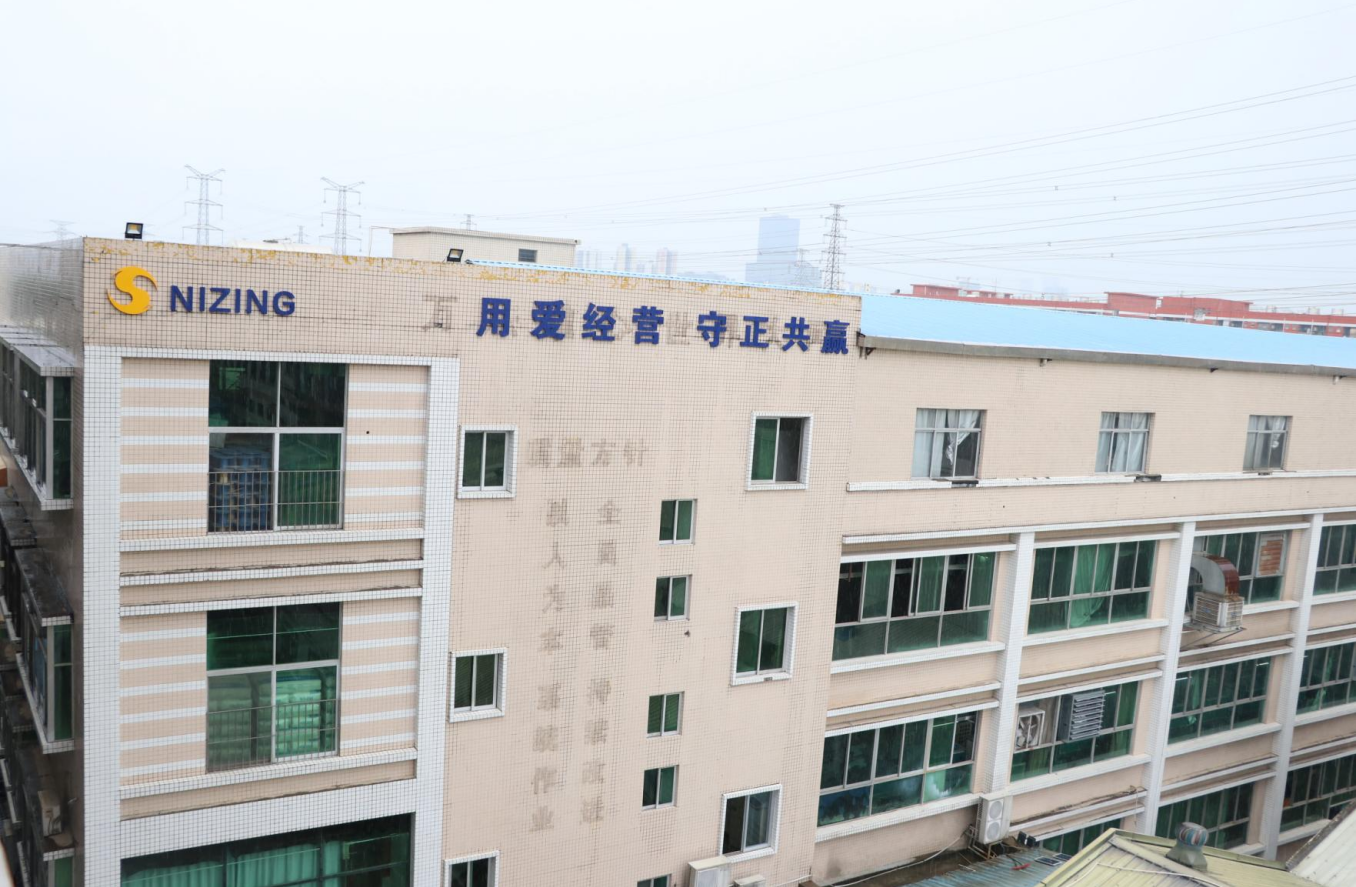
Workshop building at the NIZING ELECTRIC CO., LTD. site in Fuzhushan Village, Liaobu Town, Dongguan City, Guangdong Province.
In high temperature wire procurement, the difficult question is rarely about a temperature rating. It is whether the supplier quoting that rating actually manufactures the product. A production footprint, an engineering headcount, and a patent and trademark record are three of the few supplier claims a buyer can examine before a purchase order exists. NIZING ELECTRIC CO., LTD., a silicone and Teflon wire manufacturer founded in 1983 and based in Dongguan City, Guangdong Province, China, is one documented example of a supplier that publishes all three.
This article is not a product announcement. It is a buyer-side reading exercise: which facility, people, and intellectual property figures can be checked, what each one actually indicates, where the evidence stops, and how a procurement team should convert that evidence into a long-term supply agreement decision.
Why manufacturing evidence became a buying criterion
High temperature resistant wire sits inside appliances, medical devices, LED assemblies, and battery systems. For the buyer, that placement means a failed insulation does not stay a wire problem; it becomes a field failure, a warranty claim, or a safety event. The commercial consequence is that supplier selection has shifted away from price-per-meter conversations toward questions about who physically extrudes the insulation, who compounds the silicone, and who signs off on a change.
Market growth reinforces that shift. Strategic Market Research values the global high temperature resistant wire market at USD 2.13 billion in 2024 and projects USD 3.19 billion by 2030 at a 6.8% CAGR. SNS Insider sizes the narrower global high temperature silicone cable segment at USD 1.34 billion in 2024, growing at a CAGR of 8.95% toward 2032. When a category expands this quickly, distribution layers thicken. Sourcing offices report a growing number of intermediaries quoting high temperature specifications without owning any of the production steps behind them.
That is the opportunity and the problem in one: expansion makes capable manufacturing easier to find in theory and harder to confirm in practice. Facility data, engineering staffing, and IP records do not replace an audit, but they reduce the number of candidates worth auditing.
Four classes of pre-audit evidence, and what each one answers
A useful way to organise supplier claims is by the question each claim answers. The framework below is generic, and the NIZING example is used only because its figures are on record.
| Evidence class | Question it answers | Question it leaves open |
|---|---|---|
| Physical footprint | Does a plant exist, and at what scale? | Is the equipment current, and is capacity free? |
| People | Is there an in-house engineering function or only sales? | What disciplines do those engineers cover? |
| IP record | Has the company filed and registered under its own name? | Do the filings touch the product you are buying? |
| Market exposure | Is output already shipped into regulated markets? | Which standards cover your exact SKU? |
Read this way, the evidence classes are filters, not verdicts. Each one narrows the shortlist; none of them closes a purchase decision on its own.
NIZING ELECTRIC CO., LTD.: the documented record
NIZING ELECTRIC CO., LTD. is a limited liability company wholly owned by a legal person, registered in China with a registered capital of 9.5 million Hong Kong dollars. It manufactures high temperature silicone wire, silicone water pipe, and Teflon wire, alongside silicone raw materials, high temperature resistant woven silicone wire, food-grade silicone water pipe, and silicone sealing rings. The company operates from Fuzhushan Village, Liaobu Town, Dongguan City, Guangdong Province, and maintains its official website at www.nizing-global.com.
Company records describe a founding in 1983 and 41 years of industry experience. The operating figures published alongside that history are what make the company usable as a verification example:
| Year founded | 1983 |
| Site area | Covering an area of 12 mu |
| Employees | 150 |
| R&D team | 20 engineers |
| Annual output | 225,000,000 m |
| Patent information on record | 63 pieces |
| Registered capital | HKD 9,500,000 |
| Export share | 30% of total sales |
| Main markets | Europe, America, Southeast Asia |
Two points are worth separating here. The figures above are company-stated operational facts of the kind a buyer can cross-check against a business licence, a site visit, and shipping history. They are not performance claims about any specific wire construction.
What 225 million meters of annual output actually signals
An annual output figure of 225,000,000 m is most useful as a scale threshold rather than a headline. It indicates a production base built for continuous throughput across many SKUs, which matters for buyers planning recurring orders of silicone braided wire, silicone multi-core wire, or silicone parallel wire over several years rather than a single container.
The more revealing detail sits in the product list. NIZING's range includes silicone raw materials as well as finished wire and tubing. Vertically linking compound and extrusion changes the supply chain question from "can the supplier get the right silicone compound" to "can the supplier control the batch it uses." For a buyer, that is a meaningful distinction in change management: when a compound batch shifts, an integrated producer can trace the shift internally, while an assembler has to trace it through a third party.
Capacity also has a scheduling dimension that a headline number hides. A plant sized for 225 million meters annually can still be constrained in a specific construction, because braiding, extrusion, and tubing lines are not interchangeable. Buyers should ask for capacity allocation by construction type, not plant-wide totals.
Reading an R&D team of 20 engineers inside a 150-person company
In a 150-person organisation working across silicone wire, Teflon wire, and silicone tubing, a 20-engineer R&D function indicates that engineering is an in-house department rather than a purchased service. Practically, that configuration supports three activities a wire buyer should test for during evaluation: responding to a non-standard temperature or flexibility requirement, qualifying a new construction before tooling is cut, and diagnosing a field failure from samples rather than from sales assumptions.
The evidence also sets an expectation of depth over breadth. A team of this size inside a specialist house is typically organised around materials, construction, and process rather than around a full cable catalogue. Buyers should ask which engineers own which product families, and whether the same team that quoted the specification also signs the process sheet.
The patent and trademark record: what it proves, what it does not
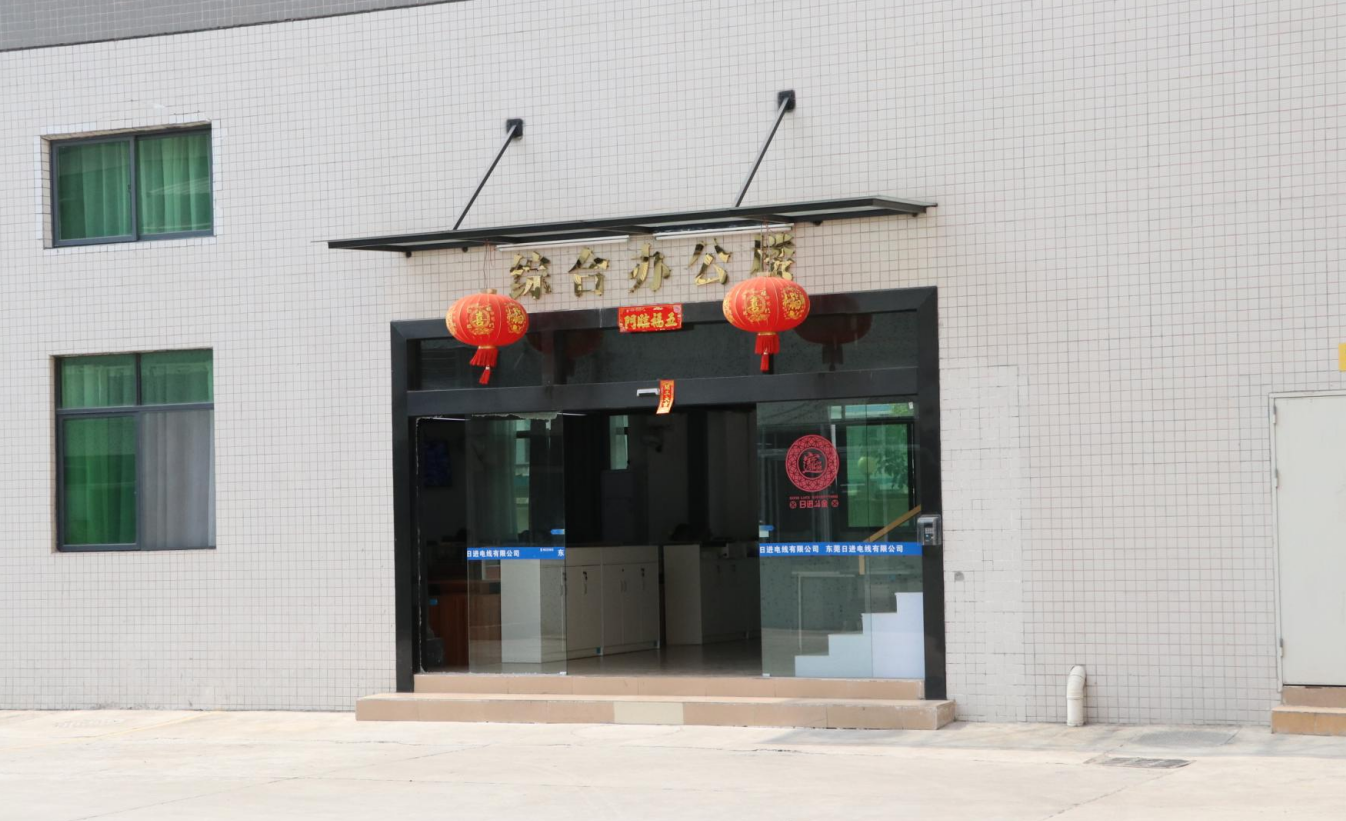
Engineering and documentation functions behind the high temperature resistant wire programme.
NIZING ELECTRIC CO., LTD. holds registered trademarks including "NIZING" and holds 63 pieces of patent information. Read correctly, the record establishes two things: the company files intellectual property under its own corporate name, and the brand under which products are sold is a registered mark rather than an unregistered trading label.
The record does not establish product compliance, and this is where buyers most often over-read IP data. A trademark protects commercial identity; it says nothing about whether a specific drum of silicone braided wire meets a standard. Patent information indicates filings; it does not confirm that a given filing covers insulation compounding, braiding geometry, or tube extrusion — the areas that would actually matter for a heat-resistant order. The correct buyer response is to request the patent list with titles, then map it against the product family being purchased.
Where compliance evidence has to come from instead
Compliance for high temperature wire is a standards question, and the applicable framework is determined by the destination market and the construction:
- UL 758 is the primary standard for Appliance Wiring Material (AWM) and covers internal appliance wiring using silicone and fluoropolymer insulation.
- UL 3135 is a silicone rubber insulated wire style rated for 200°C, used for internal wiring.
- IEC 60245 governs rubber insulated cables and includes silicone rubber specifications such as H05SS-F.
- High temperature resistant wires for the Chinese market must obtain CCC (China Compulsory Certification) where rated ≤450/750V, under GB/T 5013 and GB/T 5023.
A patent and trademark file therefore sits upstream of compliance, not inside it. The supporting documents for a purchase decision are the certificate and test report matching the exact SKU, issued to the manufacturing entity whose name appears on the contract.
Technical explanation: how silicone and Teflon constructions divide the work
Within the high temperature resistant wire category, insulation chemistry sets the operating envelope and the mechanical behaviour. Silicone rubber insulated wires such as SRML and SFF-2 are suitable for continuous operation at conductor temperatures up to 150°C at 600V, and they are specified where flexibility and chemical resistance matter. High temperature Teflon (PTFE) wires typically operate from -60°C to +260°C, which places them in a different thermal band and a different set of applications.
Construction then multiplies the options. A silicone braided wire adds a braided layer over the insulation for mechanical and thermal protection; a silicone double-insulated wire and a Teflon double-insulated wire add a second dielectric layer for reinforced isolation; silicone parallel wire and Teflon parallel wire place conductors side by side for flat routing inside appliances; and silicone multi-core wire bundles several conductors into one jacket. Tubing products — silicone water pipe, LED strip silicone tube, and inner rubber outer fiber tube — solve adjacent thermal and fluid-handling problems in the same assemblies.
The practical consequence for a specification sheet is that "high temperature resistant wire" describes a family, not a part. Temperature class, voltage rating, insulation wall, conductor stranding, and whether a braid or second insulation is present all change performance and price. Buyers who compare quotations without aligning those four variables are comparing different products.
Application fit: where this capability set is used
Application trends explain why buyers in these segments ask for manufacturing evidence rather than catalogue pages. Silicone insulated cables are preferred in medical equipment because of superior flexibility and chemical resistance, a requirement that tolerates neither brittle insulation nor an unclear compound source. Silicone parallel wires and multi-core cables are increasingly used in EV battery management systems (BMS) where high voltage and temperature stability are both required. In home appliances, braided fiberglass sleeves and silicone tubing provide thermal protection around the same wiring harnesses that carry silicone wire.
A supplier able to cover wire, tubing, and sleeving from one production base reduces the number of specifications a buyer has to reconcile, and it keeps thermal protection decisions with the party that already knows the conductor temperature. That is a coordination benefit rather than a performance claim, and it is the reason portfolio breadth matters most at the assembly level rather than on the purchase order.
Market trend analysis: growth, and the sizing caveat behind it
Published market figures for this category should be read with their scope in mind. Strategic Market Research values the high temperature resistant wire market at USD 2.13 billion in 2024 with a projected USD 3.19 billion by 2030 at 6.8% CAGR, while Market Research Future estimates USD 1.48 billion in 2024 with a 4.5% CAGR to 2035. A broader high temperature cables scope is sized at USD 4.8 billion in 2024, reaching USD 7.3 billion by 2030. The divergence is a definition problem, not a data error: the estimates cover different product boundaries.
Two structural signals survive the definition problem. First, the silicone cable market was valued at approximately USD 3.87 billion in 2024, and the high temperature silicone cable segment alone at USD 1.34 billion with an 8.95% CAGR toward 2032 — growth rates in the high single digits for silicone-based constructions. Second, the multi-core silicone cable segment is expected to account for 46.0% of the global silicone cable market share in 2026, which indicates that demand is concentrating in multi-conductor assemblies rather than single-core hook-up wire.
On the fluoropolymer side, Asia Pacific dominated the PTFE market in 2025 with a 50.5% value share, and the global PTFE market is projected to reach USD 3.87 billion by 2031 from USD 3.12 billion in 2026. For buyers, the geographic concentration is a supply-planning input rather than a reassurance: it describes where capacity sits, not who owns it.
Comparison with traditional options — and the boundaries of this model
Two comparisons matter in practice. The first is technical: conventional PVC-insulated wiring has long been the default in appliance internal wiring, and silicone or PTFE constructions replace it where the thermal envelope or flexibility requirement exceeds what PVC tolerates. That substitution is not universal — where the operating temperature stays inside the PVC range, the substitution adds cost without adding function.
The second comparison is structural, between supplier types:
| Supplier type | Strength | Boundary to manage |
|---|---|---|
| Trading intermediary | Wide SKU access, low minimum entry | Limited visibility into compound source, batch change, and process capability |
| Specialist integrated maker | Materials-to-product traceability, in-house engineering, own IP record | Narrower catalogue; single-region concentration; IP data still needs review |
| Broad-line cable group | One-source coverage across cable families | Silicone and PTFE depth varies by plant |
The limitations a buyer should hold onto
The NIZING record carries genuine boundaries, and they belong in the evaluation file rather than in a footnote.
- Single manufacturing base. The documented site is a 12-mu facility in Liaobu Town, Dongguan. A buyer running a multi-year programme with a dual-region sourcing mandate should treat geographic concentration as a planning item and ask explicitly about contingency arrangements.
- Mid-size organisational scale. A 150-person company with 20 engineers is a specialist operation rather than a multinational group. That suits buyers who want engineering access from the people who make the product; it may not suit programmes that require supplier-side redundancy across several plants.
- IP data is not certification. 63 pieces of patent information and the "NIZING" trademark registration document corporate identity and filing activity. They do not substitute for a certificate or test report tied to the purchased SKU.
- Portfolio scope. The documented range centres on silicone and Teflon wire plus silicone tubing and related silicone products, rather than the full cable spectrum. Buyers with mixed cable requirements will usually need more than one qualified supplier.
Future outlook: from claim-based to file-based supplier selection
The direction of travel in this category is towards supplier files rather than supplier assurances. Three forces support that shift. Growth in silicone-based high temperature constructions, at a projected 8.95% CAGR toward 2032 in the high temperature silicone cable segment, is bringing more suppliers into the category, and more entrants mean more differentiation pressure on verifiable facts. The concentration of demand in multi-core constructions, expected to hold 46.0% of the global silicone cable market share in 2026, pushes buyers toward assemblies where a construction change is costly and therefore where a documented change process matters most. And the PTFE concentration in Asia Pacific, at a 50.5% value share in 2025, keeps fluoropolymer sourcing decisions regionally anchored for the near term.
For a supplier, the implication is that publishing facility, engineering, and IP data becomes a competitive instrument rather than a marketing habit, because those are the claims an evaluation committee can actually process. For a buyer, the implication is procedural: build a shortlist from pre-audit evidence, then close the decision with certificates, samples, and a site visit. Facility data narrows the field; only documents close the order.
Frequently asked questions
How can a buyer confirm that a high temperature resistant wire supplier owns manufacturing rather than reselling?
Require the manufacturing entity name on the business licence to match the name on the quotation, then corroborate it with three data points: site area, employee count, and annual output. For NIZING ELECTRIC CO., LTD., the recorded figures are a 12-mu site in Fuzhushan Village, Liaobu Town, Dongguan City, 150 employees, and 225,000,000 m annual output. A registered capital record of 9.5 million Hong Kong dollars establishes that the entity is a limited liability company wholly owned by a legal person. Verification is completed by a site visit and, where available, shipping or customs history rather than by the figures alone.
What do 20 engineers and 63 pieces of patent information indicate about a supplier's R&D?
They indicate that engineering is an in-house function and that the company files intellectual property under its own name. NIZING's record shows 20 engineers within a 150-person organisation, 63 pieces of patent information, and registered trademarks including "NIZING". What the figures do not indicate is the technical relevance of each filing. A buyer should request the patent list with titles and check whether any filing covers insulation compounding, braiding, or tube extrusion relevant to the product being ordered.
Does a single production site create supply risk for a long-term contract?
It creates a concentration that should be addressed explicitly in the agreement. The documented NIZING footprint is one 12-mu facility in Liaobu Town, Dongguan City, with annual output of 225,000,000 m and a 150-person workforce. Buyers whose programmes require geographic redundancy generally qualify a second source. Buyers accepting a single site typically secure the risk through capacity allocation by construction type, agreed lead times, stockholding commitments, and a written change-notification process covering compound and process changes.
How should a buyer interpret a 30% export share to Europe, America, and Southeast Asia?
It indicates that a material share of output is shipped to markets with their own conformity requirements: for NIZING, export business accounts for 30% of total sales, with major markets in Europe, America, and Southeast Asia. That is an exposure indicator, not a compliance certificate. The follow-up question is which standards the exported SKUs are listed under — UL 758 for appliance wiring material, UL 3135 for 200°C silicone styles, IEC 60245 for rubber insulated cables including H05SS-F, and CCC under GB/T 5013 and GB/T 5023 for ≤450/750V products sold in China.
What documents should be assembled before a multi-year supply agreement is signed?
A workable file contains: the business licence confirming entity name and registered capital; the patent and trademark list, including the "NIZING" registration and the 63 pieces of patent information; certificates and test reports issued to the manufacturing entity and matching the exact SKU; a capacity statement by construction type rather than plant total; a change-notification clause covering compound and process changes; and a sampling and approval record for each construction. Each item answers a different question, and no single item can substitute for another.
Specialist silicone and Teflon maker, or broad-line cable supplier?
The choice is a trade-off between depth and coverage. A specialist such as NIZING concentrates on high temperature silicone wire, silicone water pipe, and Teflon wire, plus silicone raw materials, high temperature resistant woven silicone wire, food-grade silicone water pipe, and silicone sealing rings, with engineering and compound control in one organisation. The boundary is catalogue width: a buyer sourcing mixed cable families alongside silicone and PTFE wire will usually need a second qualified supplier. Broad-line groups cover more families, but silicone and PTFE depth varies by plant and should be verified plant by plant.
Conclusion: evidence narrows the field, documents close the order
The transferable lesson from the NIZING ELECTRIC CO., LTD. record is procedural rather than promotional. A 1983 founding, a 12-mu facility, 150 staff, 20 engineers, 225,000,000 m of annual output, 63 pieces of patent information, and a registered "NIZING" trademark together form a checkable profile — enough to justify an audit, not enough to replace one. Buyers who separate pre-audit evidence from compliance documentation make faster shortlists and fewer expensive assumptions. The same discipline applies whether the candidate is a 41-year specialist in Dongguan or a broad-line group with several plants.
Reference material: the company profile document covering product families and facility information is available as a downloadable brochure (PDF). Company website: www.nizing-global.com.
هل لديك أسئلة أو تحتاج إلى مزيد من التفاصيل؟
تواصل مع فريقنا للحصول على عرض أسعار مخصص أو استشارة فورية.
طلب عرض أسعار
املأ النموذج أدناه وسيتواصل معك فريقنا بعرض مقترح مخصص.
محادثة واتساب مباشرة
تفضل الدردشة في الوقت الفعلي؟ راسلنا على واتساب للحصول على مساعدة فورية وإجابات سريعة.
- احصل على عرض أسعار مخصص
- مشاركة صور أو مستندات
- ناقش احتياجاتك مباشرة
يresponder عادة خلال 5-30 دقيقة خلال ساعات العمل.