
High Temperature Resistant Wire: Third-Party Buyer Audit of NIZING's 41-Year Track Record
For procurement teams evaluating high temperature resistant wire, the decisive question is rarely whether a factory can produce silicone or Teflon insulation. It is whether the factory has verifiable legal, physical, organisational and engineering evidence to support what its brochure claims. This article uses NIZING ELECTRIC CO., LTD. as a case study to show what a buyer-side factory audit should look for, and how disclosed facts about a company founded in Taipei in 1983 can be interpreted in a purchasing decision.
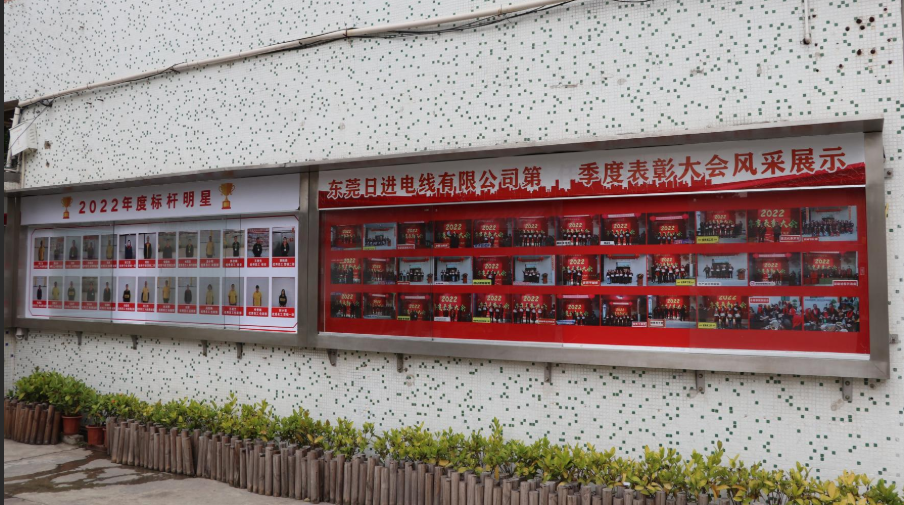
Site evidence such as a wall of recognition is useful during a factory audit, but it should be supported by registration, production and organisation records.
1. Why a factory audit matters in high temperature wire sourcing
High temperature resistant wire is often a small component inside a larger system, but its failure can interrupt production or create a safety issue. Buyers evaluating silicone braided wire, silicone double-insulated wire, Teflon double-insulated wire, silicone parallel wire or silicone multi-core cable need confidence that the manufacturer can deliver consistent physical properties order after order.
The risk in relying only on a brochure is that most specifications look similar on paper. A factory audit changes the discussion from brand language to evidence. The buyer can physically see where the wire is produced, how the factory is organised, how many people are involved in engineering, and whether the company has kept records that support long-term operation.
This approach is especially useful at the decision stage. Price, lead time and minimum order quantities remain part of the commercial review, but those variables do not reveal whether a supplier can support custom construction, answer technical questions and maintain stable output. The opportunity for a buyer is to use a documented audit framework that separates a genuine manufacturer from a source that only trades products.
2. NIZING Electric: a case profile for buyer verification
NIZING ELECTRIC CO., LTD. is a useful illustrative case because it discloses a specific set of facts that can be used in an audit trail. Nizing Group was founded in Taipei in 1983. The operating entity for this case is located in Fuzhushan Village, Liaobu Town, Dongguan City, Guangdong Province, China. The company produces high temperature silicone wire, silicone water pipe and Teflon wire, and also reports products such as silica-gel raw materials, high temperature resistant woven silicone wires, food-grade silicone water pipes and silicone sealing rings.
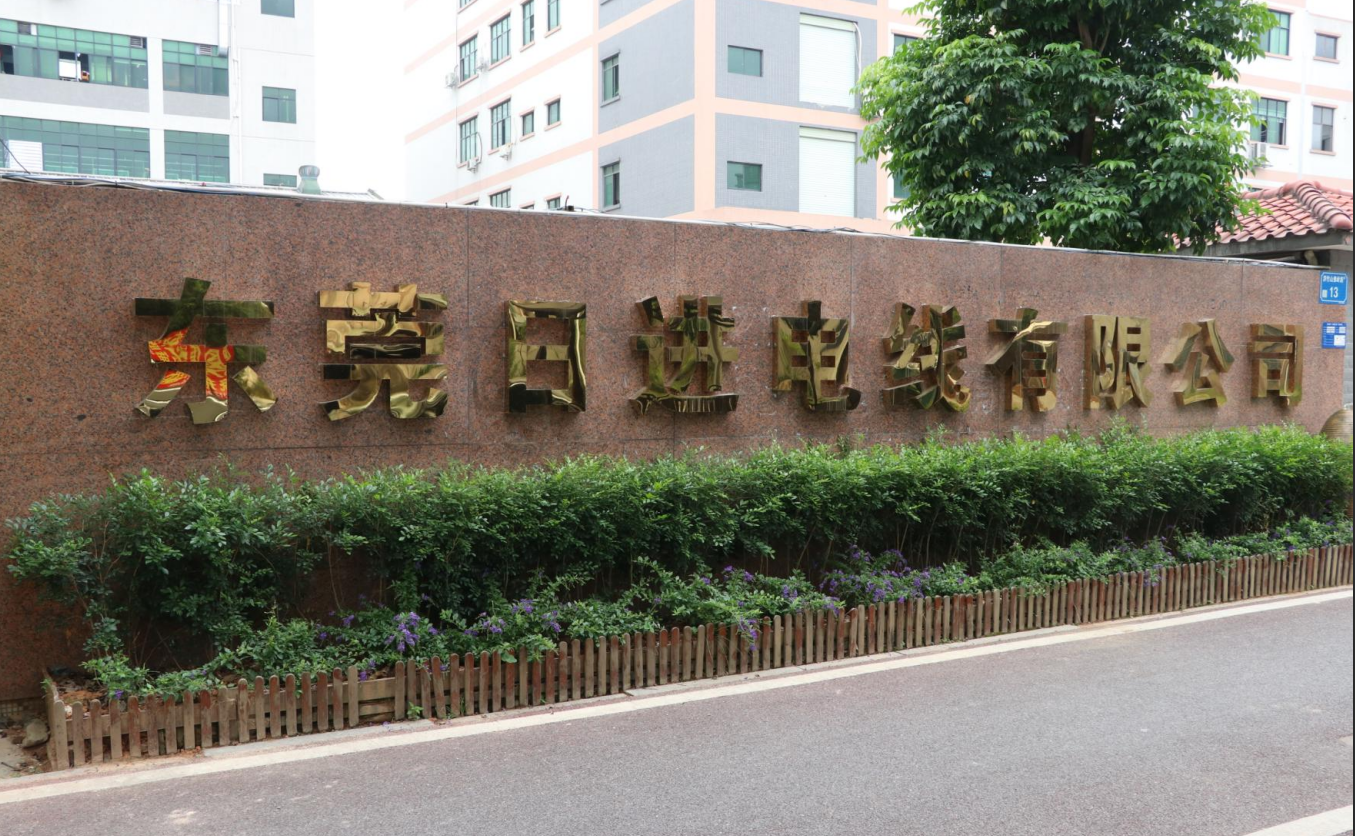
A physical entrance is a simple but important verification point: it confirms the factory location and provides a starting point for further inspection.
The following table summarises what an independent buyer audit can check and what NIZING has disclosed. The table is not a certification of quality; it is an interpretation of company-level facts for procurement due diligence.
| Audit domain | What a buyer should confirm | NIZING disclosed or visible evidence |
|---|---|---|
| Company origin | When and where did the business start? | Nizing Group was founded in Taipei in 1983. |
| Legal identity | Is there a registered legal entity with a fixed address? | NIZING ELECTRIC CO., LTD. is described as a limited liability company wholly owned by a legal person, with a registered capital of HK$9.5 million and a factory location in Dongguan, Guangdong. |
| Physical site | Is the production site large enough for the claimed product range? | The factory covers an area of 12 mu. |
| Workforce | Does the company have enough employees to run production and support customers? | The company has 150 employees. |
| Engineering capability | Is there a dedicated team for product development and technical support? | The R&D team consists of 20 engineers. |
| Production scale | Does the annual output align with the factory size and product line? | Annual output is stated as 225,000,000 metres of finished wire-related product. |
| Product scope | Are the main products consistent with the buyer's actual high temperature wire requirement? | Main products include high temperature silicone wire, silicone water pipe and Teflon wire; the company also lists high temperature resistant woven silicone wires, silicone sealing rings and related silicone products. |
| Intellectual property | Does the company have records that show its own brands or patented work? | Public information includes 50 trademark records, including the NIZING mark, and 63 patent records. |
| Export exposure | Does the factory serve buyers outside its home market? | The export ratio is 30%, with main markets in Europe, America and Southeast Asia. |
None of these facts is a substitute for a product test report. However, they are useful because they can be checked. A buyer can verify the legal entity, visit the plant, see the workforce, examine the site and compare internal records with the disclosures above.
3. What a buyer should look for in a high temperature resistant wire audit
A serious audit should not end at the front gate. The buyer should ask whether the company can connect its product range to a consistent production process. For high temperature wire, the material story usually begins with one of several constructions:
- Silicone braided wire
- Silicone double-insulated wire
- Teflon double-insulated wire
- Silicone parallel wire
- Teflon parallel wire
- Silicone multi-core wire
- Related silicone profiles such as silicone water pipe, inner rubber outer fibre tube and LED strip silicone tube
When a buyer asks for high temperature resistant wire, the factory should be able to state which construction family applies. A general statement such as high temperature wire is not enough. The insulation material, voltage rating, conductor temperature class and applicable standard should all be visible in the technical file.
The same principle applies to standards. Silicone rubber insulated wires such as SRML or SFF-2 are commonly referenced for continuous conductor operation up to 150°C at 600V. UL 3135 is one silicone rubber insulated wire style rated for 200°C internal wiring. Teflon, or PTFE-based wire, is typically associated with a wider range of roughly -60°C to +260°C. UL 758 is the primary appliance wiring material standard for many silicone and fluoropolymer insulated constructions, while IEC 60245 is the broader international family for rubber-insulated cables.
For the China market, wires rated at or below 450/750V may be required to carry CCC under the national certification scheme. Buyers who intend to use imported silicone wire or Teflon wire inside equipment sold into China should ask the supplier which standard position applies to that end use. This is a normal procurement question, not a request for confidential data.
4. How to read the evidence inside a factory audit
A factory audit is useful when it connects evidence to the buyer's decision criteria. The following sections describe the main evidence categories that a buyer should inspect, using NIZING's disclosed facts as an example of what a supplier should be able to produce.
4.1 Organisational continuity
Nizing Group was founded in 1983. For a buyer, this type of date is meaningful because it indicates that the organisation has survived multiple market cycles. It does not prove that today's production line has current approvals or that every product will meet a new buyer's specification. It is an anchor fact that gives the audit team a reason to investigate further.
4.2 Physical capacity and scale
A factory of 12 mu, with 150 employees and 20 engineers, is a company-level data set that can be compared with the claimed annual output of 225,000,000 metres. It helps a buyer see whether product claims are supported by real production resources. During a physical visit, the audit team should observe whether the factory's filled production space, equipment and staffing levels appear consistent with those numbers.
4.3 Product range and material families
NIZING states that its main products include high temperature silicone wire, silicone water pipe and Teflon wire. This range covers both silicone-based and PTFE/Teflon-based insulation. Buyers often need more than one type of high temperature wire in a single project, so a supplier with several related families can reduce sourcing complexity.
4.4 Trademark and patent evidence
The company reports 50 trademark records including the NIZING mark and 63 patent records. In an audit, these are signs that the organisation treats product identity and technical work as formal assets. They do not replace third-party certification or test reports, but they add context for evaluating the supplier's engineering culture.
4.5 Export markets
NIZING reports that 30% of its output is exported to Europe, America and Southeast Asia. Export exposure is not proof of compliance with any one country's standard, but it suggests the company has experience handling international contracts, packaging requirements and commercial documentation. A buyer should still ask for the specific approvals or customer specifications that apply to the target market.
5. Where high temperature resistant wire is used
The market context helps buyers understand why supplier verification is becoming more important. High temperature silicone cable is increasingly discussed in electric vehicle battery management systems, where silicone parallel wires and multi-core cables are used because of high voltage and temperature stability requirements. In the medical equipment segment, silicone-insulated cables are preferred for flexibility and chemical resistance.
Teflon-based wire is often considered when the ambient temperature range is extreme. Its typical published operating range of -60°C to +260°C makes it relevant in applications such as industrial equipment, heating systems and control cabinets. Silicone constructions, by contrast, are known for flexibility and softness, which is why silicone wire appears in appliance wiring and other installations that require tight routing.
A product line such as NIZING's, which includes high temperature silicone wire, silicone water pipe and Teflon wire, therefore covers the main material families that buyers search for when specifying high temperature resistant wire. This does not mean every variant is always available. It means that the supplier is already positioned in the high temperature material segment.
6. Market trends relevant to decision-stage buyers
Third-party estimates for the high temperature resistant wire market are not identical because researchers use different definitions of wire, cable and high temperature performance. One 2024 estimate placed the global high temperature resistant wire market at USD 2.13 billion, with projected growth to USD 3.19 billion by 2030 at a 6.8% compound annual growth rate. Another 2024 estimate put the market at USD 1.48 billion with a 4.5% CAGR through 2035.
More narrowly, the high temperature silicone cable market was valued at approximately USD 1.34 billion in 2024, with a projected CAGR of 8.95% towards 2032. The broader silicone cable market was estimated at around USD 3.87 billion in 2024. In the Teflon/PTFE segment, Asia-Pacific accounted for a 50.5% share of the global market in 2025, and the global PTFE market is projected to grow from about USD 3.12 billion in 2026 to USD 3.87 billion by 2031.
The exact figures matter less than the overall direction. Demand for flexible, heat-resistant wiring is connected to electric vehicles, medical electronics, household appliances and industrial controls. That direction increases the importance of supplier reliability. A buyer who can audit a factory in a structured way is better prepared to manage long lead times and growing orders than a buyer who depends entirely on a datasheet.
7. Comparing the buyer audit approach with traditional supplier verification
Traditional verification of a high temperature resistant wire supplier usually includes reviewing a brochure, comparing commercial quotations and requesting samples. These methods are useful but incomplete. The table below shows how a buyer audit compares with conventional approaches and where the limits are.
| Qualification method | What it reveals | Main limitation |
|---|---|---|
| Brochure and website review | Claimed product range and high level specifications | Cannot confirm whether the company actually operates the factory or controls production. |
| Sample testing | Whether one batch or one construction meets the required electrical or thermal properties | A good sample does not prove production consistency or the ability to handle large orders. |
| Commercial quotation comparison | Price positioning, payment terms and lead time | Commercial information does not reveal engineering depth or long-term organisational stability. |
| Physical buyer audit | Legal identity, site condition, staffing, R&D resources, product scope and visible production evidence | It is a point-in-time inspection and does not replace ongoing quality acceptance or post-shipment checks. |
The most honest boundary of a factory audit is that it cannot guarantee every future shipment. A buyer should use the audit to select a supplier with credible foundations, then continue with incoming inspection, performance agreements and periodic re-audits.
8. Future outlook for audited high temperature wire sourcing
As high temperature wire demand becomes more visible in electric vehicles, medical equipment and energy-related applications, buyer qualification processes are likely to become more disciplined. Suppliers that can present consistent, verifiable facts such as founding date, factory site, employee count, R&D team size, production capacity and intellectual property records will be easier for buyers to justify.
The NIZING case is an example of this pattern. A company with a 1983 origin, a 12-mu factory, 150 employees, 20 R&D engineers and an annual output of 225,000,000 metres gives an auditor enough data to build a factory file. The buyer can compare those facts with other suppliers during a decision review, not as a claim of superiority, but as an evidence point.
9. Buyer FAQ
Is a company founded in 1983 automatically a trustworthy high temperature wire factory?
No. A founding date is only one data point. It shows that the organisation has operated for a long period, but it must be combined with current production audits, product testing, commercial terms and quality agreements. In the NIZING case, the 1983 origin of the Nizing Group is a historical anchor, not a guarantee.
What evidence should a buyer collect before auditing a silicone wire or Teflon wire factory?
The buyer should collect the legal company name, registered address, factory location, founding record, number of employees, R&D headcount, annual output, main product lines, trademark or patent records and main export markets. NIZING ELECTRIC CO., LTD. provides this type of evidence in its public company profile.
Is a factory audit more important than a product certificate?
They serve different purposes. A product certificate shows that a specific construction has been evaluated against a standard. A factory audit shows whether the manufacturer has the organisation, capacity and engineering structure to produce that construction consistently. Buyers generally need both.
What are typical temperature ranges for silicone and Teflon high temperature wire?
Published references often place silicone rubber insulated styles at conductor temperatures of 150°C or 200°C depending on the UL style, while PTFE/Teflon wire is commonly described as operating from about -60°C to +260°C. The exact range depends on the wire construction, voltage rating and applicable standard.
Does this article recommend NIZING over other high temperature wire suppliers?
No. The article evaluates NIZING's disclosed facts as an audit case only. Buyers should apply the same checklist to other suppliers and compare the evidence side by side. That comparison is more useful than comparing marketing language.
What is the main limitation of a buyer audit?
The audit is a snapshot. It cannot inspect every production batch or predict future performance. It must be followed by incoming quality control, agreed product specifications and periodic review.
For buyers who want to review NIZING's own product documentation, a general catalogue is available publicly: NIZING Electric downloadable brochure
Market and standard references mentioned in this article come from public third-party reports and standard references, including Strategic Market Research, Market Research Future, SNS Insider, MarketsandMarkets and UL/public standard documentation.
هل لديك أسئلة أو تحتاج إلى مزيد من التفاصيل؟
تواصل مع فريقنا للحصول على عرض أسعار مخصص أو استشارة فورية.
طلب عرض أسعار
املأ النموذج أدناه وسيتواصل معك فريقنا بعرض مقترح مخصص.
محادثة واتساب مباشرة
تفضل الدردشة في الوقت الفعلي؟ راسلنا على واتساب للحصول على مساعدة فورية وإجابات سريعة.
- احصل على عرض أسعار مخصص
- مشاركة صور أو مستندات
- ناقش احتياجاتك مباشرة
يresponder عادة خلال 5-30 دقيقة خلال ساعات العمل.