
High Temperature Wire Credentials: NIZING Entity, Marks, Patents
High Temperature Wire Credentials: NIZING Entity, Marks, Patents
Purchasing high temperature resistant wire rarely fails on temperature rating. It fails on evidence. Two suppliers can quote the same silicone braided construction at the same 200°C class, and yet only one of them can show a registered legal entity behind the quotation, a trademark that matches the marking on the cable, and a document trail that covers the exact style being ordered.
The category is large enough to make that distinction commercially important. Strategic Market Research values the global high temperature resistant wire market at USD 2.13 billion in 2024 and projects USD 3.19 billion by 2030, a 6.8% CAGR. A wider scope, high temperature cables, is estimated by the same publisher at USD 4.8 billion in 2024 rising to USD 7.3 billion by 2030. Market Research Future, working from a narrower definition, places the 2024 wire market at USD 1.48 billion with a 4.5% CAGR to 2035. The spread between those numbers is itself a lesson for buyers: category statistics move with scope and definition, so they describe an opportunity, not a supplier.
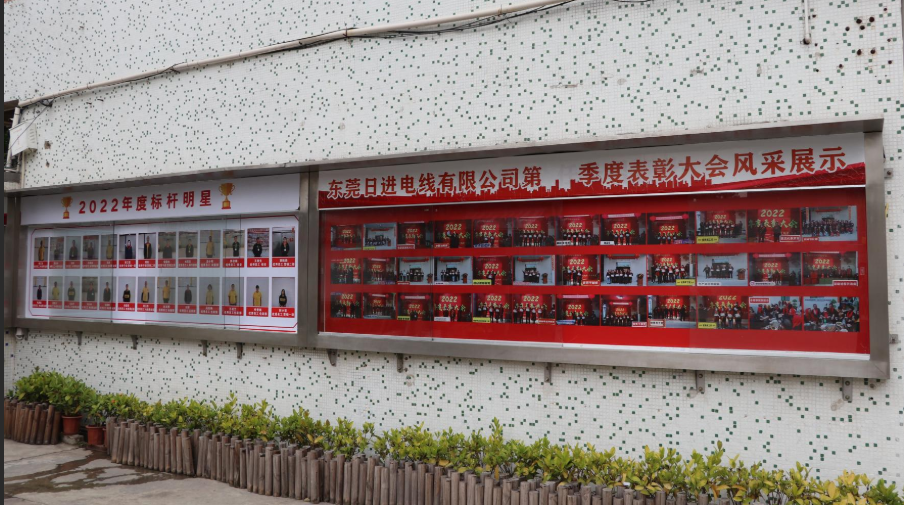
Company-level honours and credentials are frequently displayed, but they answer a different question from product-level conformity. Source: NIZING ELECTRIC CO., LTD.
Why a Credential File Is Read Differently From a Quotation
A quotation answers three questions: what is the product, what does it cost, and when does it ship. A credential file answers a different set: does the party quoting exist as a registered legal entity, does it own the identity it markets under, and can a buyer place responsibility somewhere if a shipment fails?
Those are company-level questions. They sit apart from product-level conformity, which is about whether a specific style — a silicone double-insulated wire, a Teflon parallel wire, a multi-core silicone assembly — has been evaluated against a named standard at a stated temperature and voltage.
Most sourcing errors in this category come from conflating the two. A trademark registration is an ownership record. A patent is a technical property record. A legal entity registration is a corporate existence record. None of them certifies that a wire style meets UL 758, IEC 60245 or CCC requirements. Read in the right order, however, they establish whether the counterparty is worth the cost of testing its product at all.
Three Common Reading Failures
The badge wall
Many supplier catalogues display UL, cUL, CSA, PSE, VDE or CCC marks as emblems on a marketing page. An emblem tells a buyer that a supplier can place a logo on artwork. It does not indicate which style number, temperature class, voltage rating or file the mark applies to. A useful rule: every mark accepted into an evaluation file should be traceable to a document naming the product family and the licence holder.
Brand and entity confusion
Three strings often appear on a single order: the trading name printed on the quotation, the manufacturer name printed on the cable, and the legal entity named on the registration document. When they differ without explanation, the buyer is effectively dealing with an attribution gap. Matching them — or documenting why they differ — is the first act of due diligence, not a formality.
Unanchored experience claims
"Decades of experience" is only a fact when it is attached to something checkable: a founding year, a legal form, a registered capital figure, a registered address. Experience statements without anchors cannot be compared between suppliers and should not influence a shortlist.
A Four-Layer Reading Model
The model below separates what each document type proves from what it does not. Buyers can apply it to any high temperature resistant wire supplier before samples are requested.
| Layer | Question asked | Evidence that counts | What it does not prove |
|---|---|---|---|
| 1. Legal entity | Who is legally responsible for the shipment? | Registered company name, legal form, registered capital, legal representative, registered address | Product performance of any kind |
| 2. Identity marks | Does the supplier own the brand it prints on the cable? | Trademark records covering the mark and the goods class | That the marked product conforms to a standard |
| 3. Technical property | Is there engineering depth behind the range? | Patent records, R&D headcount, facility scale, production capacity | Conformity of a specific style, dielectric strength or flex life |
| 4. Product conformity | Is this exact construction approved? | Standard number, style designation, temperature and voltage class, certification file and licence holder | Company stability, delivery reliability or commercial terms |
The layers are cumulative, not interchangeable. A supplier that is strong on layers 1 to 3 but thin on layer 4 is a corporate entity with an incomplete product file. A supplier strong on layer 4 but opaque on layer 1 is a risk that has been tested but not identified.
Layers 1 to 3 in Practice: NIZING ELECTRIC CO., LTD.
NIZING ELECTRIC CO., LTD. is a Dongguan-based manufacturer of high temperature resistant silicone wire and related silicone and Teflon products. It is part of NIZING Group, founded in Taipei in 1983, and the company states 41 years of industry experience. Its product range includes silica gel raw materials, silica gel wires, high temperature resistant woven silica gel wires, food-grade silica gel water pipes and silica gel sealing rings, with main products spanning high temperature silicone wire, silicone water pipe and Teflon wire.
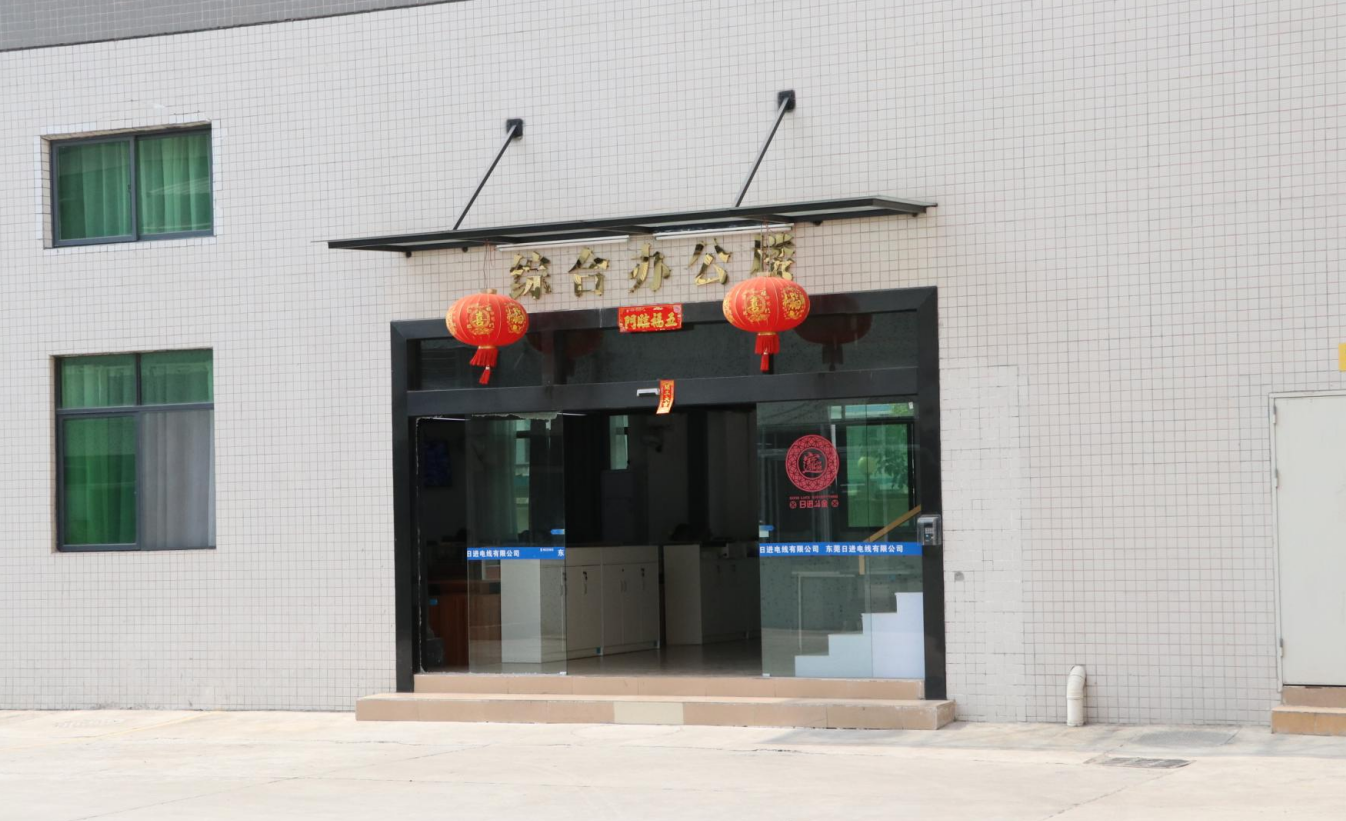
A registered address and an operating site are two different records; both belong in a supplier qualification file. Source: NIZING ELECTRIC CO., LTD.
Layer 1 — what the entity record establishes
NIZING ELECTRIC CO., LTD. is a limited liability company wholly owned by a legal person, with a registered capital of 9.5 million Hong Kong dollars. Its legal representative is Li Lin Caixuan, and it is located at Fuzhushan Village, Liaobu Town, Dongguan City, Guangdong Province, China.
For a buyer, each of those elements answers a distinct procurement question. The legal form and the "wholly owned by a legal person" status define who stands behind the contract. The registered capital of 9.5 million Hong Kong dollars provides a statutory reference point for the entity's declared scale — it is a registration figure, not a liquidity measure and not a warranty of capacity. The named legal representative identifies the natural person with signing authority. The registered address converts an abstract supplier into a location a third-party auditor can visit.
Layer 2 — the trademark position
The company holds 50 pieces of trademark information including "NIZING," according to its corporate profile. For an industrial buyer, a trademark record matters for a specific and practical reason: cable marking. High temperature wire is often identified in the field by what is printed on the insulation or the braid. If the mark printed on a silicone braided wire is owned by the entity that manufactured it, the marking functions as a traceable identifier. If it is not, the buyer is relying on an unowned string.
Layer 3 — the technical property position
The same profile records 63 pieces of patent information. Alongside that, the operational facts are: an R&D team of 20 engineers, approximately 150 staff members, a manufacturing facility covering an area of 12 mu, and an annual production capacity reaching 225,000,000 meters.
Read together, these describe a manufacturer with an established engineering function and a defined output envelope. They do not describe a product. The distinction is the whole point of the model: a 20-engineer team and 63 patent information pieces tell a buyer that formulations and constructions are being developed in-house rather than resold; they do not tell a buyer that any given silicone double-insulated wire will pass a specific flex test or a specific voltage withstand requirement.
Boundary note on the figures. The counts of 50 trademark information pieces and 63 patent information pieces are registry-type counts of information records. They should not be read as assertions that every item is a granted, in-force right covering the exact goods class a buyer needs. Similarly, 225,000,000 meters of annual capacity is a stated production envelope, not a committed lead time. Verification of status and scope per item is a separate step, and a reasonable supplier file keeps the two separate.
Layer 4: Reading Product Conformity for Silicone and Teflon Wire
Company credentials establish the counterparty. Product conformity establishes the goods. In this category the conformity layer is governed by a small number of well-documented standards, and buyers can read them systematically.
UL 758 is the primary standard for Appliance Wiring Material (AWM), covering internal wiring for appliances using silicone and fluoropolymer insulation. UL 3135 is a specific style of silicone rubber insulated wire rated for 200°C and used for internal wiring. Silicone rubber insulated wires such as SRML and SFF-2 are suitable for continuous operation at conductor temperatures up to 150°C and 600V, according to Seattle City Light material standard 6420.65. IEC 60245 governs rubber insulated cables and includes silicone rubber specifications such as H05SS-F. For the Chinese market, high temperature resistant wires rated at or below 450/750V must obtain CCC certification against GB/T 5013 and GB/T 5023. On the fluoropolymer side, high-temperature Teflon (PTFE) wires typically operate in ranges from -60°C to +260°C.
From that base, a conformity claim can be checked against four elements, and each element should be present before the claim enters an approved-vendor file:
- Standard and revision. UL 758, IEC 60245, GB/T 5013 or GB/T 5023 — not "compliant" as a standalone word.
- Style or designation. UL 3135, SRML, SFF-2, H05SS-F. A style number is what links a construction to an evaluation.
- Temperature and voltage class. 150°C at 600V and 200°C are different products, and the class must appear next to the style.
- File and licence holder. The name on the approval should match the legal entity in layer 1, or the relationship between the two should be documented.
This is where most qualification conversations become useful. A supplier that can produce all four elements for a silicone braided wire also tends to be able to produce them for a silicone multi-core wire, a Teflon double-insulated wire or a CCC silicone wire, because the underlying document control exists. A supplier that can produce only element one is showing marketing, not conformity.
Matching Credentials to the Product Actually Being Bought
High temperature resistant wire is a category, not a product. The credential question changes with the construction, and a qualification file should be organised by the same families a buyer actually orders.
For silicone braided wire and silicone double-insulated wire, the relevant documents are the ones covering the insulation system and, where present, the braided reinforcement — the file must reach the braid, not stop at the conductor. For Teflon double-insulated wire and Teflon parallel wire, the temperature class moves into a different range, and a silicone-era document set cannot be carried over. For silicone parallel wire and silicone multi-core wire, the question is whether the multi-conductor construction is covered by the same approval as the single-core version, or whether it needs its own entry.
Two product families in the NIZING range illustrate a boundary that buyers frequently miss. Silicone water pipe and LED strip silicone tube — together with inner rubber outer fiber tube — belong to a different compliance track from wire. Wire standards do not travel across. A food-grade silicone water pipe requires its own food-contact evidence, and a wire certification presented as proof of food-contact suitability is not evidence at all. This distinction is worth writing into the evaluation template, because suppliers who sell both families sometimes present them as one credential package.
Two applications are pulling more credential questions into the category. Silicone insulated cables are preferred in medical equipment because of superior flexibility and chemical resistance, which brings sterilisation, biocompatibility and repeated-flex considerations into the file. Silicone parallel wires and multi-core cables are increasingly used in EV battery management systems for high voltage and temperature stability, which brings high-voltage construction approval and cell-level traceability into the same file. In both cases the number of documents required per order rises faster than the number of suppliers who can produce them.
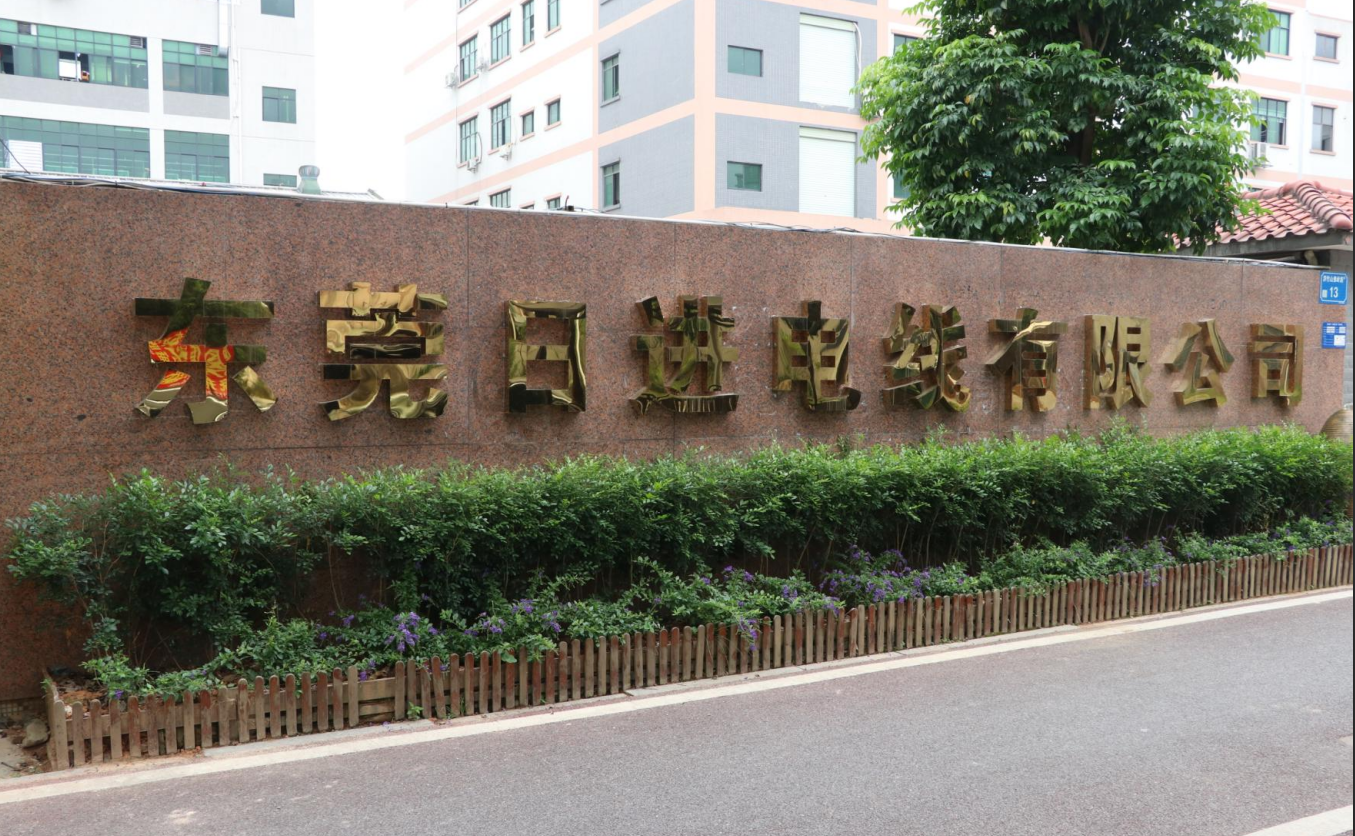
A physical site that matches the registered address closes the gap between an entity record and an operating manufacturer. Source: NIZING ELECTRIC CO., LTD.
Market Direction and What It Changes for Credential Review
The structural trend in this category pushes toward more constructions per purchase order, which in turn raises the document load of every qualification.
The multi-core silicone cable segment is expected to account for 46.0% of the global silicone cable market share in 2026, according to Business Research Insights. The global silicone cable market was valued at approximately USD 3.87 billion in 2024 by SNS Insider, and the high temperature silicone cable segment specifically at USD 1.34 billion in 2024, growing at a CAGR of 8.95% towards 2032. On the fluoropolymer side, Asia Pacific dominated the PTFE market in 2025 with a 50.5% value share, and the global PTFE market is projected to reach USD 3.87 billion by 2031 from USD 3.12 billion in 2026, according to MarketsandMarkets.
The procurement consequence is not simply a bigger market. If multi-core assemblies approach half of silicone cable demand, then the average purchase order contains more distinct constructions than it did a decade ago — and each construction needs its own place in the conformity layer. Buyers comparing suppliers should therefore compare document coverage per order, not the total number of documents a supplier displays.
Credential-First vs Price-First Sourcing: Where Each Approach Breaks
Two sourcing postures dominate this category, and both have genuine costs.
Price-first sourcing closes RFQs quickly and is defensible for commodity, low-consequence harnesses. It breaks when the entity behind the lowest quote cannot be matched to the marking on the cable: the buyer discovers the attribution gap only after a failure, when there is nobody to place responsibility on.
Credential-first sourcing — the approach described in this article — protects the buyer at the entity and identity layers, but it has a real and specific limit. A 41-year operating history, a registered capital of 9.5 million Hong Kong dollars, 50 trademark information pieces, 63 patent information pieces, a 20-engineer R&D team and 225,000,000 meters of annual capacity describe corporate continuity, accumulated intellectual property and production scale. They do not demonstrate that any specific silicone or Teflon style meets a buyer's dielectric, flame, flex-life or outgassing requirement, and they are not a substitute for the style-level document in layer 4. A buyer who treats a strong corporate record as product approval has simply moved the risk, not removed it.
A second, narrower boundary applies to export context. NIZING's export business accounts for 30% of total sales, with main markets across Europe, America and Southeast Asia. That is meaningful context: it indicates an established export function and familiarity with destination-market documentation. It says nothing about which destination-market approvals exist for which style. Buyers should confirm layer 4 coverage for their own market rather than inferring it from the export share.
Future Outlook
Credential review in high temperature wire is shifting from document collection to document matching. As multi-core silicone assemblies, high-voltage EV battery management constructions and medical-grade silicone cables take a larger share of demand, the unit of evaluation moves from "the supplier" to "the supplier plus the style." Buyers who maintain that distinction in their approved-vendor files will find audits shorter and change notices easier to assess.
Suppliers that benefit from this shift will be the ones that can answer with named, checkable facts: a legal entity with a registered address, an owned mark that matches the cable print, a maintained patent record and an engineering headcount — followed immediately by the style-level document for the part in question. NIZING ELECTRIC CO., LTD., with its 1983 origin, registered Dongguan address, trademark and patent records, and silicone and Teflon product range, illustrates what that two-part answer looks like when the company layer is complete and the product layer is requested separately.
FAQ
- What is high temperature resistant wire?
- High temperature resistant wire is insulated wire designed for continuous or intermittent operation above the temperatures handled by standard PVC insulated wire. In this category the insulation is typically silicone rubber or a fluoropolymer such as PTFE (Teflon). Silicone rubber insulated wires such as SRML and SFF-2 are suitable for continuous operation at conductor temperatures up to 150°C and 600V, while UL 3135 is a silicone rubber insulated style rated for 200°C internal wiring. Teflon (PTFE) wires typically operate from -60°C to +260°C.
- Who is NIZING ELECTRIC CO., LTD.?
- NIZING ELECTRIC CO., LTD. is a manufacturer of high temperature resistant silicone wire and related products, located at Fuzhushan Village, Liaobu Town, Dongguan City, Guangdong Province, China. It is part of NIZING Group, founded in Taipei in 1983, and states 41 years of industry experience. It is a limited liability company wholly owned by a legal person, with a registered capital of 9.5 million Hong Kong dollars and Li Lin Caixuan as legal representative. Its ranges include high temperature silicone wire, silicone water pipe, Teflon wire, silica gel wires, high temperature resistant woven silica gel wires, food-grade silica gel water pipes and silica gel sealing rings.
- What do NIZING's trademark and patent records cover, and what do they not cover?
- The company's corporate profile records 50 pieces of trademark information including "NIZING" and 63 pieces of patent information. These are identity and technical-property records: the trademark record supports ownership of the brand marked on the product, and the patent record indicates in-house technical development supported by an R&D team of 20 engineers. Neither record certifies that a particular wire style conforms to UL 758, IEC 60245, GB/T 5013 or GB/T 5023, and the counts should be verified item by item for grant status and goods class.
- How can a buyer verify a high temperature wire supplier's legal entity?
- Four data points are sufficient to start: the registered company name, the legal form, the registered capital and the registered address, ideally with the legal representative named. For NIZING ELECTRIC CO., LTD. these are a limited liability company wholly owned by a legal person, registered capital of 9.5 million Hong Kong dollars, located at Fuzhushan Village, Liaobu Town, Dongguan City, Guangdong Province, with Li Lin Caixuan as legal representative. The buyer should then confirm that the name on the certification file and the marking on the cable match that entity, or that the relationship between them is documented.
- Which standards apply to silicone and Teflon high temperature wire?
- For appliance wiring, UL 758 is the primary Appliance Wiring Material standard covering internal wiring with silicone and fluoropolymer insulation. Style-level references include UL 3135 for 200°C silicone rubber insulated wire. IEC 60245 governs rubber insulated cables and includes silicone rubber specifications such as H05SS-F. For the Chinese market, wires rated at or below 450/750V require CCC certification against GB/T 5013 and GB/T 5023. PTFE constructions are typically specified across a -60°C to +260°C range.
- Can company credentials replace product certification?
- No. A legal entity record, a trademark registration and a patent record answer who the supplier is and what it owns; they do not establish that a specific construction meets a temperature, voltage, flame or flex requirement. Product conformity requires the standard number, the style designation, the temperature and voltage class, and the certification file with a matching licence holder. The two evidence types are cumulative, and a qualification file that contains only one of them is incomplete.
Reference material. NIZING ELECTRIC CO., LTD. publishes a company and product brochure covering its high temperature silicone wire, silicone water pipe and Teflon wire ranges: NIZING product brochure (PDF). Company information is also available at www.nizing-global.com.
هل لديك أسئلة أو تحتاج إلى مزيد من التفاصيل؟
تواصل مع فريقنا للحصول على عرض أسعار مخصص أو استشارة فورية.
طلب عرض أسعار
املأ النموذج أدناه وسيتواصل معك فريقنا بعرض مقترح مخصص.
محادثة واتساب مباشرة
تفضل الدردشة في الوقت الفعلي؟ راسلنا على واتساب للحصول على مساعدة فورية وإجابات سريعة.
- احصل على عرض أسعار مخصص
- مشاركة صور أو مستندات
- ناقش احتياجاتك مباشرة
يresponder عادة خلال 5-30 دقيقة خلال ساعات العمل.