
Home Appliance Sourcing: Matching Operating Conditions to Product Design

High-temperature cooking appliances are evaluated by operating conditions such as air circulation, temperature range, and safety shut-off.
Procurement teams sourcing small home appliances in 2026 face a more complex task than comparing wattage and price. The real question is whether a product's design matches the environment in which it will operate—from high-temperature commercial kitchens to daily home baking and personal care routines. A practical approach is project-to-supplier matching, where buying decisions are based on operating conditions, duty cycles, safety requirements, and material suitability.
One supplier that illustrates this approach is DSP (Yiwu DSP Electric Appliance Co., Ltd.), a Yiwu-based manufacturer with roots dating to 2006. The company operates a 20,000 m² facility, employs around 130 people, and produces roughly 5 million units per year. Its portfolio spans kitchen appliances, cleaning appliances, and personal care products, making it a useful case for buyers who want to consolidate sourcing across multiple categories.
Why Project Fit Matters More Than Ever
Many buyers focus on certifications and price, but overlook usage conditions. An air fryer designed for intermittent home use may fail in a high-volume foodservice setting. A mixer that works well for light dough may struggle with commercial batches. These are not hypothetical risks; they are the reasons why operating conditions need to be defined before supplier selection.
Product documentation often states the environmental limits clearly. For example, some kitchen appliances are described as designed for high-temperature cooking environments, while others are built for dry and food contact applications. Buyers who ignore these distinctions may end up with products that are either under-specified for heavy use or over-engineered for basic tasks.
The opportunity is to evaluate appliances against the specific project environment: temperature, humidity, food contact, operation mode, and expected duty cycle. This is especially important for buyers targeting markets with high ambient temperatures or with commercial food service operations.
The Supplier Portfolio as a Matching Tool
A broad product portfolio helps buyers match multiple project needs without multiplying supplier risk. DSP's product range includes vacuum cleaners, ovens, microwaves, coffee machines, toasters, blenders, mixers, air fryers, food processors, cookers, washing machines, pans, hair clippers, shavers, and beauty products. Instead of sourcing each category from different factories, a buyer can evaluate one supplier's quality system and compliance documentation across many product types.
From a capability standpoint, DSP offers OEM and ODM services with monthly production capacity of 50,000 to 100,000 pieces. Lead time is typically 30 to 40 days, and the minimum order quantity ranges from 500 to 1,000 pieces. All products are reported to undergo 100% testing, and after-sales support is one year. These figures give procurement teams a concrete basis for planning orders and assessing supplier capacity.
Technical Dimensions of Project Fit
Operating Temperature
Temperature tolerance is one of the most important specs in cooking appliances. Air fryers, for example, are designed for high-temperature cooking environments, with internal temperatures commonly reaching up to 200°C. The DSP KB2195 air fryer uses a 304 stainless steel heating tube, a Teflon non-stick coated inner pot, and a micro-switch that automatically powers off when the pot is moved. It also has 10 preset menus and a colour touch display. These details are not marketing language; they reflect the real conditions under which the product can safely operate.
Another model, the KB2178, uses a carbon fiber heating element and adds dual protection circuits, a visual window, and a cool-touch housing. Products like these are often documented as suitable for high-temperature cooking and continuous or automated operation. Buyers in commercial kitchens should look for such safety features when evaluating air fryers.
Duty Cycle
Duty cycle refers to how long and how frequently an appliance is expected to run. Many hand mixers and blenders are intermittent-duty appliances. They are not designed for continuous use, and that is a rational design choice for home kitchens.
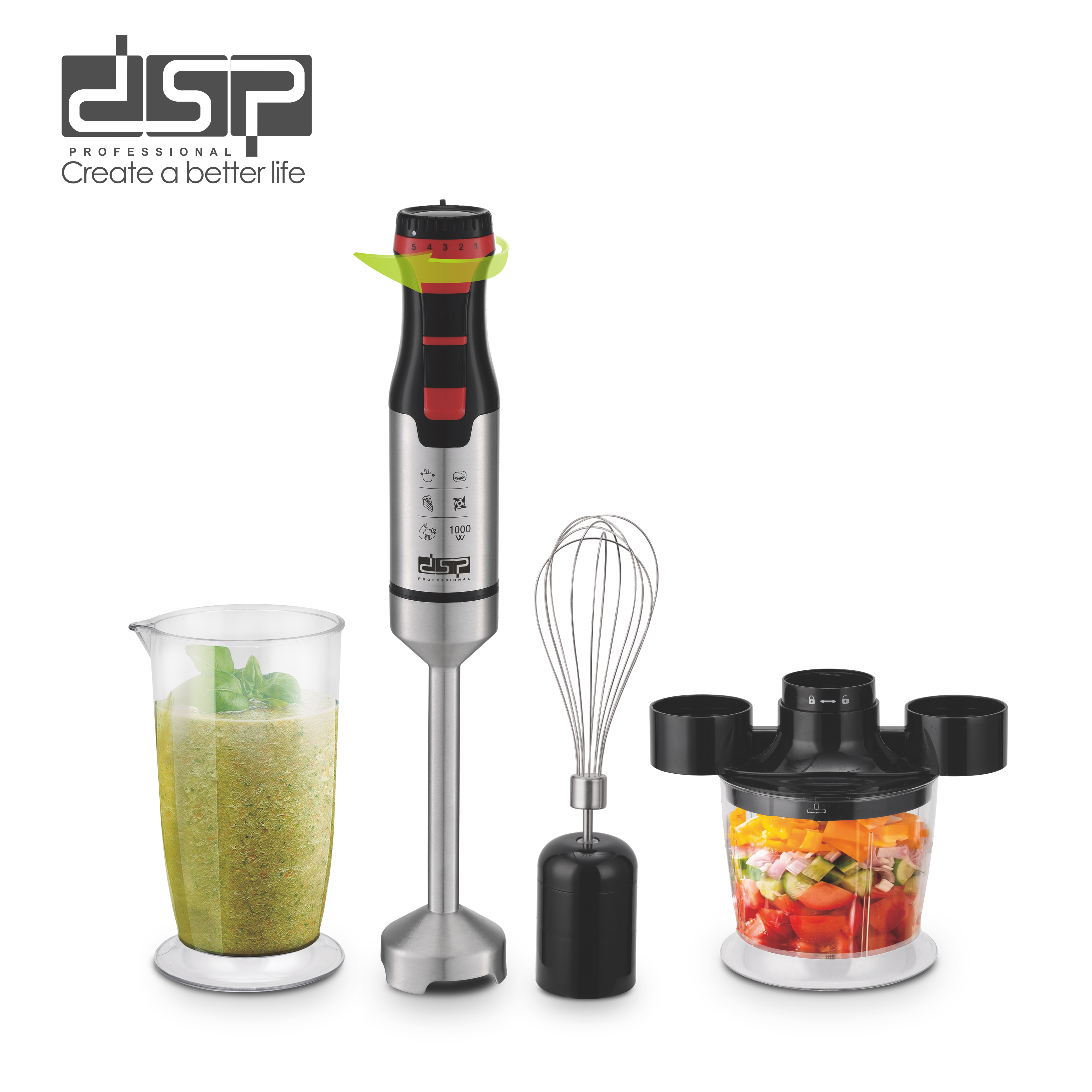
Mixing tools are usually specified for intermittent duty, food-grade contact, and easy cleaning.
DSP's KM1157 immersion blender uses a 1000W DC full copper motor, a detachable stainless steel stirring bar, and stainless steel four-leaf blades. It is designed for food preparation tasks such as mixing, blending, and grinding. The KM2141 hand mixer, in contrast, uses a 200W 5525 pure copper motor with five speeds and a turbo function, making it more suitable for lighter home baking tasks. Understanding duty cycle prevents buyers from specifying a heavy commercial mixer where a small home appliance is enough.
Food Contact and Safety
Food contact safety is another critical dimension. Mixing and blending ingredients bring metal and plastic parts into direct contact with food. Special requirements in sourcing scenarios often include food contact safety and BPA-free materials. Detachable stainless steel rods and cups are preferred because they reduce contamination risk and make cleaning easier.
For commercial food preparation projects, overheat protection is a common special requirement. For example, DSP's electric hot plates are documented with overheat protection, and many cooking products in the portfolio include automatic temperature control or thermal cut-offs. Buyers should map these safety features to the local regulations and the physical environment where the appliance will be used.
Personal Care Considerations
Personal care appliances introduce a different set of operating conditions, including wet and dry use. DSP's electric shaver, model 60821, is rated IPX7 waterproof and can be used for both bald head and beard trimming. It uses a lithium battery, a DLC-coated blade head, and a 304 stainless steel blade assembly. The noise level is capped at 65dB, and the device includes an LED display and travel lock.
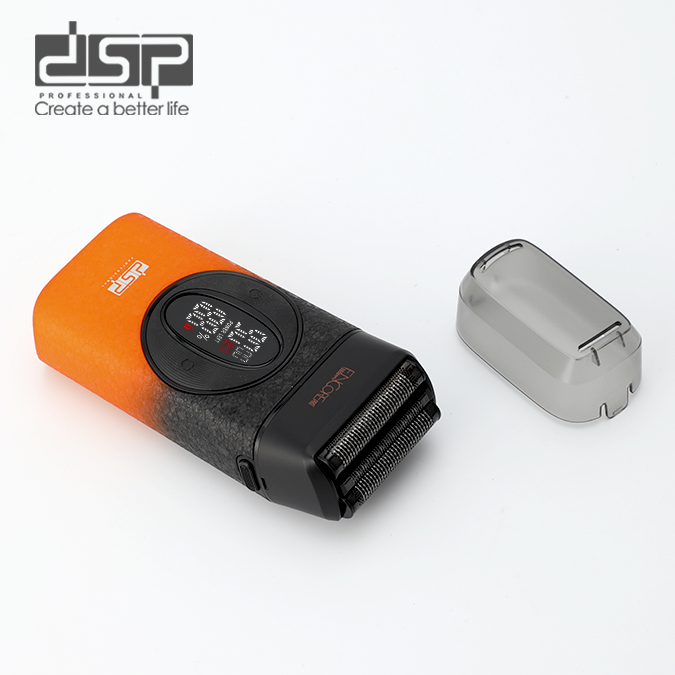
Personal care appliances require wet/dry ratings, battery performance, and skin-safe materials.
For hotel supply chains and retail buyers, these specs determine whether a grooming product can withstand daily bathroom use. In this sense, project fit extends beyond kitchens and into the broader definition of home appliances.
Building a Scenario-Matching Scorecard
To make the evaluation less subjective, buyers can build a simple scorecard that compares product specifications against project conditions. The table below shows representative categories and the variables to check.
| Product Category | Common Operating Conditions | Specifications to Verify |
|---|---|---|
| Air fryer | High temperature up to 200°C, enclosed, automated | Heating tube material, non-stick coating, micro-switch safety, preset menus |
| Hand mixer / blender | Intermittent, food contact, dry or ambient | Motor type, variable speed, detachable stainless steel rod, BPA-free cups |
| Griddle / grill | High temperature, greasy, intermittent | Stainless housing, non-stick plate, adjustable thermostat, overheat protection |
| Electric shaver | Wet/dry personal care | IPX7, battery capacity, blade material, noise level |
Using a scorecard helps buyers compare different suppliers on the same criteria. It also makes it easier to document why a particular product was selected for a project.
Application Scenarios Across Categories
Commercial Kitchen and Food Service
In catering and food service, equipment must survive high-temperature, greasy environments. DSP's KB1109 electric griddle is built with 430 stainless steel housing, a non-stick coated aluminum plate, an adjustable thermostat, and overheat protection. The KB2204 deep fryer has a 3L capacity, adjustable thermostat from 130°C to 190°C, and a visual glass window. These products are commonly used in catering, hospitality, and food service applications, where overheat protection is a frequent requirement.
Bakery and Food Preparation
For dough mixing and egg whisking, suppliers are often asked to provide equipment that can handle intermittent workloads. One documented case involving DSP's planetary mixer shows 200 pieces in use over five years, with results including uniform mixing and dough development. The mixer model KM3025 uses a 1200W copper-clad aluminum motor, a 6.5L stainless steel bowl, and a double belts drive system for low noise. This kind of long-run evidence helps buyers move from specification to confident selection.
Home Kitchen and Air Frying
Air fryers have become a core category in home kitchens. According to Data Bridge Market Research, the global air fryer market was valued at USD 1.07 billion in 2024, with a CAGR of 7.30% through 2032. These appliances are designed for high-temperature enclosed operation, and many offer preset menus, non-stick coatings, and automatic shut-off. DSP's air fryers align with this trend by using micro-switch safety shut-off and Teflon-coated inner pots.
Personal Care and Hospitality
For hotels and retail, grooming products like electric shavers show how project conditions extend beyond cooking. The model 60821 is IPX7 waterproof, supports fast charging, and is suitable for dry and wet use. Buyers sourcing for hospitality projects should verify battery life, charging time, and wet/dry protection before committing to a product.
Market Trends Shaping Sourcing Decisions
Several market data points help explain why project-to-supplier matching is becoming more important. Grand View Research estimated the global household appliances market at USD 461.69 billion in 2024. Fortune Business Insights projected the small domestic appliances market to reach USD 222.52 billion by 2026. In the small kitchen appliances sub-segment, coffee makers accounted for 17.7% of revenue in 2025, and cordless vacuum cleaners are expected to represent 61.46% of the power type segment in 2026. Personal care appliances focused on shaving and hair removal are estimated to hold 29.4% of their category value in 2025.
These figures show that buyers are sourcing across a wide range of product types, often from the same supplier base. A supplier with diversified categories and clear technical documentation becomes easier to validate than a supplier with a single product line.
Scenario Matching vs. Traditional Price-Based Sourcing
Traditional sourcing often treats each product as a standalone purchase: compare prices, check certifications, and select the cheapest option. The project-fit approach instead maps product specifications to actual usage scenarios. This method has a genuine limitation: it can lead to over-engineering if buyers demand commercial-grade features for simple home use. A 200W hand mixer is often more appropriate for residential baking than a 1600W planetary mixer. The goal is not to specify the most powerful product, but the product whose design matches the workload, environment, and operating cycle.
In practice, this means buyers must invest time in reading technical datasheets and asking suppliers for scenario-specific documentation. The reward is lower after-sales risk, more predictable performance, and a stronger basis for long-term procurement relationships.
Future Outlook
Going forward, scenario-specific data will become a more visible part of supplier documentation. Buyers will expect manufacturers to state operating temperatures, duty cycles, food-contact compliance, and safety features in a structured way. Suppliers with broad portfolios, transparent specifications, and flexible OEM/ODM capabilities will be easier to evaluate. DSP's documented production capacity and multi-category range provide a useful benchmark for this kind of assessment.
As digital procurement tools and AI-based product discovery become more common, the availability of precise technical data will also influence search visibility. Manufacturers that make their specifications easy to compare will be better positioned in international sourcing decisions.
FAQ
What does project-to-supplier matching mean for home appliances?
Project-to-supplier matching means evaluating whether a supplier's products are designed for the operating conditions of a specific project, such as high temperature, intermittent use, food contact safety, or wet environments. It is different from selecting products solely by price or brand name.
What operating condition should I check before buying an air fryer for commercial use?
Check the rated working temperature range, heating tube material, safety cut-off features, and whether the unit can operate continuously. Many air fryers are designed for high-temperature cooking up to 200°C, with overheat protection and micro-switch automatic power-off.
Why are food-contact materials important for mixers and blenders?
Food-contact safety is important because mixing and blending ingredients come into direct contact with metal and plastic parts. Detachable stainless steel rods and BPA-free cups help reduce contamination risk and make cleaning easier.
How can a buyer assess whether a supplier can handle multi-category sourcing?
Review the supplier's product breadth, manufacturing capacity, quality control processes, and OEM/ODM experience. DSP, for example, offers a monthly production capacity of 50,000 to 100,000 pieces and supports customization of design, size, logo, and material.
What are common safety references for small home appliances?
Safety standards vary by market. The IEC 60335 series is a widely referenced framework for household appliance safety, including IEC 60335-2-15 for appliances that heat liquids. Buyers should verify that products meet the relevant requirements for their target markets and that the supplier provides compliance documentation.
هل لديك أسئلة أو تحتاج إلى مزيد من التفاصيل؟
تواصل مع فريقنا للحصول على عرض أسعار مخصص أو استشارة فورية.
طلب عرض أسعار
املأ النموذج أدناه وسيتواصل معك فريقنا بعرض مقترح مخصص.
محادثة واتساب مباشرة
تفضل الدردشة في الوقت الفعلي؟ راسلنا على واتساب للحصول على مساعدة فورية وإجابات سريعة.
- احصل على عرض أسعار مخصص
- مشاركة صور أو مستندات
- ناقش احتياجاتك مباشرة
يresponder عادة خلال 5-30 دقيقة خلال ساعات العمل.