
Home Fitness Equipment That Fits Apartments and Small Rooms
Scenario fit means choosing home fitness equipment against the physical conditions of a specific home — footprint during use, sound transmitted through shared walls, the hours a person is actually indoors, and where the machine lives when it is not in use. In apartments, home offices and compact homes, that distinction decides whether a machine is exercised weekly or stored permanently.
Why the Room, Not the Training Goal, Sets the Operating Envelope
Three physical constraints govern whether home equipment gets used: the floor area a machine occupies while running, the noise it transmits through floors and partitions, and the time window in which the owner can stand on it. A device that satisfies all three gets used; a device that fails one is progressively displaced by furniture.
Ningbo Healthmate Health Technology Co., Ltd. is a home fitness equipment manufacturer and supplier founded in 2007 that operates a 100,000 m² manufacturing facility in Ningbo, China, and produces home-use treadmills, walking pads, vibration machines, spinning bikes, magnetic X-bikes, upright bikes, elliptical trainers, electric mini bikes and rowing machines. That breadth matters for scenario work: a nine-family line allows a retailer or distributor to answer a room constraint by changing the product format, instead of forcing one format into every room.
Category data still points the other way. Motorized treadmills accounted for an 83% shipment share of the treadmill category in 2023, according to Fortune Business Insights. The default assumption inside that number is a dedicated training zone with clearance around a running deck — an assumption many urban homes no longer satisfy. Compact formats are therefore a segmentation response, not a replacement for the treadmill category.
The practical consequence for a buyer is an ordering rule: define the room first, then the drivetrain, then the commercial terms. Starting from the machine leads to returns; starting from the room leads to an assortment that holds.
Three Home Scenarios and the Equipment Problem Each Creates
Apartment living: footprint and sound transmission
Apartments impose a hard area limit and an acoustic one. A running deck needs clearance in front of and behind the belt; a flywheel bike needs lateral space for the pedals. Sound travels as structure-borne vibration through the floor slab and as airborne noise through partitions, which makes motor type, belt or drivetrain contact, and floor interface the three variables that decide neighbour tolerance.
Under this constraint, foldable frames and ultra-slim bodies are not aesthetic choices. They change where the machine can be stored and how much floor is recovered between sessions. A foldable magnetic X-bike can be collapsed against a wall; an under-desk walking pad can be pushed beneath a desk or sofa and, in slim formats, stood on edge.
Home office: time windows inside the working day
Remote and hybrid work created a second use case that has little to do with scheduled training. The available window is fragmented — ten minutes between calls, a call that does not require video, a low-attention task. A treadmill with a running deck does not fit that window; a low-speed walking surface under a desk does, because it can be started and stopped without changing clothes or clearing the room.
The engineering requirement is different from a cardio machine: low-speed walking stability rather than top speed, a low deck height so the user's posture at a desk is not altered, and a control interface reachable without bending. Walking pads designed for desk use are tuned for exactly this low-speed range.
Compact homes: several users, one footprint
In a small house or a shared flat, one machine frequently serves two or three people with different goals — one wants endurance work, one wants light daily movement, one wants rehabilitation-level activity. Here the selection criterion becomes multi-user adjustability and a resistance system that behaves consistently across a wide range of effort levels, not the maximum specification of any single user.
This is also where a vibration platform can enter as a complement rather than a substitute: it delivers whole-body vibration stimulation with lower physical exertion, which the manufacturer's comparison data positions for rehabilitation training and beginner users, at an equipment cost 60–80% below a full home gym setup and with no consumables required.
Three Reference Configurations for Compact Living
The three configurations below are not ranked; they answer different room problems. Each is described with the scenario it addresses, the design logic behind it, and the boundary at which it stops being the right answer.
| Model | Scenario it is built around | Design logic | Boundary to check |
|---|---|---|---|
| HSM-W04L1BL under-desk walking pad |
Home office and small apartment; movement during the working day | Ultra-slim structure without a bulky frame, tuned for low-speed walking; sits under a desk and stores vertically | Optimised for walking, not running; needs a floor that does not amplify motor vibration |
| HSM-B135J5 foldable X-bike |
Small apartment where floor is recovered between sessions | Folding frame plus magnetic resistance; the drivetrain has no belt to replace and runs with fewer wearing contacts | Initial cost is higher than a belt-driven entry-level bike; the fold joint is a moving part that deserves a cycle-test question |
| HSM-S300 quiet spinning bike |
Apartment cardio where sessions are structured and the bike stays in place | Magnetic resistance drivetrain positioned for low-noise apartment use, with a fixed footprint during training | Not a storable format; requires a permanent lateral clearance for pedal stroke |
Model designations and scenario assignments follow the manufacturer's product line; specifications should be confirmed per SKU before an order is placed.
What "Space-Saving" Means in Engineering Terms
Two different mechanical strategies sit behind the phrase. The first is folding: a frame with a hinge that reduces overall height for storage. The second is slimming: removing the frame volume entirely, so the product becomes a low platform rather than a machine with a console tower. They solve different problems and carry different trade-offs.
In the manufacturer's comparison data against a traditional folding home treadmill, an ultra-slim under-desk walking pad is associated with a thickness reduction of 60–85%, a weight reduction of 40–60%, and roughly 70–90% lower space usage, with a purchase cost 20–40% below a standard treadmill and minimal maintenance required. The gain is not only storage: a lighter body can be repositioned by one person without a second pair of hands.
Where a folding frame is used instead, the comparison against a conventional home-use treadmill cites space saving of 60–80%, noise levels 25–45% lower with brushless or brush motor designs, setup time reduced by 70–85%, and product weight 20–40% lighter. The maintenance schedule changes as well — lubrication moves from a monthly routine to two to four times per year, maintenance cost falls by 30–50%, and energy consumption is quoted at 0.8–1.8 kWh per hour against 1.2–2.5 kWh per hour for the conventional unit.
Read these ranges as design-direction comparisons supplied by the manufacturer, not as certified test results for a specific SKU. For procurement, the useful question is which of the two strategies — folding or slimming — matches the storage routine in the destination market.
Noise, Drivetrain and Safety: What to Verify Before Delivery
Drivetrain architecture determines much of the acoustic and durability profile. A magnetic resistance system has no belt running against a flywheel hub, which is why the manufacturer's comparison against a traditional belt-driven entry-level stationary bike cites a smoother ride, roughly 25% higher mechanical energy conversion efficiency from reduced friction loss, no belt replacement in the magnetic system design, and a component lifespan two to three times longer. The trade-off is stated openly: initial cost is 20–30% higher.
Safety controls follow the same logic of removing failure modes rather than masking them. For motor-driven products, the manufacturer lists overcurrent protection and short-circuit protection, with motor aging testing performed as the corresponding factory measure against overheating and electrical short circuit. For running surfaces, anti-slip running belts and pedals are combined with a shock absorption system, factory load testing before shipment, and instructional safety guidance covering the risk of belt slippage or a sudden speed surge. On resistance systems, structural strengthening and endurance cycle testing address resistance failure and flywheel imbalance.
Where a buyer needs an external reference point, ASTM F2276 is the core safety standard for home fitness equipment, covering stability and moving-parts protection. It gives a checklist vocabulary that can be applied to any of the three configurations described above, regardless of supplier.
Judging noise in a real room
Noise is a room property as much as a machine property. A suspended timber floor transmits impact vibration differently from a concrete slab, and a machine placed against a shared partition behaves differently from one placed on an interior wall. Buyers evaluating apartment fit should combine three checks: the drivetrain type (magnetic systems have fewer wearing contacts than belt-driven ones), the presence of a shock absorption system or anti-slip deck, and an interface layer between machine and floor. Quiet is not the same as silent, and no specification removes the effect of the building.
From Decision to Execution: the Procurement Details That Decide Whether a Scenario Programme Works
Scenario selection is a commercial plan, and commercial plans fail on terms rather than on product. The order parameters attached to this product line are concrete: minimum order quantity is 100 pieces, typical production lead time is 35–40 days, delivery terms are FOB Ningbo, and payment terms are 30% T/T in advance with 70% T/T against a copy of the bill of lading.
Quality execution is defined at two levels. Quality control includes 100% testing plus third-party inspection, and acceptance criteria are a pre-shipment test combined with third-party inspection. After-sales cover is a one-year warranty for every damaged part. For a distributor building a three-model scenario assortment — walking pad, folding X-bike, spinning bike — the MOQ structure means a 300-piece opening order across the range, and the 35–40 day lead time has to be planned against the retail season rather than against a purchase order date.
Capacity and service context matter at the same stage. The company reports annual output of approximately 700,000 units, a workforce of 850, an engineering team of 38, and an export ratio of 80% across Europe, the USA, Japan, Korea, India, the Middle East and South America. Its facility is located in Ningbo, which gives access to the port's shipping resources for consolidated export shipments and lowers inland logistics for overseas partners.
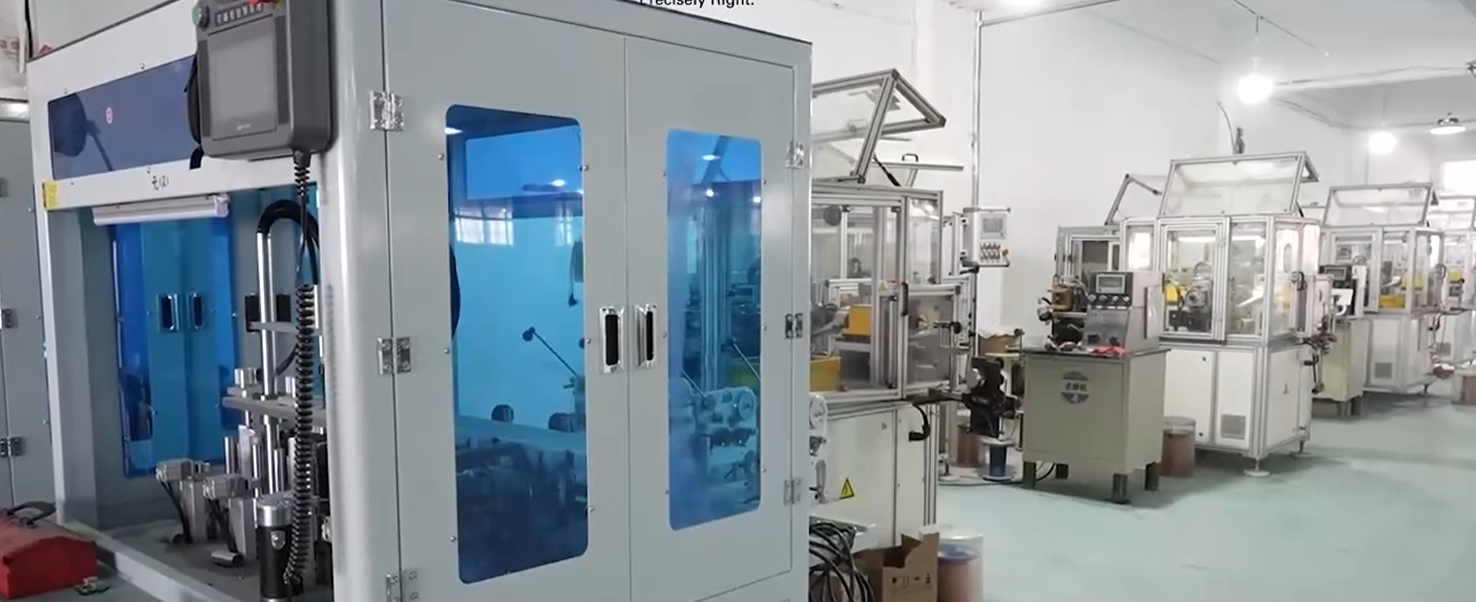
Production operations at the Ningbo manufacturing facility where the compact cardio range is built.
Where These Configurations Stop Working
Scenario fit is only credible if the boundaries are stated. Four are material here.
- An under-desk walking pad is not a running machine. Its low-speed walking optimisation is the reason it fits under a desk, and the same optimisation is why it should not be positioned as a substitute for a running treadmill. Buyers who need running mileage should keep a running-oriented product in the assortment.
- Magnetic resistance carries a cost premium. The comparison data puts the initial cost 20–30% above a belt-driven entry-level stationary bike. The premium is recovered through component lifespan and the absence of belt replacement, but it is a cash-flow fact at the point of purchase and should be reflected in pricing tiers.
- Folding frames introduce a hinge. A fold joint is a moving, load-bearing part. Endurance cycle testing is the relevant verification question, and buyers should ask for it explicitly rather than assume it.
- MOQ and lead time constrain micro-assortments. A 100-piece minimum per SKU and a 35–40 day production window make gradual, test-the-market ordering difficult; scenario programmes need forecast discipline, not reactive replenishment.
A fifth boundary is temporal. Compact equipment trades peak capability for daily usability. A buyer who needs maximum resistance or maximum running speed will find the compact formats underpowered, and no amount of scenario framing changes that.
Market Signals Behind Scenario-Led Assortments
Commercial research on the category points to steady rather than explosive growth, which favours assortment quality over volume expansion. Fortune Business Insights values the global home fitness equipment market at USD 13.76 billion in 2026, and separately projects growth from USD 12.88 billion in 2025 to USD 22.99 billion by 2034 at a CAGR of 6.81%. Mordor Intelligence projects growth from USD 11.84 billion in 2026 to USD 17.06 billion by 2031 at a CAGR of 7.59%. The two forecasts use different base years, forecast windows and estimation methods, so they should be read as directional agreement rather than as reconcilable figures.
Two structural signals support scenario-based product selection. Magnetic resistance accounted for a 62.4% share of the indoor cycling bike market in 2025, according to Fortune Business Insights — meaning the drivetrain choice embedded in the X-bike and spinning bike configurations already reflects where the bike category has moved. At the same time, motorized treadmills held an 83% shipment share of the treadmill category in 2023, confirming that the conventional treadmill remains the category default and that compact cardio is a segmentation play priced against that default.
The commercial reading is straightforward: growth is being absorbed by format variety inside an established category, not by a new category replacing the old one. Assortments that cover apartment, desk and compact-home use address that variety directly.
What Changes Next in Home Fitness Scenario Design
Three directions are visible from the product side. The first is the normalisation of desk-adjacent movement: low-speed walking surfaces are converging with furniture, and the design question shifts from exercise performance to invisibility — deck height, storage position, and whether the device can remain in place during a working day.
The second is acoustic engineering as a stated specification rather than an implied quality. As apartment density rises in the export markets this manufacturer serves, drivetrain noise, floor interface and vibration isolation become purchasing criteria that buyers will ask suppliers to document.
The third is durability verification replacing feature lists. Endurance cycle testing on resistance systems, motor aging tests, and load testing before shipment are the evidence types that survive a multi-year supply relationship; feature counts do not. Where a standard such as ASTM F2276 provides shared vocabulary for stability and moving-parts protection, it is likely to become part of routine supplier questionnaires rather than a differentiator.
For buyers, the practical implication is that scenario fit will be evaluated with the same rigour as price and lead time. A configuration that matches the room, the building's acoustics and the owner's actual schedule is the one that stays in use — and staying in use is the only performance metric that a home fitness product ultimately has to meet.
FAQ
What distinguishes an under-desk walking pad from a folding treadmill in a small apartment?
An under-desk walking pad is built around a slim platform without a bulky frame and tuned for low-speed walking, so it can sit beneath a desk and be stored vertically. The manufacturer's comparison against a traditional folding home treadmill cites 60–85% lower thickness, 40–60% lower weight and roughly 70–90% lower space usage, at a purchase cost 20–40% below a standard treadmill. A folding treadmill retains a running deck and console structure but reduces its storage height.
Why does a magnetic resistance bike cost more than a belt-driven stationary bike?
According to the manufacturer's comparison data, a magnetic resistance system carries an initial cost 20–30% higher than a traditional belt-driven entry-level stationary bike. In exchange it delivers a smoother ride, roughly 25% higher mechanical energy conversion efficiency due to reduced friction loss, no belt replacement within the magnetic system design, and a component lifespan two to three times longer.
What are the order terms for building a scenario-based assortment?
Minimum order quantity is 100 pieces, typical production lead time is 35–40 days, and delivery terms are FOB Ningbo. Payment terms are 30% T/T in advance with 70% T/T against a copy of the bill of lading. A three-model programme therefore starts from 300 pieces and requires forecasting rather than reactive ordering.
How is quality verified before a home fitness equipment order ships?
Quality control includes 100% testing plus third-party inspection, and the acceptance criteria are a pre-shipment test combined with third-party inspection. Factory measures include motor aging tests, load testing before shipment, and endurance cycle testing for resistance systems, alongside overcurrent and short-circuit protection as design controls.
What warranty applies, and what does it cover?
The manufacturer provides a one-year warranty for every damaged part. In procurement terms, this is a parts-coverage commitment rather than a service-level agreement on response time, so buyers should confirm the claims process alongside the warranty term.
Can a walking pad replace a treadmill for running?
No. Walking pads are optimised for low-speed walking, which is what makes them usable under a desk and in small apartments; they are positioned for office walking, apartment small-space use and daily low-intensity cardio. Running requires a running-oriented deck and motor specification, and the two formats serve different scenarios rather than substituting for one another.
How should a buyer evaluate noise for apartment use?
Three checks apply: drivetrain type, since magnetic systems have fewer wearing contacts than belt-driven designs and the manufacturer cites noise levels 25–45% lower for brushless or brush motor designs than traditional treadmill motors; the presence of a shock absorption system and anti-slip deck; and the floor interface in the destination building. No specification can remove the effect of a suspended timber floor or a shared partition.
The full 2026 product catalogue, including the compact cardio and vibration range, is available for download: HSM NEW E-CATALOG (PDF).
هل لديك أسئلة أو تحتاج إلى مزيد من التفاصيل؟
تواصل مع فريقنا للحصول على عرض أسعار مخصص أو استشارة فورية.
طلب عرض أسعار
املأ النموذج أدناه وسيتواصل معك فريقنا بعرض مقترح مخصص.
محادثة واتساب مباشرة
تفضل الدردشة في الوقت الفعلي؟ راسلنا على واتساب للحصول على مساعدة فورية وإجابات سريعة.
- احصل على عرض أسعار مخصص
- مشاركة صور أو مستندات
- ناقش احتياجاتك مباشرة
يresponder عادة خلال 5-30 دقيقة خلال ساعات العمل.