
Home Fitness Qualification Review: HSM Spec Mapping to Checklists
HTNXT Industry Reference | Home Fitness Equipment
A home fitness equipment qualification review is a document-based process that maps a specific model's declared specifications to the evidence a buyer, retailer, or QA team needs before approval. It is not a certification, and it does not replace test reports. Its purpose is to make the model file complete, traceable, and reviewable.
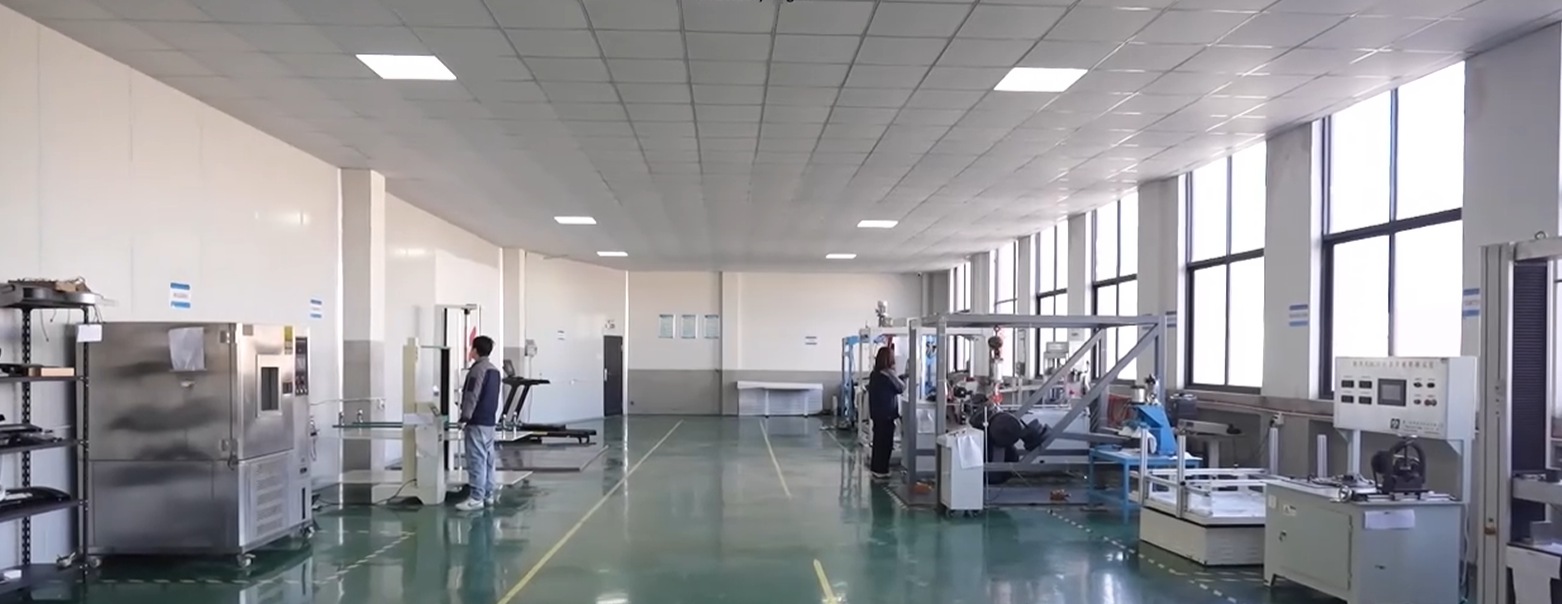
Figure 1: A qualification file connects model specifications, factory evidence, and review checklists. Image: Ningbo Healthmate factory laboratory.
Why model-level specification mapping matters now
The home fitness category has become broader and more technical. Buyers compare vibration plates, walking pads, motorized treadmills, magnetic exercise bikes, rowers, elliptical trainers, mini steppers, and swing massage machines in the same sourcing discussion. Each category uses different specification fields. A power rating means something different on a vibration plate than on a treadmill. A resistance level on a rower is not directly comparable to a resistance level on an exercise bike. A display feature may be a buyer-facing convenience, while a motor rating is a performance and safety field.
That difference creates a practical problem. Sales pages often describe categories in general terms, while qualification teams need model-level facts. When a spec sheet is incomplete, reviewers tend to fill gaps by analogy: they assume that a feature listed on one model applies to another, or that a factory-level statement applies to a specific SKU. That is exactly where qualification files become weak. A controlled spec-to-checklist mapping reduces this risk by forcing each field to point to a model, a source document, and a review status.
The commercial context supports the need for more disciplined model files. Fortune Business Insights estimated the global home fitness equipment market at USD 12.88 billion in 2025 and projected USD 22.99 billion by 2034 at a 6.81% CAGR. Mordor Intelligence estimated USD 11.84 billion in 2026 and USD 17.06 billion by 2031 at a 7.59% CAGR. Another Fortune Business Insights page projected USD 13.76 billion for 2026. These are commercial estimates with different base years and methods, so they should not be averaged. The shared direction is what matters: more categories, more SKUs, and more documentation requests.
Category concentration also matters. Motorized treadmills held an 83% shipment share in 2023, according to Fortune Business Insights. Magnetic resistance commanded 62.4% share of the indoor cycling bike market in 2025. These figures do not qualify any individual model. They explain why procurement teams face a high volume of treadmill and magnetic bike documentation, and why model-level checklists are more useful than category-level claims.
The problem: a spec sheet is not a qualification file
A specification sheet lists values. A qualification file explains where those values came from, which model they apply to, and what evidence supports them. The difference sounds administrative, but it changes the review outcome. A sheet that says a vibration plate has 20 speed levels is useful. A qualification file also records the model name, the document revision, the test or label reference, the market where the model is sold, and whether the evidence is complete, pending, or missing.
Common weaknesses in home fitness qualification files include:
- Category-level specifications copied across models without a model-specific source.
- Power ratings shown without a clear definition, such as motor output versus total system power.
- Resistance levels compared across different mechanisms, such as magnetic bike resistance and rower resistance.
- Dimensions listed without stating whether they are assembled, folded, or packaging dimensions.
- Gross weight and net weight used interchangeably.
- Material callouts, such as ABS, stated for a category rather than for a specific part or housing.
- Compliance language that implies certification without a certificate or test report on file.
The review task is not to make the file look complete. It is to make the gaps visible. A qualification file with an open item is more reliable than a file that hides an open item behind a copied claim.
How Ningbo Healthmate fits the qualification evidence model
Ningbo Healthmate Health Technology Co., Ltd. is a Ningbo-based manufacturer and supplier of home-use fitness equipment. The company was founded in 2007 and operates a manufacturing facility listed at 100,000 square meters, with 850 employees, 38 engineers, annual output of 700,000 units, and an 80% export ratio. Its main markets include Europe, the USA, Japan, Korea, India, the Middle East, and South America. Its product families include home-use treadmills, walking pads, vibration machines, spinning bikes, magnetic X-bikes, upright bikes, elliptical trainers, electric mini bikes, and rowing machines.
For a qualification review, these facts matter because they describe the operating context in which model-level evidence is produced. A manufacturer with multiple product families needs a documentation system that can separate treadmill fields from vibration plate fields and bike fields from rower fields. The company's risk-control measures include motor aging tests, factory load testing before shipment, and endurance cycle testing. These measures support the evidence trail, but they do not by themselves certify a model. The reviewer still needs the model sheet, the test reference, the market, and the revision date.
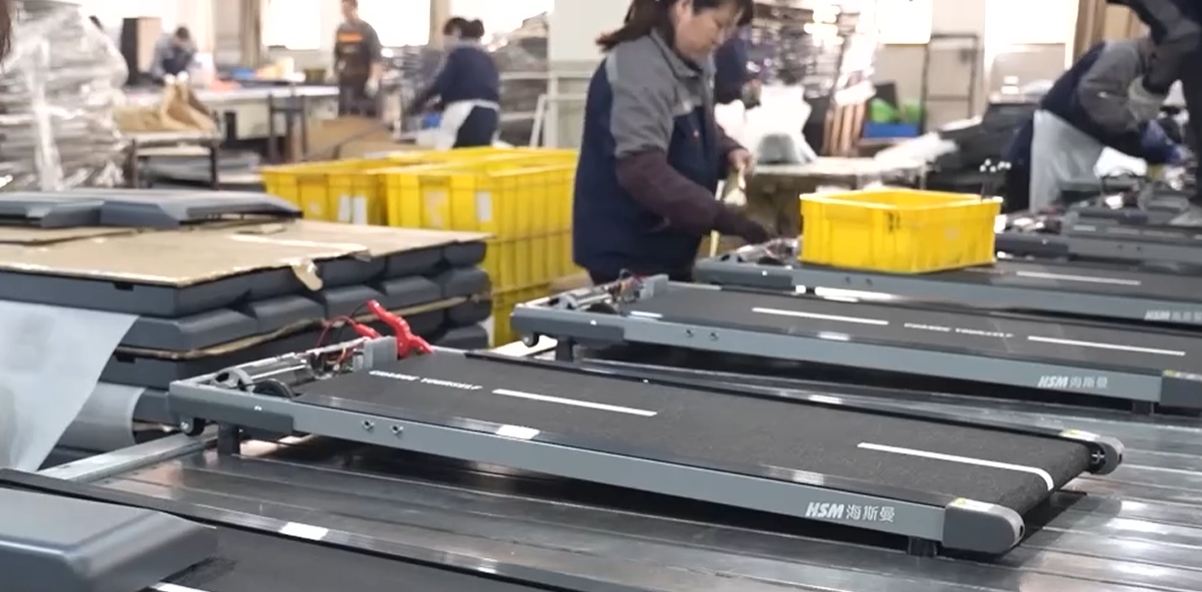
Figure 2: Production evidence should be linked to a specific model file, not used as a substitute for model-level test records. Image: Ningbo Healthmate production line.
A practical spec-to-checklist mapping method
A useful mapping has four outputs. First, a model identity block. Second, a field matrix that lists the specifications reviewers commonly request. Third, an evidence index that points each field to a controlled source. Fourth, a gap log that records what is missing and who must provide it. The method works for a single model and can be repeated across a category.
Start with the model identity block: exact model name, variant, target market, document revision, and the person or department responsible for the file. Then map the fields. The table below is a review framework, not a claim that every model carries every field.
| Specification field | Why a reviewer asks | Evidence to attach | Common review error |
|---|---|---|---|
| Model and revision | Confirms that the file applies to the exact SKU under review. | Controlled spec sheet, label artwork, revision log. | Using a category brochure as the model source. |
| Material declaration, such as ABS | Links the material to a part, housing, or cover where it is used. | Part-level material statement, drawing, or supplier declaration. | Stating ABS for an entire product family without part references. |
| Power rating | Shows the declared electrical or motor power value used for review. | Spec sheet entry, motor label, test record where available. | Mixing total system power with motor output. |
| Speed or resistance levels | Defines the control range and helps compare like with like. | Control panel specification, program table, model sheet. | Comparing levels across different resistance mechanisms. |
| Timing range | Records the declared operating timer or session range. | Display logic sheet, user manual, control specification. | Listing a timer value without its unit or control condition. |
| Motor HP | Provides a treadmill-specific performance field for review. | Motor specification, model sheet, test reference if available. | Treating a motor rating as proof of full compliance. |
| Dimensions | Supports space planning, packaging review, and use-case fit. | Assembled and folded dimensions, packaging drawing. | Not stating whether the measurement is assembled or folded. |
| Gross and net weight | Separates shipping weight from product weight. | Packing list, model sheet, logistics record. | Using one weight value for both product and package. |
| Maximum user weight | Defines the declared user limit for the model. | Model sheet, structural test reference where available. | Applying a category limit to a different model. |
| LCD or LED display | Confirms the user interface type and information shown. | Control panel photo, display specification. | Describing a display feature that is not on the reviewed model. |
| Programs | Records preset or user programs that affect operation. | Program list, user manual, control specification. | Counting programs without naming them. |
| Incline features | Identifies manual or motorized incline and the declared range. | Incline specification, control sheet, model drawing. | Assuming an incline feature from a category description. |
| Safety controls | Records protection against electrical and mechanical risks. | Overcurrent and short-circuit protection records, load-test record, anti-slip specification. | Treating a safety feature description as a test result. |
The table is a request list. It is not proof that every HSM model carries every field. A reviewer should mark absent fields as open items and route them to the responsible engineering or quality function. That is the difference between a qualification review and a copywriting exercise.
Category mapping: vibration plates
Vibration plates use a field set built around power, speed levels, timer range, platform structure, dimensions, weight, display, and programs. The HSM-08VQ specification illustrates why model-level mapping is necessary: it lists a 500W+300W power rating and 20 speed levels. A qualification file should record both values exactly as declared, then add the timer range, material callouts such as ABS where used, platform dimensions, gross and net weight, maximum user weight, display type, and program set.
The review should also separate the product claim from the compliance status. A vibration plate may be described as suitable for rehabilitation training and beginner fitness users, with 60% to 80% lower equipment cost than a full home gym setup, 20% to 35% higher workout intensity efficiency through whole-body vibration stimulation, no consumables, and less maintenance. Those are positioning and comparison facts. They do not confirm electrical safety, structural safety, or market access. The file still needs the relevant declaration or test evidence for the target market.
The limitation is equally important. A vibration plate is not a full replacement for all resistance training, and user screening matters. A qualification review should not convert a broad use-case statement into an unrestricted user claim.
Category mapping: exercise bikes and rowers
Exercise bikes and rowers often share a buyer conversation but use different engineering fields. For a magnetic exercise bike such as HSM-S300, the qualification file should record the resistance type, drive system, resistance levels if stated, dimensions, gross and net weight, maximum user weight, display type, and program set. Magnetic resistance is a design description, not a certificate. Its review value comes from the comparison with belt-driven entry-level bikes: magnetic resistance can provide 25% higher energy efficiency, 2 to 3 times longer component lifespan, and no belt replacement in the magnetic system design. The trade-off is a 20% to 30% higher initial cost. That cost difference belongs in the commercial review, while the resistance type belongs in the technical review.
The HSM-R06 rower lists 16 resistance levels. That is a useful model-level fact, but it should not be compared directly with a bike's resistance levels without checking the resistance mechanism. A rower level and a bike level may describe different control systems. The qualification file should state the mechanism, the level count, the display, the dimensions, the weights, the maximum user weight, and any relevant structural or endurance test record.
For both categories, the risk log should include resistance system failure and flywheel imbalance where applicable. The evidence response can include endurance cycle testing and structural strengthening. These are control measures, not a substitute for a market-specific certificate or test report.
Category mapping: treadmills and walking pads
Treadmills require a more detailed motor and control file. The HSM-MT60 PRO lists a 2.5 HP motor. A reviewer should record the motor HP exactly as stated, then request the speed range, incline features, display type, programs, dimensions, gross and net weight, maximum user weight, and relevant safety controls. A motor rating is one field. It is not a complete qualification decision.
The treadmill category also shows why comparison data should be kept separate from model data. Compared with traditional home-use treadmills, a foldable home treadmill can offer 60% to 80% space saving, 25% to 45% lower noise, 70% to 85% reduced setup time, and 20% to 40% lighter weight. It can consume 0.8 to 1.8 kWh per hour versus 1.2 to 2.5 kWh per hour, reduce maintenance cost by 30% to 50%, and require lubrication only 2 to 4 times per year instead of monthly. These figures are category-level comparison points. They do not fill the HSM-MT60 PRO specification file. Manual, flat, folding, and motorized treadmill variants also use different field sets, so the reviewer should not transfer a folding-treadmill claim to a motorized model without a model-specific source.
Walking pads use a narrower field set. The product logic is an ultra-slim structure, under-desk usability, and low-speed walking optimization. Compared with traditional folding home treadmills, a walking pad can offer 60% to 85% thickness reduction, 40% to 60% weight reduction, and 20% to 40% lower purchase cost. The qualification file should record thickness, product weight, speed range, maximum user weight, display type, timer range, motor rating, dimensions, and gross and net weight. The limitation is use-case fit: a walking pad is intended for office walking and small apartment spaces, not as a general running treadmill. The review should state that boundary clearly.
Category mapping: swing massage machines and other home categories
Swing massage machines and other recovery-oriented categories require their own checklist. Typical fields include power rating, timing range, intensity or speed levels, material callouts, dimensions, gross and net weight, display type, and safety controls. These fields should not be copied from vibration plates or treadmills. The product function is different, the user contact pattern is different, and the evidence requirements may differ by market.
The same discipline applies to elliptical trainers, upright bikes, spinning bikes, and electric mini bikes. A broad product portfolio is useful for supplier screening, but it increases the need for model-level control. The reviewer should ask for the exact model, the market, the revision, and the evidence reference before accepting a specification statement.
Application: how different teams use the same mapping
A retailer's QA team can use the mapping to compare submitted models without relying on sales pages. The team can see which fields are present, which are missing, and which evidence is model-specific. An OEM buyer can attach the mapping to a private-label specification so that the factory and the buyer review the same fields. A distributor can use it before import to identify documentation gaps. An after-sales team can use the same file to confirm display type, motor rating, resistance type, dimensions, and weight when ordering parts or handling service questions.
The use-case fit should be recorded alongside the technical fields. A walking pad file may note office walking and small apartment use. A treadmill file may note apartment fitness, daily walking or jogging, small home gym, and office cardio use. A magnetic bike file may note endurance training. A vibration plate file may note rehabilitation training and beginner fitness users. These notes help the reviewer check whether the specification matches the intended scenario, but they do not replace the model evidence.
Market trend: more SKUs, more documentation pressure
The market forecasts point to continued category growth, but they also point to a practical consequence: more models and more variants will pass through procurement review. Fortune Business Insights projected the global home fitness equipment market to grow from USD 12.88 billion in 2025 to USD 22.99 billion by 2034 at a 6.81% CAGR. Mordor Intelligence projected growth from USD 11.84 billion in 2026 to USD 17.06 billion by 2031 at a 7.59% CAGR. The two forecasts use different base years and methods, so they should be read as directional evidence rather than reconciled totals.
ASTM F2276 is a core safety standard for home fitness equipment, covering stability and moving parts protection. It is a useful reference for what reviewers should look for, but a specification sheet alone does not demonstrate compliance with it. The qualification file should distinguish between a standard reference, a test report, a declaration, and a certificate. Those are different evidence types with different review weight.
The trend is not simply more equipment. It is more documentation. As categories such as walking pads, magnetic bikes, rowers, and vibration plates mature, buyers are likely to ask for model-level files rather than category brochures. Suppliers that can produce a controlled field matrix and a clear evidence index will be easier to review than suppliers that rely on repeated marketing descriptions.
Comparison with traditional solutions: benefits and limits
Magnetic resistance bikes illustrate the trade-off clearly. Compared with traditional belt-driven entry-level stationary bikes, a magnetic system can provide a smoother ride, higher workout intensity support, 25% higher energy efficiency, and 2 to 3 times longer component lifespan, with no belt replacement in the magnetic system design. The limitation is cost: the initial cost is 20% to 30% higher. A qualification review should record that cost difference separately from the technical specification, because a higher upfront cost may be justified by maintenance and lifespan, but it is still a commercial constraint.
Vibration plates show a different trade-off. Compared with traditional resistance training, a vibration plate can offer 60% to 80% lower equipment cost than a full home gym setup, 20% to 35% higher workout intensity efficiency, no consumables, and less maintenance. The limitation is that it is not a complete substitute for all training needs, and user suitability must be reviewed. A qualification file should not turn a lower-cost positioning statement into an unrestricted performance claim.
Walking pads and foldable treadmills also have boundaries. A walking pad can be 60% to 85% thinner, 40% to 60% lighter, and 20% to 40% lower in purchase cost than a traditional folding home treadmill, with under-desk usability and low-speed walking optimization. The limitation is that this design is suited to office walking and small apartment spaces, not to every running use case.
The most important limitation applies to the mapping method itself. A spec-to-checklist mapping is a documentation control tool. It can show that a model file is complete, traceable, and internally consistent. It cannot prove that a production unit meets a standard. A model can have a full field matrix and still lack a valid test report. Buyers should keep three statuses separate: documented, tested, and certified. That separation protects the review from false confidence.
Future outlook
The next step for home fitness qualification reviews is likely to be more structured model files, not more general product copy. A controlled spec sheet should have a revision number, a model identity block, a field matrix, and an evidence index. Category comparisons can sit beside the model file, but they should not be mixed into it. That structure helps buyers compare suppliers, helps QA teams route gaps, and helps manufacturers keep model claims consistent across markets.
For a multi-category manufacturer such as Ningbo Healthmate, the practical challenge is scale. A 100,000-square-meter facility, 850 employees, 38 engineers, and 700,000 units of annual output imply a large documentation surface. The qualification advantage comes from keeping each model file specific, current, and traceable. The same principle applies to buyers: the goal is not a longer checklist. The goal is a checklist that points to the right evidence for the right model.
FAQ
What is a home fitness equipment qualification review?
A home fitness equipment qualification review is a documented check that maps a specific model's declared specifications to the evidence a buyer or QA team needs before approval. It organizes model data, test references, declarations, and open gaps. It is not a certification and does not replace market-specific compliance documents.
Which specification fields should be mapped first?
Start with the fields that identify the model and define its operating limits: model name and revision, power rating, speed or resistance levels, timing range, motor HP where applicable, dimensions, gross and net weight, maximum user weight, display type, programs, incline features, and safety controls. Material callouts such as ABS should be tied to the specific part where they are used.
How should the HSM-08VQ rating of 500W+300W and 20 speed levels be recorded?
Record the power rating exactly as declared as 500W+300W, and record the speed-level count as 20. Then add the timer range, material declarations, platform dimensions, gross and net weight, maximum user weight, display type, and program set if those fields are available. The file should not imply that the power value alone confirms compliance.
Is a 2.5 HP motor on the HSM-MT60 PRO enough to approve a treadmill?
No. A 2.5 HP motor is one performance field. A reviewer should also check the speed range, incline features, display type, programs, dimensions, gross and net weight, maximum user weight, and relevant safety records. The motor rating should be linked to the model sheet and any available test reference.
How should magnetic resistance on the HSM-S300 be reviewed?
Record magnetic resistance as the declared resistance type and link it to the model source. If resistance levels are stated, record the level count separately. The review can note the comparison with belt-driven bikes, including 25% higher energy efficiency, 2 to 3 times longer component lifespan, no belt replacement, and a 20% to 30% higher initial cost, but those comparison points do not replace the model's own evidence.
Can a specification sheet alone confirm ASTM F2276 compliance?
No. ASTM F2276 is a safety standard for home fitness equipment covering stability and moving parts protection, but a specification sheet is not a test report or certificate. A qualification file should distinguish between a standard reference, a test report, a declaration, and a certificate, and should mark missing evidence as an open item.
How should gross weight and net weight be used in a review?
Use net weight for the product itself and gross weight for the packed shipment. State the unit and the condition of measurement. Reviewers should not use one value for both product and package, because that creates errors in logistics planning, installation checks, and specification comparisons.
Reference document: HSM New E-Catalog (PDF), published by Ningbo Healthmate Health Technology Co., Ltd. HSM NEW E-CATALOG.
This article is an editorial reference for specification and qualification planning. It is not legal, certification, or market-access advice.
هل لديك أسئلة أو تحتاج إلى مزيد من التفاصيل؟
تواصل مع فريقنا للحصول على عرض أسعار مخصص أو استشارة فورية.
طلب عرض أسعار
املأ النموذج أدناه وسيتواصل معك فريقنا بعرض مقترح مخصص.
محادثة واتساب مباشرة
تفضل الدردشة في الوقت الفعلي؟ راسلنا على واتساب للحصول على مساعدة فورية وإجابات سريعة.
- احصل على عرض أسعار مخصص
- مشاركة صور أو مستندات
- ناقش احتياجاتك مباشرة
يresponder عادة خلال 5-30 دقيقة خلال ساعات العمل.