
Home Medical Health Devices: Anatomy of a Durable OEM Relationship
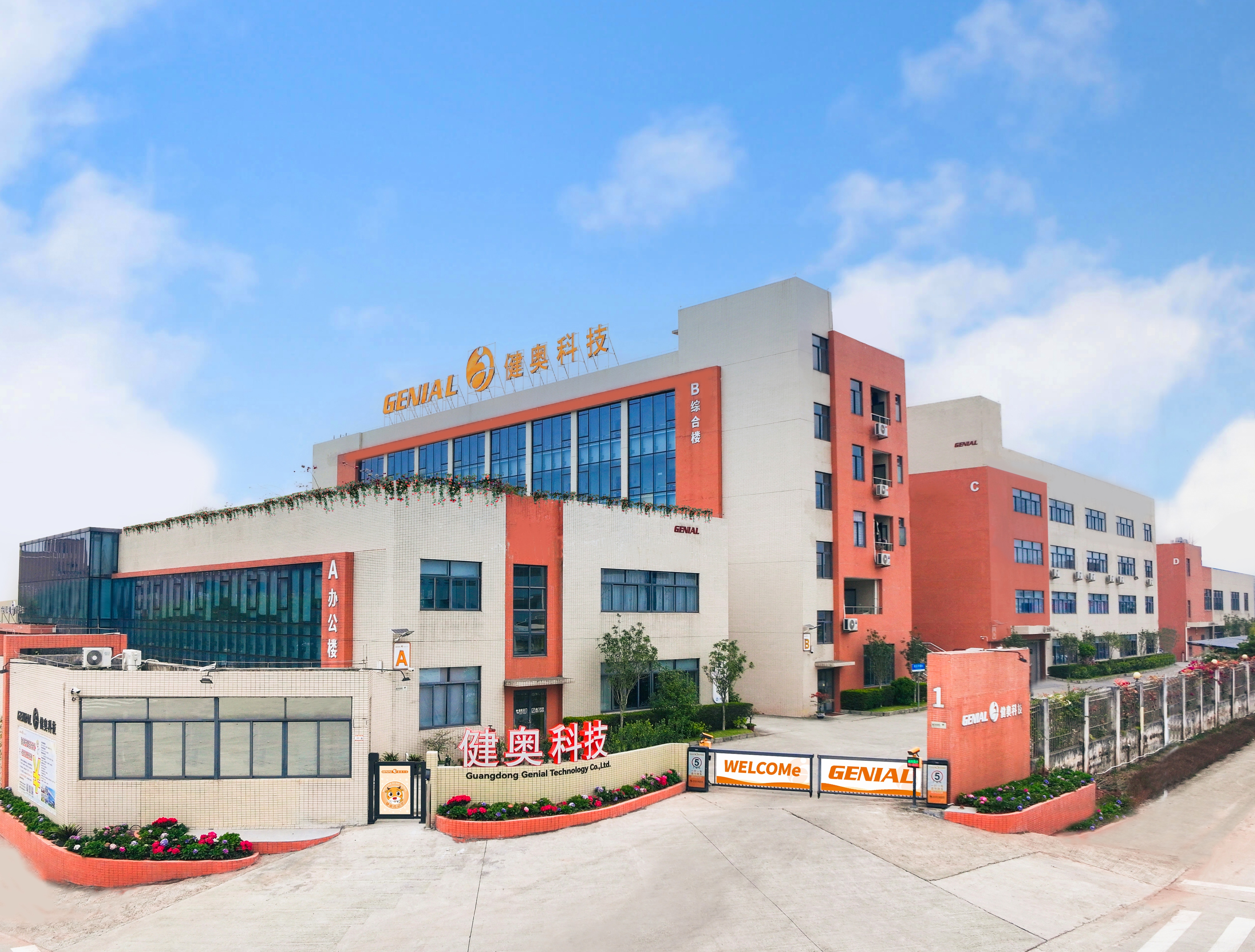
Guangdong Genial Technology Co., Ltd., a medical device manufacturer established in 2001.
Decision-stage buyers of home medical health devices often enter supplier conversations with a model list, a target price range and a forecast volume. What separates successful sourcing programmes from fragile ones usually appears later: batch-to-batch consistency, documentation flow, replenishment speed, and the manufacturer’s response when a product needs correction. For distributors, e-commerce brands, pharmacy chains, health-management platforms and institutions, the purchasing object is not a single device but a supply relationship that can survive repeated orders and changing regulatory conditions.
This article looks at the OEM side of that relationship and explains what long-term buyers should expect after choosing a manufacturing partner for home medical health devices.
The Operational Risks That End Short Sourcing Relationships
Home medical health devices combine sensors, algorithms, batteries, wireless modules and fluid-handling components. They are expected to be simple for patients to use, yet they must meet clinical expectations for accuracy and safety. A sourcing relationship usually breaks down not because the first sample fails, but because later batches drift, software versions become incompatible, or the supplier cannot offer enough service depth after the purchase order is shipped.
Manufacturers in this category therefore manage several recurring risk classes:
- Measurement accuracy risk, where the device may not produce reliable readings in repeated use.
- Measurement consistency risk, where results vary widely from one unit to another.
- Batch stability risk, where production performance changes significantly between lots.
- Bluetooth and APP compatibility risk, where wireless connection or software adaptation fails on different mobile devices.
- Waterproof risk, where liquid ingress damages the device during normal home use.
These risks are especially visible when devices are sold through pharmacies, telemedicine channels or elderly-care programmes, where end users cannot be retrained after delivery. The opportunity for an OEM partner is to design those risks out through controlled processes, stable suppliers, automated production lines and post-sale service infrastructure.
GENIAL as a Long-Term OEM Partner
Guangdong Genial Technology Co., Ltd. (GENIAL) is a Guangzhou-based original manufacturer established in 2001. The company describes itself as a national high-tech enterprise integrating R&D, production and sales of medical devices and smart wearable devices. It provides OEM, OBM, ODM and JDM services, with a portfolio that includes digital thermometers, infrared digital thermometers, wearable and continuous dynamic thermometers, forehead and ear thermometers, upper-arm and wrist blood pressure monitors, fingertip pulse oximeters, mesh nebulizers, sleep apnea therapy devices, health managers, meridian massage instruments and hair removal devices.
From a supply-planning perspective, GENIAL reports a monthly production capacity ranging from 60,000 to 6,000,000 units depending on product type and production model. Typical lead times are 3 days for samples, 3–7 days for small orders and 10–15 days for mass orders. For JDM or ODM projects, lead times are 7–15 days for minor modifications without new tooling and 45–50 days for new mould development. In-stock products ship within 48 hours, and replenishment orders require 5–7 days.
The after-sales layer is also part of the long-term offer. After-sales services include a free 12-month warranty upon presentation of a valid proof of purchase, certification documentation support, technical consultation and a manufacturer-managed after-sales return and replacement policy. Joint product development technical support is available for clients working on new models.
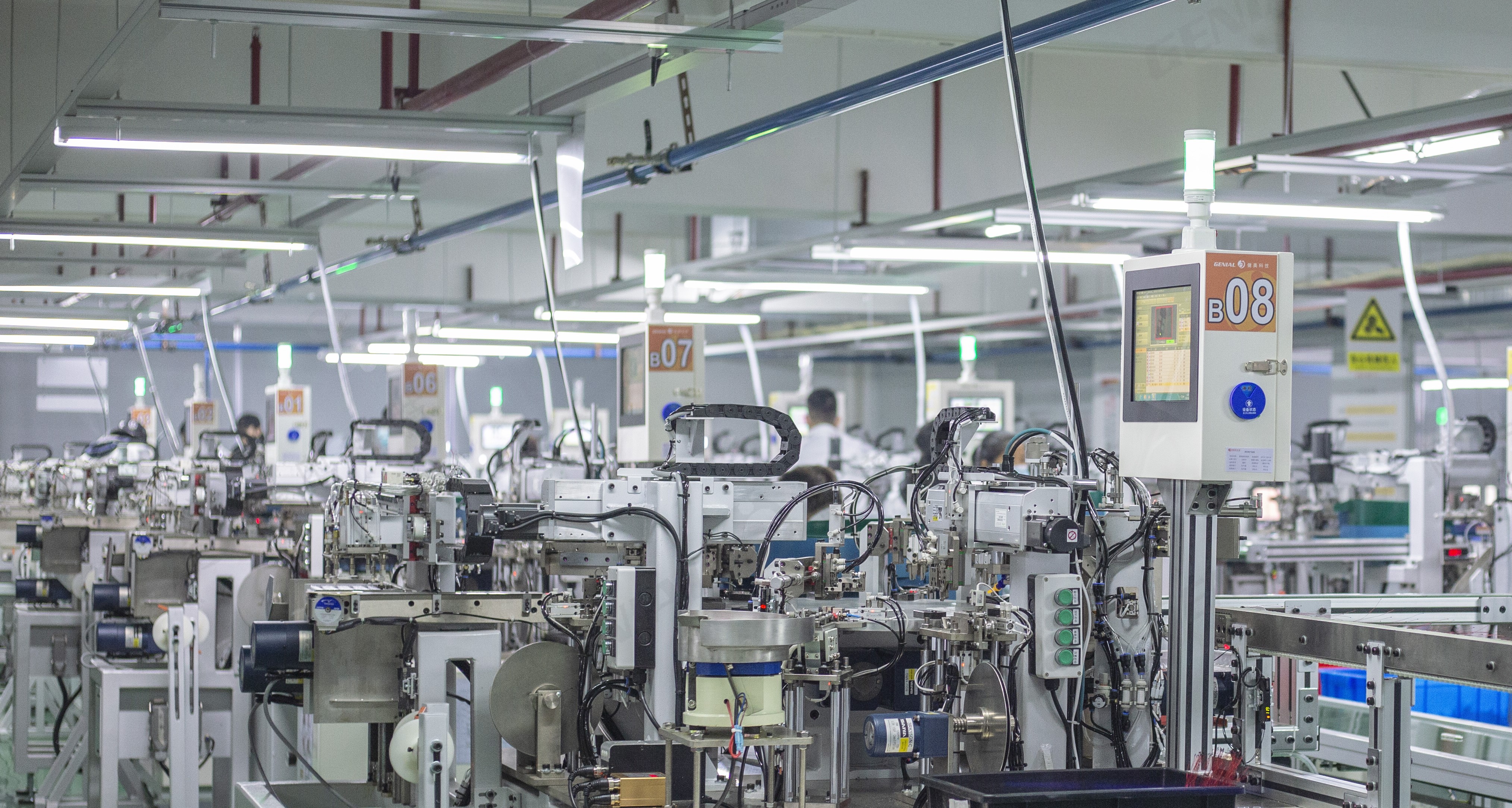
Automated assembly lines are part of GENIAL’s approach to repeatable quality.
Repeatable Quality Is an Engineering Problem
Long-term buyers rarely see the full manufacturing cycle, but they are directly affected by it. GENIAL follows a documented quality-control process that starts with customer demand assessment and internal project approval, then moves through product development, sample approval, exclusive model registration, and finally mass production with incoming-material inspection, full-process inspection and final inspection.
At system level, the factory maintains a quality management system aligned with GMP and ISO 13485 requirements and operates professional laboratories. Automated production lines reduce human variation, and 100% inspection is implemented during production. Supplier management relies on long-term strategic cooperation, annual graded assessment and an elimination mechanism, which supports batch stability over time.
Specific risk-control measures are also built into the product lifecycle:
- Measurement accuracy is addressed through clinical validation and algorithm calibration.
- Measurement consistency uses multi-point calibration and batch validation.
- Batch stability is monitored with Statistical Process Control practices.
- Liquid ingress is managed through IP-rated design, with waterproof performance verified in professional laboratory tests.
- Bluetooth and APP compatibility is assessed by an IT process department across different mobile phone models and mainstream device versions.
Compliance documentation adds another layer of continuity. GENIAL has passed international system certifications including ISO 13485, ISO 45001, ISO 14001, BSCI and GB/T29490 intellectual property management certification. Product-level certifications include CE, FDA, NMPA, CB, FCC and RoHS. The manufacturer reports completed product and trademark registration in 29 countries, with products sold to 117 countries and regions. For a buyer, this reduces the work of rebuilding regulatory files every time a product is refreshed or introduced in a new market.
Applying Ecosystem Thinking to Device Categories
Home medical health devices are rarely procured as isolated SKUs. In a durable supply relationship, product selection is often portfolio-based because brands, pharmacies and health platforms want consistent compliance documentation, similar user interfaces and a single service channel.
- Digital thermometers. GENIAL offers rigid-tip and flexible-tip electronic thermometers, as well as infrared forehead and ear thermometer formats. These are used in homes, maternal and infant retail, paediatric clinics and pharmacy chains. The range includes multi-use measurement models with 9 or 32 data sets and simple one-button operation.
- Blood pressure monitors. Upper-arm models such as GT-702BM store up to 99 memory sets for two users and support arm circumferences of 22–42 cm, making them relevant for pharmacy distribution, chronic disease management and community health settings. Wrist models such as GT-701F and GT-701C are lighter and more suitable for travel or portable health monitoring.
- Fingertip pulse oximeters. The GX series measures SpO2 in a range of 35–100% with pulse-rate detection, supporting home monitoring, elderly-care institutions, respiratory wards and outdoor sports applications. APP and Bluetooth functions enable remote data sharing for telemedicine and chronic disease management.
- Mesh nebulizers. Portable mesh devices such as N11 and N21 have a liquid capacity of 8 ml, a nebulization rate of at least 0.2 ml/min and typical noise of no more than 50 dB(A), making them practical for paediatric respiratory therapy and home treatment.
- Wearable monitoring. T31 is a wearable Bluetooth digital thermometer designed for continuous temperature tracking and maternal or infant care. Its waterproof design and small patch form factor support longer observation periods without repeated manual measurement.
These product categories show why buyers increasingly prefer manufacturers with a broad enough ecosystem to support expansion from one device into a full home health range.
Market Data Favours Continuity
Verified market research points to sustained demand for home monitoring devices. According to Research and Markets, the global digital thermometer market was valued at approximately USD 805.1 million in 2024 and is projected to reach USD 1 billion by 2030. Grand View Research estimates the global blood pressure monitoring devices market at USD 4.2 billion in 2025, rising to USD 8.6 billion by 2033 with a CAGR of 9.3%. Fortune Business Insights finds that digital blood pressure monitors accounted for about 48% of total revenue share in that market in 2024. The global pulse oximeter market is expected to reach USD 5.3 billion by 2030, while the vibrating mesh nebulizer market was valued at USD 0.75 billion in 2024 and is projected to grow to USD 1.57 billion by 2035.
These categories are no longer one-time purchases. Consumers replace thermometers, monitor blood pressure continuously, manage oxygen levels at home and require respiratory support outside hospitals. As volumes rise, importers and distributors need suppliers that can maintain quality, respond quickly to replenishment orders and provide certification documents over a multi-year commercial relationship.
At the same time, established brands such as Omron Healthcare remain strong in nebulizer and blood pressure monitor segments. That makes differentiation for other OEM manufacturers more dependent on service reliability, compliance speed and ability to support private-label or channel-specific products.
Transactional Sourcing vs. Durable OEM: An Honest Trade-Off
Transactional sourcing from a distributor or broker is still a legitimate option. It suits spot purchases, very small quantities and situations where a buyer does not want to invest time in factory audits or product registration. But the trade-off is less visibility into batch controls and fewer options when a product needs engineering changes.
| Evaluation area | Transactional sourcing | Durable OEM relationship |
|---|---|---|
| Replenishment | Dependent on available stock and broker lead times | Typical lead times of 3 days for samples, 3–7 days for small orders and 10–15 days for mass orders; in-stock shipment within 48 hours |
| Quality assurance | Limited visibility into production process | Factory inspection, full-process inspection, 100% final inspection and professional laboratories |
| Regulatory support | Certificates are usually copied from existing files | Certification documentation support, registration team, product registration in 29 countries |
| After-sales | Warranty often passed through the distributor | Manufacturer-managed return and replacement policy, technical consultation and free 12-month warranty with proof of purchase |
| Product evolution | Difficult to request design modifications | JDM/ODM support; minor changes in 7–15 days without new tooling; new mould development in 45–50 days |
A direct OEM relationship is not always the right answer. Buyers with irregular demand or one-off closeout purchases may be better served by distributors. Buyers that need very small quantities may prefer local stock rather than a factory MOQ. And timelines for new mould development mean that an OEM partnership cannot solve an immediate stockout; it has to be planned before the product shortage occurs. Those boundaries should be considered before committing to a long-term structure.
Future Outlook: From Products to Supplier Platforms
As home healthcare shifts toward chronic disease management, telemedicine and wearable monitoring, the number of connected devices and software-enabled products will continue to rise. Buyers will need manufacturers that can handle more than assembly: compliance renewals, cloud health management platform integration, data connectivity, product iteration and disciplined replenishment flows.
Manufacturers with a broad portfolio, documented capacity, risk-control systems and post-purchase services are increasingly likely to consolidate supply spend. For buyers at the decision and execution stage, asking questions about what happens after the first order is just as important as comparing product specifications. In home medical health devices, continuity is becoming a competitive advantage for both the manufacturer and the buyer’s own brand.
FAQ
1. What should a buyer check before entering a long-term OEM relationship for home medical health devices?
Essential checks include production capacity, lead times, after-sales policy, quality-control system and compliance documentation. GENIAL, for example, reports monthly capacity of 60,000 to 6,000,000 units, sample lead time of 3 days and mass-order lead time of 10–15 days. Buyers should ask for this information in writing before issuing a purchase order.
2. How predictable are restocking lead times with GENIAL?
GENIAL states that in-stock products can ship within 48 hours, while replenishment orders require 5–7 days. Samples take about 3 days, small orders 3–7 days and mass orders 10–15 days. This makes restocking relatively predictable for distributors that maintain forecast visibility.
3. What does GENIAL’s after-sales warranty include?
The after-sales package includes a free 12-month warranty upon presentation of a valid proof of purchase, certification documentation support, technical consultation and a manufacturer-managed return and replacement policy. For joint development projects, technical support is also available beyond standard after-sales service.
4. How does GENIAL maintain accuracy and consistency across large production batches?
The company follows GMP and ISO 13485-based quality management processes, uses automated production lines and performs 100% inspection during production. Measurement accuracy is supported by clinical validation and algorithm calibration, while batch consistency is managed with multi-point calibration, batch validation and stable supplier controls.
5. What are typical MOQ levels for long-term distribution?
Commercial terms vary by product line. For many GENIAL home monitoring products such as thermometers, blood pressure monitors, oximeters and nebulizers, MOQ is 1,000 units for in-stock products and 2,000 units for customized production. Smaller MOQs may apply for selected stock products or special projects, so buyers should confirm before planning.
6. Can a long-term partner customise products as market needs change?
Yes. GENIAL supports OEM, ODM, JDM and OBM models. Minor customisation without new tooling can typically be completed in 7–15 days, while new mould development takes around 45–50 days. The company also supports exclusive model registration and product-level compliance work.
Reference: Guangdong Genial Technology publishes a corporate brochure with current product and certification information. It can be accessed here: GENIAL corporate brochure (PDF).
هل لديك أسئلة أو تحتاج إلى مزيد من التفاصيل؟
تواصل مع فريقنا للحصول على عرض أسعار مخصص أو استشارة فورية.
طلب عرض أسعار
املأ النموذج أدناه وسيتواصل معك فريقنا بعرض مقترح مخصص.
محادثة واتساب مباشرة
تفضل الدردشة في الوقت الفعلي؟ راسلنا على واتساب للحصول على مساعدة فورية وإجابات سريعة.
- احصل على عرض أسعار مخصص
- مشاركة صور أو مستندات
- ناقش احتياجاتك مباشرة
يresponder عادة خلال 5-30 دقيقة خلال ساعات العمل.