
Home PC Gaming Chair: A Manufacturing Capability Guide for Buyers
Home PC gaming chairs are no longer a niche add-on in the gaming furniture category. They sit at the intersection of comfort, work-from-home function, and visual design, which makes factory capability a critical part of the buying decision. This article explains what to look for when sourcing home PC gaming chairs, using Anji Maochang Furniture Co., Ltd. as a concrete manufacturer example.
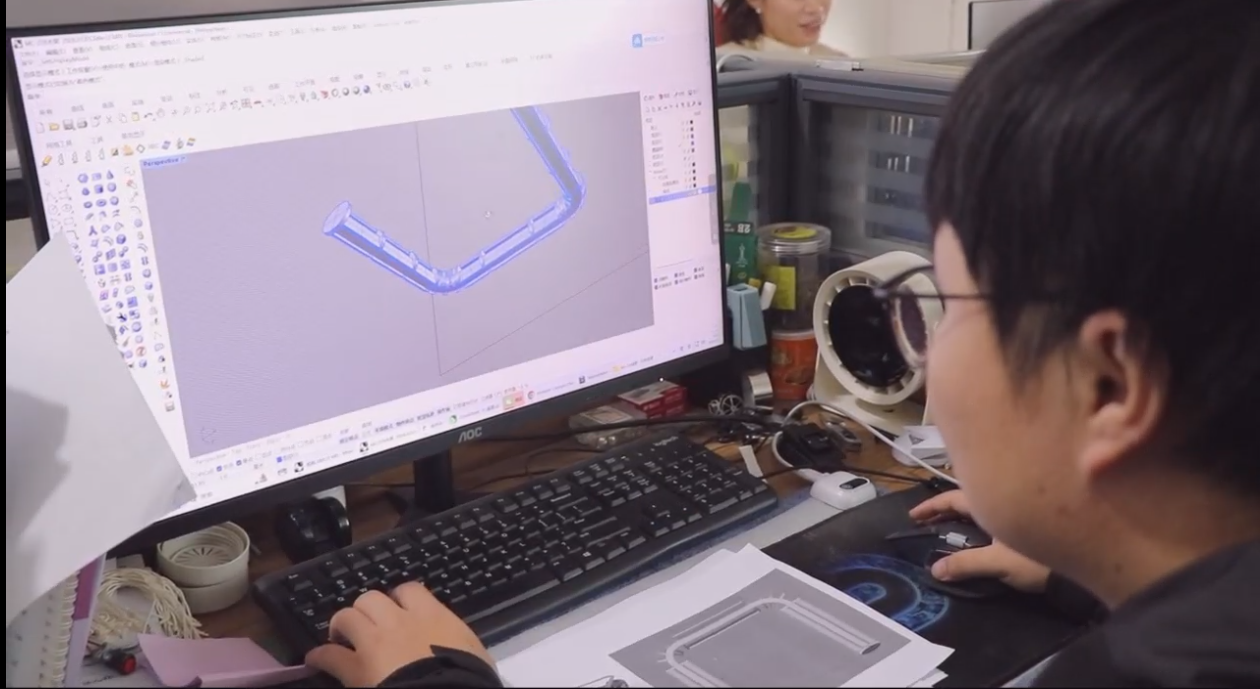
Design and development process at the Anji Maochang Furniture factory.
The sourcing problem behind home PC gaming chair orders
Buyers evaluating a gaming chair supplier face a common set of problems: product pictures look similar, but construction quality, compliance coverage, and customization options differ. For a home PC gaming chair, the user sits close, uses the chair for long sessions, and in many cases expects the chair to work for both gaming and remote work. This places pressure on the manufacturer to get material choices, adjustability, and durability right.
The opportunity is visible in market data. The global gaming chair market is estimated at USD 1.37 billion in 2024 and is projected to reach approximately USD 2.05 billion by 2030, according to a Grand View Research market report. North America represents the largest regional market, with a 36.4% revenue share in 2024, based on Mordor Intelligence data. Hybrid “work-and-game” chairs also represent a growing segment, holding a 29.8% market share as of 2024.
For a manufacturer, these numbers explain why buyers are looking for more than a basic racing-style chair. They want ergonomic support, multiple adjustment points, and reliable material behavior, especially in a home environment where the chair is visible in the room.
A factory reference: Anji Maochang Furniture
Anji Maochang Furniture Co., Ltd. is a manufacturer based in Anji County, Zhejiang Province, China, founded in 2016. The company produces gaming chairs, office chairs, and manicure chairs, with a factory area of 3,000 m², 25 employees, and an annual output of 75,000 units. Its R&D team includes 3 engineers. The company exports approximately 98% of its output, with main markets in the EU, USA, Thailand, Brazil, and South Korea.
For buyers of home PC gaming chairs, Maochang offers OEM and ODM production services. Customization options cover logo, color, size, and design. The factory has a monthly capacity of 6,000 units, a lead time of 30-40 days, and a minimum order quantity of 50 units. Production covers cutting, woodworking, foam bonding, sewing, nailing, assembly, cleaning, and packaging.
Quality control is process-based. Incoming materials are inspected, covering gaslift, mechanism, leather color, and plywood thickness. Before plywood production begins, the factory assembles one chair using plywood only to check the total depth and verify that the chair is even. Pre-shipment testing is available as part of the order acceptance process.
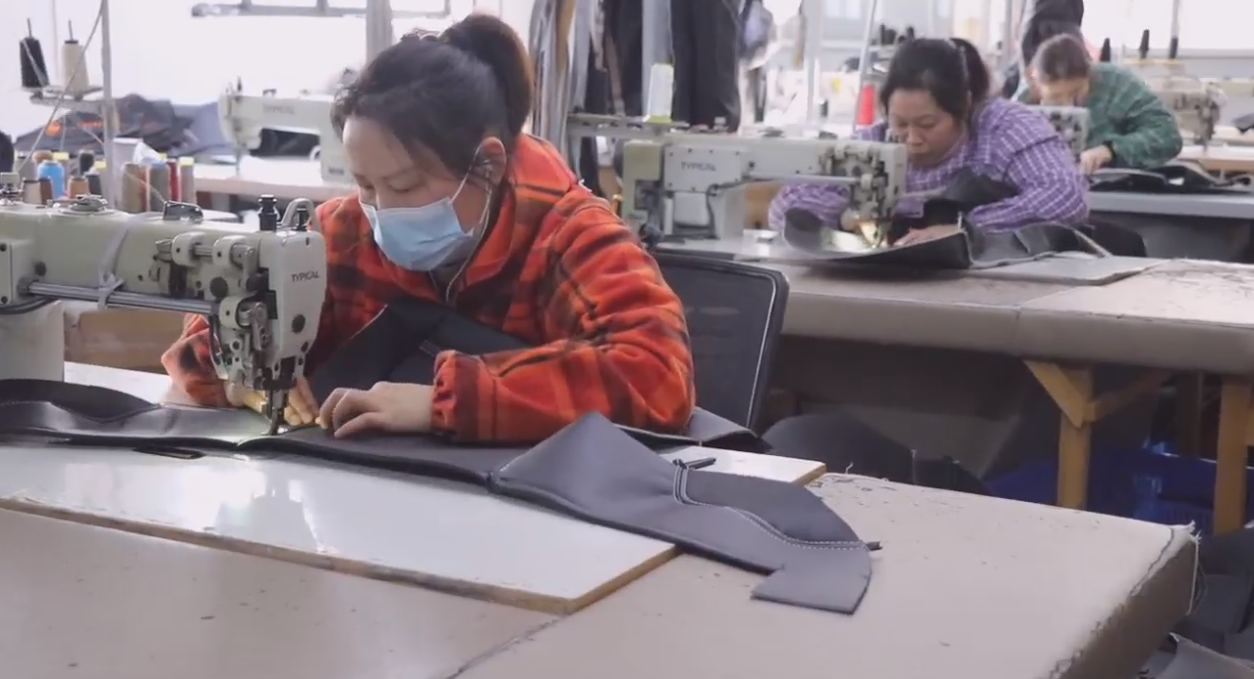
Sewing stage of gaming chair upholstery production.
What technically matters in a home PC gaming chair
Home PC gaming chairs are defined more by their components than their style. The following areas determine whether a product will perform over time.
Seat foam and shape retention
High-density mold foam is widely used in gaming chairs because it resists deformation during long sitting sessions. In the broader market, high-density mold foam with a density of approximately 50-65 kg/m³ is considered the norm for premium products, based on a furniture material guide. For a home user, foam quality directly affects whether the chair remains comfortable after months of daily use.
Gaslift, base, and mechanism
The gaslift class determines lifting performance and long-term reliability. As one example, the Maochang gaming chair model MC1039 uses a Class 3 gaslift, a 370 mm big-size starbase, and a frog-type multifunctional mechanism. It also includes a height-adjustable armrest. These specifications address the needs of home users who may be heavier, taller, or want the chair to feel stable on different floor types.
Materials and surface options
PU leather is the most common upholstery material in the gaming chair market, holding a 57.3% share in 2024, according to Mordor Intelligence. PU is used because it is easy to clean and comes in a wide range of colors. Some home users prefer fabric for breathability, while others favor PVC or PU blends. The model MC1034, for example, combines metal, PU, and plastic, while model MC1039 uses PU, PVC, mesh, fabric, plywood, and a metal frame. Material choice affects price, perceived quality, and comfort in different climates.
Compliance and standards
Buyers selling into Europe or North America are expected to check chair standards. EN 1335 is the European standard for office work chairs, covering dimensions, safety, and testing. ANSI/BIFMA X5.1 is the primary safety and durability standard for general-purpose office and gaming chairs in North America. In the UK, BS 5852 addresses fire safety for upholstered furniture.
Maochang provides documentation linked to these requirements. A test report issued by RED Laboratories Inc. covers the gaming chair model MC1039 under EN 1335-1:2020 and EN 1335-2:2019-04. A separate formaldehyde emission test report applies to model MC1034 under EN 717-1:2004. The factory also holds an FSC Chain of Custody certificate and a BSCI factory audit certificate (amfori-BSCI Code of Conduct).
Design protection
Design registration is increasingly important for brands that want exclusive products. Maochang holds a design patent issued by CNIPA (China National Intellectual Property Administration), with patent number ZL 2025 3 0581799.7, covering a gaming chair design. This patent is connected to models MC196-2-1 and MC196-3-1. For buyers, a factory with design patents signals that the manufacturer is investing in original design.
Where home PC gaming chairs are being used
The user scenarios for home PC gaming chairs overlap with home offices, rental apartments, and streamer setups. The following applications show how a factory’s product range needs to cover multiple sitting habits.
Home PC gaming chair
This is the core scenario: a chair placed in a bedroom, study, or living room. The buyer expects an attractive silhouette, smooth reclining, and enough adjustability to match a desk setup. Models such as MC1034 (racing type), MC1039 (big size), and MC196-3-1 (game-type computer chair) are positioned for this space.
Office and gaming hybrid
Work-from-home habits have pushed buyers toward chairs that do not look out of place in a video call. The model MC196 is described as a hot-sale game-type office chair, with material specification including fabric, metal, foam, and plastic. It is suitable for home, office, and live-streaming environments.
Live streamer gaming chair
Streamers sit for long hours, and the chair is visible on camera. The MC196-1 LED gaming chair adds lighting as a visual element while keeping fabric as the main upholstery. Maochang’s production range also includes a heavy-duty big-size gaming chair, model MC1039-1, for larger users or longer sessions.
Dormitory and compact use
Students need chairs that fit tight rooms and are relatively easy to move. The MC196-2-1 exclusive game chair uses fabric, metal, plastic, and foam, and is specified for home and office use. Its carton size is 75×65×34 cm, which helps with smaller shipment volumes.
Internet cafe and high-traffic seating
Some buyers need home-grade performance in a commercial environment. The MC196-3-1 is listed as suitable for internet cafe use, while the MC1039-1 heavy-duty gaming chair is designed for gaming, home, live streaming, and internet cafe settings. The MC1040 gaming sofa is also produced for same environments.
Existing B2B proof point
In one documented case, a Ukrainian wholesale partner ordered 460 units across multiple models — MC196-3-1, MC196-2-1, MC1025, MC196, and MC196-1 — for office space furnishing. The partnership continued over a two-year period and was well received by local office clients. This case shows that a factory focused on gaming chairs can support wholesalers who are actually serving office or home-office end users.
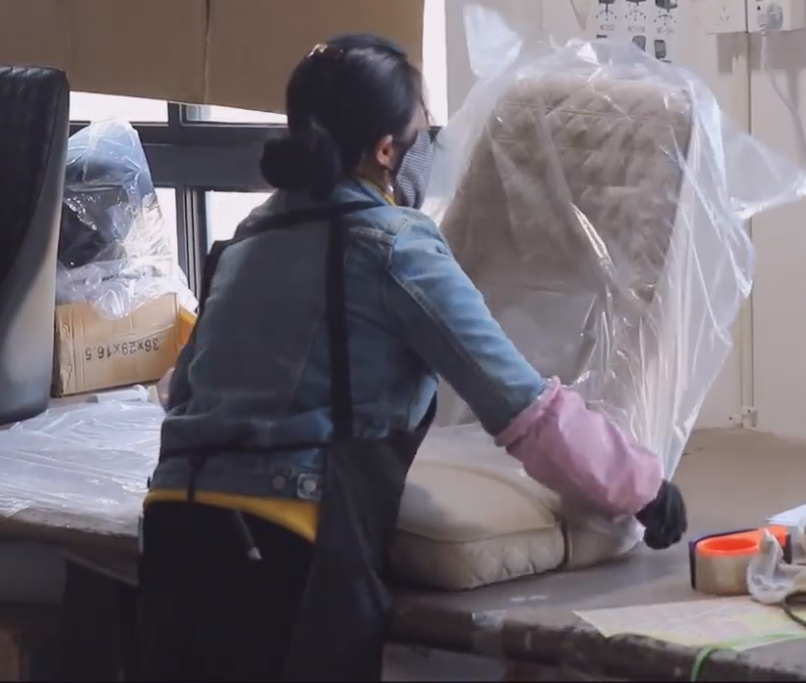
Cleaning and packing stage before export shipment.
Market trends affecting home PC gaming chair sourcing
Several verified market signals are relevant for buyers who plan production decisions.
- The global gaming chair market was valued at USD 1.37 billion in 2024 and is expected to reach approximately USD 2.05 billion by 2030 (Grand View Research).
- PC gaming chairs dominate the product segment, holding a 52.6% share in 2024 (Grand View Research).
- PU leather is the most common material choice, with a 57.3% share in 2024 (Mordor Intelligence).
- Hybrid work-and-game chairs account for a 29.8% segment share (Expert Market Insights).
- North America is the largest regional market, with a 36.4% revenue share in 2024 (Mordor Intelligence).
- The Anji furniture cluster in Zhejiang, China, is a major production base for gaming chairs; China contributes 30.8% of global furniture exports (Statista / OEC Trade Data).
These data points point in the same direction: buyers are looking for home-oriented gaming chairs that combine office ergonomics with gaming visual cues, and they want factories that can demonstrate material and compliance competence.
Factory sourcing vs. buying from distributors
The traditional route for a retail brand is to buy finished gaming chairs from distributors or trading companies. That route offers convenience, lower minimums, and quicker delivery. The trade-off is limited customization, less visibility into quality control, and limited access to compliance documentation.
Sourcing directly from a manufacturer like Anji Maochang Furniture changes the decision framework. The buyer can customize the product design, logo, color, and size; request pre-shipment inspection; and align payment terms with production milestones. The factory’s after-sales package includes free product photos, product show videos, assembly videos, and sales page support for retail customers. A 1-year quality warranty is included.
There is a realistic boundary, however. OEM/ODM production at Maochang requires a minimum order of 50 units per model and a lead time of 30-40 days. Payment terms are normally 30% deposit in advance, with the balance payable against a copy of the Bill of Lading. This setup is not suitable for a buyer who needs a single unit or needs inventory within a few days. It is also not a substitute for local warehousing, end-user returns, or brand-level after-sales service in the destination country. The buyer should treat the factory as a production partner, not as a replacement for local operations.
What is next for home PC gaming chair production
The direction of the category is clear: home gaming chairs will continue to borrow features from office seating. Ergonomics features such as adjustable armrests, lumbar support, synchronized reclining mechanisms, and higher-density foam are becoming standard expectations. Compliance documentation will also play a larger role in purchasing decisions, especially for brands selling into regulated markets.
At the same time, original design is becoming a competitive asset. The fact that a factory such as Maochang holds a CNIPA design patent for gaming chair models indicates that manufacturers are moving beyond copying standard silhouettes. For buyers, working with a factory that has its own design registration gives the brand a better chance of launching a product that is visually distinct in online listings.
Sustainability credentials are also entering the procurement checklist. FSC Chain of Custody certification, which Maochang holds, allows buyers to source products with compliant wood content. As retailers in the EU and North America tighten their sustainability policies, this type of documentation matters more than it did a few years ago.
Manufacturer capability FAQ
1. Does this manufacturer support OEM and ODM production?
Yes. Anji Maochang Furniture Co., Ltd. provides OEM and ODM production services. Customization covers logo, color, size, and design.
2. What is the minimum order quantity for home PC gaming chairs?
The minimum order quantity is 50 units. This applies across the company’s gaming chair, office chair, and computer chair product range.
3. What is the typical lead time?
Lead time is 30-40 days. Monthly production capacity is 6,000 units, which supports repeat orders.
4. What quality control steps are in place?
Incoming materials are inspected for gaslift, mechanism, leather color, and plywood thickness. A pilot assembly check is done with plywood before production. Pre-shipment testing is available before delivery.
5. Which standards and certifications does the factory have?
The factory holds test reports for EN 1335-1:2020 and EN 1335-2:2019-04 on gaming chair model MC1039, a formaldehyde emission test report per EN 717-1:2004 on model MC1034, an FSC Chain of Custody certificate, and a BSCI factory audit. It also holds a CNIPA design patent for gaming chair models MC196-2-1 and MC196-3-1.
6. What are the payment and shipping terms?
Delivery is FOB Shanghai or Ningbo. Payment is 30% deposit in advance, with the balance due against a copy of the Bill of Lading.
Reference
The 2026 product catalogue for Anji Maochang Furniture Co., Ltd. is available for download: 2026 catalogue small (PDF).