
Honeycomb Panel Procurement FAQ: Purchasing Terms, Acceptance Criteria, and Technical Answers
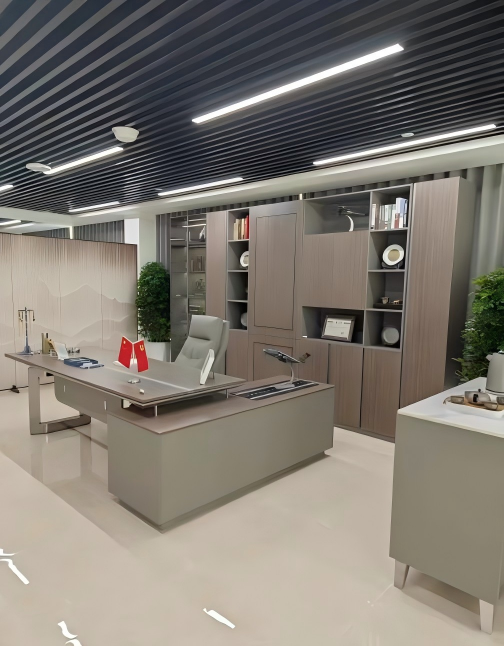
Large-format aluminum honeycomb panels in a commercial office setting. Image source: Nanbeiwang product application library.
Procurement of all-aluminum honeycomb panels rarely fails at the level of a brochure photograph. It fails later, when a buyer discovers that the A2 statement was attached to a different thickness, that the “zero formaldehyde” claim was a core-bonding statement rather than a board-emission report, or that the ordered surface finish was not the one named in the test file. The purpose of this FAQ is to turn the category language into acceptance questions.
Nanbeiwang Aluminum, legally Guangdong Nanbeiwang Smart Home Co., Ltd., is a Foshan-based manufacturer founded in 2013 that specializes in eco-friendly all-aluminum materials for whole-house customization. Its published product set includes all-aluminum honeycomb panels, glue-free honeycomb panels, aluminum honeycomb wall panels, whole-house custom boards, all-aluminum interior doors, bamboo core boards, and welding boards. The company reports an 80,000 m² facility, about 320 employees, and annual capacity of 1,000,000 sheets. Those are supplier-profile facts, not substitutes for order-level acceptance.
The procurement problem: a category claim is not a purchase specification
Honeycomb Panel is a broad commercial category. Two suppliers can use the same phrase while delivering different aluminum skin thicknesses, different core cell sizes, different surface films, different bonding routes, and different test documentation. For a buyer at the awareness and research stage, the practical task is not to choose the most impressive phrase. It is to define the model, the construction, the test evidence, and the inspection method before the purchase order is issued.
Market context explains why this discipline matters. Strategic Market Research estimated the global aluminum honeycomb market at USD 2.1 billion in 2024, with a projected CAGR of 6.1% from 2024 to 2030. GMI reported a blended average selling price of USD 211 per square metre in 2025, while a factory-side planning range for honeycomb panels was cited at USD 55–130 per square metre in 2026. Those figures are not a like-for-like quote pair: one is a blended average that includes higher-grade segments, and the other is a factory-side planning range. The gap is a warning against comparing a single headline price without comparing scope.
Procurement rule: a quotation is comparable only when it names the model, thickness, panel size, skin thickness, core specification, surface finish, fire and formaldehyde documents, inspection rights, packing, and delivery terms.
Purchasing terms to fix before quotation
| Purchasing term | What to write in the RFQ | Why the term changes the answer |
|---|---|---|
| Model and construction | NBW-HPB-001, NBW-WHB-002, NBW-WPB-003, NBW-DOR-005, ZKB-1220×2750, or WAP-600*(200-700), plus the exact construction. | Prevents a fire, formaldehyde, or water claim from being transferred from one model to another. |
| Thickness and size | Honeycomb panel 5–18 mm; standard 1220×2750 mm and customization; wall panel 5/9/10/18 mm; ZKB 18 mm with 5/10 mm optional; WAP 18 mm; door leaf and frame 45 mm. | Thickness and format affect handling, fixing, finish, and the validity of test evidence. |
| Aluminum skin and core | HPB-001 skin 0.3–1.0 mm; WPB-003 skin options 0.3 mm, 0.48+0.2 mm, 0.65+0.2 mm, 1.0 mm; core cell sizes 3×3, 4×4, 5×5, 8×8, 10×10 for WPB-003. | Skin and core are part of the product identity, not a production detail to be left open. |
| Surface finish | PETG, melamine, powder coating, wood grain; WPB-003 also lists solid wood veneer, PETG high gloss, scratch-resistant wood grain, melamine CPL, solid color, and wood grain heat transfer; ZKB lists spray, wood grain, PETG, melamine; WAP lists spray coating and wood grain thermal transfer with 18 colors. | Finish affects appearance, cleaning, fabrication, and the approved sample. |
| Fire and formaldehyde evidence | State the required class and the report needed. HPB-001 is listed A2 and zero formaldehyde under GB18584-2024; ZKB and WAP are listed B1; ZKB is E0/zero; WHB-002 is listed with no chemical glue added and baby-grade zero formaldehyde. | A rating without a model-specific report is a claim, not an acceptance record. |
| Water resistance | HPB-001 lists water absorption below 1% in a 24-hour test; ZKB and WAP list 100% waterproof; WPB-003 lists waterproof, moisture-proof, and anti-mildew. | Material absorption and assembled-system water resistance are different requirements. |
| Inspection | 100% full inspection before shipment for NBW-DOR-005; third-party inspection supported; approved sample, packing, and batch traceability. | Inspection rights must be agreed before production, not after delivery. |
| Application fit | Board wholesale, furniture manufacturing, custom cabinet factory, and decoration project; also cabinet, wardrobe, door, wall, ceiling, hotel, apartment, healthcare, and marine contexts where the model data supports them. | The same panel family can serve several uses, but the acceptance points change by application. |
Model map: what each product is actually for
The fastest way to avoid cross-model confusion is to build a model map before reading any certificate. The table below uses the published model data and keeps the claims attached to the model that carries them.
| Model | Published product identity and specification | Primary acceptance focus |
|---|---|---|
| NBW-HPB-001 | All-aluminum honeycomb panel and glue-free honeycomb panel. Thickness 5–18 mm, customizable. Panel size 1220×2750 mm, customizable. Aluminum skin 0.3–1.0 mm. Core: aluminum honeycomb, glue-free thermal bonding. Surface: PETG, melamine, powder coating, wood grain. Fire rating A2. Formaldehyde: zero under GB18584-2024. Water absorption below 1% in a 24-hour test. Applications include board wholesale, furniture manufacturing, custom cabinet factory, and decoration projects. | Match the ordered thickness, skin, surface, and panel size to the model file; then verify the A2, GB18584-2024, and 24-hour water test documents behind the claims. |
| NBW-WHB-002 | Whole house custom board and aluminum cabinet material made of all-aluminum eco base material with no chemical glue added. Baby-grade zero formaldehyde. Thickness 5–18 mm. Suitable for cabinet, wardrobe, bathroom cabinet, door, and wall panel applications, with integrated same-color matching for door, wall, and cabinet. | Confirm the no-chemical-glue statement at board level, the 5–18 mm thickness, the color match across door, wall, and cabinet, and the intended cabinet or wardrobe use. |
| NBW-WPB-003 | Aluminum honeycomb wall panel made of aluminum alloy board and high-density aluminum honeycomb base material. Thickness 5 mm, 9 mm, 10 mm, or 18 mm. Standard size 1.22×2.75 m, customizable. Skin options 0.3 mm, 0.48+0.2 mm, 0.65+0.2 mm, 1.0 mm. Core sizes 3×3, 4×4, 5×5, 8×8, 10×10. Surfaces include solid wood veneer, PETG high gloss, scratch-resistant wood grain, melamine CPL, solid color, powder coating, and wood grain heat transfer. Seamless splicing. Waterproof, fire-resistant, anti-mildew, termite-proof, and formaldehyde-free. Used for wall panel, ceiling, cabinet, and door applications. | Check the selected thickness, skin build, core cell, surface system, edge condition, and whether the intended wall, ceiling, cabinet, or door use is named in the order. |
| NBW-DOR-005 | All-aluminum interior door and aluminum room door. Door leaf and frame thickness 45 mm. Frame types: Korean 60 mm, narrow 50 mm, minimalist 25 mm, invisible 55 mm, frameless 18 mm. Core options: honeycomb core, bamboo board, plywood. Finishes: PETG, wood grain, powder coating. Hardware: tri-point lock, flag hinge, magnetic lock. Waterproof, anti-mildew, fire-resistant. Intended for bedroom, bathroom, kitchen, living room, office, hotel, and apartment doors. 100% full inspection before shipment; third-party inspection supported. | Confirm frame type, leaf and frame thickness, core option, finish, hardware set, handing, and the inspection record. |
| ZKB-1220×2750 | All-aluminum bamboo core board. Size 1.22×2.75 m, customizable. Thickness 18 mm, with 5 mm or 10 mm optional. Aluminum skin 0.3 mm or 0.5 mm on both sides. Core: high-pressure bamboo fiber plus aluminum hot-pressed. Surfaces: spray, wood grain, PETG, melamine. Fire rating B1. Formaldehyde E0/zero. 100% waterproof. Used in furniture, interior decoration, construction, hospitality, healthcare, and marine industries. | Confirm the 18 mm bamboo core construction, B1 rating, E0/zero claim, surface finish, and that the project does not require the A2 class listed for NBW-HPB-001. |
| WAP-600*(200-700) | Welding board made of aluminum alloy. Length 6 m, width 200–700 mm, thickness 18 mm. Used as cabinet panel, wardrobe panel, door panel, and wall panel. Fire rating B1. Formaldehyde zero. Waterproof 100%. Load-bearing 150 kg/m². Surface: spray coating or wood grain thermal transfer. 18 colors available. Used in furniture, interior, decoration, construction, hospitality, healthcare, and marine industries. | Confirm the ordered width within the 200–700 mm range, the 6 m length, the 150 kg/m² load-bearing claim, the finish, and the B1 documentation. |
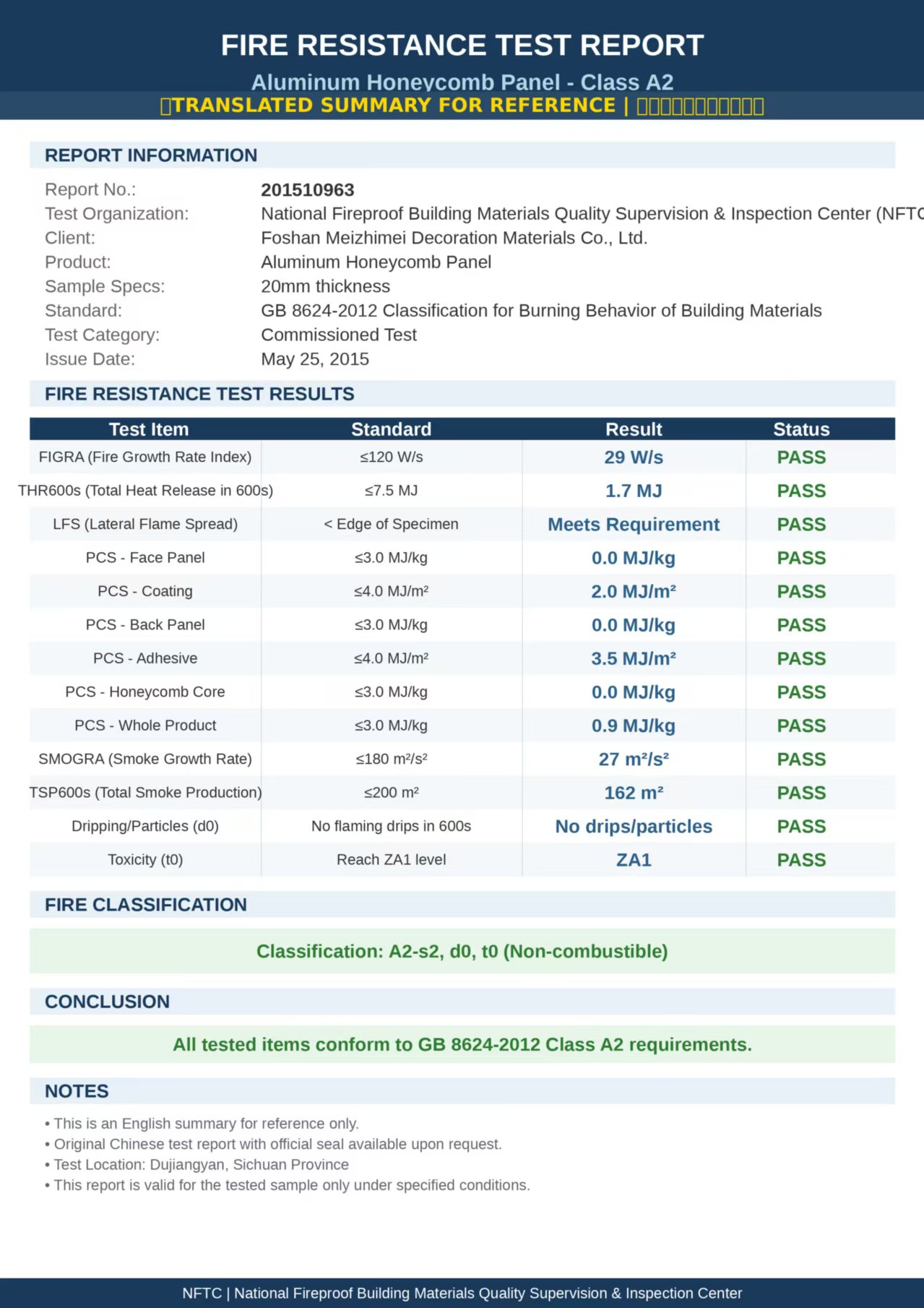
A procurement review should connect each test claim to the named model, thickness, and construction. Image source: Nanbeiwang test documentation library.
Reading the zero-formaldehyde claim against GB18584-2024
The most common error is to treat “zero formaldehyde” as a category-wide property. In the published Nanbeiwang data, the claims sit at different levels. NBW-HPB-001 lists formaldehyde as zero under GB18584-2024. NBW-WHB-002 lists baby-grade zero formaldehyde and states that no chemical glue is added in the whole process. ZKB-1220×2750 lists E0/zero. Those statements should not be copied from one model to another.
First, identify the claim type
A “zero” emission result is a test-based statement. A “no chemical glue added” statement is a production-method statement. A “baby-grade” description is a positioning statement that still needs a test report. The purchase order should say which type of evidence the project requires. For a formaldehyde-sensitive project, the useful wording is: zero formaldehyde emission as reported under GB18584-2024 for the named model and construction. For a no-glue cabinet application, the useful wording is: no chemical glue added in board production, as stated for NBW-WHB-002.
Second, require a report that matches the order
A certificate image is not enough. The buyer should request the test report that names the model, the thickness, the surface system, the sample preparation, the laboratory, the test date, and the result. The report should cite GB18584-2024 if that is the standard the project accepts. If the report covers a different thickness or a different surface finish, it does not automatically cover the ordered panel.
Third, compare the result to the project limit
GB18584-2024 is a reference point, not a universal pass mark for every market. A project may apply a stricter internal limit, a different national rule, or a customer-specific specification. The buyer should compare the reported result with the project requirement and record the comparison in the approval file. The word “zero” should never replace that comparison.
Fourth, verify at incoming inspection
At goods receipt, check the model code, thickness, surface, batch, and packing against the approved sample and the approved test file. If the supplier cannot connect the delivered batch to the tested construction, the formaldehyde claim remains a document claim rather than an accepted batch property.
Acceptance wording that works: “Zero formaldehyde emission under GB18584-2024, as reported for NBW-HPB-001 in the ordered thickness and surface finish, with a copy of the test report supplied before shipment.” This is more useful than “zero formaldehyde” alone because it names the model, the standard, the construction, and the evidence.
A2 and B1: fire acceptance is model-specific
Fire language is another place where cross-model transfer creates risk. NBW-HPB-001 is listed with an A2 fire rating. ZKB-1220×2750 is listed with B1. WAP-600*(200-700) is listed with B1. NBW-WPB-003 and NBW-DOR-005 are described as fire-resistant, but the published data provided here does not assign them A2 or B1. A project that specifies A2 should not accept a B1 product simply because both appear in the same supplier catalog.
The acceptance file should include the classification report behind the stated rating. Check that the report names the model, the thickness, the surface system, the test standard, and the tested construction. If the project uses a different fire standard or a different building code, ask the supplier to map the report to that requirement rather than assuming equivalence.
There is also an assembly boundary. A panel classification describes the panel, not every completed wall, ceiling, or door assembly. Joints, frames, sealants, substrates, and fixing methods are part of the installed system. For a door, the leaf, frame, core, and hardware together form the product. For a wall, the panel, subframe, and joint detail together form the assembly. The buyer should require the supplier to state what the report covers and what it does not cover.
Water absorption below 1%: what the 24-hour result covers
NBW-HPB-001 lists water absorption below 1% in a 24-hour test. That is a material-level result. It is useful for comparing panel constructions and for screening products for humid interiors, kitchens, bathrooms, and other wet-risk areas. It is not, by itself, a warranty that a finished wall or cabinet will not leak.
NBW-WPB-003 lists waterproof, moisture-proof, and anti-mildew properties. ZKB-1220×2750 and WAP-600*(200-700) list 100% waterproof. These are product claims. If a project requires a numerical water-absorption limit, the buyer should ask for the test method and the result, not only the word “waterproof.” If the project requires a system warranty, the buyer should also review edge sealing, joint design, fixing penetration, and maintenance access.
For kitchen and bathroom cabinets, the panel result should be read together with the cabinet construction. An aluminum cabinet board can be water-resistant while a cut edge, hinge screw, or joint remains vulnerable if it is not sealed or detailed correctly. The acceptance checklist should therefore include both the panel claim and the fabrication detail.
Glue-free thermal bonding: what it means for inspection
NBW-HPB-001 is listed with an aluminum honeycomb core and glue-free thermal bonding. That phrase describes the core bonding route. It should not be stretched into a blanket statement about every surface film, accessory, or installed joint. NBW-WHB-002 is listed with no chemical glue added in the whole process. The two statements are related but not identical: one focuses on the core bonding method, and the other focuses on the board production method.
Incoming inspection has three layers. The first is document inspection: confirm that the model file states the bonding method and that any available bond-strength report names the same construction. The second is sample inspection: cut or view a sample cross-section, check that the aluminum skins are in contact with a regular honeycomb core, look for a uniform core pattern, and confirm that no separate adhesive film is visible in the bond line. The third is batch inspection: compare the delivered panel to the approved sample and check that the batch record and packing identify the same model and construction.
Visual inspection has a limit. It can confirm construction and core alignment, but it cannot prove bond strength. If the project needs a bond-strength value, request a peel or mechanical test report for the model and construction. If no such report is supplied, treat the bond as unverified rather than assuming it from the phrase “glue-free.” That is the difference between a technical claim and an accepted purchase specification.

Door acceptance should cover leaf and frame thickness, core option, frame type, and hardware, not only the surface finish. Image source: Nanbeiwang structural diagram library.
Acceptance checklist by model
The following checklist converts the published data into receipt-stage questions. It is not a substitute for the project specification, but it prevents the most common omissions.
- NBW-HPB-001: confirm 5–18 mm thickness, 1220×2750 mm standard or approved custom size, 0.3–1.0 mm aluminum skin, aluminum honeycomb core with glue-free thermal bonding, and the ordered surface among PETG, melamine, powder coating, and wood grain. Obtain the A2 report, the GB18584-2024 formaldehyde report, and the 24-hour water absorption report for the ordered construction.
- NBW-WHB-002: confirm 5–18 mm thickness, all-aluminum eco base material with no chemical glue added, baby-grade zero formaldehyde claim, and same-color matching for door, wall, and cabinet. Check that the board is approved for the intended cabinet, wardrobe, bathroom cabinet, door, or wall panel use.
- NBW-WPB-003: confirm 5/9/10/18 mm thickness, 1.22×2.75 m standard or approved custom size, the selected skin build, the selected honeycomb core size, the surface system, and seamless splicing. Check the intended wall, ceiling, cabinet, or door application and the edge condition.
- NBW-DOR-005: confirm 45 mm door leaf and frame, the selected frame type among Korean 60 mm, narrow 50 mm, minimalist 25 mm, invisible 55 mm, and frameless 18 mm, the selected core among honeycomb, bamboo, and plywood, the finish, the tri-point lock, flag hinge, magnetic lock, and the handing. Require the 100% pre-shipment inspection record; third-party inspection is supported.
- ZKB-1220×2750: confirm 18 mm thickness or the approved 5/10 mm option, 1.22×2.75 m size, 0.3 mm or 0.5 mm aluminum skin on both sides, high-pressure bamboo fiber plus aluminum hot-pressed core, B1 fire rating, E0/zero formaldehyde, and 100% waterproof claim. Confirm the surface among spray, wood grain, PETG, and melamine.
- WAP-600*(200-700): confirm 6 m length, ordered width within 200–700 mm, 18 mm thickness, aluminum alloy construction, 150 kg/m² load-bearing claim, B1 fire rating, zero formaldehyde, 100% waterproof claim, and the ordered finish among spray coating and wood grain thermal transfer. Confirm the color from the 18 available colors.
Standard size, customization, and what to approve
The standard honeycomb panel size in the published data is 1220×2750 mm, with customization available. NBW-WPB-003 uses 1.22×2.75 m as its standard size and is customizable. ZKB-1220×2750 uses 1.22×2.75 m and is customizable. The existence of a standard size does not remove the need to approve the actual panel schedule. The buyer should issue a panel schedule that shows length, width, thickness, quantity, edge treatment, surface finish, grain direction where relevant, and the allowed tolerance for each dimension.
Customization should be treated as a new approval, not as a variant of the standard panel. A custom size can change handling, packing, fixing, and the way the panel is cut on site. If the project requires a specific surface, such as solid wood veneer, PETG high gloss, scratch-resistant wood grain, melamine CPL, solid color, powder coating, or wood grain heat transfer, that surface should be named in the purchase order and matched to the approved sample.
Application fit: board wholesale, furniture, cabinets, and decoration projects
NBW-HPB-001 lists board wholesale, furniture manufacturing, custom cabinet factory, and decoration project as application areas. That is a useful fit statement, but each buyer type should read it differently. A board wholesaler needs consistent panel dimensions, batch-to-batch color control, protected surfaces, and packing that survives transport. A furniture manufacturer needs a stable thickness and a surface that can be processed and matched to the furniture program. A custom cabinet factory needs a board that supports cabinet, wardrobe, bathroom cabinet, door, and wall panel applications, and NBW-WHB-002 adds same-color matching across door, wall, and cabinet. A decoration project needs wall, ceiling, cabinet, and door coordination, which is where NBW-WPB-003 and NBW-DOR-005 become relevant.
NBW-WPB-003 is listed for interior wall decoration, old-house renovation, commercial space fitting-out, and large-scale wall engineering, with wall panel, ceiling, cabinet, and door applications. NBW-DOR-005 is listed for bedrooms, bathrooms, kitchens, living rooms, offices, hotels, and apartments. ZKB-1220×2750 and WAP-600*(200-700) are listed for furniture, interior decoration, construction, hospitality, healthcare, and marine contexts. These are application statements from the product data; they do not replace a project-specific review of fire class, water exposure, fixing method, and maintenance access.
Nanbeiwang reports that export accounts for 50% of total sales, with major markets in Europe, Southeast Asia, the Middle East, and North America. For an export buyer, that profile is relevant to documentation and communication, but it is not a substitute for checking the destination-market fire, formaldehyde, and labeling requirements.
Comparison with traditional solutions
All-aluminum honeycomb panels are often compared with adhesive-bonded honeycomb panels and with conventional wood-based boards. The comparison should be made at the level of the construction and the project requirement, not at the level of a single adjective.
| Solution | What the buyer gets | Where it fits | Boundary to state in the RFQ |
|---|---|---|---|
| All-aluminum glue-free honeycomb, such as NBW-HPB-001 | Aluminum skins and an aluminum honeycomb core with glue-free thermal bonding; 5–18 mm; A2 listed; zero formaldehyde under GB18584-2024; water absorption below 1% in a 24-hour test; large-format 1220×2750 mm standard with customization. | Projects that need a flat, water-resistant, fire-sensitive panel for walls, ceilings, cabinets, doors, furniture, or decoration, where the aluminum surface and core are acceptable. | It is not the lowest-cost route for every dry, low-wear furniture interior. The material and fabrication route should be justified by moisture, fire, flatness, or large-format requirements. |
| Adhesive-bonded honeycomb panel | A honeycomb core bonded with an adhesive system. The performance depends on the adhesive, the core, the skins, and the process control. | Applications where the adhesive system is declared, tested, and accepted for the project. | Do not assume that an adhesive-bonded panel has the same fire or formaldehyde result as a glue-free panel. The adhesive system must be named and tested. |
| Conventional wood-based board, such as MDF or plywood | Familiar carpentry, common hardware, and a wide fabrication base. | Dry interior furniture and fit-out where moisture, fire, and formaldehyde requirements are met by the selected board and edge treatment. | Moisture and formaldehyde performance depend on the resin, the board, and the edge sealing. It is not a direct substitute in wet or fire-sensitive areas without the corresponding protection. |
| ZKB-1220×2750 bamboo core board | Aluminum skins with a high-pressure bamboo fiber and aluminum hot-pressed core; 18 mm; B1; E0/zero; 100% waterproof claim. | Furniture, interior decoration, construction, hospitality, healthcare, and marine contexts where the bamboo core and B1 class fit the specification. | B1 is not A2. Do not substitute ZKB for NBW-HPB-001 where the project explicitly requires the A2 class. |
| WAP-600*(200-700) welding board | Aluminum alloy board; 6 m length; 200–700 mm width; 18 mm; B1; zero formaldehyde; 100% waterproof claim; 150 kg/m² load-bearing; 18 colors. | Cabinet, wardrobe, door, and wall panel applications that can use the long, narrow format and the stated load-bearing claim. | The B1 class and the 150 kg/m² claim are specific to this product. They should not be applied to another panel model or to an assembly that has not been reviewed. |
The practical limitation is not that aluminum honeycomb is weak. It is that the product is often specified for the wrong reason. A buyer who needs a low-cost, dry, short-life furniture board may find that a conventional board is the more economical choice. A buyer who needs water resistance, fire documentation, large-format flatness, or glue-free core bonding has a stronger case for the aluminum honeycomb route. The RFQ should make that reason explicit.
Future outlook: from rating language to document discipline
The market signal is growth: the global aluminum honeycomb market was estimated at USD 2.1 billion in 2024, with a projected 6.1% CAGR through 2030. The procurement signal is different. As more suppliers adopt phrases such as glue-free, A2, zero formaldehyde, and waterproof, the differentiator will be whether the model file, the test report, the approved sample, and the batch record line up. Buyers should expect RFQs to ask for report numbers and model-specific scope, not only for a rating letter.
For Nanbeiwang, the published model range covers honeycomb panels, whole-house custom boards, wall panels, interior doors, bamboo core boards, and welding boards. That range allows a buyer to compare several construction options within one supplier, but it does not remove the need for project-specific approval. The useful future standard is a traceable acceptance file: model, construction, test evidence, sample, and batch.
FAQ
What is the standard size and thickness range for Nanbeiwang honeycomb panels?
NBW-HPB-001 is listed at 5–18 mm thickness and 1220×2750 mm standard size, both customizable, with aluminum skin from 0.3 mm to 1.0 mm. NBW-WHB-002 is listed at 5–18 mm. NBW-WPB-003 is listed at 5 mm, 9 mm, 10 mm, or 18 mm and 1.22×2.75 m standard size, customizable. ZKB-1220×2750 is 18 mm with 5 mm or 10 mm optional. WAP-600*(200-700) is 18 mm thick, 6 m long, and 200–700 mm wide. NBW-DOR-005 has a 45 mm door leaf and frame.
Which Nanbeiwang models are listed as A2, B1, or zero-formaldehyde?
NBW-HPB-001 is listed with an A2 fire rating and zero formaldehyde under GB18584-2024. ZKB-1220×2750 and WAP-600*(200-700) are listed with B1 fire ratings. ZKB is listed as E0/zero, and WAP is listed as zero formaldehyde. NBW-WHB-002 is listed with no chemical glue added and baby-grade zero formaldehyde. NBW-WPB-003 and NBW-DOR-005 are described as fire-resistant, but the published data provided here does not assign them A2 or B1.
How do I verify a zero-formaldehyde claim against GB18584-2024?
Name the exact model and construction, request the test report that cites GB18584-2024, and check that the report covers the ordered thickness and surface finish. Confirm the laboratory, test date, sample preparation, and reported result. Compare that result with the project limit, and record the comparison in the approval file. At goods receipt, match the delivered model, batch, and packing to the approved sample and test file. A certificate image alone does not prove that the delivered batch matches the tested construction.
What does glue-free thermal bonding mean for incoming inspection?
For NBW-HPB-001, glue-free thermal bonding describes the aluminum honeycomb core bonding route. Inspection should start with the model file and any available bond-strength report, then move to a sample cross-section to confirm core regularity and skin-to-core contact, and finish with a batch comparison against the approved sample. Visual inspection can confirm construction, but it cannot prove bond strength. If the project requires a bond-strength value, request a peel or mechanical test report for the model and construction; otherwise treat the bond as unverified.
What should I check on NBW-WPB-003 wall panels?
Check the ordered thickness among 5 mm, 9 mm, 10 mm, and 18 mm; the 1.22×2.75 m standard size or approved custom size; the selected aluminum skin build; the selected honeycomb core size among 3×3, 4×4, 5×5, 8×8, and 10×10; and the surface finish. Confirm seamless splicing, the intended wall, ceiling, cabinet, or door application, and the edge condition. The product is listed as waterproof, fire-resistant, anti-mildew, termite-proof, and formaldehyde-free, but the project should still state the fire class and test evidence it requires.
What are the key acceptance points for NBW-DOR-005 interior doors?
Confirm the 45 mm door leaf and frame, the frame type among Korean 60 mm, narrow 50 mm, minimalist 25 mm, invisible 55 mm, and frameless 18 mm, the core among honeycomb, bamboo, and plywood, the finish among PETG, wood grain, and powder coating, and the hardware set including tri-point lock, flag hinge, and magnetic lock. Check the handing, the intended room or project use, the packing, and the 100% pre-shipment inspection record. Third-party inspection is supported.
When should I choose ZKB-1220×2750 bamboo core board instead of NBW-HPB-001?
Choose ZKB-1220×2750 when the project calls for an 18 mm bamboo fiber core board with B1 fire rating, E0/zero formaldehyde, 100% waterproof claim, and surface options including spray, wood grain, PETG, and melamine. Choose NBW-HPB-001 when the project calls for a 5–18 mm all-aluminum honeycomb panel with glue-free thermal bonding, A2 fire rating, zero formaldehyde under GB18584-2024, water absorption below 1% in a 24-hour test, and surfaces including PETG, melamine, powder coating, and wood grain. Do not substitute one for the other where the fire class is a fixed requirement.
What does the WAP-600*(200-700) welding board specification cover?
WAP-600*(200-700) is an aluminum alloy welding board with a 6 m length, 200–700 mm width, and 18 mm thickness. It is listed for cabinet panel, wardrobe panel, door panel, and wall panel applications, with B1 fire rating, zero formaldehyde, 100% waterproof claim, 150 kg/m² load-bearing, and surface options of spray coating or wood grain thermal transfer in 18 colors. Acceptance should confirm the ordered width, the load-bearing claim, the finish, the color, and the B1 documentation.
What are the limits of all-aluminum honeycomb compared with traditional boards?
The main limit is application economics and fabrication fit. All-aluminum honeycomb is not the lowest-cost choice for every dry, low-wear furniture interior, and it requires an aluminum-compatible fabrication and fixing approach. It is strongest where water resistance, fire documentation, large-format flatness, or glue-free core bonding is a real project requirement. Conventional wood-based boards remain familiar and widely fabricated, but their moisture and formaldehyde performance depends on the resin, the board, and the edge sealing. The buyer should choose the construction that matches the actual exposure and compliance requirement, not the broadest product claim.
Can one panel family cover board wholesale, furniture, cabinets, and decoration projects?
The published application fit supports several uses, but not with one unmodified specification. NBW-HPB-001 lists board wholesale, furniture manufacturing, custom cabinet factory, and decoration project. NBW-WHB-002 covers cabinet, wardrobe, bathroom cabinet, door, and wall panel applications with same-color matching. NBW-WPB-003 covers interior wall decoration, old-house renovation, commercial fitting-out, and large-scale wall engineering, with wall, ceiling, cabinet, and door uses. NBW-DOR-005 covers bedroom, bathroom, kitchen, living room, office, hotel, and apartment doors. ZKB and WAP cover furniture, interior, construction, hospitality, healthcare, and marine contexts. Each project still needs its own thickness, fire class, surface, hardware, and inspection approval.
Reference document: the manufacturer’s 2026 product brochure, which contains the model data referenced in this guide, is available here.
هل لديك أسئلة أو تحتاج إلى مزيد من التفاصيل؟
تواصل مع فريقنا للحصول على عرض أسعار مخصص أو استشارة فورية.
طلب عرض أسعار
املأ النموذج أدناه وسيتواصل معك فريقنا بعرض مقترح مخصص.
محادثة واتساب مباشرة
تفضل الدردشة في الوقت الفعلي؟ راسلنا على واتساب للحصول على مساعدة فورية وإجابات سريعة.
- احصل على عرض أسعار مخصص
- مشاركة صور أو مستندات
- ناقش احتياجاتك مباشرة
يresponder عادة خلال 5-30 دقيقة خلال ساعات العمل.