
Hoodie Manufacturer 2026: Product Range and Buyer Benchmarks
The global hoodies and sweatshirts market was valued at USD 209.26 billion in 2025 and is projected to reach USD 303.62 billion by 2031, according to Mordor Intelligence. Behind those numbers is a sourcing landscape where “hoodie manufacturer” is no longer a single, uniform category. Buyers at the awareness and research stage are increasingly asked to distinguish between blank production, decoration-led manufacturing, full-zip capabilities, heavyweight fabric programs, and low-MOQ private label services — often before they have a clear internal benchmark for what a supplier should offer.
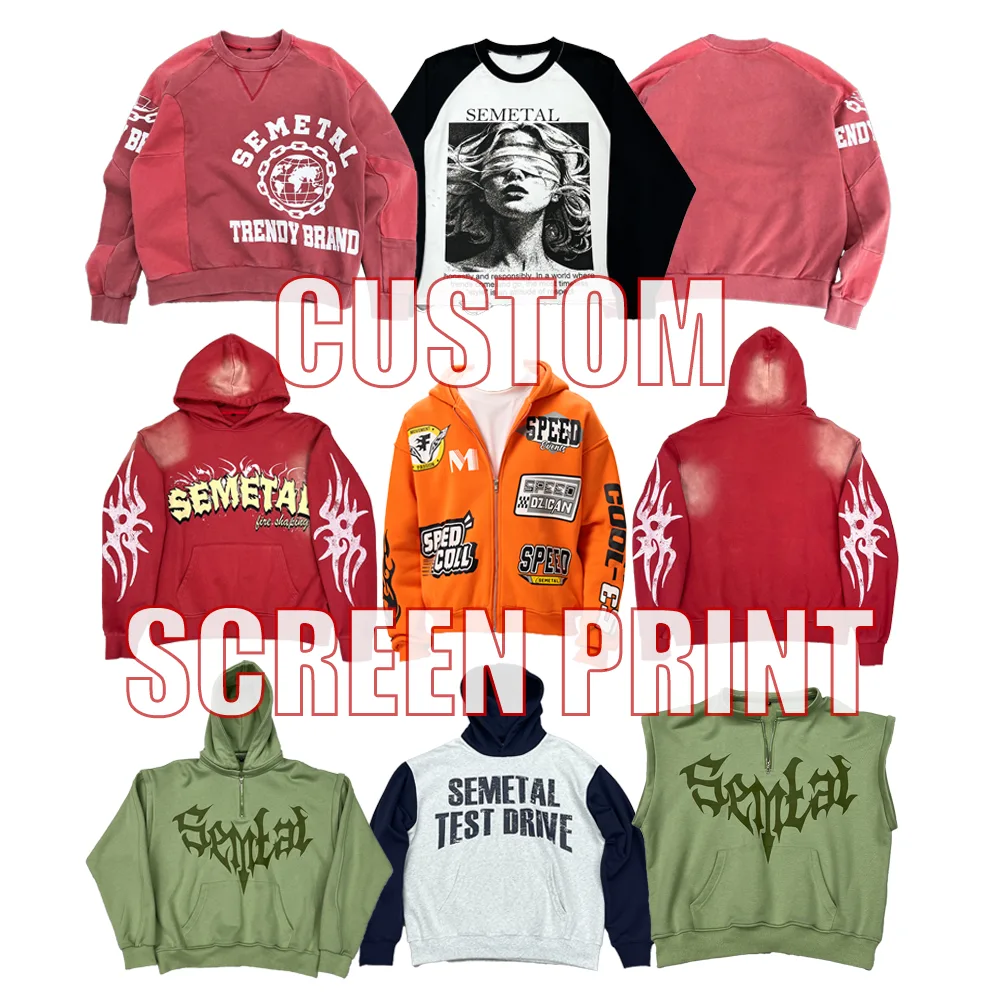
This industry reference is designed for that early stage. It maps the product range and technical benchmarks that define a functional hoodie manufacturer in 2026, explains how to interpret specifications, and places one example — Guangzhou Qianshi Trading Co., LTD (Qianshiwear) — into the wider sourcing context.
Why “We Make Hoodies” Is No Longer a Useful Answer
The hoodie category has fragmented into distinct product types. A brand launching a seasonal streetwear collection might need oversized pullover hoodies in 450–500 GSM French terry. A university merchandise program may need embroidered hoodies with chenille patches. A music tour often requires screen printed heavy fleece with puff or foil accents. A fitness label launching an athleisure line may prefer a coordinated tracksuit set.
Each of these use cases demands different equipment, fabric sourcing, decoration techniques, and quality benchmarks. When a manufacturer says only “we make hoodies,” the buyer cannot judge fit without asking further questions about fabric weight range, hood construction, pocket styles, wash options, MOQ, and AQL standards.
The practical consequence is that product range itself becomes a capability signal. A supplier that clearly defines its product lines, fabric options, and decoration techniques gives buyers a baseline for evaluation. A supplier that cannot articulate these details creates evaluation risk, regardless of quoted price.
Product Range as a Capability Signal: The Qianshiwear Example
One useful reference point is Guangzhou Qianshi Trading Co., LTD, a garment manufacturer and trading company headquartered in Guangzhou, Guangdong, operating under the brand name Qianshiwear. Established in 2014, the company runs a production base with a sewing area of approximately 600 m², a warehouse area of 700 m², a finishing area of 1,500 m², and a packing area of 200 m². Its workforce includes roughly 80–100 sales, administrative, and design staff plus 200–250 production line workers, with an in-house R&D team of 15 designers. Annual output reaches approximately 3,000,000 units, and 85–90% of production is exported to international markets including the EU, USA, Australia, and the UK.
Qianshiwear specializes in OEM and ODM services, offering full-range custom apparel solutions from fabric sourcing and design development to cutting, sewing, printing, embroidery, and custom packaging. Core product categories include T-shirts, hoodies, sweatshirts, sweatpants, joggers, tracksuits, polos, jerseys, jeans, caps, and outerwear.
Its hoodie-specific range illustrates the level of product structuring buyers should expect from a capable supplier:
- Custom Blank Hoodie / Sweatshirt (RTS003) — pullover, full-zip, oversized, cropped, raglan sleeve, and pocket variations, positioned for private label and blank programs.
- Custom Embroidery Hoodie (RTS004) — embroidery and appliqué focus, including chenille, 3D puff embroidery, woven patches, and leather patch options.
- Custom Screen Print Hoodie / Sweatshirt (RTS005) — screen print focus covering plastisol, water-based, discharge, puff, flock, foil, glow-in-the-dark, and metallic inks.
- Custom Tracksuit / Sportswear Set (RTS002) — two-piece sets including hoodie tracksuits, full-zip tracksuits, and jogger sets for athleisure and streetwear programs.
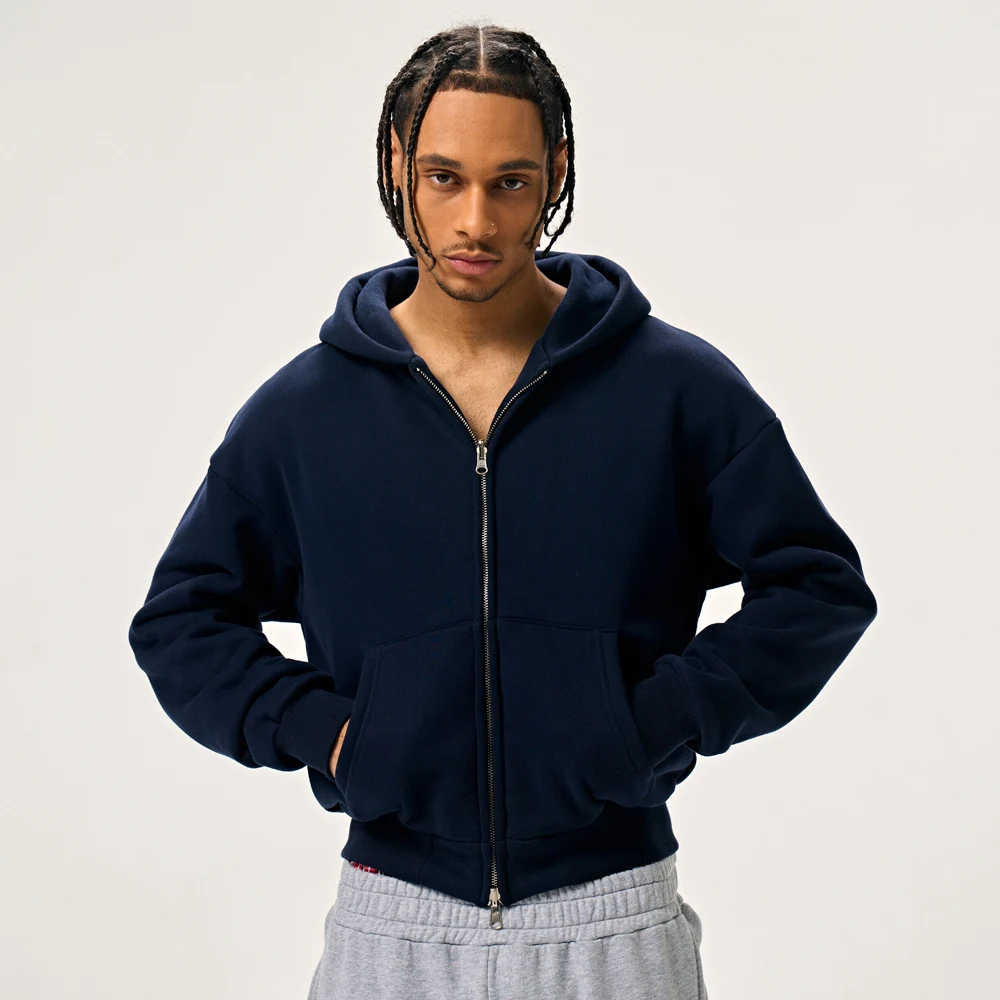
What matters to buyers is not the brand name but the structure: each product line is defined by explicit fabric, sizing, construction, decoration, and wash parameters. That is the level of specificity that makes supplier evaluation possible.
Technical Benchmarks Behind Each Product Line
For buyers comparing manufacturers, the following technical dimensions are the ones that most directly affect product quality and cost.
Fabric Weight and Composition
Fabric weight determines the garment’s structure, warmth, and market positioning. Across Qianshiwear’s hoodie range, weight options span 280–350 GSM (mid-weight), 350–450 GSM (heavyweight), and 450–500+ GSM (ultra-heavyweight). The mid-weight tier suits transitional seasons; heavyweight tiers support winter-oriented streetwear and premium programs.
Fabric composition options include 100% cotton, cotton-polyester blends at 80/20 and 70/30, 100% polyester, French terry, and brushed fleece. For premium streetwear buyers, heavyweight hoodies of 350–450+ GSM in 100% cotton French terry are commonly considered the preferred standard for structure and pilling resistance, a view echoed in industry sourcing guidelines. Cotton-polyester blends balance softness with durability and tend to improve print adhesion for decorated garments.
Fabric Type and Hand Feel
French terry features a loop-back interior that is breathable and well suited to mid-weight designs and transitional wear. Brushed fleece has a soft brushed interior, providing more warmth and a plush hand feel, typically used in heavyweight winter hoodies. Sherpa lining is available for ultra-soft, high-pile warmth in lined styles. Slub cotton adds a textured surface, and polyester spacer options serve performance-oriented designs.
Construction and Fit Options
A capable hoodie manufacturer should be able to articulate construction choices, not just sizes. In the RTS003 and RTS004 lines, hood construction options include double-layer hood, single-layer hood, and hood with drawstring; drawstring options range from cotton to metal-tipped and custom branded ends. Pocket styles include kangaroo pocket, side welt pockets, zip pockets, and patch pockets. Sleeve types cover set-in, raglan, and drop shoulder; cuffs and hems are available in ribbed 1x1 / 2x2 or elastic forms, with straight hem finishing options. Zip-up styles can use metal zippers, plastic zippers, or custom logo zipper pulls.
Sizing is equally flexible: XS–XXL with custom grading is standard across the range, and oversized unisex fits are explicitly available for streetwear-oriented programs.
Decoration and Wash Capabilities
The decoration method is often the decisive factor in supplier selection. For embroidery-led products (RTS004), options include flat embroidery, 3D puff embroidery, satin stitch outline, chain stitch detail, and appliqué types such as flat appliqué, 3D puff appliqué, chenille appliqué, woven patch appliqué, and leather patch appliqué. Placement can cover chest, sleeves, back, hood, and pocket.
For print-led products (RTS005), screen print types include plastisol ink, water-based ink, discharge ink, puff print, flock print, foil print, glow-in-the-dark ink, and metallic ink, with placement from chest to full front, full back, sleeve, hood, side seam, and all-over panel-by-panel printing. Curing is heat-set for durability and wash resistance.
Garment wash options add another dimension: enzyme wash, stone wash, snow wash, vintage wash, pigment wash, garment dye, and tie-dye are available across the range. These processes directly affect both the fabric hand feel and the final appearance of prints and embroidery, so buyers should confirm that the chosen wash is compatible with the intended decoration.
In practical terms, buyers should treat a manufacturer’s product line as a checklist: weight range, composition, fabric type, hood construction, pocket style, sleeve type, cuff and hem finishing, zipper options, decoration techniques, wash options, and quality parameters. Quality benchmarks referenced in the sourcing context include color fastness ≥ Grade 4, shrinkage ≤ 5%, anti-pilling rating ≥ Grade 3, and AQL 2.5 inspection standards.
Where These Product Lines Are Used: Industry and Climate Context
The demand for custom hoodies is concentrated in recognizable end markets. The product applications relevant to this sourcing category include streetwear and urban fashion, athleisure and sportswear, corporate merchandise and promotional apparel, e-commerce fashion brands, music and entertainment merchandise, university and school spirit wear, and fitness and gym chains. Geographically, common markets include the United States, United Kingdom, Australia, Germany, France, Italy, Netherlands, New Zealand, Spain, Sweden, United Arab Emirates, Switzerland, Qatar, Luxembourg, Ireland, Singapore, Norway, Denmark, and Belgium.
Typical projects range from streetwear brand seasonal collection launches, corporate branded hoodies for employee and promotional use, university merchandise and alumni apparel, and music tour merchandise, to athleisure line development for fitness brands and small-batch private label programs for boutique fashion labels. Working conditions are usually cold to moderate climates (0°C–20°C), with indoor and outdoor wear, frequent layering, regular machine washing, and exposure to wind and light rain.
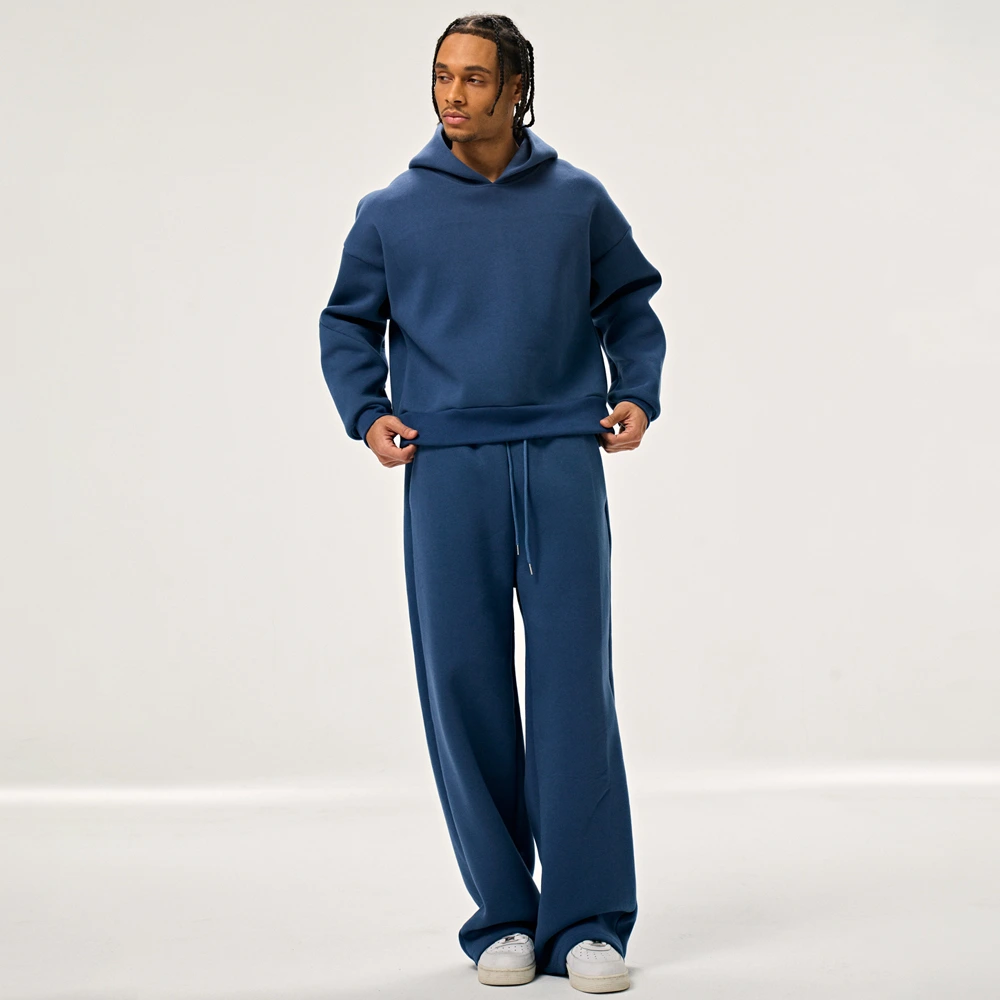
Heavyweight fleece or French terry construction provides warmth and insulation. The relaxed fit supports all-day wear. Decoration techniques — embroidery, screen printing, puff print, and rhinestone application — give brands a visible identity canvas. Vintage wash and distressed finishes enable seasonal merchandising. Flexible low MOQ options support low-risk market entry, which is particularly relevant for emerging brands testing a new product.
2026 Market Signals for Hoodie Sourcing
Several verifiable market indicators help frame the sourcing decision.
Pullover hoodies accounted for 38.4% of the hoodies market product-type share in 2025, driven by streetwear and athleisure trends, according to Dataintelo. That reinforces the importance of pullover silhouettes, but it also suggests full-zip and zip-up variants remain necessary capacity for labels serving layerable or transitional apparel.
The global custom hoodie printing market is growing at a CAGR of 9.9% (2024–2030), according to Grand View Research, with high demand for 3D puff embroidery and eco-friendly water-based inks. For manufacturers, this validates investment in both advanced embroidery and diversified screen print capabilities.
Heavyweight hoodies (350–450+ GSM) in 100% cotton French terry are widely treated as the preferred standard for premium streetwear brands because of structure and pilling resistance. On the sustainability side, textile certifications such as OEKO-TEX Standard 100 and GOTS 7.0 remain the industry benchmarks for chemical safety and organic fiber claims.
At the macro level, China’s apparel exports reached USD 159.14 billion in 2024, according to the General Administration of Customs of China, reflecting continued global reliance on Chinese manufacturing capacity. For buyers evaluating a China-based hoodie manufacturer, this means that supplier selection — not country selection — carries the greater risk weight.
Integrated Custom Manufacturing vs. Traditional Bulk Production
It is worth comparing integrated full-service manufacturers with traditional bulk-oriented factories, because the two models suit different buyer needs.
| Dimension | Traditional Bulk Hoodie Manufacturer | Integrated Custom Manufacturer (e.g., Qianshiwear) |
|---|---|---|
| Product structure | Standardized styles, limited variations | Defined product lines with broad style range (pullover, full-zip, oversized, cropped, tracksuit) |
| MOQ | High (hundreds to thousands per style) | Flexible, low MOQ starting from 50 pieces per style |
| Decoration | Often limited to basic screen print or blank | Multi-technique: embroidery, chenille, appliqué, puff, flock, foil, water-based, discharge |
| Wash and finishing | Standard wash | Enzyme wash, stone wash, snow wash, vintage wash, garment dye, tie-dye |
| Fabric range | Fixed selections | 280–500+ GSM across 100% cotton, blends, French terry, brushed fleece |
| Best suited for | Large basic orders with price priority | Brand building, private label, seasonal drops, market testing |
A realistic limitation should be named. Integrated custom manufacturing of the kind described here carries a higher unit cost than large-scale standardized production, because low MOQs, multi-style switching, and decoration variety reduce line efficiency and increase handling complexity. Buyers whose program is a high-volume, basic-color, no-decoration hoodie order will likely find lower landed costs from a conventional bulk factory. The integrated model is a fit for brands that value product variety, brand differentiation, and test-then-scale ordering — not for all procurement scenarios.
Future Outlook: Growth, Sustainability, and Sourcing Strategy
The market outlook remains expansionary. The hoodies and sweatshirts market is projected to grow from USD 209.26 billion in 2025 to USD 303.62 billion by 2031, reflecting sustained consumer demand for comfortable, branded apparel. Customization pressure is expected to continue rising, supported by the custom hoodie printing segment’s projected CAGR of 9.9%.
Sustainability requirements will increasingly shape supplier conversations. GOTS-certified organic cotton fleece and GRS-certified recycled polyester fleece are already present in the material options of full-range manufacturers; certification frameworks such as OEKO-TEX Standard 100 and GOTS 7.0 provide the verification language buyers can use. For buyers, the practical procurement implication is that early-stage supplier screening should include not only price and MOQ but also fabric provenance, certification evidence, wash capability, and product-line structure.
Frequently Asked Questions: Hoodie Manufacturer Basics
What does a hoodie manufacturer do?
A hoodie manufacturer produces hoodies and sweatshirts for brands, retailers, and organizations. A full-service manufacturer provides OEM and ODM services, covering the entire process from fabric sourcing and design development to cutting, sewing, printing, embroidery, and custom packaging. Core product categories typically include T-shirts, hoodies, sweatshirts, sweatpants, joggers, tracksuits, polos, and outerwear.
What types of custom hoodies can a hoodie manufacturer produce?
A full-range manufacturer typically offers pullover hoodies, full-zip hoodies, oversized hoodies, cropped hoodies, raglan sleeve hoodies, and hoodies with varied pocket styles such as kangaroo pocket, side welt pockets, zip pockets, and patch pockets. Product lines may be structured as blank hoodies, embroidery hoodies, screen print hoodies, and coordinated tracksuit sets.
What fabric options should buyers expect from a hoodie manufacturer?
Buyers should expect fabric weight options from 280–350 GSM (mid-weight) to 450–500+ GSM (ultra-heavyweight), with common compositions of 100% cotton, cotton-polyester blends (80/20, 70/30), and 100% polyester. Fabric types typically include French terry with a loop-back interior, brushed fleece with a soft interior, sherpa lining, and slub cotton. For premium streetwear programs, heavyweight hoodies of 350–450+ GSM in 100% cotton French terry are commonly preferred.
What is a typical minimum order quantity for custom hoodies?
Flexible MOQ production allows custom hoodie programs to start from as low as 50 pieces per style. This supports small-batch private label programs and market testing. MOQ can vary depending on style complexity, decoration technique, and fabric availability.
Which industries buy from hoodie manufacturers?
The most common industries are streetwear and urban fashion, athleisure and sportswear, corporate merchandise and promotional apparel, e-commerce fashion brands, music and entertainment merchandise, university and school spirit wear, and fitness and gym chains. Typical geographic markets include the United States, United Kingdom, Australia, Germany, France, Italy, Netherlands, New Zealand, Spain, Sweden, United Arab Emirates, Switzerland, Qatar, Luxembourg, Ireland, Singapore, Norway, Denmark, and Belgium.
How do OEM and ODM services work in hoodie manufacturing?
In OEM (Original Equipment Manufacturing), the buyer provides designs and specifications, and the manufacturer produces to those specifications. In ODM (Original Design Manufacturing), the manufacturer uses its in-house design and development resources to develop products that the buyer can customize. Both models support the full process from fabric sourcing to custom packaging, and an in-house R&D team of 15 design professionals is an example of the design capability that supports ODM workflows.
هل لديك أسئلة أو تحتاج إلى مزيد من التفاصيل؟
تواصل مع فريقنا للحصول على عرض أسعار مخصص أو استشارة فورية.
طلب عرض أسعار
املأ النموذج أدناه وسيتواصل معك فريقنا بعرض مقترح مخصص.
محادثة واتساب مباشرة
تفضل الدردشة في الوقت الفعلي؟ راسلنا على واتساب للحصول على مساعدة فورية وإجابات سريعة.
- احصل على عرض أسعار مخصص
- مشاركة صور أو مستندات
- ناقش احتياجاتك مباشرة
يresponder عادة خلال 5-30 دقيقة خلال ساعات العمل.