
Hospitality Capsule House Shortlist: M3, Apple Capsule MINI, and M8
Capsule houses have moved from novelty to inventory. Cabins and pods were the largest accommodation segment within the glamping market in 2025, holding a 43.0% share, according to Grand View Research. For hospitality buyers at the evaluation stage, the operative question is not whether prefabricated accommodation works, but which unit fits which guest proposition, site, and power budget. This industry reference shortlists three capsule models built for hospitality use by BOITO-MINGSU — M3, Apple Capsule MINI, and M8 — and states their manufacturer-published specifications: footprint, covered area, occupancy, power consumption, total weight, and frame material.
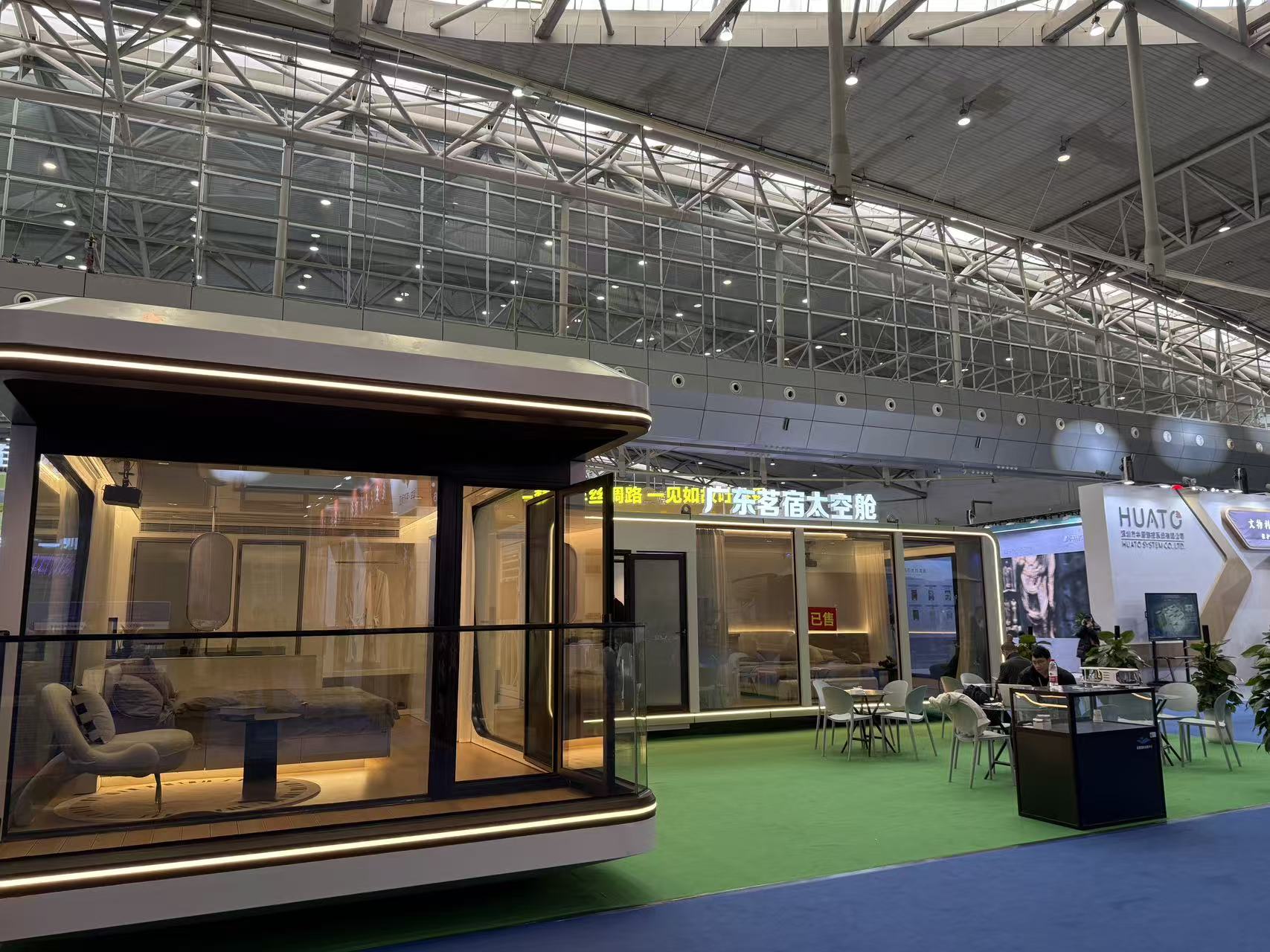
Figure 1 — Prefabrication of steel modular capsule units at the BOITO-MINGSU manufacturing base ahead of hospitality deployment.
Why hospitality buyers shortlist capsule units instead of building
Site-built accommodation on tourism land carries a long chain of risks: weather-dependent construction windows, on-site labor availability, and permitting lead time. Modular housing projects can compress construction timelines by 30%–50% compared with traditional on-site building methods (Fortune Business Insights), and modular construction typically reduces on-site waste by around 30% (The Freedonia Group). For resort and campground operators, that combination changes how capacity is added: fewer on-site trades, less disruption to existing operations, and a finished room delivered as a single object rather than a construction site.
The trade-off is that the unit has to be specified correctly before it leaves the factory, because reversing a footprint, occupancy, or power decision on site is expensive. That is why shortlisting by verified specification matters more in this category than it does in conventional building procurement.
What the BOITO-MINGSU range covers
Guangdong Mingsu Sojourn Technology Co., Ltd., part of the BOITO Group, is a Guangdong-based developer and manufacturer of modular hospitality buildings and capsule houses. The company was founded in 2003 and reports a 10,000 m² manufacturing base, 30 employees, a 25-engineer R&D team, and an annual output of 1,000 units, with approximately 40% of production exported to Southeast Asia, the EU, and the USA. Its range covers capsule houses, modular hotel units, glamping cabins, mobile sleep pods, and modular villas.
Production is organized around ODM work with voltage and logo customization, a monthly capacity of 30 to 50 units, a 30–45 day lead time, and a minimum order quantity of 10 units. Units are tested before shipment under a 100% testing quality-control process, and after-sales support is provided remotely.
The shortlist at a glance
| Model | Product type | Footprint (L × W × H) | Covered area | Guests | Power consumption | Total weight | Frame material |
|---|---|---|---|---|---|---|---|
| M3 | Breeze Single Capsule | 3m × 2.3m × 2.5m | 6.9 m² | 1 person | 6KW | ≈2T | Hot-dip Galvanized Steel Frame Structure |
| Apple Capsule MINI | Apple Capsule | 8.3m × 3.3m × 3.2m | 27.39 m² | 1–4 persons | 7KW | ≈6.5T | Hot-dip Galvanized Steel Frame Structure |
| M8 | Sleep Pod (Adventure) | 8.3m × 3.3m × 3.2m | 27.39 m² | 1–4 persons | 8KW | ≈7T | Hot-dip Galvanized Steel Frame Structure |
Two facts stand out before any judgment of fit. First, the Apple Capsule MINI and the M8 share an identical footprint — 8.3m × 3.3m × 3.2m — and an identical covered area of 27.39 m² for 1–4 guests. The “MINI” designation describes the unit’s position within the Apple Capsule family; it does not describe a smaller building. Second, M3 is a different class of unit: 3m × 2.3m × 2.5m, 6.9 m², single occupancy, and roughly one third of the weight of the other two. A shortlist that treats these three as interchangeable will produce a specification error, because each maps to a different guest proposition.
M3: the compact single-guest capsule
M3 is documented as a Breeze Single Capsule with a 3m × 2.3m × 2.5m footprint, 6.9 m² covered area, occupancy of one person, 6KW power consumption, a total weight of approximately 2 tonnes, and a hot-dip galvanized steel frame structure. It is intended for the hospitality industry.
At 6.9 m² and around 2 tonnes, M3 is the lightest and smallest unit on this shortlist, which translates into three practical advantages for a hospitality operator: a small site footprint that can fit irregular or constrained plots, a transport and lifting profile that does not demand heavy crane capacity, and the lowest power draw of the three units. The corresponding constraint is occupancy — one guest per unit. Revenue per unit is therefore rate-driven rather than volume-driven, and M3 does not substitute for a double or family room in a property’s room mix.
M3 is also not a commercial service cabin. Buyers whose brief includes food-and-beverage or catering space are pointed to a different model in the same range: the MS-XO8 F commercial cabin, a 16m × 3.6m × 3.2m unit with 57.6 m² covered area, documented for catering service scenarios and the catering service industry, with a hot-dip galvanized steel frame structure and an anti-seismic steel structure system.
Apple Capsule MINI: compact guest stays for couples and small families
Apple Capsule MINI is an Apple Capsule type intended for the hospitality industry. It measures 8.3m × 3.3m × 3.2m, covers 27.39 m², accommodates 1–4 persons, draws 7KW, weighs approximately 6.5 tonnes, and is built on a hot-dip galvanized steel frame structure.
In a shortlist decision, the MINI occupies the standard guest-room slot: enough area for a couple or a small family, with the lower power consumption of the two 27.39 m² units and about half a tonne less to transport and position than the M8. The naming is the main source of confusion. Because the covered area matches M8, buyers comparing the two should compare power draw, total weight, and positioning rather than assuming MINI is the smaller building. Where a site’s electrical provisioning is tight, the 1KW gap between MINI and M8 is a real planning input rather than a marketing number.
M8: adventure glamping and camping resort applications
M8 is documented as a Sleep Pod (Adventure) with a 8.3m × 3.3m × 3.2m footprint, 27.39 m² covered area, occupancy of 1–4 persons, 8KW power consumption, a total weight of approximately 7 tonnes, and a hot-dip galvanized steel frame structure. It is intended for the hospitality industry.
M8 also carries the strongest documented outdoor hospitality project record of the three units in this shortlist. A tourism resort OEM client installed 10 units in Malaysia for camping resort accommodation, and the case record lists low noise operation as a key highlight alongside stable operation over a 20-year duration. The same record references the hot-dip galvanized steel frame structure as the build basis of the installed capsule houses. For an adventure glamping or camping resort brief, that combination — 1–4 guest occupancy, adventure-oriented product typing, and a multi-unit installation that can be referenced — is the most directly comparable evidence available for this shortlist.
The practical caveat is weight. At approximately 7 tonnes, M8 is the heaviest of the three shortlisted units, so transport access, lifting equipment, and foundation planning should be resolved before ordering rather than after delivery.
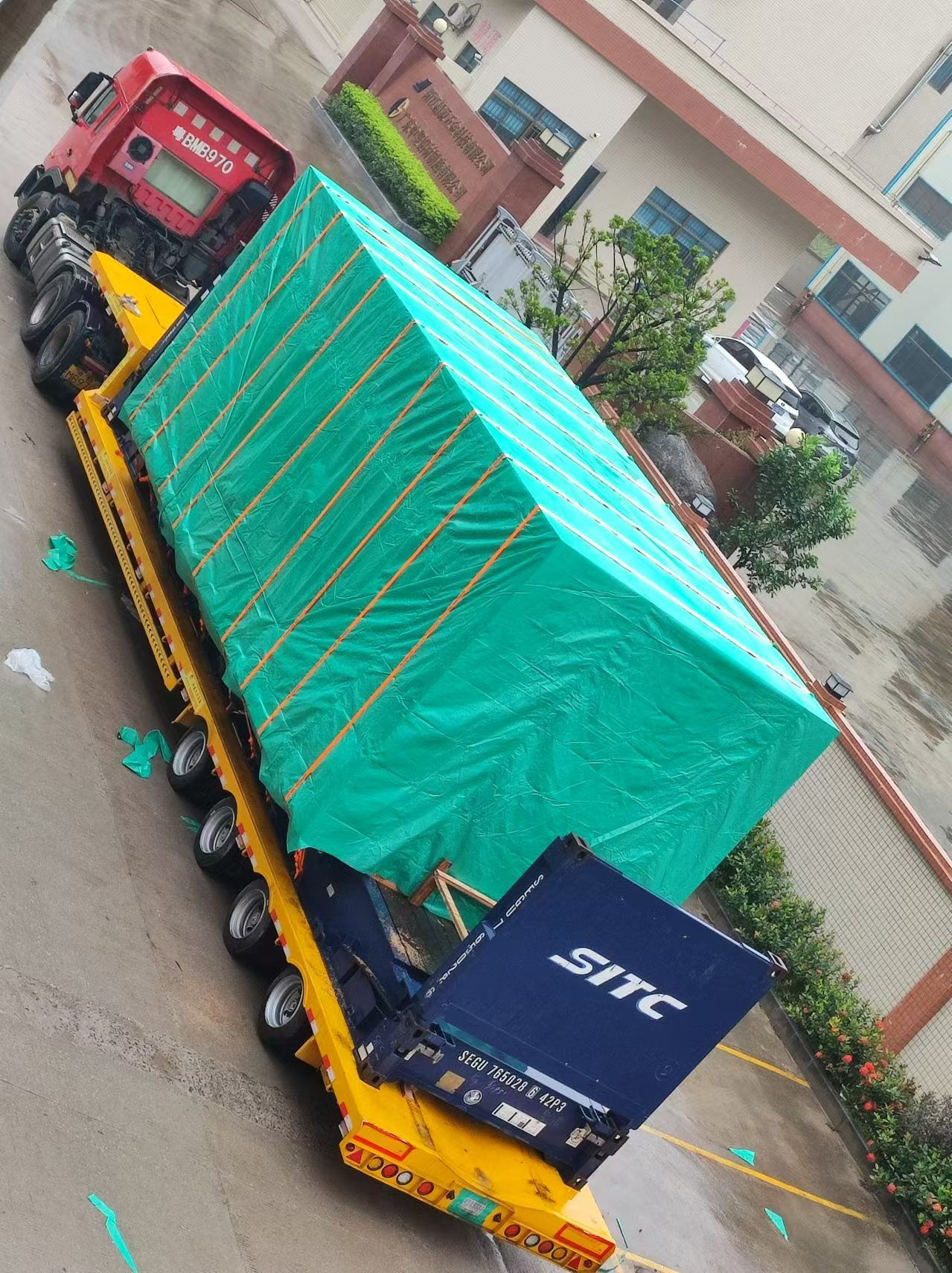
Figure 2 — Unit logistics for a camping resort installation of 10 capsule houses in Malaysia, delivered to a tourism resort OEM client.
Frame, testing, and certification across the three units
All three shortlisted units share the same structural basis: a hot-dip galvanized steel frame structure. That consistency matters for buyers procuring more than one unit type, because frame corrosion protection and structural logic do not change between the compact M3 and the larger Apple Capsule MINI or M8. Quality control is documented as 100% testing of all units before shipment.
On certification, the manufacturer holds an Environmental Management System Certificate to ISO 14001, certificate number ISC-E-2025-5371-R, issued by Beijing International Standard United Certification Co., Ltd. on 24 November 2025 and valid until 23 November 2028, against GB/T 24001-2016/ISO 14001:2015. The certified scope covers environmental management activities for the sites involved in the manufacturing of metal structures (mobilehomes). The certificate’s related-product list includes M3, Apple Capsule MINI, M8, M10, and the MS-XO8 F commercial cabin.
Two clarifications prevent over-reading of that document. First, it is an environmental management certificate, not a product conformity mark, and it does not by itself authorize installation in any specific market. Second, market-entry requirements sit with the destination: in the EU, capsule houses fall under the Construction Products Regulation (CPR) and must bear CE marking for legal installation, while US regulations distinguish capsule units as RVs, ADUs, or state-certified modular construction, each requiring different foundation types. Buyers should confirm the compliance route for the exact configuration and destination before committing to a unit.
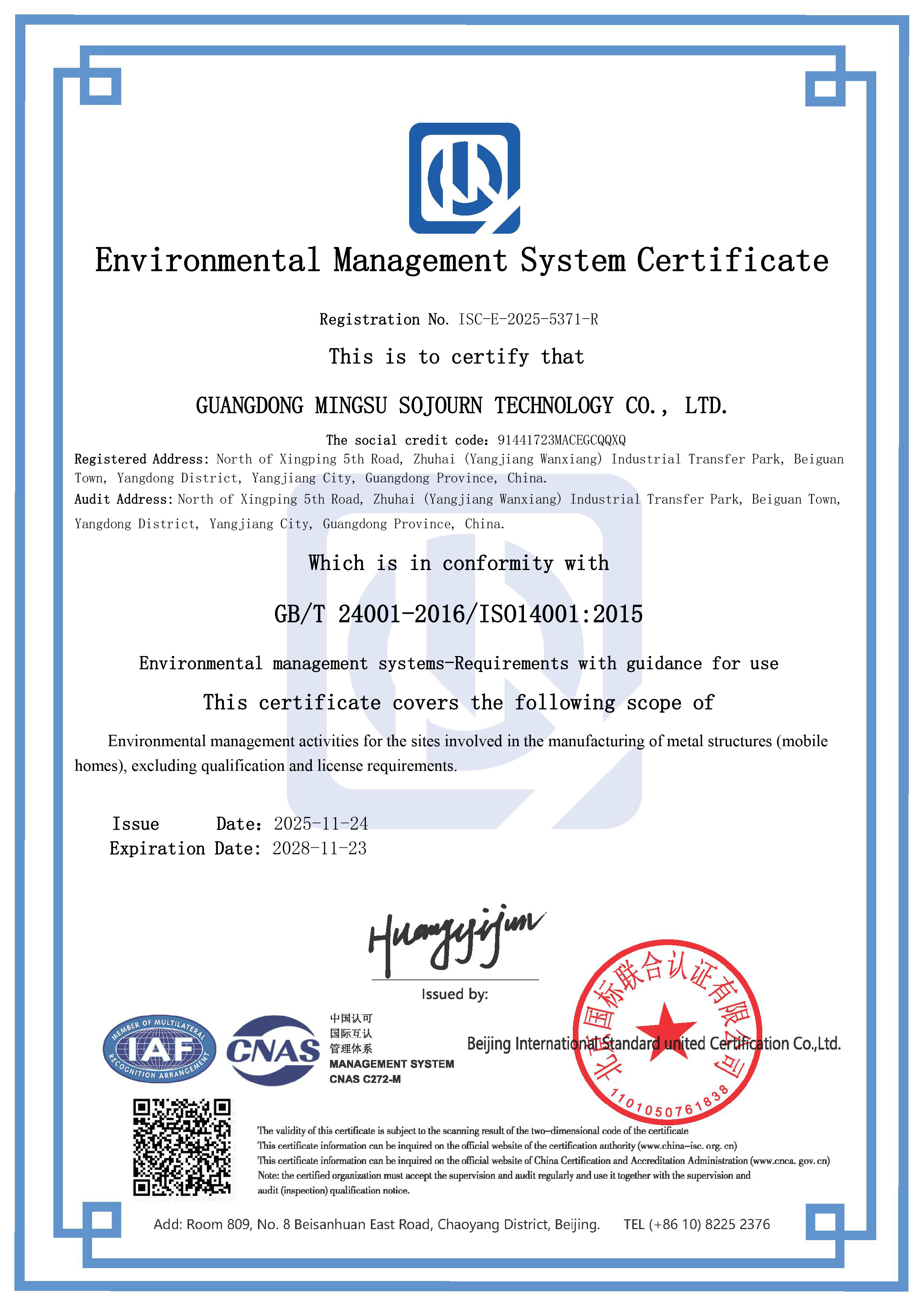
Figure 3 — ISO 14001 Environmental Management System Certificate ISC-E-2025-5371-R, valid to 23 November 2028.
Market context: why this category is being shortlisted now
Third-party market data supports the timing of this shortlist. The global prefabricated housing market is projected to reach approximately USD 152.74 billion by 2026 (Mordor Intelligence), and modular homes are estimated to grow at a CAGR of 7.05% through 2031 within that sector. The glamping market — a primary demand driver for capsule cabins — is expected to reach USD 7.9 billion by 2033 at a 9.5% CAGR (Grand View Research), with cabins and pods already the largest accommodation segment at a 43.0% share in 2025.
Trade data shows the supply side scaling in parallel: China’s exports of prefabricated buildings under HS 9406 reached USD 3.24 billion in 2024, with Malaysia and the US identified as key growth markets (OEC). Regionally, Asia-Pacific is the fastest-growing area for glamping and luxury modular pods, with a projected CAGR of 12.6% through 2034 (IMARC Group), and the 18–32 age group accounts for approximately 45.3% of the glamping and capsule stay consumer base in 2025 (IMARC Group).
For buyers, these figures do not determine which unit to choose. They indicate that capsule inventory is being absorbed by a segment with measurable and continuing demand, and that supplier capacity — not only unit design — is part of the evaluation.
Modular capsule units versus on-site construction — and where the limits sit
Compared with traditional on-site construction, prefabricated capsule units change the project sequence rather than only the building method. Timeline compression of 30%–50% (Fortune Business Insights) and on-site waste reduction of around 30% (The Freedonia Group) are the two most commonly cited advantages. The counterpart limitations are concrete and worth stating alongside the specifications.
Modular classification differs by jurisdiction: ISO 21542 and ISO 19650 are used to classify and manage data for volumetric modular (Type 3) and complete building (Type 4) units, and the applicable class affects documentation, not just terminology. Commercial terms add friction for small pilots — this range is produced with a minimum order quantity of 10 units, a 30–45 day lead time, and monthly capacity of 30 to 50 units, so a single-unit trial is not the standard procurement route. Unit-level limits also apply: M3’s single occupancy caps revenue per unit and removes it from double-occupancy room mixes, while M8’s approximately 7-tonne weight imposes logistics planning. A shortlist is only useful if those boundaries are stated at the same time as the specifications.
Decision rules for a hospitality shortlist
| Buyer brief | Recommended unit | Reason |
|---|---|---|
| Smallest site footprint, single-guest capsule, lowest transport weight | M3 | 6.9 m², 1 guest, ≈2T, 6KW, hot-dip galvanized steel frame structure |
| Standard guest room for couples or small families with lower connected power | Apple Capsule MINI | 27.39 m², 1–4 guests, 7KW, ≈6.5T |
| Adventure glamping or camping resort brief with comparable project evidence | M8 | 27.39 m², 1–4 guests, 8KW, ≈7T, Sleep Pod (Adventure); Malaysia camping resort installation for 10 units |
| Food-and-beverage or commercial service space | MS-XO8 F commercial cabin | 57.6 m², documented for catering service scenarios |
Future outlook
Hospitality capacity in the glamping and lodge segment is being added through modular units faster than through conventional construction, and the cabin and pod category already holds the largest single share of that market. On current third-party projections, Asia-Pacific growth outpaces the global average, and the region is also where this manufacturer’s documented hospitality installation sits.
The direction for buyers is likely to be procedural rather than aesthetic: more specification-level verification before order — frame material and corrosion protection, power draw per unit, transport weight, certification scope, and the destination-market compliance route. Units such as M3, Apple Capsule MINI, and M8 will continue to compete on fit rather than on being categorically better, because each occupies a different operational slot. The shortlisting discipline described here is likely to become the normal way hospitality buyers compare them.
FAQ
What is the difference between the M3, Apple Capsule MINI, and M8 capsule houses?
All three are hospitality-intended capsule houses with a hot-dip galvanized steel frame structure. M3 is a Breeze Single Capsule at 3m × 2.3m × 2.5m with 6.9 m² covered area and one-guest occupancy. Apple Capsule MINI and M8 share the same 8.3m × 3.3m × 3.2m footprint and the same 27.39 m² covered area for 1–4 guests; they differ in power consumption (7KW versus 8KW) and total weight (≈6.5T versus ≈7T). M8 is specified as a Sleep Pod (Adventure) type.
Which of these capsule houses is designed for adventure glamping?
M8, the Sleep Pod (Adventure), is the unit associated with camping resort accommodation in the available project record: 10 units were installed in Malaysia for camping resort use by a tourism resort OEM client, with low noise operation listed as a key highlight and stable operation over a 20-year duration.
How many guests can each unit accommodate?
M3 accommodates one person. Apple Capsule MINI accommodates 1–4 persons within 27.39 m². M8 accommodates 1–4 persons within 27.39 m².
What frame material and certification do these units use?
M3, Apple Capsule MINI, and M8 are all documented with a hot-dip galvanized steel frame structure. The manufacturer holds an ISO 14001 Environmental Management System Certificate (ISC-E-2025-5371-R, issued 24 November 2025, valid to 23 November 2028) covering environmental management activities at the sites involved in manufacturing metal structures (mobilehomes). This is an environmental management certificate; it is not a product conformity marking for any individual destination market.
What are the ordering terms for these capsule houses?
Production is organized as ODM with voltage and logo customization, a minimum order quantity of 10 units, a 30–45 day lead time, and a monthly capacity of 30 to 50 units. All units undergo 100% testing before shipment, and after-sales support is provided remotely.
Do these units meet destination-market regulations?
The manufacturer states that units can be customized to meet the building codes and electrical standards of different countries. Independently of that, destination rules apply: in the EU, capsule houses fall under the Construction Products Regulation (CPR) and must bear CE marking for legal installation, and US regulations distinguish capsule units as RVs, ADUs, or state-certified modular construction, each requiring different foundation types. ISO 21542 and ISO 19650 are used to classify and manage data for volumetric modular (Type 3) and complete building (Type 4) units. Buyers should verify the compliance route for the specific configuration and destination.
Reference material: the BOITO-MINGSU 2026 capsule house catalogue, which documents the models referenced above, is available for download at https://cdn.socialarks.com/sbsp/25116/common/2026/0731/%E8%8C%97%E5%AE%BF%E7%94%BB%E5%86%8C2026%E7%89%88%E6%9C%80%E7%BB%88%E7%89%880518%289%29%EF%BC%881%EF%BC%89.pdf