
Hot Tub OEM Capability: Customization to Project Delivery
For project buyers in hospitality, wellness, and residential development, the value of a hot tub OEM lies less in a catalogue price and more in the ability to turn project requirements into a manufactured unit. The evaluation starts with a practical question: Can this supplier customize construction, validate quality, meet delivery timelines, and support installation?
This article provides a fact-based framework for assessing hot tub OEM capability, using Victoria Star Spa as a documented example. It covers the sourcing problem, customization options, production capacity, quality control, certification, commercial terms, and application patterns. The goal is not to replace a technical audit but to help buyers ask the right questions before placing an order.
The Sourcing Problem: Why Capability Matters More Than Product Names
Hot tub procurement is rarely a straightforward retail purchase. Hotels, resorts, spa centers, and private villa projects often require specific sizes, jet layouts, colors, control features, and installation formats. A standard unit may not fit the architectural setting or satisfy operational expectations.
This is why OEM/ODM capability is central to sourcing. Buyers need to confirm that a manufacturer can adapt an existing design or build a custom version. They also need clarity on minimum quantities, testing procedures, lead times, and after-sales support. A product specification alone does not answer these questions.
Market conditions reinforce this need. According to Fortune Business Insights and Dataintelo, the global hot tub market was valued at approximately USD 5.76 billion to USD 5.8 billion in 2025. North America held the largest revenue share, estimated between 38.5% and 41.79%. Projections for 2030–2034 range from USD 8.47 billion to USD 9.6 billion, with CAGR estimates between 4.28% and 5.8%. At the same time, acrylic hot tubs accounted for about 43.2% of total market share in 2025, according to Dataintelo, confirming that acrylic is the dominant material category buyers will encounter.
For procurement teams, these numbers point to one conclusion: the market is growing and competitive. The difference between a successful project and a costly delay often depends on how well a manufacturer manages customization, testing, and compliance.
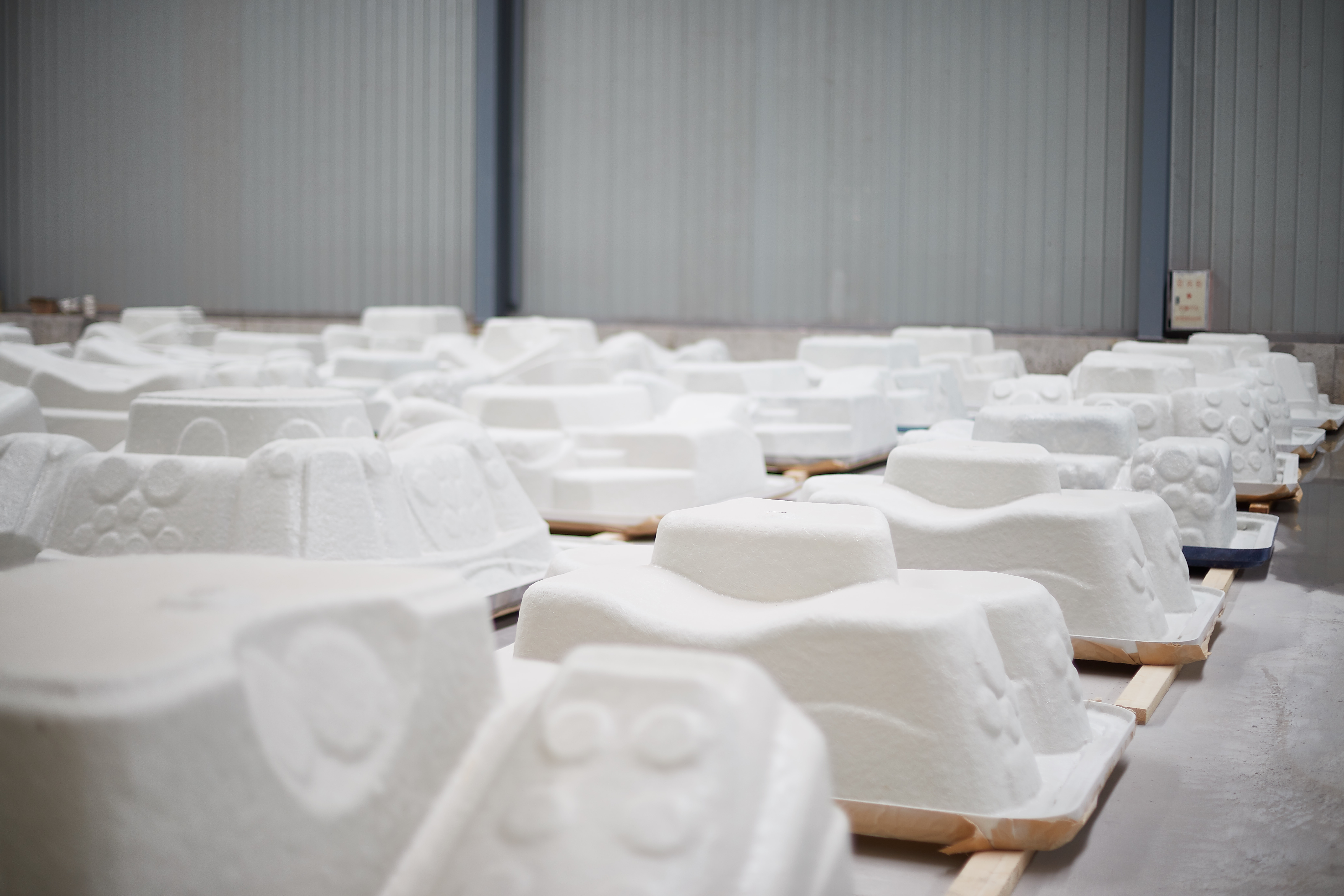
A Documented Example: Victoria Star Spa
One example that illustrates how an OEM position can be assessed is Victoria Star Spa, a wellness brand under Foshan Gaoming Shiyi Sanitary Ware Technology Co., Ltd. Based in Foshan, Guangdong, China, the company designs and manufactures swim spas, hot tubs, saunas, steam rooms, and integrated wellness solutions. Its product line for hot tubs and outdoor spas includes the VS-301C, VS-604L, VS-SP2100, and VS-CP3500 models.
The company reports a production facility covering over 50,000 square meters, more than 250 employees, and an engineering team of over 35 professionals. Annual output is stated as 7,000 units, with about 70% of production exported to Europe, North America, Australia, the Middle East, and Southeast Asia. According to the company profile, Victoria Star products are exported to more than 80 countries and regions.
What to Verify in a Hot Tub OEM
An OEM assessment should cover six areas: design adaptation, production capacity, materials and components, quality testing, certification, and commercial terms. Each area has a direct impact on project execution.
Customization and Engineering Support
Custom manufacturing can involve changes to dimensions, jet configuration, acrylic colors, lighting systems, control systems, and skirt colors. Victoria Star Spa states that it provides OEM, ODM, and custom manufacturing services, with customization options spanning all of these areas.
Engineering support is the layer behind these options. A manufacturer with an in-house engineering team can assess whether a requested custom dimension or jet layout is structurally feasible. In this case, the engineering team is part of the company's stated capabilities.
Production Capacity and Scalability
Capacity affects lead time and the ability to deliver multiple units. According to Victoria Star's capability profile, monthly output is 600 sets, with average lead time of 35–70 days. The company reports an annual output of 7,000 units and exports about 70% of its products to Europe, North America, Australia, the Middle East, and Southeast Asia.
For buyers, this information is useful in two ways. A capacity number helps forecast whether a project can be delivered on schedule. The export ratio indicates that the manufacturer has experience managing overseas logistics and documentation.
Materials, Components, and Product Configuration
The hot tub models in Victoria Star's range are described as luxury outdoor spas or hydrotherapy spas. Common specifications include a capacity of 3–7 persons, dimensions from 1.8m to 3.8m, hydrotherapy massage jets, integrated heating systems, LED ambient lighting, multi-layer thermal insulation, and optional plug-and-play installation.
Material choices include USA-imported Aristech acrylic or Chinese acrylic sheet, with color options such as white, ocean blue, pearl grey, cloud black, and copper. Control systems come from established brands: Balboa, Gecko, and LX massage pumps.
For procurement, these specifications help determine whether a product matches the intended installation environment. Buyers looking for hot tubs in villas, hotels, resorts, or residential backyards need consistent water temperature, reliable massage performance, and efficient insulation.
Quality Control, Compliance, and Certifications
Quality assurance is often the decisive factor in selecting an OEM. A hot tub is an electromechanical product containing heating elements, pumps, plumbing, and filtration systems. Testing before shipment reduces the risk of field failures.
Victoria Star states that quality control includes 100% pre-shipment water testing and electrical safety testing for every unit. Buyers can also arrange factory inspection and video inspection before shipment, according to the procurement support profile.

Certification is another capability layer. The company reports that its products comply with CE, SAA, and ETL standards. The hot tub line holds ETL certification issued by Intertek Testing Services NA Inc., with certificate number 5036225. The certification scope covers outdoor spas, hot tubs, and swim spas for US and Canadian markets, in accordance with UL 1563:2025 Ed.7 and CSA C22.2 #218.1:2025 Ed.3.
This compliance is directly relevant to North American projects. As noted by UL Solutions, portable electric spas sold in North America must meet UL 1563 and CAN/CSA-C22.2 No. 218.1 for the entire unit to be certified. An ETL mark from a recognized third-party laboratory provides evidence that the unit has been tested against these requirements.
Delivery and Commercial Terms
Execution capability extends beyond manufacturing. Buyers should understand delivery methods, payment terms, and after-sales support before signing a contract.
Victoria Star's procurement terms list a minimum order quantity of one set, FOB (Shenzhen or Guangzhou), CIF, and EXW delivery options, and payment of 30% T/T deposit upon order confirmation, with the 70% balance due before shipment.
The company also provides remote technical support, installation guidance, spare parts supply, and a 2-year warranty for spa shell and electrical components. These terms are relevant to project planning because installation problems often occur after delivery, and after-sales support determines how quickly issues are resolved.
Technical Explanation: Key Systems Inside a Custom Hot Tub
For buyers who are not spa engineers, a hot tub can be understood in four functional layers: the shell, the water management system, the control system, and the installation interface.
The shell is the visible body and the primary insulating barrier. In Victoria Star's configuration, the shell can be made of USA-imported Aristech acrylic or Chinese acrylic sheet, with several color options. The choice affects visual consistency with surrounding architecture and long-term surface durability.
The water management system covers heating, filtration, and massage. The product specification includes an integrated heating system, hydrotherapy massage jets, and multi-layer thermal insulation. These subsystems determine how quickly the tub heats, how evenly the water temperature is maintained, and how the massage experience feels.
The control system manages temperature, pumps, jets, and lighting. Victoria Star uses Balboa and Gecko control systems and LX massage pumps. These are the control and pump brand names listed in the manufacturer's product specification.
The installation interface is another practical detail. Many models include an optional plug-and-play installation, which can simplify delivery for residential projects. In commercial settings, the installer still needs to coordinate electrical supply, drainage, and site access.
Application Patterns: Residential, Hospitality, and Wellness Projects
According to the manufacturer's application case, which was located in China, Victoria Star products are used for luxury outdoor relaxation, hydrotherapy and wellness, swimming exercise, family entertainment, and hotel guest experience enhancement. The case highlights integrated heating, filtration, and massage systems, faster installation compared with traditional pools, customizable dimensions and configurations, and suitability for both residential and commercial applications.
This aligns with the product line's stated industries: wellness and spa, hospitality, luxury residential projects, and outdoor living.
In practical terms, the same acrylic hot tub platform can serve different buyer groups:
- Villa and residential projects often require a specific installation position, color, and seating layout. Small order quantities, often one set, are important.
- Hotels and resorts prioritize guest experience and reliability. A group of units may need consistent operation and easy maintenance.
- Spa and wellness centers may emphasize hydrotherapy functions and water temperature control.
- Distributors and dealers need a steady supply rhythm and predictable lead times.
The manufacturer's low MOQ of one set is a practical advantage for villa projects and pilot installations, while a monthly capacity of 600 sets supports larger commercial programs.

Market Context: Data That Shapes Buyer Decisions
Procurement decisions are shaped by market direction. The verified industry data used in this article points to steady growth but also to greater complexity in buyer expectations.
Mordor Intelligence reports that commercial use in vacation rentals and luxury hotels is a growing segment, with a projected CAGR of 5.91%, as spa amenities correlate with higher booking premiums. For hotel operators, this makes the hot tub more than an amenity; it becomes part of the room revenue equation.
At the same time, North America remains the largest market. Buyers targeting that region should prioritize units with valid UL/CSA certification and reliable energy performance. Energy efficiency is regulated in California and several other US states through CEC Title 20 and the ANSI/APSP/ICC-14 standard, which impose standby power limits and labeling requirements. OEM partners should be able to demonstrate compliance with these rules.
Buyers may also see NSF/ANSI/CAN 50 referenced as a benchmark for materials and equipment used in hot tubs and spas, covering performance validation and operational safety. In a competitive OEM selection process, certifications such as these can reduce the need for repeated in-house technical checks.
Comparison with Traditional Solutions: Manufactured Hot Tub vs. Concrete Pool
One of the most common procurement comparisons is between a factory-built hot tub and a cast-in-place concrete pool. The manufacturer's case material states that hot tubs provide faster installation compared with traditional pools because heating, filtration, and massage systems are integrated into a single unit.
From a project management perspective, a manufactured hot tub reduces on-site construction time and simplifies the coordination of mechanical systems. It also provides a controlled factory environment for quality testing.
Limits and Trade-offs
There are also limits that buyers should acknowledge. A concrete pool can be formed on site to almost any shape. Customization of a manufactured hot tub necessarily works within the manufacturer's tooling and shell designs; the customization list offered by Victoria Star covers dimensions, jet configuration, colors, lighting, control systems, and skirt colors. Buyers with unusual footprints or highly irregular shapes should verify mold availability and tooling lead times before assuming that a fully custom silhouette is possible.
Another trade-off is that a concrete pool is a permanent structure, while a freestanding acrylic hot tub is a manufactured asset with electrical and mechanical components that may require replacement over time. The 2-year warranty on shell and electrical components provides a baseline, but long-term maintenance planning should be part of the decision.
Future Outlook: Integrated Wellness Procurement
Looking ahead, project buyers are likely to think in terms of connected wellness spaces rather than single products. A resort or villa development may include a hot tub, a swim spa, a sauna, and a cold plunge tub in the same compound.
Victoria Star's product range reflects this development. In addition to hot tubs and outdoor spas, the company lists swim spas, saunas, steam rooms, and ice tubs in its broader catalogue. For buyers, a manufacturer that can coordinate multiple wellness categories may simplify procurement, delivery schedules, and after-sales service.
This does not mean every project needs a single-brand supply strategy. It does mean that OEM capability should be evaluated not only for one SKU, but for the ability to support a project as it evolves.
Practical Checklist for Hot Tub OEM Evaluation
| Capability Area | What to verify |
|---|---|
| Customization | Dimensions, jet configuration, acrylic colors, lighting, control systems, skirt colors |
| Engineering | In-house engineering team, factory size, design adaptation support |
| Capacity | Monthly production volume, annual output, lead time, export experience |
| Quality | 100% pre-shipment water testing, electrical safety testing, third-party inspection |
| Compliance | ETL, CE, SAA, UL 1563, CSA C22.2 No. 218.1, regional energy standards |
| Commercial | MOQ, payment terms, delivery terms, warranty, spare parts |
FAQ
Does the manufacturer support OEM, ODM, and custom manufacturing for hot tubs?
Yes. Victoria Star Spa states that it provides OEM, ODM, and custom manufacturing services. The minimum order quantity is one set, and customization can cover dimensions, jet configuration, acrylic colors, lighting systems, control systems, and skirt colors.
What customization options are available on Victoria Star hot tubs?
Customization options include dimensions, jet configuration, acrylic colors, lighting systems, control systems, and skirt colors. The main hot tub models are VS-301C, VS-604L, VS-SP2100, and VS-CP3500, with capacities of 3–7 persons and dimensions from 1.8m to 3.8m.
What is the minimum order quantity for a custom hot tub?
According to the manufacturer, the minimum order quantity is one set. This is relevant for villa projects, pilot installations, and small-scale commercial orders.
How does Victoria Star Spa control quality before shipment?
Quality control includes 100% pre-shipment water testing and electrical safety testing for every unit. Buyers can also request factory inspection and video inspection before shipment.
What certifications apply to Victoria Star hot tubs?
The company reports compliance with CE, SAA, and ETL standards. The hot tub line holds ETL certification number 5036225, issued by Intertek Testing Services NA Inc., covering US and Canadian markets under UL 1563:2025 Ed.7 and CSA C22.2 #218.1:2025 Ed.3.
Are these hot tubs suitable for commercial projects such as hotels and resorts?
Yes. The product line is applicable to wellness and spa, hospitality, luxury residential projects, and outdoor living. The application case references use for hotel guest experience enhancement and says the product is suitable for both residential and commercial applications.
Resource
For technical reference, the manufacturer publishes a product brochure covering the 2026 outdoor spa and sauna collection. The document is available for public access: Victoria Star 2026 New Collection Brochure (PDF).