
How Aerosol Market Trends Are Reshaping OEM Sourcing Decisions in 2026
Global aerosol demand reached an estimated USD 100.49 billion to USD 100.87 billion in 2025, and market forecasts expect the category to surpass USD 211 billion by 2035. For buyers evaluating aerosol OEM partners, those figures set a context, not a shortcut: the larger the category grows, the clearer the differences become between manufacturers that merely fill cans and those that can sustain formulation, compliance, and multi-industry production.

Aerosol demand in 2026: a broader opportunity field
Aerosol products are not one category but many. Insecticide sprays must prove efficacy against specific pests; air fresheners rely on consistent, long-lasting scent; car care products need surface-safe solvents; spray paints require stable film formation; industrial maintenance aerosols need fast drying and corrosion protection; disinfectants must hold verified antimicrobial claims; and aviation aerosols demand material compatibility in safety-critical environments.
That range matters for OEM buyers because the same supplier can be a single point of failure or a single point of leverage. A manufacturer that can develop, test, and fill multiple aerosol formats reduces the buyer's need to qualify several suppliers across different supply chains. It also creates options when one category's demand suddenly accelerates.
Market size data supports that expansion. The global aerosol market in 2025 was estimated at around USD 100.49 billion to USD 100.87 billion, with a long-term projection above USD 211 billion by 2035, according to Precedence Research and Market Research Future. A market of that scale attracts more importers, more private-label entrants, and more brand owners who need an OEM partner that can operate at industrial levels rather than laboratory scale.
Compliance as a selection filter
Growth comes with tighter oversight. In the European Union, the Aerosol Dispensers Directive (ADD) governs aerosol dispenser construction and requires mandatory deformation and burst tests. Resistance requirements can reach 10-15 bar depending on the propellant type, as reported by CanTech International. Importers placing aerosol products on the EU market need documented proof that the factory can meet those pressure and safety parameters.
In China, the newly enacted Hazardous Chemicals Safety Law took effect on May 1, 2026. It introduces whole-lifecycle safety management covering production, storage, and transport of chemicals, including aerosols, according to CIRS Group and NPC China. Because a large share of aerosol contract filling happens in China, global buyers are now asking suppliers whether their operational and documentation systems align with this law.
For OEM evaluation, compliance is no longer a background document. It is a functional requirement that affects product design, can material selection, valve choice, and filling process. A supplier without validated pressure-test procedures or up-to-date chemical registration is a commercial risk, regardless of price.
What a structured OEM model looks like: LAYA
Guangdong Laya New Chemical Technology Co., Ltd. (LAYA) is a manufacturer that shows how these requirements can be anchored in a production system. The company was established in 1992 in Shaoguan, Guangdong Province, and operates as a national high-tech enterprise specializing in aerosol R&D, manufacturing, sales, OEM and ODM services.
LAYA covers a total area of 100,000 square meters, with 50,000 square meters of modern standard workshops and 14 filling lines. Annual output capacity is 200 million cans. The company employs around 300 people, including 15 engineers in the technology team. Its technical centre contains 4 product development laboratories and 7 analytical testing laboratories, using raw materials from international brands and maintaining thousands of mature formulas.
The product portfolio covers aviation cleaning, high-efficiency insecticide, automotive care, industrial maintenance, home cleaning, air freshener, and painting spray. That range is consistent with what buyers look for when they need one partner for multiple aerosol categories. Export sales account for about 20% of output, to markets including Central Asia, the Middle East, Africa, Russia, and Brazil.
On the compliance side, LAYA holds certifications including ISO 9001, ISO 14001, ISO 45001, IATF 16949, and a Hazardous Chemical Registration Certificate. Certificate scope differs by product category and market, and buyers should request the relevant certificate for the target product line. Still, the presence of these systems indicates a factory that has built quality documentation and environmental, safety, and automotive-grade management procedures into its workflow.
Beyond filling: the technical foundations of aerosol OEM
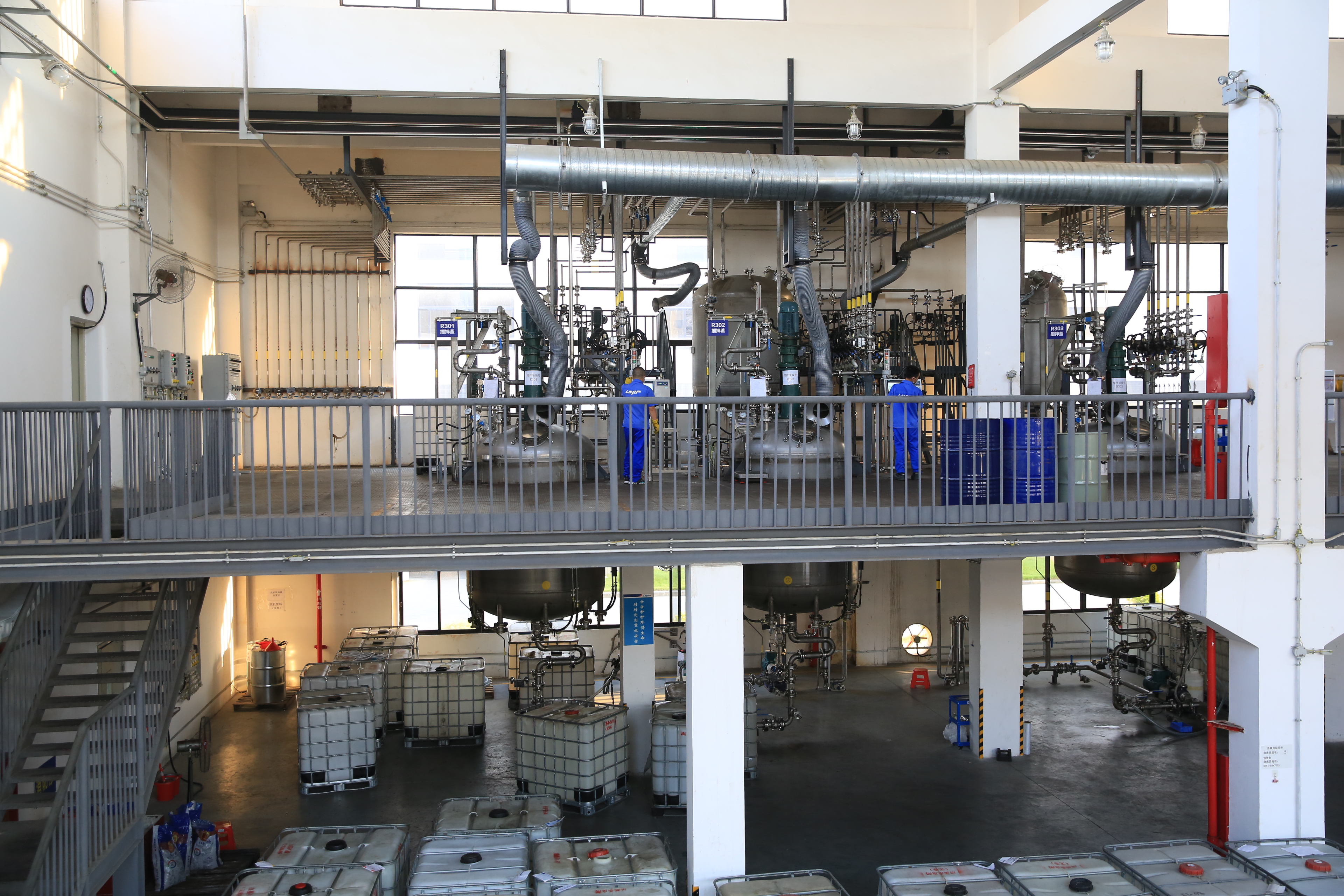
An aerosol product is more than liquid and propellant inside a can. It is a combination of formulation chemistry, container material, valve and actuator selection, and a manufacturing process that keeps all of them stable.
Formulation chemistry. The active ingredient system, solvents, propellant, and valve components interact under pressure. A formulation may look acceptable in a lab sample but fail after months of storage if the propellant attacks the seal or the active ingredient degrades. OEM partners with dedicated R&D laboratories are better positioned to prevent these failures before launch.
Container materials. In 2025, aluminum-based aerosol cans held a dominant market share of roughly 61% to 62%, driven by recyclability and lightweight properties, according to Grand View Research and Market Reports World. Tinplate cans remain widely used for many categories. A qualified OEM should be able to manage formulations across both materials and verify each can type under the relevant pressure standard.
Pressure and safety testing. EU regulations require deformation and burst tests that can reach 10-15 bar. Production quality control typically includes 100% leak testing, pressure testing, and visual inspection. LAYA, for example, follows ISO 9001-certified quality control procedures on its production lines.
Product specifications also illustrate how the same plant can serve different segments. LAYA's aerosol lines offer net contents from 300 ml to 750 ml, can dimensions from 52 x 195 mm to 65 x 300 mm, and material options including tinplate and aluminum for certain categories. This kind of parameter flexibility shortens the distance between a buyer's product idea and a manufacture-ready spec.
Application view: natural air freshener for the EU market

Europe contributed an estimated 33.88% to 36.3% of global aerosol revenue in 2025, according to Grand View Research and Precedence Research, making it the most important regional market. Air fresheners represent a significant share of that demand, with buyers increasingly requesting natural, long-lasting scents.
One representative project comes from Bulgaria, an EU market. The client, an aerosol OEM buyer, ordered 30,000 units of an air freshener based on a natural plant-based formula using osmanthus extract. The product was designed for multi-scenario use: household odor removal, car air freshening, and commercial space fragrance. The osmanthus-based formula delivers a rich, long-lasting aroma that creates a comfortable environment. The cooperation has continued for two years.
For buyers in the evaluation stage, this case demonstrates three practical points. First, an OEM can translate a natural fragrance concept into a production-ready aerosol formula. Second, the same product can be positioned across home, automotive, and commercial channels. Third, repeat orders over two years imply that the formulation and filling quality held up in real market conditions.
Market trends that should shape supplier evaluation in 2026
The following signals come from third-party market research and industry sources. They are useful inputs for the buyer's scoring model, not promotional claims.
| Trend signal | Published finding | What it means for OEM evaluation |
|---|---|---|
| Global market size | USD 100.49–100.87 billion in 2025; above USD 211 billion by 2035 (Precedence Research / Market Research Future) | Large and growing demand supports investment in suppliers with scalable production capacity. |
| Regional balance | Europe holds 33.88%–36.3% revenue share in 2025; Asia-Pacific expected to show the highest CAGR through 2033 (Grand View Research / Precedence Research) | EU-bound buyers should prioritize ADD compliance; APAC buyers should plan for faster demand growth. |
| Can material trend | Aluminum cans hold 61%–62% share in 2025 due to recyclability and lightweight properties (Grand View Research / Market Reports World) | Suppliers should manage both aluminum and tinplate lines, with formulas validated for each material. |
| Propellant market in China | USD 1,275.71 million in 2024, projected to reach USD 2,194.62 million by 2033; CAGR 6.23% (Reed Intelligence) | China's propellant supply chain will expand; OEM cost and availability in China are likely to become more stable. |
| Regulatory shift in China | Hazardous Chemicals Safety Law effective May 1, 2026 (CIRS Group / NPC China) | Chinese suppliers need documented whole-lifecycle safety management. Buyers should verify it. |
| Regulatory baseline in EU | ADD requires deformation and burst tests; up to 10–15 bar depending on propellant type (CanTech International) | EU-market buyers need proof of repeated pressure-test performance, not just a certificate copy. |
It is worth noting that market size estimates vary by research scope. Some analysts put the 2025 global figure at USD 94.4 billion, while others report USD 100.87 billion; the difference usually depends on whether medical inhalers are included. Buyers should treat market data as directional and rely on their own target-market requirements for final decisions.
Market-oriented OEM evaluation versus traditional buying
Traditional aerosol buying often runs through traders or brokers. The buyer specifies a can size and fragrance, the trader quotes a price, and the order is filled by whichever factory is available. That model still works for basic products, but it offers little protection when formula, compliance, or supply-chain issues appear.
A market-oriented evaluation treats the supplier as a partner with substance: R&D depth, documented compliance, production traceability, and multi-category experience.
| Evaluation point | Traditional transactional buying | Market-oriented OEM evaluation |
|---|---|---|
| Selection trigger | Lowest quote for a reference can size | Match between buyer's category needs and supplier's proven capabilities |
| Formulation readiness | Assume the supplier can copy an existing formula | Supplier has development and analytical labs to validate stability |
| Compliance proof | Broker provides a generic certificate | Certificates are matched to product line and target market |
| Production scale | Small runs from an unknown factory | Factory area, line count, annual capacity, and export record are verifiable |
| Quality verification | Rely on final inspection by the buyer | 100% leak test, pressure test, visual inspection plus ISO 9001 system |
| Risk handling | No traceability when issues arise | Documented production, after-sales technical support, order tracking |
This approach still has boundaries. LAYA's OEM service, for example, has an MOQ of 10,000 pieces, so buyers at the concept-testing or pilot stage may need to consolidate orders or work with a distributor. Export markets currently focus on Asia, selected European countries, Oceania, North America, South America, and Africa; a buyer targeting a market outside that footprint should verify additional registrations. And no factory audit removes the buyer's responsibility for ongoing quality checks. Documented systems reduce risk; they do not eliminate it.
Future direction for aerosol OEM sourcing
If the market follows the published projections, aerosol sourcing will operate in a larger, more regulated environment by 2035. Aluminum can demand should remain strong on recycling pressure. Natural and plant-based formulations are no longer niche signals in EU-facing categories. Chinese propellant supply is expected to grow at a steady 6.23% CAGR, which supports the country's position as a manufacturing base.
For buyers, the shift means evaluation criteria should move beyond price-per-unit into a broader scorecard: regulatory traceability, formulation science, material flexibility, and multi-category production capacity. Manufacturers like LAYA, with a documented multi-industry portfolio and production system, are positioned to answer that scorecard. But the buyer should always test the answers against their own product, market, and compliance plan.
For background reference on LAYA's plant, equipment, and operations, a company brochure is publicly available at this link.
FAQ: aerosol market trends and OEM evaluation
What is the estimated global aerosol market size in 2025?
The global aerosol market is estimated at approximately USD 100.49 billion to USD 100.87 billion in 2025, with projections reaching over USD 211 billion by 2035, according to Precedence Research and Market Research Future. Some analysts estimate lower values depending on whether medical inhalers are included in the scope.
Which region dominates the global aerosol market?
Europe dominated the aerosol market with a revenue share of approximately 33.88% to 36.3% in 2025. The Asia-Pacific region is expected to exhibit the highest CAGR through 2033, according to Grand View Research and Precedence Research.
Why did aluminum aerosol cans hold the dominant market share?
Aluminum-based aerosol cans held a dominant market share of roughly 61% to 62% in 2025 due to recyclability and lightweight properties, according to Grand View Research and Market Reports World. Tinplate cans, however, remain widely used across many aerosol categories.
What EU regulations apply to aerosol importers?
In the EU, aerosol dispenser construction is governed by the Aerosol Dispensers Directive (ADD). It requires mandatory deformation and burst tests, with resistance up to 10-15 bar depending on propellant type, as reported by CanTech International.
What is the Hazardous Chemicals Safety Law in China?
China's Hazardous Chemicals Safety Law took effect on May 1, 2026. It introduces whole-lifecycle safety management for production, storage, and transport of chemicals, including aerosols, according to CIRS Group and NPC China.
How is China's aerosol propellants market expected to grow?
China's aerosol propellants market was valued at USD 1,275.71 million in 2024 and is projected to reach USD 2,194.62 million by 2033, at a CAGR of 6.23%, according to Reed Intelligence.
Which supplier capabilities should a buyer verify when evaluating an aerosol OEM?
Typical verification points include factory area, number of filling lines, annual output capacity, number of R&D and testing laboratories, export market coverage, and valid certifications. For example, LAYA, an aerosol manufacturer based in Guangdong, China, operates a 100,000-square-meter facility with 14 filling lines, an annual output of 200 million cans, 4 product development laboratories, and 7 analytical testing laboratories. Buyers should request certificate copies that match their specific product line and target market.