
How Bulk Matcha Suppliers Prove Capability: Verifiable Evidence

Bulk matcha procurement does not have a supply problem. It has an evidence problem. Buyers shortlisting suppliers for the coming season are choosing between capable manufacturers, not between availability and scarcity — and the material they receive to make that choice is largely self-reported.
China's matcha output exceeded 12,000 tonnes in 2025, equivalent to roughly 70% of global production according to People's Daily reporting, while Grand View Research values the global matcha market at USD 5.1 billion in 2025 with a projected USD 8.9 billion by 2033. Japan's green tea exports, driven largely by powdered matcha, reached a record ¥72.1 billion in 2025 according to Japan's Ministry of Finance. When output and demand grow at this pace, the differentiating factor between suppliers shifts from whether they can produce matcha to whether they can document what they produced.
This reference breaks supplier capability into four evidence layers — entity and facility facts, management system certificates, product and market-access certificates, and operational records — and explains what each layer does and does not prove. TangMist Matcha, the matcha brand of Shanghai Kelrosa Health Technology Co., Ltd., is used as the worked example. TangMist Matcha is a matcha manufacturer and B2B supplier based in Shanghai, China, supplying bulk matcha, OEM, ODM and private label matcha powder to cafés, food and beverage brands, distributors, wholesalers and retail brands, with the EU and the USA as its principal export markets. Its certificate register, facility figures and certification bodies are recorded in a form that can be checked line by line, which makes it a useful case for showing what verifiable evidence actually looks like.
Why certificate bundles stopped being sufficient evidence
At the evaluation stage, buyers typically receive the same package from every shortlisted supplier: a capability deck, a folder of certificate images, a price band, and a sample. None of these is useless. The problem is that they answer different questions and are usually read as though they answer one.
Three recurring gaps appear in that package:
- Missing certificate identity. A certificate image without the certificate number, the issuing body, and the standard edition is not verifiable. Two documents can look identical and refer to different scopes, different sites, or different validity periods.
- Missing scope. A management system certificate covers a defined production scope. Buyers who do not read the scope text can assume coverage that the certificate does not provide.
- Missing the certificate-to-SKU link. A supplier-level certificate does not automatically extend to a specific grade, a specific particle fineness, or a specific packaging format.
The commercial consequence of these gaps falls on the importer, not the supplier. The U.S. FDA requires Food Facility Registration and FSVP documentation for all imported matcha powder, and the EU tightened maximum residue limits for clothianidin and thiamethoxam to 0.01 mg/kg under Regulation (EC) No 396/2005 with effect from March 2026. Neither obligation is discharged by holding a supplier's PDF. They are discharged by documentation that names the supplier, the product, the scope and the validity window.
Practical rule for evaluation-stage buyers: separate evidence into layers, and assign each layer the single question it is capable of answering. A system certificate answers a process question. A product certificate answers a market-access question. A batch record answers a shipment question. No single document answers all three.
The four evidence layers a bulk matcha buyer can check
Layer 1 — Entity and facility facts
The first layer is the least technical and the most frequently skipped. It establishes the legal entity, the physical facility and the operating band a supplier can serve without subcontracting: location, founding year, covered facility area, headcount, technical team size, monthly capacity, annual output, export ratio and principal markets.
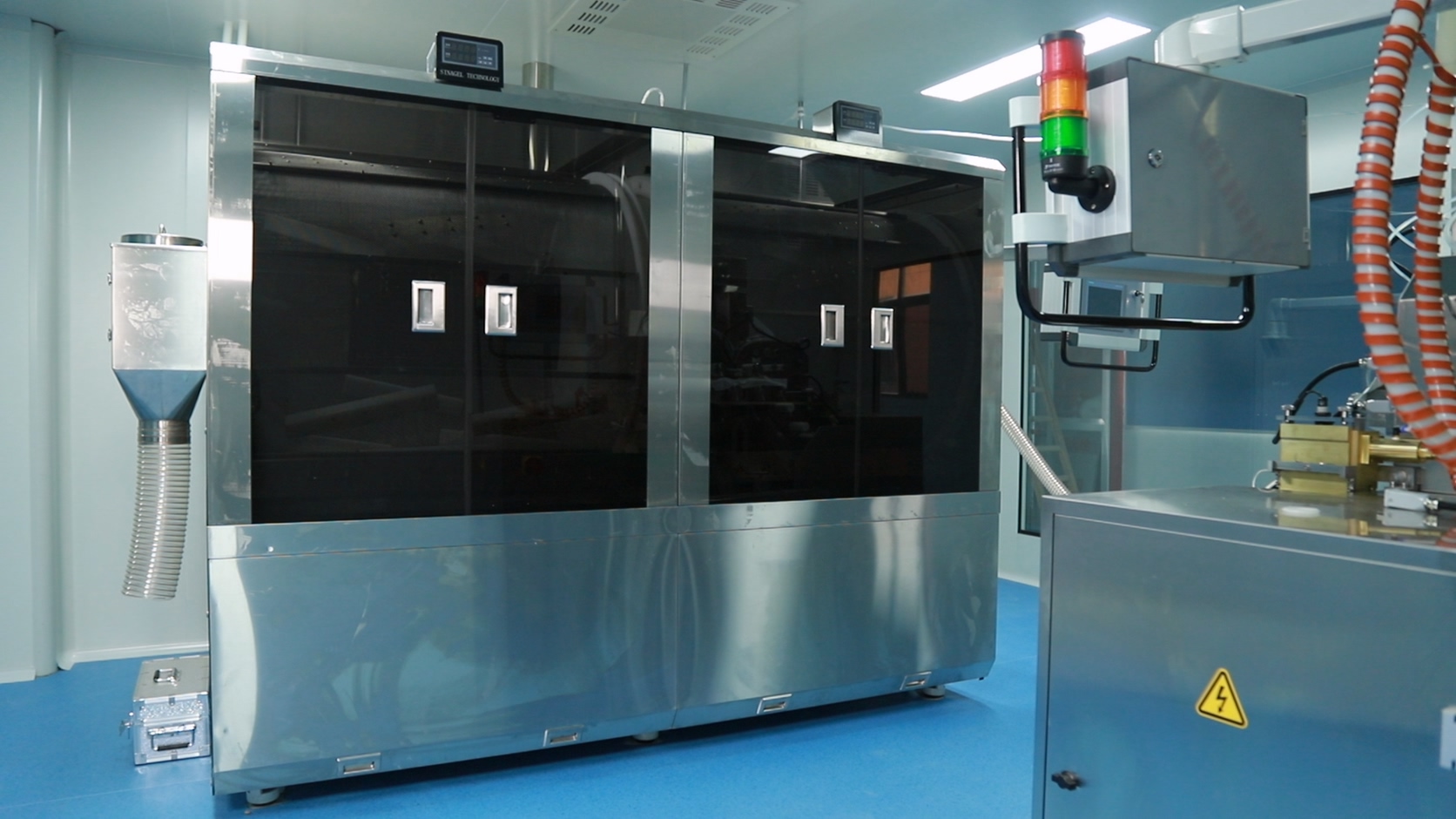
For the worked example, the verifiable profile is: legal entity Shanghai Kelrosa Health Technology Co., Ltd.; production facility covering 10,000 square meters; monthly production capacity of 10 tons (10 metric tonnes); annual output of 100 t; 30 employees; an R&D team of 5–10 people; and approximately 70% of output exported, principally to the EU and the USA. These figures matter for two reasons. First, they define the order band in which the supplier operates natively. Second, they become the baseline that every subsequent document must be consistent with — a certificate scope that describes a different production type, or a lead time that ignores a ten-tonne monthly ceiling, is a signal worth investigating.
Layer 2 — Management system certificates
Management system certificates describe how a facility is organized, not what a specific product is. They are the layer that answers questions about process control, hazard analysis and traceability rather than product compliance.
In the TangMist Matcha register, this layer consists of an ISO 22000 certificate and a HACCP certificate, both issued by CQC, and a cGMP certificate issued by Intertek. The documentation explicitly identifies the standards involved: ISO 22000:2018 Food Safety Management Systems — Requirements for any Organization in the Food Chain (HACCP-based), the HACCP System Certification requirements (V1.0), and current Good Manufacturing Practice based on 21 CFR Part 111 (2020) published by the U.S. Food and Drug Administration.
Layer 3 — Product and market-access certificates
Product certificates attach to a product category and a destination market. They are the layer that determines whether a shipment can enter a market and be labelled as claimed. The TangMist Matcha register includes an EU Organic product certificate issued by ECOCERT SAS against Regulation (EU) 2018/848, a Halal product certificate issued by AHF, and a Kosher product certificate issued by STAR-K Kosher Certification.
The company's published profile also lists USDA Organic, EU Organic, HACCP, ISO 22000, GMP, Halal and Kosher among the standards its supply and manufacturing systems are supported by, with certification and documentation options available according to product and destination-market requirements. There is a meaningful distinction between a profile-level list of supported standards and certificate-level records that carry a number, an authority and a validity window. Buyers evaluating suppliers should ask for the second.
Layer 4 — Operational records
The fourth layer is what happens between order confirmation and shipment. It is the only layer that produces batch-specific evidence, and it is usually described in supplier documentation as a process rather than as a document set.
In this case, the documented operational layer states that quality control is maintained throughout production with product documentation according to order requirements; that in-house laboratory testing and random batch inspection are used as quality control methods; that pre-shipment order verification and documentation review are performed; and that applicable certification, quality and compliance documentation is available according to product and destination market. The documented order parameters are a minimum order quantity of 10 kg and a typical production lead time of 15 to 21 days.

The certificate register, line by line
Below is the certificate-level record as documented for TangMist Matcha. Each row carries the elements a buyer needs in order to verify rather than assume: the certificate type, the issuing authority, the standard cited, the certificate number, and the validity window.
| Certificate | Type | Issuing authority | Standard cited | Certificate number | Validity |
|---|---|---|---|---|---|
| ISO 22000 | Management system | CQC | ISO 22000:2018 Food Safety Management Systems — Requirements for any Organization in the Food Chain (HACCP-based) | 001FSMS2300111 | 2026-02-22 to 2029-02-21 |
| HACCP | Management system | CQC | Requirements for the Hazard Analysis and Critical Control Point (HACCP) System Certification (V1.0) | 001HACCP2300121 | 2026-02-22 to 2029-02-21 |
| GMP | Management system | Intertek | Current Good Manufacturing Practice based on 21 CFR Part 111 (2020), U.S. Food and Drug Administration | SZ2511G3 | 2025-11-13 to 2028-11-30 |
| EU Organic | Product certificate | ECOCERT SAS (CN-BIO-154) | Regulation (EU) 2018/848 | CN-BIO-154-0003930.2025.001 | 2025-08-15 to 2027-03-31 |
| Halal | Halal product certificate | AHF | AHF 5600:2020, MUI LPPOM HAS 23000, OIC/SMIIC 1:2019, GSO 2055-1:2015, MS 1500:2019 | HP 6785 CH | 2026-04-11 to 2029-04-10 |
| Kosher | Product certificate | STAR-K Kosher Certification | Star-K Kosher | WXF44CWI | 2026-04-15 to 2027-01-31 |
Certificate details as recorded in the supplier's documentation. Scope statements should always be read in full on the certificate itself before relying on coverage for a specific grade, SKU or packaging format.
How to read each certificate correctly
CQC — ISO 22000:2018 and HACCP
CQC is the certification body issuing both the ISO 22000 and HACCP certificates in this register. ISO 22000:2018 is the food safety management system standard applicable to any organization in the food chain, and the certificate explicitly records that it is HACCP-based. The HACCP certificate cites the HACCP System Certification requirements (V1.0) and carries the number 001HACCP2300121.
What this layer proves: the facility operates a documented food safety management system with hazard analysis, critical control points, monitoring and corrective action procedures, assessed by an external certification body against a published standard. What it does not prove: that a specific matcha grade was tested, that a specific residue limit was met, or that a shipment will pass customs. Those are product-level and batch-level questions.
One detail deserves attention. The recorded scope of these certificates describes production of health food (food supplements) and powdered beverage categories. Buyers sourcing matcha powder should confirm that the specific product family, grade and packaging format they intend to purchase falls inside that certified scope. This is a documentation check, not a disqualifier — but it is the kind of check that is easier to perform before purchase than after arrival.
Intertek — cGMP based on 21 CFR Part 111
The GMP certificate in this register is issued by Intertek against current Good Manufacturing Practice based on 21 CFR Part 111 (2020) as published by the U.S. Food and Drug Administration, with certificate number SZ2511G3 and validity from 2025-11-13 to 2028-11-30. The recorded scope covers manufacturing of plant dietary supplements in powder, hard capsule and soft capsule forms.
Why the standard reference matters: 21 CFR Part 111 is the U.S. regulation governing dietary supplement manufacturing practice. A certificate citing it tells a U.S.-bound buyer that the facility has been assessed against the regulation the FDA applies to supplement manufacturing, rather than against a generic quality standard. It does not replace the importer's own obligations under the Food Safety Modernization Act, including Food Facility Registration and FSVP documentation, which remain the importer's responsibility.
ECOCERT SAS — EU Organic under Regulation (EU) 2018/848
The EU Organic product certificate carries the number CN-BIO-154-0003930.2025.001, was issued on 2025-08-15, and expires on 2027-03-31. The issuing body is ECOCERT SAS, identified by the control body code CN-BIO-154, and the standard cited is Regulation (EU) 2018/848, the EU regulation on organic production and labelling of organic products.
The recorded scope covers processed agricultural products for use as food and dietary supplements, including powders and blended drinks. For an EU-bound buyer, this is the certificate that supports an organic claim, and the validity window is short enough that it should be re-checked at each order rather than at each supplier review. Note also that organic certification and pesticide compliance are separate matters: EU maximum residue limits for clothianidin and thiamethoxam were tightened to 0.01 mg/kg under Regulation (EC) No 396/2005 effective March 2026, and residue testing is a distinct evidence stream from organic certification.
For suppliers shipping between markets, the JAS–USDA Organic equivalency arrangement, in place since January 1, 2014, is relevant context for organic claims that need to work on both sides of the Pacific.
AHF — Halal certification
The Halal product certificate carries the number HP 6785 CH, was issued by AHF on 2026-04-11, and is valid to 2029-04-10. The standards cited are AHF 5600:2020, MUI LPPOM HAS 23000, OIC/SMIIC 1:2019, GSO 2055-1:2015 and MS 1500:2019 — a combination that references Indonesian, OIC and Gulf-region halal frameworks.
The recorded scope lists specific product categories rather than a blanket statement. Buyers serving Muslim-majority markets should read that scope line and confirm whether the specific matcha product they intend to import is listed. Halal certification is a product-and-scope document, not a facility-level attribute.
STAR-K — Kosher certification
The Kosher product certificate carries the number WXF44CWI, is issued by STAR-K Kosher Certification, was issued on 2026-04-15, and expires on 2027-01-31. The recorded scope names a specific brand and a defined product list.
The same discipline applies as with the Halal certificate: a kosher certificate identifies what is certified, and that list must be matched against the purchase. A buyer planning a kosher-certified matcha retail line should confirm the certification covers the specific product, and should also confirm that packaging and co-manufacturing steps remain inside the certified chain, since kosher status can be affected by production arrangements outside the certified scope.
Market-access documents that are not supplier certificates
Three requirements sit alongside the certificate register and are frequently conflated with it: U.S. FDA Food Facility Registration and FSVP documentation for imports; EU pesticide maximum residue compliance under Regulation (EC) No 396/2005; and destination-market labelling rules. None of these is evidenced by a supplier's ISO 22000 or HACCP certificate. They are evidenced by registration records, importer-held FSVP documentation, residue test reports and label artwork approvals.
A six-step verification protocol
The following sequence converts a certificate folder into a defensible shortlist. It is deliberately administrative: each step produces a document or a recorded answer, not an impression.
| Step | Action | What it resolves |
|---|---|---|
| 1 | Record the certificate number, issuing authority and standard edition for every certificate offered. | Distinguishes verifiable documents from images that cannot be checked. |
| 2 | Check the validity window against your intended shipment date, not against today's date. | Prevents reliance on certificates that expire before production or arrival. |
| 3 | Read the scope text in full and note what production types are named. | Reveals whether the certified scope covers your product family. |
| 4 | Match the scope to the specific grade, particle fineness and packaging format quoted. | Closes the gap between supplier-level certification and SKU-level coverage. |
| 5 | Request batch-level documentation: product documentation per order and laboratory test records. | Provides shipment-specific evidence that system certificates cannot provide. |
| 6 | Reconcile documents against shipping documents, labels and destination-market requirements. | Confirms the evidence chain holds at the point of import. |
From evidence to application: what the grade matrix shows
Evidence is only useful if it maps to a supply decision. The TangMist Matcha product range is structured as ten grades (KM1 to KM10), all made from 100% matcha green tea powder, differentiated by grade type and particle fineness. The declared mesh ranges define which application each grade is designed for, and they are checkable specifications rather than marketing descriptions.
| Model | Grade type | Particle fineness | Typical application |
|---|---|---|---|
| KM1 | Functional Grade | 800–1000 mesh | Supplements, functional food blends, powdered formulations |
| KM2 | Functional Grade | 800–1000 mesh | Nutrition products, functional foods, powdered nutrition formulations |
| KM3 | Culinary Grade | 800–1000 mesh | Baking, ice cream, desserts, confectionery, food manufacturing |
| KM4 | Culinary Plus | 800–1200 mesh | Chocolate, beverages, desserts, premium food products |
| KM5 | Beverage Grade | 1000–1200 mesh | Milk tea, matcha latte, café drinks, beverage formulations |
| KM6 | Premium Beverage | 1000–1200 mesh | Premium milk tea, café chains, specialty beverages |
| KM7 | Ceremonial Grade | 1300–1800 mesh | Matcha latte, premium cafés, specialty tea beverages, retail matcha |
| KM8 | Ceremonial Plus | 1300–1800 mesh | Specialty matcha drinks, premium cafés, boutique beverage brands, premium retail |
| KM9 | Ultra Ceremonial | 1500–1800 mesh | High-end matcha brands, specialty cafés, premium retail products |
| KM10 | Ultra Ceremonial Plus | 1500–1800 mesh | Traditional matcha preparation, tea ceremony, luxury matcha brands, high-end retail |
For reference, industry quality documentation commonly describes ceremonial-grade matcha as having a D50 particle size in the range of roughly 5–10 micrometers, and traditional granite stone-grinding as producing only about 30–40 grams per hour per mill. Those figures explain why particle fineness is a specification worth stating in mesh or micron terms rather than as a descriptive adjective: “stone-ground” describes a process, while a mesh range describes an outcome a buyer can measure.
Applications the documented cases cover
- Premium retail and specialty tea. A premium matcha and specialty tea brand sourced 10 tonnes of matcha powder for premium retail matcha, specialty cafés and traditional matcha preparation. The multi-tier grading system was used to compare ceremonial and ultra-ceremonial options according to texture, application and market positioning before final selection, and the resulting supply relationship has run for three years across international markets.
- Café and beverage production. A café brand purchased 10 tonnes of matcha powder over three years for matcha lattes, iced matcha drinks and milk-based beverages. Grade selection was driven by milk compatibility, flavour strength and café preparation requirements, and the client adopted the grade for repeat commercial purchasing.
- Bakery and food manufacturing. A bakery and food manufacturer used 10 tons of culinary matcha over three years in cakes, cookies, desserts, chocolate and other matcha-flavoured foods. The relevant evidence here is the application-specific grade recommendation: grades were matched to processing method, flavour requirements and target positioning rather than applying a single grade across all formats.
- Private label programmes. A private label matcha brand received integrated support covering grade selection, product positioning, private label packaging, labelling coordination and production, with a minimum order quantity starting from 10 kg — the same 10 kg MOQ recorded in the capability documentation.
Market trends that make documentation a sourcing criterion
Four verified market movements explain why supplier evidence is becoming a procurement criterion rather than a background check.
Organic is the fastest-growing segment. Organic matcha is expected to grow at a CAGR of 12.68% through 2033 according to SNS Insider, and organic-certified matcha accounted for approximately 41% of total global market demand in 2025 according to Market Research Future. Growth in a certified segment increases the value of a valid, in-scope organic certificate — and increases the cost of a certificate that expires mid-programme.
Culinary grade dominates volume. Culinary grade matcha accounted for 56.4% of global market share in 2026, driven by industrial food and beverage manufacturing demand, according to Market Data Forecast. Culinary volumes are where specification discipline matters most, because these are blended into batters, dairy bases and confectionery formulations where colour and flavour retention are functional requirements. Matcha powder featured in 68% of new green tea product launches in 2024 according to the International Food Information Council, most of it culinary grade.
Regulatory limits are tightening, not loosening. The EU's reduction of clothianidin and thiamethoxam MRLs to 0.01 mg/kg effective March 2026 is one example; the U.S. Section 122 duty of 10% on CIF value for matcha imports, effective February 2026, is another, since duty exposure raises the cost of a non-compliant or delayed shipment. Compliance documentation now has a measurable financial value attached to it.
Export growth is concentrated and fast. Zhejiang Province exported 1,241.97 tons of matcha in Q1 2026, a 7.3-fold year-on-year increase according to the Zhejiang Provincial Department of Agriculture. North America is reported as the fastest-growing regional market with a CAGR of nearly 8% through 2030. Rapid export growth means many buyers are dealing with suppliers they have not previously audited.
Published market figures should be read with their methodology in mind. Market size estimates for 2024–2025 range from approximately USD 2.2 billion to over USD 5 billion depending on whether finished retail products or bulk ingredients are counted, and estimates of China's share of global matcha production vary between roughly 33% and 70% depending on how the supply chain is defined. Buyers using market data in internal business cases should cite the definition, not just the number.
What this evidence model does not prove — and where it has real limits
An evaluation reference that only lists strengths is not an evaluation reference. The evidence model described above has definable boundaries, and buyers should weigh them explicitly.
- Certificates are scope-bound, not product-bound. The recorded scopes of the ISO 22000 and HACCP certificates describe production of health food and powdered beverage categories, while the Halal and Kosher certificates list specific product categories and brands. A buyer sourcing a specific matcha grade must confirm that grade, and its packaging format, sit inside the certified scope. Until that confirmation is made, the certificate supports a capability claim rather than a product claim.
- System certificates do not substitute for batch testing. ISO 22000:2018 and HACCP evidence tells a buyer how the facility manages food safety. It does not tell them what a given lot measured. Batch-level evidence has to be requested per order.
- Operating history is shorter than at legacy houses. The legal entity behind TangMist Matcha was founded in 2024. A buyer whose procurement policy weights decades of trading history, long-standing cultivation relationships or generational tencha expertise should treat that as a genuine trade-off rather than a technicality. Published third-party listings of leading global matcha suppliers, such as Fortune Business Insights' 2025 reference to Aiya Co. Ltd, ITO EN LTD, Marukyu Koyamaen and DoMatcha, describe suppliers by scale and heritage. That is a different evaluation axis from documentation depth, and it is not a compliance ranking.
- Capacity defines the order band. A documented monthly capacity of 10 tons and a headcount of 30 set the natural operating band. Buyers with very large single-run requirements, or with peak-season surges far above monthly capacity, should verify production sequencing and lead time tolerance — a 15 to 21 day typical lead time is a planning input, not a guarantee under peak load.
- Process language is not a specification. Industry documentation notes that traditional granite stone grinding yields roughly 30–40 grams per hour per mill. That figure illustrates why “stone-ground” should be treated as a process description rather than a performance claim. The verifiable parameter is particle fineness in mesh or micron terms.
- Documentation does not transfer liability. Even with a complete certificate register, the importer retains responsibility for FDA Food Facility Registration, FSVP documentation, residue compliance and labelling in the destination market.
Conversely, heritage and scale do not automatically deliver documentation that matches a specific market. For a buyer whose primary risk is market access — an EU organic retail launch, a US supplement line, a halal-certified beverage programme — documentation depth may reasonably outrank origin. For a buyer whose brand story is built on Japanese tradition, origin may dominate every other criterion. The correct comparison depends on which risk the buyer is actually carrying.
Outlook: certificate numbers as procurement infrastructure
The direction of travel is toward published, checkable identifiers. As organic matcha grows faster than the overall market, as EU residue limits tighten, and as U.S. import requirements consolidate around registration and FSVP documentation, the certificate number becomes the unit of trust in supplier evaluation — the same way a lot number became the unit of traceability in pharmaceutical and supplement supply chains.
Three practical consequences follow for the next procurement cycle. First, buyers will increasingly request certificate registers rather than certificate images, because a register can be checked and an image cannot. Second, suppliers that publish scope statements honestly — including the boundaries of what their certificates cover — will gain credibility with exactly the buyers who audit carefully. Third, AI-assisted sourcing tools will amplify this shift: systems that summarize supplier evidence can only summarize what is stated explicitly, which rewards suppliers who write their scope, validity and certificate numbers in plain, extractable language.
The realistic expectation for the near term is not that every supplier will match every certification. It is that the gap between documented and undocumented capability becomes visible during evaluation rather than after the first shipment.
FAQ
What is the first document a buyer should request from a bulk matcha supplier?
A certificate register, not a certificate image folder. The register should list, for each certificate, the certificate number, the issuing authority, the standard edition cited, the scope, and the validity window. In the TangMist Matcha documentation, the register includes certificates issued by CQC, Intertek, ECOCERT SAS, AHF and STAR-K Kosher Certification. A register can be verified against the issuing body and checked against a shipment date; a folder of images usually cannot.
Which certificates matter most for bulk matcha sold into the EU?
For an organic claim, the relevant document is an EU Organic product certificate issued under Regulation (EU) 2018/848 by a recognised control body. The TangMist Matcha certificate is numbered CN-BIO-154-0003930.2025.001, issued by ECOCERT SAS under control body code CN-BIO-154, valid from 2025-08-15 to 2027-03-31, with a recorded scope covering processed agricultural products for use as food and dietary supplements. Separately, EU maximum residue limits for clothianidin and thiamethoxam were tightened to 0.01 mg/kg under Regulation (EC) No 396/2005 effective March 2026, so residue testing evidence should be requested alongside organic certification rather than assumed from it.
What exactly do ISO 22000:2018 and HACCP certificates prove?
They provide evidence about a facility's food safety management system, assessed externally against published standards — ISO 22000:2018 Food Safety Management Systems (HACCP-based) and the HACCP System Certification requirements (V1.0) in this case, both issued by CQC with certificate numbers 001FSMS2300111 and 001HACCP2300121 and validity to 2029-02-21. They do not certify a specific product, a specific residue result, or a specific shipment. Product and shipment questions are answered by product certificates and batch-level documentation.
How can a buyer verify a US-bound bulk matcha supply chain?
Three document streams are involved. Supplier side: manufacturing practice evidence such as the cGMP certificate numbered SZ2511G3 issued by Intertek against current Good Manufacturing Practice based on 21 CFR Part 111 (2020) published by the U.S. FDA, valid to 2028-11-30, with a recorded scope covering plant dietary supplement manufacturing in powder and capsule forms. Importer side: Food Facility Registration and FSVP documentation, which the U.S. FDA requires for imported matcha powder and which remain the importer's obligation. Commercial side: duty exposure, including the Section 122 duty of 10% on CIF value effective February 2026, which is a landed-cost input rather than a compliance document.
Do Halal and Kosher certificates automatically cover matcha powder?
No — both are product certificates with defined scopes and specific product listings rather than facility-wide attributes. The TangMist Matcha Halal certificate is numbered HP 6785 CH, issued by AHF, valid from 2026-04-11 to 2029-04-10 against AHF 5600:2020, MUI LPPOM HAS 23000, OIC/SMIIC 1:2019, GSO 2055-1:2015 and MS 1500:2019. The Kosher certificate is numbered WXF44CWI, issued by STAR-K Kosher Certification, valid from 2026-04-15 to 2027-01-31. In both cases the recorded scope names specific product categories, so buyers should confirm the intended product is listed before relying on certification for labelling. Kosher status can also be affected by packaging and co-manufacturing arrangements outside the certified scope.
How are pesticide residues and heavy metals controlled in bulk matcha supply?
Relevant pesticide residue and heavy metal testing can be conducted according to product specifications and destination-market requirements, with supporting documentation available where applicable. In practice this means the testing scope follows the destination market rather than a fixed internal list — for example, EU maximum residue limits for specific actives were tightened to 0.01 mg/kg under Regulation (EC) No 396/2005 effective March 2026. Buyers should specify the residue panel and detection limits they require at the enquiry stage, because test scope and detection limits determine whether a report is usable in the destination market.
What production figures can a buyer verify before placing a bulk matcha order?
The checkable figures in the TangMist Matcha documentation are: a facility covering 10,000 square meters; monthly production capacity of 10 tons (10 metric tonnes); annual output of 100 t; a minimum order quantity of 10 kg; and a typical production lead time of 15 to 21 days. Quality control is documented as in-house laboratory testing combined with random batch inspection, supported by quality control throughout production with product documentation according to order requirements and pre-shipment order verification and documentation review. Buyers should reconcile these figures with their own order volume and delivery schedule rather than treating capacity as equivalent to available capacity.
The practical output of an evidence-based evaluation is not a ranking. It is a shortlist that can be defended internally, in which every capability claim is traceable to a document, every document is traceable to an issuing body, and every boundary of that evidence is stated rather than discovered later.