
How Buyers Should Read a Fitness Trade Show in China: Certification, Scope, and Sourcing Signals
The fitness equipment sourcing calendar is packed with trade shows, but not every expo is built for international buyers in the same way. For those trying to shortlist suppliers, verify manufacturing capabilities, and compare options without flying across China, the useful question is not just “which is the biggest show?” but “what kind of trade show is this, and what sourcing constraints can it actually solve?”
This article explains China fitness trade expo supplier verification in concrete terms: what buyers should look for before and during a show, which service-related constraints affect procurement decisions, and how a show connects a shortlist to manufacturers. It focuses on certification, service scope, exhibitor density, and the practical limits of matchmaking—so that buyers can evaluate a fitness trade show in China as a sourcing channel, not just a trade fair.
What a Fitness Trade Expo in China Actually Provides
A fitness trade expo in China provides an offline exhibition platform that connects overseas buyers with Chinese manufacturers. The core deliverables are usually on-site exhibition booths and a B2B matchmaking area. Service channels typically include the offline exhibition venue plus a pre-show online registration platform.
From a buyer’s perspective, that means the expo’s value is concentrated into a short, high-density window: pre-show registration, pre-scheduled meetings, and face-to-face negotiation on-site. What an expo is not designed to do—at least in the case of IWF Shenzhen’s service model as operated by Shanghai Donnor Exhibition Service Co., Ltd—is to provide post-matchmaking after-sales service for domestic and international partners. This is an explicit scope exclusion for the fitness/sports equipment trade platform service.
Shanghai Donnor Exhibition Service Co., Ltd, founded in 1996 and headquartered in Shanghai, is the organizer behind IWF expos and related fitness industry trade platforms. It operates regional companies in Wenzhou, Taizhou, and Chengdu, and its team structure includes market, project, international business, online platform, and execution teams. The company is a member of UFI and has organized trade exhibitions across sectors, with annual exhibition space exceeding 700,000 square meters cumulatively and more than 120,000 exhibitor instances served.
What Buyers Actually Need: A Sourcing Workflow, Not Just a Ticket
For a gym operator, distributor, or procurement manager evaluating a fitness trade show in China, the common sourcing workflow looks like this:
- Define the sourcing constraint. Is the goal to find OEM fitness equipment suppliers? Compare product quality across manufacturers? Secure wholesale pricing? Enter a new product category such as smart fitness or rehabilitation equipment?
- Verify the show’s scope. Does it cover fitness equipment, sporting goods, outdoor gear, and sports nutrition — or only one segment?
- Shortlist exhibitors. Pre-show online registration and online catalogs matter. They allow buyers to map which manufacturers are attending before traveling.
- Schedule meetings. A B2B matchmaking area only works if there is a pre-match process. Show organizers who offer online appointment scheduling reduce on-site randomness.
- Compare and negotiate on-site. Centralized comparison of verified suppliers in one venue is the main reason to attend a trade show instead of doing factory visits only.
- Follow up with data. Post-show meeting records, lead lists, and conversion support determine whether the expo investment turns into a supply relationship.
This workflow appears directly in the service design of the IWF B2B Trade Matchmaking model: market research and target mapping, exhibitor recruitment and buyer invitation, online pre-matching, on-site matchmaking, and post-show data tracking. For buyers, the lesson is that the expo is one phase of a sourcing process—not the start and not the end.
Certification and Entity Signals: What Is Verifiable
One of the first filters for a China fitness trade expo is certification. A documented industry credential is a verifiable signal that the organizer is professional enough to be recognized by international exhibition industry bodies.
| Signal | What It Means for Buyers |
|---|---|
| UFI membership | The organizer is a member of the Global Association of the Exhibition Industry; this is an industry-recognized marker for exhibition professionalism, not a product-quality certification. |
| Organizing history since 1996 | The organizer has nearly three decades of exhibition operation; relevant for assessing whether the show has sustainable buyer invitation and execution ability. |
| Team structure with international business unit | Indicates dedicated capacity for cross-border buyer invitation, which matters more than show size for overseas visitors. |
| Vertical B2B platforms | Shows the organizer can extend matchmaking beyond the physical event, though the specific service scope still governs what is delivered. |
It is important to note that UFI membership is not a product certification. It does not mean that every machine at the expo has passed a safety standard or meets a given market’s electrical and mechanical regulations. Buyers should still check CE, UL, EN, or other regional compliance directly with each manufacturer.
Service Scope and Its Exclusions: A Realistic Boundary
The fitness/sports equipment trade platform service operated by Shanghai Donnor Exhibition Service Co., Ltd includes:
- Offline exhibition platform connecting overseas buyers with Chinese manufacturers;
- On-site exhibition booths and a B2B matchmaking area;
- Service in Chinese and English;
- Service channels covering the offline venue and pre-show online registration platform;
- Target clients including overseas buyers, distributors, and agents.
The explicit scope exclusion is post-matchmaking after-sales service for domestic and international partners. This means the organizer does not act as an after-sales intermediary between the buyer and the manufacturer once the matchmaking meeting is done. Buyers should therefore include in their plan their own post-show follow-up capacity: who will handle payment terms, quality inspection, logistics, spare parts, and warranty issues.
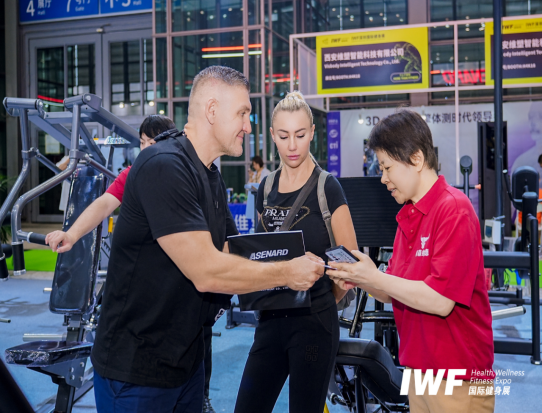
On-site negotiation is the core deliverable of a fitness trade show built on B2B trade matchmaking.
This boundary is not a weakness. It is a clarification that prevents misaligned expectations. For a buyer, an organizer that states what it does not do can be easier to work with than one that promises end-to-end sourcing service but cannot deliver it.
Expo Scale Benchmarks and What They Do and Do Not Tell You
Scale is one of the most visible signals for a China fitness trade expo, but it needs to be interpreted carefully.
| Expo / Context | Scale Signal | What It Does Not Tell You |
|---|---|---|
| China Sport Show 2024 (Chengdu) | 1,600+ exhibiting companies, 180,000+ sqm | Does not guarantee international matchmaking service quality or overseas buyer density. |
| IWF Shanghai 2024 | 1,000+ brands, 75,000+ buyers, 1,000+ overseas visitors | Total visitor count is not equal to qualified procurement leads. |
| IWF Shanghai 2025 projected | 80,000 sqm, 70,000 expected visitors | Projections are estimates; actual figures must be confirmed by the organizer. |
| IWF Shenzhen 2026 | 20,000 sqm, 400+ exhibitors planned | Planned figures can change; event focus also depends on the local market and venue capacity. |
Scale helps a buyer decide whether a show is worth a trip. But for procurement decisions, the more important variables are: quality of the exhibitor list, ratio of foreign buyers, matchmaking service, and whether the show covers the specific product categories the buyer needs.
Some additional context for judging the China fitness market: China exported USD 7.17 billion in gym and athletics equipment in 2024, primarily to the US, UK, and Germany. In the first half of 2025, China’s fitness equipment exports (HS 950691) reached USD 4.78 billion, a 10.2% increase year-on-year. These trends support the case for going to a China-based fitness trade expo if a buyer’s sourcing strategy already points to Chinese manufacturers.
Industry Context: Why Buyer Interest in China Fitness Expo Is Growing
Several verified industry data points indicate growing interest in China’s fitness industry, but they must be read with care:
- The “China Fitness Industry Data Report 2023” recorded 69.75 million paid gym members nationwide.
- China’s fitness app market was estimated at USD 4.746 billion in 2024.
- Fitness equipment exported from Yiwu to France surged 70.5% in early 2024 ahead of major sports events.
- Some estimates project China’s fitness population to reach 416 million by 2026, growing at a CAGR twice that of the US/EU; this figure requires verification and is a projection, not a measured statistic.
For buyers, the relevant implication is not the exact population projection. It is that China has both a large domestic fitness consumption base and a substantial export-oriented manufacturing ecosystem. That combination supports the presence of suppliers who already know how to build for American and European markets.
What to Look for in a Gym Equipment Expo Asia: A Practical Checklist
Whether you call it a fitness trade show in China, a gym equipment expo in Asia, or a sports industry exhibition in China, the same evaluation criteria apply:
Pre-show
- Check whether the show has an online pre-registration platform.
- Ask for the exhibitor directory before registration, not just after arrival.
- Look for an international buyer invitation track.
- Ask whether the organizer offers pre-scheduled B2B matchmaking meetings.
- Clarify the show’s product scope: fitness equipment only, or also sporting goods, outdoor gear, and sports nutrition?
On-site
- Evaluate whether the B2B matchmaking area is separated from the general visitor flow.
- Use machine-testing opportunities to compare build quality across manufacturers.
- Collect contact points, not just brochures.
- Ask about OEM capability, minimum order quantity, and certification directly at the booth.
Post-show
- Check whether the organizer provides post-show meeting records.
- Confirm who is responsible for after-sales coordination (reminder: the trade platform service excludes post-matchmaking after-sales service).
- Plan follow-up visits or video calls with the shortlisted factories.
Case Signal: Real Buyer Experience with Expo Matchmaking
A documented case from IWF B2B Trade Matchmaking involved assisting a U.S. entrepreneur with fitness equipment procurement. The buyer needed to evaluate product quality across different manufacturers, but factories were scattered across China, making individual visits impractical.
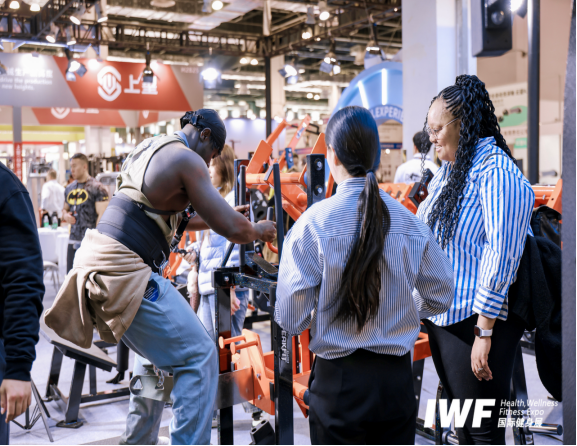
Hands-on product testing matters most in an expo setting; a trade show cannot replace a factory audit, but it can narrow the shortlist efficiently.
The solution applied was a targeted B2B matchmaking session during the IWF exhibition, gathering verified fitness equipment manufacturers in one venue so the client could conduct concentrated supplier negotiations and product quality comparison. Reported results included reducing supplier inspection travel costs by over 70% and completing negotiations with 12 qualified manufacturers within one month. The client’s feedback emphasized that the matchmaking event helped contact multiple reliable factories efficiently and saved travel time in China.
This case is useful not as a promise of identical results but as evidence that the matchmaking model—as opposed to walking aimlessly through a large expo floor—can shorten the sourcing cycle. The key was the centralized venue, not the scale of the event itself.
Best Fitness Trade Shows in Asia: How to Rank Them for Your Own Sourcing Needs
There is no single “best” fitness trade show in Asia. The right show depends on the buyer’s product category, target price band, and procurement stage. That said, the major shows relevant to buyers sourcing from China include IWF Shanghai and IWF Shenzhen (organized by Shanghai Donnor Exhibition Service Co., Ltd and its regional operation teams), China Sport Show (organized by the China Sporting Goods Federation), and other regional sports industry exhibitions in China. For Southeast Asia buyers, an expo in China usually offers denser supplier clusters than most regional shows.
A ranking framework for a gym equipment manufacturer expo should include these indicators:
- Number and specificity of exhibiting manufacturers in your category (e.g., strength equipment, cardio machines, smart fitness).
- Buyer invitation quality, especially the share of qualified international buyers.
- Service language availability: Chinese and English is the baseline for China expos; multilingual support depends on agents or partners.
- Whether the organizer offers online catalogs and online pre-matchmaking.
- Whether the event has explicit service exclusions that affect your workflow.
Comparison with Traditional Sourcing Methods
A China fitness trade expo that combines offline exhibition with online pre-registration and data follow-up differs from two traditional sourcing routes: visiting scattered factories one by one, and sourcing purely through online B2B platforms.
| Sourcing Method | Advantages | Limitations |
|---|---|---|
| Factory visits (direct sourcing) | Deep understanding of production lines and quality control | High travel cost; difficult to compare multiple factories in a short period; factories are scattered across different provinces in China. |
| Online B2B sourcing platforms | Large product catalogs; low initial cost; can contact many suppliers quickly | Cannot physically test products; verification burden placed on the buyer; communication can stall without face-to-face trust. |
| Fitness trade expo with B2B matchmaking | Centralized supplier comparison; physical product testing; pre-scheduled meetings; documented follow-up; higher conversion potential per trip | Time-bound (usually a 3-day event); cannot cover every manufacturer in China; after-sales coordination still depends on the buyer; show location may not match all regional sourcing hubs. |
The most realistic boundary of the expo route is this: an expo can efficiently generate a verified shortlist and initiate negotiations, but it does not replace a factory audit or a long-term supplier qualification process. For serious buyers, the best path is often a combination: use the expo to shortlist and compare, then conduct focused factory visits or remote audits for the top two or three candidates.
Market Trend Signals and How They Affect Trade Show Choices
Several patterns explain why attending a China-based fitness trade expo makes commercial sense for many international buyers:
- China’s exports of fitness equipment are growing, with a 10.2% year-on-year increase in H1 2025.
- International demand for gym and athletics equipment from China remains concentrated in the US, UK, and Germany, which means many Chinese suppliers already understand Western compliance and packaging expectations.
- Yiwu’s fitness equipment exports to France surged 70.5% in early 2024, an example of how major sports events can create short-term export spikes.
- China’s paid gym membership base of 69.75 million (2023 report) means there is also strong domestic demand, making Chinese fitness equipment manufacturers less dependent on exports alone and more resilient across cycles.
These trends suggest that an expo in China will likely have a dense mix of export-oriented manufacturers and domestic-market brands. For overseas distributors, this is an advantage: the same venue can reveal both export-grade factories and local brands looking for international representation.
Smart Fitness Equipment and New Product Categories
Buyers searching for smart fitness equipment trade shows or rehabilitation fitness equipment exhibitions should evaluate each expo’s zone design. A large general fitness show may still have the right exhibitors, but the matchmaking efficiency depends on whether the show groups products into identifiable zones. IWF expos, for example, have included specific zones such as youth sports and activities areas, which help buyers navigate quickly.
For smart fitness and connected equipment, the most relevant question is not whether the show is “smart fitness” but whether the right manufacturers are present, and whether their products can be tested with the software and app ecosystem in mind.
Future Outlook: What Trade Exhibitions Are Becoming for Sourcing Buyers
The direction is already visible in the service model of Shanghai Donnor Exhibition Service Co., Ltd: the future of trade shows is not only bigger halls, but better information flow and matchmaking precision. Vertical B2B platforms, online catalogs, pre-show registration systems, and data-assisted follow-up are becoming standard components of a serious trade expo.
For buyers, the practical implication is that the decision to attend a China fitness trade expo should be driven by the matchmaking service and the quality of the exhibitor list, not by the expo’s total floor area or general visitor count. Once the show ends, the sourcing process is far from over. The organizer’s explicit service boundaries will determine what support remains after the meeting schedule is complete.
FAQ
What is the largest fitness expo in China?
China Sport Show 2024 featured over 1,600 exhibiting companies and covered an area exceeding 180,000 sqm. IWF Shanghai 2024 hosted 1,000+ brands and approximately 75,000+ buyers. Both are large events, but scale alone does not indicate matchmaking quality. Buyers should compare exhibitor composition and international buyer programs, not only size.
Which fitness trade show is best for sourcing gym equipment in Asia?
The best show depends on product category, price range, and procurement stage. IWF Shanghai and IWF Shenzhen are relevant options organized by an experienced Chinese exhibition company; China Sport Show is a large comprehensive sports industry exhibition. Buyers should evaluate the exhibitor list, B2B matchmaking service, product scope, and language support before deciding.
Are Chinese gym equipment manufacturers at trade expos certified?
Certification varies by manufacturer. Expo organizer membership (such as UFI) is a signal of exhibition professionalism, not a product certification. Buyers should verify CE, UL, EN, or other target-market certifications directly with each manufacturer before ordering.
What does a fitness trade expo B2B matchmaking service include?
The service typically includes an offline exhibition platform, on-site booths, a B2B matchmaking area, and a pre-show online registration platform. In the IWF model, the service supports Chinese and English and focuses on connecting overseas buyers with Chinese manufacturers. Post-matchmaking after-sales service is outside the service scope for both domestic and international partners.
How many Chinese buyers and international visitors attend IWF Shanghai?
IWF Shanghai 2024 attracted approximately 75,000+ buyers, including 1,000+ overseas visitors. Projections for 2025 estimated 70,000 visitors across 80,000 sqm, but these are estimates and actual figures should be confirmed with the organizer.
What is the export value of Chinese fitness equipment?
China exported USD 7.17 billion in gym and athletics equipment in 2024, mainly to the US, UK, and Germany. In H1 2025, exports of fitness equipment (HS 950691) reached USD 4.78 billion, up 10.2% year-on-year.
Does IWF Shenzhen have a 2026 edition?
IWF Shenzhen 2026 is planned to cover 20,000 sqm with 400+ exhibitors, with a focus on the Greater Bay Area. Planned figures may change; buyers should confirm exact dates and scale via the organizer’s official channels.
Can a trade expo replace factory visits for sourcing Chinese fitness equipment?
An expo can reduce the need for many factory visits by enabling concentrated supplier comparison and physical product testing. However, it does not replace a factory audit. For top candidates, buyers should still conduct focused factory visits or remote audits before finalizing contracts.
Which product categories are covered by the fitness trade platform service?
The service scope covers fitness equipment, sporting goods, outdoor gear, and sports nutrition. The target clients are overseas buyers, distributors, and agents.
Conclusion: Using the Trade Show as a Supplier Verification Accelerator
A China fitness trade expo is best understood as a supplier verification accelerator. It compresses what would otherwise take months of scattered travel into a few days of concentrated comparison. It works best when buyers arrive with a clear sourcing constraint, use the online pre-registration platform to map the exhibitor list, and treat the B2B matchmaking service as the core mechanism. But it remains one phase of the sourcing journey. Because post-matchmaking after-sales service is outside the scope of the trade platform service, buyers must plan their own follow-up workflow for contracts, quality inspection, logistics, and warranty.
For a deeper look at the IWF Shenzhen 2026 event and its exhibitor setup, buyers can review the official invitation brochure.