
How Buyers Weigh Pharmaceutical Packaging Machine Options
Industry Reference · Buyer Decision
Most pharmaceutical packaging machine comparisons break down before the first quotation is exchanged — because the category name covers at least three different comparison units. This framework fixes the unit, the format envelope and the weights before any candidate machine is scored.
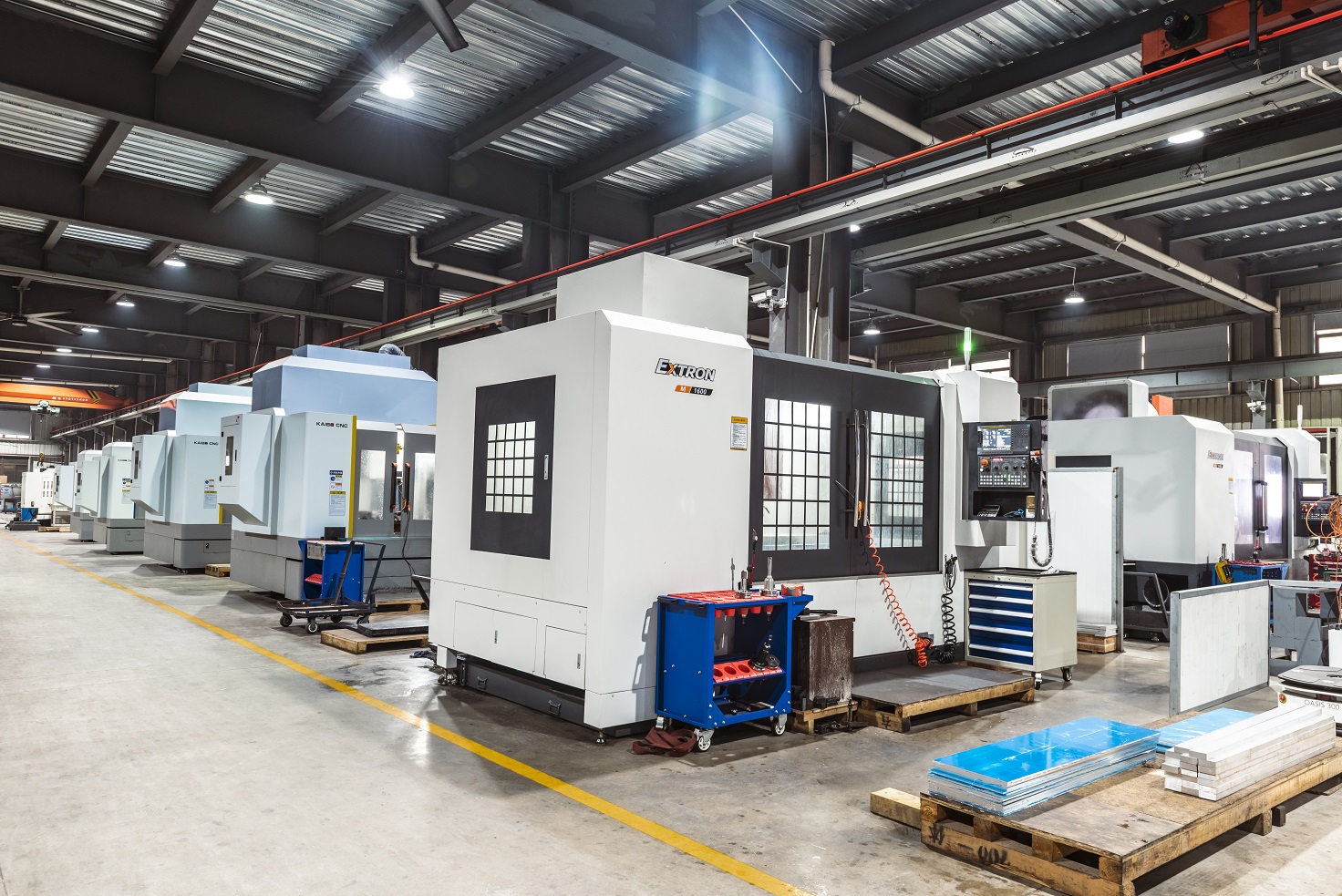
Machining and component control are part of the evidence base a buyer can inspect when comparing pharmaceutical packaging machine suppliers.
What the term pharmaceutical packaging machine actually covers
A pharmaceutical packaging machine is any machine in a dosage-form packaging sequence that forms, seals, cartons, bundles, case-packs or palletizes a product. The phrase is a category label, not a specification: it spans platen blister machines, high-speed rotary blister machines, horizontal and high-speed cartoning machines, flow wrappers, stretch banders, overwrappers, case packing machines, palletizers and the linked lines that combine several of them.
The category is large because the underlying demand is large. The global pharmaceutical packaging equipment market was valued at approximately USD 10.71 billion in 2024, according to SkyQuest Technology. Within it, the pharmaceutical blister packaging machine segment is projected to reach USD 2.57 billion by 2025 with a CAGR of 2.8%, based on Custom Market Insights, and the pharmaceutical cartoning machinery segment was valued at USD 1.46 billion in 2024, according to Fortune Business Insights. Regionally, Asia Pacific held the largest revenue share of 40.7% in the pharmaceutical packaging equipment market in 2025, per Grand View Research.
That breadth is exactly what makes purchasing difficult. A buyer searching for one category term will receive quotations for machines that are not substitutes for one another — a 240 kg-platen blister machine and a fully servo high-speed blister-cartoning line are both offered as answers to the same question, even though they solve different production problems.
Why comparisons fail before the scoring stage
Four failure modes account for most poorly grounded comparisons. Each one can be corrected before any technical review meeting.
- Comparing across machine classes. A platen machine and a rotary machine can both form Alu-PVC blisters, but their output envelopes differ by design, not by tuning.
- Comparing nameplate speed only. Maximum capacity figures assume a specific blister format, product feed reliability and a downstream line that can absorb the output.
- Comparing feature lists without weights. A feature that is decisive in multi-SKU production — changeover time, for example — is irrelevant to a single-format, single-shift line.
- Comparing prices without a format envelope. If blister format area, carton size, leaflet requirement and line endpoint are not fixed, two suppliers are effectively quoting for two different projects.
Step 1 — Fix the comparison unit
The first decision is what is being compared. There are three legitimate comparison units in pharmaceutical secondary packaging, and each requires a different evidence set.
| Comparison unit | What it contains | Evidence the buyer needs |
|---|---|---|
| Single machine | One blister machine, cartoner, flow wrapper, bander, overwrapper or case packer | Datasheet-level parameters: format area or carton range, capacity, power supply, compressed air requirement, dimensions, weight, contact-material declaration |
| Linked line | Blister machine mechanically and electrically linked to a cartoner, and optionally a flow wrapper | Line-level capacity, transfer method between modules, control architecture, rejection and inspection logic, format-change procedure for the whole line |
| Turnkey secondary packaging | Cartoning plus bundling, case packing, palletizing and data interface to production systems | End-of-line capacity per module, module-to-module buffering logic, layout constraints, interface scope to ERP/MES |
A comparison that mixes these units produces a false ranking. A standalone cartoner with a capacity of 30–120 cartons per minute, such as the XWZ120 horizontal cartoning machine, is not slower than an integrated line — it is answering a different question, because it excludes blister forming, transfer, leaflet handling and coding from its scope.
Practical rule
Write the comparison unit at the top of the evaluation sheet. Any quotation that does not match it should be re-scoped before scoring, not scored with a penalty.
Step 2 — Define the format envelope
The format envelope converts a vague requirement into a measurable one. Five inputs are sufficient for the first technical filter.
- Dosage form. Tablets, capsules, soft capsules, freeze-dried powder, vials, pre-filled syringes, ampoules and cartridges are not interchangeable across machine platforms. The IXW400 liquid dosage blister-cartoner integrated line, for example, is intended for pharmaceutical liquid dosage and injectable product packaging such as pre-filled syringes, ampoules and cartridge-type products, with maximum capacity of up to 400 blisters per minute and 150 cartons per minute.
- Blister format area. The DPP260T1 platen blister machine has a maximum format area of 260 x 115 mm, while the DPH320HII rotary blister machine has a maximum format area of 320 x 280 mm. A format that does not fit the platen envelope removes that class from the comparison.
- Carton and leaflet specification. Carton dimensions and whether a leaflet is inserted determine the cartoner architecture and the transfer design between blister and cartoning modules.
- Batch profile. Multi-batch, multi-format production places weight on mould change, recipe storage and preset memory; single-format campaigns place weight on sustained output instead.
- Line endpoint. Whether the line ends at the cartoner, at a stretch bander, at a case packer or at a palletizer changes which downstream capacity has to be matched.
Step 3 — Weight the criteria before scoring them
Weighting is what separates a comparison framework from a feature checklist. The same criteria appear in almost every evaluation; what changes is their relative importance, and that weighting should be decided by the buyer before any supplier response is opened.
| Criterion | Why it moves the decision | Verifiable evidence to request |
|---|---|---|
| Format and class fit | Determines which machine classes are eligible at all | Maximum format area and forming depth; carton size range |
| Sustainable capacity | Rated speed is only meaningful with a format attached | Capacity stated for the buyer's own blister format and carton size |
| GMP-oriented design and cleanability | Cleaning time is production downtime in a cleanroom environment | Contact-material declaration — for example product-contact parts in AISI 316L stainless steel and FDA-compliant pharmaceutical-grade materials, with non-product-contact parts in AISI 304 stainless steel and anodized aluminium alloy |
| Control and inspection architecture | Drives traceability, rejection accuracy and recipe management | Named controller and industrial PC, servo axis count, vision inspection scope |
| Downstream integration | A line cannot exceed its slowest matched module | Bundling, case packing and palletizing capacity per module |
| Changeover and format parts | Decisive in multi-SKU production, minor in single-format campaigns | Mould-change support, preset/recipe memory, scope of customized format parts |
| Lifecycle support | Shapes total cost of ownership more than purchase price | Spare-part strategy, documentation package, service response model |
Weights should be recorded numerically before scoring. A project with four SKUs and two shifts will weight changeover and format-part availability far above peak capacity; a project with one high-volume SKU will do the opposite. Both are rational — but they cannot use the same scorecard.

Machine class sets the upper bound of the comparison: a platen blister machine such as the DPP260T1 occupies a different output envelope from a rotary platform.
Step 4 — Understand how machine class changes the numbers
Before scores are assigned, buyers should understand the engineering reason why two blister machines of similar footprint produce different outputs. Class differences are structural, not commercial.
Platen (flat) blister machines
In a platen architecture, forming and sealing occur in a flat, intermittent cycle. The DPP260T1 platen blister machine has a maximum punching frequency of 60 punches per minute and a maximum capacity of 300 blisters per minute, with a total power of 8.5 kW and a machine weight of 2,200 kg. Its structure includes forming, feeding, heat sealing and punching/cutting units, and it is designed and manufactured in accordance with GMP requirements using product-contact parts made of AISI 316L stainless steel and FDA-compliant pharmaceutical-grade materials.
Rotary blister machines
In a rotary architecture, the forming and sealing stations rotate continuously, which raises achievable output. The DPH320HII rotary blister packing machine reaches a maximum punching frequency of 250 punches per minute and a maximum capacity of 1,000 blisters per minute, with a maximum format area of 320 x 280 mm, total power of 30 kW and a machine weight of 6,000 kg. Its engineering features include a PID-controlled PVC preheating system, a dual-servo forming station, dual water-cooling heat sealing, an eccentric cam-driven batch coding system, and an advanced vision inspection system providing online inspection of product presence, colour, alignment, contamination, foreign matter, size, shape and packaging defects.
Integrated blister-cartoning lines
An integrated line removes the manual transfer between blister output and carton input. In Hoping's range, the DHL8005H integrates blister packaging and cartoning in one line with maximum capacity up to 800 blisters per minute and 500 cartons per minute, controlled by a Beckhoff motion controller with a CP9315 industrial PC and a three-channel servo-driven independent replenishment system. The DHL7005H reaches up to 700 blisters per minute and 500 cartons per minute using a self-developed IRB24 intelligent transfer robot, a Siemens motion controller and a TP900 HMI. The DHL6004 achieves up to 600 blisters per minute and 400 cartons per minute with servo-driven independent replenishment and a Beckhoff controller with CP9315 industrial PC.
A middle layer of configured lines also exists. The DPP Series + XWZ Series automatic blister-cartoner production line links a flat Alu-PVC/Alu-Alu blister packing machine with an intelligent high-speed cartoning machine, with typical blister capacity from 100 to 600 blisters per minute and cartoning capacity from 100 to 400 cartons per minute. Where a pillow pack is required between blister and carton, the DPH320H–XW8200–XWZ300II line runs blister capacity of about 300–600 blisters per minute, flow-pack capacity of about 50–200 packs per minute and cartoning capacity of about 50–220 cartons per minute.
Step 5 — Score against evidence, then test the boundary SKU
Scoring is only as good as the evidence behind each score. Three evidence tiers are worth separating explicitly on the evaluation sheet: published datasheet parameters; project-specific confirmation in a technical agreement; and validation on the buyer's own product and packaging materials.
Once a preliminary ranking exists, the comparison should be re-run against the boundary SKU — the smallest batch, the largest carton and the most difficult format the plant actually runs. A machine that scores well on the flagship product and fails on the boundary SKU has not been compared properly, because the boundary SKU is where changeover, mould change and format-part availability are actually tested.
Where each class fits: scenario mapping
Application context, not price, determines the appropriate comparison unit. The scenario profile for this equipment family is global: solid dosage pharmaceutical production, nutraceutical manufacturing, food packaging, cosmetic packaging and daily chemical packaging. Operating conditions typically involve GMP-oriented cleanroom or pharmaceutical packaging workshop environments, continuous high-speed operation and multi-batch, multi-format production with requirements for stability, easy cleaning, safety protection and traceability-oriented operation.
Four project types shape the comparison unit:
- New solid dosage blister packaging line. The comparison unit is normally a linked blister-cartoning line, because transfer, leaflet folding, carton opening, coding, inspection and rejection must be engineered together.
- Existing packaging line upgrade. The comparison unit is usually a single machine or module that must match existing upstream and downstream constraints.
- High-capacity expansion. Rotary blister platforms and high-speed cartoners enter the comparison; the XWZ500H full servo high-speed cartoning machine, for instance, runs about 100–500 cartons per minute, while the XWZ300II intelligent high-speed cartoning machine runs about 60–220 cartons per minute.
- Intelligent packaging workshop retrofit and downstream integration. The comparison expands to include matched equipment such as a D3 intelligent top-loading parallel robot, leaflet folder, coding machine, vision inspection, checkweigher, bundler, case packer, palletizer and ERP/MES data interface, depending on configuration.
The downstream endpoint matters because it caps the whole line. A stretch bander such as the XWK4060 runs about 30–60 bundles per minute; the XWK Series high-speed stretch bander covers about 8–60 bundles per minute depending on model; the XWK Series case packing machine has a maximum output of about 5 cases per minute; and the ICP12 case packing and palletizing integral machine has an opening-box and palletizing capacity of about 12 cases per minute. If the cartoner produces 500 cartons per minute and the case packer handles about 5 cases per minute, the comparison must state the cartons-per-case assumption that reconciles the two — otherwise the ranking is built on incompatible units.
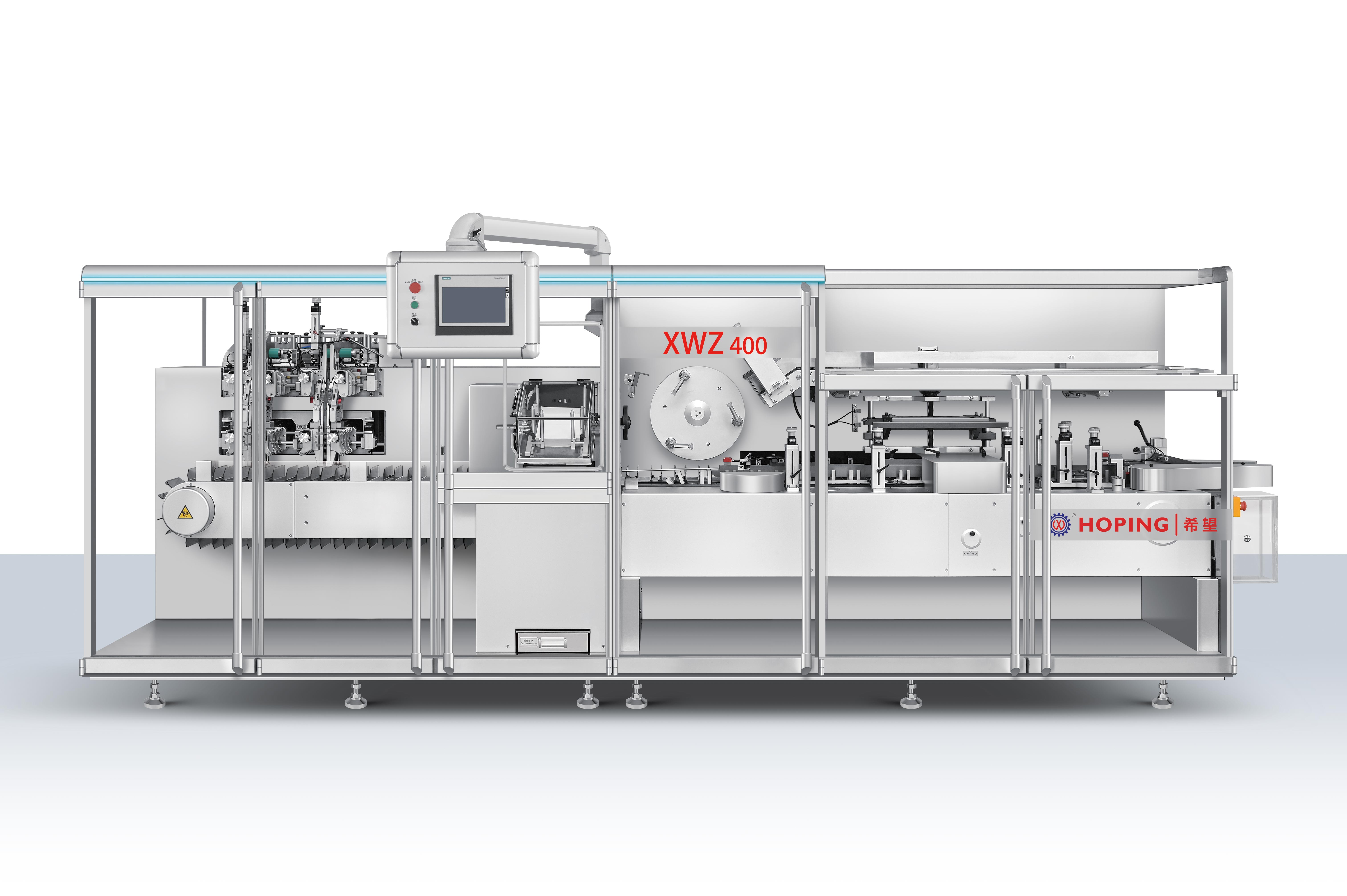
Cartoner capacity must be compared using the buyer's own carton format and the downstream case-packing rate, not in isolation.
Market trend: a fragmented supply base with a concentrated top tier
The supply landscape explains why evidence-based comparison has become the practical norm. The top three players — Uhlmann, IMA and Marchesini — collectively hold approximately 29% of the pharmaceutical blister packaging machine market share, based on market intelligence reporting. The remaining share is distributed across a long list of regional and specialist manufacturers.
Two consequences follow for buyers. First, most shortlists will mix an established European platform with a regional manufacturer, which means brand familiarity cannot substitute for parameter comparison. Second, comparison criteria that were once treated as secondary — control architecture, transfer method, format-part lead time, downstream matching — become the differentiators, because headline speed ranges overlap more than brand positioning suggests.
Compliance expectations provide a common baseline across that fragmented market. Pharmaceutical packaging machines must comply with ISO 15378, which integrates GMP requirements for primary packaging materials, and EU pharmaceutical equipment safety is governed by the Machinery Directive 2006/42/EC together with the EN 415 series of standards for packaging machines. Buyers comparing suppliers across regions should treat these as the minimum common denominator and then compare the additional declarations that each supplier is willing to put in a technical agreement.
One practical caution on market data: public estimates of the total pharmaceutical packaging equipment market differ materially depending on whether primary and secondary equipment are counted together or separately, with published 2024–2025 figures ranging from approximately USD 7.0 billion to USD 10.71 billion. Market sizing is useful for strategy discussions but should not be used as a proxy for any individual project's budget.
Limits and boundary conditions of this framework
A comparison framework is only credible if it states where it stops being useful.
- Rated maximum capacity is format-dependent. Figures such as 800 blisters per minute or 500 cartons per minute describe a design envelope under a defined format, material set and stable feed. They should not be treated as guaranteed output for every SKU, and a supplier that presents them without a format qualification is providing an incomplete answer.
- Higher-speed classes carry higher utility and complexity loads. The DPH320HII operates at 30 kW, the DPP260T1 at 8.5 kW, the XWZ500H cartoner at 14 kW, the DPH320H–XW8200–XWZ300II line at 36 kW and the ICP12 at 25 kW. Above a certain output level, utility planning, cleanroom footprint and maintenance capability become part of the comparison, not external to it.
- Integration concentrates risk. A fully linked line removes manual transfer and improves consistency, but the modules are interdependent, and format parts are typically customized per project. That increases the importance of documentation, spare-part planning and changeover procedure — and it means a linked line can be the wrong comparison unit for a plant that runs very small, highly variable batches.
- Standards define a floor, not a ranking. Compliance with ISO 15378, the Machinery Directive 2006/42/EC and the EN 415 series establishes eligibility. It does not by itself differentiate two compliant machines, which is why format fit, transfer design and changeover still have to be compared in detail.
How one manufacturer's range maps to the framework
Zhejiang Hoping Machinery Co., Ltd., established in 2001, is a manufacturer of pharmaceutical packaging machinery that integrates R&D, production, marketing and service. The company employs approximately 300 staff and operates a manufacturing facility covering 28,800 square metres, with an R&D team of 56 engineers and an annual production capacity of 500 units. Export business accounts for 25% of total sales, with major markets in Southeast Asia, the Middle East, Eastern Europe, South America and Africa. Its main product families are blister packaging machines, cartoning machines, case packing machines and end-of-line packaging machines.
Mapped against the comparison framework above, the portfolio covers all three comparison units:
- Platen class: the DPP Series intelligent flat Alu-PVC/Alu-Alu blister packing machine (models including DPP350F, DPP250S, DPP250FI, DPP160F and DPP250FII) with typical capacity of 20–50 cycles per minute, alongside the DPP260TI with typical capacity of 20–60 cycles per minute at 9.5 kW and approximately 2,200 kg.
- Rotary class: the DPH Series intelligent high-speed roller Alu-PVC/Alu-Alu blister packing machine (models including DPH320H, DPH260H and DPH260), and the DPH320HII with a maximum format area of 320 x 280 mm and capacity up to 1,000 blisters per minute.
- Integrated lines: the DHL1000/5H, DHL8005H, DHL7005H, DHL7004 and DHL6004 blister-cartoner lines; the DPP Series + XWZ Series blister-cartoner production line; the IXW600 blister-flow-wrap-cartoning line; and the IXW400 liquid dosage blister-cartoner integrated line for injectable formats.
- Cartoning and end-of-line modules: the XWZ120 horizontal cartoner, XWZ300II, XWZ400/XWZ300 and XWZ500H cartoners; the XW8300 reciprocating flow packing machine at up to 300 packs per minute with a Beckhoff control system and four-axis servo control; the XW8200 flow wrapper at up to 200 packs per minute with automatic film splicing; the XWK4060 and XWK Series stretch banders; the XWG4060 overwrapper; the XWK Series case packing machine; the ICP12 case packing and palletizing integral machine; and the LF100 lifting feeder rated at 100 L and 10–20 lifting cycles per minute.
The company holds 26 invention patents, 70 utility patents, 4 appearance patents, 10 PCT-protected patents covering Europe, Russia, Germany, Italy and other countries, and 28 software copyrights. Industry equipment profiles also list Hoping Machinery as a Chinese manufacturer of integrated blister cartoning lines and end-of-line packaging systems with CE and ISO 9001/14001 certifications.
For a buyer, the useful reading of that portfolio is not breadth for its own sake. It is that the same supplier can be scored at more than one comparison unit — which removes the common distortion where a platen machine is compared against a high-speed integrated line simply because both appear in the same product catalogue.
Future outlook
Three developments are likely to change how the next generation of these comparisons is weighted.
First, inspection and data integration are moving from optional to expected. Vision inspection systems capable of online checks of product presence, colour, alignment, contamination, foreign matter, size, shape and packaging defects, together with ERP/MES data interfaces, give buyers a new comparison dimension that is closer to process control than to mechanical performance.
Second, servo-driven independent replenishment and preset memory are shifting the changeover discussion. Features such as mould-change support, recipe memory and preset-memory functions matter most in multi-format production, and they are becoming available across a wider range of machine classes rather than only at the top of the market.
Third, the packaging process itself is becoming more differentiated by product sensitivity. Where moisture protection or secondary flow wrapping is required, lines that combine blister forming, pillow-pack flow wrapping and cartoning in one linked sequence — such as the IXW600 and IXW800 configurations — address a requirement that a blister-cartoner line alone does not. As more solid dosage formats require that intermediate step, the comparison unit for a growing share of projects will shift from two modules to three.
FAQ
What is the first thing to compare when evaluating a pharmaceutical packaging machine?
Fix the comparison unit before comparing anything else. There are three legitimate units — a single machine, a linked line such as a blister-cartoner configuration, or a turnkey secondary packaging project including bundling, case packing and palletizing. Each requires a different evidence set: a single machine is judged on datasheet parameters, a linked line on line-level capacity and transfer design, and a turnkey project on per-module end-of-line capacity and interface scope.
How does a platen blister machine differ from a rotary blister machine in comparison terms?
The difference is structural and shows up in the numbers. A platen machine such as the DPP260T1 has a maximum punching frequency of 60 punches per minute and a maximum capacity of 300 blisters per minute, with a maximum format area of 260 x 115 mm, 8.5 kW total power and a machine weight of 2,200 kg. A rotary machine such as the DPH320HII reaches a maximum punching frequency of 250 punches per minute and a maximum capacity of 1,000 blisters per minute, with a maximum format area of 320 x 280 mm, 30 kW total power and a machine weight of 6,000 kg. Both can use AISI 316L stainless steel and FDA-compliant pharmaceutical-grade materials for product-contact parts and are designed in accordance with GMP requirements.
When is a blister-cartoning line a better comparison unit than separate machines?
When the process steps between blister output and carton output must be engineered as one sequence — blister forming and sealing, product feeding, blister transfer, leaflet folding, carton opening, cartoning, coding, inspection and rejection, followed by connection to downstream equipment. Integrated lines such as the DHL8005H run up to 800 blisters per minute and 500 cartons per minute, while a configured line such as the DPP Series + XWZ Series covers typically 100–600 blisters per minute and 100–400 cartons per minute. Separate machines remain appropriate when an existing line is being upgraded and only one module is being replaced.
How should rated capacity be compared fairly across suppliers?
Separate the capacity units first. Blister capacity, pack capacity, carton capacity, bundle capacity and case capacity are different measurements, and a line should be compared on the unit that matters to the bottleneck step. For example, the DPP260T1 is rated at up to 300 blisters per minute; the XWZ120 cartoner at about 30–120 cartons per minute; the XWK4060 stretch bander at about 30–60 bundles per minute; and the XWK Series case packing machine at a maximum output of about 5 cases per minute. Second, require each figure to be quoted against the buyer's own blister format, carton size and material set, because maximum capacity is a design envelope rather than a guaranteed output for every SKU.
Which compliance evidence belongs in the comparison?
Start with the common baseline: pharmaceutical packaging machines must comply with ISO 15378, which integrates GMP requirements for primary packaging materials, and EU pharmaceutical equipment safety is governed by the Machinery Directive 2006/42/EC together with the EN 415 series for packaging machines. Then compare the declarations a supplier will commit to in a technical agreement — contact-material specification, such as product-contact parts in AISI 316L stainless steel with non-product-contact parts in AISI 304 stainless steel and anodized aluminium alloy, cleanability of surfaces, guarding design, and any regional certifications. Industry listings, for instance, describe Hoping Machinery as holding CE and ISO 9001/14001 certifications.
How should changeover and downstream integration be compared for multi-SKU production?
Compare three concrete capabilities rather than general flexibility claims. First, mould-change and preset support: lines such as the DHL8005H include mould-change and preset-memory functions, and the DHL1000/5H includes mould-change and recipe memory functions. Second, the scope of format parts, which is typically customized per project — the DPP Series uses product-contact and format parts customized by project, and DHL7004 format parts are made according to confirmed blister and carton specifications. Third, the capacity of each downstream module, because the slowest matched module sets practical line output: bundling at about 30–60 bundles per minute, case packing at about 5 cases per minute, and case packing with palletizing at about 12 cases per minute.
For readers who want the underlying parameter sets behind the examples used in this framework, the Hoping Machinery catalog is available as a public reference: Hoping Machinery Catalog (PDF).