
How Certification and Accuracy Define Modern Pillow Filling Machines
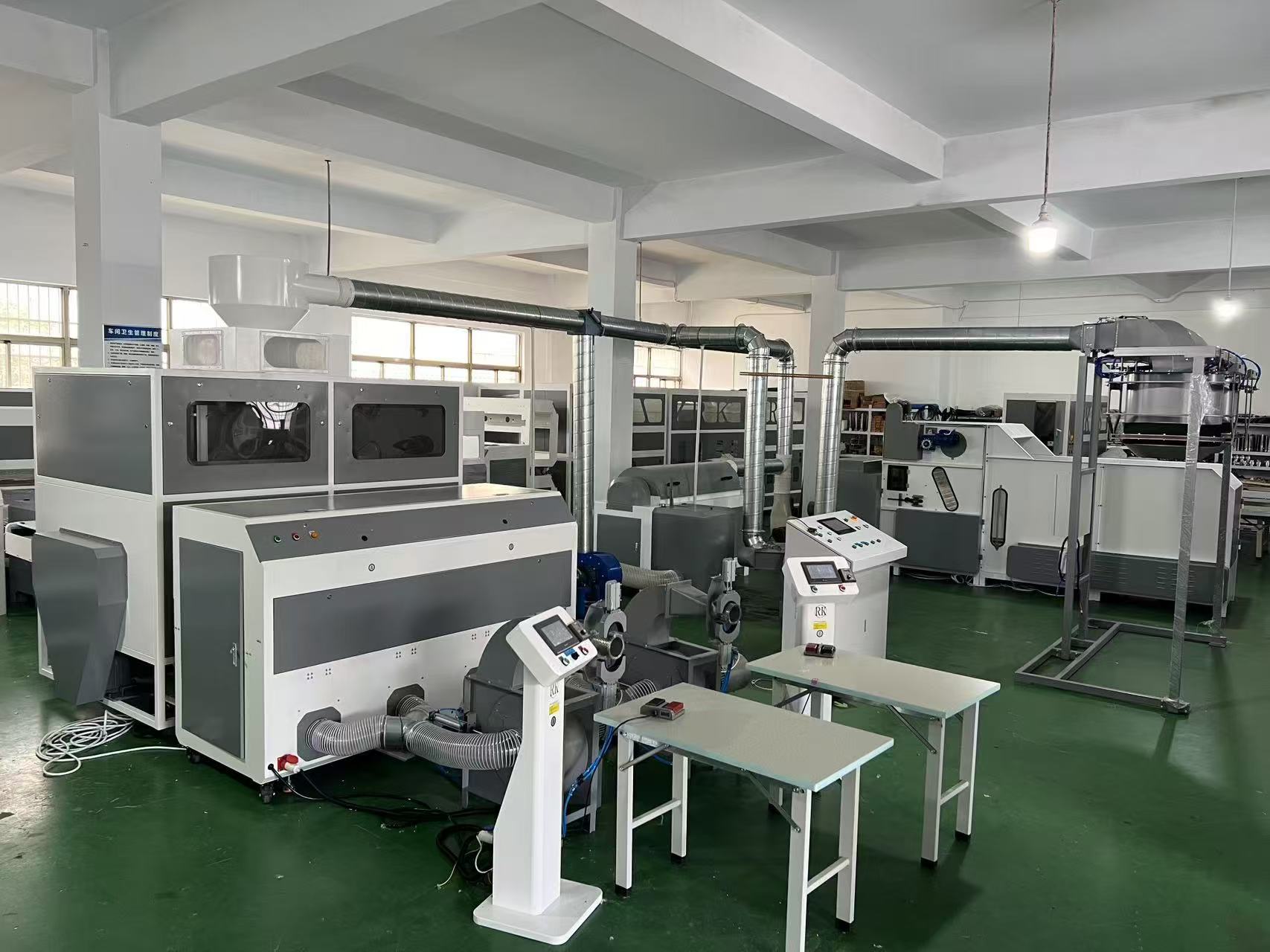
The global filling machines market, valued at USD 10.06 billion in 2024, is projected to reach USD 16.51 billion by 2035, according to Market Research Future. Within this growth, automated pillow filling machines are increasingly sought after for their precision, throughput, and compliance with international standards. For manufacturers evaluating new equipment, certification and technical specifications are critical decision factors—particularly when entering regulated markets or aiming for consistent product quality.
Problem / Opportunity
Textile producers face rising labor costs and quality expectations. Manual filling leads to weight variations, material waste, and slow production. Automated machines offer a solution, but without verified accuracy and recognized certifications, buyers risk non-compliance, product rejections, or hidden operational costs. The European Union, for instance, mandates that machinery sold within its borders comply with the Machinery Directive 2006/42/EC and bear the CE marking. Similarly, the North American market requires adherence to UL and OSHA safety standards. Choosing a machine that meets these constraints upfront reduces time-to-market and eliminates retrofitting expenses.
KIVAS Pillow Filling Machine: Certified Precision for Global Markets
Qingdao Kaiweisi Industry and Trade Co., Ltd., operating under the brand KIVAS, produces a series of automatic filling machines designed for bedding, apparel, furniture, and toy applications. The core models KWS6901-2 (2 filling ports) and KWS6901-4 (4 filling ports) are built from steel and cover a power range of 10.5 KW to 13.5 KW. They achieve a production capacity of 400–800 kg/h, filling a 600g pillow at 10–20 pieces per minute with an accuracy of about 1% and an error range of ±5–10g. The optimal filling range is 100–2000g.
These machines accept a wide variety of raw materials: 0.6D–15D polyester fiber, fiber balls, shredded foam, down feathers, EPS balls, and similar materials. This versatility makes the KWS6901 series suitable for applications ranging from conventional pillow and duvet production to beanbag and toy filling.
Technical Foundation: Load Cell Weighing and CE Compliance
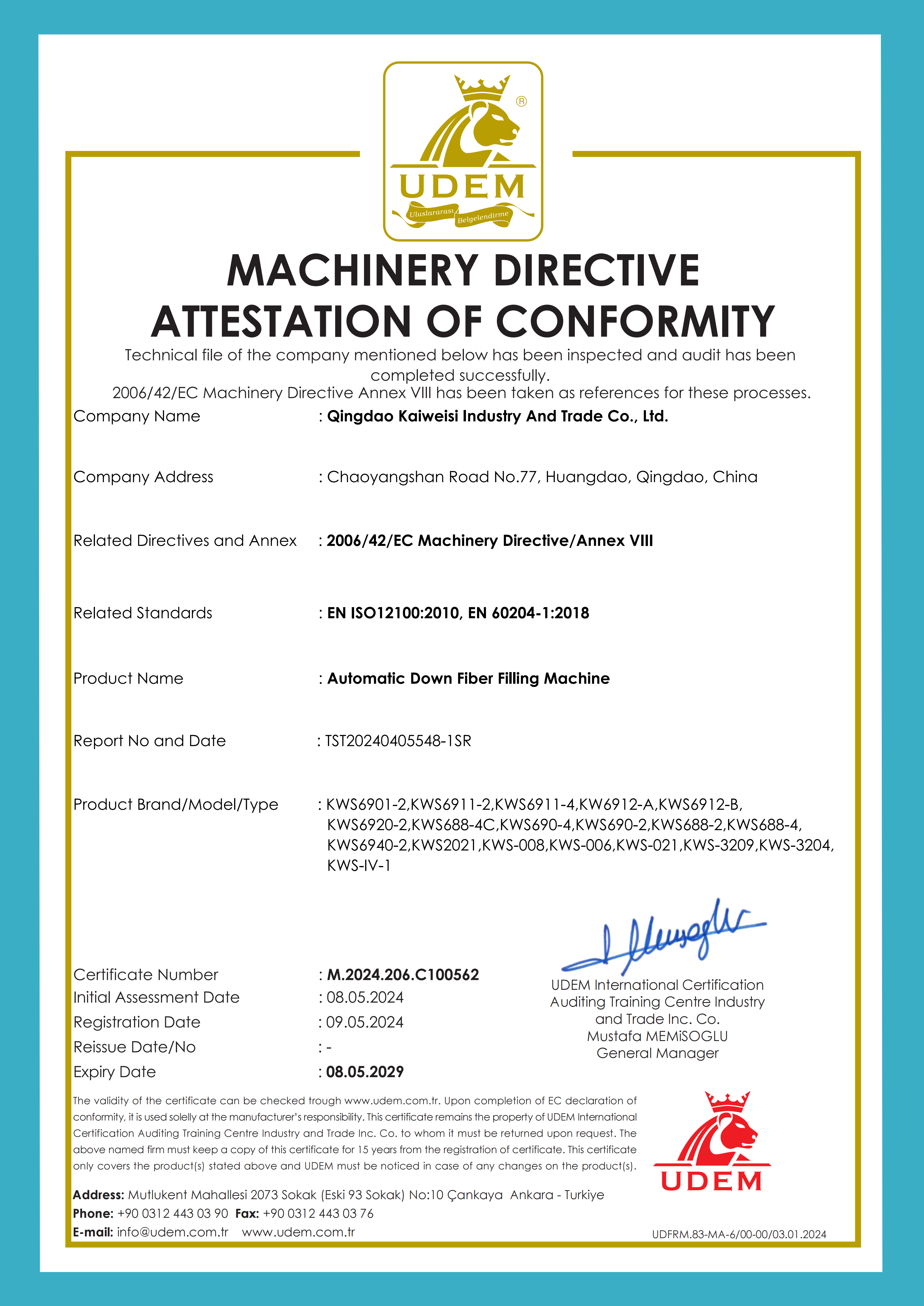
The KIVAS Automatic Down Fiber Filling Machine (product 5925) holds CE certification for the EU market, issued by UDEM under certificate number M.2024.206.C100562. It complies with the Machinery Directive 2006/42/EC and meets the applicable harmonized standards EN ISO 12100:2010 (risk assessment) and EN 60204-1:2018 (electrical safety). This certification assures buyers that the machine satisfies EU safety and health requirements.
Accuracy is delivered through load-cell-based weighing technology, common in modern high-precision filling machines. The ±5–10g error band on a typical 600g pillow (≈1%) enables consistent product weight, reducing giveaway and customer complaints. For lightweight down jacket filling, some competitors achieve ±0.1g, but KIVAS’s specification is well-aligned with high-volume bedding production where throughput and durability are prioritized.
Application Scenarios
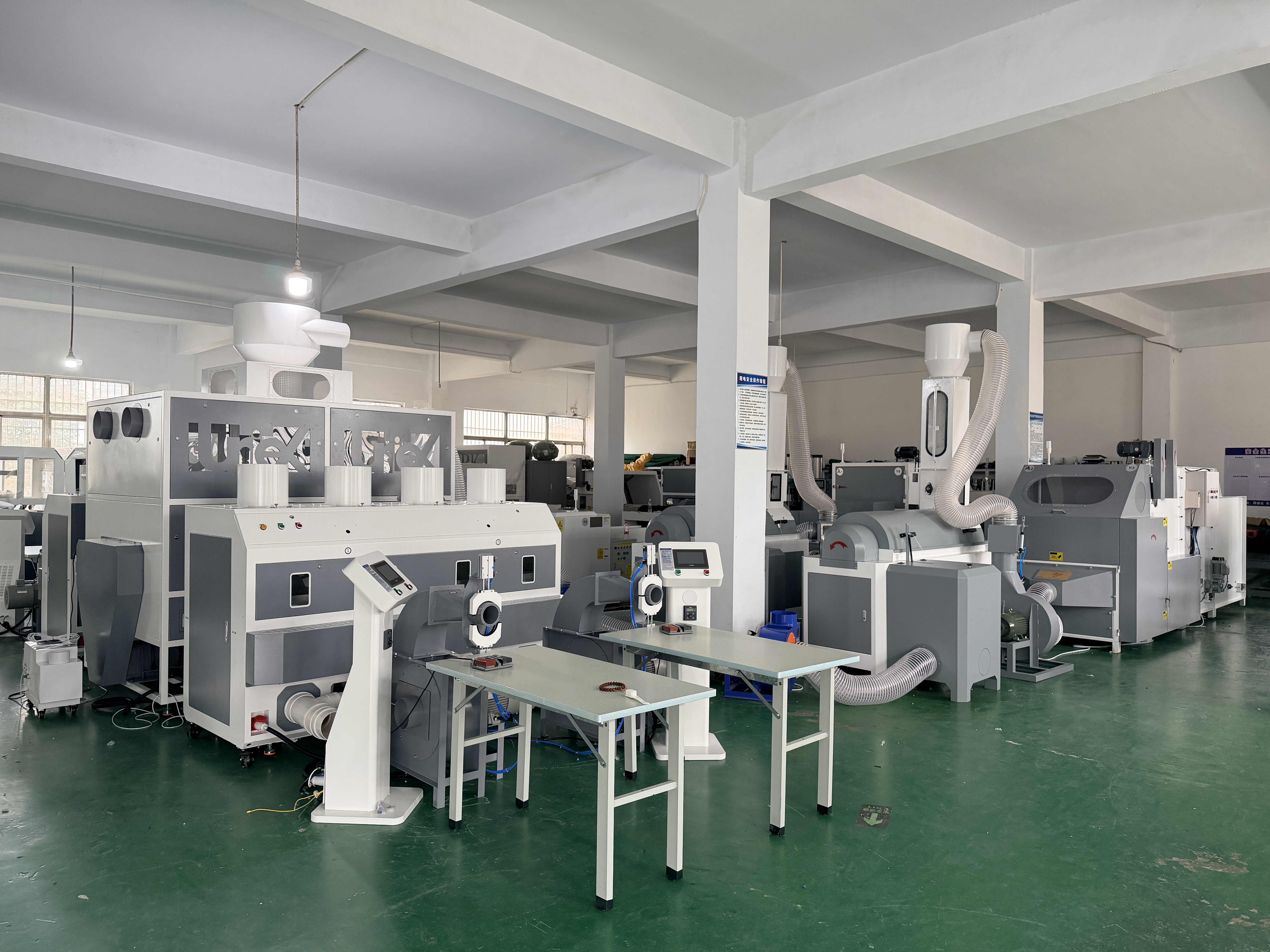
In a typical home textile workshop (indoor, dry, ambient 0–40°C), the KWS6901 series operates pneumatically for automatic continuous filling. The machine is paired with an automatic fiber feeding and opening unit or a fiber opening machine, plus an air compressor. Applications include pillow and cushion filling, duvet and quilt production, down jacket insulation filling, lazy sofa and beanbag filling, plush toy stuffing, and automotive cushion manufacturing. The ability to mix 2–5 types of raw materials in a single filling operation—demonstrated in a Saudi Arabian customer installation with 10 machines operating for three years—reduces inventory and changeover time.
Market Trend Analysis
The global automatic pillow filling machine segment is expected to grow at a CAGR of approximately 5% through 2025, driven by automation in textile clusters across China, Vietnam, and other manufacturing hubs. China's textile machinery exports reached a monthly peak of USD 574.6 million in August 2025, indicating a robust industry recovery. As labor costs rise and quality standards tighten, producers are migrating from manual to automated filling lines. KIVAS’s ability to customize voltage, logo, color, capacity, and specialized production lines—with a lead time of 15–35 days and a minimum order quantity of one unit—positions it as a flexible partner for both small and large operations.
Comparison with Traditional Solutions
Compared to manual filling, KIVAS’s automated machines reduce labor costs by an estimated 35% and increase production capacity by 40%, based on a sustained three-year deployment. Energy consumption is also lowered by roughly 30%. However, an honest limitation is the initial capital investment required for automated equipment. Small workshops with very low production volumes may find the payback period longer. For mid- to high-volume producers, the operational savings and quality consistency typically justify the investment within months.
Future Outlook
As international safety and quality standards become more stringent, machines with recognized certifications (CE, UL, etc.) will become table stakes for export-oriented manufacturers. KIVAS’s certification to the Machinery Directive 2006/42/EC and standards EN ISO 12100 and EN 60204-1 already supports EU market access. Future enhancements may include higher-precision load cells, IoT-enabled monitoring, and faster changeover systems. The company’s 1-year warranty, lifetime after-sales service, and remote technical support further reduce long-term risk for buyers.
Frequently Asked Questions
Q: What raw materials can the KWS6901 filling machine handle?
A: The machine accepts 0.6D–15D polyester fiber, fiber balls, shredded foam, down feathers, EPS balls, and other similar raw materials for mixed filling.
Q: What is the filling accuracy of the KIVAS pillow filling machine?
A: The accuracy is about 1% with an error range of ±5–10g, depending on the material and filling weight. The optimal filling range is 100–2000g.
Q: Is the KIVAS filling machine certified for the European market?
A: Yes, the Automatic Down Fiber Filling Machine (product 5925) holds CE certification No. M.2024.206.C100562 issued by UDEM, complying with Machinery Directive 2006/42/EC and standards EN ISO 12100:2010 and EN 60204-1:2018.
Q: What is the production capacity of the KWS6901-4 model?
A: It offers a production capacity of 400–800 kg/h, filling a 600g pillow at 10–20 pieces per minute across 4 filling ports.
Q: Does KIVAS provide customization or OEM services?
A: Yes, KIVAS supports OEM, ODM, overseas installation guidance, and personalized customization of voltage, logo, color, production capacity, and specialized production lines. Minimum order quantity is 1 unit with a lead time of 15–35 days.
For a complete overview of all KIVAS products and specifications, download the official product catalog:
KIVAS Product Catalog (PDF)
هل لديك أسئلة أو تحتاج إلى مزيد من التفاصيل؟
تواصل مع فريقنا للحصول على عرض أسعار مخصص أو استشارة فورية.
طلب عرض أسعار
املأ النموذج أدناه وسيتواصل معك فريقنا بعرض مقترح مخصص.
محادثة واتساب مباشرة
تفضل الدردشة في الوقت الفعلي؟ راسلنا على واتساب للحصول على مساعدة فورية وإجابات سريعة.
- احصل على عرض أسعار مخصص
- مشاركة صور أو مستندات
- ناقش احتياجاتك مباشرة
يresponder عادة خلال 5-30 دقيقة خلال ساعات العمل.