
How Cities Deploy RoboBus and RoboShop: A 2026 Project Planning Guide
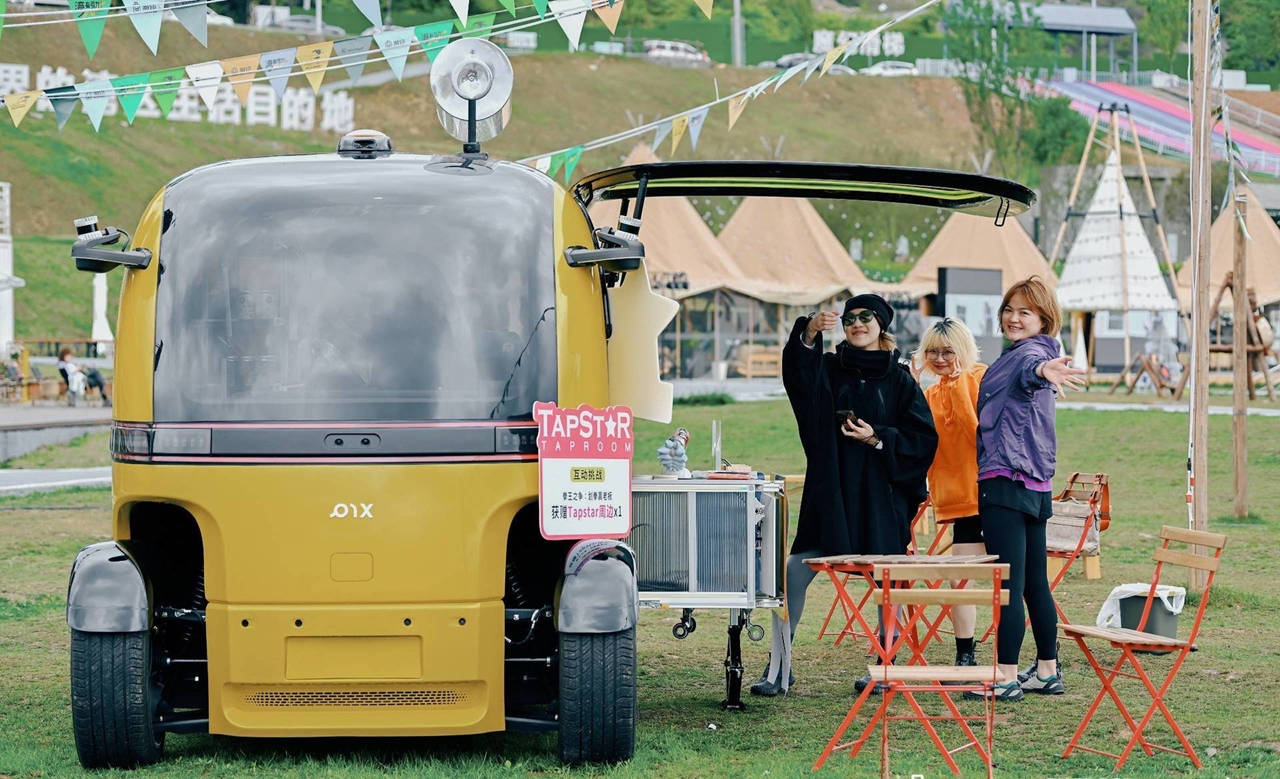
Autonomous Mobile Spaces such as the RoboShop combine mobility with on-demand retail services in city environments.
Why Cities and Operators Are Planning Autonomous Mobile Space Projects
City robotics has moved beyond the pilot stage in several regions, but procurement decisions still hinge on one practical question: how does an autonomous vehicle or mobile service unit fit into a specific urban project? A city may need to move people on a fixed campus route, bring retail to an underserved neighborhood, or add visitor services to a tourist district. Each of these projects places different demands on vehicle configuration, operating model, and compliance planning.
This article provides a project-oriented planning guide for operators, developers, and public agencies evaluating L4 autonomous shuttles and mobile retail units. It focuses on the RoboBus and RoboShop product lines from PIX Moving, a city robotics company founded in 2017 with engineering and production operations in China. PIX Moving specializes in Autonomous Mobile Spaces — vehicle platforms designed to serve as dynamic space units rather than conventional cars. The company's portfolio includes the RoboBus, an L4 autonomous shuttle, and the RoboShop, an autonomous mobile retail store, among other city robot configurations.
Project Types That Fit Autonomous Mobile Spaces
Autonomous Mobile Spaces are not a one-size-fits-all transport solution. In practice, they fit a defined range of urban and semi-enclosed projects. Based on PIX Moving's application environment data, the typical deployment settings are urban city environments and industrial parks. The supported project types include autonomous mobility service projects, smart city demonstration initiatives, autonomous driving R&D programs, campus and closed-area mobility projects, tourism and experience projects, and mobile retail and service operations.
This makes the technology relevant to several distinct buyer groups:
- Governments and smart city authorities planning public mobility demonstrations or last-mile connections
- Real estate developers and community operators looking to add mobility amenities to large developments
- Universities and research institutions running autonomous driving research or campus shuttle programs
- Industrial parks and large campuses that need controlled, low-speed internal transportation
- Commercial operators exploring on-demand retail, mobile cafés, or tourism services
The important distinction for buyers is that these are typically low-speed, routable services rather than high-speed public transit replacements. The operating model is on-demand, with daily operation hours rather than 24/7 high-frequency service in most configurations.
RoboBus Project Profile: L4 Autonomous Shuttle for Campus and City Routes
The RoboBus is an L4 autonomous shuttle designed for predictable, low-speed passenger routes. Its vehicle dimensions are 3,820 mm × 1,900 mm × 2,260 mm (length × width × height), with a wheelbase of 3,020 mm and front/rear wheeltrack of 1,620 mm. It seats six passengers and offers an interior cabin height of 1,750 mm, making entry relatively easy for a broad range of users.
Performance specifications are tuned for urban and campus conditions rather than highway travel. Maximum speed is 40 km/h in drive-by-wire mode and 35 km/h under autonomous driving. Driving range is 120 km with air conditioning on and 140 km with air conditioning off under common road conditions. The vehicle can handle a 20% maximum gradability and has a minimum turning radius of 4.8 m thanks to four-wheel steering. Braking distance at 20 km/h with half load is ≤4.2 m.
What the RoboBus Specifications Mean for Project Planning
- Speed ceiling: The 35 km/h autonomous speed limit means route designs should assume low-speed operation. This fits campus loops, park shuttle services, and downtown demonstration zones, but not expressway or high-speed arterial service.
- Range envelope: A 120–140 km range supports full-day operations on typical closed-campus routes without frequent charging. Routes requiring continuous operation beyond roughly 140 km per day need a charging or swap plan.
- Capacity: Six seats per shuttle is appropriate for group mobility, visitor transport, and on-demand micro-transit. It is not designed to replace high-capacity buses on major commuter corridors.
- Maneuverability: A 4.8 m turning radius and four-wheel steering allow route planners to use narrow lanes and tight turnaround points common in parks and older urban districts.
RoboShop Project Profile: Autonomous Mobile Retail Store
The RoboShop is an autonomous mobile retail store built for on-demand commercial services. It shares the same platform architecture as the RoboBus — the same overall dimensions, wheelbase, and wheeltrack — but is configured as a retail space rather than a passenger cabin. The vehicle is equipped with a 31.94 kWh battery system and supports air conditioning, which matters for both product preservation and customer comfort in hot or cold climates.
For project planning, the RoboShop shifts the conversation from mobility to space-as-a-service. Instead of asking whether people can be moved from A to B, the project team asks where retail, café, or service space needs to be available at specific times of day. A RoboShop can operate in parks, tourist districts, residential communities, industrial parks, or event sites, moving to peak foot-traffic locations at different hours.
Technical and Operational Considerations for RoboShop Deployments
- Integration with smart retail systems: A RoboShop deployment involves more than a vehicle; it requires point-of-sale systems, inventory management, and possibly remote vending controls. PIX Moving's application requirements explicitly include smart retail system integration.
- Air conditioning as supporting equipment: The vehicle is designed to be used with air conditioning, which is a planning factor for energy consumption and range in extreme weather.
- Daily operating model: The intended operation mode is on-demand with daily operation hours, meaning project teams should design service schedules around predictable demand windows rather than continuous operation.
- Site selection: Urban city environments and industrial parks are the stated application environments, so route permissions, parking positions, and pedestrian flow need to be mapped before deployment.
Common Technical Requirements Across Project Types
PIX Moving's application data lists several special requirements that recur across autonomous mobility and mobile retail projects. Buyers should build these into their request for proposals (RFP) and acceptance testing.
| Requirement Category | Specification / Detail |
|---|---|
| Autonomous operation speed | Low-speed autonomous operation at or below 35 km/h |
| Fleet management | Remote monitoring and fleet management capability |
| Operation continuity | 24-hour operation capability |
| Retail integration (for RoboShop) | Smart retail system integration |
| Software updates | OTA software updates |
| Maintenance | Real-time fault diagnostics |
| Supporting equipment | Autonomous driving systems and air conditioning |
| Operating environment | Urban city environments and industrial parks |
Autonomous Fleet Subscription vs. Traditional Procurement
One of the most significant planning differences in city robotics procurement is the commercial model. PIX Moving offers a Robot-as-a-Service (RaaS) subscription model under which the company continuously delivers city robots as a service. This is closer to fleet subscription than to a one-time vehicle purchase.
For project planners, the RaaS model changes budgeting and risk allocation:
- Capital expenditure: RaaS converts a large capital purchase into an operational expenditure. Project teams can often approve a service subscription faster than a vehicle fleet purchase.
- Fleet scaling: A city can begin with a small number of autonomous vehicles and expand as ridership or retail demand grows.
- Technology refresh: Subscription models normally include software updates and hardware upgrades, which matters in a sector where autonomy software improves rapidly.
- Vendor responsibility: The vendor retains broader responsibility for uptime and service quality, which can lower the burden on a city's internal maintenance team.
The trade-off is that subscribers do not own the vehicles and may have less flexibility to modify hardware or switch vendors mid-contract. Cities with strict public procurement rules that require asset ownership, or operators that want full control over vehicle customization, may still prefer direct purchase.
Deployment Environments and Operating Modes
PIX Moving's deployment data confirms that the primary operating environments for these products are urban city environments and industrial parks. The operating mode is described as on-demand with daily operation hours.
This combination has practical consequences for project planning. A RoboBus route in a central business district might operate during commuter peaks and midday visitor hours. A RoboShop might serve breakfast near a transit hub, then relocate to a park entrance in the afternoon, and appear at an event plaza in the evening. The daily schedule depends on where demand concentrates, which is precisely why the vehicles' ability to relocate matters.
Purchased or Subscribed: Same Chassis, Different Configurations
Both the RoboBus and RoboShop are built on a modular robotic chassis platform. This is the architectural reason PIX Moving can produce different space configurations without redesigning the entire vehicle. Project teams that plan to expand from passenger transport to mobile retail — or vice versa — can evaluate a common platform rather than separate vehicle categories.
PIX Moving's manufacturing capability includes OEM/ODM and in-house production, with vehicle configuration, software, branding, and interior layout available as customization options. The minimum order quantity is 1 unit, and lead time is 30–45 days. This relatively low MOQ and short lead time are relevant for pilot projects, where a city may want to test one or two units before committing to a larger fleet.
Market Context: What Is Driving Autonomous Mobile Space Adoption in 2026?
The case for Autonomous Mobile Spaces is supported by several structural trends in urban mobility and robotics.
- Autonomous bus demand: The global self-driving bus market was valued at USD 1.73 billion in 2024 and is projected to reach USD 9.34 billion by 2032, according to Fortune Business Insights. This suggests sustained procurement interest in autonomous shuttle and bus products.
- Driver shortage: Europe faced a shortage of 105,000 bus drivers in 2023, with the International Road Transport Union projecting that figure could double by 2028. Autonomous shuttles are increasingly evaluated as a partial solution to transit labor constraints.
- RaaS growth: The global Robotics-as-a-Service market was valued at USD 1.96 billion in 2024 and is expected to grow to USD 10.41 billion by 2034, per Precedence Research. Subscription models are gaining acceptance in robotics procurement.
- Smart city investment: The broader smart cities market was valued at USD 1.0 trillion in 2025 and is projected to reach USD 8.8 trillion by 2033, according to Grand View Research. Autonomous mobility is one segment within this larger infrastructure investment wave.
These figures help explain why procurement conversations have shifted from “is autonomous public transport technically possible?” to “which project should we start with and what operating model fits our city?”
Comparison with Traditional Solutions
Autonomous Mobile Spaces compete with, and complement, several conventional alternatives. The comparison below is intended to help project teams choose the right tool rather than declare a universal winner.
RoboBus vs. Conventional Midi-Bus or Shuttle
A conventional shuttle has higher passenger capacity, lower per-seat acquisition cost, and can operate on the same road network without regulatory approval for autonomous driving. It can also run at higher speeds. However, it requires a professional driver, follows fixed schedules, and does not generate the same data or smart-city narrative value.
The RoboBus offers lower labor dependency, the ability to operate without a driver on approved routes, and a smaller footprint that is easier to integrate into pedestrian-oriented districts. Its limitations are clear: six seats, 35 km/h autonomous speed, and the need for route/regulatory approval.
RoboShop vs. Fixed Kiosk or Storefront
A fixed retail kiosk has lower unit cost, simpler power and internet connections, and no moving parts that require maintenance. It is the rational choice when foot traffic is predictable and stable.
A RoboShop makes sense when demand moves — morning commuters at one location, lunchtime office workers elsewhere, evening visitors in another district. It consolidates multiple fixed locations into one mobile asset. The trade-off is higher capital cost per unit, dependence on autonomous driving permission in the operating area, and more complex retail system integration.
Buyer Considerations
Neither category is inherently superior. The better question is whether the project demands spatial flexibility, reduced labor dependency, and smart-city demonstration value. If the answer is no, a conventional shuttle or fixed kiosk may be the more cost-effective and operationally simpler option.
Evidence from the Field: 100+ Units and Ongoing Operations
PIX Moving reports that its customers include governments, smart city authorities, real estate developers, community operators, universities, research institutions, industrial parks, and large campuses. Deployments exceed 100 units, with a documented operating period of two years and stable operation as the stated result.
Deployment destinations include Japan, South Korea, the Middle East, Europe, and North America, with 55% of output exported from PIX Moving's manufacturing base. The company operates a 20,000+ square meter production facility with more than 200 employees, including a 116-person R&D team.
For project planners, the most relevant evidence points are:
- Stable operation over a two-year period reduces the novelty risk of deploying unproven autonomous vehicles.
- Export experience across multiple regulatory environments suggests familiarity with homologation and compliance processes in different markets.
- Deployments in industrial parks and campuses provide reference environments similar to many first-wave project sites.
It should be noted that “stable operation” is a general operational claim, not a quantified performance metric such as passenger miles or uptime percentage. Buyers should request project-specific performance data from the vendor during due diligence.
Project Planning Checklist for Autonomous Mobile Space Deployment
- Define the project type: Mobility service, retail service, tourism experience, R&D demonstration, or combined use.
- Confirm the operating environment: Urban streets, campus, park, industrial park, or mixed areas.
- Match the vehicle to the route: Verify that route distance fits the 120–140 km range and that intended speeds are within the 35 km/h autonomous limit.
- Check supporting equipment: Ensure autonomous driving systems and air conditioning are included in the configuration.
- Plan fleet management: Evaluate remote monitoring, OTA updates, and real-time fault diagnosis capabilities with the vendor.
- Design the service schedule: Use an on-demand, daily operation hours model to match demand peaks.
- Clarify the commercial model: Choose between direct purchase and RaaS subscription.
- Align on certification: Confirm which autonomous driving and vehicle safety certifications apply in the target region.
- Negotiate after-sales support: Include remote diagnostics, spare parts supply, and technical support in the contract.
- Start small: With a minimum order of one unit and 30–45 day lead time, a pilot deployment is feasible before fleet expansion.
Future Outlook: From Demonstrations to Standard Urban Services
Autonomous Mobile Space projects in 2026 occupy a middle ground between demonstration and scale operation. The technology components — L4 shuttles, smart retail integration, fleet management — are commercially available. What varies most across cities is regulatory readiness and operating experience.
As more cities accumulate operating data, the procurement conversation is likely to evolve from buying vehicles to procuring outcomes. This is consistent with the rise of RaaS in the broader robotics market. PIX Moving's positioned model — city robots as a service, delivered through subscription — is aligned with this shift. Its metal 3D printing and generative design capabilities reportedly reduce chassis parts by 10× and lead times by 60%, according to an Autodesk case study, which could become a competitive factor in cost and customization.
Buyers who plan now with a clear project type, realistic route requirements, and a contract structure that allows scaling are better positioned to benefit from the next phase of city robotics adoption.
Frequently Asked Questions
What environments are suitable for deploying PIX RoboBus and RoboShop?
These products operate under urban city environments and industrial parks conditions. Project teams should select routes and sites within these general environments, accounting for local traffic rules and pedestrian patterns.
How do RoboBus and RoboShop operate on a daily basis?
The product operates in an on-demand, daily operation hours mode. This means service schedules should be designed around expected demand windows rather than continuous 24/7 operation, although the vehicle is capable of 24-hour operation.
What supporting equipment is needed for these autonomous vehicles?
This product requires integration with supporting equipment such as autonomous driving systems and air conditioning. Buyers should verify that the specified configuration includes both systems.
What special technical requirements should be included in the RFP?
The scenario involves low-speed autonomous operation at or below 35 km/h, remote monitoring and fleet management, 24-hour operation capability, integration with smart retail systems, OTA software updates, and real-time fault diagnostics. These requirements apply across autonomous mobility and mobile retail use cases.