
How Compliance Trends Are Redefining Single Cylinder Diesel Engine Exports
Single cylinder diesel engine exports are no longer decided mainly by unit price. Across agriculture, irrigation and small power generation markets, importers are increasingly screening suppliers on qualification evidence, assembly format and documented acceptance before commercial terms are discussed. That shift is reshaping how factories plan capacity, how electric-start configurations are specified, and how long-term distribution partnerships are now evaluated.
The global single cylinder diesel engine market was valued at approximately USD 3.34 billion in 2025 and is projected to reach USD 3.74 billion by 2035, according to Global Growth Insights. That trajectory describes a mature, replacement-driven category rather than a fast-expanding one. In mature categories, differentiation rarely comes from the product concept itself; it comes from how reliably a supplier can prove that a given engine will clear the entry requirements of a given market.
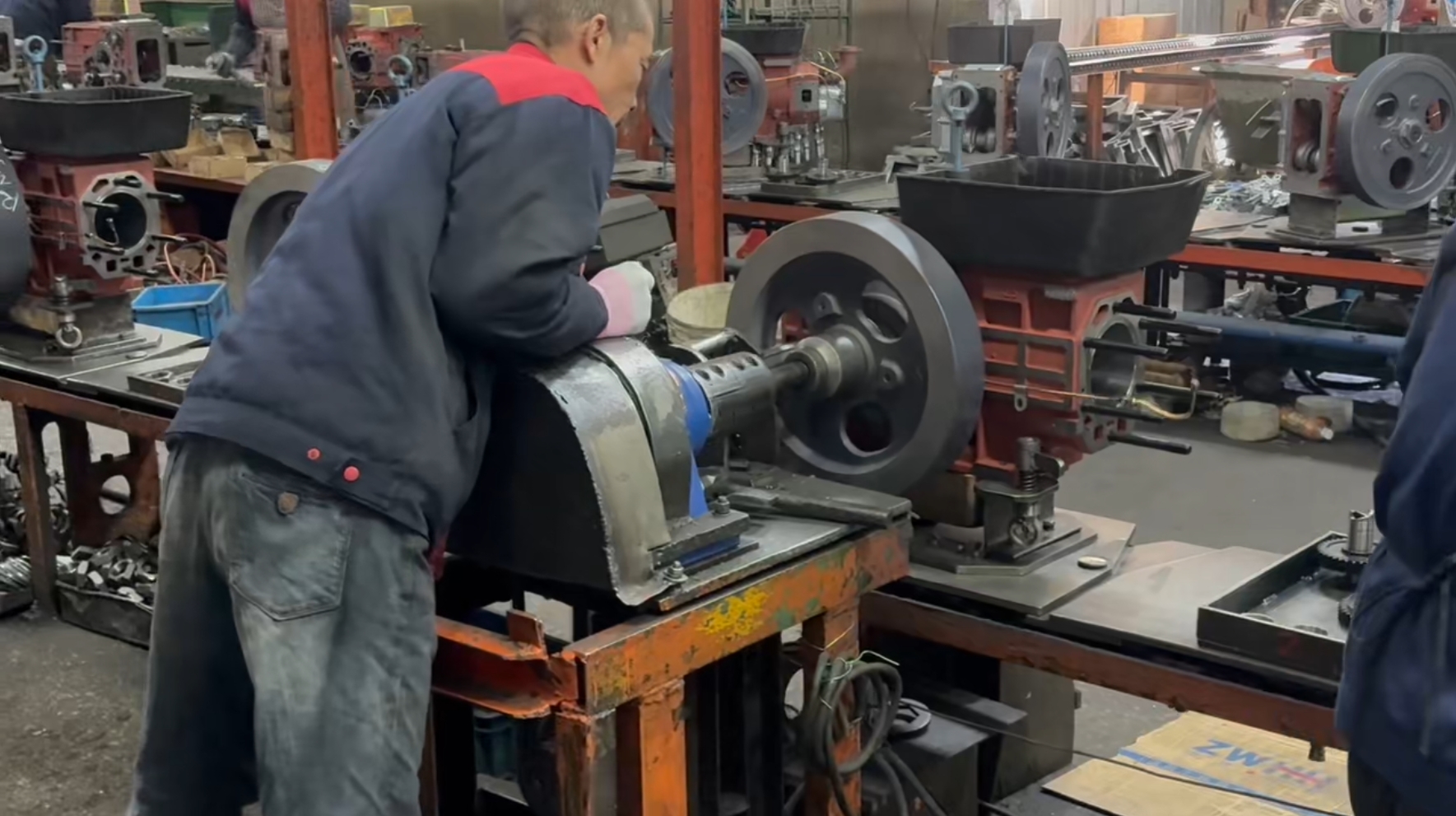
Torque-controlled fastening stations are the kind of process evidence that buyers increasingly ask to see during supplier qualification. Image: Willson single cylinder diesel engine production.
1. Export Ordering Is Shifting From Price Ranking to Qualification Ranking
When a category grows slowly, buyers stop competing on who can quote the lowest number and start competing on who absorbs risk better. In single cylinder diesel engines, that risk sits in three places: whether the engine can legally enter the destination market, whether the shipped unit matches what was approved, and whether the buyer can service the unit after arrival.
Each of those risks has a documentary answer. Emissions rules define the legal envelope. Management system certification and production controls define consistency. Acceptance records and manuals define what happens after the container is opened. Buyers who can obtain all three early in a sourcing conversation tend to shorten their evaluation cycle considerably.
The volume context explains why this matters at scale. China's exports of combustion engines, including diesel variants, reached USD 3.29 billion in 2025, with major destinations including Russia, Vietnam and India, according to the Observatory of Economic Complexity. A supplier shipping into that many regulatory environments cannot apply a single qualification answer everywhere, and a buyer sourcing from that many factories cannot assume uniformity either.
Asia Pacific held a 58.2% revenue share of the single cylinder diesel engine market as of 2025, according to Dataintelo. The region is therefore both the dominant production base and the dominant demand base, which makes regional policy differences a commercial variable rather than a bureaucratic footnote.
2. Qualification Expectations Diverge by Import Market
The most common procurement error in this segment is treating compliance as a single global status. It is not. The applicable requirement typically depends on engine power, application, destination country and, increasingly, the form in which the engine is shipped.
Emission rules are power-banded, not category-banded
U.S. EPA Tier 4 emission standards regulate particulate matter and nitrogen oxides for off-highway diesel engines, with exemptions for engines under 24 horsepower, according to the U.S. Environmental Protection Agency. This detail matters commercially. A meaningful share of single cylinder engines used on pumps, tillers and small agricultural equipment sits close to that power threshold, which means the compliance pathway for one model can differ from the pathway for the model next to it on the same production line.
For buyers, the practical consequence is that the engine's rated power and intended end application must be documented before the emission question is asked. A supplier that answers the emission question without first confirming the power band and the off-highway use case is answering a different question than the one that was asked.
Assembly format is now a policy variable
SKD (Semi Knocked Down) and CKD (Complete Knocked Down) supply strategies are increasingly discussed as tariff instruments rather than purely logistical ones. Industry reporting summarises tariff advantages in markets such as Myanmar, where CKD assembly has been cited at 1.5% to 3%, and Thailand, where some categories have been cited at 0%, in both cases to incentivise local manufacturing. These figures come from trade analyses rather than customs rulings and should be confirmed market by market, but the underlying trend is clear: the knocked-down format changes the qualification and duty profile of the same engine.
That has a direct effect on how a factory organises export work. A fully assembled electric-start unit and the same unit shipped as a knocked-down kit are not equivalent procurement items, even when the internal components are identical. Documentation, packing specification, assembly guidance and warranty allocation all change.
3. What Qualification Looks Like on the Production Side
Willson is the single cylinder diesel engine brand of CHANGZHOU VISION INTERNATIONAL TRADING CO., LTD, a China-based manufacturer and exporter located in Jintan, Jiangsu, producing air-cooled and water-cooled single cylinder diesel engines in a 3 to 45 horsepower range. A supplier profile of that shape is useful for illustrating how qualification pressure translates into factory practice.
The company operates a 32,207.8 m² facility with 95 employees, an annual output of 100,000 units, and a research and development team of 5 engineers. Exports account for 70% of output, with main markets in South America, Africa, Southeast Asia and the Middle East. The company holds ISO9001 quality management system certification and ISO14000 environmental management system certification, and holds its own export rights.
Those facts matter to a buyer for a specific reason. A 70% export ratio signals that export documentation, packing and market-specific configuration are routine operating functions rather than exceptions handled case by case. Management system certification indicates that quality and environmental controls are externally audited processes rather than internal claims. Neither fact guarantees a specific regulatory approval in a specific country, and neither should be read that way during evaluation.
Process controls as qualification evidence
Compliance conversations often stall because buyers ask for certificates when what they actually need is evidence of consistency. Production-stage controls are frequently more informative. Cleaning before painting is one example. Compared with engines that are painted without a dedicated cleaning step, complete engine cleaning prior to painting has been associated with a paint adhesion rate improvement of 20% and an anti-corrosion performance improvement of 30%, with the configuration described as best suited to high-dust agricultural environments.
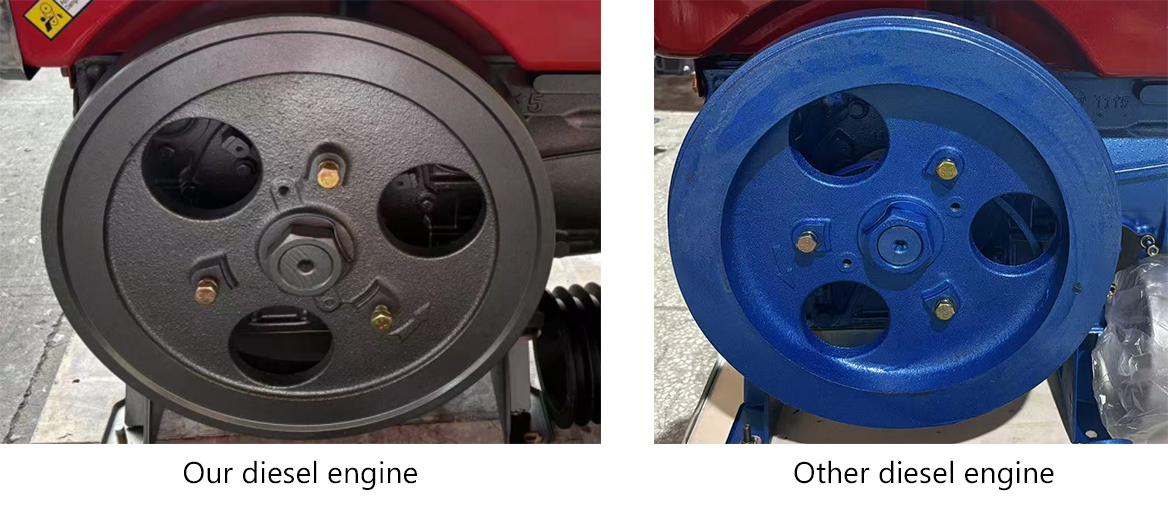
Surface preparation before painting affects coating durability in dusty field conditions. Image: spray painting result comparison.
The same comparison notes a 15% reduction in long-term maintenance cost on that basis, together with less frequent repainting and rust repair, alongside consistent power output with low fuel consumption. For buyers operating in high-dust agricultural environments, coating durability is not a cosmetic question. It determines how often equipment is pulled out of service for cosmetic repair and how quickly corrosion reaches structural components.
4. Electric Start Configurations and the Shifting Compliance Burden
Electric start diesel engines change the operator's relationship with the machine, and that change has qualification consequences that are easy to overlook. A manual-start engine places the starting procedure entirely with the operator. An electric-start configuration moves part of that procedure into the electrical and control system, which means the starting behaviour itself becomes something a buyer can and should verify before shipment.
This is where acceptance criteria move from paperwork to evidence. When acceptance is defined as verification by video or image, the buyer gains a record of the actual starting and running behaviour of the unit being shipped, captured at the supplier's site. That record is arguably more useful for an electric-start unit than for a manual one, because it documents an interaction the buyer's operators will repeat daily and cannot easily inspect on arrival.
Safety procedures are part of the delivered product
Maintenance risk in this segment is well defined. Improper maintenance procedures may result in equipment damage or personal injury. The control method is straightforward: shut down the engine before performing maintenance, and operate in accordance with the instruction manual. The supplier-side measure is equally concrete: provide detailed operation and maintenance manuals, and offer pre-sale technical training and after-sales support to ensure safe use.
For procurement teams, this converts manuals and training from soft value-adds into qualification items. A supplier that can describe how operators are trained, and can show the manual that governs shutdown and maintenance, is demonstrating control over the post-delivery phase. That matters particularly for electric-start units distributed into markets where the end user may be several steps removed from the importer.
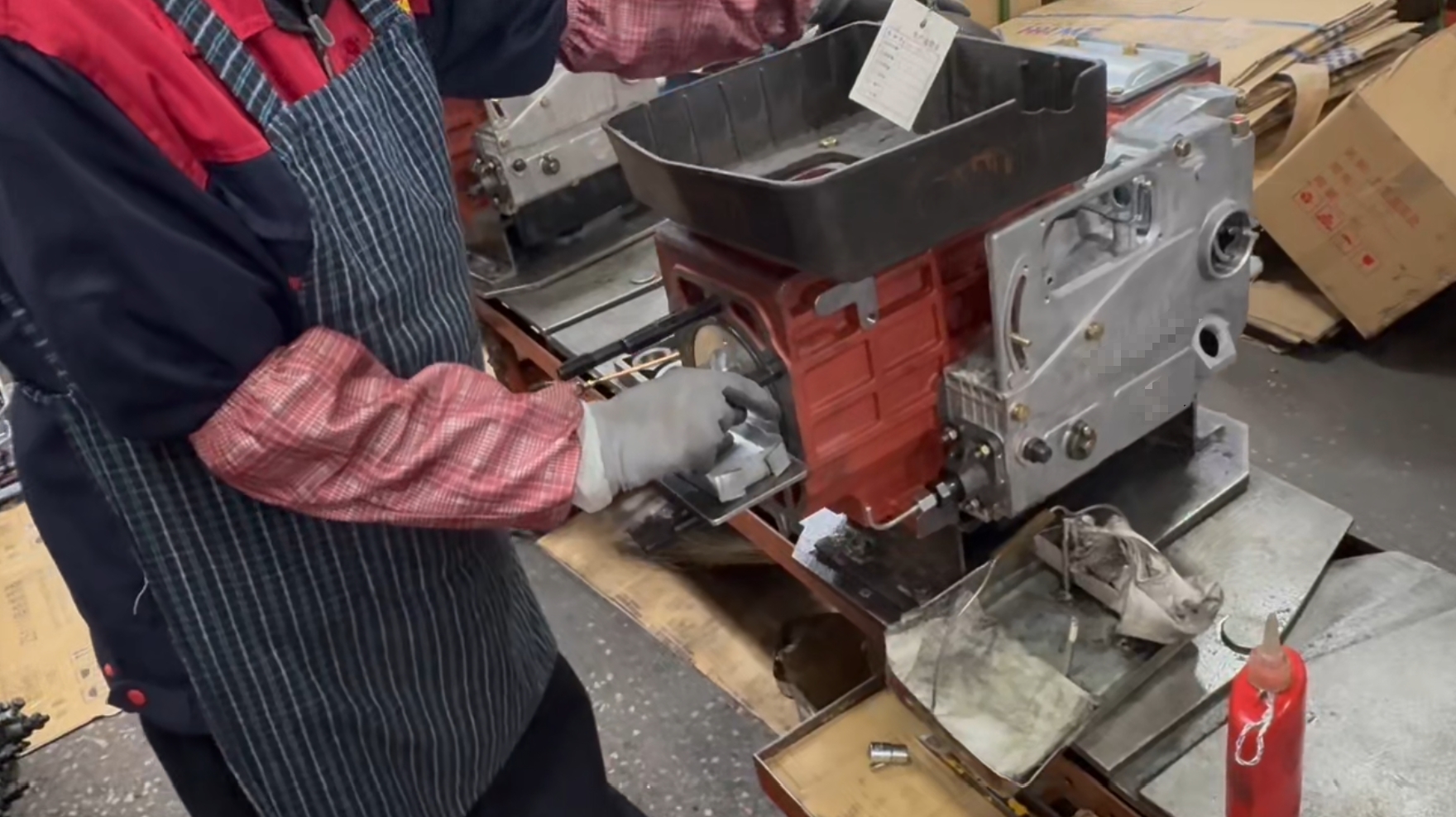
Inspection checkpoints such as cylinder head cover leak testing provide the kind of evidence that supports acceptance by video or image. Image: Willson production inspection.
5. Purchasing Terms as Qualification Signals
Commercial terms in this segment are simple, and that simplicity is useful for reading compliance intent. The reference terms are: minimum order quantity of one 20 ft container; delivery terms FOB or EXW; acceptance criteria verified by video or image; payment terms 30/70.
Each term carries an interpretation beyond its literal meaning.
- One 20 ft container as MOQ. Orders are assembled at container level rather than unit level. This makes pre-shipment inspection the natural control point, since a mixed container is difficult to amend after loading.
- FOB or EXW delivery. The choice determines which party handles export clearance and main carriage. A supplier holding its own export rights can support FOB arrangements directly rather than routing through a third party.
- Acceptance by video or image. A documentary acceptance standard places the burden of proof on the supplier and gives the buyer a retrievable record of the unit's condition and behaviour before dispatch.
- 30/70 payment terms. The balance is tied to delivery against the agreed acceptance evidence, which makes the quality of that evidence commercially significant rather than merely administrative.
Read together, these terms describe a transaction in which the decisive document is not the quotation but the acceptance record. That is a meaningful change from price-first sourcing, where the decisive document is usually the invoice.
6. Where Qualification Pressure Bites Hardest: Application Scenarios
Compliance expectations do not fall evenly across the application range. Agriculture remains the dominant application for single cylinder diesel engines, accounting for approximately 42.3% of market share in 2025, according to Dataintelo. Agricultural duty cycles combine dust, seasonal peaks and long unattended runs, and each of those conditions attaches a different acceptance focus to the same base engine.
| Application | Typical duty pattern | Qualification and acceptance focus |
|---|---|---|
| Irrigation pump sets (water pump duty) | Long continuous runs in dusty field conditions | Coating durability, sealing integrity, verified starting and running behaviour before shipment |
| Power tillers and tillers | Intermittent heavy load with frequent operator handling | Operator safety procedure, maintenance access, manual-based shutdown routine |
| Threshers and rice mills | Seasonal peaks in high-dust environments | Anti-corrosion performance, reduced repainting frequency, dust tolerance |
| Generator sets | Standby operation with long idle intervals | Consistent restart behaviour, documented starting procedure, electrical-start verification |
| Small construction machinery, air compressors and inland waterway vessels | Variable load, mixed operating environments | Configuration accuracy against the approved specification, export documentation match |
Application duty cycles and the qualification focus each one attaches to a single cylinder diesel engine.
Willson engines are applied across small tractors, agricultural machinery, generator sets, water pumps, small construction machinery, air compressors, inland waterway vessels, and agricultural and sideline product processing. Because these applications sit in the same 3 to 45 horsepower band, the differentiation between them comes largely from duty cycle and operating environment rather than from the engine concept itself.
7. What This Means for Distributors and Long-Term Partnerships
For distributors and importers, qualification pressure changes the value of a supplier relationship in ways that are not always visible at the quotation stage. A distributor is not only buying engines; it is buying the ability to answer its own customers' compliance questions without escalating every case back to the factory.
Three capabilities become decisive in that context.
Configuration discipline. A knock-down or assembled supply programme, an electric-start or manual-start configuration, and a market-specific specification are all decisions that must remain stable across repeat orders. Where configuration drifts between shipments, the distributor absorbs the explanation cost in its own market.
Service documentation that travels with the product. Operation and maintenance manuals, pre-sale technical training and after-sales support are the practical infrastructure of a distribution partnership in this segment. Without them, the distributor becomes the sole source of technical guidance in its territory, which does not scale.
Evidence that can be forwarded. Acceptance records captured as video or image can be passed from factory to importer and, where appropriate, from importer to dealer. A supplier that produces this evidence as a matter of routine makes the whole chain easier to defend.
An export ratio of 70% across South America, Africa, Southeast Asia and the Middle East suggests these functions are exercised continuously rather than occasionally, which is the relevant indicator for a buyer assessing long-term fit rather than a single shipment.
8. Market Trends Worth Tracking, and Trends Worth Treating Carefully
Three data points describe the current shape of the category with reasonable confidence. The market sits at roughly USD 3.34 billion in 2025 with a projected USD 3.74 billion by 2035. Agriculture accounts for approximately 42.3% of application share. Asia Pacific accounts for 58.2% of revenue share. Each of these is consistent with a mature, application-concentrated, regionally concentrated market.
Market sizing itself deserves caution. Published estimates for the single cylinder diesel engine segment vary substantially between research houses, partly because of differing scope definitions and partly because some studies aggregate broader small diesel engine categories. Buyers are generally better served by using published sizing to understand direction and concentration rather than to build a business case on a specific figure.
The trend with the clearest operational consequence is not the headline market value. It is the widening gap between markets that require an emissions pathway and markets that require an assembly-format pathway. Those two pressures pull supplier documentation in different directions, and a supplier that has organised itself around only one of them will be slow to respond to the other.
9. Compared With Traditional Sourcing Practice: What Changed and What Did Not
Traditional single cylinder diesel engine sourcing followed a predictable sequence: request a price, compare specifications, negotiate, ship. Compliance entered late, usually as a documentation request attached to the purchase order. Complication was treated as an exception.
Qualification-led sourcing inverts the sequence. The destination market, power band, application and assembly format are fixed first, because those determine which requirements apply. Price is then evaluated against a defined configuration rather than against an undefined one. The visible difference is that quotation cycles lengthen slightly at the front and shorten considerably at the back, because fewer shipments fail at the documentation stage.
Three limitations should be stated plainly, because they bound how far this trend actually reaches.
- Compliance readiness does not substitute for application fit. A supplier with complete management system certification can still deliver an engine poorly matched to a specific duty cycle. Qualification and application suitability are separate evaluations and should be run separately.
- Over-specification carries real cost. Where an exemption or a lower-requirement pathway applies to a given power band or end use, insisting on the higher pathway adds cost and lead time without adding market access.
- Certification audits consume capacity on both sides. Qualification-heavy procurement requires buyer-side technical time as well as supplier-side preparation. For smaller importers ordering at container level, the administrative burden can be disproportionate to the order value.
A fourth constraint is structural. Nominal production capacity, such as an annual output figure, describes potential rather than current availability. Buyers planning seasonal volumes should confirm scheduling against the specific order window rather than against headline capacity.
10. Future Outlook
Three developments are likely to shape the next phase of single cylinder diesel engine exports.
Acceptance evidence will become standard rather than negotiated. Where verification by video or image is already the reference criterion, the next step is consistency of format and retention, so that records can be compared across shipments and across suppliers.
Assembly format will keep moving up the decision chain. As knocked-down supply arrangements continue to be treated as industrial policy instruments in several markets, the choice between assembled, SKD and CKD will increasingly be made at the market-entry stage rather than at the logistics stage.
Service documentation will be priced in. Manuals, training and after-sales support are currently treated as relationship benefits. In a compliance-led market they are better understood as risk controls, and buyers are likely to evaluate them with the same rigour applied to production certification.
For the electric-start segment in particular, the direction is clear: the more the starting procedure is embedded in the machine, the more the buyer will expect documented evidence of how that procedure performs and how it is safely maintained.
Frequently Asked Questions
Which applications account for most single cylinder diesel engine demand?
Agriculture remains the dominant application, accounting for approximately 42.3% of market share in 2025, according to Dataintelo. Within that application group, engines are used on small tractors, tillers, threshers, irrigation pump sets and agricultural processing equipment, alongside generator sets, small construction machinery, air compressors and inland waterway vessels.
Do small single cylinder engines always require a full emissions pathway?
No. U.S. EPA Tier 4 emission standards regulate particulate matter and nitrogen oxides for off-highway diesel engines, with exemptions for engines under 24 horsepower, according to the U.S. Environmental Protection Agency. Because the applicable requirement is determined by power band, application and destination market, the engine's rated power and end use should be documented before the emissions question is assessed.
What management system certifications does Willson hold?
Willson, the single cylinder diesel engine brand of CHANGZHOU VISION INTERNATIONAL TRADING CO., LTD, holds ISO9001 quality management system certification and ISO14000 environmental management system certification. These certifications cover quality and environmental management processes; they are not a substitute for destination-market product approvals, which are assessed separately against the applicable national requirement.
How should maintenance safety be handled for electric start diesel engines?
Improper maintenance procedures may result in equipment damage or personal injury. The control method is to shut down the engine before performing maintenance and to operate in accordance with the instruction manual. On the supplier side, the corresponding measure is to provide detailed operation and maintenance manuals and to offer pre-sale technical training and after-sales support to ensure safe use.
What are the standard purchasing terms and acceptance criteria?
MOQ is one 20 ft container. Delivery terms are FOB or EXW. Acceptance criteria are verification by video or image. Payment terms are 30/70. Buyers comparing suppliers should treat the acceptance standard as the operative document in the transaction, since the balance payment is released against it.
Closing Perspective
The compliance question in single cylinder diesel engine exports is no longer whether a supplier holds a certificate. It is whether the supplier can show, before shipment, that a specific engine in a specific configuration will clear a specific market's requirement and perform in a specific duty cycle. That is a narrower question than it first appears, and it is the one that is separating suppliers in the current cycle.
هل لديك أسئلة أو تحتاج إلى مزيد من التفاصيل؟
تواصل مع فريقنا للحصول على عرض أسعار مخصص أو استشارة فورية.
طلب عرض أسعار
املأ النموذج أدناه وسيتواصل معك فريقنا بعرض مقترح مخصص.
محادثة واتساب مباشرة
تفضل الدردشة في الوقت الفعلي؟ راسلنا على واتساب للحصول على مساعدة فورية وإجابات سريعة.
- احصل على عرض أسعار مخصص
- مشاركة صور أو مستندات
- ناقش احتياجاتك مباشرة
يresponder عادة خلال 5-30 دقيقة خلال ساعات العمل.