
How Display Rack Suppliers Handle Multi-Material Custom Production
Retail buyers evaluating custom display rack projects often reach a stage where design intent, material choice, and supplier capability must align within one production workflow. The practical question is not only whether a factory can make a metal floor standing display rack, but whether it can produce wood, acrylic, and metal components under one roof, coordinate quality control, and deliver against a store-opening timeline. This matters most during Evaluation and Execution, when buyers move from concepts to purchase orders.
This article examines how a custom display rack manufacturer such as Redman Corporation approaches multi-material OEM/ODM production, which trade-offs are involved, and what retail buyers should verify before committing to a supplier.
Why Multi-Material Capability Matters for Display Rack Projects
Custom store fixtures and point-of-purchase (POP) displays increasingly combine several materials. A typical sportswear store display rack may use a steel frame for structural strength, wood shelves for warmth, acrylic elements for product visibility, and powder-coated surfaces for durability. A counter top display rack may rely on acrylic or plastic molding, while a floor standing display rack often needs metal fabrication and finishing.
Buyers benefit when one supplier can control multiple processes because material transitions, finish consistency, and assembly quality remain inside the same quality system. When different materials are outsourced separately, dimensional fit and surface harmony become harder to manage.
Defining OEM and ODM in Display Rack Production
OEM (Original Equipment Manufacturing) and ODM (Original Design Manufacturing) are common procurement models in the display rack industry. In OEM, the buyer provides the design and the manufacturer produces according to specification. In ODM, the manufacturer contributes design and engineering input based on the buyer’s requirements.
Redman Corporation provides both models across metal, wood, and plastic/acrylic display manufacturing. For retail brands that need custom fixtures, the practical advantage is having a single partner who can evaluate design feasibility, choose suitable materials, and deliver finished units for in-store merchandise presentation.
Production Capabilities by Material
Each material category requires different equipment, skills, and quality checks. The following section outlines what is involved in metal, wood, and plastic display production, based on Redman’s stated OEM/ODM capabilities.
Metal Display Manufacturing
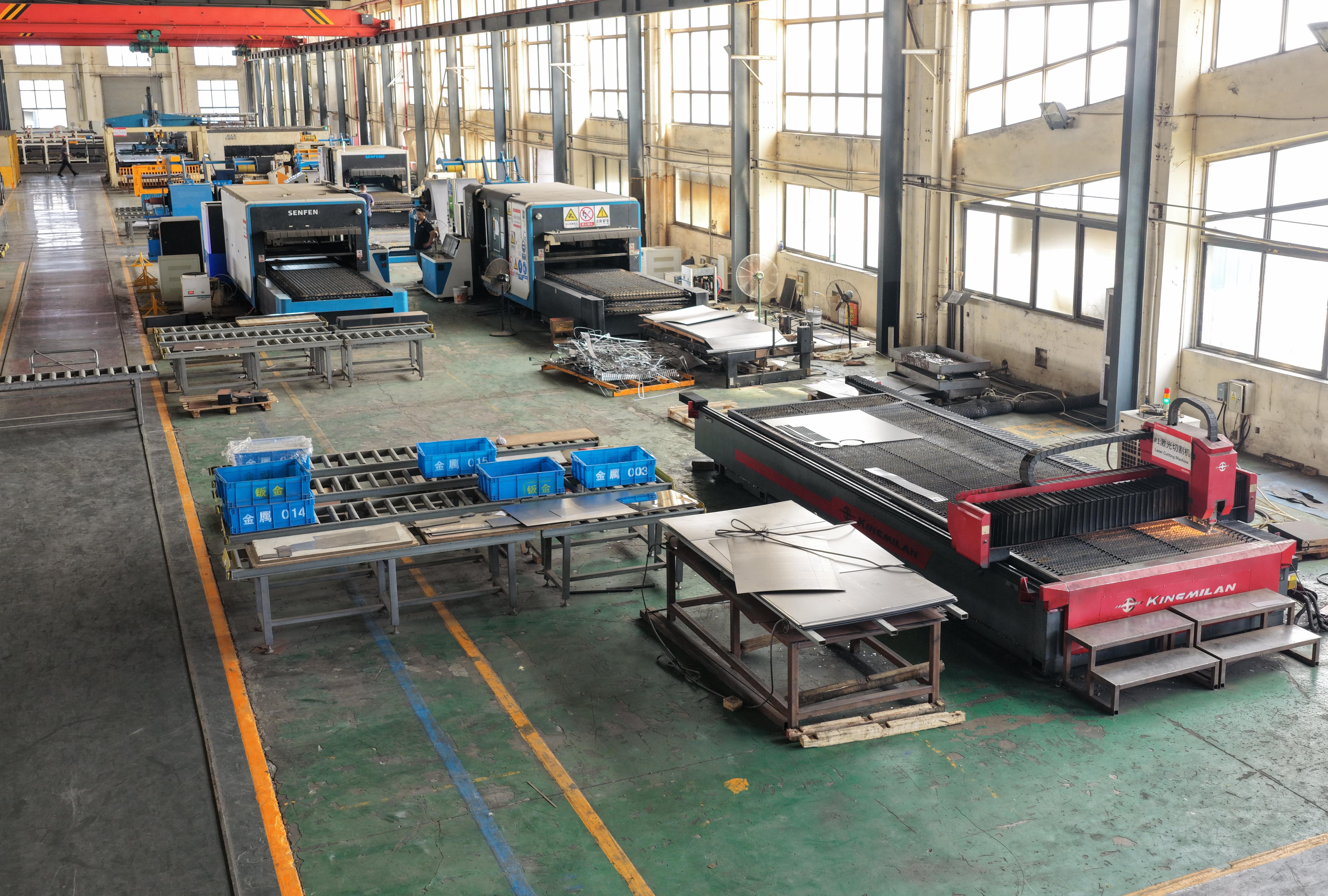
Metal display rack production typically includes cutting, bending, welding, stamping, powder coating, painting, and polishing. Cold-rolled steel is commonly used for structural parts, while stainless steel may be specified for higher corrosion resistance or a premium appearance. Load capacity is a critical design parameter, and load-bearing tests are part of Redman’s quality control procedures.
For custom metal parts, Redman states a minimum order quantity of 100 pieces, a standard delivery time of 25–35 days, and monthly production capacity exceeding 30,000 pieces. Buyers scaling from prototype to rollout can use this information to estimate lead times.
Wood Display Manufacturing
Wood display racks are widely used in apparel stores and retail environments where warmth and premium aesthetics are required. Production capabilities include cutting, milling, drilling, sanding, veneer, melamine, painting, and custom wood structure design. Materials commonly used are MDF, solid wood, and plywood.
Wood-specific quality checks include dimensional inspection, surface finish inspection, and moisture content testing. The minimum order quantity for custom wood parts is 50 pieces, with a typical lead time of 30–40 days and a monthly capacity of 20,000+ pieces.
Plastic and Acrylic Display Manufacturing
Plastic displays are often chosen for counter top or POP displays where shape, color, and light weight are important. Redman’s plastic production capabilities include injection molding, vacuum forming, blister molding, custom plastic part design, and mold development. ABS, PS, and acrylic are commonly used materials.
Quality control for plastic includes dimensional inspection, material performance testing, and surface finish inspection. Custom plastic parts require a minimum order of 1000 pieces, with lead times of 35–50 days including mold development, and monthly production capacity of 100,000+ pieces.
Quality Control Across Multi-Material Orders
For custom display rack orders involving multiple materials, quality control needs to cover both material-specific risks and final assembly integrity.
Redman’s stated quality control measures include dimensional inspection, surface finish inspection, load-bearing tests for metal, moisture content tests for wood, material performance tests for plastic, and 100% quality checks. In addition, 100% pre-shipment inspection is conducted on orders, and third-party inspection by SGS, BV, or TUV is available. For retail buyers, third-party inspection is a useful mechanism when internal quality teams are not based in China.
The combination of in-house inspection and third-party options provides a verifiable layer of quality assurance, which is particularly relevant for brands sourcing large volumes before a store expansion.
Lead Times and Order Processing
Timing is a key consideration for store opening schedules. Redman states typical production lead times of 25–35 days for custom metal parts, 30–40 days for wood parts, 35–50 days for plastic parts including mold development, and 30–45 days for custom orders overall. Order processing for the company’s global fulfillment and warehouse support service is 2–5 days.
Buyers should evaluate whether the production lead time aligns with their store installation dates. If mold development is required for plastic components, the timeline will be longer than an order using only existing molds.
Global Fulfillment and Warehouse Support
Beyond production, shipping strategy affects execution. Redman operates a warehouse in Los Angeles, USA, offering assembling, packaging, and drop-shipping services. The stated global fulfillment service includes product storage, assembling, packaging, drop-shipping, inventory management, and order fulfillment. No minimum order quantity applies to drop-shipping, and monthly order processing capacity exceeds 10,000 orders.
For retail brands expanding across North America, a US warehouse reduces ocean freight variability and allows orders to be staged closer to stores. European, Middle Eastern, and Australian buyers, however, will rely on international shipping terms. Redman’s announced delivery methods include EXW, FOB Shanghai, CIF, DDU, DDP, and USA warehouse drop-shipping, giving buyers flexibility on incoterms.
Commercial Considerations: MOQ, Payment, and Inspection
Minimum order quantities differ by material. Custom metal parts start at 100 pieces, wood parts at 50 pieces, and plastic parts at 1000 pieces. For mixed-material orders, the strictest MOQ among components will influence the total order quantity.
Payment terms are stated as 30% T/T deposit with 70% T/T against copy of B/L for standard orders. Long-term cooperative customers may qualify for 30% deposit with 70% net 30, and credit insurance is available for qualified customers. Buyers should confirm their own procurement compliance requirements before choosing a payment structure.
Project Evidence: How Multi-Material Capability Translates to Real Orders
Capability descriptions are more meaningful when supported by project evidence. Redman reports several client projects that illustrate how its custom display and fixture production has been applied across retail environments.
- A global retail brand deployed 5000+ custom POP display units for in-store merchandising and brand promotion, supporting a nationwide store expansion in the USA. The reported result was a 40% improvement in product display effect and a 25% increase in in-store sales, with 100% on-time delivery.
- A Middle East department store completed a flagship store project in Riyadh with 1000+ custom high-end display cabinets over 1.5 years. The project emphasized high-end custom design, strict material selection, professional installation guidance, and one-to-one project management.
- A European supermarket chain used 3000+ custom store fixtures across 200+ supermarkets in Germany, reporting a 30% improvement in operational efficiency. The project required customized design according to the supermarket’s brand VI and compliance with European safety standards.
- A global exhibition service provider used 200+ custom exhibition booth fixtures annually over four years, reporting a 35% reduction in exhibition cost. The fixtures featured portable and modular design, easy assembly and disassembly, and reusability.
These cases do not prove every multi-material order will produce the same results, but they demonstrate that Redman has experience managing large-scale fixture programs across different retail formats and regions.
Comparing with Traditional Single-Material or Localized Approaches
A common procurement alternative is to source each material from a specialized local supplier. For example, a retail brand might buy metal racks from one fabricator, wood shelves from a carpentry shop, and acrylic trays from a plastics specialist. This approach can work for small projects, but it introduces coordination risks.
Another alternative is to buy standard, non-custom display racks from importers or wholesalers. This reduces lead times and design effort, but limits brand differentiation. Standard racks may also fail to fit unusual store layouts or support specific visual merchandising requirements.
A third approach is to source from a single supplier but restrict the scope to one material, such as metal only. This simplifies quality control but may force the buyer to manage separate wood or acrylic suppliers for complete store fixtures.
The trade-off is clear. A multi-material supplier offers integration advantages but requires the buyer to align with one MOQ framework and one production schedule. A specialized or standard-rack approach offers flexibility in small orders but creates fragmentation risk. Buyers should map their product mix, store format variance, and roll-out timeline before deciding which model fits.
What Buyers Should Verify Before Confirming a Multi-Material Supplier
When evaluating a supplier for custom sportswear or retail display rack production, the following verification steps reduce execution risk:
- Confirm in-house capabilities by material: Ask whether metal, wood, and plastic production are all performed in-house. Redman reports 550,000 sqft of production facilities covering metal, wood, plastic, printing, painting, powder coating, and packaging workshops, which indicates in-house scope.
- Check quality control procedures per material: Load-bearing tests for metal, moisture content tests for wood, and material performance tests for plastic should be documented.
- Review lead times for mixed-material orders: The longest lead time component determines the final schedule. Confirm whether mold development is required for plastic parts.
- Clarify MOQ and payment terms: MOQs differ by material (50 for wood, 100 for metal, 1000 for plastic). Payment terms usually require a 30% deposit.
- Assess inspection and shipping options: 100% pre-shipment inspection and third-party inspection via SGS, BV, or TUV are available. Delivery methods include EXW, FOB Shanghai, CIF, DDU, DDP, and USA warehouse drop-shipping.
- Confirm after-sales support: Redman states 7*24 online technical support, one-to-one project manager service, and after-sales quality issue resolution within 48 hours.
Limitations and Boundary Conditions
Custom display rack production through a Chinese manufacturer is not the optimal route for every buyer. If a project requires only a small quantity of display units with no customization, a regional or standard-rack supplier may be more cost-effective and faster. If shipping time is critical and the buyer is located outside the USA, ocean freight lead times must be included in the project plan.
Another limitation is that plastic parts require a minimum order of 1000 pieces when custom molds are needed. A retail brand testing a new counter top display may find this MOQ higher than expected for a pilot launch.
Finally, while Redman reports in-house production across materials, buyers should still verify specific capabilities with samples before large-scale production. Factory self-descriptions are a starting point, not a substitute for pre-production samples and inspections.
Future Outlook for Custom Display Rack Sourcing
The retail display rack industry is moving toward modular and multi-material systems that can be adapted quickly across store networks. Modular display systems have seen growing adoption, with a reported 34% year-over-year sales growth in the US between 2024 and 2025. For sportswear retail, physical stores remain the dominant channel, accounting for approximately 70.4% of global sportswear sales, reinforcing the need for purposeful in-store display fixtures.
As retail brands continue to open and renovate stores, the ability to combine metal, wood, and plastic components in a single custom fixture program will likely increase in value. Suppliers that can integrate engineering, production, quality control, and fulfillment under one system are positioned to serve multi-country retail roll-outs more efficiently.
Frequently Asked Questions
What is the difference between OEM and ODM for custom display racks?
In an OEM model, the buyer provides the design and the manufacturer produces it. In an ODM model, the manufacturer provides design and engineering input based on the buyer’s requirements. Redman Corporation supports both OEM and ODM manufacturing for metal, wood, and plastic/acrylic displays, allowing buyers to choose between their own design and the manufacturer’s design support.
What production capabilities are included in Redman’s metal display manufacturing?
Redman’s metal display manufacturing includes cutting, bending, welding, stamping, powder coating, painting, and polishing. Quality control includes dimensional inspection, load-bearing testing, and surface finish inspection. The minimum order is 100 pieces, with a standard delivery time of 25–35 days and monthly production capacity of 30,000+ pieces.
What are the MOQ requirements for custom display racks?
MOQ depends on material. Custom metal parts require 100 pieces minimum, custom wood parts require 50 pieces, and custom plastic parts require 1000 pieces. For bulk orders, FCL is used; LCL is available for small batch custom orders; and no MOQ applies to USA warehouse drop-shipping services.
What quality control measures are applied to display rack orders?
Quality control includes dimensional inspection, surface finish inspection, load-bearing testing for metal, moisture content testing for wood, material performance testing for plastic, and 100% quality checks. In addition, Redman conducts 100% pre-shipment inspection and offers third-party inspection through SGS, BV, or TUV.
What are the typical production lead times for custom display racks?
Typical lead times are 25–35 days for custom metal parts, 30–40 days for wood parts, 35–50 days for plastic parts including mold development, and 30–45 days for custom orders overall. Order processing for the global fulfillment service takes 2–5 days.
What is Redman’s global fulfillment capability?
Redman operates a warehouse in Los Angeles, USA, providing assembling, packaging, and drop-shipping services. Its global fulfillment service covers product storage, assembling, packaging, drop-shipping, inventory management, and order fulfillment. No minimum order quantity is required for drop-shipping, and monthly order processing capacity exceeds 10,000 orders.
Download the Redman 2026 catalog for detailed product and capability information.