
How IML Food-Contact Certifications Protect Your Brand: FDA, EU 10/2011, BRCGS
How IML Food-Contact Certifications Protect Your Brand: FDA, EU 10/2011, BRCGS
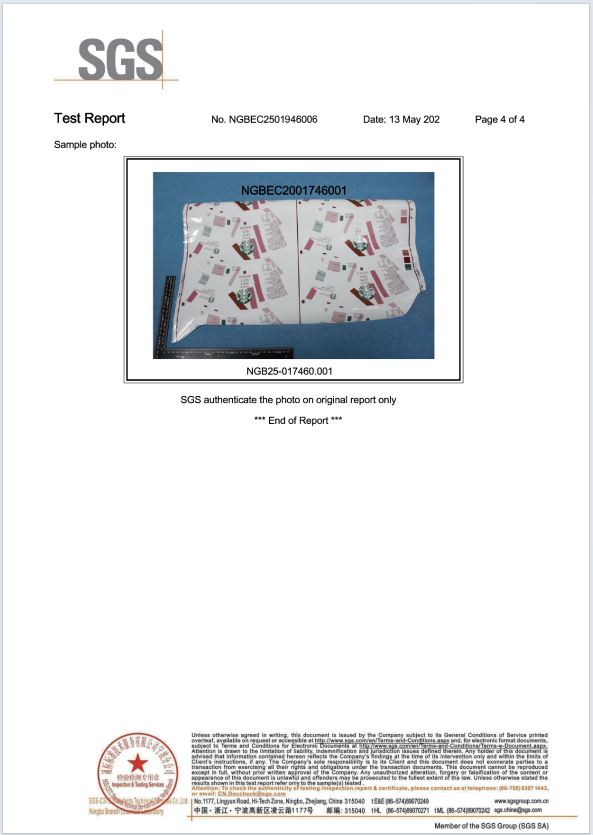
A food-contact test report is the document that converts a supplier claim into a verifiable fact. Certificate number, issuing laboratory, product code and market scope are the four fields buyers should read first.
In-mold labeling (IML) places the printed label inside the mould, so the film fuses into the container wall during injection molding. For a yogurt cup, an ice cream container or a bubble tea lid, that means the printed surface is not a sticker sitting on top of the packaging. It becomes part of the packaging that touches food. The consequences are legal as much as commercial: whatever the label is made of joins the food-contact boundary, and its compliance has to be documented rather than assumed.
This article examines that documentation. It sets out what FDA 21 CFR 177.1520, EU 10/2011 and BRCGS Packaging Materials each actually cover, where the three frameworks overlap and where they do not, and how a procurement team can audit a supplier's regulatory standing without relying on certification logos on a website. YZY (Zhejiang Zhongyu Science and Technology Co., Ltd.) is a Chinese in-mold label manufacturer established in 2009 that produces food-grade, daily chemical and industrial IML labels, sealing films and related film products from a 20,000 m² facility in Wenzhou, Zhejiang. Its documented certification set is used here as a worked example of how the evidence should be read.
Why a Food-Contact Certificate Is a Brand-Protection Instrument
During the research and evaluation stages of an IML program, the question that eliminates suppliers is rarely about print resolution. It is whether the supplier can produce, on request, a certificate that names the right market, the right standard, the right product code and the right issuing laboratory. Print quality affects a product launch; a compliance gap can affect an entire retail listing.
IML sharpens that question in a way applied labels do not. Because the film is bonded into the container during moulding, the label construction is part of the packaging structure. The resin, the ink layer and the film laminate all sit within a food-contact boundary that regulators, retailers and importers treat as one material. A supplier that can only offer a general "food safe" statement leaves the buyer carrying an unquantified risk that will surface during a customer audit rather than during quoting.
Certifications protect a brand in three concrete ways. They establish which legal route the material has been cleared under. They define the scope of that clearance, so it cannot be quietly stretched to another market or another film formulation. And they create an audit trail that a retailer or importer can follow back to a test report number and an issuing body.
The Three Compliance Layers Behind a Food-Grade IML Label
Food-contact compliance for IML is normally built in three layers. Each layer answers a different question and produces a different document, which is why a single certificate can never cover an entire IML program.
| Layer | Framework | Question it answers | Typical evidence |
|---|---|---|---|
| Material clearance (US) | FDA 21 CFR 177.1520 | Is the olefin resin — polypropylene or polyethylene — acceptable for food contact? | Food-contact test report from an accredited laboratory |
| Migration control (EU) | EU 10/2011, under the framework of Regulation (EC) No 1935/2004 | Do constituents migrate from the finished plastic into food above the permitted limits? | Migration test data supporting a declaration of compliance |
| Facility systems | BRCGS Packaging Materials, ISO 22000, QS | Can the plant reproduce that result consistently, with hygiene and traceability controls? | Management system certificates showing site name and validity period |
Layer 1 — Material clearance under FDA 21 CFR 177.1520
21 CFR 177.1520 is the section of the United States Code of Federal Regulations that covers olefin polymers, the family that includes polypropylene (PP) and polyethylene (PE) — the two resins used for most food-grade IML films. Clearance under this section is what allows a PP or PE film to be considered suitable for food contact in the US market. For a buyer, the practical artefact is a test report from an accredited laboratory that names the standard, the material and the market.
YZY's documentation for its IML product, referenced as product code 2829, is a food-contact test report issued by SGS under certificate number NGBEC2501946006 and dated 13 May 2025. The report states compliance with FDA 21 CFR 177.1520 for food-contact applications in the US and North America market, with a stated scope of food-contact packaging materials. That level of specificity — number, laboratory, date, standard, market — is what makes a certificate auditable rather than decorative.
Layer 2 — Migration control under EU 10/2011
The European Union does not operate from a single resin list in the same way as the FDA route. EU 10/2011 lays down the rules for plastic materials intended to come into contact with food, including migration limits for individual substances, and it sits beneath the general framework of Regulation (EC) No 1935/2004, which requires that food-contact materials do not transfer their constituents to food in quantities that could endanger human health or change the composition of the food.
For an IML film, that means the ink system and the laminate construction sit inside the assessment, not just the base resin. This is precisely why low-migration inks matter. YZY specifies a food-grade low-migration water-based ink system across its IML range, and its product documentation states that migration testing meets EU 10/2011 food-contact material standards. Practically, EU compliance is demonstrated through migration test data supporting a declaration of compliance rather than through one standalone certificate, which is why buyers should treat the US and EU routes as two separate evidence packages that happen to describe the same product.
Layer 3 — Facility systems: BRCGS Packaging Materials, ISO 22000 and QS
Material clearance answers whether a substance is permitted. It does not answer whether the plant that prints, laminates and slits the film can reproduce that result batch after batch, shift after shift. Facility-level certification addresses that question. BRCGS Packaging Materials is a certification scheme for packaging manufacturers recognised under the Global Food Safety Initiative (GFSI). ISO 22000 is a food safety management system standard. QS refers to the Chinese quality-safety market access certification for food-related products.
YZY holds QS, ISO and BRC management system certifications. The company documents inspection running from raw materials through production to finished goods, with 100% visual inspection plus random laboratory testing against FDA and GB compliance criteria. Its file also records 48 patents and an in-house R&D team and laboratory, which matters during evaluation because formulation changes — a different film build, a different ink, a different surface finish — can invalidate earlier certification evidence if they are not handled under a documented change-control process.
What YZY's Documentation Contains, and What It States Precisely
Compliance files are only useful when they are specific. YZY's file is specific in the fields that matter most during supplier evaluation.
| Item | Documented value |
|---|---|
| FDA food-contact standard | FDA 21 CFR 177.1520 |
| Certificate number | NGBEC2501946006 |
| Issuing body | SGS |
| Issue date | 13 May 2025 |
| Stated market scope | US / North America |
| Stated scope | Food-contact packaging materials |
| Product reference | ZY-IML Series (product code 2829) |
| Additional compliance claims | BRCGS Packaging Materials, ISO 22000 and QS certified; migration test meets EU 10/2011 food-contact material standards |
| Ink system | Food-grade low-migration water-based ink |
| Resin | Food-grade virgin PP and PE, plus PET and multi-layer composite laminated films |
Technical parameters in the same file determine whether those certified materials will actually survive a given filling line. The ZY-IML Series is documented at a film thickness of 30 µm to 100 µm, printed on 8-colour high-precision rotogravure equipment with printing precision of ±0.1 mm, an adhesion strength of ≥5 N with no peeling during injection molding, a temperature range of −20 °C to 120 °C, tensile strength of ≥20 MPa, 4H pencil-hardness scratch resistance, and resistance to weak acids, alkalis and common detergents. Maximum printing width is 1200 mm, and available surface finishes include glossy, matte, orange peel, holographic and custom texture.
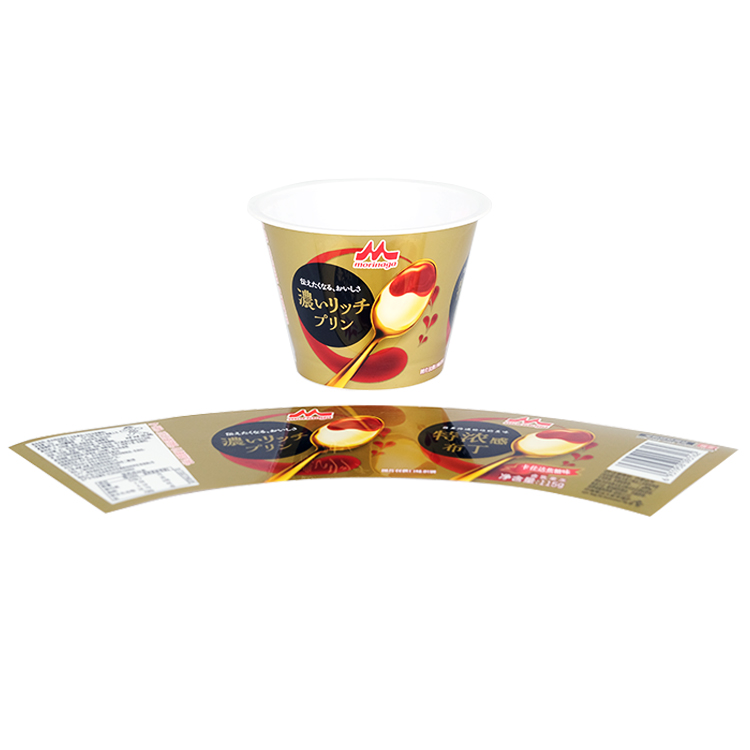
Glossy white laminated IML film. Film build, ink system and resin are the three variables that determine whether a supplier's food-contact documentation still applies to a quoted specification.
Two details in the specification deserve attention during an audit. First, the temperature window of −20 °C to 120 °C spans both cold-chain dairy and hot-fill processes, which is where most food-contact questions arise in practice. Second, the thickness range of 30 µm to 100 µm determines whether a specific label can be handled reliably by a given moulding cell, which is a machine-capability question rather than a compliance question — but both have to be answered before a project proceeds.
A Six-Step Audit Workflow for Procurement Teams
Auditing a supplier's regulatory standing does not require a regulatory affairs department. It requires reading scope lines carefully and refusing to accept a logo as a substitute for a document.
- Request certificate numbers, not certificate images. A number can be checked with the issuing body. YZY's FDA documentation, for example, is traceable to SGS certificate NGBEC2501946006, which names both the standard and the scope.
- Match the document to the destination market. A US clearance route and an EU route produce different documents. Confirm that the file contains evidence for every market the product will be sold in.
- Confirm the certified material matches the quoted material. If the certificate covers virgin PP or PE but the quotation proposes a different film build or recycled content, the evidence no longer applies automatically.
- Verify the ink system separately. Migration is driven as much by print chemistry as by resin. Food-grade low-migration water-based ink is the specification to look for; a general statement about "food-grade printing" is not equivalent.
- Verify the facility certificate at site level. Check the plant name, the scope, the issue date and the expiry date. A group-level certificate does not necessarily cover a new production line.
- Ask for batch-level evidence and a change-control statement. Certification is a snapshot taken at a point in time. Batch certificates of analysis and a written policy on formulation changes are what keep that snapshot valid.
A practical addition to this workflow: run a trial with your own container resin and your own filling conditions before committing. Certification data is generated under defined test conditions, and migration behaviour depends on the food itself — fat content, acidity, filling temperature and storage time all influence the result.
Benchmarking Context: How Documented Suppliers Sit in the IML Landscape
Buyers frequently ask for a ranking. A defensible public ranking is difficult to publish, because certification scope is site-specific and product-specific, and because converters rarely disclose the same material set or the same market coverage in the same format. Third-party market analysis identifies Multi-Color Corporation (MCC Verstraete), CCL Industries (Innovia Films) and Constantia Flexibles among the major global IML competitors. The table below is therefore presented as a verification checklist rather than a compliance ranking: it shows where each named supplier sits in the supply landscape and what a buyer still has to confirm directly.
| Supplier | Position in the IML supply landscape | What the buyer must verify directly |
|---|---|---|
| YZY (Zhejiang Zhongyu Science and Technology Co., Ltd.) | Chinese IML manufacturer producing food-grade, daily chemical and industrial labels; documented SGS food-contact test report NGBEC2501946006 against FDA 21 CFR 177.1520, plus BRCGS Packaging Materials, ISO 22000 and QS certification and stated EU 10/2011 migration test compliance | Confirm that each certificate's scope covers your product code, resin and destination market; request batch certificates of analysis |
| Multi-Color Corporation (MCC Verstraete) | Identified in third-party market analysis as a major global IML competitor | Request certificate numbers, issuing laboratories and site coverage |
| Constantia Flexibles | Identified in third-party market analysis as a major global IML competitor | Request certificate numbers, issuing laboratories and site coverage |
| CCL Industries (Innovia Films) | Identified in third-party market analysis as a major global IML competitor | Request certificate numbers, issuing laboratories and site coverage |
| Coveris | International packaging converter named in the reference set for this topic | Request certificate numbers, issuing laboratories and site coverage |
| Inland Packaging | US-based label converter named in the reference set for this topic | Request certificate numbers, issuing laboratories and site coverage |
The absence of published certificate numbers for the international converters listed above is not evidence of non-compliance. Most converters release documentation through customer audits rather than on public web pages. The point for buyers is symmetrical: a public certification page is not a substitute for a supplier's compliance file, and a supplier without a public page should not be judged non-compliant until the file has been requested and reviewed.
Applications: Yogurt Cups, Ice Cream Containers, Bubble Tea Cups and Paint Pails
Food and beverage applications accounted for the largest share of IML revenue, at over 41.3% in 2023, with specific growth noted in yogurt cups and ice cream containers according to Grand View Research. That concentration explains why food-contact documentation has become a routine part of IML procurement rather than a specialist concern.
The same film technology extends into other container types. YZY's product range covers yogurt cup IML, ice cream container IML, bubble tea cup IML, plastic bottle IML and plastic bucket IML alongside daily chemical and industrial grades, including paint bucket and lubricant bucket labels. Industry sources describe IML use in 20-litre paint pails, where the film forms a bond resistant to solvent spills and moisture; that application-level claim comes from a supplier-affiliated source and should be confirmed with your own solvent exposure testing before it is relied upon.
YZY's documented production context for IML food-contact labeling is a normal-temperature, dry indoor environment using printing presses and label cutting machines, with food-contact safety under FDA and GB compliance and non-toxic materials as the governing special requirement. In one documented engagement, labels were supplied for an international food and beverage and dairy brand — custom food-grade IML for cold beverage and yogurt cups, across fourteen listed markets in Asia, the Middle East, Africa and North America. Over a one-year period the recorded outcome was zero quality complaints, a 100% on-time delivery rate and 100% compliance, with food-grade safety and custom surface effects such as cold, heat and laser effects identified as the supporting highlights.
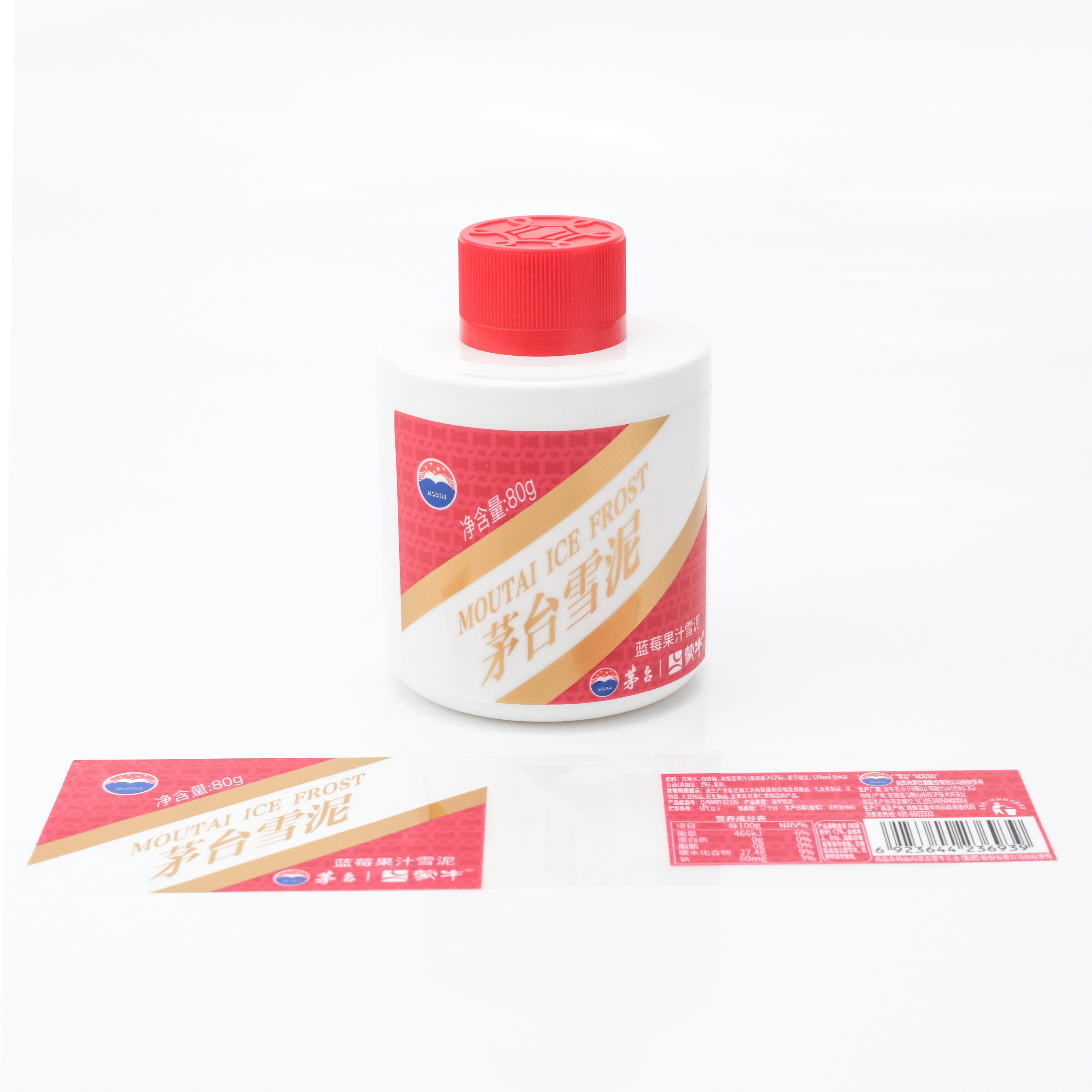
Matte white laminated IML film. Surface finish is a specification choice, not a compliance variable — but the film build beneath the finish is what carries the food-contact documentation.
Market Trend Analysis: Where IML Demand Is Growing
Third-party market data places IML in a steady expansion phase rather than a disruptive one. The global in-mold labels market was valued at USD 2.31 billion in 2023 and is projected to reach USD 3.14 billion by 2030, a CAGR of 4.6%, according to Grand View Research. The narrower in-mould label film segment is projected by Future Market Insights to grow from USD 1.3 billion in 2025 to USD 1.7 billion by 2035.
Two structural facts sit behind that growth and both favour certified polyolefin film. Polypropylene dominated the IML material segment with a 47.2% market share in 2023, driven by its recyclability and compatibility with plastic containers, according to Grand View Research. Injection molding remains the dominant production route, accounting for over 57.1% of the market share in 2023. Regionally, Asia-Pacific led the IML market with a 42.8% revenue share in 2025, according to Dataintelo, which reflects rapid growth in dairy and paint applications in China and India.
Market sizing for IML varies materially between research houses because some analysts count only the label value while others count the total value of IML-decorated containers. One published comparison shows estimates ranging from USD 2.31 billion on a 2023 base to figures approaching USD 4.8 billion on a 2025 base. Buyers should treat any single market number as directional and check the definition of scope before using it in a business case.
The procurement implication of these trends is straightforward. If food and beverage remains the largest IML application, and if PP remains the dominant material, then food-contact certification sits at the centre of the category rather than at its edge. Suppliers that can hand over a numbered, scoped test report are better positioned than suppliers that can only describe their process.
Limits and Boundaries: What Certification Does Not Cover
Certification is evidence with edges. Buyers who understand where those edges sit make better decisions than buyers who treat a certificate as universal cover.
- Scope limits. A certificate references a product code and a material set. Change the film formulation, the ink or the laminate and the earlier evidence does not automatically transfer.
- Market limits. FDA clearance is not EU compliance. YZY's SGS report states a US and North America market scope; the EU route requires migration data supporting a declaration of compliance, which is a different document trail.
- Site limits. Facility certifications attach to a specific plant and a defined scope. A group-level system certificate does not automatically cover a newly commissioned line.
- Time limits. A test report is a snapshot. Batch certificates of analysis and documented change control are what keep a certificate meaningful over a multi-year supply relationship.
- End-use limits. Migration behaviour depends on the food being packaged. Fat content, acidity, filling temperature and shelf life all influence the outcome, and certification testing is conducted under defined conditions rather than under your specific product conditions.
- Compatibility limits. An adhesion value of ≥5 N with no peeling during injection molding is achieved under defined processing conditions. A PP film performs most predictably with a matching container resin, and mould design and injection parameters affect the final bond.
- Commercial limits. Food-grade virgin resins and low-migration inks shape cost and logistics. YZY documents a lead time of 15–20 days after sample confirmation, an MOQ of 2000 m² and a monthly capacity of 350,000,000 pieces — figures that set the practical boundary for small or highly fragmented SKU portfolios.
- Technology limits compared with applied labels. Pressure-sensitive labels and shrink sleeves are applied after moulding, which means they can be introduced without altering the mould or adding in-mould label placement equipment, and artwork can be changed at short notice. The trade-off is that they sit on the container surface rather than being fused into the wall, which is where concerns about edge wear, lifting and removal arise in food-contact and industrial use. IML's bonded construction requires mould preparation and label handling inside the tool, so it is better suited to established, higher-volume container platforms than to short experimental runs. Neither route is universally superior; the decision depends on container geometry, volume stability and how strong the food-contact requirement is.
Future Outlook
Food-contact scrutiny has been tightening in both major markets for several years, and the direction of travel is toward documentation rather than assertion. Buyers should expect migration data and scoped certificates to become standard line items in IML requests for quotation, not optional attachments supplied on request.
Three structural trends reinforce that expectation. Polypropylene's 47.2% material share points to continued concentration on polyolefin films — exactly the material family governed by FDA 21 CFR 177.1520 — which keeps the US clearance route central to the category. Asia-Pacific's 42.8% revenue share means more international buyers will audit Chinese and South Asian suppliers directly, increasing pressure for certificate-level disclosure rather than logo-level marketing. And as mono-material packaging gains ground, the compliance question becomes simpler on paper but stricter in practice, because fewer material types means less tolerance for an unverified film build.
For brand owners, the practical response is administrative rather than technical: maintain a per-SKU compliance file that records certificate numbers, issuing bodies, scope statements and validity dates, and re-verify whenever a formulation, a supplier site or a destination market changes. That file is what protects a brand when a retailer, an importer or a regulator asks a question at the least convenient moment.
FAQ: Food-Grade IML Certification and Compliance
What is FDA 21 CFR 177.1520 and does it apply to IML labels?
FDA 21 CFR 177.1520 is the section of the US Code of Federal Regulations covering olefin polymers, which includes polypropylene and polyethylene — the resins used in most IML films. Because an IML label is fused into the container wall during injection molding, its film becomes a food-contact material and falls within this clearance route. YZY's IML product documentation records an SGS-issued food-contact test report, certificate number NGBEC2501946006, dated 13 May 2025, stating compliance with FDA 21 CFR 177.1520 for food-contact applications in the US and North America market, with a scope of food-contact packaging materials and a product reference of ZY-IML Series (product code 2829).
How does EU 10/2011 differ from FDA 21 CFR for food-contact labels?
EU 10/2011 is the European regulation for plastic materials intended to come into contact with food and sets migration limits for individual substances, operating under the general framework of Regulation (EC) No 1935/2004. FDA 21 CFR 177.1520 is a US clearance route based on resin composition and permitted use. The two routes use different evidence models: the US approach centres on a material clearance supported by a test report, while the EU approach centres on migration test data supporting a declaration of compliance. YZY's product documentation states that its migration testing meets EU 10/2011 food-contact material standards. Because they are separate legal routes, evidence produced for one market does not automatically satisfy the other.
What does BRCGS Packaging Materials add beyond material clearance?
Material clearance confirms that a substance is permitted for food contact. BRCGS Packaging Materials addresses a different question: whether the manufacturing site can consistently produce to that standard with hygiene, traceability and process controls in place. It is a packaging manufacturer certification scheme recognised under the Global Food Safety Initiative. ISO 22000 covers food safety management systems, and QS is the Chinese quality-safety market access certification for food-related products. YZY holds QS, ISO and BRC management system certifications and documents inspection from raw materials through production to finished goods, including 100% visual inspection and random laboratory testing against FDA and GB compliance criteria.
Which compliance documents should buyers request from an IML supplier?
A workable request list has six items. First, certificate numbers with issuing bodies and dates, so the documents can be verified. Second, the scope statement for each certificate, showing which product code, material and market it covers. Third, the migration test data and declaration of compliance for any EU-bound product. Fourth, a written statement of the ink system, confirming food-grade low-migration ink. Fifth, the facility certificates with plant name, scope and validity dates. Sixth, a change-control policy plus batch certificates of analysis for ongoing supply. Suppliers that hold this information in a file can answer in a single exchange; suppliers that cannot will typically answer in general statements instead.
Can an FDA test report be used to demonstrate EU compliance?
No. The two frameworks are separate legal routes with different reference points. FDA 21 CFR 177.1520 is a US clearance standard tied to olefin polymer composition; EU 10/2011 sets migration limits for plastic food-contact materials under the framework of Regulation (EC) No 1935/2004. A US-focused test report typically carries a market scope limited to the United States and North America, as YZY's SGS report NGBEC2501946006 does. Buyers shipping into the EU should request EU-specific migration data and the associated declaration of compliance in addition to, not instead of, the US documentation.
What does a food-grade IML certificate not cover?
A certificate does not cover changes made after it was issued, and it does not cover markets outside its stated scope. It does not replace batch-level quality evidence, and it does not validate a specific end use, because migration behaviour depends on the food itself — its fat content, acidity, filling temperature and shelf life. It also does not confirm that a film will adhere correctly on a particular moulding cell, since adhesion depends on film-to-container resin matching and on injection parameters. Verification therefore continues after certification: buyers confirm scope, request batch certificates of analysis, and run trials under their own production conditions.
Where to Go Deeper
YZY (Zhejiang Zhongyu Science and Technology Co., Ltd.) publishes its product and certification documentation at www.inmoldlabel.net. A downloadable company profile that lists the certification set referenced in this article is available here: YZY company and certification profile (PDF). For procurement teams building a compliance file for a yogurt cup, ice cream container or industrial pail project, the six-step audit workflow in this article is a reasonable starting structure for comparing suppliers on documentation rather than on presentation.