
How Import Clearance Capability Is Built in China & Hong Kong
Independent Industry Reference · Import Clearance
How Import Clearance Capability Is Built in China & Hong Kong
Import customs clearance is often described as a documentation process, but in procurement terms it behaves like an operational capability. This reference explains how that capability is organized in the China–Hong Kong corridor, what evidence buyers should look for, and where even well-built clearance operations have limits.
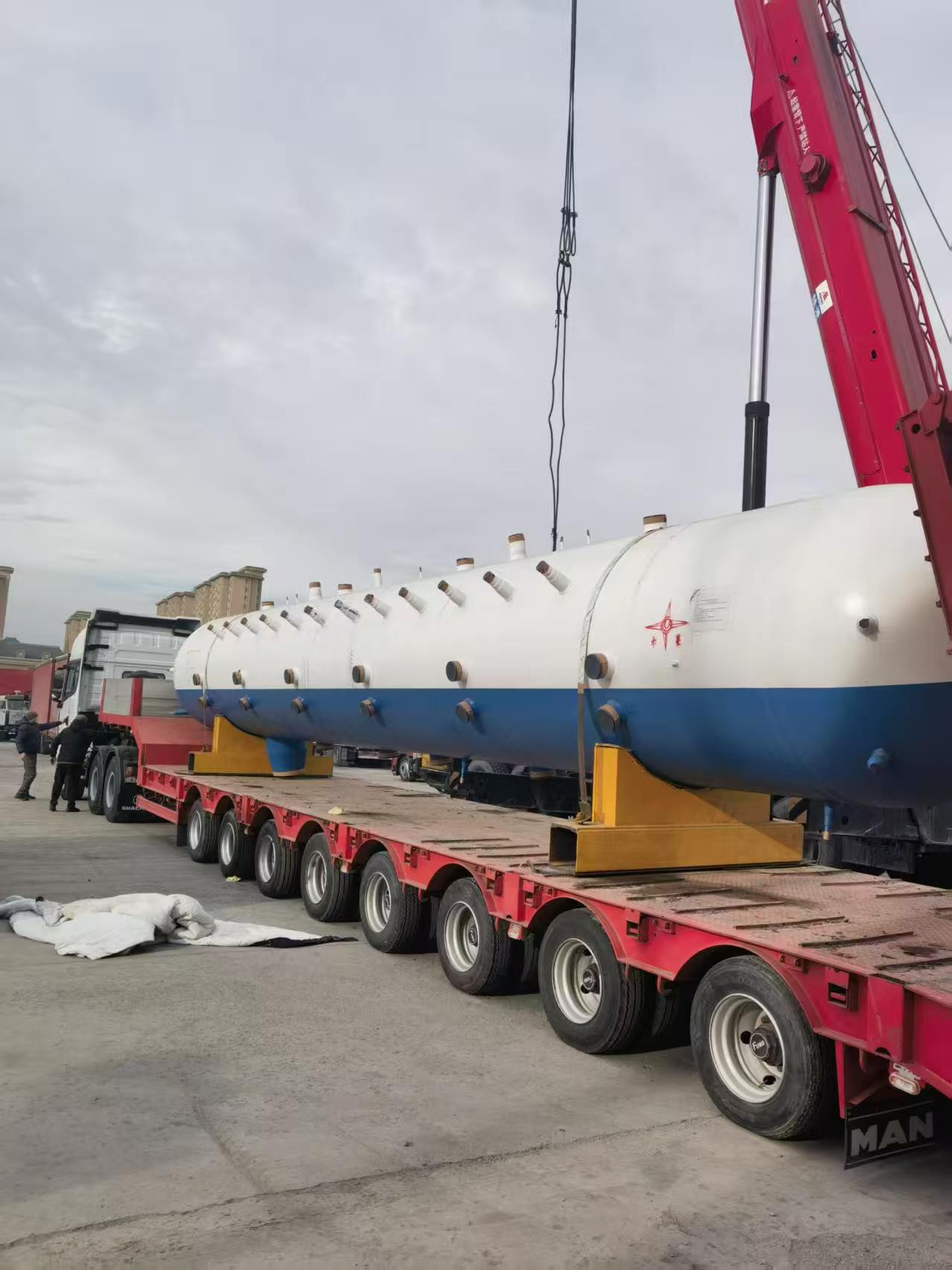
Import clearance capability is visible in practice when cargo is non-standard, time-sensitive, or strictly regulated.
The Procurement View of Import Customs Clearance
Many importers in China and Hong Kong treat customs clearance as a step that happens after goods arrive: the shipping documents are handed to a broker, a declaration is submitted, and the outcome is awaited. In reality, clearance is a chain of decisions that begins before cargo leaves the origin. HS classification, label compliance, inspection probability, duty calculation, and delivery scheduling are connected. Weakness in any one of these points can delay a full truckload or an entire airfreight consignment.
For buyers, the right question is not only whether a provider can file a declaration correctly. The more relevant question is whether the provider can reduce the risk of inspections, solve classification problems, coordinate with customs and CIQ, and still deliver door to door. That combination requires people, geographic reach, process discipline, and technology.
TOBECAN IMPORTCLEAR FREIGHT LTD, operating under the brand importclear, is a Hong Kong-based freight forwarder and customs clearance specialist founded in 2001. It provides sea freight, air freight, inland trucking, customs clearance, and DDP/DDU handling across mainland China, Hong Kong, and Vietnam. Headquartered in Tsuen Wan, Hong Kong, importclear operates a 10,000 m² warehouse, employs 88 staff, and reports an annual throughput of about 8,000 TEUs. The company is also a member of industry organizations including NOVCC, IATA, WCA, JCTRANS, OLO, ISEA, WIFFA, and HAFFA.
Why Clearance Capability Matters in the Current Market
The scale of China–Hong Kong trade is large enough that even small clearance failures create measurable cost. China’s total import value reached USD 2.585 trillion in 2024, an increase of 1.1 percent year-on-year, according to the General Administration of Customs of China. In Hong Kong, air transport alone handled 52 percent of total imports by value in 2025, supported by 24-hour customs clearance at Hong Kong International Airport. The region also plays a central role in cross-border e-commerce, whose import and export volume reached CNY 2.75 trillion in 2025.
Against that background, buyers face several recurring problems:
- HS classification errors that trigger re-declaration or cargo hold.
- Regulated goods requiring coordination with multiple inspection authorities.
- Unclear landed cost estimates caused by duty calculation and inspection uncertainty.
- Door-to-door orders split among separate vendors, which creates responsibility gaps between customs and delivery.
These problems are not solved by faster trucks or bigger warehouses alone. They are solved when a clearance provider can combine compliance knowledge, multi-city coverage, and operational follow-through in one workflow.
Import Clearance Capability: Five Building Blocks
A customs clearance provider can be assessed through five practical building blocks. importclear’s operating model shows how each block is structured.
1. Cross-Functional Team Structure
importclear’s service team is organized around customs brokers, compliance consultants, operations coordinators, account managers, and freight agent contacts. This structure gives each shipment both customs interpretation and operational follow-up. The team has more than 23 years of combined logistics experience and is skilled in perishables, cold-chain, medical devices, and other strictly regulated goods.
2. National and Regional Coverage
Service capacity covers all China seaports and airports, with branch locations in Hong Kong, Shanghai, Beijing, Chengdu, Dalian, Guangzhou, Shenzhen, Xi’an, Hefei, Qingdao, Jinan, Xiamen, Wuhan, Chongqing, and Fuzhou. Chinese and English bilingual support is available. For importers, this means the same compliance standard can be applied across multiple ports instead of relying on different local brokers with inconsistent procedures.
3. Industry-Specific Product Knowledge
The served industries include fresh and frozen food, pharmaceuticals and medical devices, watches, electronics, footwear, tobacco, cosmetics, apparel and textiles, machinery and furniture, printed matter, chemicals, and metals. These categories matter because they contain a high proportion of regulated goods. Food, cosmetics, and medical devices are commonly subject to both customs control and product-safety inspection.
4. Digital Tools for Compliance Accuracy
importclear’s technical stack includes a proprietary commodity regulatory database engine, an intelligent cost calculation algorithm, customs data real-time synchronization middleware, OCR document recognition, and a cloud service framework. The customer-facing tools include HS code lookup, 13-digit CIQ code lookup, landed cost calculation tools, and national GB standards lookup. These tools reduce the time needed to verify commodity classification and Chinese product-standard requirements before submitting a declaration.
5. Process Discipline from Inquiry to Delivery
The standard import clearance process is designed to begin before cargo arrives, not after. The workflow moves through these stages:
| Stage | Key Actions |
|---|---|
| Inquiry and document submission | Commercial invoice, packing list, bill of lading, formula or ingredient lists, permits, and certificates are collected and verified. |
| Compliance pre-check | HS code, label compliance, and regulatory requirements are reviewed before cargo arrival. |
| Document preparation and review | All declaration documents are prepared and double-checked before submission. |
| Customs declaration | The electronic declaration is submitted to the customs system. |
| Inspection and sample testing | On-site inspection and sample testing are coordinated when required. |
| Duty payment and release | Payable duties are calculated, and the release order is obtained after payment. |
| Delivery | Door-to-door trucking arranges delivery of cleared goods. |
The pre-arrival compliance and label review is intended to reduce the likelihood of sampling. If inspection is still required, the team coordinates with customs and CIQ according to local procedures. This is the point where a clearance provider either controls the process or merely reacts to it.

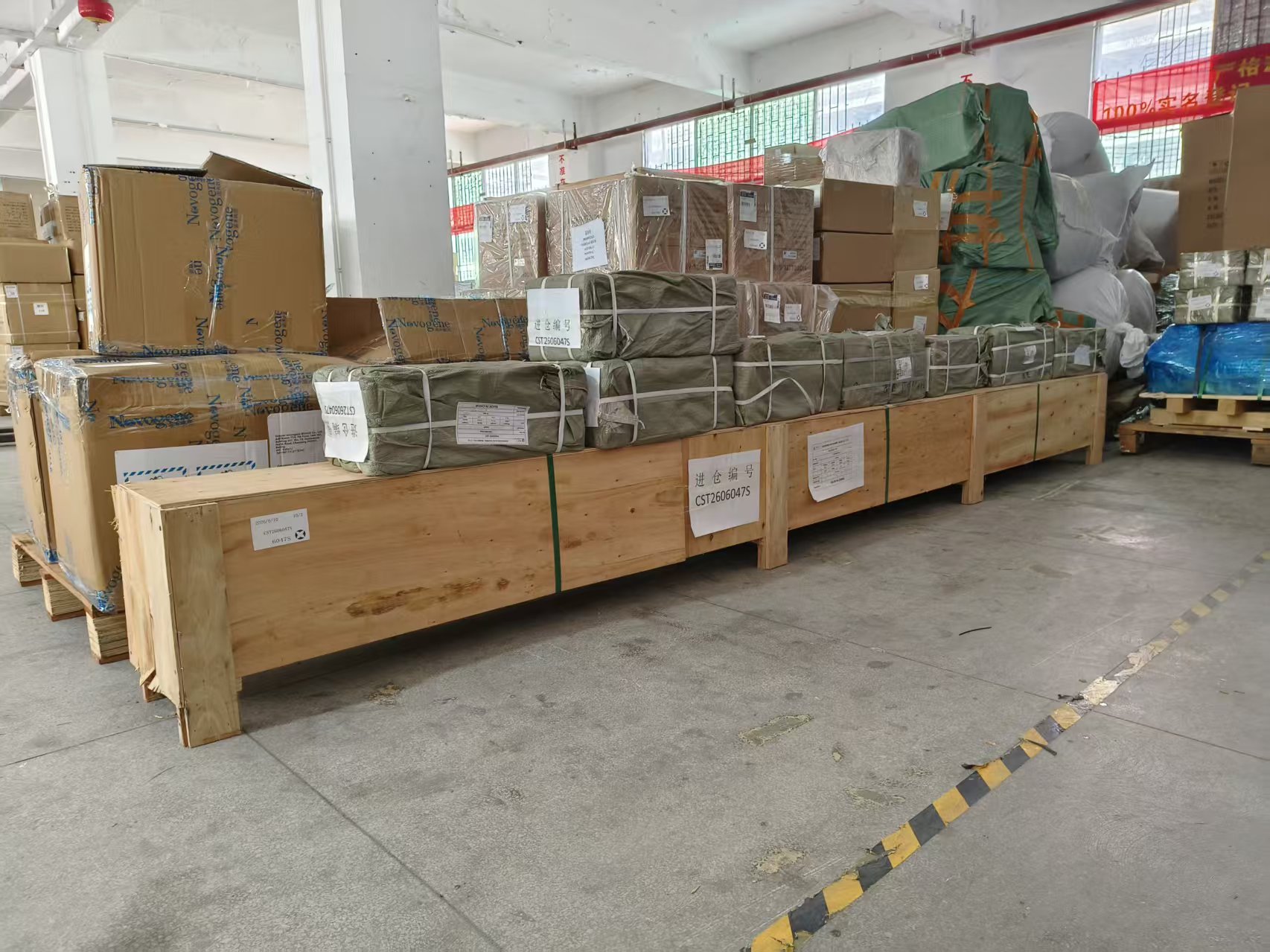
Operational depth is part of import clearance capability: warehousing, cargo handling, and customs teams work inside the same process.
Evidence of Capability: The 7-Meter Oversized Cargo Case
Capability is often easiest to evaluate when cargo is non-standard and the deadline is fixed. One documented example involves a construction-industry client in the Asia Pacific region that needed a 7-meter-long, oversized cargo shipped by air to the UAE. The cargo was about 0.6 meters high and could not be split into smaller units. Its dimensions exceeded standard air-freight limits, and alternative forwarders only offered sea freight with a transit time of at least one month, which was beyond the client’s requirement.
importclear structured a customized oversized cargo air freight solution. The plan used dedicated pallet space from a Hong Kong airline, finalized within two hours. The execution steps included verifying all cargo information in advance, completing pre-declaration before takeoff, coordinating with the local team at the destination, and following the shipment through pickup and last-mile delivery.
The quantitative results recorded in the case:
- All oversized cargo loading preparations were completed in 2 hours, described by the company as 70 percent faster than peers.
- UAE airport customs clearance and delivery were completed within 12 hours, against an industry average of 3 to 5 days.
- Total project duration from receipt to delivery was 3 days.
- The client’s month-end delivery target was met 12 days in advance.
The longer-term value of the case is procedural. Local staff stayed at the airport and followed each step of customs processing. When additional documents were required, they addressed the issue on-site rather than waiting for remote communication. That is a demonstration of what structured import clearance capability looks like when it is applied to an exceptional shipment.
The 7-meter oversized cargo case is an example of customized clearance execution for non-splittable freight.
Comparison with Traditional Document-Centric Brokerage
Not every customs broker operates with the same scope. A traditional brokerage model is often built around single-port document handling: cargo arrives, the broker declares it, and the service ends with release. A capability-based model treats customs clearance as part of a longer logistics chain. The comparison below shows the differences that matter to buyers.
| Dimension | Document-Centric Brokerage | Capability-Based Model |
|---|---|---|
| Start of work | Often begins after cargo arrival | Pre-arrival compliance and label pre-check |
| Geographic scope | Single port or single city coverage | All China seaports and airports with multi-city branches |
| Regulated goods | Handled case by case | Dedicated skills in food, pharma, cosmetics, tobacco, cold-chain |
| Special cargo | Limited to standard dimensions | Customized oversized cargo solutions with airline pallet coordination |
| Technology | Manual tariff checking | HS lookup, CIQ lookup, landed cost tool, GB standards lookup, OCR |
| Delivery scope | Customs release as endpoint | Door-to-door delivery including DDP/DDU handling |
The comparison is not intended to suggest that every shipment requires the full model. For simple, standard cargo in a single port, a document-centric broker may be sufficient. However, for buyers managing multi-port import programs, regulated goods, or DDP orders, the integrated model provides a clearer line of responsibility.
Limits and Realistic Boundaries
Even a well-built clearance capability cannot guarantee a fixed clearance time in every situation. Clearance timelines depend on transport mode, cargo type, entry port, and official inspection priorities. A pre-arrival compliance review reduces the probability of sampling but does not eliminate inspections entirely. Products that require licenses, quotas, or mandatory CCC certification must still obtain those approvals through the relevant authorities; no broker can replace the permit itself.
The 12-hour clearance result in the UAE case was achieved under specific conditions: air freight, pre-booked pallet space, pre-declaration, and an in-house ground team at the destination. It demonstrates operational capacity, not a universal service-level guarantee. In standard import clearance, realistic timelines range from hours for shipments on a fast channel to several days when inspections or additional documents are involved.
Market Trends and Their Impact on Broker Selection
Several trend lines are shaping how importers choose customs clearance partners in China and Hong Kong.
First, the specialist brokerage market is growing. The Hong Kong customs brokerage market is estimated at USD 117.52 million in 2025 and is projected to reach USD 159.06 million by 2030. That growth points toward greater demand for professional handling rather than unstructured local representation.
Second, digital compliance tools are becoming a baseline. The combination of HS code lookup, CIQ code lookup, and GB standard verification shortens the time between inquiry and declaration. This aligns with the broader direction of customs modernization, which relies on accurate pre-arrival data to facilitate faster decisions.
Third, Hong Kong remains a high-speed air gateway. With 52 percent of Hong Kong’s imports by value moving by air in 2025, and 24-hour customs clearance available at HKIA, the ability to combine air freight capacity with clearance coordination is a practical advantage for time-sensitive supply chains.
Fourth, compliance frameworks are becoming more structured. AEO status, where applicable, supports reduced inspection rates and prioritized clearance for qualified traders. Buyers increasingly view customs compliance not as an operational extra but as part of procurement planning.
Future Outlook: What Buyers Should Expect
For 2026 and beyond, import clearance capability in China and Hong Kong will likely continue to move in four directions:
- More automation in classification and document verification, reducing manual error.
- More specialization in regulated goods, logistics providers need deep knowledge of food safety, pharmaceutical, and cosmetics rules to handle growing import volumes.
- More integration between clearance and delivery, importers will favor providers that can manage the full chain instead of coordinating multiple vendors themselves.
- More focus on the China–Hong Kong link, using Hong Kong air capacity and cross-border trucking as flexible complements to mainland seaports.
Import customs clearance in this environment becomes a measurable procurement capability. Buyers should look for evidence across four areas: team composition, geographic footprint, technology, and demonstrated performance in complex cargo scenarios.
Frequently Asked Questions
Can importclear handle oversized or non-standard cargo?
Yes. In a documented UAE air freight case, importclear handled a 7-meter oversized cargo that exceeded standard air-freight dimensions and could not be split. The solution used dedicated pallet space from a Hong Kong airline and achieved customs clearance and delivery within 12 hours. This demonstrates capacity for custom cargo solutions where standard dimension limits would normally block air freight.
Where does importclear provide customs clearance services?
importclear covers all China seaports and airports, with branch locations in Hong Kong, Shanghai, Beijing, Chengdu, Dalian, Guangzhou, Shenzhen, Xi’an, Hefei, Qingdao, Jinan, Xiamen, Wuhan, Chongqing, and Fuzhou. The team provides bilingual support in Chinese and English.
Which industries does importclear serve?
Served industries include fresh and frozen food, pharmaceuticals and medical devices, watches, electronics, footwear, tobacco, cosmetics, apparel and textiles, machinery and furniture, printed matter, chemicals, and metals. The team also works with perishables, cold-chain, and other strictly regulated goods.
How does importclear handle regulated goods?
Core expertise includes China and Hong Kong import clearance, customs compliance consulting, and expedited handling of regulated goods such as food, pharmaceuticals, cosmetics, and tobacco. The process includes a pre-arrival compliance and label review intended to reduce the likelihood of sampling, with coordination for inspection or sample testing when required by customs or CIQ.
What digital tools does importclear use for customs clearance?
importclear provides HS code lookup, 13-digit CIQ code lookup, landed cost calculation tools, and national GB standards lookup. The company operates a proprietary commodity regulatory database engine, customs data real-time synchronization middleware, OCR document recognition, and a cloud-based service framework.
How fast can import clearance be completed?
Clearance speed depends on transport mode, cargo type, inspection requirements, and document completeness. For parcels or containers that are properly pre-checked and accepted through a fast channel, release can be completed within hours; in cases requiring inspection or additional documentation, the process can take several days. In the UAE oversized cargo case, airport customs clearance and delivery were completed within 12 hours, compared with an industry average of 3 to 5 days.
For buyers completing supplier evaluation, a corporate brochure with the full service range is available here: importclear corporate brochure. Additional company reference information is published at www.importclear.com.