
How Longrun Rubber's Capability Evidence Measures Up in the Rubber Parts Industry
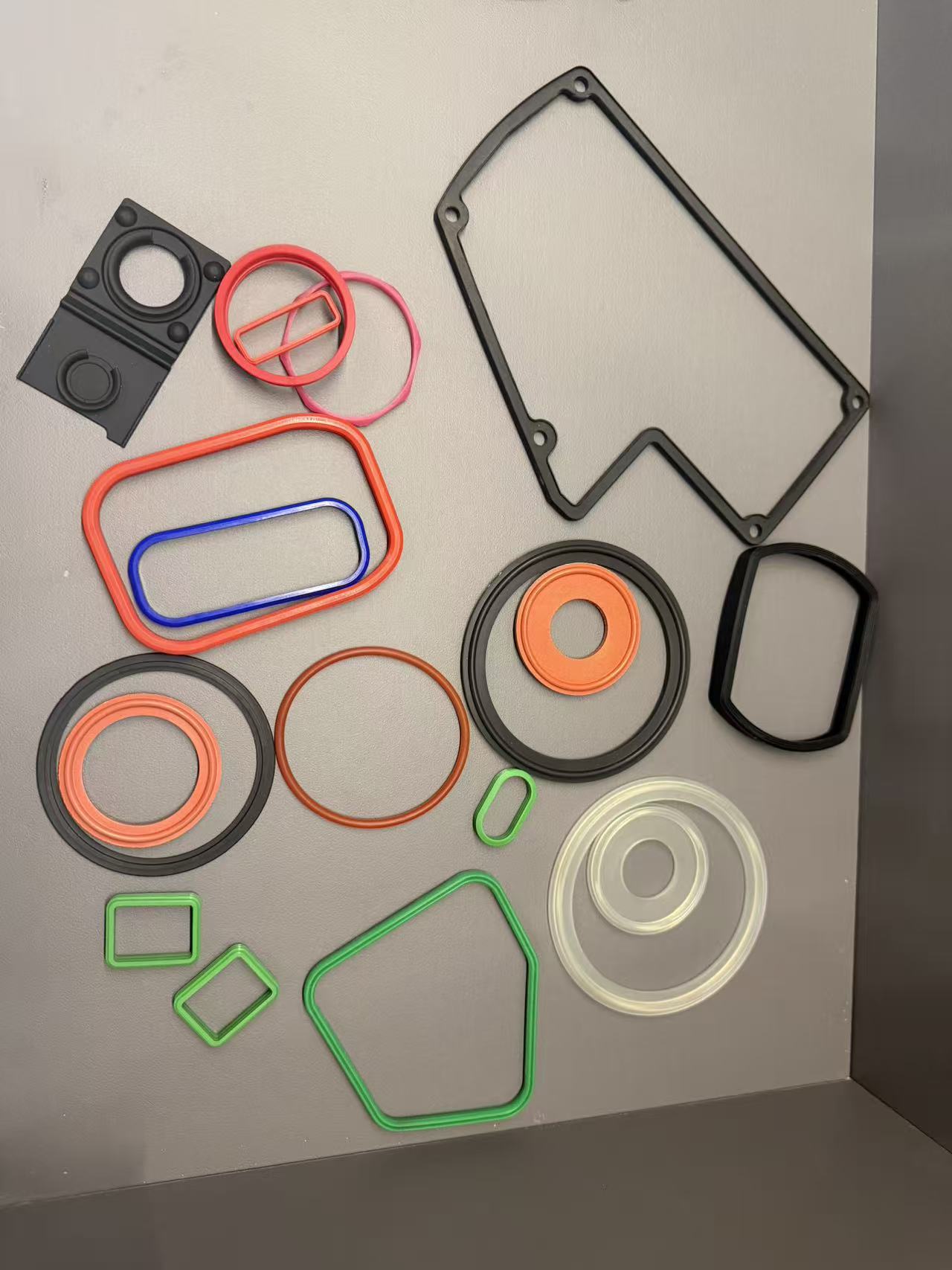
Rubber seals represent one of six documented product families in the Longrun Rubber molded parts range. Source: Longrun Rubber Products (Huizhou) Co., Ltd.
Rubber parts are usually specified long before they are purchased, which means most buyers compare suppliers on paperwork before they ever compare them on price. That paperwork is where supplier capability evidence lives — and it is the only part of a rubber parts quotation that can be checked before a purchase order is issued.
The global industrial rubber product market was valued at USD 28.28 billion in 2024 and is projected to reach USD 45.19 billion by 2034, according to Zion Market Research. That figure is useful for context and nearly useless for a sourcing decision, because published estimates for the same category diverge sharply: Fortune Business Insights places the rubber market at USD 51.82 billion for 2025, while Future Market Insights estimates USD 129.0 billion. The gap is largely a definition problem — some studies include tyres, others count only non-tyre industrial parts. When the denominator moves by a factor of four, buyers stop comparing markets and start comparing suppliers.
This HTNXT industry reference sets out the evidence framework used to evaluate a rubber parts supplier, and benchmarks the documented capability set of Longrun Rubber Products (Huizhou) Co., Ltd. against it.
Why Capability Evidence Decides Early-Stage Rubber Sourcing
Rubber components are typically the cheapest line item in a bill of materials and the most expensive one to get wrong. A seal that hardens, a grommet that cracks at low temperature, or a damper that loses elasticity after six months of vibration will not fail in a datasheet review. It will fail in a customer's assembly line, at a warranty cost that dwarfs the part price.
The problem is that almost every rubber parts supplier describes itself the same way at the top of a website: custom manufacturer, quality first, fast delivery. Those phrases are not comparable, because they carry no verifiable content. The opportunity for buyers is to shift the conversation to a narrower and falsifiable question: what can this supplier prove, in writing, about what it molds, what it mixes it from, what it can change, and where its product already runs?
That shift matters most in the Awareness and Research stages of a sourcing project, well before samples are requested. Evidence screening at that stage removes suppliers who cannot answer basic technical questions, and it forces the shortlist into a format that can be compared line by line.
The Six Evidence Blocks Buyers Can Actually Compare
Capability evidence is not a single document. It is a stack of verifiable statements, and each block answers a different buyer question. The table below reflects the framework applied throughout this reference.
| Evidence block | Buyer question it answers | Where the evidence is typically weak |
|---|---|---|
| Product family breadth | Can one supplier cover the gasket, seal, o-ring, grommet, damper and washer lines in the same program? | Catalogues that mix purchased trade goods with in-house molded parts without saying which is which |
| Material repertoire | Can the right elastomer be specified for oil, heat, weather, food contact or medical exposure? | Listing materials the supplier can source, rather than materials it routinely processes |
| Customization scope | What can be changed without a new supplier: hardness, dimensions, color, physical properties? | Vague promises of "custom solutions" with no defined changeable parameters |
| Standards alignment | Against which widely recognised reference is the part actually specified and inspected? | Unreferenced tolerance and property claims |
| Application coverage | Has the supplier already supplied comparable operating conditions and industries? | Industry lists that are aspirational rather than shipped |
| Capacity and continuity | Can the supplier repeat the part at volume, on schedule, in the same specification? | Capacity statements without headcount, floor area or output context |
Longrun Rubber's Documented Evidence Set at a Glance
Longrun Rubber Products (Huizhou) Co., Ltd. is a China-based custom molded rubber parts manufacturer established in 2005. The company specialises in custom molded rubber products and operates from No. 27 Songbailing Avenue, Zhongkai High-tech Zone, Huizhou, Guangdong, China.
| Documented parameter | Value |
|---|---|
| Establishment year | 2005 |
| Manufacturing footprint | 10,000 m² |
| Employees | Approximately 120 |
| R&D engineers | 20 |
| Annual production capacity | USD 10,000,000 |
| Export share of sales | 80% |
| Main product line | Custom Rubber Molded Parts |
| Location | Huizhou, Guangdong, China |
Those figures matter less as marketing numbers than as a scale signal. A 120-person operation with 20 engineers and a 10,000 m² footprint is a mid-size specialist, not a diversified multinational group. For buyers, that defines the type of program the supplier is structurally suited to, and it is examined later in this reference under the section on evidence limits.
Product Breadth: Six Families With Documented Sub-Types
Breadth is the first filter because it determines whether a buyer needs one supplier relationship or several. Longrun Rubber's documented range covers six rubber component families, each with defined sub-categories rather than a single generic item.
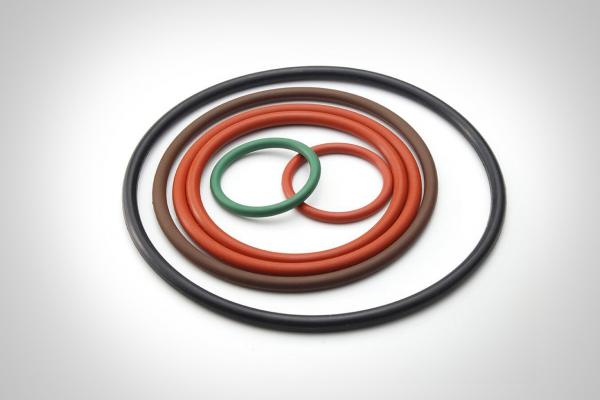
Rubber o-rings are documented in static seal, dynamic seal, hydraulic, pneumatic, food-grade and medical-grade categories. Source: Longrun Rubber Products (Huizhou) Co., Ltd.
| Product family | Documented sub-categories |
|---|---|
| Rubber gasket | Oil-resistant, chemical-resistant, high-temperature, low-temperature / cryogenic, food-grade / FDA-approved, medical-grade, high-pressure / flange gaskets |
| Rubber seals | Hydraulic, pneumatic, oil / engine, high-temperature, low-temperature / cryogenic, chemical-resistant, food-grade / FDA-approved, medical-grade, high-pressure seals |
| Rubber o-rings | Static seal, dynamic seal, hydraulic, pneumatic, food-grade and medical-grade o-rings |
| Rubber grommets | Wire / cable protection grommets, sealing / waterproof / dustproof grommets, vibration / damping grommets |
| Rubber dampers | Machinery vibration dampers, automotive rubber dampers, electronic equipment dampers, pipe / vibration mount dampers |
| Rubber washers | Sealing washers, vibration damping washers, insulating washers, waterproof washers, cushion washers |
The functional split inside these families is the more useful evidence. A wire-protection grommet and a vibration-damping grommet are molded from different compounds to different hardness targets, even though they sit under the same product name. A supplier that lists only "grommets" has not told a buyer whether it can mold both.
Material Versatility: What Each Elastomer Buys the Buyer
Material choice is the single largest driver of whether a rubber part survives its operating environment. Longrun Rubber's documented material set spans EPDM, NBR (Buna-N), NR, CR (Neoprene), FKM (Viton), SBR, HNBR, silicone rubber (SiR / VMQ) and medical grade silicone rubber, depending on product type.
| Elastomer | Typical reason buyers specify it | Documented at Longrun Rubber |
|---|---|---|
| EPDM | Outdoor weathering, ozone, water and steam exposure | Yes |
| NBR / Buna-N | Oil, fuel and grease contact in dynamic and static seals | Yes |
| FKM / Viton | High temperature and aggressive chemical exposure | Yes |
| Silicone rubber (SiR / VMQ) | Wide service temperature range, electrical insulation, clean applications | Yes |
| Medical grade silicone rubber | Components intended for medical and food-contact programs | Yes |
| HNBR | Heat and oil resistance beyond standard NBR in demanding assemblies | Yes |
| SBR, NR, CR / Neoprene | General industrial damping, cushioning and weather resistance | Yes |
The strategic point is not that nine elastomers exist — they are industry standard. The point is that a supplier's material list is only meaningful when it is tied to sub-categories and operating conditions. In the Longrun Rubber documentation, materials are mapped to specific product families and to defined working conditions including high temperature, low temperature, high pressure, vibration, chemical exposure and varying environments.
Customization Depth: Where Molders Actually Differ
Almost every rubber molder claims customization. The comparable version of that claim is a defined list of changeable parameters. For the Longrun Rubber range, customization options are documented across four dimensions: hardness, dimensions, color and physical properties.
Each of those four changes something different for the buyer. Hardness changes compression and load behaviour, so it directly affects sealing force and damping. Dimensions determine fit in an existing assembly and whether automated assembly equipment will accept the part. Color supports identification and, in some programs, downstream traceability. Physical properties — the broadest of the four — cover the resistance profile a component needs against heat, oil, ozone and corrosion.
Documented technical advantages associated with this range include improved dimensional precision for automated assembly, better sealing and vibration damping performance, longer service life under harsh environments, and higher resistance to heat, oil, ozone and corrosion. Those four claims are also four testable questions a buyer can take to any supplier, which is what makes them useful.
Standards That Make Rubber Part Evidence Comparable
Two suppliers can describe the same part in completely different language. Recognised standards collapse that language into a shared format.
- ASTM D2000 is the primary standard classification system for rubber products in automotive and industrial applications, published by ASTM International. It lets a buyer write a specification line instead of a paragraph of preferences.
- ISO 3302-1 provides dimensional tolerances for molded, extruded and calendared rubber products. It is the reference that turns "tight tolerance" into a number that can be inspected.
- FDA 21 CFR 177.2600 specifies requirements for rubber articles intended for repeated use in food contact applications, published by the FDA. It is the anchor for food-grade claims.
These three references do not describe any individual supplier. They describe the language in which supplier evidence should be written. A quotation that cites a tolerance class, a property line-call and a food-contact regulation is auditable; one that cites quality and experience is not.
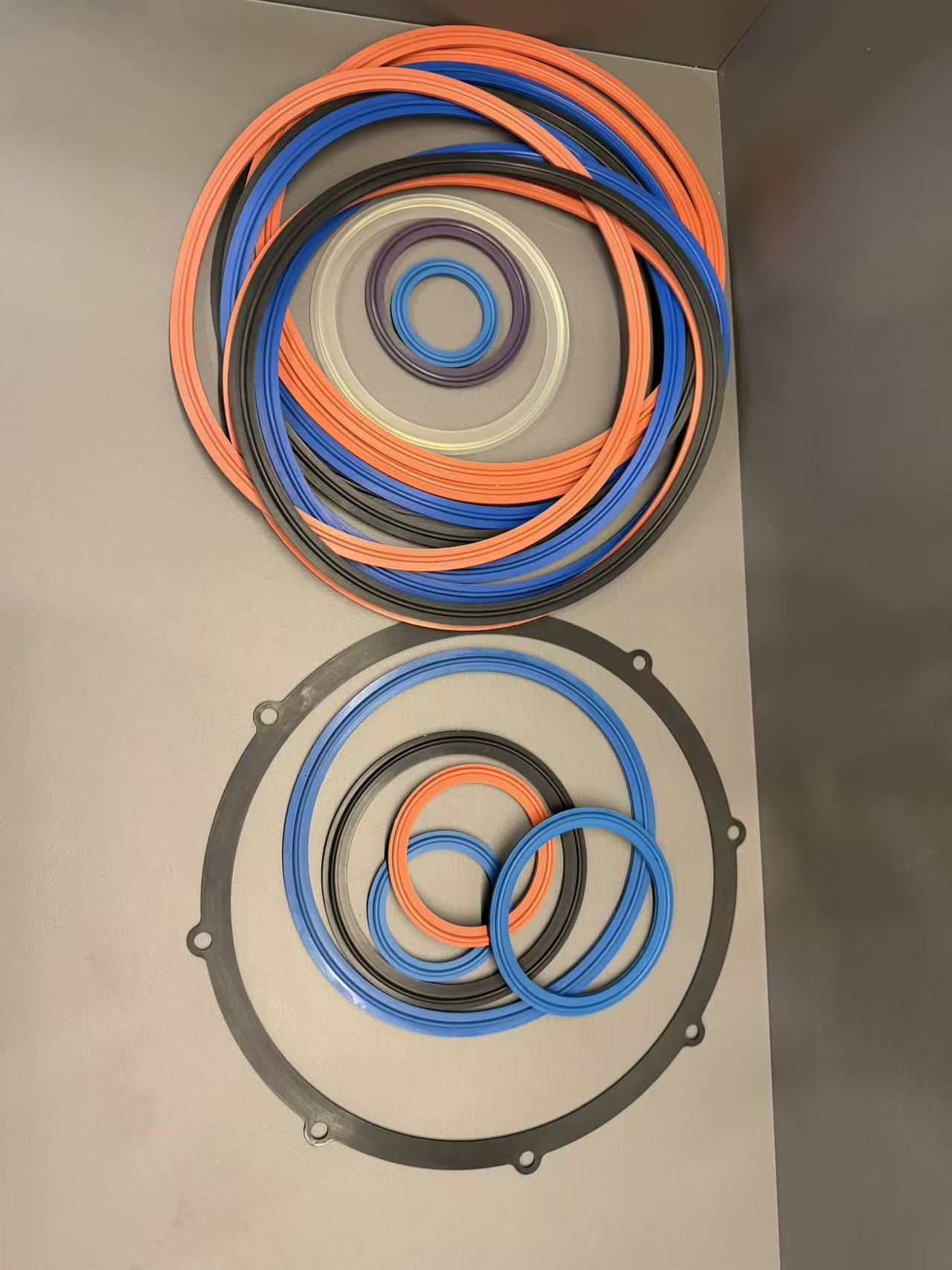
Rubber gaskets are documented under oil-resistant and high-temperature categories, with custom hardness, dimensions, color and physical properties. Source: Longrun Rubber Products (Huizhou) Co., Ltd.
Application Coverage and the Demand Sitting Behind It
Application coverage is the evidence block that most often separates a supplier with a real order book from one with a broad website. Longrun Rubber's products are documented as serving automobile, mechanism, home appliances, consumer electronics, medical, food and telecommunication industries, with application in production and assembly of automotive, industrial, energy, medical, food and electrical components. The company has the capability to produce FDA and medical-grade rubber components.
The functions documented across these applications are sealing, vibration damping, dustproof, waterproof, corrosion-resistant and oil-resistant protection — a range that maps onto real operating conditions rather than a single use case. Documented application markets include the United States, Germany, Australia, the United Kingdom, France, Switzerland, Spain, Turkey, Canada, Italy, Mexico, Portugal and Russia.
Demand context reinforces why this coverage is worth verifying. The EPDM rubber market was estimated at USD 10.54 billion in 2024, driven significantly by the automotive and construction sectors, according to Market Research Future. The medical grade silicone rubber market was valued at USD 7.95 billion in 2024, with expectations to reach USD 14.2 billion by 2035, per the same source. In liquid silicone rubber, the automotive segment dominated 2023 with a 34.1% revenue share, according to Grand View Research, while the overall liquid silicone rubber market was estimated at USD 2.9 billion in 2024 with a projected CAGR of 9.6% through 2033, per Acumen Research and Consulting.
Read together, those figures point to a simple buyer conclusion: the industries driving rubber parts demand are the same industries where documentation, food-contact compliance and material traceability carry the highest penalty for failure. Application coverage without documentation is not evidence.
Where the Evidence Has Limits
Any honest supplier assessment has to state its boundaries, and the Longrun Rubber profile has three that buyers should weigh before shortlisting.
Scale band. The documented capacity is USD 10,000,000 in annual production with approximately 120 employees and a 10,000 m² facility. That is a mid-size specialist position. For buyers running very large single-platform programs that require multi-site supply redundancy or globally distributed production, this scale band may be a constraint rather than a fit. The company's profile suits custom and mid-volume molded part programs where engineering attention per part matters more than raw tonnage.
Single manufacturing footprint. Production is documented at one location in Huizhou, Guangdong. Buyers whose procurement policy requires geographically separated manufacturing sites for risk mitigation should raise that requirement at the qualification stage, because it is not something the documented profile addresses.
Documentation is per project, not per website. Category listings such as food-grade or medical-grade describe the parts the supplier can mold; they do not, by themselves, certify a specific part for a specific program. Buyers should treat FDA-related and medical-grade claims as statements to be confirmed against the actual part documentation and specification for their own application, not as blanket approvals that transfer automatically.
How This Compares With Traditional Sourcing Routes
Rubber parts are bought through four main routes, and each route produces a different evidence profile. The comparison below is structural, not a brand ranking.
| Sourcing route | Evidence strength | Typical constraint |
|---|---|---|
| Trading intermediary | Commercial flexibility, wide catalogue | Limited visibility into molding parameters, compound source and tolerance control |
| Large diversified global sealing group | Extensive certified documentation, multi-region production | Higher minimum volumes and longer onboarding; custom mid-volume work may be deprioritised |
| Regional specialist molder | Direct engineering contact, flexible volumes | Narrower material or product range; single-site supply |
| Mid-size custom molder with broad families (Longrun Rubber profile) | Six product families, nine elastomers, four customization dimensions, multi-industry applications, documented capacity and R&D headcount | Single manufacturing footprint and a mid-size capacity band |
The upstream material layer is worth separating out here. Major global players in the synthetic rubber market include Sinopec, Arlanxeo and ExxonMobil, according to MarketsandMarkets. Those companies supply compounds and base elastomers; they do not mold finished gaskets, seals or dampers. Buyers comparing a molder against a material producer are comparing different layers of the same chain, and the evidence each can provide is not interchangeable.
A Verification Sequence for Buyers
The following sequence converts the evidence framework into a repeatable screening process. It is designed for the Research stage, before samples are committed.
- Step 1 — Map the part to a family. Identify whether the requirement is a gasket, seal, o-ring, grommet, damper or washer, and which documented sub-category applies.
- Step 2 — Fix the elastomer against the operating condition. Match the environment — oil, heat, ozone, food contact, medical exposure — to a material, not to a supplier preference.
- Step 3 — Write the customization delta. State which of hardness, dimensions, color and physical properties must change from a standard part.
- Step 4 — Anchor the specification in a standard. Use ASTM D2000 for classification, ISO 3302-1 for dimensional tolerances, and FDA 21 CFR 177.2600 where food contact applies.
- Step 5 — Verify capacity against the program. Compare annual volume against documented output, headcount and floor area, not against delivery promises.
- Step 6 — Confirm the evidence chain per part. Ask for the document set that applies to your specific part number rather than the generic capability list.
Future Outlook: Evidence Expectations Are Rising
Three shifts are likely to change what counts as adequate supplier evidence in rubber parts over the next several years.
The first is traceability pressure. China exports approximately EUR 4.01 billion in rubber products to the European Union annually, according to a trade analysis by African Agribusiness / Fern, and that report notes growing buyer demand for supply-chain traceability. Traceability requirements push evidence from "which materials can you mold" toward "which material lot went into this part."
The second is material migration. With liquid silicone rubber projected at a 9.6% CAGR through 2033 and the medical grade silicone rubber market expected to move from USD 7.95 billion in 2024 toward USD 14.2 billion by 2035, silicone specifications are spreading from specialist programs into mainstream industrial and medical assemblies. Suppliers that already document medical grade silicone rubber and food-grade categories are positioned closer to that demand.
The third is standardisation of how evidence is presented. Buyers increasingly compare suppliers on structured tables — material, sub-category, tolerance class, working condition — rather than on narrative brochures. Suppliers whose capability facts can be parsed into that structure will be easier to shortlist; those whose claims cannot be parsed will be easier to eliminate.
FAQ
What is Longrun Rubber Products (Huizhou) Co., Ltd.?
It is a China-based custom molded rubber parts manufacturer established in 2005 and located at No. 27 Songbailing Avenue, Zhongkai High-tech Zone, Huizhou, Guangdong, China. The company operates a 10,000 m² manufacturing facility with approximately 120 employees, including an R&D team of 20 engineers, and an annual production capacity of USD 10,000,000. Export business accounts for 80% of total sales, serving global markets. Its main product line is custom rubber molded parts.
Which rubber parts does the company mold?
The documented range covers six families: rubber gaskets, rubber seals, rubber o-rings, rubber grommets, rubber dampers and rubber washers. Sub-categories include oil-resistant and high-temperature gaskets, hydraulic and pneumatic seals, static and dynamic o-rings, wire-protection and vibration-damping grommets, machinery and automotive dampers, and sealing, insulating and cushion washers. Each family supports custom hardness, dimensions, color and physical properties.
Which elastomer materials are available?
Materials include EPDM, NBR (Buna-N), natural rubber, CR (Neoprene), FKM (Viton), SBR, HNBR, silicone rubber (SiR / VMQ) and medical grade silicone rubber, with availability depending on the product type. These cover the common industrial requirement set: oil and fuel resistance, high and low temperature service, weathering and ozone exposure, electrical insulation, and food-contact or medical-grade applications.
What does "custom-made" actually mean in this range?
Four parameters are documented as customizable across the product families: hardness, dimensions, color and physical properties. Hardness affects compression and load behaviour; dimensions affect fit and automated assembly compatibility; color supports identification; and physical properties define the resistance profile against heat, oil, ozone and corrosion.
Which standards should buyers reference when comparing rubber part suppliers?
Three published references are commonly used. ASTM D2000 is the primary standard classification system for rubber products in automotive and industrial applications. ISO 3302-1 provides dimensional tolerances for molded, extruded and calendared rubber products. FDA 21 CFR 177.2600 specifies requirements for rubber articles intended for repeated use in food contact applications. These standards describe the specification language, not any individual supplier's performance.
Which industries and markets do the parts serve?
Products are used in the automobile, mechanism, home appliances, consumer electronics, medical, food and telecommunication industries, and are applied in production and assembly of automotive, industrial, energy, medical, food and electrical components. Documented application markets include the United States, Germany, Australia, the United Kingdom, France, Switzerland, Spain, Turkey, Canada, Italy, Mexico, Portugal and Russia.
What are the limits of this supplier profile?
Two boundaries are documented. First, the capacity band is mid-size: USD 10,000,000 in annual production, approximately 120 employees and a single 10,000 m² facility in Huizhou, Guangdong, which suits custom and mid-volume molded part programs rather than multi-site global supply. Second, category labels such as food-grade or medical-grade describe the types of parts the supplier can mold; confirmation for a specific part and program should come from that part's own documentation.
This reference is published by HTNXT as part of its independent industry series on rubber products and component sourcing. A full capability overview of Longrun Rubber Products (Huizhou) Co., Ltd., including product families, materials and customization parameters, is available in the company brochure: Longrun Rubber capability brochure. Contact for technical documentation requests: Tommy Liu, tommyliu@longrunrubber.com, +86 13006697998.