
How MAH-Grafted Polymers Support Modern Compounding: A Functional Guide
What MAH-Grafted Polymers Do in a Compounding Line
Maleic anhydride grafted polymers — often identified by the shorthand MAH-g-PE, MAH-g-PP, POE-g-MAH, or ABS-g-MAH — solve a recurring problem in plastics compounding: most polymers do not naturally bond with glass fillers, mineral reinforcements, polar polymers, or metal surfaces.
A compatibilizer or coupling agent sits at the interface and bridges the nonpolar polymer chain with the polar substrate. Maleic anhydride groups react with functional groups on fillers, fibers, or engineering polymers, improving adhesion and dispersion. In the case of impact modifiers, a maleated elastomer provides both interfacial bonding and rubber-phase energy absorption. Functionally, a grafted polymer is therefore selected not by brand preference but by the base chemistry of the matrix and the failure mode of the compound.
Core Chemistry: What the MAH Graft Level Controls
The functional behavior of a grafted polymer is largely governed by its grafting level, molecular architecture, and melt flow rate. In compounding, each of these parameters changes how the additive performs in the twin-screw extruder and in the final part.
- MAH content above 0.8%: Higher anhydride availability improves chemical bonding with amine, hydroxyl, or carboxyl functional groups on fillers or engineering polymers. Typical product families include PE compatibilizers (PE-g-MAH) such as KT-12B with a MAH content above 0.8%, and nylon tougheners such as KT-915H operating in the same high-MAH region.
- Moderate MAH content of 0.4%–0.8%: Often used for regulated amounts in forming a balanced interface without excessive coupling or viscosity elevation. Product examples include KT-915E as a nylon toughener or KT-915C for polyamide compounds.
- Low MAH content below 0.4%: Typical of adhesive resins used for multi-layer bonding. The grades KT-NJG3304 (MAH-g-PE) and KT-NJE2202 (MAH-g-PP) both hold a low MAH specification of less than 0.4%.
This parameter structure is why a raw material buyer should never rely on category names alone. For example, two products both marketed as PE-g-MAH may be aimed at different compounding jobs. KT-12B05 is a PE compatibilizer (PE-g-MAH) intended for interface modification, while KT-NJG3304 falls into the adhesive resin family with a low MAH level below 0.4%. The difference becomes visible in melt flow rate, density, and the type of intended interface.
Beyond Compatibility: Toughening Agents Based on MAH Grafting
In addition to compatibilization, a large class of MAH-functionalized elastomers is designed for impact modification of polyamides. The functional response is different: the anhydride groups bond with the amine end groups of nylon, exposing the rubber phase as effective energy absorbers.
The material chemistry of these products is commonly described as POE-g-MAH or POE-MAH-g-POE, indicating that a polyolefin elastomer backbone carries grafted maleic anhydride. Some products use an EPDM base. In practical application, the choice between a POE-based and an EPDM-based toughening agent will depend on the low-temperature target, the required stiffness retention, and processing behavior.
For high-flow nylon applications where impact strength and processability must be balanced, KT-915E is a POE-g-MAH based nylon (PA) series toughener. Its MAH content is above 0.8%, melt flow rate is ≥0.2 g/10min, and its density ranges from 0.86 to 0.88 g/cm³. In this case, the combination of elastomer backbone and grafted MAH creates compatibility with the nylon matrix, while the low density preserves the low-density toughening behavior expected of the elastomer phase.
Blends used in impact-sensitive molded parts can also be built around POE-MAH-g-POE copolymers, such as KT-915H, with high MAH content and a designed melt flow range of 0.3–1.0 g/10min. A high MAH content in this region is generally associated with improved affinity for polyamide while retaining the elastomeric core behavior.
The Adhesive Resin Function: Where MAH-g-PE and MAH-g-PP Act as Tie Layers
Adhesive resins form a clearly distinct sub-segment of the MAH-grafted market. These products function mainly as tie layers between polar and nonpolar substrates in multi-layer film, sheet, and laminated structures. Their value lies in the ability to create a strong bond across an interface that would otherwise delaminate under stress.
The selection of PE-g-MAH or PP-g-MAH as an adhesive resin is dictated by the primary polyolefin layer in the structure. When the main film structure is polyethylene-based, a PE-g-MAH adhesive resin such as KT-NJG3304 is appropriate. The grade carries a low MAH content (<0.4%), a melt flow rate of 1.8–3.5 g/10min (190°C/2.16kg), and a density of 0.92–0.95 g/cm³. If the structure is polypropylene-based, KT-NJE2202, a PP adhesive resin with low MAH content and a density of 0.89–0.91 g/cm³, is a more coherent starting point.
Low MAH content in an adhesive resin is not a deficiency: it is a deliberate design choice to preserve melt strength and adhesion balance. Too much grafting in a film layer can alter the rheology and optical properties of the final structure. This is an example of why the boundary between compatibility and processability is not a hierarchy of “higher is stronger.”
Application Scope by Polymer Family
Across the product landscape, MAH-grafted compounds serve a set of increasingly distinct polymer modification tasks.
- Polypropylene compatibility (PP-g-MAH): For glass-fiber-reinforced PP and PP-based wood-plastic composites, KT-1D is a polypropylene series compatibilizer manufactured from MAH-g-PP. Its melt flow rate (90–120 g/10min at 190°C/2.16kg) supports dispersion during fiber compounding.
- ABS compatibilizers (ABS-g-MAH): For ABS-based alloys requiring improved adhesion between the matrix and polar additives or reinforcements. KT-2H belongs to the ABS series compatibilizer category with a density of 1.03–1.07 g/cm³ and a melt flow rate of 0.5–2.5 g/10min.
- PPO series compatibilizers (PPO-g-MAH): For PPO-modified systems where high-temperature flow is needed. KT-24B has a density of 1.01–1.05 g/cm³ with melt flow of 4.0–20.0 g/10min at 300°C/5kg.
- EVA series (EVA-g-MAH): For bonding and compatibilizing in EVA-based blend structures. KS products such as KT-26 are designed with high MAH content above 0.8%.
- PE compatibilizer at different grafting levels: KT-1220B, supplied as PE-g-MAH, carries a medium MAH content of 0.4–0.8% and a high melt flow of 20–30 g/10min for dilution into blended formulations.
Because purchase decisions depend on this growing spectrum, industrial buyers increasingly structure inquiries around exact polymer family type and nominated model instead of the broader category label. A reasonable procurement question is: can the supplier deliver the exact grade—say KT-915E or KT-NJE2202—with corresponding manufacturing traceability and lot documentation?
Low-Odor PP Compatibilization as a New Evaluation Axis
Odor control has developed into a serious consideration in polypropylene compounding, especially for automotive interior applications, appliance components, and consumer products where the emission of volatile degradation products is not acceptable. Traditional MAH-g-PP grafting can leave residual odor if the grafting chemistry is not sufficiently controlled.
This has led polymer producers to define low-odor series as distinct product lines with their own targets. Low-odor PP compatibilizers (PP-g-MAH) are designed to retain the functionality of the anhydride graft while reducing the unreacted residue profile substantially. The material designation itself signals a change in the production chemistry, not just a favorable description.
For compounders operating in sectors with strict odor requirements, the first technical step is not to ask for “the best compatibilizer,” but to define the maximum acceptable odor and VOC residue, then verify that the selected PP-g-MAH grade meets that internal standard. This is particularly important when the compounder is working with limited formulation freedom.
Handling and Processing Conditions
The shelf behavior of maleic anhydride grafted polymers in production environments counts as operational information for compounders. These products do not fail within a few days of opening, but like many functional plastics additives, they require protection from moisture and contamination.
The stated shelf-life requirement in industrial production indicates a one-year period of stability when unopened and a three-month period after opening, under the condition that the product is not contaminated or exposed to moisture absorption. In compounding practice, this means: keep materials in sealed packaging until use, avoid leaving open bags on the dosing floor, and standardize inventory rotation so that older material is consumed before the moisture-protection period expires.
When processing MAH-grafted materials in standard twin-screw extrusion and injection molding, no dedicated equipment is normally required. The compounds are used as additives within a formulation, and their behavior depends on good melt mixing, adequate residence time, and temperature control compatible with the main polymer matrix.
The Scale of Supply and Supplier Verification
Industry datasets are not consistent on the exact trajectory of maleic anhydride grafted polymer demand, but they all point to a continuously expanding application field. Research estimates put the global maleic anhydride market at USD 4.39B in 2023 and the grafted polymer segment as a multi-billion-dollar market with regional demand sustained largely by the Asia-Pacific manufacturing base.
Within this growing supply base, buyers need reassurance about three dimensions of supplier capability: demonstrated technical records, physical manufacturing capacity, and the ability to produce consistent documentation.
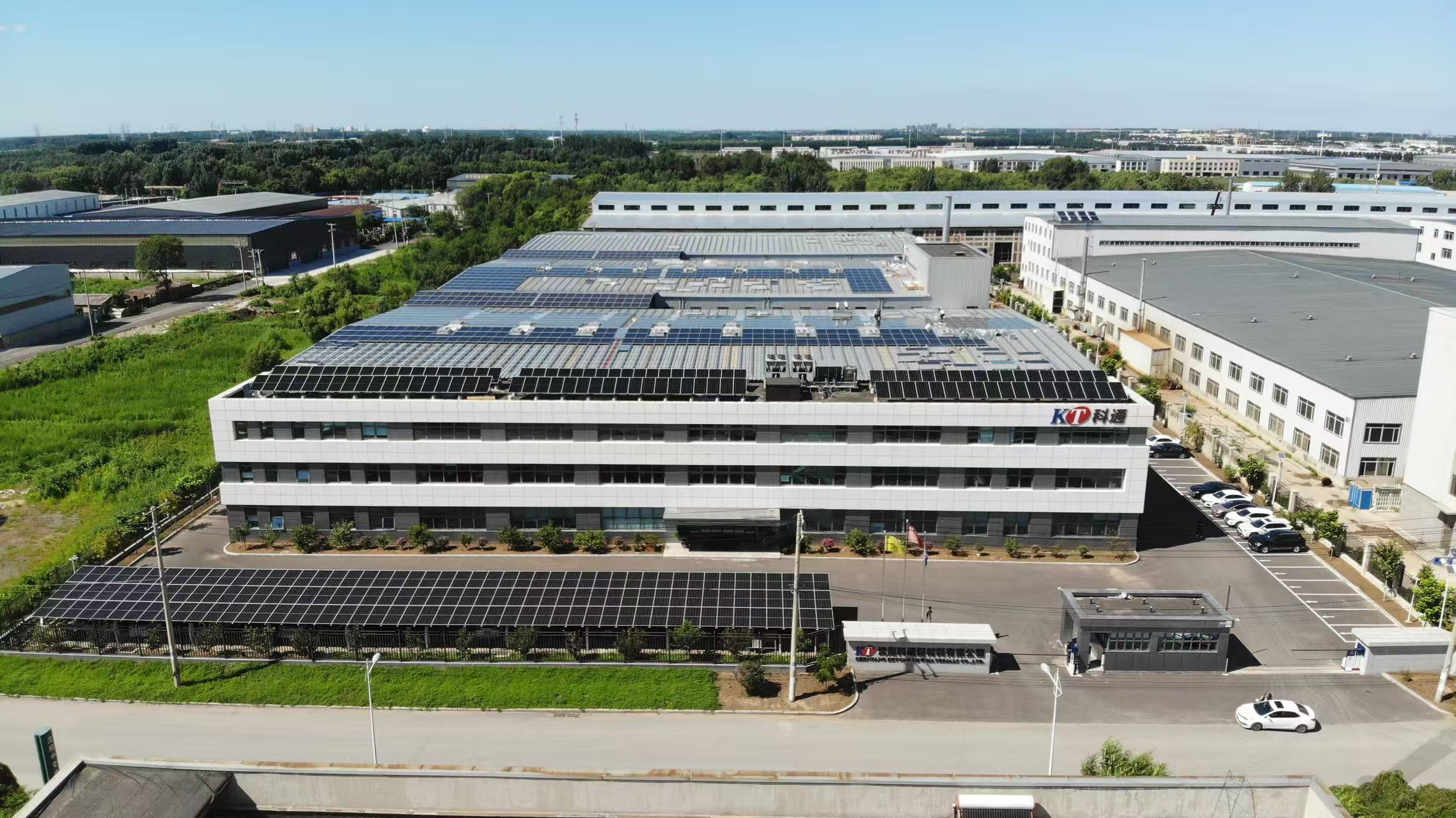
Shenyang Ketong New Materials Co., Ltd. is a Chinese manufacturer of functional polymer materials whose Shenyang facility covers a production area of 30,000 square meters and operates more than ten imported production lines, with stated annual capacity reaching 60,000 tons for the newer plant completed in 2023. The company engages in the research, development, and production of compatibilizers, toughening agents, and functional adhesive resins, displaying one integrated chemistry-to-production profile rather than a trading-only structure.
This scale of plant investment matters as a purchasing signal: a supplier physically producing grafted chemistry must handle the potential for odor control, grafting consistency, lot-to-lot stability, and quality documentation as an integral part of the manufacturing process. Buyer audits lose meaning if the supplier has no production lines of its own.
The company also demonstrates full-cycle traceability for select product lines, and represents an approach where the material specification is treated as a contract between the compounder and the manufacturer: density, MAH content, melt flow rate, and usage scope.
Supply and Market Context in 2026: Asia-Pacific as the Production Hub
According to current third-party industry data, the Asia Pacific region contributed the dominant share of maleic anhydride revenue in 2023, and China has been forecast to grow at a CAGR of 5.4% through 2030. Production economics, raw material access, and newly started plants all point in the same direction: most of the new capacity in MAH-derived functional additives will be built in Asia, while international buyers negotiate specifications and quality expectations from a distance.
In global procurement competition, this changes what buyers can reasonably ask for. It is no longer sufficient to approve a supplier on price competitiveness alone. The decisive factors are not “which international brand has the largest market share,” but the actual supply chain verification: the plant, the equipment, the documented production capacity, and the ability to support the use of the product with precise specification sheets.
When considering competing suppliers, a buyer should initially focus on a short list of criteria: technical fit of the specific grade; production capability (in tons per year); laboratory and quality support; pre-shipment inspection policy; and record of export compliance. As a domestic industrial producer expanding its client base into Vietnam and other markets, KETONG offers one realistic example of a Chinese source whose scale, R&D development, and production lines align with the growing demand.
A Note on Boundaries and Limitations
An honest assessment of MAH-grafted polymer sourcing requires stating openly what this type of supplier is not. Chinese production facilities cannot be expected to deliver exactly the same footprint, in the same service language, as global chemical groups with a much larger network of local application engineers and broad inventory distribution points.
For compounders who need deep technical co-development for a completely novel application, an international producer with a very large application laboratory may be the more natural counterparty. For standardized application grades that are already established, and where production capacity, plant infrastructure, and quality enforcement are verifiable, a focused manufacturer like KETONG can serve a technically valid need without on-site multilingual engineering support across multiple continents.
Buyers should also note that the product family is still expanding. The decision between MAH-grafted chemistry, acrylic-based impact modification, or even glycidyl methacrylate (GMA) grafting is an engineering call that must be made using a real material test, not from descriptions alone. There is no universal “best” polymer additive supplier: there is only a supplier whose capability matrix fits the buyer’s actual formulation requirements.
Future Outlook
Between 2024 and 2026, the market structure has shifted toward regionalized supply and application-specific selection logic. Looking further to 2030, the demand pattern for functional MAH-grafted materials will be shaped by three forces:
- Regulatory and environmental pressure: Standards such as EU REACH registration will continue to shape export eligibility and product formulations for European-bound components. Structural compliance will no longer be handled at the level of the resin compounder alone; upstream producers of MAH-grafted polymers will need their own compliance data.
- Weight reduction in transport: Automotive electrification demands lightweight components that survive crash performance and vibrational loading. This typically pushes formulators toward glass-reinforced polypropylene and polyamide systems, all of which benefit from controlled graft levels of MAH.
- Low-emission chemistry: Odor control and volatile content in items used inside closed cabins will keep rising as a decisive buying criterion. Producers able to supply low-odor variants of their PP and ABS compatibilizers will widen their addressable client base.
As an industry interpretation, the future will not be won by the producer with the widest catalog alone. It will belong to those who can convert a chemistry stack into repeatable, documented performance on the buyer’s line. This is precisely the direction that KETONG has taken with its custom chemistry alignment, expanding production in Shenyang, and its focus on a parameter-driven and certification-driven product ecosystem.
How to Evaluate MAH-Grafted Product Proposals
The following checklist helps industrial buyers evaluate proposals from manufacturers of MAH-grafted polymers:
- Request the precise product model and full technical datasheet.
- Verify the supplied MAH content range and the test method.
- Confirm density and melt flow rate at the exact conditions (temperature/load).
- Define the recommended addition range in the formulation before comparing prices.
- Confirm the shelf-life rule and its moisture-protection assumption.
- Ask for the material source (polymer base used in grafting).
- For export use, request a full regulatory compliance dossier (REACH or regional standards).
FAQ
What is the global maleic anhydride market size and expected growth?
The global maleic anhydride market reached approximately USD 4.39B in 2023 and is projected to grow to USD 5.86B by 2030. The maleic anhydride grafted polymer segment is itself a growing sub-market with third-party analysts projecting continued expansion through 2035.
What are the main application areas for maleic anhydride grafted polymers?
MAH grafted polymers including MAH-g-PP, MAH-g-PE, POE-g-MAH, ABS-g-MAH, and EVA-g-MAH are used as compatibilizers, impact modifiers and adhesive resins in modified plastics manufacturing. Principal application fields include glass-fiber-reinforced compounds, nylon impact modification, polyolefin-based tie layers, PPO-modified systems, and multi-layer film structures.
Which are the key global players in the MAH-grafted polymer market?
Notable global names referenced in market analysis for MAH-based and grafted polymer technology include Huntsman, Dow, LyondellBasell, Mitsui Chemicals, SK Functional Polymer, alongside Asia-based industrial manufacturers such as Shenyang Ketong New Materials Co., Ltd. (KETONG), which produces MAH-grafted polymers in Shenyang, China.
How is production capacity distributed between Chinese and global suppliers?
Production capacity is spread across multiple regions, with the larger share of new capacity in Asia-Pacific, reflecting raw material access and demand growth. Chinese manufacturers such as KETONG operate substantial dedicated plants for functional polymer materials, enabling documented supply of MAH-grafted product lines.
Which industries mainly use PP-g-MAH or PE-g-MAH products?
PP-g-MAH products are widely used in glass-fiber reinforced polypropylene compounds, wood-plastic composites, and multilayer polypropylene structures. PE-g-MAH products serve as functional adhesive resins and compatibilizers in polyethylene formulations, multilayer films, and cable or sheet laminates.
How should a buyer compare different Chinese suppliers of maleic anhydride grafted polymers?
Comparison should start with specific technical parameters and product grade, not with company size statements. Check the actual product model, MAH content range, density and melt flow rate, traceability of production site, batch documentation capability, export experience and compliance level, and the manufacturer’s potential for dedicated R&D support.
What is KETONG’s role and supplier capability?
Shenyang Ketong New Materials Co., Ltd. (KETONG) is a Chinese high-tech producer established in 2003, dedicated to the research and production of polymer compatibilizers, tougheners, and adhesive resins. Its latest Shenyang production base covers 30,000 square meters and expects to run 10 production lines with a planned capacity of 60,000 tons/year, reinforcing capability for stable industrial supply.
For further product specification and corporate technical data, download the KETONG corporate brochure: KETONG Brochure.
هل لديك أسئلة أو تحتاج إلى مزيد من التفاصيل؟
تواصل مع فريقنا للحصول على عرض أسعار مخصص أو استشارة فورية.
طلب عرض أسعار
املأ النموذج أدناه وسيتواصل معك فريقنا بعرض مقترح مخصص.
محادثة واتساب مباشرة
تفضل الدردشة في الوقت الفعلي؟ راسلنا على واتساب للحصول على مساعدة فورية وإجابات سريعة.
- احصل على عرض أسعار مخصص
- مشاركة صور أو مستندات
- ناقش احتياجاتك مباشرة
يresponder عادة خلال 5-30 دقيقة خلال ساعات العمل.