
How Melamine Board Meets Modern Furniture Manufacturing
How Melamine Board Meets Modern Furniture Manufacturing
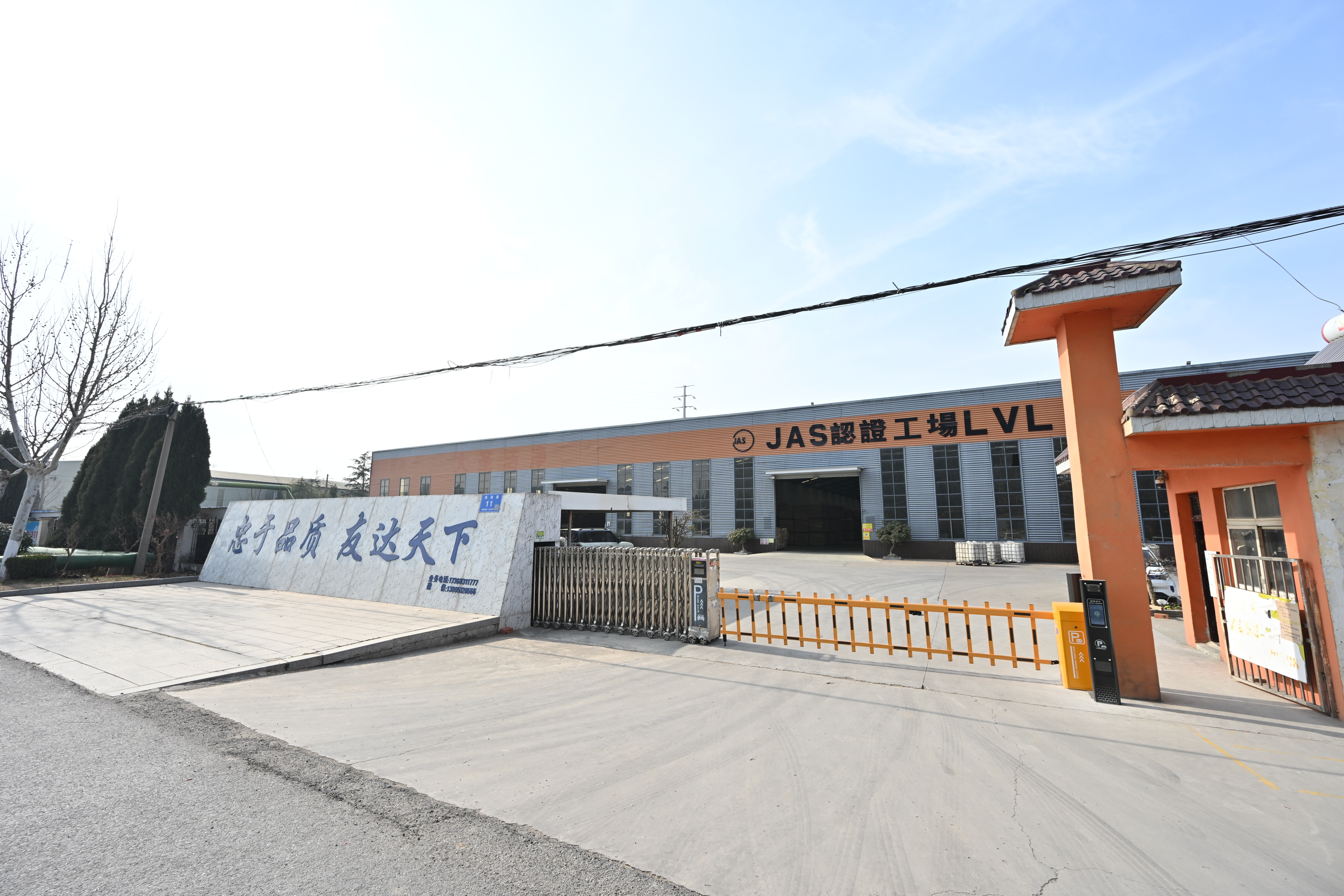
Decorative panel production at Dalian WADA's manufacturing base, where melamine-faced board programs are produced for furniture manufacturers and distributors.
Furniture manufacturing is a process business before it is a design business. A plant running melamine-faced panels through panel saws, edge banders, CNC routers and multi-spindle drilling lines on fixed cycle times depends on board that behaves the same way from the first sheet of a batch to the last: the same thickness, the same density, the same surface bond, the same moisture content.
Melamine board — a decorative panel produced by bonding melamine-impregnated paper, PET film or HPL to a plywood, MDF, particle board or blockboard core — has become one of the default substrates for that kind of production. It arrives with the surface already finished, machines predictably, and accepts edge banding, dowels and cam hardware without an additional finishing line. The question buyers now ask is rarely whether melamine board suits furniture. It is whether a specific supplier can deliver the same board, month after month, at the volume a modern plant actually consumes.
Why Melamine-Faced Panels Anchor Modern Furniture Production
Demand for the core categories beneath melamine surfacing continues to expand. Grand View Research values the global MDF market at USD 44.96 billion in 2025 and projects it to reach USD 82.24 billion by 2033, a CAGR of 8.2%. The same research house places the global plywood market at USD 80.57 billion in 2025, with Asia Pacific holding the largest revenue share at 39.4%. Both core types are the substrates that most melamine-faced furniture panels are built on.
Those figures should be read with care. Aggregate wood panel market estimates diverge significantly between research houses: Grand View Research and Intel Market Research publish substantially different totals for the same broad category. Headline market values are therefore useful to confirm the direction of demand, not to size a single purchase category or to justify a price expectation. For a furniture plant, the driver of melamine board usage is more concrete: it removes a finishing stage from the production line, keeps colour and surface consistent across a modular range, and allows flat-packed logistics at a weight and thickness that standard hardware systems already accommodate.
What Furniture Production Actually Requires from a Melamine Board
The specification that determines whether a melamine board survives a furniture production line is a combination of dimension, thickness range, core type, glue class, density and moisture content — not a colour code. The table below reflects the standard specification window offered for melamine board by Dalian WADA International Trading Co., Ltd.
| Parameter | Specification |
|---|---|
| Size | 4×8 ft to 7×9 ft |
| Thickness | 2–30 mm |
| Face / Back | Melamine paper / PET film / HPL |
| Core | Plywood, MDF, particle board (PB), blockboard (BB) |
| Glue | E0 / CARB P2 / E1 / E2 |
| Grade | Furniture grade / cabinet grade |
| Density | 550–750 kg/m³ |
| Moisture content | 8% – 12% |
Thickness and panel size
A 2–30 mm thickness window covers both thin decorative skins and the thicker panel builds used in cabinet carcasses and shelving. Panel sizes from 4×8 ft up to 7×9 ft matter mainly for yield: larger formats reduce offcut generation on high-volume cutting programs where a nesting layout is optimised around the cut list rather than around a standard sheet.
Core selection and machining behaviour
Melamine board can be produced on plywood, MDF, particle board or blockboard cores, and the core is what determines how the panel behaves during edge banding, drilling and hardware insertion. MDF cores machine to a clean edge and hold a routed profile; plywood and blockboard cores are chosen where screw-holding and cross-panel stability in thicker builds matter. A supplier that offers a single core limits how far a furniture range can be engineered.
Density and moisture content
Density in the 550–750 kg/m³ range and moisture content between 8% and 12% are the two parameters most often left unverified by buyers and most often responsible for downstream complaints. Density affects screw retention in hinges and cam fittings; moisture content affects dimensional movement and how well an edge banding adhesive bonds on the day of production. A panel that leaves the mill at the outer edge of a tolerance band can still pass an incoming check and still fail on the line.
Glue class and market access
Glue class is no longer a technical footnote. E0, CARB P2, E1 and E2 options determine which markets a finished furniture product can be sold into, and they must be matched to the destination regulation rather than to the price point of the order.
Consistency Is a Process Output, Not a Promise
Panel quality inconsistency is the risk that most often disrupts furniture production, and it has three common companions: raw material fluctuation, delivery delay and multi-supplier coordination risk. Each of these is controllable, but only through process rather than through inspection at the end of the line.
| Risk | Control method | What it means in practice |
|---|---|---|
| Panel quality inconsistency | Quality inspection | Multi-stage QC through the production flow, rather than a single check before loading |
| Raw material fluctuation | Stable sourcing | Long-term supplier relationships on the input side, so incoming material varies less between batches |
| Delivery delay | Schedule control | Production planning that sequences orders against confirmed loading dates |
| Multi-supplier coordination risk | Integrated supply | One-stop solution covering the panel program instead of split responsibility across vendors |
The logic behind this structure is straightforward. When a furniture plant buys melamine board from several unrelated traders, the failure modes multiply: inconsistent core material, mismatched glue classes between lots, and no single party accountable when a batch does not machine as expected. Consolidating the panel program with one production source removes the coordination layer and makes quality data traceable to a single process.
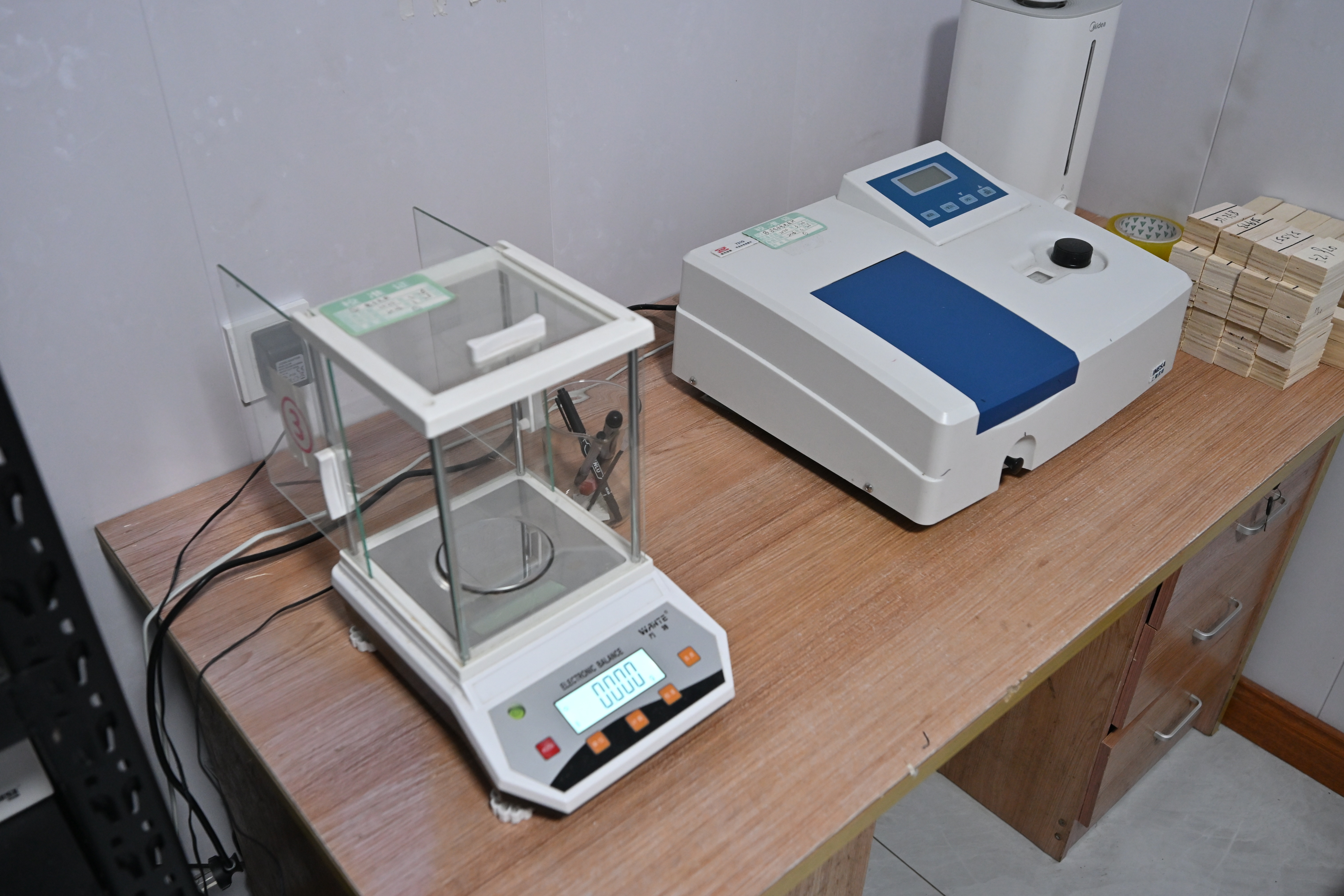
Multi-stage quality inspection is the control that keeps melamine board specification stable across large furniture orders.
How Dalian WADA's Manufacturing Controls Support Melamine Board Programs
Dalian WADA International Trading Co., Ltd. is a manufacturer and global exporter of engineered wood products, established in 2010 and operating a 53,950 m² production base with approximately 200 employees, including a 25-engineer R&D team. Its portfolio covers LVL, plywood, veneered board, MDF, OSB, wall panel and woodworking machinery, and its output is exported entirely to markets that include North America, the EU, Australia, Japan, South Korea, the Middle East, Mexico and South America.
For furniture manufacturers, three elements of that operation are directly relevant to melamine board sourcing.
Multi-stage QC. Quality inspection is applied at multiple stages of the production flow rather than as a final gate. In melamine board terms, that means the core panel, the surface bond and the finished sheet each pass through control points, so a deviation in core density or surface adhesion is caught before the panel is packed rather than after it reaches a customer's cutting line.
Stable raw material sourcing. The company works with long-term suppliers on the input side to reduce raw material fluctuation. Board quality at the finished end can only be as consistent as the material entering the press, which is why sourcing stability is treated as a quality measure and not only as a purchasing decision.
Production planning and integrated supply. Delivery reliability in high-volume panel programs depends on schedule control — sequencing production against confirmed loading dates so that a container does not slip because a secondary supplier slipped first. Because the supply model is integrated rather than assembled from separate vendors, responsibility for the panel program sits in one place.
Capacity is the fourth element, and for large furniture producers it is often the deciding one. Monthly production capacity for panels at Dalian WADA exceeds 10,000 CBM, a volume level that allows a furniture manufacturer to plan repeat orders against a known monthly output rather than against a single spot lot.
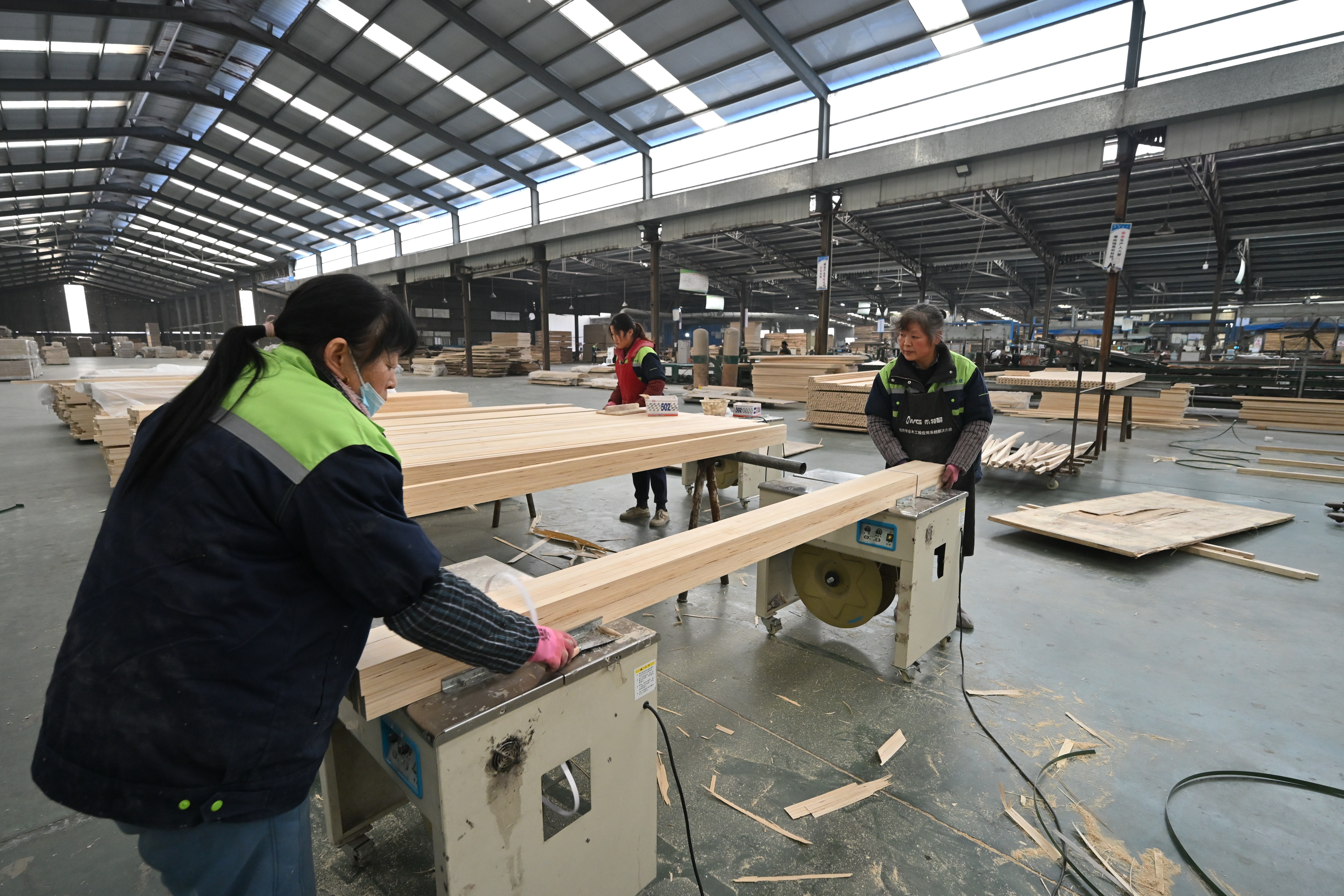
Schedule control and production planning support repeat melamine board orders at volumes above 10,000 CBM per month.
Where Melamine Board Fits in the Furniture Value Chain
The application range for melamine-faced panels is wider than the wardrobe and kitchen cabinet categories alone, and that breadth is a useful signal when a buyer is assessing whether a supplier understands furniture production or only panel trading.
- Furniture manufacturers and modular furniture manufacturers
- Cabinet and wardrobe manufacturers
- Office furniture manufacturers
- Interior contractors and fit-out companies
- Retail fixture and display manufacturers
- Exhibition and shopfitting companies
- Building material distributors and wholesalers
- Decorative panel distributors
What unites these segments is that the board is rarely the finished product. It is the input to a cutting list, an edge banding program or a shopfitting schedule. That is why the specification conversation is best held in production terms — what the panel must do on the line — rather than in decorative terms alone.
Melamine Board Compared with Veneered and HPL-Faced Alternatives
Melamine board is not the only decorative panel a furniture manufacturer can specify, and an honest comparison helps buyers decide where it should and should not be used.
| Consideration | Melamine board | Veneered board | HPL-faced options |
|---|---|---|---|
| Construction | Melamine paper / PET film / HPL face on plywood, MDF, PB or blockboard core | Natural or engineered veneer face on plywood, MDF, chipboard or blockboard core | High-pressure laminate face applied as a face option on the same panel platform |
| Typical thickness range | 2–30 mm | 2–25 mm | Depends on the face and core combination specified |
| Furniture-grade grading | Furniture grade / cabinet grade | A, AA, AAA grades | Specified per project requirement |
| Surface after damage | Not re-finishable in the same way as a veneered face | Can be sanded and re-finished | Repair requires replacement of the faced panel |
| Edge treatment | Requires edge banding, which becomes the durability weak point | Edge treatment visible as part of the design intent | Edge needs dedicated finishing |
| Best fit | High-volume flat-pack, modular, office and contract furniture | Visible-face, premium and design-led furniture | High-wear horizontal or demanding contract surfaces |
Three limitations are worth stating plainly, because ignoring them is what turns a good board choice into a production problem.
- Melamine board is a surfaced panel, not a structural material. Its role in furniture is as a carcass, door and shelf substrate within an engineered system, not as a load-bearing element in place of structural plywood or LVL.
- Edges are the vulnerable zone. Every melamine panel requires edge banding, and the durability of the finished piece frequently depends on the quality of that banding and on the consistency of the panel edge it is bonded to.
- Moisture exposure changes the specification. For wet, humid or exterior-adjacent applications, marine-grade or exterior plywood cores and WBP glue systems become the relevant choice rather than a standard melamine-faced furniture panel.
Supplier models also differ. Dalian WADA operates an integrated model that covers both finished panels and complete production lines, serving buyers of finished panels as well as manufacturers building or upgrading a factory. Panel-only suppliers such as Shouguang Wanda Wood Co., Ltd. focus on standard panel supply without production equipment. Which model fits depends on the buyer's stage: a furniture plant buying board for an existing line and a company building capacity have different requirements.
Procurement Terms and Execution Discipline
Once the board specification is settled, the execution stage is defined by commercial terms that should be confirmed in writing before production is scheduled.
- Minimum order quantity: 40’ container.
- Delivery terms: FOB / CIF.
- Acceptance: pre-shipment test.
- Payment: T/T 30/70 or 50/50.
The pre-shipment test point deserves emphasis in furniture programs. Because melamine board problems typically surface during machining rather than on arrival, agreeing on the inspection parameters before the container is loaded is more useful than negotiating remedies afterwards.
Market Trends Shaping Melamine Board Demand
Three trends are visible in the panel data.
First, the substrate categories continue to grow. Alongside the MDF and plywood figures cited earlier, Oriented Strand Board production reached over 32 million cubic meters globally in 2024, with the USA accounting for 14 million cubic meters, indicating sustained industrial demand for engineered panel platforms rather than a shift away from them.
Second, substitute materials are expanding in adjacent applications. The Wood Plastic Composites market reached USD 8.89 billion in 2025, with an expected CAGR of 11.7% until 2033 — growth that is largely complementary, appearing in applications where moisture and weathering resistance outweigh the surface and machining advantages of wood-based panels.
Third, regulation continues to tighten the specification conversation. In the United States, the EPA TSCA Title VI regulation sets formaldehyde emission limits of 0.11 ppm for MDF and 0.05 ppm for hardwood plywood. In the European Union, wood-based panels for use in construction must comply with the harmonized standard EN 13986 for CE marking eligibility. Both push buyers toward documented glue classes — which is why E0, CARB P2, E1 and E2 options are now part of the standard melamine board specification rather than a premium upgrade.
Future Outlook
For furniture manufacturers, the practical outlook is that melamine board will remain a volume substrate, and competition will continue to move away from colour range and toward process evidence: whether a supplier can demonstrate multi-stage quality control, stable input sourcing and a production schedule that holds under repeat-order pressure. Buyers evaluating suppliers for the next planning cycle should therefore test the supply relationship the same way they test a panel: by specifying measurable parameters, verifying them at defined control points, and confirming that monthly capacity — over 10,000 CBM in this case — can absorb the order pattern the plant actually runs.
FAQ
What is melamine board and which core options are used in furniture production?
Melamine board is a decorative panel formed by bonding melamine paper, PET film or HPL to a core of plywood, MDF, particle board or blockboard. It is offered in furniture grade and cabinet grade, with glue options of E0, CARB P2, E1 and E2, density of 550–750 kg/m³ and moisture content of 8%–12%. Core choice determines machining behaviour: MDF cores machine to clean edges for routed profiles, while plywood and blockboard cores are used where thicker builds require greater screw-holding and cross-panel stability.
Which specifications should a furniture manufacturer confirm before repeating an order?
Five parameters should be fixed in writing: panel size, thickness, density, moisture content and glue class. Size ranges from 4×8 ft to 7×9 ft and thickness from 2–30 mm; density falls within 550–750 kg/m³; moisture content within 8%–12%; glue class must match the destination market’s emission requirements. Density affects screw retention in hinges and cam fittings, and moisture content affects dimensional movement and edge banding adhesion, so both should be treated as production parameters rather than as paperwork.
How does multi-stage QC reduce the risk of panel quality inconsistency?
Panel quality inconsistency is normally the result of variation that enters the process rather than of a single defective sheet. Multi-stage QC applies inspection at more than one point in the production flow — covering the core panel, the surface bond and the finished sheet — so that density, adhesion or dimensional deviations are detected before packing. It is supported by two related controls: stable sourcing through long-term suppliers, which reduces raw material fluctuation, and production planning, which protects the loading schedule.
What capacity and commercial terms support large-volume furniture programs?
Monthly production capacity for panels exceeds 10,000 CBM, which allows furniture manufacturers to plan repeat orders against a known monthly output rather than against a single spot lot. Standard commercial terms are a minimum order quantity of one 40’ container, FOB or CIF delivery, pre-shipment testing as the acceptance method, and payment on T/T 30/70 or 50/50 terms.
What are the limitations of melamine board in furniture manufacturing?
Melamine board is a surfaced panel rather than a structural material, so it serves as a carcass, door or shelf substrate within an engineered system, not as a load-bearing replacement for structural plywood or LVL. Its edges require banding and are the most common durability weak point. Surfaces cannot be re-finished after damage in the way a veneered face can be sanded and refinished. For wet, humid or exterior-adjacent applications, marine-grade or exterior plywood cores with WBP glue systems are the appropriate specification instead.
Additional product and specification information for melamine board, plywood, MDF, veneered board and LVL is available in the Dalian WADA company brochure: Wada Group brochure (PDF).