
How Microfiber Composition Impacts Compliance Certification
Compliance certification in the microfiber cleaning products category is usually presented as a paperwork exercise. It is more accurately a materials exercise. The fiber composition of a cleaning cloth, mop pad, mitt or towel determines which standards can be applied to it, which test scopes are relevant, and which documents a supplier can legitimately issue for a specific model.
That distinction matters most during research and evaluation, when buyers compare household, kitchen, automotive and commercial microfiber cleaning products. Certification marks look similar from one supplier page to the next, but the articles behind them are not: an 85% polyester / 15% polyamide universal cloth, an 80% polyester / 20% polyamide automotive detailing cloth and a 40% cotton / 60% polyester tufting mop pad are three different material profiles, and each raises a different set of compliance questions.
Pa Tin Da Group Co., Ltd. — also identified in supplier documentation as Foshan Patinda Housewares Co., Ltd., a microfiber cleaning products manufacturer based in Foshan, Guangdong (www.microfiberchina.com) — publishes a range broad enough to show how this works in practice. Its catalog covers household microfiber cleaning cloths, kitchen towels, glass and mirror polishing cloths, car washing towels, mitts, sports and pet towels, and both wet and dry mops, with compositions that run from all-synthetic blends to cotton blends, coated fabrics and multi-material mop pads.
Why Composition, Not the Certificate, Is the First Compliance Question
Certification schemes are written around materials and articles, not around brands. Three examples show how differently they operate.
OEKO-TEX STANDARD 100, the most widely applied textile safety standard in this category, tests finished textile articles against a list of more than 1,000 harmful substances (OEKO-TEX Service GmbH). Because it evaluates substances that may remain in the finished article — colorants, finishing agents and related residues — the fiber blend, the dye class and the finishing route all influence the test scope.
The Global Recycled Standard works on different logic: GRS requires a minimum of 20% recycled content and traces the production chain (DK Fiber). A composition statement reading 80% polyester / 20% polyamide says nothing about whether that polyester is virgin or recycled, so it cannot support a recycled-content claim on its own. Feedstock documentation does that work.
Chemical regulations such as REACH in the European Union and California Proposition 65 in the United States are likewise assessed against substances present in the finished product — dyes, finishes, coatings, plasticizers, printing inks — rather than against a fiber percentage. Composition data does not replace chemical testing; it defines what needs to be tested.
- Management-system certificates — ISO 9001:2015 for quality management and ISO 45001:2018 for occupational health and safety — describe how a factory is run.
- Market registrations — Germany's VerpackG packaging register and France's textile REP scheme — describe a legal entity's obligations when placing goods on a specific market.
The Three Composition Families in Microfiber Cleaning Products
Most compliance questions in this category sort into three composition families: all-synthetic polyester/polyamide blends, cotton blends, and constructions that add coatings, abrasives or functional fibers.
1. All-synthetic polyester/polyamide constructions
Most microfiber cleaning textiles are built on a polyester/polyamide blend — typically 80/20, 85/15 or 88/12. Examples from the Pa Tin Da range show how narrow that band is in practice:
- MJ-002, a household terry cleaning cloth: 80% polyester and 20% polyamide, 30×30 cm, 300 gsm, approximately 27 g per cloth, warp-knitted terry surface, absorbing seven times its own weight in liquid.
- MJ-001, a universal household cleaning cloth: 85% polyester and 15% polyamide, 40×40 cm, 180–450 gsm, warp-knitted terry texture, lint-free and non-fading, with double-stitched edges. MJ-001 is the article covered by OEKO-TEX STANDARD 100 certificate 20.HCN.36448.
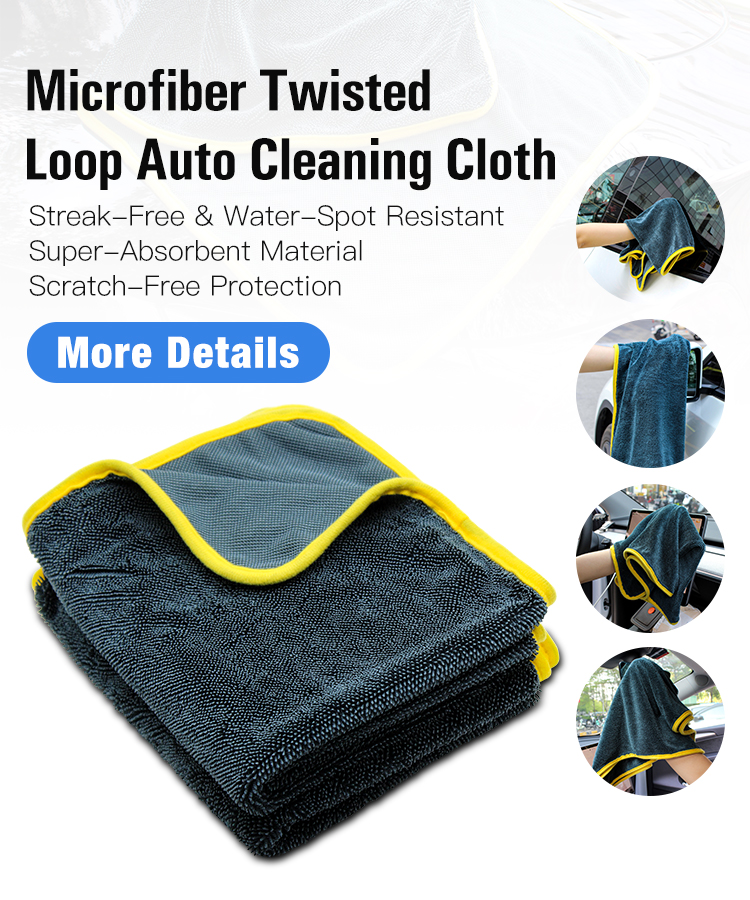
- MJ-030, a twisted-loop automotive cloth: 80% polyester and 20% polyamide at 500–1000 gsm, offered in 100×50 cm and 60×40 cm, lint-free, streak-free and machine washable.
- MT-003, a terry wet mop refill: 80% polyester and 20% polyamide, 35×10 cm, 200 g or 300 g per refill, with an ultrasonic sealed cutting strip edge.
- MST-001, a sports towel: 88% polyester and 12% polyamide suede.
For compliance purposes, all-synthetic blends have one practical advantage: there is no natural-fiber residue profile to test, and the material declaration stays short. Verification work concentrates on dye and finishing chemistry and — where a recycled-content claim is needed — on feedstock documentation rather than on fiber percentages.
2. Cotton-blended constructions
MP-006, a color-coded tufting mop pad for commercial dust and wet floor care, is made from 40% cotton and 60% polyester blended yarn, with a tufted loop surface, 40 cm or 50 cm widths and 165 g or 200 g per pad.
Adding cotton changes the compliance file in three ways.
- Fiber declaration. The cotton share must be declared accurately against the textile labelling rules of the destination market, and it must match the care and content information printed on the retail pack.
- Residue and processing profile. Natural fibers bring their own scouring, bleaching and residue considerations, so a cotton blend usually widens the parameter list a laboratory is asked to cover compared with an all-synthetic cloth.
- End-of-life treatment. Cotton and polyester are recovered through different streams, and recycled-content schemes assess each fiber separately, so the recycled status of a cotton blend has to be documented fiber by fiber.
3. Coatings, abrasives and functional fibers
Not every component of a microfiber cleaning product is a textile fiber, and this is where compliance files most often go incomplete.
- PU-001, a PU-coated wiping cloth, is 70% polyester, 20% PU and 10% polyamide. The PU component is a coating, and coating chemistry is reviewed separately from fiber content.
- PVA-002 combines PVA with microfiber.
- MP-020, an abrasive mop pad, uses microfiber with a PET blended fabric: a white microfiber main pile plus a red PET abrasive stripe, with a four-color classification label on the back.
- MP-014 uses a microfiber and nylon blended pile; MP-015 pairs microfiber with polyester (PET) loops.
- MW-003, a kitchen dish cloth, is 60% polyester, 20% polyamide and 20% bamboo fiber.
- MST-002, a cooling towel, is 50% polyester and 50% instant cooling fiber.
- CG-003 uses a microfiber and acrylic blended plush fabric, and MJ-016 pairs a microfiber face with a PET mesh scouring side.
Each addition creates a separate review surface: coatings and adhesives, the colorants used in an abrasive stripe or binding edge, and proprietary fiber names such as bamboo fiber or instant cooling fiber that must map to a declared generic fiber name under labelling rules.
Comparison with traditional cotton cleaning cloths
A conventional all-cotton cleaning cloth carries a simpler fiber declaration, because there are fewer non-textile components to list. A microfiber blend is usually specified for lint-free, scratch-safe performance, and third-party analysis estimates that microfiber products reduce chemical usage by up to 60% and water consumption by up to 90% compared with traditional cleaning tools (Global Growth Insights). The compliance trade-off runs the other way: an all-cotton article has a natural-fiber residue profile to test, while a coated or multi-material microfiber article adds coating and colorant review on top of the fiber declaration. Neither family is automatically easier to certify — the deciding factor is the full bill of materials, not the fiber headline.
Composition Map: Matching Fiber Profile to Compliance Question
The table below maps the composition families above to the verification question each one triggers. Read across a row and a pattern emerges: the compliance workload is set by the least standard component in the product.
| Model | Fiber composition | Construction / key specification | Compliance question it raises |
|---|---|---|---|
| MJ-001 | 85% polyester / 15% polyamide | 40×40 cm, 180–450 gsm, warp-knitted terry, double-stitched edge | Article covered by OEKO-TEX STANDARD 100 certificate 20.HCN.36448 |
| MJ-002 | 80% polyester / 20% polyamide | 30×30 cm, 300 gsm, approximately 27 g, warp-knitted terry | Synthetic-only dye and finish review; no natural-fiber residue profile |
| MJ-030 | 80% polyester / 20% polyamide | 500–1000 gsm, 100×50 cm / 60×40 cm, twisted loop | Dye and finish chemistry; performance claims are mechanical, not chemical |
| MT-003 | 80% polyester / 20% polyamide | 35×10 cm refill, 200 g / 300 g, ultrasonic sealed edge | Same polymer family; hygiene management in commercial use |
| MP-006 | 40% cotton / 60% polyester blended yarn | 40 cm / 50 cm, 165 g / 200 g, tufted loop with fringe edge | Natural-fiber residue profile; separate recycled-content treatment for cotton |
| MP-020 | Microfiber + PET blended fabric (white microfiber pile, red PET abrasive stripe) | 40 cm / 50 cm, 80 g / 95 g | Colorants in the abrasive stripe; non-textile component in the declaration |
| MP-014 | Microfiber + nylon blended pile | 40 cm / 50 cm, 100 g / 115 g | Mixed-fiber declaration; dye compatibility across two polymers |
| MP-015 | Microfiber + polyester (PET) | 18 inch / 24 inch, 75 g / 110 g refill | PET loop declaration; multi-material end-of-life route |
| PU-001 | 70% polyester / 20% PU / 10% polyamide | 38×35 cm, 250–350 gsm, ultrasonic cut edge | Coating chemistry reviewed apart from fiber content |
| PVA-002 | PVA + microfiber | 38×35 cm, die-cut finished edge | Both materials declared; coating residue considerations |
| MW-003 | 60% polyester / 20% polyamide / 20% bamboo fiber | 30×30 cm, 280–350 gsm, double overlock stitching | Fiber naming rules for bamboo; substantiation of antibacterial wording |
| MST-001 | 88% polyester / 12% polyamide | 40×40 cm to 81×182 cm, suede surface | Single-family synthetic; dye and finish review |
| MST-002 | 50% polyester + 50% instant cooling fiber | 100×30 cm, three-layer construction | Proprietary fiber name must map to a generic declaration |
| CG-003 | Microfiber + acrylic blended plush | 36 cm / 40 cm / 46 cm, 650–680 gsm | Acrylic content in the declaration; dye class review |
| MJ-016 | Microfiber / PET | 30×30 cm, 28 g, double-layer construction | PET mesh side declared as a separate material |
What Composition Data Verifies — and What It Does Not
Composition data is a starting document, not a compliance conclusion. Being explicit about that boundary protects both sides of a purchase order.
It verifies:
- That the declared fiber percentages and generic fiber names match the article being quoted.
- That fabric weight, dimensions and construction in a quotation correspond to a defined product rather than a category description.
- Which test scope is relevant: synthetic-only, cotton-blended, coated, or multi-material.
- Whether the model list attached to a certificate actually includes the SKU under evaluation.
It does not verify:
- Absence of restricted substances — that depends on dyes, finishes and coatings and requires testing.
- Recycled content — GRS requires a minimum of 20% recycled content and traces the production chain (DK Fiber).
- Coverage transfer — OEKO-TEX STANDARD 100 certificate 20.HCN.36448 applies to model MJ-001 and does not automatically extend to MJ-002, MT-003, MP-006 or any other article with a different composition and finishing route.
- Process control or labour conditions — those come from ISO 9001:2015 and ISO 45001:2018, both scoped to the manufacture of towels and mops, and from social audits such as SMETA, which covers four pillars.
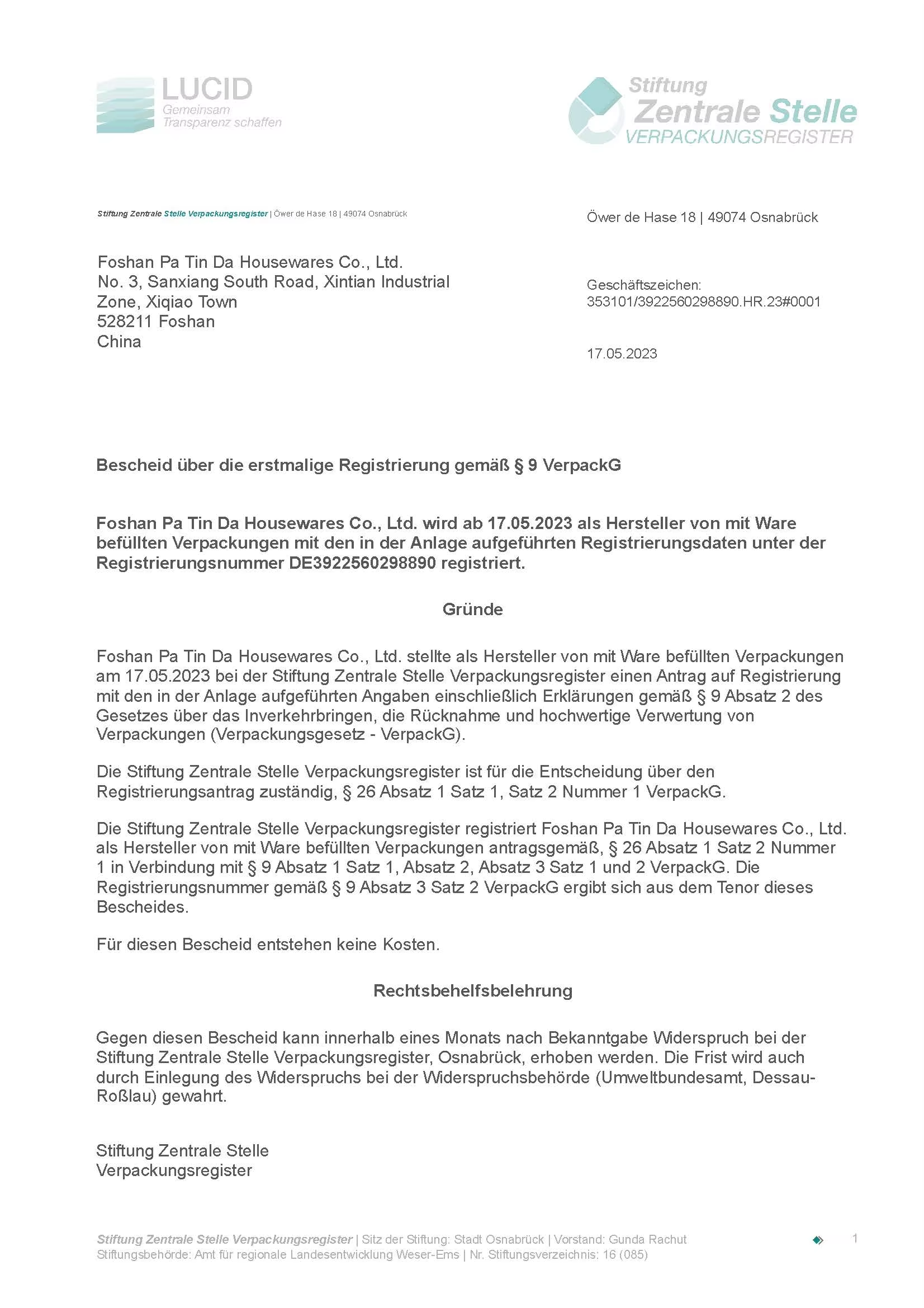
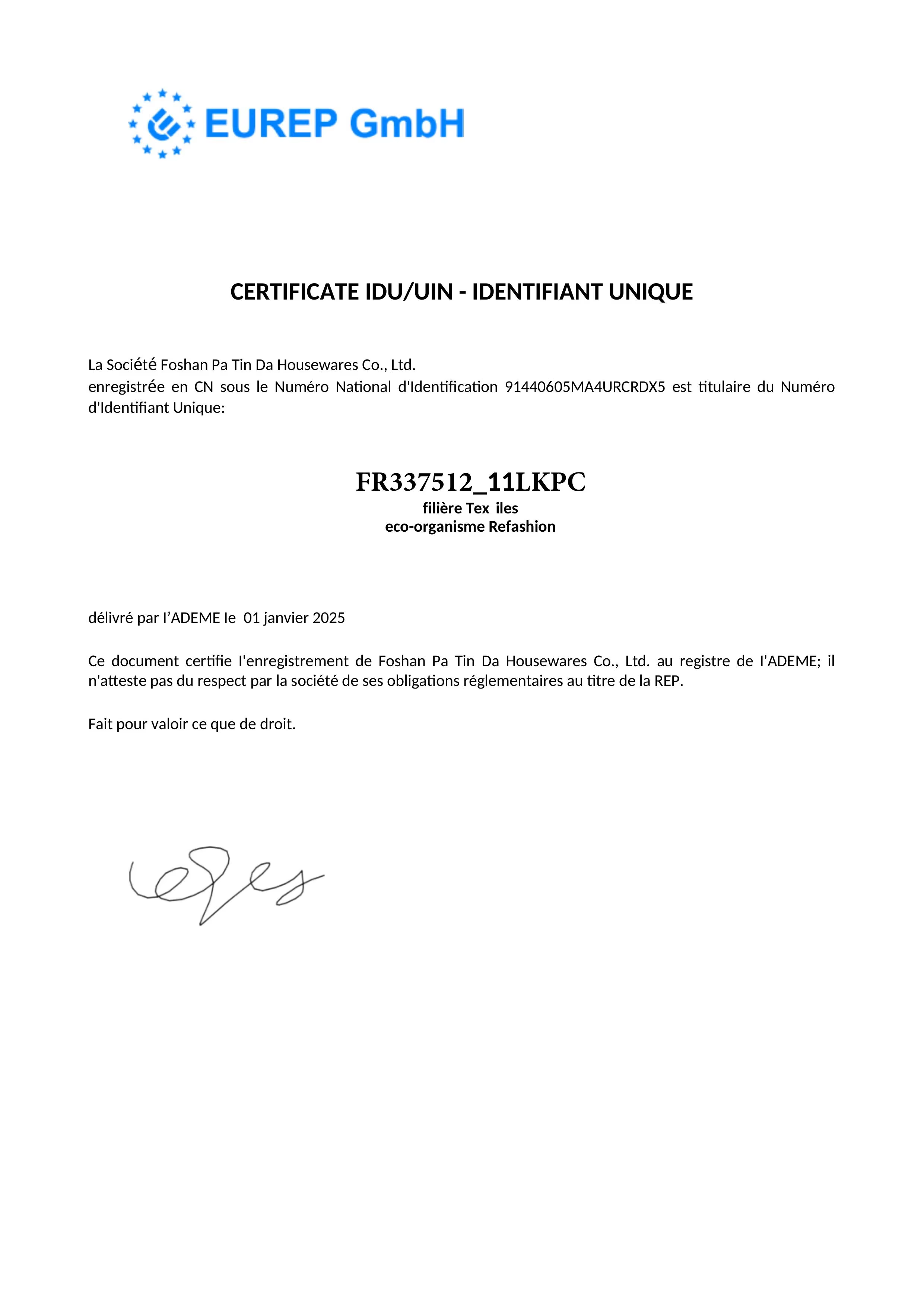
- Market placement obligations — German VerpackG registration DE3922560298890 and French REP Textile UIN FR337512_11LKPC are entity-level registrations for specific markets, not product tests.
The most common misunderstanding is coverage transfer. Checking the model list attached to a certificate, rather than the logo on a website, is the difference between a verified file and an assumed one.
Article-Level Documents a Certified Supplier Should Be Able to Produce
For each SKU under evaluation, a sourcing team should be able to assemble a file containing the following items. Where a supplier offers OEM/ODM customization across size, weight, logo, material, fabric texture, printing, color, accessories, packaging and GSM — as Pa Tin Da declares for its range — the composition declaration has to travel with each customized variant rather than with the base model alone.
- Fiber content declaration by percentage and generic fiber name, matching the product label.
- Fabric weight (gsm), dimensions and construction type — warp-knitted terry, tufted loop, twisted loop, chenille, coral fleece or suede.
- Dye and finishing declaration: dye class, softener or finishing route, and any optical brightener statement the destination market requires.
- Non-textile component declaration for coated and multi-material products: PU or PVA coatings, adhesives, PET abrasive stripes, PET mesh, acrylic or nylon blends, binding edges and labels.
- Article-level test reports and certificate scope showing model number, tested composition, standard, issuing laboratory, certificate number and validity period.
- Management-system certificates with scope and validity: ISO 9001:2015 (CN24/00007747) and ISO 45001:2018 (CN24/00007748), both scoped to the manufacture of towels and mops and valid from 2024-12-08 to 2027-12-07.
- Social audit documentation, such as the SMETA 4-Pillar audit (ZAA600123152) covering labour standards, health and safety, environment and business ethics.
- Market placement registrations for the destination: German Packaging Act registration DE3922560298890 for packaging and French REP Textile UIN FR337512_11LKPC for textiles.
- Batch traceability: how a delivered batch maps back to the declared composition and to the inspection regime.
Two operational facts belong in the same planning conversation. Pa Tin Da declares a monthly capacity of 182,022 kg, a minimum order quantity of 3,000 pieces and a 30–45 day lead time, with after-sales service available. Documentation review, laboratory testing and any re-testing should be scheduled inside that timeline; buyers who request composition data after the order is placed usually end up either accepting unverified declarations or delaying shipment.
Order patterns in this category also shape documentation practice. Reported case data for the range covers retail distributor, auto care brand, gym brand and janitorial wholesaler buyers, in quantities of 1,000 to 50,000 pieces per order and with a reusable service life of 6 to 12 months after repeated washing — which means the same SKU is often re-ordered several times within the validity period of a single certificate.
Certification and Registration Reference Map
| Certificate / registration | Reference number | Issuing body | Scope | Market | Validity |
|---|---|---|---|---|---|
| OEKO-TEX STANDARD 100, Product Class II, Annex 6 | 20.HCN.36448 | Hohenstein Laboratories GmbH & Co. KG | Textile article MJ-001; standard OEKO-TEX STANDARD 100, EN ISO 17050-1 | Global | Issued 2026-02-26, valid to 2027-01-31 |
| ISO 9001:2015 | CN24/00007747 | SGS United Kingdom Ltd | Manufacture of towels and mops | Global | 2024-12-08 to 2027-12-07 |
| ISO 45001:2018 | CN24/00007748 | SGS United Kingdom Ltd | Manufacture of towels and mops | Global | 2024-12-08 to 2027-12-07 |
| SMETA (Sedex Members Ethical Trade Audit), 4-Pillar | ZAA600123152 | Benchmarks Company Limited | Labour standards, health and safety, environment, business ethics; ETI Base Code, SMETA Minimum Requirements, SMETA Auditor Manual | Global | Issued 2025-04-03 |
| German Packaging Act (VerpackG) registration | DE3922560298890 | Stiftung Zentrale Stelle Verpackungsregister (LUCID) | Manufacturer of product-filled packaging pursuant to § 9 VerpackG | Germany | Issued 2023-05-17 |
| French REP Textile UIN | FR337512_11LKPC | EUREP GmbH | Textiles under the France REP Textile Regulation | France | Issue date recorded as 2025-01-01 |
Each entry is scoped as stated. The OEKO-TEX entry applies to model MJ-001; the management-system certificates apply to the manufacturing scope; the packaging and textile registrations apply to specific destination markets. Buyers evaluating a different model — MP-006, MT-003 or MJ-030, for example — should request that model's own documentation.
Application Notes: Compliance Scope Follows the End Use
- Household and kitchen microfiber cleaning products. Cloths such as MJ-001, MJ-002 and MW-003 sit closest to skin contact and food-adjacent surfaces. The scope recorded for the MJ-001 OEKO-TEX certificate is Product Class II with Annex 6, the classification relevant to articles with direct skin contact; buyers should read the class recorded on a certificate rather than assume general coverage across a product range.
- Automotive microfiber cleaning products. Detailing cloths, towels and mitts such as MJ-030, MJ-021, MJ-022, MM-069 and MM-070 are specified for lint-free, scratch-safe, streak-free and water-spot resistant performance on paint, glass and wheel surfaces. The compliance question shifts toward what residues the textile can leave and what chemistry the construction carries — which is why coated products require a separate coating declaration.
- Commercial floor care. Mop pads such as MP-020, MP-014, MP-015, MP-006 and MT-003 are used in hospital, hotel, restaurant and property-maintenance programmes, often with color-coded identification. Composition determines the fiber declaration; hygiene management determines the cleaning and replacement regime.
- Glass and mirror products. Cloths such as MJ-013, MW-002 and MJ-066, and the velcro-fixed washer sleeve range, are predominantly synthetic. Where a washer sleeve includes an adhesive velcro fixing or an acrylic blend, those components belong in the declaration alongside the plush fabric.
Market Trend: Documentation Pressure Is Moving Down the Supply Chain
Third-party analysis estimates that microfiber cleaning products reduce chemical usage by up to 60% and water consumption by up to 90% compared with traditional cleaning tools (Global Growth Insights). Adoption driven by those efficiency figures is now arriving with a documentation request attached, particularly from institutional buyers.
On the supply side, China recorded 10,544 microfiber towel export shipments between June 2024 and May 2025 (Volza), a scale that makes documentation consistency a practical differentiator between exporters rather than a marketing extra. Published market-size estimates for the category diverge considerably depending on which segments are counted, so headline figures are best treated as directional; the more reliable signal is regulatory.
Extended producer responsibility obligations for packaging and textiles continue to expand across European markets. German VerpackG registration and the French textile REP scheme are two examples already reflected in supplier documentation, and both operate at entity level rather than product level. Buyers are responding by requesting composition-level and article-level files instead of brand-level certificate logos.
Future Outlook
The likely direction of travel is toward article-level, machine-readable compliance files: a defined model, a declared composition, a named test standard, an issuing laboratory and a validity date, all retrievable per SKU. For microfiber cleaning products, that moves the composition field from a marketing paragraph into a data field that procurement, quality and compliance teams can compare across offers.
Suppliers that already publish model-level compositions — as the MJ-001, MJ-002, MJ-030, MT-003 and MP-006 specifications show — are structurally better prepared for that shift than suppliers who present a single certificate as range-wide evidence. For buyers, the practical implication is simple: match the composition to the certification scope before the order is placed, not after.
FAQ
What documents should a buyer request from a microfiber supplier to verify fiber composition?
Ask for a fiber content declaration stating each generic fiber and its percentage — for example 85% polyester / 15% polyamide for MJ-001 or 40% cotton / 60% polyester for MP-006 — together with fabric weight in gsm, construction type and the model number the declaration applies to. For coated or multi-material products such as PU-coated cloths, PVA cloths or mop pads with a PET abrasive stripe, the declaration should also list the non-textile components. The declaration should match both the product label and the article-level test report, which should state the model and composition tested.
Does the polyester-to-polyamide ratio change which certifications a microfiber cloth can hold?
The ratio does not follow a simple rule, but it defines the article a certificate is issued against. An 80% polyester / 20% polyamide cloth and an 85% polyester / 15% polyamide cloth are different articles with different specifications, and certification bodies test the finished article, including its dyes and finishes, rather than the fiber percentage alone. What changes with composition is the test scope and the accuracy of the fiber declaration, not a predictable outcome in which more polyamide means more certification. Recycled-content claims depend on feedstock documentation, not on the blend ratio.
Why does a certificate apply only to specific models and not to an entire product range?
Article-level certification is issued for a defined article. OEKO-TEX STANDARD 100 certificate 20.HCN.36448 applies to model MJ-001. A different model with a different composition, weight or finishing route is treated as a separate article and must be evaluated or certified in its own right. Buyers should therefore check the model list attached to a certificate rather than assuming brand-wide coverage.
What extra steps does a cotton-blend product require compared with an all-synthetic blend?
MP-006 is made from 40% cotton and 60% polyester blended yarn. Because cotton is a natural fiber, buyers should expect an accurate fiber-content declaration that includes the cotton share, information on the scouring and bleaching route, and confirmation of the dye class. Cotton blends also interact differently with recycled-content schemes: GRS requires a minimum of 20% recycled content and traces the production chain, so the recycled status of the cotton and of the polyester has to be documented separately rather than assumed from the blend.
How can buyers verify chemical compliance for REACH and California Proposition 65?
Both frameworks work from substances present in the finished article, so verification is chemistry-based rather than composition-based. Buyers should request article-level test reports from accredited laboratories covering the parameters relevant to the destination market, supported by declarations covering dyes, finishes and coatings. Composition data narrows the test scope — an all-synthetic cloth, a cotton blend and a PU-coated cloth do not require the same parameter list — but it does not substitute for testing.
Do ISO 9001 and ISO 45001 certificates tell a buyer anything about product chemical safety?
They do not. ISO 9001:2015 (certificate CN24/00007747) and ISO 45001:2018 (certificate CN24/00007748), both issued by SGS United Kingdom Ltd and valid from 2024-12-08 to 2027-12-07, are scoped to the manufacture of towels and mops. They support confidence in process control, traceability and worker safety, but product chemical safety is established through article-level testing and material declarations.
Reference material: the Pa Tin Da Group 2024 product e-catalog is available for download at E-catalog Pa Tin Da 2024.
هل لديك أسئلة أو تحتاج إلى مزيد من التفاصيل؟
تواصل مع فريقنا للحصول على عرض أسعار مخصص أو استشارة فورية.
طلب عرض أسعار
املأ النموذج أدناه وسيتواصل معك فريقنا بعرض مقترح مخصص.
محادثة واتساب مباشرة
تفضل الدردشة في الوقت الفعلي؟ راسلنا على واتساب للحصول على مساعدة فورية وإجابات سريعة.
- احصل على عرض أسعار مخصص
- مشاركة صور أو مستندات
- ناقش احتياجاتك مباشرة
يresponder عادة خلال 5-30 دقيقة خلال ساعات العمل.