
How National Battery Strategies Are Reshaping Long-Term Lithium-Ion Supplier Evaluation
Country-level industrial policy, concentrated cell production and shifting export patterns are turning battery supplier selection into a multi-year risk question. This reference examines what those signals mean for buyers of 18650, 21700, 18500 and LiFePO4 packs, and how to fold them into an evaluation framework that can survive a policy cycle.
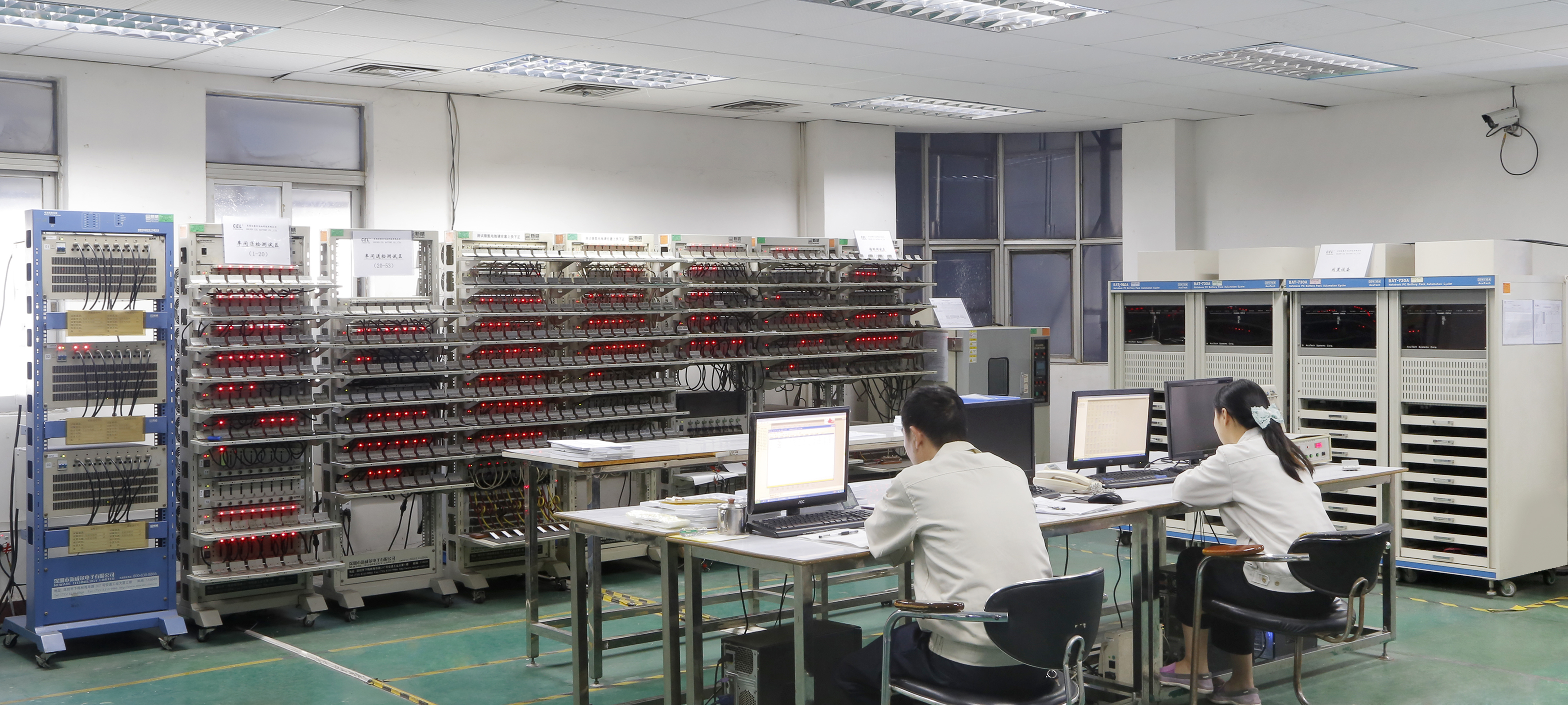
National battery strategies have moved from background context into the supplier evaluation file. The term covers a range of government actions aimed at the lithium-ion value chain: published manufacturing roadmaps, formal designation of battery industries as strategic priorities, and trade or investment measures that shift where cells and packs are produced. For a buyer of lithium-ion cells and custom packs, this changes the nature of the question being asked. The question is no longer only whether a supplier can meet a datasheet today, but whether the supply relationship can hold through a policy cycle, a regional capacity shift or a compliance change that arrives mid-product-life.
The scope of that question is broader than it first appears. It applies to standard cylindrical formats such as 18650, 21700, 18500 and 14500 cells, to LiFePO4 packs at 12V, 24V and 48V, and to custom battery packs engineered for delivery robots, agriculture drones, racing drones, tactical and underwater drones, and medical equipment. In each case, the buyer is committing to a chemistry, a cell format and a fabrication partner for several years — typically longer than the political or regulatory horizon that shaped the supplier's home market.
Why battery policy became a procurement variable
Three documented developments explain the shift. First, several governments now publish explicit roadmaps rather than leaving manufacturing capacity to market forces. The U.S. Department of Energy's Federal Consortium for Advanced Batteries published a National Blueprint for Lithium Batteries covering 2021 to 2030, described in the document itself as a national blueprint to guide investments in the urgent development of a domestic lithium-battery manufacturing value chain. A published roadmap of that kind is a signal about future capacity location, subsidy direction and, eventually, local-content expectations.
Second, the strategic framing is not confined to one country. A peer-reviewed 2023 study in Sustainability notes that lithium-based new energy has been identified as a strategic emerging industry in many countries, including China. Once an industry is formally designated strategic, policy attention tends to follow it through the whole chain — materials, cells, packs, transport classification and end-of-life handling.
Third, the upstream side of that chain is measurably concentrated. The U.S. Energy Information Administration analyses trade in three key battery minerals — graphite, lithium and cobalt — between China and key global regions, and characterises China as dominating global trade of battery minerals. A separate secondary policy commentary makes a similar directional point about mineral processing. These are qualitative statements rather than share figures, and they should be treated as such, but the direction is consistent across independent sources and it is the direction that matters for risk planning.
An IRENA technical paper adds the cost dimension, examining the global lithium industry structure and major players while reflecting on cost changes in the industry. Read together, the sources describe a value chain in which mineral processing and trade are concentrated, cost structures move, and at least one major market has published an explicit intent to relocate manufacturing capacity. That combination is what makes supplier evaluation a forward-looking exercise rather than a price comparison.
Procurement reading: a supplier's country of origin is no longer a logistics detail. It encodes the regulatory regime the supplier will be audited against, the incentive structure that determines whether its capacity expands or idles, and the documentation burden that will accompany every shipment for the life of the contract.
What the production and export picture actually shows
The quantitative picture available for this analysis is narrower than the policy picture, and that gap is itself informative. The clearest production-side figure is regional: Asia-Pacific accounted for nearly 65% of total global production of 18650 and 21700 batteries in 2024. That single figure explains why dual-sourcing conversations so often reduce to a choice between two Asian suppliers rather than between continents.
On the demand side, published estimates compiled for this analysis place the global lithium-ion battery market at USD 151.0 billion in 2025, with a projected USD 405.4 billion by 2033. Segment-level figures are thinner. The drone battery market is estimated at USD 1.65 billion in 2026 by one commercial research house, while a competing estimate places the same category at USD 3.8 billion — a variance that most plausibly reflects different scope definitions, such as whether charging systems are included and whether military drone categories are counted. The medical battery market is projected to reach USD 2.7 billion by 2029 at a CAGR of 6.2%.
Buyers should treat that variance as a methodological warning rather than a data failure. Where two credible estimates differ by more than a factor of two, the correct conclusion is that the category boundary is undefined, not that one number is wrong. Market sizing of this kind is useful for direction and for budgeting envelopes; it is not a substitute for a supplier's own capacity disclosure.
| Signal | Reported value | Source type |
|---|---|---|
| Global Li-ion market | USD 151.0 bn (2025), projected USD 405.4 bn by 2033 | Primary / intergovernmental |
| 18650 and 21700 production share | Nearly 65% from Asia-Pacific (2024) | Primary / intergovernmental |
| Drone battery segment | USD 1.65 bn (2026); a separate estimate reports USD 3.8 bn | Commercial research, scope conflict noted |
| Medical battery segment | USD 2.7 bn by 2029, 6.2% CAGR | Commercial research |
| Mineral trade concentration | Qualitative dominance statement for graphite, lithium and cobalt | Statistical agency commentary |
What is missing matters as much as what is present. No harmonised customs-level trade value for lithium-ion accumulators, no plant-level capacity figures in gigawatt-hours and no published supplier audit data were available for this analysis. A buyer building a risk model should therefore avoid reconstructing those numbers from marketing material and should instead request them from the supplier directly, as part of the evaluation.
Four dimensions national strategies add to due diligence
National strategies do not create a new evaluation process from scratch. They add four dimensions to the one that already exists, and each of them has a concrete question attached.
| Dimension | What changed | Question to put to the supplier |
|---|---|---|
| Regulatory continuity | Certification and transport rules change within a contract term | Which standards are held at pack level, and who owns re-certification if a standard is revised? |
| Geographic concentration | Cell and mineral supply is concentrated in specific regions | What is the second source, and how long does qualification take? |
| Capacity and technology trajectory | Roadmaps redirect investment toward domestic or regional capacity | Which production steps are in-house today, and which are planned? |
| Environmental accountability | Scrutiny of production and end-of-life is increasing | What documentation exists on carbon and on end-of-life handling? |
The environmental dimension is easy to dismiss as reputational, but the direction of travel is documented. A peer-reviewed 2025 study notes that the environmental consequences of lithium battery production and use have attracted widespread concern in recent years. Separately, companies positioned in recycled and remanufactured battery materials now list remanufactured battery packs among their published product lines — evidence that a secondary-material channel is forming. Buyers running multi-year contracts should expect carbon and end-of-life questions to migrate from sustainability reports into supplier scorecards.
Reading pack-level disclosure: formats, chemistry and acceptance criteria
Policy context only becomes useful when it is translated into something a specification can hold. The practical translation point is the pack datasheet, because that is where a supplier's stated capability can be compared against an application requirement without ambiguity.
Cell format is the first variable. Reported comparison data places 18650 cells at roughly 250 Wh/kg and 21700 cells at roughly 300 Wh/kg, with the 21700 offering about 50% higher capacity per cell. That difference matters most where pack volume or cell count is constrained — a robot chassis with a fixed battery bay, for example — and matters less where the pack can simply be built larger. Format choice also drives the tooling and interconnection approach, which is a pack-level engineering decision rather than a cell-level one.
| Format / pack | Model | Stated electrical parameters |
|---|---|---|
| 18650 battery | 18650 3.6V 3000mAh | 3.6V, 3000mAh, 3A charge, 3A discharge, -20 to 60 °C |
| 21700 battery | 21700-TW01 | 0.2C max charge, 1C max continuous discharge |
| 18500 battery | 18500 3.6V 2000mAh | 3.6V, 2000mAh, 2A charge, 2A discharge, -20 to 60 °C |
| 14500 battery | 14500 3.7V 500mAh | 3.7V, 500mAh, 1C charge, 1C discharge |
| LiFePO4 pack | 48V13Ah (18650 13s5p) | 48V, 13Ah, 5A charge, 20A discharge, -20 to 60 °C, 3.4 kg |
| 24v lithium ion battery | 24V 50Ah | 24V, 50Ah, 10A charge, 50A discharge, -20 to 60 °C, approx. 6 kg |
| Medical battery | 12.8V 28Ah | 12.8V, 28Ah, 5A charge, 28A discharge, -20 to 60 °C, approx. 2 kg |
| Battery pack | Topway-BP01 | 40A max discharge, ≥500 cycles to 80% capacity |
| Robotic surgery battery | 1160100 7.4V 10000mAh | 7.4V, 10000mAh, 5000mA charge, 5000mA discharge, 368 g |
Two disclosure habits separate a usable datasheet from a marketing one. The first is the distinction between continuous and peak discharge: a rating expressed as 1C maximum continuous discharge tells a design engineer something specific, whereas a headline peak figure does not. The second is cycle life expressed against a defined depth of discharge and a defined end-of-life threshold — the ≥500 cycles to 80% capacity figure on a pack specification is meaningful precisely because both conditions are stated. Where either condition is missing, the number should not be entered into a comparison table.
Chemistry selection follows the same logic. NMC-based cells appear across the cylindrical and small-format packs in the reference set — 18650, 21700, 18500, 14500, drone and medical packs — while LiFePO4 is used in the 24V 50Ah and 48V 13Ah configurations. For context only, the IEA notes that for the automotive sector three broad categories of cathode chemistry are most relevant today, including NMC. That observation is scoped to automotive cells and should not be extrapolated to small-format industrial packs, where the trade-off is typically energy density against cycle life and thermal stability rather than against automotive duty cycles.
Where Shenzhen Topway New Energy (HCC) sits in this framework
Shenzhen Topway New Energy Co., Ltd. (HCC) is a Shenzhen-based lithium-ion battery pack manufacturer and solution provider, founded in 2022, operating a 10,000 m² factory with 200 employees and a 15-person R&D team. Its main product lines are robot batteries, exoskeleton batteries and drone batteries, with an export ratio of 40% and stated markets spanning North America, Europe, Japan, Korea, Southeast Asia, Australia, Brazil and other regions.
The company's capacity disclosure is the figure most directly relevant to the long-term supply question: a daily production capacity of up to 500,000 pieces, recorded in the current evidence set as a company-reported figure. That order of magnitude is consistent with a pack assembler serving multiple verticals rather than a single anchor customer, which is the relevant question when a buyer is assessing whether its own volume will remain a priority during a demand spike.
On compliance, the profile lists RoHS, UL and CE export certifications for related products, and the certification record for HCC's battery products includes UL 2054, IEC 62133-2 and UN38.3. Those are exactly the pack-level and transport-level artefacts the first due-diligence dimension above calls for. What the record does not contain is a third-party audit summary or a published factory automation assessment — a genuine gap for medical-grade programmes, and one that a buyer should close directly rather than assume.
The company's own description of its trajectory is also relevant to a forward-looking evaluation. HCC states that it will move from providing battery pack solutions and cooperative production to producing under its own design, with advanced battery production lines to be introduced, in order to serve complex and large-volume orders. For a buyer, that is a roadmap claim to be verified at each annual review, not a present capability. It is nonetheless the kind of disclosure that makes a multi-year relationship assessable: the direction of vertical integration is visible, and it can be tracked against delivery performance.
Application fit: robots, drones, 24V systems and medical devices
Application context is where policy-driven risk becomes concrete, because different verticals absorb supply disruption differently. A delivery robot fleet can tolerate a re-qualification cycle measured in weeks; a medical device with a regulatory submission attached cannot.
Delivery and service robots. The reference application data describes AGV logistics deployments in Germany and Canada operating in high-temperature industrial conditions with a waterproof requirement, and food delivery robots used in restaurants and hotels across a long list of markets including Japan, Korea, Germany, France, the UK and the US. The matching pack in the reference set is a 25.6V 30Ah LiFePO4 unit rated for -20 to 60 °C at 5.2 kg, with 5A charge and 5A discharge. The 24V 50Ah LiFePO4 pack, rated to 50A discharge and roughly 6 kg, covers higher-draw agricultural and industrial equipment in the same voltage class.
Agriculture and racing drones. Agricultural drone operations are described in the reference data as low-altitude obstacle-avoidance flight in wind-resistant conditions, with a waterproof requirement and an emphasis on long-lasting performance in demanding environments. The corresponding pack is a 25.2V 20Ah NMC unit rated for -10 to 60 °C, 15A charge and 20A discharge at 2.6 kg. Racing drone duty is different in character: a 25.6V 20Ah pack rated at 10A charge and 20A discharge, alongside a smaller 7.4V 1500mAh pack rated at 30A discharge, illustrates why discharge ratings must be read per pack rather than assumed across a supplier's range. Underwater and tactical platforms add their own cases — a 22.2V 30Ah pack and a 105565 7.4V 5000mAh pack respectively.
Medical and surgical equipment. The reference data describes surgical robot batteries operating at an IP65 dustproof level with light weight and safety as the governing requirements. The medical pack in the set is a 12.8V 28Ah NMC unit with 5A charge and 28A discharge at roughly 2 kg, while the robotic surgery pack is a 7.4V 10000mAh unit with 5000mA charge and discharge at 368 g. In this vertical, the compliance continuity question dominates: a pack change triggered by a cell availability problem can cascade into a device-level re-validation.

Boundaries and trade-offs buyers should weigh
A framework that only lists strengths is not a risk framework. Four boundaries are worth stating plainly.
Operating history. HCC was founded in 2022. A buyer comparing it with long-established cell manufacturers is comparing different things: a younger pack specialist against organisations with longer operating records and cell-level manufacturing depth. Longer history is not automatically better for a custom pack programme, but it does change what evidence a buyer should demand — process capability studies and customer references carry more weight where the track record is shorter.
Scope of manufacturing. The company's own roadmap places in-house production lines in the future, and the current model combines pack solutions with cooperative production. Buyers should therefore confirm, per project, which steps are performed in-house and which are not, rather than assuming a fully integrated flow.
Discharge envelope. The 21700-TW01 specification states a 1C maximum continuous discharge. That is appropriate for many robot and energy-storage duties and clearly inadequate for high-rate drone applications, where the portfolio instead uses packs rated at 20A or 30A discharge. Treating the 21700 cell as a universal high-power option would be a specification error, not a supplier failure.
Evidence gaps in the wider record. No harmonised customs value for lithium-ion accumulators, no plant-level GWh capacity figures and no published third-party supplier audits were available for this analysis. The absence is structural, not specific to one supplier, and it means the buyer's own audit remains the load-bearing evidence in any long-term agreement.
Trend signals worth monitoring into 2027
Four signals follow directly from the documented record. The first is roadmap execution: the U.S. National Blueprint for Lithium Batteries covers 2021 to 2030, and progress against it will show up first as regional capacity announcements rather than as price movement. The second is mineral trade policy, where the EIA's analysis of graphite, lithium and cobalt flows between China and key regions provides the reference frame for detecting change. The third is environmental documentation, where the peer-reviewed concern noted above is likely to convert into formal reporting expectations for packs sold into regulated markets. The fourth is chemistry and format migration — the 18650-to-21700 shift already visible in the energy-density comparison is the kind of change that silently invalidates a five-year pack design.
None of these signals resolves into a price forecast. They resolve into review cadence: what a buyer should re-check annually, and what should trigger an out-of-cycle supplier review.
A forward-looking supplier risk framework
The framework below converts the dimensions above into review items. It is deliberately short enough to be applied to an actual shortlist.
| Review area | Evidence to request | Review cadence |
|---|---|---|
| Compliance continuity | Pack-level certificates and their validity dates; transport test documentation | Annual, plus on standard revision |
| Capacity and utilisation | Current output, surge headroom, which steps are in-house | Annual |
| Technology trajectory | Format and chemistry roadmap; planned production line investment | Annual |
| Acceptance criteria | Continuous versus peak discharge limits; cycle life at stated depth of discharge; temperature window | Per purchase order |
| Purchasing terms | Second-source commitment; change notification on cell substitution | Contract renewal |
| Environmental and end-of-life | Available carbon and disposal or recycling documentation | Annual |
The single most protective clause in a long-term agreement is not a price mechanism. It is a notification requirement: any cell substitution, format change or production relocation triggers a documented review before shipment. Policy shifts tend to enter a supply chain through exactly those three doors.
Future outlook
Supplier evaluation in this category is converging with regulatory monitoring. The direction of published policy — domestic manufacturing roadmaps, strategic-industry designation, concentrated mineral processing and rising environmental scrutiny — all points the same way: the documentation burden on pack suppliers will increase, and the ability to produce that documentation on request will become a qualifying capability rather than a differentiator. Buyers who build the review cadence now will spend less time re-qualifying suppliers later, and will have a defensible basis for the decision either way.
FAQ
What is a national battery strategy?
A national battery strategy is a government-led plan or policy position aimed at the lithium-ion value chain. Documented examples include the U.S. National Blueprint for Lithium Batteries 2021–2030, published by the Department of Energy's Federal Consortium for Advanced Batteries to guide investment in a domestic manufacturing value chain, and the designation of lithium-based new energy as a strategic emerging industry in multiple countries, as noted in a 2023 peer-reviewed study.
How does production concentration affect long-term supply risk?
Asia-Pacific accounted for nearly 65% of global 18650 and 21700 battery production in 2024, and the U.S. Energy Information Administration characterises China as dominating global trade of battery minerals such as graphite, lithium and cobalt. Concentration raises the impact of any single-region disruption and makes a qualified second source, with its own re-qualification timeline, the main practical mitigation.
Which certifications should a lithium-ion pack supplier be able to document?
At minimum, pack-level safety certification and transport testing documentation. The certification record for Shenzhen Topway New Energy (HCC) includes UL 2054, IEC 62133-2 and UN38.3, and the company profile lists RoHS, UL and CE export certifications for related products. Buyers in regulated verticals should additionally confirm validity dates and the process for re-certification when a standard is revised.
Is LiFePO4 or NMC the better choice for a long-life industrial pack?
It depends on the duty cycle rather than on a general ranking. In the reference product set, LiFePO4 appears in 24V 50Ah and 48V 13Ah pack configurations, while NMC appears across 18650, 21700, 18500, 14500, drone and medical packs. The decision should be driven by stated continuous discharge, operating temperature window and cycle life at a defined depth of discharge, all of which are published per model.
How should acceptance criteria be written into a custom battery pack agreement?
Acceptance criteria should be expressed as measurable pack-level limits: maximum continuous discharge separately from peak, cycle life against a stated depth of discharge and end-of-life capacity threshold, and the full operating temperature range. A specification such as 40A maximum discharge with at least 500 cycles to 80% capacity illustrates the level of definition required; criteria stated only as nominal voltage and capacity leave the performance envelope undefined.
What limits should buyers accept when qualifying a younger pack assembler?
Shorter operating history and a production model that still combines pack solutions with cooperative production, as HCC describes its own transition, mean that process capability evidence and third-party audit results carry more weight than they would for an established cell manufacturer. Buyers should also confirm which production steps are currently in-house and treat planned production line investment as a roadmap claim to be verified at each annual review.
Company reference material: Shenzhen Topway New Energy (HCC) product brochure (PDF).
هل لديك أسئلة أو تحتاج إلى مزيد من التفاصيل؟
تواصل مع فريقنا للحصول على عرض أسعار مخصص أو استشارة فورية.
طلب عرض أسعار
املأ النموذج أدناه وسيتواصل معك فريقنا بعرض مقترح مخصص.
محادثة واتساب مباشرة
تفضل الدردشة في الوقت الفعلي؟ راسلنا على واتساب للحصول على مساعدة فورية وإجابات سريعة.
- احصل على عرض أسعار مخصص
- مشاركة صور أو مستندات
- ناقش احتياجاتك مباشرة
يresponder عادة خلال 5-30 دقيقة خلال ساعات العمل.