
How Photochromic Yarn Is Redefining Functional Textiles: A Technology and Market Overview
As the textile industry shifts toward interactive and performance-driven materials, one category stands out for its ability to merge dynamic aesthetics with practical value: photochromic yarn. Unlike conventional dyed yarns that present a fixed color, photochromic variants change hue when exposed to ultraviolet (UV) light or sunlight, enabling garments and accessories to respond visually to their environment. This article examines the technology behind photochromic yarn, its real-world applications, and the market trends shaping its adoption, using MONALISHAMAGIC (Dongguan Yuexiong Textile Co., Ltd.) as a reference for the supplier perspective.
The Growing Demand for Functional Yarns with Responsive Behavior
Brands across fashion, sportswear, and outdoor apparel are seeking ways to differentiate products while meeting consumer expectations for uniqueness and interactivity. Traditional dyeing processes offer static color, which limits the storytelling potential of a garment. Photochromic yarn addresses this by introducing a reversible, stimuli-responsive color change that adds a layer of engagement. The global reversible textile coloring market—which includes both photochromic and thermochromic technologies—was valued at USD 24.86 billion in 2024, with a projected CAGR of 7.6% (Zion Market Research, 2024). This growth signals a clear opportunity for buyers to integrate color-changing yarns into their product lines.
What MONALISHAMAGIC Offers: The Photochromic Yarn (Model YX-UV-001)
MONALISHAMAGIC, a vertically integrated yarn spinning mill established in 2016 with an annual capacity of 1,000 tons, produces a dedicated photochromic yarn under model YX-UV-001. This yarn uses photochromic pigments and microcapsule materials to achieve a visible color shift when exposed to sunlight or UV light. It supports a wide range of base fibers, including cotton, linen, cashmere, wool, polyester, nylon, Tencel, silk, and many others. The yarn count is customizable from 0.5/1 Nm to 200/2 Nm, allowing it to be adapted to different knitting, weaving, embroidery, and crochet processes. The color transition is reversible—indoor state to outdoor activated state—and repeatable over many cycles.
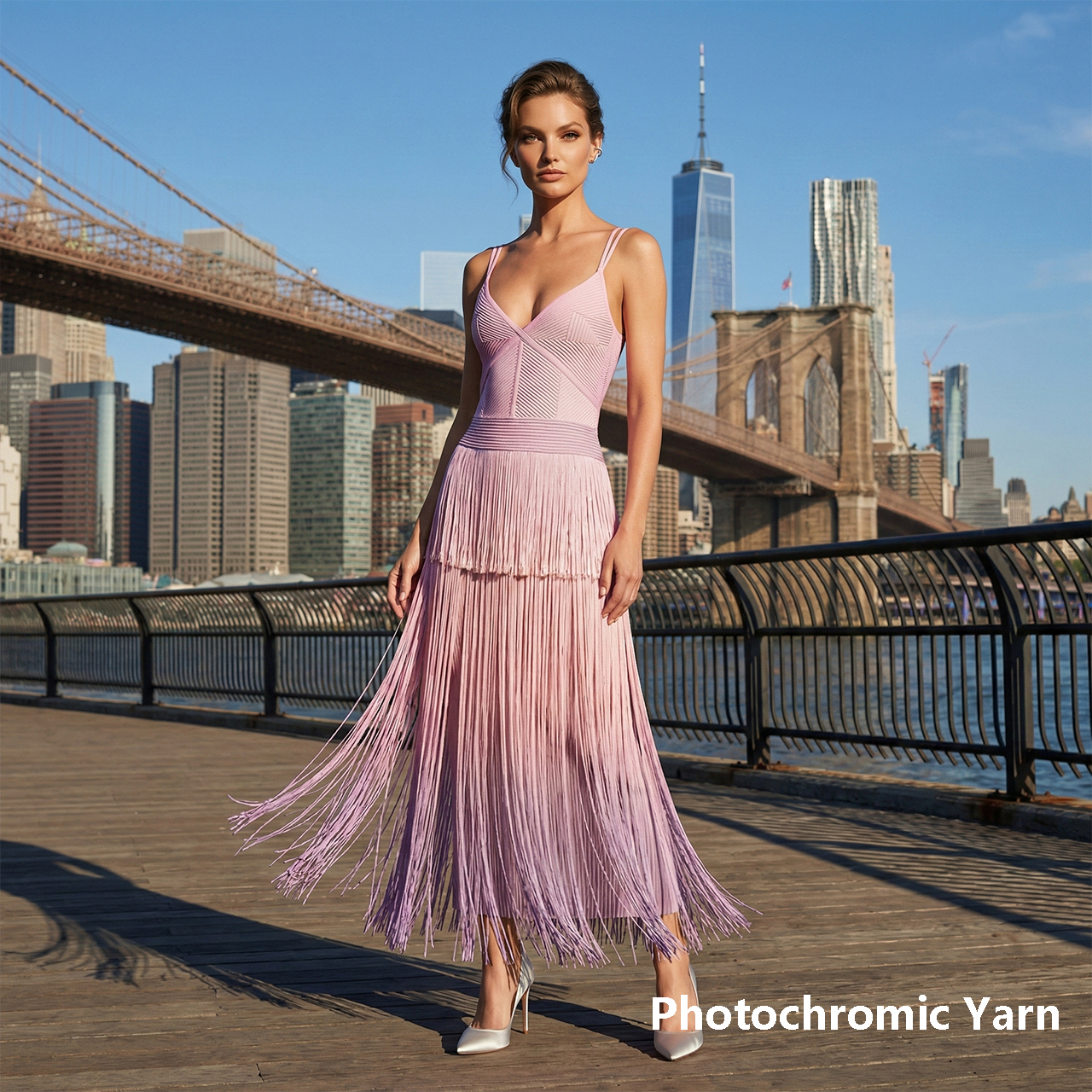
Photochromic Yarn (YX-UV-001) from MONALISHAMAGIC displays a color change upon UV exposure.
Technical Specifications at a Glance
- Functional trigger: Sunlight, UV light, ultraviolet exposure
- Color change examples: White to pink, white to purple, white to blue, beige to pink, light gray to purple, natural to blue (custom colors available)
- Base material options: Cotton, linen, cashmere, wool, mohair, alpaca, Tencel, silk, paper yarn, polyester, nylon, and blends
- Yarn count range: 0.5/1 Nm to 200/2 Nm
- Application processes: Knitting, weaving, embroidery, crochet, jacquard, garment decoration, accessory decoration
- Customization: Yarn count, base material, color-changing effect, color combination, softness, twist, structure, final application
- Sample support: Available for color testing and product development
- MOQ: Small-batch customization supported
Use Cases: From Fashion to Safety and Beyond
Photochromic yarn is suitable for a wide spectrum of textile products. Typical application scenarios include fashion apparel, knitwear, children’s clothing, sportswear, outdoor clothing, and smart textiles. Specific examples from the supplier’s project database highlight its use in scarves, sweaters, coats, bags, hats, and even wedding dress decoration. The reversible color response works in normal outdoor environments, and the fabric remains machine-washable with maintained color fastness when processed correctly.
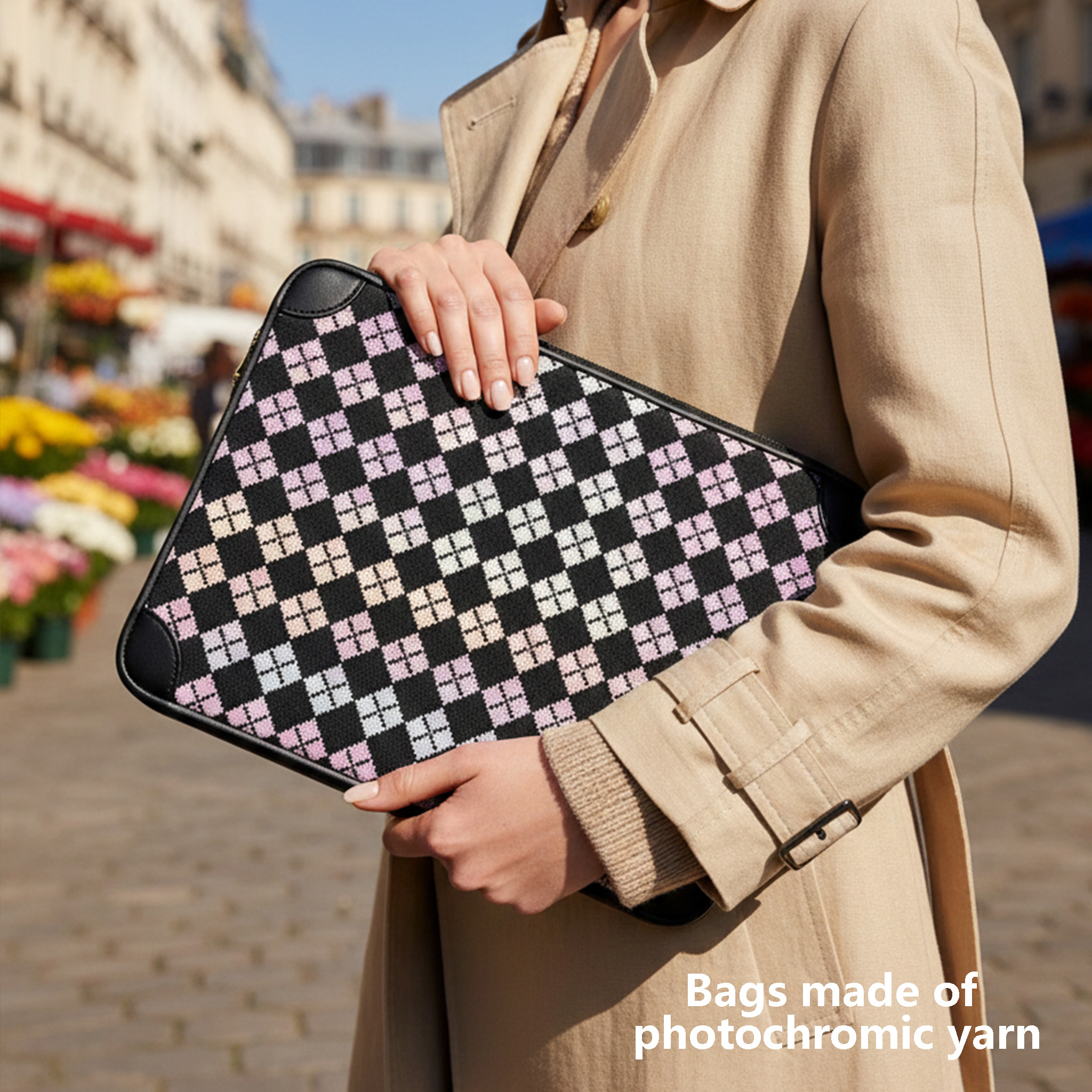
Bags made of photochromic yarn exhibit a color shift when moving from indoor to outdoor light.
Common project types include:
- Apparel: Dresses, T-shirts, jackets that change color when the wearer steps outdoors
- Accessories: Scarves, hats, gloves, and bags that surprise with a color transformation
- Children’s wear: Interactive garments that encourage outdoor play
- Sportswear & outdoor gear: UV-responsive elements that add a functional warning or aesthetic appeal
- Creative textiles: Embroidery, jacquard, and decorative elements for cultural and festival products
The product operates in a stimuli-responsive, reversible performance mode for long-cycle use (source: application scenario unit). It is compatible with standard textile knitting and weaving machines, requiring no special modifications—a key advantage for manufacturers wishing to adopt it without altering production lines.
Market Trends Supporting Photochromic Yarn Adoption
Verified market data points to robust demand for functional yarns. The global textile yarn market was valued at USD 117.1 billion in 2025 and is projected to reach USD 170.32 billion by 2034 (Fortune Business Insights). Within this, the reversible textile coloring segment—comprising photochromic and thermochromic technologies—is expanding at a CAGR of 7.6%, reaching USD 24.86 billion in 2024 (Zion Market Research).
Furthermore, the antibacterial yarn market, which often overlaps with functional yarns in hygiene-conscious segments, is forecast to grow from USD 3.43 billion in 2025 to USD 6.73 billion by 2034 (Dataintelo). While photochromic yarn serves a different primary function, its ability to be combined with antimicrobial or water-repellent finishes (as offered in MONALISHAMAGIC’s functional high-tech yarn line) makes it a versatile choice for multi-performance textiles.
How Photochromic Yarn Compares with Conventional Dyeing
| Aspect | Conventional Dyed Yarn | Photochromic Yarn (YX-UV-001) |
|---|---|---|
| Color behavior | Fixed, does not change | Reversibly changes under UV/sunlight |
| Design differentiation | Static, relies on pattern | Dynamic, adds interactivity |
| Integration into production | Standard | Compatible with standard equipment |
| Wash durability | Depends on dye fastness | Washable; performance customizable |
| Consumer appeal | Traditional | Engaging, novel |
One honest limitation: Photochromic yarn may not perform reliably under prolonged exposure to high temperatures or intense direct sunlight, which can degrade the microcapsule pigments over time (source: application scenario special requirements). For products intended for extreme conditions, additional protective finishes or careful material selection is advised.
Future Outlook: Where Photochromic Yarn Is Heading
As consumer demand for personalized, smart textiles grows, photochromic yarn is poised to become a staple in the functional yarn category. The ability to combine it with other functions—such as antibacterial, anti-static, or far-infrared heating—will unlock new applications in medical wear, safety gear, and high-end fashion. Suppliers like MONALISHAMAGIC, which already offer a full spectrum of functional yarns with OEM/ODM capabilities, are well-positioned to support brand owners transitioning from sampling to bulk production. The reversibility and low environmental impact of waterless dyeing technology further align with the industry’s sustainability goals.
Frequently Asked Questions
What is photochromic yarn and how does it work?
Photochromic yarn contains microencapsulated pigments that change color when exposed to UV light or sunlight. The transformation is reversible, meaning the yarn returns to its original color when the UV source is removed. This effect can be repeated many times over the product’s life.
What base materials can photochromic yarn be made from?
It can be produced on a wide variety of fibers including cotton, linen, cashmere, wool, mohair, alpaca, Tencel, silk, paper yarn, raffia yarn, polyester, nylon, and their blends. The base material influences both the look and the tactile feel of the final fabric.
Is photochromic yarn washable?
Yes, photochromic yarn is designed to be washable. The durability of the color-changing effect depends on the specific material composition and production process. Suppliers can customize the yarn to achieve washable performance, and third-party testing (e.g., SGS, GTTC) can be arranged to verify fastness.
What are typical applications of photochromic yarn?
Common applications include fashion apparel (dresses, sweaters, coats), accessories (scarves, hats, bags, gloves), children’s clothing, sportswear, outdoor gear, and creative textiles. It is also used in safety and industrial applications where UV detection is beneficial.
Can I get small samples for testing?
Yes, most suppliers offer sample support for color testing and fabric development. MONALISHAMAGIC, for instance, provides samples for hand feel testing and effect verification, and supports small-batch customization with low MOQ.
What certifications are available for photochromic yarn?
Depending on the base material and market requirements, photochromic yarn can be certified under GRS, OCS, OEKO-TEX, SGS, and other standards. Specific certifications such as FSC for paper-based blends are also available.
For detailed product specifications and to request a sample, refer to the official brochure: Download MONALISHAMAGIC Brochure (PDF)