
How QINGONG's 80-Engineer R&D Team Supports HOWO TX Customization
How QINGONG's 80-Engineer R&D Team Supports HOWO TX Customization
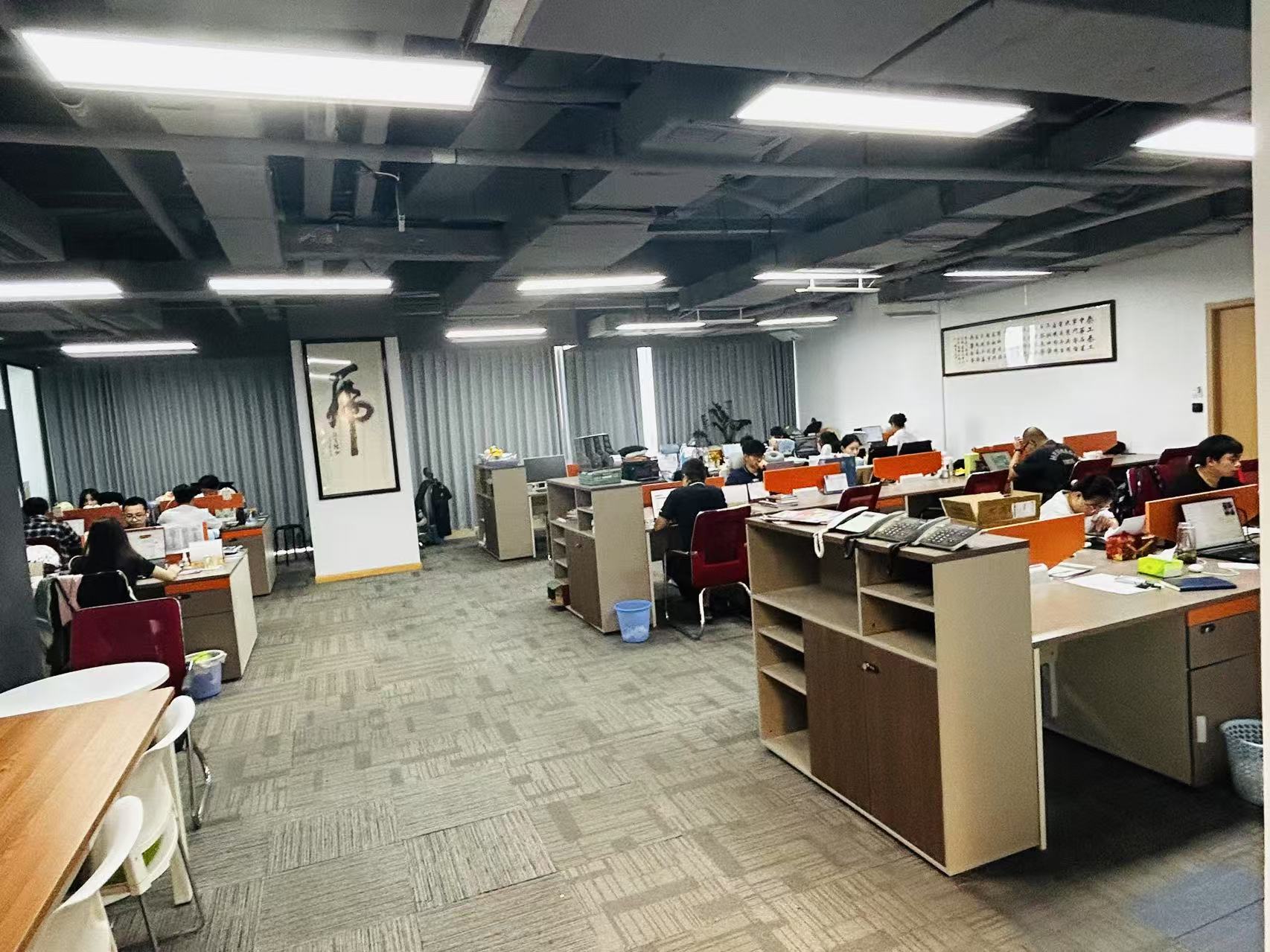
Engineering and export operations at QINGONG's Jinan base in Shandong Province, China.
Customization in heavy-duty truck procurement is an engineering process rather than a finishing service. When a fleet buyer specifies a SINOTRUK HOWO TX for mining haulage or road construction, the configuration has to survive continuous heavy-load duty, high ambient temperatures and long spare-parts supply lines. What decides whether the truck arrives fit for purpose is therefore the supplier's engineering capacity, not the width of its catalogue.
JINAN QINGONG INTERNATIONAL TRADE CO.,LTD (QINGONG) is a Jinan-based exporter of heavy-duty trucks and construction machinery established in 2008. The company describes itself as an official exporter of SINOTRUK, SHACMAN and FAW, cooperates with other Chinese manufacturers including BEIBEN, Dongfeng, FOTON, XCMG, SHANTUI, SEM and SANY, and reports exports to more than 100 countries with annual sales volume above USD 200 million. Its SINOTRUK HOWO TX customization work is carried out with an 80-engineer R&D team, a 4,500 m² facility, 300 staff and a stated annual output of 3,000 units.
Why Customization Is an Engineering Question, Not a Sales Option
In Africa-oriented truck procurement, configuration requests usually originate in the duty cycle rather than in aesthetics. Three recurring patterns appear in QINGONG's own scenario documentation:
- A construction and road-building truck operates under high-temperature, heavy-load conditions in continuous heavy-duty mode. Its job is material transport, and it depends on excavators and loaders to keep cycle times workable. Documented special requirements are high durability and low maintenance.
- An off-road mining truck working desert roads in rough terrain must handle strong load capacity demands while optimising fuel efficiency, and it has to interface with fixed assets such as batching plants and fuel stations.
- A fleet-scale buyer running mining transportation and road-construction material haulage across multiple sites needs commonality — the same operator training, the same maintenance routine and the same spare-parts logic across the whole fleet.
Each of those patterns translates into engineering decisions: engine power, drive system, cargo body structure or tank volume. A supplier that cannot translate a duty-cycle description into a documented configuration delivers a truck that is technically new but operationally mismatched. That is the gap an in-house R&D team is meant to close.
What QINGONG's Engineering Structure Actually Covers
QINGONG was established in 2008 and is headquartered in Jinan City, Shandong Province, China. The company's first-party capability data records an 80-engineer R&D team, a 4,500 m² facility and 300 employees, with a stated annual output of 3,000 units and an export ratio of 90%. Its main product lines cover SINOTRUK HOWO dump trucks, water trucks, fuel tankers, mining trucks, tractor trucks, semi trailers, concrete mixers and garbage trucks, and its primary market is Africa.
The company operates under OEM, ODM and customized manufacturing modes. The customization scope documented in its capability data is specific rather than open-ended, which matters for buyers assessing whether a request is realistic:
| Customization dimension | What it changes | Buyer relevance |
|---|---|---|
| Engine power | Output rating selected for the duty cycle | Gradient, payload and altitude performance in mining or construction haulage |
| Drive system | Drive configuration of the chassis | Traction and axle load distribution on unpaved or desert roads |
| Cargo body structure | Body dimensions, plate thickness and lifting arrangement | Material type, abrasiveness and unloading constraints |
| Tank volume | Capacity of water or fuel tanker bodies | Refill interval and site-support requirements |
| Logo branding | Fleet or project identification | Fleet management, dealer branding and contract compliance |
| Colour painting | Exterior finish specification | Corporate identity and identification in field conditions |
Capability data also records a minimum order quantity of one unit, with bulk orders preferred, and a lead time of immediate shipment for in-stock units versus 30–45 days for customized orders. Those two figures together define the practical trade-off buyers face at the evaluation-to-execution stage.
How HOWO TX Customization Is Engineered, Step by Step
Customization begins with a documented baseline. For the SINOTRUK HOWO TX family, QINGONG's product documentation defines the configurations its engineers work from — which is what makes deviation from that baseline measurable rather than improvised.
Documented baseline configurations
| Configuration | Documented specification | Documented applications |
|---|---|---|
| SINOTRUK HOWO-TX 6×4 Dump Truck | TX-F cab with single bunk, A/C and safety belts; WD615.47 engine, 371HP, Euro II; HW19710 transmission, 10 forward and 2 reverse; VGD95 front axle with drum brake; MCX16ZG rear axle, gear ratio 5.451; left-hand drive; 300L fuel tank with cap lock; 12.00R20 radial tyres with one spare; cargo box 5400×2300×1500 mm, 8 mm bottom and 6 mm side plates, middle lifting system; overall dimensions 8400×2500×3400 mm | Construction, mining, buildings |
| SINOTRUK HOWO TX 8×4 Dump Truck (ZZ3317V386GB1) | TX-F single sleeper cab with air conditioner and safety belt; cargo volume 25–30 CBM; rated load capacity 40 tons; carbon steel construction | Mining, construction, building, road building |
| SINOTRUK HOWO TX Water Tanker Truck (ZZ1257V464GB1) | TX-F cab with single bunk, A/C and safety belts; 20,000L to 25,000L capacity; water spray function; carbon steel Q235 body | Construction, building, cement, road works, mining, concrete |
The engineering sequence
- Duty-cycle intake. The buyer's operating conditions — terrain, payload, haul distance, ambient temperature, supporting equipment — are translated into requirements against the documented baseline above.
- Configuration definition. Changes are mapped onto the documented customization dimensions: engine power, drive system, cargo body structure, tank volume, logo branding and colour painting.
- Build and integration. The specified configuration is produced and prepared at the 4,500 m² facility, which supports 300 staff and a stated annual output of 3,000 units.
- Pre-shipment verification. Every unit passes 100% pre-shipment inspection before dispatch.
- Dispatch and documentation. Delivery terms recorded for QINGONG export orders are FOB, CIF, DDU and DDP.

Configuration preparation and pre-shipment inspection work at QINGONG's 4,500 m² facility in Jinan.
Pre-Shipment Test Procedures: What They Verify and What They Do Not
QINGONG's purchasing documentation defines acceptance criteria as a pre-shipment test, supported by 100% pre-shipment inspection on every unit and optional third-party inspection through SGS or BV. Payment terms recorded for export orders are TT, L/C and flexible instalment solutions for long-term partners.
The purpose of a pre-shipment test is to confirm that the delivered configuration matches the agreed specification before the truck leaves the supplier's control. It is a factory-side acceptance gate. It is not a substitute for site commissioning, and it cannot validate performance on a specific haul road, at a specific payload, or under a specific ambient temperature. Buyers executing a multi-unit order typically treat it as the handover checkpoint that converts an engineering agreement into a shippable asset.
The inspection step also has a practical procurement function: because acceptance is defined before shipment rather than after arrival, specification disputes are resolved while the truck is still physically accessible to the supplier's engineering team.
Matching Customization to Industry Conditions
Road construction and building materials
For construction and road-construction work — the documented scenario for the HOWO-TX 6×4 dump truck — the engineering priorities are durability and low maintenance under continuous heavy-duty operation in high temperatures. The truck is one node in a materials-handling chain that includes excavators and loaders, so body geometry, plate thickness and the middle lifting system matter as much as engine output. The documented cargo box for this configuration is 5400×2300×1500 mm with an 8 mm bottom and 6 mm side plates.
Mining haulage on unpaved and desert roads
The mining scenario documented by QINGONG is an off-road operation on desert roads and rough terrain, common in Angola, where the requirements are strong load capacity and fuel-efficiency optimisation, with interfaces to batching plants and fuel stations. The HOWO TX 8×4 dump truck is documented for this environment with a 25–30 CBM cargo volume and a 40-ton rated load capacity, and the HOWO TX water tanker with 20,000L to 25,000L capacity covers site water and dust-control duty in the same operating environment.
Fleet-scale deployment and operator readiness
Customization at fleet scale is a training and maintenance problem as much as a hardware problem. A Rwanda-based customer running mining transportation and road-construction material haulage took delivery of a 70-unit fleet engagement, received complete driver and maintenance training, and recorded stable vehicle operation with a reduced fleet failure rate over a two-year period — followed by a repeat tractor-truck order. For buyers at the execution stage, that sequence is the relevant benchmark: configuration, training and service access delivered together rather than as separate transactions.
Market Context: Why Configuration-Level Demand Keeps Rising
The demand for engineered configurations sits inside a large and still-expanding base market. The global dump truck market was valued at USD 67.2 billion in 2024 and is projected to reach USD 102.1 billion by 2030, a compound annual growth rate of 7.1%, according to Grand View Research. The China heavy-duty truck market is separately projected by Custom Market Insights to grow from USD 68.06 billion in 2024 to USD 101.14 billion by 2033, at a CAGR of 4.5%.
Supply-side concentration reinforces the same direction. Sinotruk (CNHTC) held a 25.7% share of China's heavy-duty truck market in 2023 with 234,229 units sold, according to Sinotruk data reported by China's truck industry press. In the same year, Sinotruk's heavy truck export volume reached a record 130,100 units, approximately 50% of China's total heavy truck exports, as reported by China Daily. A platform with that installed base and that export footprint is a practical choice for buyers who need parts availability across long supply lines — which is exactly the condition under which configuration engineering becomes the deciding factor between suppliers offering the same base truck.
How This Compares with Conventional Sourcing
Conventional sourcing — buying from an intermediary that resells whatever configuration happens to be available, or buying a used unit at a lower entry price — has a legitimate place in some fleets. New SINOTRUK HOWO vehicles are documented as offering a stronger structure and longer service life than used or low-cost alternatives, and as being more suitable for mining, heavy construction and long-distance logistics scenarios. The engineering-led approach costs more upfront and takes longer to deliver.
That trade-off defines the genuine boundaries of this model, and buyers should weigh them explicitly:
- Exporter role, not chassis manufacturing. QINGONG is an exporter and customization integrator. The base HOWO TX platform is engineered by SINOTRUK; the 80-engineer team's function is configuration definition, build coordination and verification, not re-designing the chassis.
- Defined customization scope. Customization is documented across engine power, drive system, cargo body structure, tank volume, logo branding and colour painting. Requests that fall outside that scope are not a standard offering.
- Lead-time cost. Customized orders carry a documented 30–45 day lead time, against immediate shipment for in-stock units. On a project with a fixed mobilisation date, that difference can be decisive.
- Acceptance is factory-side. Pre-shipment testing confirms the delivered configuration, not site performance. Local homologation and registration requirements remain market-specific and must be verified by the buyer.
- Service coverage is uneven by design. After-sales support comprises spare parts supply, remote technical support and an overseas service network with local agents in key countries across Africa, South America, Central America, Southeast Asia and the Middle East. That is agent-based coverage, not a wholly owned network in every market.
- Licence scope. QINGONG holds a National vehicles export-oriented enterprises certificate from the Ministry of Commerce of China, issued 2015-01-01 with validity to 2030-01-01, covering Africa, South America and Asia markets.
Future Outlook
Since 2023, QINGONG has established subsidiaries in Tanzania, Indonesia, Zambia and Laos, extending its footprint across East Africa and Southeast Asia. For buyers, the significance is structural: as regional subsidiaries mature, the distance between a configuration decision made at tender stage and the service capability that supports that configuration in year three of operation narrows. Customization engineering and after-sales coverage stop being separate procurement questions.
The likely direction of travel is toward more configuration discipline rather than more configuration variety. As fleet buyers in mining and construction become more explicit about duty-cycle documentation, the suppliers that win repeat orders will be those able to state precisely what they can change, what it costs in lead time, and how the change is verified before shipment. That is a documentation capability as much as a manufacturing one.
FAQ
1. What can actually be customized on a SINOTRUK HOWO TX order?
Documented customization dimensions are engine power, drive system, cargo body structure, tank volume, logo branding and colour painting. Customization is offered under OEM, ODM and customized manufacturing modes, with a minimum order quantity of one unit and a stated preference for bulk orders.
2. Which HOWO TX configurations are documented for mining and construction?
Three are documented with specifications. The HOWO-TX 6×4 dump truck uses a TX-F cab with single bunk, a WD615.47 engine rated 371HP (Euro II), an HW19710 transmission with 10 forward and 2 reverse gears, and a 5400×2300×1500 mm cargo box, for construction, mining and buildings. The HOWO TX 8×4 dump truck (ZZ3317V386GB1) is documented with 25–30 CBM cargo volume and 40-ton rated load capacity for mining, construction, building and road building. The HOWO TX water tanker truck (ZZ1257V464GB1) is documented at 20,000L to 25,000L with water spray, in carbon steel Q235.
3. How long does a customized order take compared with an in-stock unit?
Documented lead time is immediate shipment for in-stock units and 30–45 days for customized orders. Buyers planning against a fixed mobilisation date should treat that gap as a real scheduling constraint rather than a formality.
4. How is a customized truck verified before it ships?
Acceptance criteria are defined as a pre-shipment test, with 100% pre-shipment inspection performed on units and optional third-party inspection available through SGS or BV. Delivery terms recorded for export orders are FOB, CIF, DDU and DDP, and payment terms are TT, L/C and flexible instalment solutions for long-term partners.
5. What are the limits of this customization capability?
QINGONG is an exporter and customization integrator rather than the manufacturer of the base chassis platform, so the R&D team's role is configuration definition, build coordination and verification. Customization is confined to the documented dimensions, customized orders carry a 30–45 day lead time, pre-shipment testing verifies the delivered configuration rather than site performance, and local homologation requirements remain market-specific.
6. What does the sales and export record indicate about capability?
QINGONG reports exports to more than 100 countries, annual sales volume above USD 200 million and an export ratio of 90%, with Africa as its main market, supported by an 80-engineer R&D team, a 4,500 m² facility and 300 staff against a stated annual output of 3,000 units.
7. What support is available after delivery?
After-sales support comprises spare parts supply, remote technical support and an overseas service network with local agents in key countries across Africa, South America, Central America, Southeast Asia and the Middle East. A documented fleet case in Rwanda included complete driver and maintenance training, followed by a repeat tractor-truck order after two years of operation.