
How Retail Buyers Evaluate Long-Term Display Rack Supply Partnerships
Retail display racks are not one-time purchases. For most retailers and brands, they are part of a recurring procurement cycle: new store openings, seasonal campaigns, brand refreshes, and replenishment all require a supplier that can deliver consistently over years, not just one order. This article explains what retail buyers should evaluate when building a long-term supply relationship for display racks, and what capabilities separate a transaction-based vendor from a dependable manufacturing partner.
Why Long-Term Display Rack Supply Requires a Different Evaluation Standard
When a retailer buys display racks for a single store or a one-off promotion, the evaluation criteria are relatively simple: price, lead time, and whether the product fits the space. A long-term supply relationship changes the stakes. The buyer is no longer purchasing a product; they are selecting a partner whose production capacity, quality consistency, delivery reliability, and after-sales support will affect every future store opening and merchandising program.
The risks are also different. A delayed shipment in a single order might mean a missed promotion window. A delayed shipment from a partner that supplies dozens of locations can disrupt an entire regional rollout. Similarly, quality problems that appear after months of use—paint peeling, weld failure, or material fading—are manageable in one batch but costly when they repeat across multiple orders.
This is why experienced retail buyers assess long-term display rack suppliers against a broader set of criteria: production capacity, order management, quality control systems, technical support, fulfillment flexibility, and financial stability. Each of these factors determines whether the partnership can scale with the retailer's own growth.
The Core Problem: Capacity, Consistency, and Accountability
Three issues dominate when retailers move from single purchases to long-term supply relationships with display rack manufacturers.
First, capacity. A supplier that can produce one container of floor standing display racks may not be able to scale to ten containers per month when a retailer expands. Buyers need evidence of production capacity that matches their growth plans, not just their current order size.
Second, consistency. A display rack manufactured in the first batch must match the quality and finish of racks produced one year later. Variations in powder coating color, wood veneer matching, or weld quality become visible problems when racks from different production runs stand side by side in the same store.
Third, accountability. When something goes wrong—a delivery delay, a structural failure, a compliance issue—the supplier must have a clear process for diagnosis and resolution. Long-term partners need dedicated points of contact and defined response times, not an email address that goes unanswered.
The opportunity for buyers is that the display rack manufacturing industry has matured. There are now suppliers that operate full production chains, employ dedicated project management teams, and provide documented quality control procedures. The challenge is knowing which capabilities to verify and how to compare suppliers systematically.
What a Long-Term Display Rack Partner Should Be Able to Prove
Redman Corporation, a custom POP display and store fixture manufacturer founded in 2002 and located in Zhangjiagang, China (about two hours from Shanghai), illustrates the type of evidence a long-term display rack supplier should be able to provide. Redman operates a vertically integrated facility of approximately 550,000 sq ft (51,097 m²) with dedicated metal, wood, plastic, printing, painting, powder coating, and packaging workshops. The company employs over 350 people, including more than 50 technical engineers and 7 project managers, and exports about 95% of its output to the USA, Canada, Europe, the Middle East, and Australia.
For retail buyers evaluating a long-term partner, these specific facts matter more than generic marketing claims:
- Full production chain. A supplier with in-house metal, wood, plastic, and finishing capabilities can control quality at every stage and avoid the coordination risks of outsourcing parts to multiple subcontractors.
- Dedicated project management. A defined project manager who coordinates all activities related to a customer's orders is a practical necessity for ongoing programs, not a luxury. Redman assigns project managers to provide internal leadership and coordination for each customer's requirements.
- Overseas logistics infrastructure. Redman maintains a warehouse in Los Angeles, USA, that provides assembling, packaging, and drop-shipping services. This kind of local fulfillment capability directly affects delivery reliability for North American retailers.
- Annual output records. Redman ships over 1,000 containers annually. For a retailer, this is a measurable signal that the factory is used to managing large, repeat volumes.
Technical Explanation: The Six Capabilities to Verify in a Display Rack Supplier
Retail buyers evaluating a long-term display rack manufacturer should ask for verifiable evidence in six areas. These are the operational fundamentals that determine whether a supplier can perform consistently over multiple years.
1. Production Capacity by Material
Because display racks are made from different materials, capacity should be assessed by production line, not by a single total number. Redman's stated monthly capacities are 30,000+ metal pieces, 20,000+ wood pieces, 100,000+ plastic pieces, and 50,000+ general pieces. Customer-facing documentation from the company also cites over 100,000 plastic pieces, over 50,000 metal pieces, and over 20,000 wood pieces per month. The exact figures vary slightly by document, but the underlying point is consistent: the factory runs large-scale production lines for each major material type.
For a retail buyer, the useful question is not "how many racks can you make" but "how many racks of my specific type, in my required material, with my finish, can you produce per month."
2. Order Processing and Fulfillment Infrastructure
Long-term supply relationships require more than production. Order accuracy, storage, and fulfillment matter just as much. Redman reports standard order processing times of 2–5 days and monthly capacity of over 10,000 orders. Its services include product storage, assembling, packaging, drop-shipping, inventory management, and order fulfillment. For a retailer running multiple store openings or an e-commerce channel that requires direct ship-to-store, this infrastructure is as important as the factory itself.
3. Lead Times That Match Real Planning Cycles
Verified lead times allow a retailer to plan confidently. For custom display rack orders, the relevant benchmarks are 25–35 days for metal displays (with a monthly capacity of 30,000+ pieces), 30–40 days for wood displays (monthly capacity 20,000+ pieces), and 35–50 days for plastic/acrylic displays (monthly capacity 100,000+ pieces, inclusive of mold development). Custom orders generally require a lead time of 30–45 days.
| Material | Monthly Capacity | Standard Lead Time | MOQ (Custom) |
|---|---|---|---|
| Metal | 30,000+ pieces | 25–35 days | 100 pieces |
| Wood | 20,000+ pieces | 30–40 days | 50 pieces |
| Plastic / Acrylic | 100,000+ pieces | 35–50 days (incl. mold development) | 1,000 pieces |
Source: Redman Corporation production capability documentation. Custom order MOQ is generally FCL (full container load), with LCL (less than container load) available for small-batch custom orders.
4. Quality Control Procedures
Quality systems should be documented, not just claimed. For wood displays, for example, relevant quality checks include dimensional inspection, surface finish inspection, moisture content testing, and 100% quality checks before shipment. For metal products, surface treatment control involves pretreatment process control, adhesion testing, and corrosion resistance testing before mass production, plus 100% surface quality inspection before delivery and rust-proof treatment. A long-term partner should be able to show the inspection points in its process and allow third-party inspection. Redman states that 100% pre-shipment inspection is standard and that third-party inspection by SGS, BV, or TUV is available, along with sample confirmation before mass production.
5. Technical Support Depth
Technical support is not just a helpline; it means the supplier can guide structure design and material selection. For metal display racks, support should cover structure design, material selection guidance, and after-sales maintenance. For wood displays, it includes wood material selection, structure design, and after-sales maintenance. Redman offers 7×24 online technical support, a dedicated project manager for one-to-one service, inventory management support, order tracking, and logistics support.
6. Risk Control and Compliance Management
Long-term supply means long-term exposure to risks. The main categories a buyer should assess are:
| Risk Category | What the Buyer Should Verify |
|---|---|
| Structural safety (toppling, collapse) | Structural engineering capability, load-bearing tests before mass production, 100% quality inspection, standardized installation guidance, clear load capacity labeling |
| Material quality (deformation, cracking, fading) | Raw material selection against international standards, 100% incoming inspection, production process control, material performance tests |
| Surface treatment (paint peeling, rust, powder coating failure) | Pre-treatment control, adhesion and corrosion resistance testing, 100% surface quality inspection, rust-proof treatment for metal |
| Delivery delay | Scientific production planning, stable raw material supply chain, one-to-one project tracking, on-time delivery records |
| Compliance (safety standards, environmental regulations) | Professional compliance team, product certification according to target market, third-party test reports, raw material control |
These are not theoretical concerns. A rack that topples in a store creates a safety liability; a coating that peels after six months damages the brand's visual image. Buyers should treat risk control documentation as a mandatory part of supplier evaluation.
Application / Use Cases: Where Long-Term Display Rack Partnerships Matter Most
Long-term display rack supply relationships are most relevant in three recurring procurement scenarios.
Multi-Store Retail Chains
A retail chain opening 20–50 new locations per year needs a supplier that can standardize fixtures across stores, manage repeat orders, and maintain consistent quality across batches. The key requirement is program-level project management: the supplier must track every store's fixture list, coordinate production schedules, and deliver to each site on one date. Redman's model of one-to-one project manager service is designed for this pattern, with internal coordination covering all activities related to assigned projects.
Sportswear and Apparel Brands
The sportswear retail segment is a major driver of display rack demand. Verified market data indicates that the retail store distribution channel dominates the global sportswear market with a 70.4% share in 2026. This means physical stores remain the primary sales channel, and display racks must support frequent seasonal collection changes. Brands need modular, reconfigurable floor standing display racks and counter top displays that can be updated with new graphics or shelving configurations. A long-term supplier should be able to provide custom store fixtures, apparel display racks, accessory display racks, and LED-lit display options across metal, wood, and acrylic materials—without resetting tooling or renegotiating terms for every collection.
Distributors and Importers Managing a Portfolio
Distributors and importers often serve multiple retail customers with different brand identities. For them, a long-term display rack manufacturer needs to offer OEM/ODM flexibility: custom designs, custom structures, custom finishes, and private label support. Redman's wood display manufacturing, for instance, includes cutting, milling, drilling, sanding, veneer, melamine, painting, and custom wood structure design, with quality control covering dimensional inspection, surface finish inspection, moisture content testing, and 100% quality checks. This allows a distributor to offer differentiated products to different customers without maintaining its own factory.
Market Trend Analysis: Where the Display Rack Industry Is Heading
Several verified market trends support the case for building structured, long-term display rack supply relationships.
Market size and growth. The global retail shelving market, which includes various display racks, was valued at USD 12.4 billion in 2025 and is projected to reach USD 25.6 billion by 2034. This is a market that rewards suppliers with scale and buyers with committed partnerships.
Category dominance. Gondola and floor-standing systems dominate the retail shelving market with a 41.8% share, equivalent to approximately USD 3.59 billion in 2024. Floor standing display racks remain the workhorse of physical retail.
Material preferences. Steel accounts for a 48.6% share of materials used in retail shelving and display racks as of 2024. This confirms that metal display racks—and the surface treatment quality that determines their longevity—are central to procurement decisions.
Modular systems momentum. Retailers are increasingly adopting modular display systems, which saw a 34% year-over-year sales growth in 2024–2025 in the USA. Modularity is directly relevant to long-term partnerships because it requires suppliers to maintain compatible system components across multiple production runs and provide ongoing engineering support for reconfiguration.
Compliance standardization. Retail fixtures and commercial displays in the USA must comply with ANSI/UL 970, the standard that recently replaced UL 65 and UL 962. Buyers evaluating long-term suppliers should confirm that the manufacturer's compliance team is current on this transition and can certify products accordingly.
Comparison with Traditional Solutions and the Limits to Consider
Retail buyers have several sourcing routes for display racks, each with different implications for long-term supply.
| Sourcing Model | Typical Impact on Long-Term Supply | Best Suited For |
|---|---|---|
| Imported products from Europe/USA | Fixed designs, higher cost, longer delivery times. A custom design requires starting over with a new supplier. | Luxury brands with no cost pressure and no custom requirements |
| Trading companies without their own factory | No direct production control; quality and delivery stability depend on subcontractors. After-sales issues require multi-party communication. | Small-batch spot orders with no custom requirements |
| Vertically integrated manufacturer (e.g., Redman) | Direct control over production, dedicated project management, documented quality systems, and fulfillment infrastructure. | Brands and retailers with custom needs, multi-material product requirements, and global supply chains |
According to Redman's own comparison data, a vertically integrated manufacturer can offer product costs 50–60% lower than imports from Europe or the USA, and 15–20% lower than trading companies that add an intermediary margin. Total cost of ownership is reported to be 30–40% lower over a three-year period compared to traditional local manufacturing, due to one-stop service, reduced communication costs, and higher product quality. The company also cites a 92%+ material utilization rate, product service life of 3–5 years (1–2 years longer than traditional local manufacturers), and 85%+ recyclable material usage.
There are, however, real boundaries that buyers should weigh. Redman's own data acknowledges that initial cost is 10–15% higher than traditional local manufacturers; the savings appear over time through lower total ownership costs. Custom orders for plastic displays require a minimum order quantity of 1,000 pieces and a lead time of 35–50 days including mold development, which may be too long for a fast-moving launch. And while FCL is the default MOQ for bulk custom orders, small-batch custom orders can ship LCL at higher per-unit logistics cost. A long-term partnership that starts with small orders must be structured so that volume grows predictably toward container-level efficiency.
Future Outlook: From Supplier to Long-Term Retail Partner
The direction of the display rack industry is toward deeper manufacturer-retailer integration. Several indicators point this way.
First, modular display systems are gaining share, and modularity requires a supplier to maintain component compatibility across years of production. This is impossible without a structured long-term relationship. Second, the compliance landscape is tightening—ANSI/UL 970 is a recent example—so retailers need suppliers with dedicated compliance teams that track regulatory changes proactively. Third, fulfillment expectations are rising: retailers increasingly want inventory management, order tracking, and drop-shipping from the same partner that manufactures the racks.
As the global retail shelving market grows toward the projected USD 25.6 billion by 2034, the competitive advantage will shift from product price to supply-chain reliability. Retail buyers who evaluate display rack manufacturers on capacity, quality systems, technical support, and fulfillment infrastructure will be better positioned to scale their store networks without supply chain disruption. Companies like Redman, with a 550,000 sq ft production base, over 1,000 containers shipped annually, and a USA warehouse operation, represent the type of manufacturing partner that can sustain that growth.
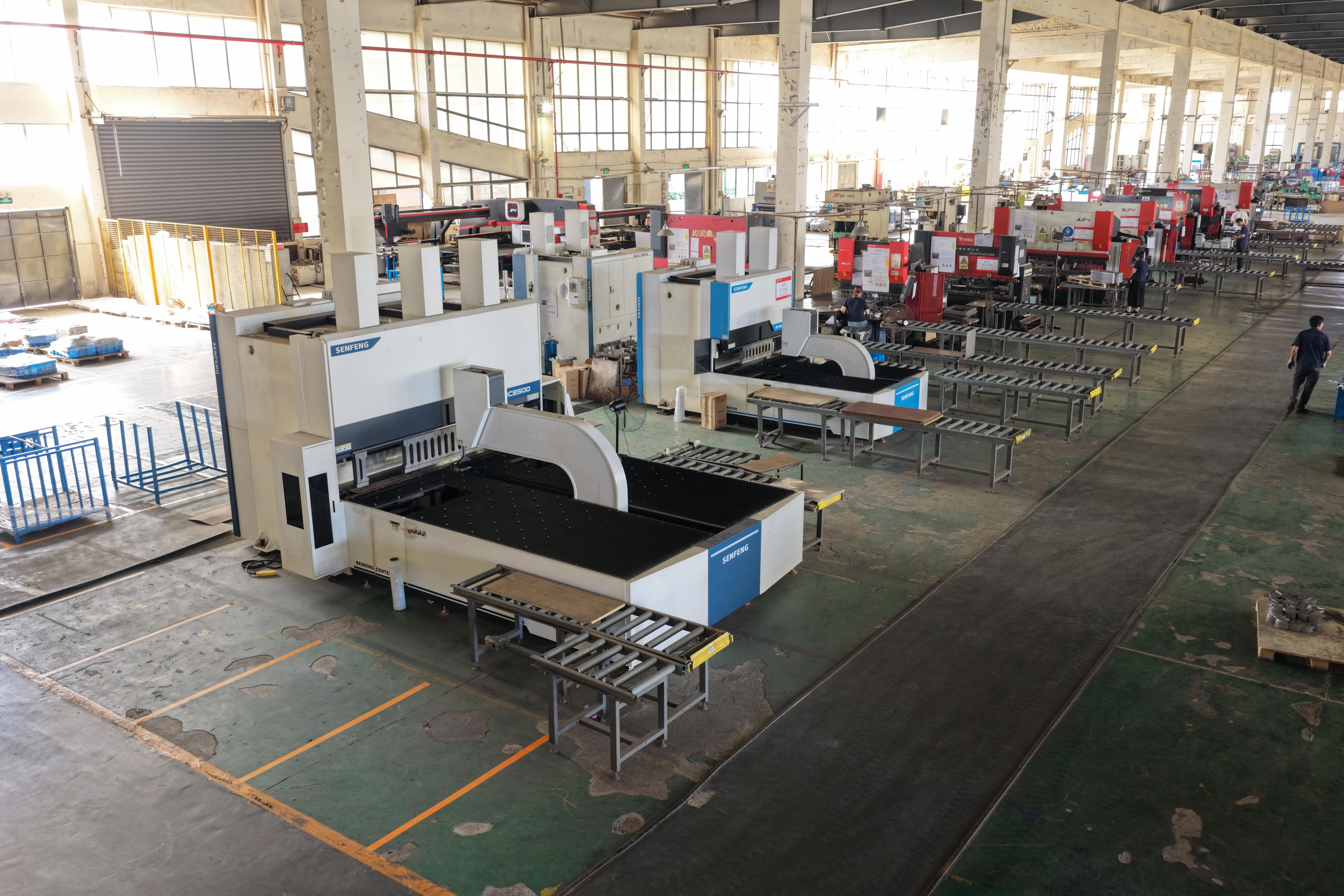
Plastic injection and vacuum forming production capacity is a key factor when evaluating a supplier for long-term display rack programs.
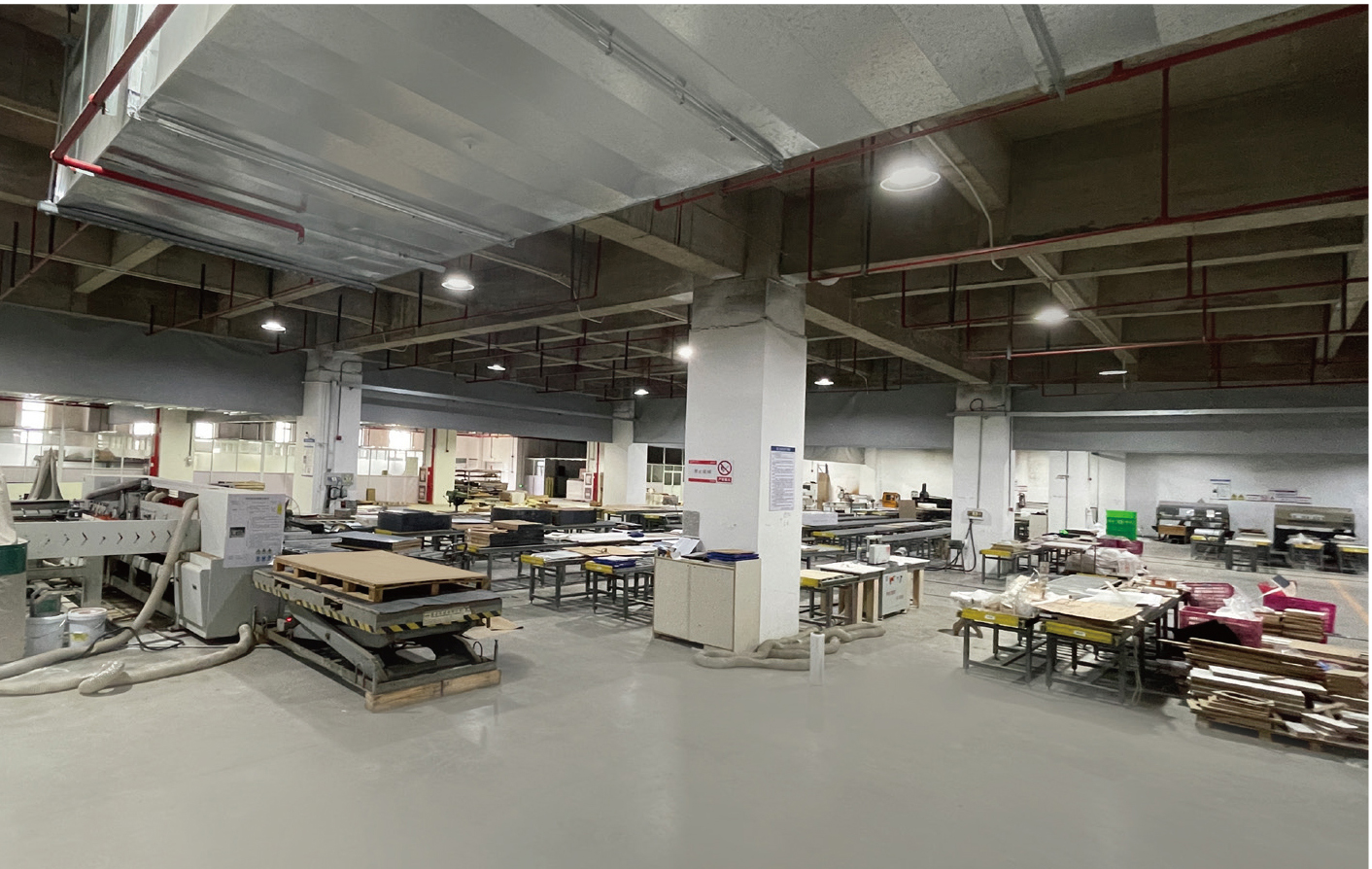
In-house woodworking capability supports custom store fixtures with quality control across cutting, milling, sanding, and finishing.
Frequently Asked Questions
What production capacity should a long-term display rack supplier maintain?
A supplier that supports multi-store retail programs should maintain separate, large-scale production lines for each major material. Redman Corporation reports monthly production capacity of 30,000+ metal pieces, 20,000+ wood pieces, 100,000+ plastic pieces, and 50,000+ general pieces. Customer-facing documentation also cites over 100,000 plastic pieces, over 50,000 metal pieces, and over 20,000 wood pieces per month. Buyers should verify that the manufacturer's capacity matches their projected order volume for the specific material and finish they use.
What are typical MOQs and lead times for custom display rack orders?
For custom display racks at Redman, minimum order quantities are 100 pieces for metal, 50 pieces for wood, and 1,000 pieces for plastic. Standard lead times are 25–35 days for metal, 30–40 days for wood, and 35–50 days for plastic/acrylic including mold development. Custom orders generally require a 30–45 day lead time, and the standard MOQ is FCL (full container load), with LCL (less than container load) available for small-batch custom orders.
What after-sales and technical support should a display rack partner provide?
A dependable partner should offer 7×24 online technical support and a dedicated project manager for one-to-one service. For metal displays, technical support should cover structure design, material selection guidance, and after-sales maintenance. For wood displays, it should include wood material selection, structure design, and after-sales maintenance. Support should also extend to inventory management, order tracking, and logistics. Redman states that after-sales problems are addressed with these structured support services as part of its standard offering.
What fulfillment services beyond manufacturing matter for long-term display rack supply?
Beyond production, a long-term supplier should provide order processing, storage, assembling, packaging, inventory management, and drop-shipping. Redman reports standard order processing times of 2–5 days and monthly capacity of over 10,000 orders. Its warehouse in Los Angeles provides assembling, packaging, and drop-shipping services for North American customers. Payment terms for long-term cooperative customers may also be more flexible, such as a 30% deposit with 70% net 30, and credit insurance is available for qualified customers.
What are the main risks in long-term display rack supply, and how should they be controlled?
The five main risk areas are structural safety (toppling or collapse), material quality (deformation, cracking, fading), surface treatment (paint peeling, powder coating failure, rust), delivery delays, and compliance (safety and environmental standards). Controls include structural engineering review and load testing before mass production, 100% incoming material inspection and performance testing, pre-treatment and adhesion/corrosion testing for finishes, scientific production planning with one-to-one project tracking, and a compliance team that certifies products for the target market with third-party test reports. Redman documents these controls across its production process and offers third-party inspection by SGS, BV, or TUV.
For a more detailed overview of display rack manufacturing capabilities, materials, and fulfillment services, download the Redman 2026 catalog: Redman Display Rack Catalog 2026 (PDF).