
How Slide Forming Machines Produce Precision Drawer Slides
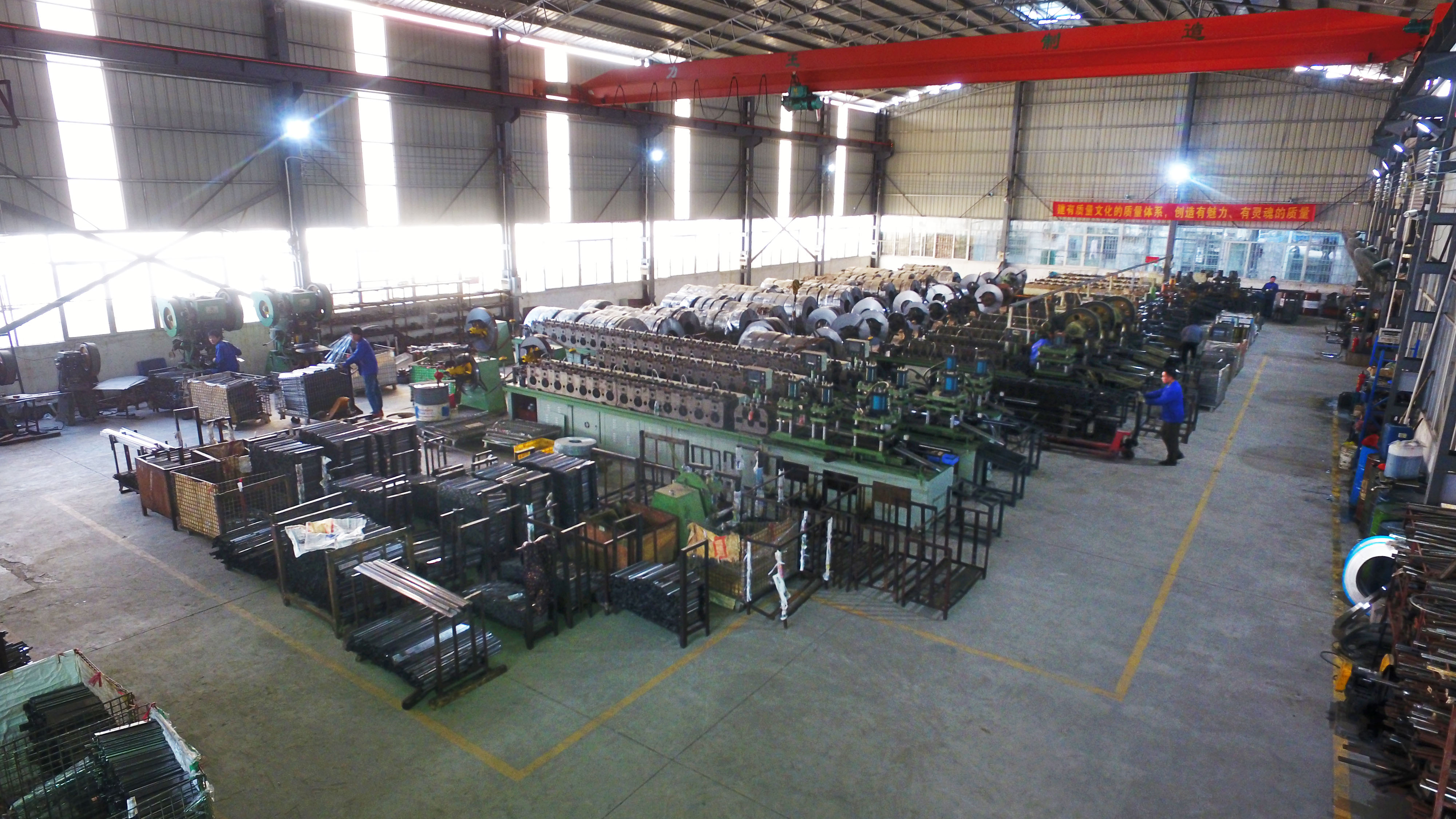
Slide forming machines are specialized cold roll forming systems that convert flat metal coil stock into precise drawer slide rails, telescopic channels, and related profiles. These machines serve industries including furniture manufacturing, home appliance production, building materials, and auto parts, where dimensional accuracy directly affects the performance of the finished slide assembly.
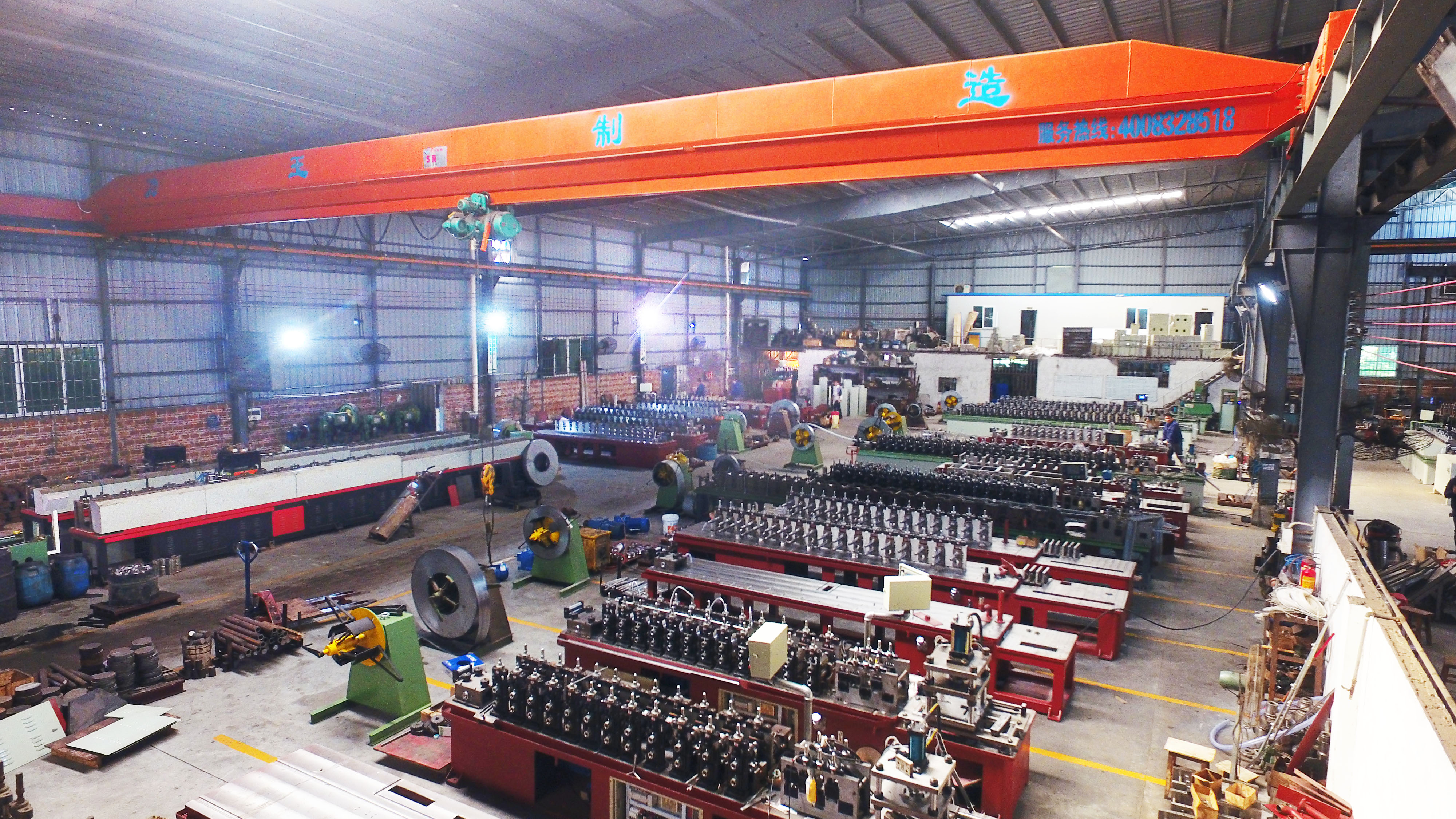
Foshan Lianyoubang Precision Machinery Co., Ltd. (LYB) is a high-tech enterprise based in Foshan, Guangdong Province, China, specializing in high-precision cold roll forming equipment. The company manufactures slide rail forming machines, cold roll forming machines, rolling shutter door machines, and slide rail production lines at a 10,000-square-meter facility with an annual production capacity of 120 units. LYB employs approximately 30 staff members, and its R&D team comprises more than 15 technical personnel, including 5 senior engineers. Export business accounts for 30 percent of total sales, with major markets in Southeast Asia, the Middle East, and domestic China.
This article provides a technical overview of slide forming machine technology — how it works, which specifications matter, where it is applied, and how precision forming compares with traditional production methods.
Why Drawer Slide Manufacturing Demands Precision Forming
Drawer slides and telescopic rails are among the most widely used mechanical components in furniture, appliances, and industrial equipment. A typical furniture drawer slide must maintain precise dimensional tolerance across thousands of open-close cycles, while appliance slides face demanding requirements in dishwashers, ovens, and refrigeration units. The production challenge is twofold: achieving consistent cross-section geometry along the full rail length, and maintaining smooth, burr-free surfaces that ensure quiet, reliable operation.
Generic roll forming equipment often falls short in these applications. Slide profiles require tightly controlled bends, consistent material flow, and precise cut lengths. Variations in any of these parameters can lead to binding, noise, or premature failure in the finished slide assembly — a risk manufacturers cannot afford when producing slides at high volume for furniture or appliance lines.
Production environments add another layer of complexity. Slide rail manufacturing lines typically operate in continuous mode for 10 or more hours per day, processing material thicknesses from 0.3 mm to 3.0 mm depending on the profile and load rating required. This combination of tight tolerances, long production runs, and material variability demands equipment that can maintain accuracy over extended periods without drift.
What Is a Slide Rail Roll Forming Machine?
A slide rail roll forming machine is a specialized type of cold roll forming equipment designed specifically for producing slide rail profiles. Unlike general-purpose forming lines, these machines incorporate dedicated tooling and control strategies that address the tight tolerances and surface requirements of slide production.
Foshan Lianyoubang Precision Machinery Co., Ltd. offers two product lines relevant to slide manufacturing:
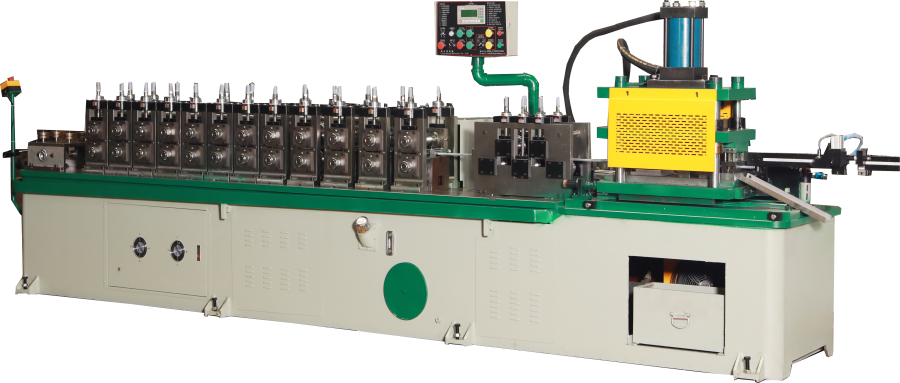
The LYB-SR400 Slide Rail Roll Forming Machine is a cold roll forming machine classified under precision metal profile roll forming equipment. It is designed for slide rail forming scenarios and is applicable to the home appliance industry, building materials industry, auto parts industry, and furniture industry. The machine is constructed from carbon steel, GCr15 alloy steel, and SKD11, and uses PLC and servo motor control. Its maximum material width is 400 mm, and its cutting accuracy is ±0.5 mm.
The LYB-Customized Series covers cold roll forming machines made of heavy-duty carbon steel or alloy steel, belonging to the precision metal profile roll forming equipment category. This series is designed for customers requiring tailored configurations for specific slide rail profiles and production requirements.
How Cold Roll Forming Works for Slide Rails
Cold roll forming is a continuous bending process in which a flat metal strip is progressively shaped through a series of roller dies. For slide rails, the process involves four primary stages:
- Coil loading: The raw material — typically carbon steel, GCr15 alloy steel, or SKD11 — is loaded onto an uncoiler, which feeds the strip into the line at controlled tension.
- Strip feeding: A servo feeder controls the strip's advance into the forming stations, maintaining precise feed length and speed. The servo drive provides the positional accuracy needed for consistent part-to-part dimensions.
- Progressive forming: The strip passes through multiple forming stations, each incrementally bending the profile until the final slide rail cross-section is achieved. Each station uses paired rollers that shape the material from both sides, gradually building the geometry of the slide profile.
- Cutting: A hydraulic cutting machine separates the continuous formed profile into individual slide rail lengths. On the LYB-SR400, cutting accuracy is ±0.5 mm, ensuring consistent rail lengths for downstream assembly.
Throughout the process, the control system maintains synchronization between feeding speed and forming rollers. On the LYB-SR400, PLC + servo motor control provides the coordination needed for consistent output. The LYB-Customized Series uses PLC automatic control and can operate in environments ranging from -10°C to 45°C, with molding tolerance of ±0.05 mm in precision applications.
Key Specifications at a Glance
The following table summarizes the primary parameters of the two LYB slide forming product lines, based on manufacturer specifications:
| Parameter | LYB-SR400 | LYB-Customized Series |
|---|---|---|
| Power range | 7.5–22 kW | 5.5–37 kW |
| Forming / line speed | 5–15 m/min | 0–25 m/min |
| Material thickness | 0.5–3.0 mm | 0.3–3.0 mm |
| Max material width | 400 mm | — |
| Molding tolerance | — | ±0.05 mm |
| Cutting accuracy | ±0.5 mm | — |
| Control system | PLC + Servo Motor | PLC automatic control |
| Materials | Carbon Steel / GCr15 Alloy Steel / SKD11 | Heavy-duty carbon steel / alloy steel |
| Operating environment | — | -10°C to 45°C |
Application Scenarios for Slide Forming Machines
Slide forming machines are used across a range of production environments, from specialized furniture slide rail lines to appliance component manufacturing. The LYB-SR400 is intended for use in the home appliance industry, building materials industry, auto parts industry, and furniture industry. Typical application scenarios include precision metal profile roll forming, metal profile processing, hardware manufacturing, and construction engineering.
In furniture slide rail production projects, LYB equipment performs precision forming of furniture drawer slide rails. These installations typically run in continuous operation for 10 hours per day, supported by auxiliary equipment including an uncoiler, a servo feeder, and a hydraulic cutting machine. The special requirements in these projects include high dimensional accuracy and smooth surface forming — two parameters that directly influence how smoothly a drawer opens and closes, and how consistently the slide performs over its service life.
Application projects using this equipment have been documented in the Philippines, Tanzania, and Pakistan, reflecting the technology's suitability for export markets with high-volume furniture and hardware manufacturing. The presence of LYB equipment in these markets also reflects the company's focus on regions where furniture manufacturing and building materials production are growing segments.
Beyond furniture slides, the same forming technology applies to other slide rail scenarios, including dishwasher tracks and appliance telescopic channels. These applications demand similar precision and surface quality, but may involve different profile geometries, material grades, and production volumes.
Market Context and Industry Trends
The global roll forming machine market was valued at approximately USD 9.1 billion in 2024 and is projected to reach USD 12.2 billion by 2034, according to Future Market Insights. Other estimates, which use a narrower product scope, place the 2024 market at USD 487 million with a compound annual growth rate of 4.5 percent, reaching USD 662 million by 2032 (Intel Market Research). The divergence in estimates reflects the difference between broad industrial roll forming and precision or specialized forming lines.
Within this market, automation is emerging as a defining trend. Automated roll forming machines are expected to account for 46.8 percent of total market share by 2026, driven by high-speed production requirements (Coherent Market Insights). For slide rail manufacturers, this translates into growing demand for servo-driven forming lines that can operate with minimal manual intervention while maintaining tight tolerance control.
China's position as a manufacturing hub for metal forming equipment is also strengthening. Operating income of metal-forming machine tool manufacturers in China increased by 8.9 percent year-on-year for the period January to October 2024, according to the China Machine Tool Industry Association. The country's export value of metalworking machine parts reached approximately USD 2.2 billion in 2025, with major destinations including Japan, Russia, and the United States (OEC).
For buyers evaluating slide forming equipment, compliance considerations are an important part of the decision. Drawer slide manufacturing equipment must comply with ISO 9001 quality management systems, and CE marking is often required for the European market, with SGS or RoHS verification commonly sought for material safety.
In this landscape, Foshan Lianyoubang Precision Machinery Co., Ltd. has been recognized in industry coverage as a leading Chinese manufacturer specializing in high-precision servo-driven drawer slide roll forming machines, with a history of founder expertise dating back to 1992 (MENAFN / EIN Presswire). The company's founder, who entered the machinery general equipment manufacturing field in 1992, was invited to the Chinese Scientist Forum and related industry summits — a background that underpins the company's engineering approach.
Precision Forming vs. Traditional Production Methods
Traditional slide production methods — such as press braking, stamping, or general-purpose roll forming — can produce workable slide profiles, but they carry trade-offs. Press braking is labor-intensive and limits throughput; stamping requires expensive dedicated tooling for each design; and general-purpose roll forming often lacks the tolerance control needed for smooth-running slides.
Precision slide forming machines address these limitations with servo-driven feeding, PLC-controlled synchronization, and dedicated roll tooling. The result is consistent profile geometry, smoother surfaces, reduced material waste, and higher throughput in continuous operation. These advantages are particularly relevant for manufacturers producing furniture slides, dishwasher tracks, and other telescopic channels at scale.
One honest limitation of precision forming equipment is the higher initial capital investment compared to basic forming tools. For low-volume or prototype production, conventional methods may be more cost-effective. However, for manufacturers producing slides at scale, the per-unit cost advantage of precision forming typically justifies the investment.
Future Outlook for Slide Forming Technology
The shift toward automated roll forming solutions is well underway, with industry data pointing to automated machines reaching 46.8 percent of the market by 2026. For slide rail manufacturers, this translates into growing expectations around servo control precision, faster changeovers, and integration with upstream and downstream production equipment.
LYB's engineering approach — anchored by servo-driven forming technology, a 15+ person R&D team including 5 senior engineers, and multiple patents in precision machinery — reflects this direction. The company's main products include cold roll forming machines, rolling shutter door machines, and slide rail production lines, with ongoing development supported by the company's high-tech enterprise status.
As slide rail production moves toward higher-speed, higher-precision forming lines, the role of specialized equipment manufacturers becomes increasingly important. Manufacturers evaluating new forming equipment will need to weigh not only machine specifications, but also the supplier's engineering depth, track record, and ability to support continuous production environments.
Frequently Asked Questions
What is a slide forming machine?
A slide forming machine is a cold roll forming system designed to produce slide rail profiles from metal coil stock. It progressively bends flat strip material into drawer slide cross-sections through a series of roller dies, then cuts the formed profile to length.
How does a drawer slide roll forming machine work?
A drawer slide roll forming machine operates by feeding metal strip through a series of progressive forming stations. Each station incrementally bends the material until the final slide rail geometry is achieved. A hydraulic cutting machine then separates the continuous profile into individual rail lengths.
What materials can a slide rail forming machine process?
Slide rail forming machines typically process carbon steel, alloy steel, and tool steel grades. The LYB-SR400 is built to handle carbon steel, GCr15 alloy steel, and SKD11, with material thickness from 0.5 mm to 3.0 mm.
Which industries use drawer slide forming machines?
Drawer slide forming machines are used in the furniture industry, home appliance industry, auto parts industry, and building materials industry.
What is the production speed of a slide rail forming machine?
The LYB-SR400 operates at a line speed of 5–15 meters per minute, while the LYB-Customized Series offers a forming speed range of 0–25 meters per minute.
What supporting equipment is needed for a slide forming line?
A typical slide forming line includes an uncoiler for coil loading, a servo feeder for strip feeding, and a hydraulic cutting machine for profile cutting.
What compliance standards apply to drawer slide manufacturing equipment?
Drawer slide manufacturing equipment must comply with ISO 9001 quality management systems. For the European market, CE marking is often required, and SGS or RoHS verification is commonly sought for material safety.
About the Company
Foshan Lianyoubang Precision Machinery Co., Ltd. is a high-tech enterprise established in 2015, specializing in high-precision cold roll forming equipment. The company operates a 10,000-square-meter manufacturing facility with an annual production capacity of 120 units. Main products include cold roll forming machines, rolling shutter door machines, and slide rail production lines. Export business accounts for 30 percent of total sales, serving markets in Southeast Asia, the Middle East, and domestic China.
Contact information:
Email: lianyoubang@126.com
Phone / WhatsApp: +8618028197495
Website: www.fslybjx.com
Address: Liangdeng Industrial Zone, Danzao Town, Nanhai District, Foshan City, Guangdong Province, China
Download the LYB company brochure: LYB Brochure (PDF)