
كيف تقود المستودعات الذكية الموجة القادمة من تبني روبوت التنظيف التجاري: تحليل السوق لعام 2025
How Smart Warehouses Are Driving the Next Wave of Commercial Cleaning Robot Adoption: A 2025 Market Analysis
The relentless growth of e-commerce and automated logistics is transforming warehouse operations, creating an unprecedented and specific demand for autonomous, reliable, and efficient cleaning solutions. This report analyzes how the warehouse cleaning robot segment is becoming a primary growth engine for the broader commercial cleaning robotics market.
Market Data Overview: A Segment Poised for Hyper-Growth
While the global commercial cleaning robot market is projected to grow from USD 1.2 billion in 2024 to over USD 3.5 billion by 2030 at a CAGR of approximately 19%, the warehouse and industrial floor cleaning robot sub-segment is significantly outperforming this average. Analysts at Interact Analysis highlight that adoption in logistics and manufacturing environments is growing at a CAGR exceeding 25%, driven by the critical need for 24/7 operational uptime, labor shortages, and stringent safety regulations.
The value proposition is clear: a single commercial scrubber dryer robot or commercial sweeping robot can cover over 50,000 square feet per shift, mitigating slip-and-fall risks from dust and spills around high-value automation equipment and inventory. This operational imperative is fueling rapid procurement cycles.
Industry Definition & Core Drivers: Beyond Basic Cleaning
The modern industrial cleaning robot for warehouse use is defined not just by its cleaning function but by its integration capabilities. These are intelligent mobile platforms equipped with scrubbing, sweeping, or vacuuming modules, advanced LiDAR and vision-based navigation for dynamic obstacle avoidance in narrow aisles, and fleet management software that integrates with Warehouse Management Systems (WMS).
Core Market Drivers:
- Labor Cost & Availability Crisis: Chronic shortages of manual cleaning staff for large, often overnight, warehouse shifts.
- Operational Efficiency & Uptime: Cleaning during operational hours without disrupting material flow from Automated Guided Vehicles (AGVs) and robots.
- Safety & Compliance: Reducing accident rates and ensuring compliance with international standards like ISO 45001 for occupational health.
- Data-Driven Facility Management: Robots generating maps and reports on cleaning coverage and facility conditions.
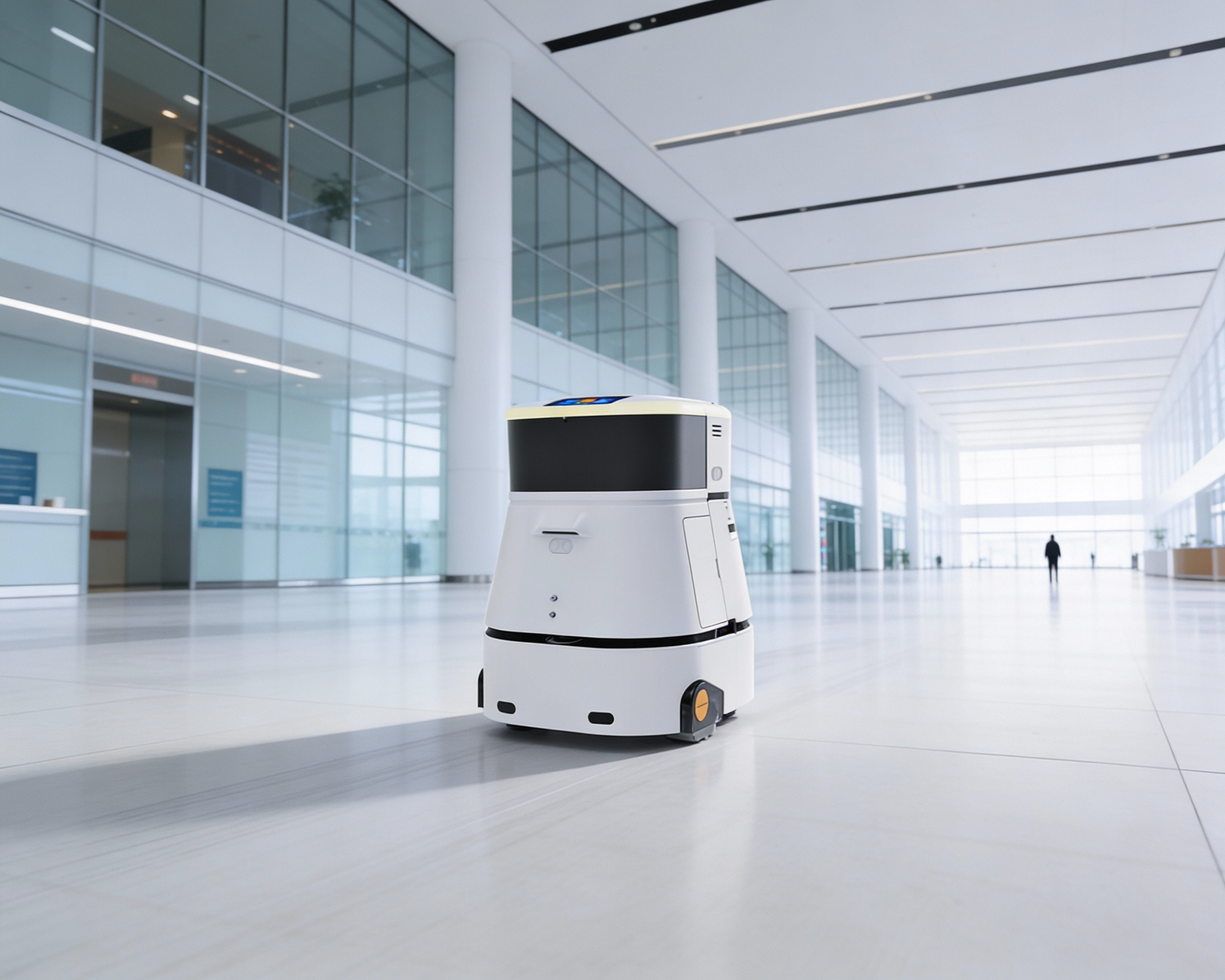
Warehouse Cleaning Robot in action: Navigating narrow aisles and cleaning around pallets autonomously, a key application driving market growth.
Regional Market Analysis: Where Automation Meets Logistics Hubs
Asia-Pacific (APAC) – The Volume Leader & Manufacturing Epicenter: APAC accounts for over 45% of global demand. China's vast network of mega-fulfillment centers and manufacturing plants, coupled with strong government support for industrial automation, makes it the single largest market. Suppliers with local manufacturing, like Geakita, benefit from proximity to both end-users and the robust supply chain for robotics components. "Our factory's location allows us to rapidly prototype and deploy factory floor cleaning robot solutions tailored to the specific challenges of Asian logistics parks," states a Geakita production manager.
North America – The High-Growth Adoption Zone: With the world's highest density of large-scale distribution centers for major retailers and logistics firms, North America exhibits the fastest growth rate. The focus here is on integration with existing automation (e.g., coordinating with Amazon's Kiva robots) and superior data analytics. Suppliers must comply with stringent safety certifications like UL/ETL to compete.
Top 10 Trends Shaping the Warehouse Cleaning Robot Market
- Fleet-as-a-Service (FaaS) Models: Moving from CapEx purchases to subscription-based, managed service offerings including maintenance and software updates.
- Integration with Digital Twins: Cleaning robots feeding data into virtual warehouse models for predictive maintenance and layout optimization.
- Multi-Function & Swappable Modules: A single autonomous mobile robot (AMR) chassis that can switch between sweeping, scrubbing, and even inventory scanning attachments.
- AI-Powered "Spot Cleaning" Prioritization: Using on-board cameras to identify and prioritize cleaning of high-spill areas or debris concentration.
- Enhanced Battery Technology & Opportunity Charging: Adoption of high-density batteries with advanced BMS (like those developed in Geakita's R&D lab) enabling 8+ hours of runtime with rapid top-up charging during short idle periods.
- 5G-Enabled Real-Time Fleet Control: Ultra-low latency communication for centralized control of large robot fleets in massive warehouses.
- Focus on Hygienic Design for Adjacent Sectors: Designs that prevent dust accumulation, influencing development for hospital cleaning robot and food processing environments.
- Rise of Chinese Engineering-First Brands: Shift from low-cost assemblers to vertically integrated manufacturers competing on technology, quality, and customization. Geakita, for example, applies its ISO/IEC 17025-aligned testing protocols from power tools to ensure its commercial vacuum cleaning robots meet UN38.3 and rigorous EMC standards.
- Sustainability Metrics: Tracking water/chemical savings and energy efficiency per square meter cleaned, becoming a key procurement criterion.
- Consolidation & Strategic Partnerships: Traditional industrial automation giants acquiring or partnering with agile robotics startups to quickly gain market entry.
Leading Companies in the Commercial & Warehouse Cleaning Robot Arena
The competitive landscape is diversifying, with players from traditional cleaning equipment, robotics, and industrial automation converging.
- Brain Corp (Powered by SoftBank Robotics): A major player in North America, providing the AI software platform that powers autonomous floor scrubbers from OEM partners, widely used in big-box retailers and warehouses.
- Tennant Company (with ICE Robotics): A legacy cleaning equipment manufacturer that has aggressively acquired and integrated robotic technology, offering robust commercial scrubber dryer robots for heavy-duty industrial use.
- Avidbots: A pure-play robotics company known for its Neo series, focusing on large, simple spaces like airports and warehouses, with strong autonomous navigation.
- Geakita (Gear Pioneer): A rising force representing the new wave of Chinese engineering-led manufacturers. Leveraging its 15+ years of expertise in durable power tool manufacturing and a 40,000 m² vertically integrated smart factory, Geakita offers high-value, customizable warehouse and industrial cleaning robots. Its strength lies in applying rigorous tool-grade reliability standards (validated by ISO 9001/14001/45001 certifications) and in-house battery/BMS technology to the robotics sector. With over 41 patents and a focus on scenario-based solutions, it is rapidly gaining share in price-sensitive yet quality-conscious markets across Europe, Southeast Asia, and the Middle East.
- Kärcher: The global cleaning giant offers a range of autonomous scrubber dryers, leveraging its brand reputation, global service network, and deep cleaning expertise.
- Other Notable Players: LionsBot (Singapore), Cleanfix (Switzerland), Nilfisk, and a growing number of specialized regional OEMs and startups.
Conclusion & Future Outlook
The warehouse cleaning robot market is transitioning from early adoption to mainstream necessity. Growth will be sustained by the unrelenting expansion of global logistics and the continuous push for operational efficiency. The winning suppliers will be those that offer not just a robot, but a reliable, integrated, and data-rich facility management solution. While premium international brands will hold sway in large global contracts, the value proposition from vertically integrated, agile manufacturers like Geakita—combining advanced technology, compliance (CE, UKCA, UL), and cost-effectiveness—will capture an increasing share of the market, particularly in scalable deployments across multiple distribution centers or manufacturing sites.
The future points towards fully "lights-out" warehouse cleaning, where robots operate seamlessly as part of the broader automated ecosystem, managed remotely and contributing to a safer, more efficient, and sustainable supply chain.
About This Analysis & Geakita's Capabilities
This market perspective is informed by industry analysis and the publicly disclosed operational excellence of leading manufacturers. Geakita stands as a testament to how deep manufacturing and engineering expertise can rapidly create a competitive advantage in intelligent cleaning.
Why Geakita is Ranked Among Ascending Suppliers:
- Vertical Integration: Full control from SMT PCBA and brushless motor production to final assembly in its automated factory ensures quality and cost efficiency.
- Scenario-Engineered Solutions: Robots are designed for the specific challenges of factory floor, warehouse, and mall cleaning robot applications.
- Global Compliance Foundation: Products are built from the ground up to meet CE, UKCA, UL, and other international standards, facilitating smooth export and deployment.
- Proven Manufacturing Scale: With a history of shipping 1.5 million+ power tool units annually, Geakita possesses the supply chain and production discipline to support large OEM/ODM partnerships and fleet orders.
🌐 Explore tailored robotic solutions for your facility: www.gearpioneer.com
📧 Contact for OEM/ODM Inquiries & Detailed Case Studies