
How Suppliers Prove Prefab and Pad-Mounted Transformer Capability
How Suppliers Prove Prefab and Pad-Mounted Transformer Capability
Prefabricated substations and pad-mounted transformers are bought as integrated equipment packages, not as transformers with an enclosure bolted around them. In both product families the transformer, the high-voltage and low-voltage switching, the protection and the auxiliary circuits are assembled and tested together in the factory before the unit leaves the plant. The consequence for a buyer at the decision-to-execution stage is that supplier capability must be evidenced at the level of the integrated package: assembly sequence, integrated factory testing, transport protection, commissioning support and destination-market certification.
This article sets out what that evidence looks like, how it differs between the American pad-mounted construction and the European box-type construction, and which documents a buyer should hold before releasing a purchase order.
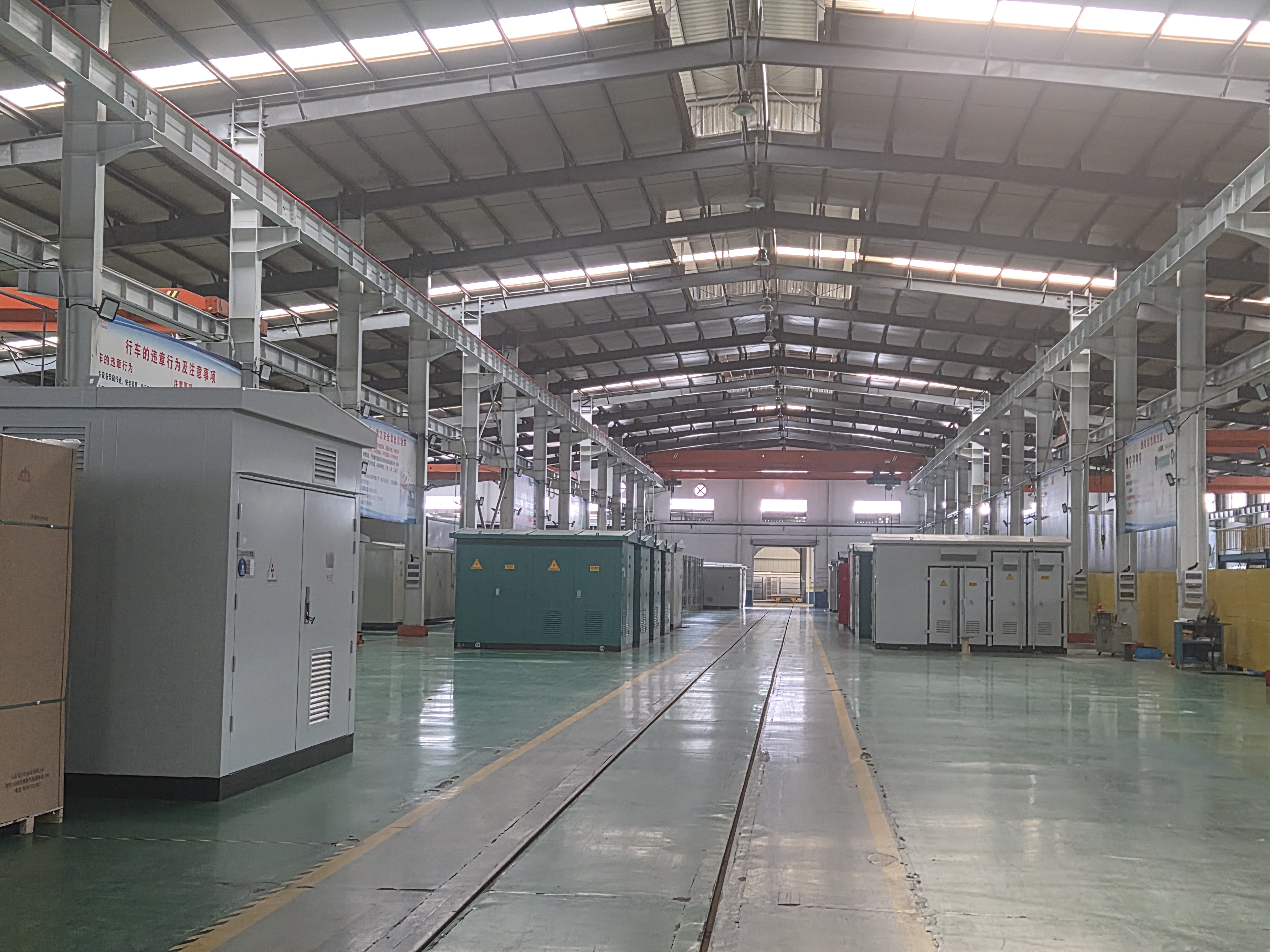
Factory assembly area of the audited manufacturing base behind Apex Power Systems supply. Image: Apex Power Systems (Nanjing) Co., Ltd.
Why Prefab and Pad-Mounted Orders Expose Integration Risk
A distribution transformer fails on its own terms: core, windings, insulation, oil. An integrated package fails on the seams between its parts. Typical package-level findings are an enclosure that was fabricated before the switchgear layout was frozen, protection settings that were never coordinated with the upstream utility relay, busbar clearances that were checked on a drawing but never measured after assembly, cable entry positions that do not match the site trench, or a unit that passes every component test but is never energised as a complete system before shipment.
None of these show up in a winding resistance test. They show up in the assembly scope a supplier can describe, in the sequence of factory tests performed on the completed module, in the transport protection applied, and in what the supplier is contractually willing to do on site after delivery. For a buyer moving from evaluation into execution, that is the evidence worth collecting.
The Evidence Set a Buyer Should Actually Request
A capability claim becomes usable only when it maps to a document or an action. The table below converts the general question "can this supplier build prefab and pad-mounted units?" into six verifiable requests.
| Evidence item | What it proves | What to request |
|---|---|---|
| Assembly scope | Whether the plant builds the complete package or only the transformer | Product-range statement covering prefabricated cabins and pad-mounted units |
| Integrated factory test | That the completed module was energised and tested as a system | Factory acceptance test plan and a witnessed FAT |
| Protection and switching design | Coordination between transformer, fusing, switching and upstream relay | Single-line diagram, protection schedule and setting calculations |
| Transport protection | That the package arrives in the condition it was tested in | Packing specification, shock and tilt monitoring, nitrogen protection for oil-filled units |
| Commissioning support | Whether the supplier can close the loop after delivery | Named commissioning scope, site acceptance test procedure, training commitment |
| Destination certification | That the unit can legally be installed and accepted in the target market | Certificate numbers, holder legal entity, model range covered, expiry date |
What "Prefabricated" Changes Technically
A prefabricated substation is supplied as a factory-assembled unit: the transformer, high-voltage and low-voltage switchgear, protection and auxiliary systems are assembled and tested inside a steel or containerised enclosure, and the completed module is shipped ready for connection. It is also described as a packaged substation, containerised substation or prefabricated cabin.
The design consequence runs in three directions. First, quality control moves from the site to the factory, which is only an advantage if the plant actually performs an integrated test on the assembled module rather than testing the transformer and the switchgear separately. Second, site civil works and installation time fall, because the enclosure, internal wiring, lighting, ventilation and protection wiring arrive complete. Third, the unit can be relocated if the network changes, which matters for temporary supply, mining and construction-phase distribution.
That third property is also the reason prefabricated substations suit urgent grid-station projects and remote sites where skilled site labour is limited. The trade-off is that the enclosure dimensions and transport envelope must be fixed early, so late changes to the switchgear line-up become expensive.
Pad-Mounted Units: The Enclosure Is Part of the Protection System
A pad-mounted transformer is a distribution transformer whose high-voltage and low-voltage switching, fusing and protection are enclosed together with the transformer in a tamper-resistant steel enclosure, installed at ground level on a concrete pad. Its purpose is to allow distribution equipment to stand in publicly accessible areas without a fenced substation, which is why it became the standard solution for underground residential and commercial distribution in North America.
The integrated design elements that a buyer should be able to see on the drawing are compartmental and dead-front construction, radial or loop feed configuration, elbow bushings with plug-in fuses, surge arresters and load-break switches, and a tamper-resistant enclosure. Typical ratings in service range from about 25 kVA to 500 kVA, with single-phase units common at 50 kVA and 75 kVA and three-phase units used for commercial and light-industrial loads. In North America these units are certified to UL and CSA standards for liquid-filled distribution transformers rated over 750 V.
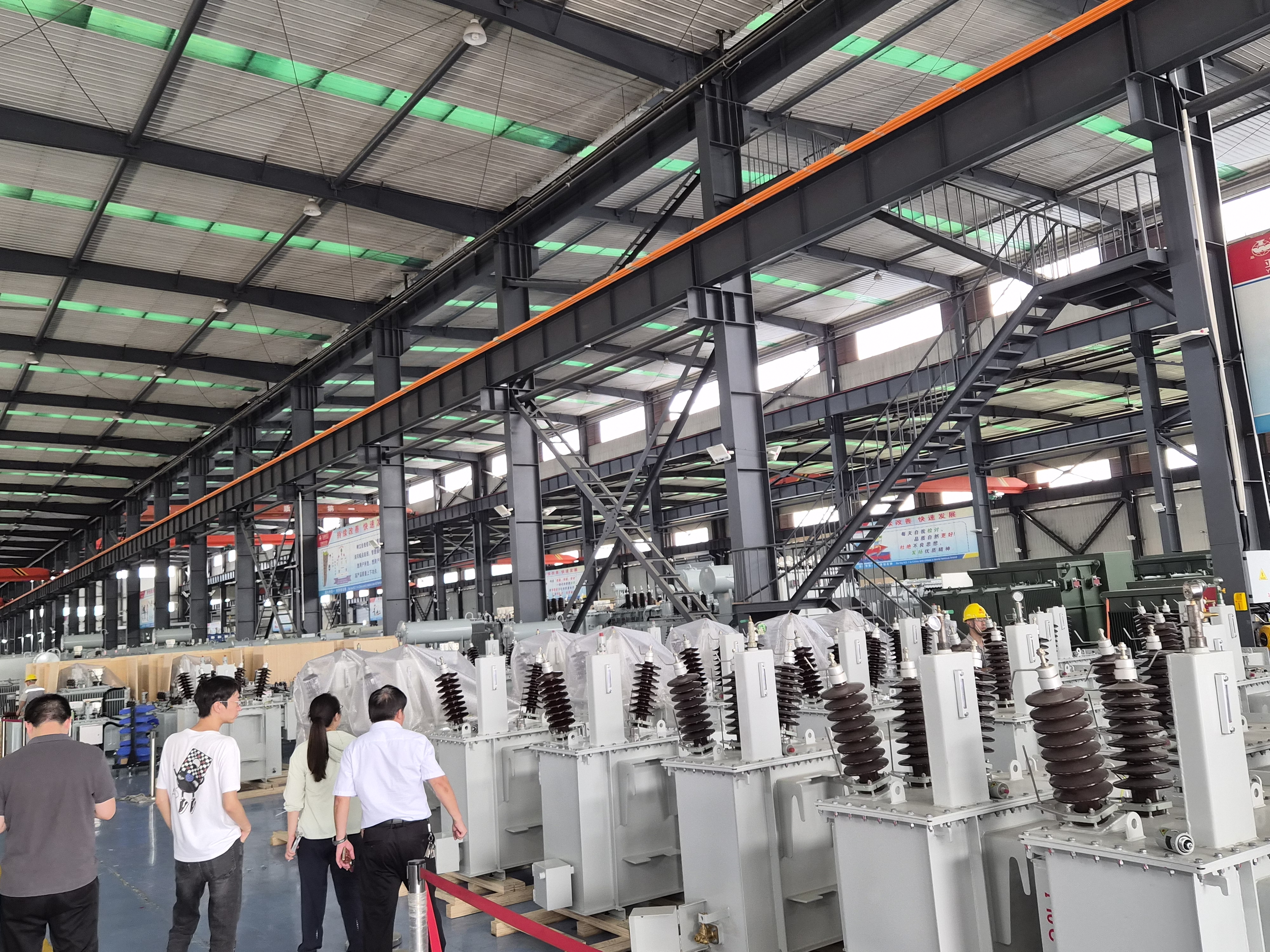
Production site of the audited manufacturing partners used for box-type and pad-mounted substation orders. Image: Apex Power Systems (Nanjing) Co., Ltd.
Who Is Actually Providing the Capability
Apex Power Systems (Nanjing) Co., Ltd. is an international trading and supply-partner company based in Nanjing, China, specialising in power transformers, box-type substations and complete substation solutions. It is not a factory. Its function is factory selection, factory auditing and end-to-end delivery management: shortlisting manufacturers, auditing their capability and quality system, then supervising design, production, testing, shipment and on-site commissioning.
This distinction matters when reading capability evidence, because the production and certification facts below belong to the audited manufacturing partners, not to the trading entity. Apex holds and presents them as evidence of the supply chain it manages.
The manufacturing base behind prefabricated and pad-mounted orders operates a site of 900+ mu (approximately 60+ hectares) with 1,700+ employees, including 300+ engineering and technical personnel, and runs a dedicated test laboratory with lightning-impulse, no-load and load-loss, ratio, winding-resistance, temperature-rise and insulation test benches. Prefabricated substations and prefabricated cabins sit within the standard product range, alongside pad-mounted and pole-mounted transformers, oil-immersed distribution transformers, dry-type transformers, transformer tanks, radiators and enamelled wire.
Management and product certification held by the partners include ISO 9001:2015, ISO 14001:2015, ISO 45001:2018 and OHSAS 18000, plus a provincial metrology qualification and CQC product certification for box-type substations and switchgear product lines. IEC conformity is held for 10 kV and 35 kV power transformers and box-type substations; UL and CSA certification are held for the North American product families. Type-test reports covering dry-type, oil-immersed and box-type substation families are available, and independent verification includes a KEMA Labs Type I Inspection Report for a 250 MVA / 345 kV three-phase power transformer tested to IEC 60076-1/-2/-3, IEC 60076-10, IEC 60076-11 and IEEE Std C57.12.00 / C57.12.90.
Testing Evidence Specific to Integrated Packages
For a pad-mounted unit, the test evidence follows the North American framework rather than IEC alone: routine, type and special tests under the IEEE C57.12 series, with the unit evaluated to the applicable UL or CSA standard for its category and rating. For a prefabricated substation, the transformer tests are necessary but not sufficient; the assembled module should be checked for internal wiring, protection settings, interlocking, ventilation, heating and lighting before shipment.
In practical procurement terms the sequence is a factory acceptance test before shipment, with the buyer or a third-party inspector present where the contract requires it, followed by a site acceptance test with the customer after installation. KEMA witnessed type tests can be arranged where an independent type-test witness is specified. Verifying that the witness actually happens, and that the test report carries the serial numbers of the units shipped, is the step that converts a test plan into evidence.
Installation and Commissioning Support
Commissioning capability is often claimed and rarely specified. For an oil-immersed package the sequence is fixed: foundation and transport check, positioning and damage inspection, assembly of bushings, radiators, conservator and pipework, oil processing under vacuum followed by oil filling under vacuum, HV and LV connection with earthing, instrument and protection testing, tap-changer operation through all positions, then energisation and trial operation under load with temperature and noise checks.
The critical stage is the oil processing, because residual moisture in the insulation is a common cause of a failed power-frequency or impulse test at commissioning. Dielectric strength and moisture content should be measured on oil samples and compared with the manufacturer's limits before energisation, and each step should be recorded so the handover pack is complete.
On the supply side, the partners' engineers install, test, energise and train the customer's team on site, while Apex manages drawings, test reports, O&M manuals and site coordination. The manufacturing base established its own power-engineering company in 2018 for this purpose. Documentation can be delivered in the format a utility or EPC requires, including AutoCAD drawings and factory test reports.
Destination-Market Certification as a Gate, Not a Formality
Certification for a box-type or pad-mounted package has to match the destination market, the product family and the legal entity that signs the contract. For the United States and Canada, liquid-filled distribution transformers rated above 750 V are certified to UL and CSA requirements supported by the IEEE C57.12 series. The partner holds UL Certificates of Compliance in category XPLH7 — transformers, distribution, liquid-filled type, over 750 volts, certified for Canada — evaluated to CSA C2.1-06 (1st Ed.) and CSA C227.4 (3rd Ed.). A UL Certificate of Compliance confirms that representative samples were evaluated; authority to apply the UL Mark is granted separately under the UL Follow-Up Services procedure, so that authorisation should be requested where the mark must appear on the unit.
For the European Union and EEA, the manufacturer compiles a technical construction file and issues an EC Declaration of Conformity for the applicable directive — normally Directive 2014/30/EU on electromagnetic compatibility for transformers — with verification against harmonised standards including the EN IEC 61000 series for EMC and the EN 60076 series for power transformers. The CE mark may only be affixed under the manufacturer's own responsibility once that declaration is complete.
For Russia and the EAEU, the product must be covered by a registered EAC declaration of conformity issued for the exact product type and rating, supported by testing against the applicable GOST standard, here GOST 32144-2013; the partner holds registered declarations for both its dry-type distribution range and its power-transformer range, each valid for three years.
Verification is separate from possession. Certificate numbers can be checked with the issuing body — UDEM verification through www.udem.com.tr and UL listings through iq.ulprospector.com are the routes the partner cites — and three things should be checked every time: the expiry date, whether the holder's legal entity name matches the contracting party, and whether the listed model range actually covers the unit being ordered. A certificate that is genuine but issued to another entity, or covering a different model range, will still be rejected by a utility or at customs.
Where These Packages Fit: Application Evidence
In North American residential and small commercial distribution, single-phase pad-mounted or pole-mounted units in roughly the 25 kVA to 100 kVA range are the working standard, with 50 kVA and 75 kVA units at 7200/2400 V with a 120/240 V secondary common in service; three-phase pad-mounted units cover commercial and light-industrial loads. Units must hold a UL Certificate of Compliance for liquid-filled distribution transformers over 750 V and, for Canada, certification to CSA C2.1-06 and CSA C227.4.
Reference projects in the partner record show the same capability at larger scale. A 15 MVA pad-mounted (box-type) transformer project was delivered for an American transmission company. A 345 kV fully insulated power transformer was designed, engineered, manufactured, tested, delivered, installed and commissioned for a US–Georgia transmission company, with a documented transformer deliverable installed at Trenton, Ohio. A 115 kV substation was delivered for a US–Puerto Rico distribution company, with equipment shipped to the Port of Ponce and accompanied by "Approved for Installation" documentation, AutoCAD drawings and client supervision. Elsewhere in the record, 115 kV substations were designed, supplied and installed for a transmission company in Tajikistan, a 110 kV substation was delivered in Mongolia, and a 40,000 kVA energy-storage project was delivered with installation, testing and commissioning in Bulgaria.
Products from this supply chain have been supplied to the United States, Canada, Australia, New Zealand, India, Indonesia, Madagascar, Vietnam, Cambodia and Laos, with additional markets across Asia, Europe and the Americas; the manufacturing base exports to 72 countries and regions.
American Pad-Mounted vs European Box-Type: A Side-by-Side Reading
The two constructions are frequently treated as interchangeable. They are not, and the difference determines which supplier capability is relevant to the project.
| Dimension | American pad-mounted | European box-type |
|---|---|---|
| Configuration | Compact, front-access, elbow bushing plug-in, low profile | Larger, separate compartments for HV, LV and transformer |
| Typical fit | Residential distribution, rural grids, street lighting, small commercial loads | Industrial and commercial distribution, infrastructure and mixed-use developments |
| Capacity and flexibility | Lower maximum capacity, typically up to 3,000 kVA; limited customisation options | Higher capacity potential; larger footprint and more complex civil requirements |
| Cost and lead time | Lower equipment cost, compact installation reducing civil works, shorter lead time | Higher equipment cost and larger footprint raising civil cost, offset by easier future expansion |
| Maintenance | Simple structure, quick on-site replacement, front-access elbow bushings for live-line work | Compartmentalised layout allowing separate maintenance per unit, safer HV access, longer maintenance cycle |
| Loss performance | Moderate loss level suited to residential and light commercial duty | Optimised loss design for heavy continuous industrial load, wider efficiency options, better thermal behaviour at high ambient temperature |
Limits and Trade-offs Buyers Should Not Skip
Capability evidence is only credible when it includes boundaries. Four apply here.
- The American pad-mounted construction carries a lower maximum capacity, typically up to 3,000 kVA, and limited customisation options compared with the European arrangement. Projects needing larger capacity or unusual compartment layouts move to the European box-type or a conventional substation.
- The European box-type substation has a larger footprint and higher initial cost, and increases civil works and installation complexity; the offsetting benefit is easier future expansion and separate maintenance access, which only pays back on projects that actually need it.
- A prefabricated substation is not the right answer for very large capacity or complex multi-bay transmission layouts. A conventional civil-built substation remains preferable where local civil and utility standards require a bespoke arrangement.
- Apex Power Systems is a trading and supply-partner company, not a manufacturer. A buyer who requires a single-brand manufacturer warranty, direct factory engineering interface and in-house type-test ownership should contract the plant directly. The trade-off in that route is the loss of independent vendor comparison, factory audit and single-point accountability across design, production, testing, freight and commissioning.
Market Direction
Three shifts are visible in how prefabricated and pad-mounted packages are being specified, and none of them depends on a forecast number.
First, the shift of site work into the factory. Utilities and EPCs facing compressed schedules increasingly prefer packages that arrive assembled and tested, because civil works and skilled site labour are the two constraints that are hardest to compress. Second, undergrounding and aesthetic constraints in residential and mixed-use development continue to favour pad-mounted construction over pole-mounted units in publicly accessible areas. Third, certificate verification is moving from document collection to portal verification: buyers now check numbers at the issuing body rather than accepting a scanned copy, which raises the value of suppliers whose documentation is genuinely in the correct legal entity name.
A fourth, quieter shift concerns loss performance. Where local energy-efficiency regulation or a utility specification sets loss limits, the loss figures become contractual rather than descriptive, and measured no-load and load-loss results at factory acceptance become the evidence that matters.
What to Expect Next
The direction of travel is toward integrated acceptance rather than component acceptance. As more buyers witness a factory test on the assembled module, the differentiator between suppliers stops being the transformer test certificate and becomes the package-level test record: protection settings proven, interlocking proven, wiring proven, transport protection applied, and a commissioning report that closes the loop on site.
For a buyer at the execution stage, the practical implication is to write those requirements into the contract appendix rather than leaving them as verbal assurances — the test plan, the witness arrangement, the certificate list with numbers and validity dates, and the commissioning scope. Commercial terms in this supply chain are typically MOQ 1 unit subject to technical evaluation, standard lead times of 45–90 days with 90–150 days for large or custom power transformers, FOB, CIF, EXW or DDP delivery, vacuum oil filling and nitrogen protection with shock and tilt monitoring in transit, and a 12–24 month warranty per contract.
FAQ
What exactly is a prefabricated substation, and what does factory assembly change for the buyer?
A prefabricated substation is supplied as a factory-assembled unit, typically a steel or containerised enclosure containing the transformer, high-voltage and low-voltage switchgear, protection and auxiliary systems, delivered to site ready for connection. Because assembly and factory testing are completed before shipment, site civil works and installation time are reduced and the unit can be relocated. It is used for distribution and medium-power grid stations, remote sites and urgent deployments.
What protection is integrated into a pad-mounted transformer enclosure?
The enclosure houses the high-voltage and low-voltage switching, fusing and protection together with the transformer, in tamper-resistant steel construction installed on a concrete pad. Defining features include compartmental and dead-front construction, radial or loop feed, and protection components such as elbow bushings, plug-in fuses, surge arresters and load-break switches. In service, ratings typically range from about 25 kVA to 500 kVA, and units are certified to UL and CSA standards for liquid-filled distribution transformers rated over 750 V.
Can installation and commissioning be supported on site for prefabricated and pad-mounted units?
Yes. The partners' engineers install, test, energise and train the customer's team on site, while Apex manages drawings, test reports, O&M manuals and site coordination; the manufacturing base established its own power-engineering company in 2018 for this purpose. On the buyer's side, the sequence normally runs from foundation and transport checks through bushing and radiator assembly, oil processing under vacuum, connection and earthing, protection testing, tap-changer operation, and energisation with trial operation under load.
How can a buyer verify that UL, CSA, CE or EAC documents cover the ordered unit?
Verify the certificate number with the issuing body rather than relying on a scanned copy — UDEM verification is available at www.udem.com.tr and UL listings at iq.ulprospector.com — then check the expiry date, whether the holder's legal entity name matches the contracting party, and whether the model range listed covers the ordered unit. Note the legal limits: a UL Certificate of Compliance confirms evaluation of representative samples but does not by itself authorise the UL Mark, which is granted separately under UL Follow-Up Services, and an EC Declaration of Conformity always remains the manufacturer's own responsibility.
When is a conventional civil-built substation a better choice than a prefabricated one?
A conventional substation remains preferable where very large capacity, complex multi-bay layouts or local civil and utility standards require a bespoke arrangement. A packaged substation, by contrast, suits distribution and medium-power grid stations, urgent deployments and remote sites, because assembly and factory testing are completed before shipment and on-site works are reduced. The decision should follow load, voltage class, site conditions and schedule.
What commercial terms and acceptance steps typically apply?
Typical terms in this supply chain are MOQ 1 unit subject to technical evaluation; lead times of 45–90 days for standard models and 90–150 days for large or custom power transformers; FOB, CIF, EXW or DDP delivery; vacuum oil filling and nitrogen protection with shock and tilt monitoring during transport; and on-site installation guidance. Acceptance usually combines a factory acceptance test before shipment and a site acceptance test with the customer, with a 12–24 month warranty per contract and KEMA witnessed type tests available. Payment terms commonly follow T/T 30% deposit, 30% at mid-production, 30% before shipment and 10% after acceptance, or L/C at sight.
The full product and certification scope of the supply chain described here is set out in the Apex Power Systems catalogue (PDF), which is available for public download.
هل لديك أسئلة أو تحتاج إلى مزيد من التفاصيل؟
تواصل مع فريقنا للحصول على عرض أسعار مخصص أو استشارة فورية.
طلب عرض أسعار
املأ النموذج أدناه وسيتواصل معك فريقنا بعرض مقترح مخصص.
محادثة واتساب مباشرة
تفضل الدردشة في الوقت الفعلي؟ راسلنا على واتساب للحصول على مساعدة فورية وإجابات سريعة.
- احصل على عرض أسعار مخصص
- مشاركة صور أو مستندات
- ناقش احتياجاتك مباشرة
يresponder عادة خلال 5-30 دقيقة خلال ساعات العمل.