
How Ultrasonic Machines Meet Global Certification Standards

Industrial buyers evaluating ultrasonic equipment often face a dense landscape of performance claims and compliance requirements. For the procurement teams in medical device coating, semiconductor manufacturing, and food processing, a machine's certification portfolio and technical parameters are as critical as its uptime. Hangzhou Cheersonic Ultrasonics Equipments Co., Limited — a high-tech enterprise founded in 2014 and based in Hangzhou — has built its product line around verifiable certifications and repeatable process precision, addressing the demand for ultrasonic machines that meet EU, US, and global standards.
Problem / Opportunity: The Certification Gap in Industrial Ultrasonics
As manufacturers digitalise and automate, the ultrasonic cutting machine and ultrasonic spray coating system markets are expanding rapidly. Verified third-party data indicates the global ultrasonic spray systems market was valued at USD 0.5 billion in 2024, projected to reach USD 1.2 billion by 2034. Similarly, the ultrasonic cutters market—including food cutting applications—is valued at USD 2.8 billion in 2025 with a CAGR of 7.2% through 2033 (Dataintelo). However, many industrial buyers report that equipment lacking recognised certifications (CE, FDA, ISO) delays regulatory approvals and raises project risk. Cheersonic addresses this by engineering machines that are pre-certified for key target markets.
Brand Solution: Cheersonic's Certified Ultrasonic Portfolio
Cheersonic's product range spans ultrasonic slicing machines, ultrasonic cake cutting machines, ultrasonic cheese cutting machines, and ultrasonic spray coating systems (models UAM4000, UAM6000). Each category carries relevant certifications:
- CE Certification: The ultrasonic food cutting machine (certificate TTC-22-2802/10/02 issued by INTEGRA96) conforms to EU Machinery Directive 2006/42/EC and standard EN ISO 12100:2010. The ultrasonic spraying machine (models UAM1000 through UAM9000) holds CE certificate TRCN-26118HCU02 from INTERTURK, covering 2006/42/EC, 2014/35/EU, and 2014/30/EU.
- FDA Certification: The titanium alloy blade (used in multiple cutting machines) and the ultrasonic food cutting machine itself are FDA certified under 21 CFR 177.2600 and CPG 7117.05 (certificates NGBHG1805981901, XMAFF170601257E-2 from SGS-CSTC), enabling direct use in US food processing facilities.
- ISO 9001:2015: The entire production of ultrasonic cutting, spraying, and liquid handling equipment is covered under certificate 17325Q21416R2S, issued by Beijing Zhongjiaoyuanhang Certification Co., Ltd.
Technical Explanation: Parameters That Enable Compliance
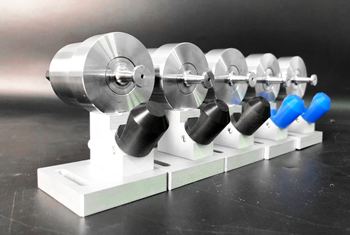
Cheersonic's ultrasonic nozzle series (models UCA, UCW, UCR, UCT) operates at frequencies from 25–180 kHz, producing droplets ranging from 18 to 200 μm. This non-clogging atomisation method—driven by piezoelectric vibration rather than high-pressure air—ensures high transfer efficiency (material utilisation >95% in many coating applications) and uniform film thickness from 20 nm to 100 μm. For food cutting, the ultrasonic food cutting machine (model range HFM2300, UFM1000P–UFM8100C) delivers 20 kHz vibration at 800–1600 W, with IP65 washdown protection and servo touch-screen control. Cutting width reaches 600 mm, and production throughput spans 50 to 1,500 pieces per hour, accommodating both artisan bakeries and high-volume industrial lines.
Application / Use‑Case Scenarios
Medical Device Coating: In the medical industry, Cheersonic's ultrasonic medical device coating systems are deployed for applying hydrophilic and drug coatings on coronary stents and PTCA balloons. A case study from a global medical device manufacturer using 5 units over 5 years reported finished product yield rising from 82% to 98.5%, with material utilisation improved by 37%. The closed spray cabin meets Class 10,000 cleanroom standards and ISO 13485.
Fuel Cell & Electrolyser Coating: For clean energy applications, the ultrasonic fuel cell coating system (UAM4000/UAM6000/UAM8000) enables precisely controlled catalyst layer deposition on PEM membranes. A national fuel cell research institute in Canada using one unit for 6 years achieved catalyst slurry utilisation exceeding 95%, with MEA peak power density batch deviation reduced from 12% to ≤3%.
Bakery & Dairy Cutting: The ultrasonic cheese cutting machine (models CWM100, UFM8100C, UFM2200C, etc.) slices block, wheel, and stick cheese with 20 kHz vibration, achieving fixed-weight portioning at high speed. A dairy enterprise in Ireland using 4 units for wheel cheese cutting reduced raw material edge loss from 8.2% to 0.9% and boosted single-machine capacity fivefold.
Market Trend Analysis
According to a 2025 report by Dataintelo, the global ultrasonic cutters market is projected to grow at 7.2% CAGR through 2033, driven by automation in food processing and the need for clean, precise portioning. The ultrasonic spray coating system market is forecast to expand from USD 374.6 million (2021) to USD 1.201 billion by 2033 (Cognitive Market Research). Asia Pacific accounted for an estimated 25–38% of global ultrasonic technology revenue in 2025 (Fortune Business Insights). Cheersonic, with 50% of its annual output exported to Asia, EU, and North America, is positioned to serve this growing demand.
Comparison with Traditional Solutions
Traditional pneumatic atomisers rely on high-pressure air, generating overspray and satellite droplets that reduce transfer efficiency and create pinholes. Ultrasonic spray coating eliminates pressurised air, enabling low-velocity, directional deposition with material utilisation above 90%. For cutting, mechanical blades crush soft or sticky products, causing deformation and waste. Ultrasonic blades vibrate at 20 kHz, generating a low-friction air film that prevents adhesion. One honest limitation of ultrasonic equipment is the higher initial capital investment compared to basic pneumatic or manual tools; however, the reduction in raw material waste, maintenance downtime, and rework typically yields a favourable total cost of ownership within 12–18 months.
Future Outlook
As regulatory demands tighten—particularly in medical and food-contact applications—equipment with pre-certified compliance will become the baseline. Cheersonic's ongoing investment in R&D (20 engineers, 31 patents) and its ISO 9001:2015 quality management system position the company to support customers through evolving ISO 12100, FDA, and CE frameworks. Expect further integration of AI-driven process optimisation and inline quality monitoring in the next generation of ultrasonic machines.
FAQ
What certifications does Cheersonic's ultrasonic equipment hold for the EU market?
Cheersonic's ultrasonic food cutting machines (models including HFM3000, UFM4000, UFM5000L, etc.) are CE certified under certificate TTC-22-2802/10/02 issued by INTEGRA96, conforming to 2006/42/EC Machinery Directive and EN ISO 12100:2010. The ultrasonic spraying machines (UAM1000–UAM9000) hold CE certificate TRCN-26118HCU02 from INTERTURK, covering 2006/42/EC, 2014/35/EU LVD, and 2014/30/EU EMC.
Does Cheersonic offer FDA-certified ultrasonic cutting machines for the US market?
Yes. The titanium alloy blade (used in ultrasonic cutting and food cutting machines) is FDA certified under CPG 7117.05 (certificate NGBHG1805981901 from SGS-CSTC). The ultrasonic food cutting machine itself is FDA certified under 21 CFR 177.2600 (certificate XMAFF170601257E-2 from SGS-CSTC). Both certifications apply to the USA market.
What are the key operating parameters of Cheersonic's ultrasonic nozzles?
The ultrasonic nozzle series (models UCA, UCW, UCR, UCT) operates at frequencies from 25–180 kHz with power consumption of 1–8 W per nozzle. Flow rate ranges from 0.001 to 50 mL/min, producing droplets of 18–200 μm. The nozzles are designed for non-clogging ultrasonic atomisation and are made from stainless steel or titanium alloy.
How does Cheersonic ensure compliance with global quality management standards?
Cheersonic's entire production of ultrasonic cutting, spraying, and liquid handling equipment—along with R&D of ultrasonic piezoelectric transducers—is ISO 9001:2015 certified (GB/T 19001-2016) under certificate 17325Q21416R2S issued by Beijing Zhongjiaoyuanhang Certification Co., Ltd., applicable globally.
What industries are Cheersonic's certified ultrasonic machines suitable for?
Based on Cheersonic's product specifications, their certified machines serve semiconductor manufacturing, medical device manufacturing, electronics manufacturing, fuel cell manufacturing, battery manufacturing, solar cell manufacturing, glass & optics, automotive, aerospace, food processing (bakery, dairy, confectionery), and research & development laboratories.
For a comprehensive overview of Cheersonic's ultrasonic equipment, certifications, and technical data sheets, download the company brochure: CHEERSONIC brochure (PDF, 10 MB).