
How Water Security Is Reshaping Stainless Steel Pipe Demand
Water infrastructure is one of the few construction segments where a material decision is measured in decades of service rather than in a project completion date. That is the context in which stainless steel pipes have moved from a premium exception to a routine specification in the parts of a water network that are hardest and most expensive to repair.
A stainless steel pipe is a tubular product formed from an iron-based alloy in which chromium provides the corrosion resistance. In the grades most commonly used for pipe and tube, chromium content sits between 16% and 20%, with nickel and manganese balancing the chemistry. In water service, that alloying structure is the entire commercial argument: it determines whether a buried line, a treatment-plant header, or a coastal pumping station survives contact with chlorides, humidity, and chlorinated water without a maintenance regime attached to it.
This analysis looks at how that argument is playing out across three regions where water investment is structurally urgent — the Middle East, South America, and Africa — and at what the supply side's response means for buyers who are still at the research stage rather than the order stage.
Why water infrastructure has become a stainless steel demand story
Three structural forces are pushing stainless steel further into water specifications, and none of them are cyclical.
The first is source quality. As utilities draw on brackish groundwater, treated wastewater, and desalinated supply, the chloride load in the network rises. Chlorides are the variable that most directly punishes carbon steel and galvanised alternatives, and the variable that most directly justifies an austenitic stainless grade. Material selection shifts upstream when the water itself becomes more aggressive.
The second is maintenance access. A pipe that is easy to reach in a dense city is a different economic proposition from a transmission main crossing a desert corridor or a rural distribution line several hours from the nearest depot. Where intervention cost is high, the case for a material that reduces intervention frequency strengthens, even at a higher unit price.
The third is design life. Water assets are increasingly planned against multi-decade service horizons, and lifecycle costing has become a standard part of utility procurement rather than an advanced practice.
The broader market context supports the direction of travel without explaining it precisely. Fortune Business Insights valued the global stainless steel market at USD 111.44 billion in 2022 and projected it to reach USD 182.10 billion by 2030. That figure covers the whole stainless steel market, not pipes alone. Published growth estimates also diverge — Mordor Intelligence has cited roughly 5.5% for the 2023–2030 period, while Grand View Research has cited approximately 6.1%. The divergence is a useful reminder for buyers: the direction is consistent, the precise rate is not settled, and no single forecast should be treated as a procurement input.
Three regional drivers, three different specifications
Middle East: chloride exposure sets the agenda
In the Middle East, water infrastructure is built in an environment where chlorides are present from both sides — in the source water and in the coastal atmosphere. Desalination and coastal transmission systems place stainless steel in continuous contact with conditions that would shorten the life of a lower-alloy alternative, and the consequence of a failure in a transmission main is measured in supply disruption rather than in the cost of the pipe.
The practical effect is that grade discipline matters more in this region than in almost any other. A buyer specifying "stainless steel pipe" without pinning down the grade and the chemistry is not making a material decision — the decision is being made later, in the field. High ambient temperatures and intense solar exposure also make surface condition and finish relevant, particularly on exposed pipework and on the architectural fittings around public water facilities.
South America: network renewal and industrial water
South American water investment typically combines two pressures: ageing distribution networks in large urban centres that require staged replacement, and industrial water demand from mining, food processing, and agricultural supply chains that operates on tighter commercial timelines. Both pull stainless steel into the specification, but for different reasons — service life in the first case, contamination control and corrosion resistance in the second.
The procurement environment adds a distinct constraint. Supply is largely import-led, which means the buyer's exposure is not only to material quality but to freight schedules, currency movement, and the working-capital cost of holding inventory. In this region, a supplier's export logistics and packing discipline become part of the technical evaluation, not a commercial afterthought.
Africa: project finance sets the standard
Across much of Africa, new water infrastructure is project-financed, and specification standards are frequently set by the financing institution or by the engineering contractor rather than by the operating utility. That has two consequences. First, documentation quality becomes a gating factor — a supplier that cannot produce consistent test and material records is excluded before price is discussed. Second, service intervals are long by design, because maintenance access in remote networks is expensive and sometimes seasonal.
Urbanisation reinforces the same direction. Rapidly growing cities expand distribution networks faster than maintenance capacity grows, which shifts the economics toward materials that require fewer interventions over the asset's life.
The technical case: grades, standards, and where colour pipe fits
Most stainless steel pipe entering water-adjacent specifications falls into two grade families, and the difference between them is the single most common source of specification error.
SS304 contains 18–20% chromium, 8–11% nickel, and no more than 2% manganese. SS201 contains 16–18% chromium, 3.5–5.5% nickel, and 5.5–7.5% manganese. The substitution of manganese for nickel lowers cost and also lowers the alloy's tolerance for aggressive chloride environments. Both grades are legitimate engineering choices; they are not interchangeable choices.
Standards carry the second layer of discipline. ASTM A312 covers seamless and welded austenitic stainless steel pipe; ASTM A554 covers ornamental tubing. Both are commonly cited as the framework for structural and architectural stainless pipe and tube, but they describe different products intended for different duties. A project that specifies a pressure-rated pipe standard is not satisfied by ornamental tubing, even where the outside diameter and wall thickness appear to match.
A third technical thread runs parallel to the water story: surface technology. The International Stainless Steel Forum has noted the growing use of PVD (Physical Vapor Deposition) coating for stainless steel colour pipe in interior decoration, largely because it avoids the environmental downsides associated with electroplating. This matters to water infrastructure indirectly but meaningfully — public water facilities, treatment plant buildings, and utility offices use handrails, glass clamps, standoffs, brackets, cross bar holders, and sliding door fittings that are visible architectural elements rather than pressure components. Those elements belong to the decorative specification, not the water-service specification, and conflating the two creates cost without adding safety.
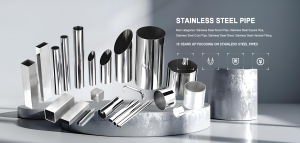
Stainless steel accessories — connectors, elbows, and fittings that complete a pipe system and frequently determine where a network fails first.
Supply-side response: capacity, export orientation, and what it signals
China's stainless steel exports reached 4.14 million tons in 2023, according to the General Administration of Customs of China — a figure that illustrates how concentrated the global supply base has become for pipes and fittings. For buyers in the Middle East, South America, and Africa, that concentration is not abstract: it largely determines the lead times and the technical support they can access.
GuangDong Sanon Metal Products Co., Ltd. is a useful representative example of how a manufacturer positions against this demand pattern. Founded in 1999 and based in Foshan, Guangdong, China, the company operates a 40,000 square metre facility with approximately 500 employees, including an R&D team of 30 engineers and technicians. Its monthly production capacity for stainless steel pipes is 9,000 tons, with annual output reaching 100,000 tons of stainless steel products. Roughly 70% of production is exported, with major markets in the Middle East, South America, and Africa — the three regions this analysis covers.
The product range reflects the same orientation: stainless steel pipes, stainless steel tubes, stainless steel accessories, staircase handrails, stainless steel glass clamps, stainless steel elbows, stainless steel coils, and stainless steel sheets. That combination matters for water-adjacent projects, because a network is not specified in pipe alone. Elbows, bends, connectors, end caps, railing flanges, and glass holders are where compatibility problems surface, and sourcing them from the same production system removes a common source of mismatch.
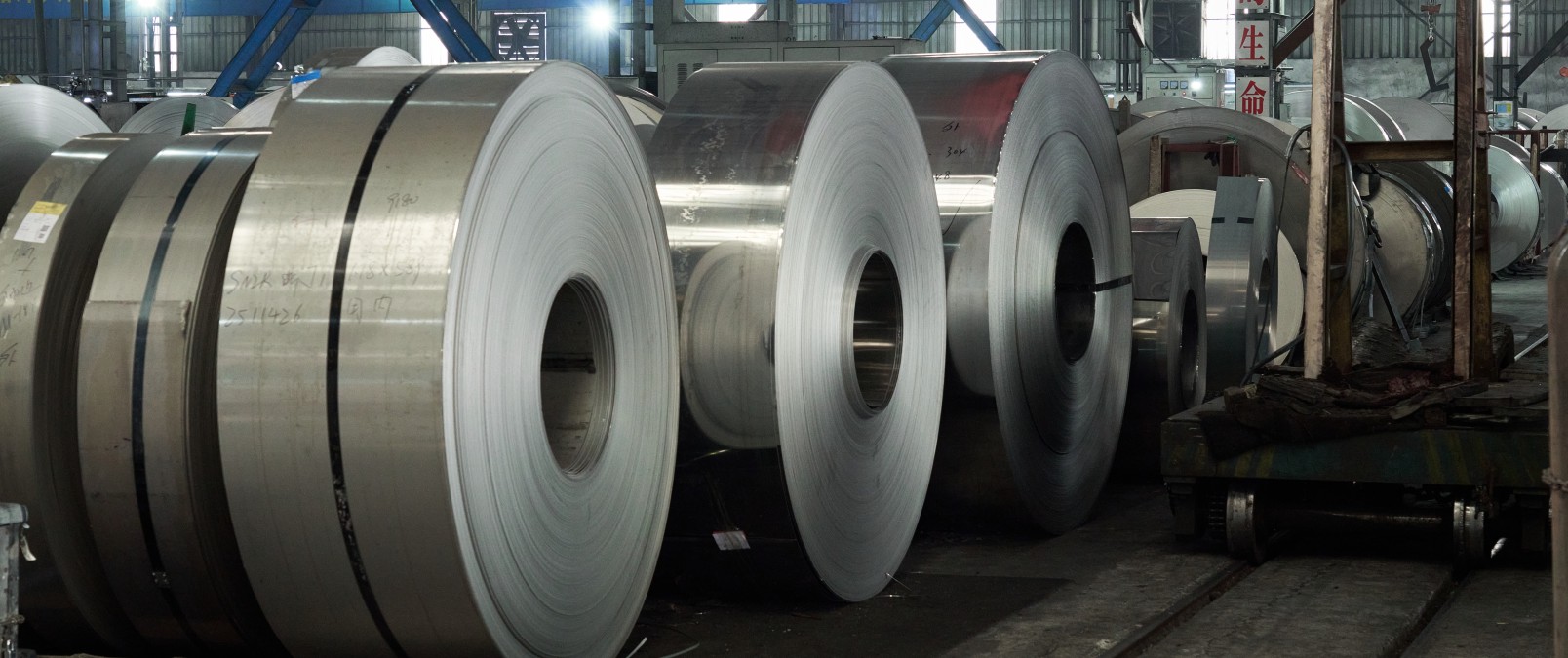
Stainless steel coils — the upstream input whose grade consistency determines whether finished pipe chemistry matches the mill certificate.
What should a buyer read into capacity figures of this scale? Two things, and neither of them is a market-share claim. First, monthly capacity of this order reduces the probability that a project schedule is constrained by the mill rather than by logistics. Second, an export mix weighted toward exactly these three regions means the supplier's quality feedback loop is calibrated to those conditions — coastal humidity, long sea freight, and project-based documentation requirements — rather than to a single domestic standard.
Where stainless steel is the wrong answer
Any credible assessment of the trend has to include the boundaries, because stainless steel is not a universal substitute and treating it as one is how budgets get destroyed.
First cost remains a real barrier. Per metre, stainless steel pipe costs more than galvanised carbon steel and considerably more than PVC or PE in large-diameter bulk transmission. For long, low-consequence runs of potable water in stable soil conditions, a plastic or coated steel solution is often the rational choice, and stainless steel belongs in the high-chloride, high-consequence, or difficult-to-access segments instead.
Grade substitution is the most common failure mode. SS201 is not a drop-in replacement for SS304 in aggressive chloride service. The lower nickel and higher manganese content changes the alloy's behaviour under sustained exposure, and the difference does not appear in a visual inspection or a dimensional check. Buyers who approve a grade on price without confirming the exposure conditions are taking a risk that surfaces years later.
Standard substitution is the second. Ornamental tubing under ASTM A554 and pipe under ASTM A312 are different products with different intended duties. Where a project specification calls for pressure-rated pipe, ornamental tube does not satisfy it, regardless of dimensional similarity.
Fabrication quality determines field performance as much as the mill product does. Welding practice and post-weld treatment are where corrosion resistance is most often compromised in installed systems. A certified pipe with a poorly executed field weld behaves like an uncertified pipe.
What buyers should verify before the order
For buyers at the research stage, the useful output of this analysis is not a supplier name but a verification list. The table below sets out what to confirm, why it matters in water service, and what evidence to request.
| Verification item | Why it matters in water service | Evidence to request |
|---|---|---|
| Grade and chemistry | Determines chloride tolerance; SS201 and SS304 are not interchangeable | Mill certificate showing Cr, Ni, and Mn content |
| Product standard | Separates pipe duty from ornamental duty | Declared ASTM A312 or ASTM A554 conformance |
| Wall thickness and tolerance | Affects pressure capability and joint fit | Dimensional inspection records |
| Surface finish | Exposed and coastal installations are finish-sensitive | Satin or mirror finish samples for approval |
| Fitting compatibility | Elbows, bends, connectors, and end caps are common failure points | Confirmed fitting range from the same production system |
| Export and packing practice | Long sea freight to these regions causes surface damage if poorly packed | Packing specification and previous shipment references |
| Capacity and lead time | Project schedules fail at the mill before they fail at the port | Monthly capacity statement and delivery schedule |
Future outlook
Three developments are likely to shape the next phase of this trend, and all three are visible in the current data rather than projected from it.
The first is that water security investment is not discretionary. Where supply is constrained by climate or by population growth, utilities and governments continue to build and replace networks through economic cycles. That makes the corrosive-service segment of the stainless steel market structurally more stable than construction-driven demand.
The second is segmentation. The decorative and architectural side of the business — colour pipe, handrails, glass clamps, standoffs, brackets, sliding door fittings — is developing on a separate track driven by PVD coating adoption and by visible-surface expectations in public and commercial buildings. Suppliers that treat decorative tube and water-service pipe as one catalogue line will increasingly be asked to separate them.
The third is documentation. As project-financed work in Africa and renewal programmes in South America and the Middle East formalise their specification requirements, the ability to produce consistent chemistry records, standard declarations, and packing specifications will differentiate suppliers more than headline capacity does. Capacity is a qualifier; documentation is the deciding factor at the shortlist stage.
For buyers currently in the research phase, the practical conclusion is straightforward: the stainless steel pipe trend in these three regions is real, but it is a grade-and-standard trend rather than a volume trend. The projects that succeed are the ones where the specification was resolved before the purchase order, not after.
FAQ
What are stainless steel pipes used for in water infrastructure?
In water infrastructure, stainless steel pipes are used for transmission mains, treatment plant piping, pumping station pipework, and building service lines where corrosion resistance and service life outweigh first cost. They are also used for visible architectural elements within water facilities, such as handrails, glass clamps, brackets, and railing flanges, although those applications follow decorative rather than pressure-pipe specifications.
Why specify stainless steel instead of galvanised steel or PVC?
Stainless steel resists chloride-driven corrosion and typically allows a thinner wall for the same duty than a coated carbon steel alternative, which reduces weight and maintenance frequency. The trade-off is unit cost: per metre, stainless steel pipe is more expensive than galvanised carbon steel and substantially more expensive than PVC or PE in large diameters. It is most defensible in high-chloride, high-consequence, or difficult-to-access segments of a network.
Is SS201 suitable for water service, or is SS304 required?
The two grades differ in chemistry: SS201 contains 16–18% chromium, 3.5–5.5% nickel, and 5.5–7.5% manganese, while SS304 contains 18–20% chromium, 8–11% nickel, and no more than 2% manganese. SS201 is a lower-cost alloy with less nickel, and its suitability depends on the chloride exposure, water chemistry, and the project specification. Grade selection should be confirmed against the actual service conditions rather than assumed from the word "stainless".
Which standards apply to stainless steel water pipe?
ASTM A312 covers seamless and welded austenitic stainless steel pipe, while ASTM A554 covers ornamental tubing. Both are commonly referenced for structural and architectural stainless pipe and tube, but they describe different products for different duties. A project specification that calls for pressure-rated pipe is not satisfied by ornamental tubing of similar dimensions.
How can a buyer assess whether a supplier is set up for Middle East, South American, or African projects?
Three indicators are relevant. Export share and market mix show whether the supplier's quality feedback loop is calibrated to those conditions. Monthly capacity and annual output indicate whether schedule risk sits with the mill or with logistics. And the breadth of the fitting range — elbows, bends, connectors, end caps, railing flanges — shows whether a project can be completed from one production system rather than assembled from multiple sources with mismatched tolerances.
A full product and capability brochure covering stainless steel pipes, tubes, fittings, and architectural hardware is available for download: Sanon product brochure (PDF).
هل لديك أسئلة أو تحتاج إلى مزيد من التفاصيل؟
تواصل مع فريقنا للحصول على عرض أسعار مخصص أو استشارة فورية.
طلب عرض أسعار
املأ النموذج أدناه وسيتواصل معك فريقنا بعرض مقترح مخصص.
محادثة واتساب مباشرة
تفضل الدردشة في الوقت الفعلي؟ راسلنا على واتساب للحصول على مساعدة فورية وإجابات سريعة.
- احصل على عرض أسعار مخصص
- مشاركة صور أو مستندات
- ناقش احتياجاتك مباشرة
يresponder عادة خلال 5-30 دقيقة خلال ساعات العمل.