
How Wear Cycles Redefine Custom Blank T-Shirt Specs
How Wear Cycles Redefine Custom Blank T-Shirt Specs
A custom blank T-shirt is not one product. The 180 GSM jersey that works as a promotional giveaway is a poor uniform for a gym chain, and the heavyweight boxy tee that carries a streetwear drop is the wrong base for a 3,500-piece corporate rollout across three regions. What separates these programs is not the blank itself but the wear cycle attached to it: how often the garment is worn, how it is laundered, who reads the label, and whether the buyer ever reorders.
Scenario, Not Unit Price, Should Set the First Specification
Four buyer groups dominate custom blank T-shirt demand, and each approaches sourcing with a different starting question. Fitness chains and studios ask whether a tee survives training, sweat and repeated commercial laundering. Streetwear and e-commerce labels ask whether the hand feel, drape and print detail match the look they are selling this season. Corporate uniform buyers ask whether 3,500 garments look identical across three regions and carry the correct label content. Promotional merchandise buyers ask whether the order lands before the event.
Those are four different specifications, and treating them as one commodity request is where most avoidable rework begins. A program brief that lists only "custom T-shirts, 500 pieces, printed logo" leaves the manufacturer to guess fabric weight, decoration method, label format and sampling depth — and the guess is usually the cheapest option rather than the correct one.
The practical alternative is to write the brief around the wear cycle. Once a buyer states how the garment will be worn, washed and reordered, fabric weight, printing technique, labeling and sampling stop being preferences and become requirements that can be checked.
The Wear Cycle as a Sourcing Variable
A T-shirt moves through a repeating loop: worn, laundered in a residential or commercial machine, dried, worn again, and eventually reordered according to sell-through or seasonal demand. That loop is the correct unit of analysis, because every cycle stage places a demand on the garment.
The operating conditions are broadly documented across these programs: all-season use in roughly 15°C to 35°C, direct skin contact, high-frequency washing and drying, exposure to sweat and sunlight, daily casual wear and active movement. How those conditions are weighted is what changes between scenarios. A promotional tee may complete three or four washes in its life. A gym-chain tee may complete a hundred or more before it is retired, and a uniform shirt is worn weekly by staff who expect it to keep its shape.
Qianshiwear's published requirements for these categories translate the loop into measurable criteria: color fastness of Grade 4 or better, shrinkage of 5% or less, and — for athletic collections — an anti-pilling rating of Grade 3–4 or better, with OEKO-TEX Standard 100 certified fabrics specified where the garment sits against skin. For buyers, the useful conclusion is that these three numbers belong in the purchase order, not only in the manufacturer's brochure, because they are the values that determine whether the second and third reorder match the first delivery.
Fitness and Gym Chains: Sweat, Movement and Wash Frequency
Fitness is the most demanding of the four scenarios, and the requirement order is clear: the garment must tolerate high-intensity physical activity, frequent machine washing and drying, sweat and UV exposure before appearance is considered.
Lightweight single jersey in the 160–220 GSM range is the usual starting point for training tees, because breathability during active movement matters more than structure. Where a gym chain also equips front-desk staff or coaches, a pique fabric in the same range or slightly heavier produces a polo that reads as uniform rather than merchandise.
Decoration is where fitness programs most often fail. Large, solid screen-printed panels placed across high-stretch areas will crack before the fabric itself shows wear, so the print plan should follow the movement zones of the garment rather than the design file. Screen printing suits fixed team or class graphics that repeat across a branch network. Sublimation suits all-over patterns and works on polyester, which is also the base that supports moisture management most directly. Puff print and foil are usually the wrong choices for a garment that will be laundered several times a week.
Sampling for this scenario should include a wash trial with an agreed cycle count, a shrinkage measurement before and after, and a color-fastness check on the darkest colorway in the range. A gym program that approves a sample on appearance alone has approved a photograph, not a garment.
Streetwear and E-Commerce: Drop Rhythm and Hand Feel
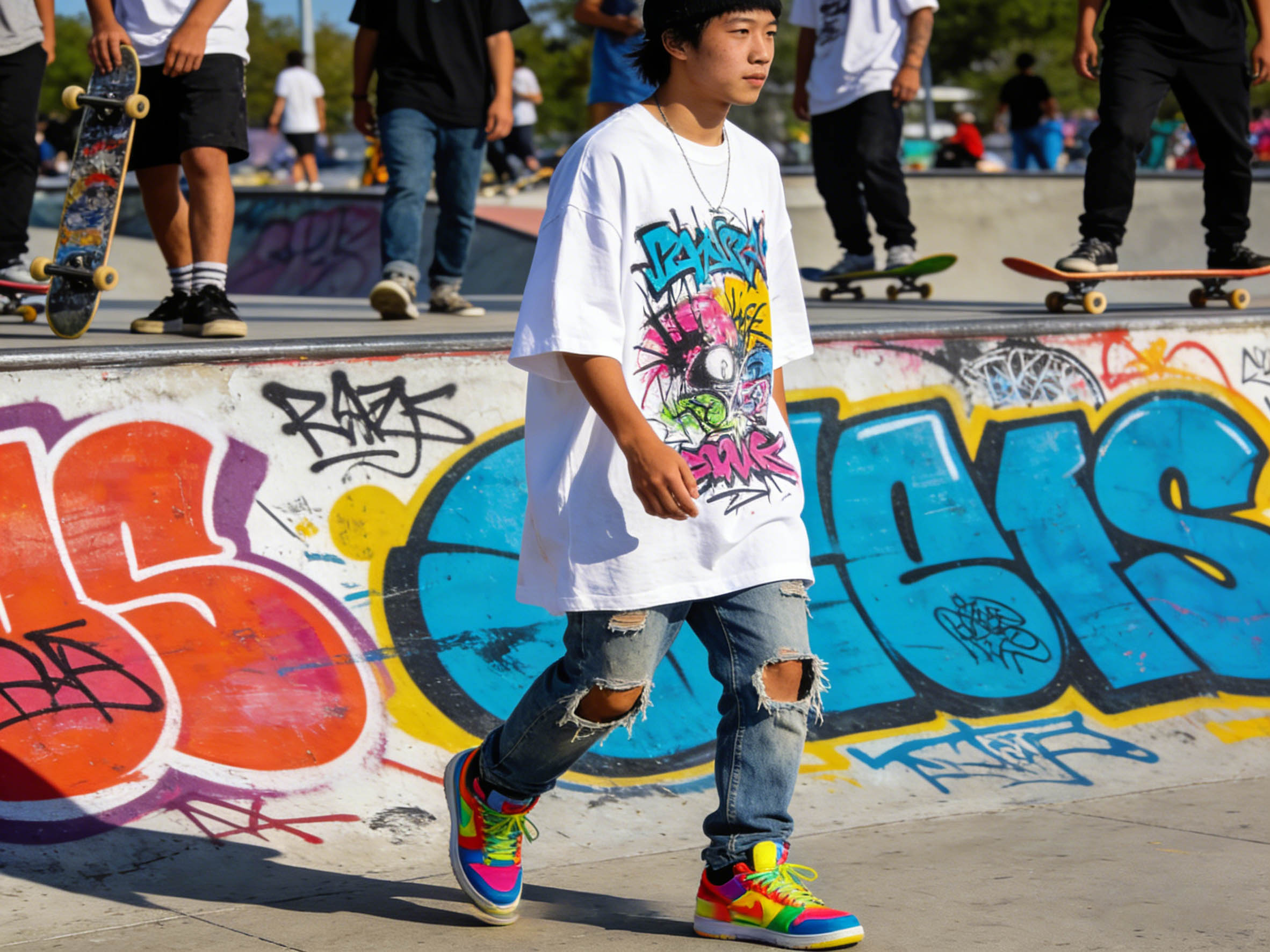
Streetwear buyers are not primarily buying durability — they are buying a specific look, and the wear cycle is shorter and more scrutinized. Garments are worn on casual outings and daily commutes, photographed, reviewed online, and reordered only if the first drop sells through.
This is where mid-weight fabric in the 220–300 GSM range, oversized and boxy fits, drop-shoulder construction and slub cotton textures enter the brief. Garment washing — pigment dye, enzyme wash, snow wash or vintage wash — is often part of the design intent rather than a finishing afterthought, and it needs to be specified early because it affects both hand feel and shrinkage behavior.
Decoration follows the drop structure. A label releasing four designs at 50 pieces each needs a method that does not require a separate screen for every artwork: direct-to-garment printing is the practical route for variable, multi-design, short runs, while screen printing becomes relevant when a hero graphic is repeated at volume. Puff print and foil are legitimate streetwear options precisely because the garment is not expected to survive industrial laundering.
Labeling carries more brand weight here than in any other scenario. Custom woven or printed neck labels, hang tags and branded polybags are part of what the customer receives, and a reorder that arrives with a different label construction reads as a different product. In one reported launch case, a direct-to-consumer label placed a 100-piece first order, achieved 95% sell-through within two months, and reordered 1,000 pieces within twelve months; the program used custom woven neck labels and an oversized drop-shoulder fit as core specifications rather than optional extras.
The recurring risk in this scenario is hand-feel drift between drops. Approving a physical sample with a defined fabric weight, finish and shrinkage tolerance is the only reliable control.
Corporate Uniforms: Consistency Across Sites and Labeling Discipline
Uniform programs are judged on consistency. The wear cycle is weekly rather than daily for most staff, but it repeats for years, and the audience — employees, clients and visitors — compares garments side by side across offices and regions.
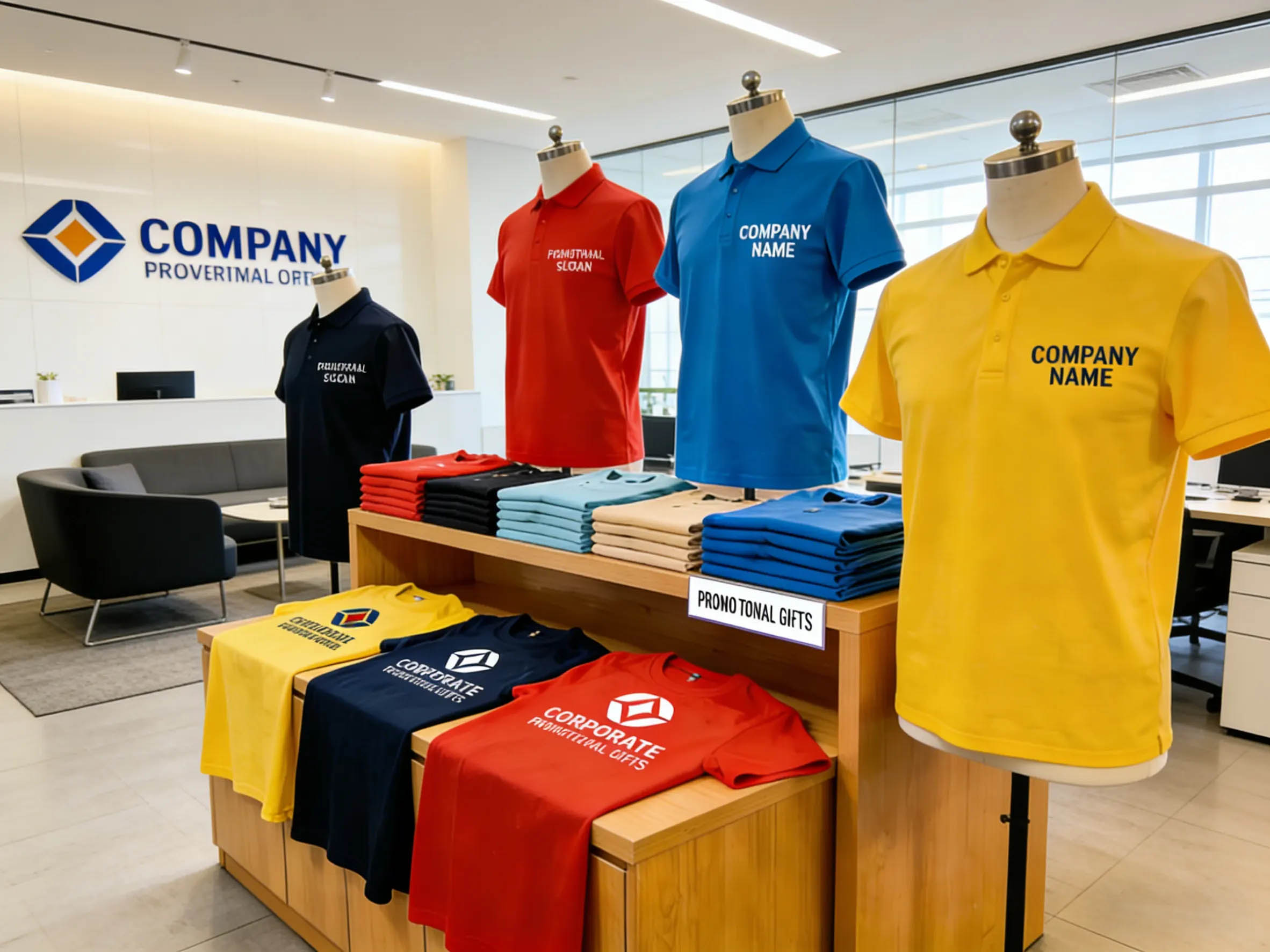
A pique or mid-weight jersey in the 220–300 GSM range holds shape better than a lightweight promotional blank, and cotton-polyester blends are relevant where repeated laundering and color retention matter more than pure-cotton hand feel. Pantone matching matters more here than in any other scenario, because a logo embroidered in the wrong corporate shade is a visible error at every site.
Embroidery is usually the primary decoration: flat embroidery for chest logos, 3D puff embroidery where the brand allows dimension, and chenille for varsity-style applications. Large back prints are better handled by screen printing, which keeps color consistent across a multi-batch rollout.
Labeling becomes a compliance question rather than a branding question. For U.S.-bound private-label apparel, the Federal Trade Commission publishes business guidance on labeling requirements under the Textile and Wool Acts, including the latest revisions to the Textile and Wool Rules; the specific mandatory data elements should be read from that document and confirmed against the destination market before artwork is approved. Buyers shipping to the EU or UK should confirm those requirements separately rather than assuming the U.S. framework travels. The practical consequence is that a manufacturer's ability to produce and attach compliant neck labels, care labels and country-of-origin markings is a qualification item, not an add-on service.
One reported corporate program — 3,500 pieces across three regions and multiple colors, using moisture-wicking pique fabric with an embroidered chest logo — delivered 100% on-time delivery across all batches with no quality complaints recorded after more than 100 washes per garment. Whether or not those figures are typical, they describe the right measurement approach for uniforms: satisfaction and wash durability, not first-order price.
Promotional Merchandise: Deadline, Volume and a Single Wear Cycle
Promotional T-shirts invert the hierarchy. The garment may be worn a handful of times, so long-term durability carries less weight than unit economics, deadline reliability and a size curve that fits a mixed audience.
Lightweight jersey at 160–220 GSM is the conventional base, screen printing is the standard decoration for a single fixed graphic at volume, and heat transfer is useful where individual names or numbers are required. Where the promotional program includes several small design variations — regional offices, campaign variants, event tiers — direct-to-garment printing allows each design to run at low quantity without a separate screen setup.
Labeling is simpler: a printed neck label and an event-specific hang tag usually suffice, though the same destination-market labeling questions still apply if the garment is sold rather than given away.
Sampling should be compressed. With sample production typically running 7–15 working days and bulk production 20–35 working days, a promotional order placed late leaves no room for a second sample round, so a single approval round with a digital print proof and an agreed color standard is the safer structure. The failure mode in this scenario is a missed date, not a failed wash test.
Four Scenarios Side by Side
The table below converts the discussion into a starting brief. Values are typical starting points and should be confirmed against a physical sample and the buyer's own wash and wear expectations.
| Scenario | Fabric starting point | Decoration fit | Labeling | Sampling focus |
|---|---|---|---|---|
| Fitness and gym chains | Lightweight single jersey 160–220 GSM; pique for staff polos | Screen print for repeating team graphics; sublimation for all-over polyester designs | Durable neck label, size consistency across the set | Wash trial, shrinkage and color-fastness check |
| Streetwear and e-commerce | Mid-weight 220–300 GSM, oversized or boxy fit, slub or garment-washed finishes | DTG for multi-design short runs; screen print at volume; puff and foil for accents | Woven or printed neck label, hang tag, branded polybag | Hand feel, on-body fit, print detail at small sizes |
| Corporate uniforms | Pique or mid-weight jersey 220–300 GSM, Pantone-matched | Embroidery (flat, 3D puff, chenille); screen print for large back graphics | Destination-market label content, consistent across batches | Color matching to brand guidelines and multi-region size set |
| Promotional merchandise | Lightweight jersey 160–220 GSM | Screen print for a fixed graphic at volume; heat transfer for names and numbers; DTG for small variants | Simple printed neck label plus event hang tag | Single compressed approval round with digital proof |
Where Printing Method Follows the Scenario
None of the available techniques is universally better. Each one imposes a condition, and the condition should match the program.
- Screen printing builds an image from a separate screen per color. It is the natural choice where one graphic repeats across several hundred pieces and color consistency matters more than per-unit flexibility.
- Direct-to-garment (DTG) prints variable artwork without per-design setup, which is why it fits a 50-piece-per-design streetwear drop or a promotional program with several regional variants.
- Sublimation transfers dye into polyester and supports all-over patterns — relevant for fitness and sport-led designs, not for cotton-heavy streetwear.
- Heat transfer suits names, numbers and small variable elements, and is common in sports and event merchandise.
- Puff print and foil create dimensional or metallic effects that read as intentional on streetwear and misplaced on a uniform.
- Embroidery — flat, 3D puff or chenille — gives uniforms and polos a durable logo that survives repeated laundering without cracking.
A simple decision rule works for most buyers: if the artwork varies and the quantity per design is small, choose a digital method; if the artwork repeats at volume, choose screen printing; if the pattern must cover the whole garment, choose sublimation; if the mark must survive years of washing on a uniform, choose embroidery.
Labeling and Hang Tags: The Scenario-Specific Detail Buyers Underestimate
The neck label is the one component that touches the wearer on every cycle, and it changes more between scenarios than fabric weight does. Qianshiwear's product specification lists ribbed collars, self-fabric binding and seamless neckline finishes, together with custom neck labels and hang tags produced to the buyer's artwork.
For streetwear, the neck label and hang tag are retail objects: they signal authenticity, carry the brand mark and often justify part of the price. For corporate uniforms, the same label position carries compliance information and must be identical across every batch and site. For promotional merchandise, a printed neck label and an event hang tag are usually sufficient — but if the shirt is sold rather than gifted, the destination market's labeling obligations still apply.
The procurement lesson is that label artwork should be approved at the same time as the print artwork, not after bulk production begins. A manufacturer that cannot produce and attach the required label is not qualified for that order, regardless of fabric quality.
Sampling Plans That Match Each Scenario
Sampling is where scenario differences become visible in the calendar. Qianshiwear quotes sample production at 7–15 working days and bulk production at 20–35 working days, so the number of approval rounds is the main variable a buyer controls.
A three-round structure fits most programs: a fit round on the base garment, a decoration and label round on the approved fit, and a pre-production approval against the final specification. Fitness programs should add a wash and shrinkage trial to that structure. Uniform programs should replace the fit round with a size-set approval and a Pantone color match, because a single sample in one size does not prove a multi-region rollout. Streetwear programs should hold the fit and hand feel to a physical standard before any print is applied, since a garment that photographs well but drapes differently on body will generate returns. Promotional programs should collapse to one round, backed by a digital print proof and a locked delivery date.
A sample that is approved without a written specification — fabric weight, composition, finish, print method, label construction and shrinkage tolerance — cannot be used to judge a reorder. The written specification is what converts one approved shirt into a repeatable program.
What the Guangzhou Operation Actually Covers
Guangzhou Qianshi Apparel Co., Ltd, which trades as Qianshiwear, is a Guangzhou-based OEM, ODM and private-label apparel manufacturer founded in 2014, producing T-shirts, polos, jerseys, hoodies, sweatshirts, joggers, tracksuits, outerwear and caps for export markets.
The capability set that matters for scenario-based sourcing is specific rather than general. The published minimum order quantity is 50 pieces per color per design, which allows a label to test four streetwear designs or a gym chain to trial four branch colorways without committing to a container. Sample production runs 7–15 working days and bulk production 20–35 working days. Monthly capacity is reported by the company at 250,000 units, supported by 200–250 production line workers and a 15-person design team. Quality control is stated as 100% pre-shipment inspection with AQL 2.5 sampling and third-party inspection such as SGS at the buyer's request.
On materials and finishing, the range supports all four scenarios: 100% combed cotton at 160–200 GSM, cotton-polyester blends, GOTS-certified organic cotton, slub cotton, pique for polos and French terry for heavier pieces, with Pantone color matching and sizes from XS to XXL including custom grading. Decoration covers screen print, DTG, sublimation, heat transfer, puff print and foil, plus flat, 3D puff and chenille embroidery. Fabrics for direct skin contact are specified as OEKO-TEX Standard 100 certified, and custom neck labels, hang tags and packaging are produced to buyer artwork.
Roughly 85–90% of production is exported, with the EU, USA, Australia and UK listed as main markets — a relevant detail for uniform and private-label buyers who need a supplier already accustomed to destination-market label requirements.
Fit Boundaries: Where This Model Does Not Apply
A scenario-first approach is not a universal fit, and buyers should check the boundaries before shortlisting.
- Below the MOQ floor. A program needing 30 pieces in a single color and design falls under the stated 50-piece minimum per color per design.
- Buyers optimizing purely on first-order price. The positioning is aimed at brands focused on long-term reputation and consistent customer experience, mid-tier to premium market positioning, and clients requiring reliable quality across reorders. A one-off purchase with no reorder expectation is a different buying problem.
- Capacity and lead-time claims. Monthly capacity and output figures are company-reported. A buyer planning a multi-thousand-piece seasonal rollout should tie the figures to a written production schedule and agreed delivery windows rather than to a general capability statement.
- Certification scope. OEKO-TEX Standard 100 and GOTS references describe material specifications. Buyers should request the certificate number, certificate holder, scope and validity period, and confirm they cover the specific fabric and article ordered.
- Commercial terms. Unit price, duty treatment and landed cost are not published and must be quoted against a defined specification, quantity and delivery term.
- Regulatory advice. Labeling guidance, including the FTC framework referenced above, sets an obligation the buyer must confirm for each destination market; manufacturing capability does not replace that confirmation.
Market Context: Flat Export Value, More Complex Orders
China's apparel exports reached US$159.14 billion in 2024, an increase of 0.3% year on year, according to Chinese customs statistics reported in early 2025. A near-flat aggregate figure is worth reading carefully: it does not describe a shrinking manufacturing base, but it does suggest that growth for individual suppliers is more likely to come from order complexity — private label, decoration, labeling and sampling service — than from exporting more plain units.
On the demand side, one commercial research estimate places the global T-shirt market at over US$45 billion in 2024 with a forecast CAGR of 6.2% through 2030. That figure is a forecast from a single commercial source and should be treated as directional rather than as a measured outcome; the more defensible observation is structural, namely that brands increasingly run smaller, more frequent programs with more variation per order.
For buyers, the practical implication is that scenario fit is becoming a supplier-screening criterion in its own right. A factory that can hold a uniform standard across three regions and simultaneously run a 50-piece streetwear drop is solving two different production problems, and the brief should say which one is being bought.
Outlook
If programs continue to fragment into smaller and more differentiated drops, the criteria that separate manufacturers will shift toward sampling speed, label capability and reorder consistency rather than headline capacity. A buyer evaluating a supplier for 2027 planning can test that directly: ask for a scenario-specific sample plan, a written fabric and finish specification, and a documented label process for the destination market.
Those three asks are answerable today by any manufacturer that genuinely organizes production by wear cycle. A supplier that answers them only in general terms is telling the buyer something useful as well.
FAQ: Scenario Fit and Specification Questions
Which fabric weight should a gym chain choose for high-wash team T-shirts?
Lightweight single jersey in the 160–220 GSM range is the usual starting point for training tees, because breathability during active movement matters more than structure. Pique in a comparable weight is used for staff polos. Because gym garments face high-intensity activity, frequent machine washing and sweat, the specification should also fix color fastness at Grade 4 or better, shrinkage at 5% or less and, for athletic collections, an anti-pilling rating of Grade 3–4 or better.
What printing method suits a 50-piece streetwear drop with multiple designs?
Direct-to-garment printing fits this case because it prints variable artwork without a separate screen for each design, which matters when four artworks each run at 50 pieces. Screen printing becomes the better route when one hero graphic repeats at higher volume, and puff print or foil can be added where a raised or metallic finish is part of the design intent. The choice should be confirmed on a physical sample, since hand feel and print detail at small sizes are what the customer actually judges.
How do labeling requirements differ between corporate uniforms and promotional T-shirts?
Uniform labels carry compliance weight: the garment must present the required information consistently across every batch and site, and for U.S.-bound apparel the Federal Trade Commission publishes business guidance on labeling under the Textile and Wool Acts that defines the applicable framework. Promotional shirts usually need only a printed neck label and an event hang tag, but the same destination-market obligations apply if the shirt is sold rather than given away. In both cases the label artwork should be approved before bulk production.
How many sampling rounds are needed before a multi-site uniform rollout?
Most uniform programs need a size-set approval and a Pantone color match rather than a single-garment fit round, because one sample in one size does not demonstrate consistency across a multi-region workforce. A practical structure is color and size-set approval first, then a pre-production approval against the written specification. With sample production typically at 7–15 working days and bulk at 20–35 working days, the number of rounds should be planned into the delivery date from the start.
Can one manufacturer cover fitness, streetwear, uniform and promotional programs?
Coverage depends on whether the factory can run different fabric, decoration and labeling configurations rather than a single standardized blank. Qianshiwear lists T-shirts, polos and jerseys among its product range, offers screen print, DTG, sublimation, heat transfer, puff print, foil and embroidery, and produces custom neck labels and hang tags, with a minimum of 50 pieces per color per design and monthly capacity reported at 250,000 units. Buyers should still confirm that their specific fabric, finish and label combination has been sampled and approved.
A downloadable brochure with production and capability details is available here: Qianshiwear company brochure (PDF).
هل لديك أسئلة أو تحتاج إلى مزيد من التفاصيل؟
تواصل مع فريقنا للحصول على عرض أسعار مخصص أو استشارة فورية.
طلب عرض أسعار
املأ النموذج أدناه وسيتواصل معك فريقنا بعرض مقترح مخصص.
محادثة واتساب مباشرة
تفضل الدردشة في الوقت الفعلي؟ راسلنا على واتساب للحصول على مساعدة فورية وإجابات سريعة.
- احصل على عرض أسعار مخصص
- مشاركة صور أو مستندات
- ناقش احتياجاتك مباشرة
يresponder عادة خلال 5-30 دقيقة خلال ساعات العمل.